
10 P
1st - Uni
12 P
5th - 8th
20 P
7th - 8th
20 P
6th - 8th
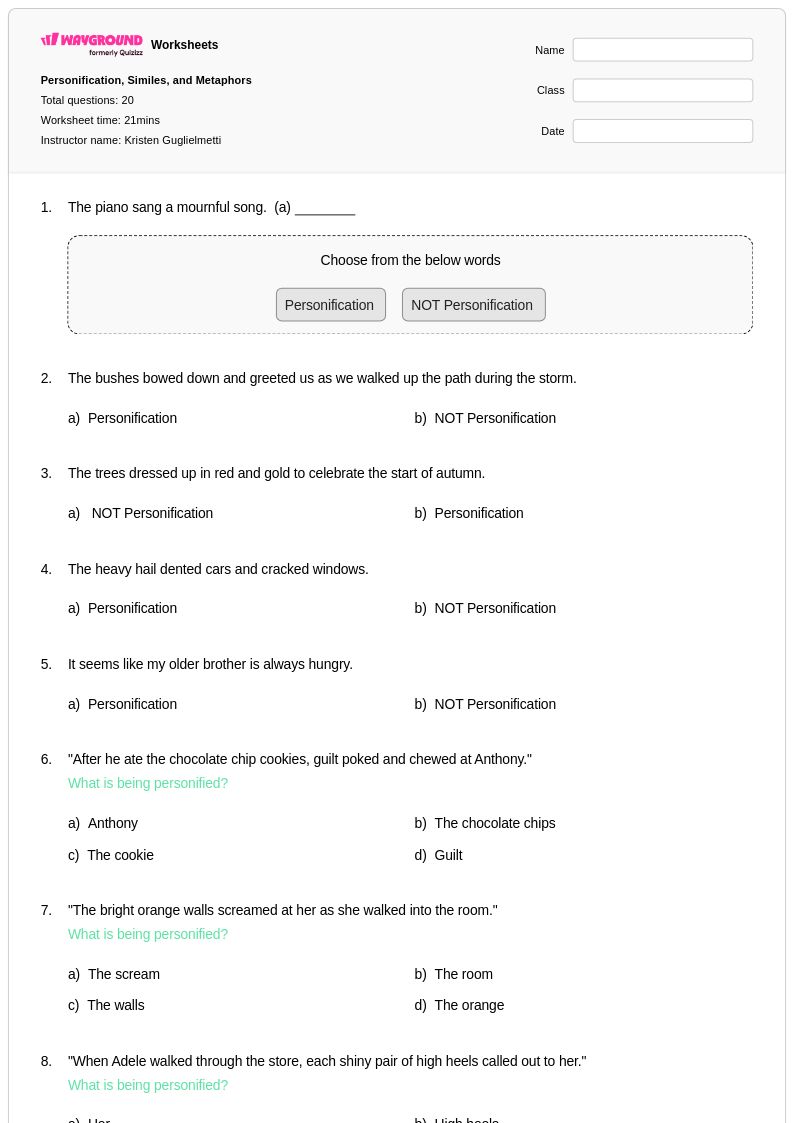
20 P
6th - 10th
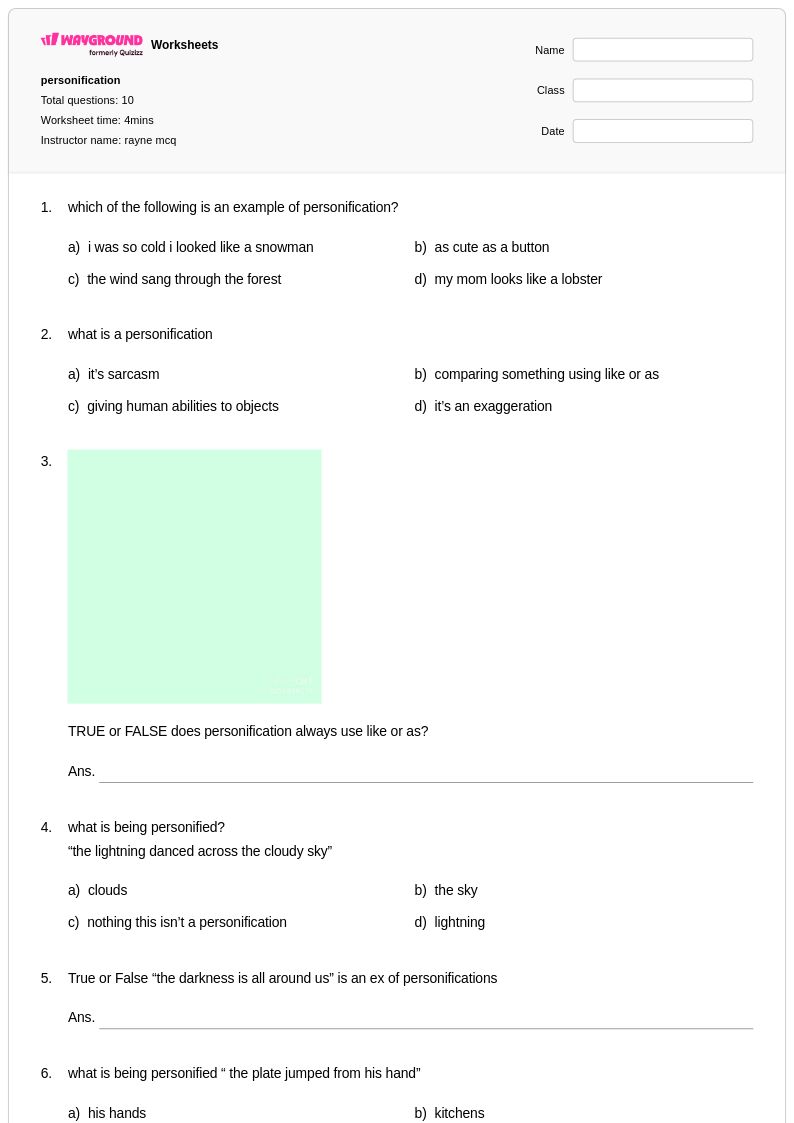
10 P
KG - Uni
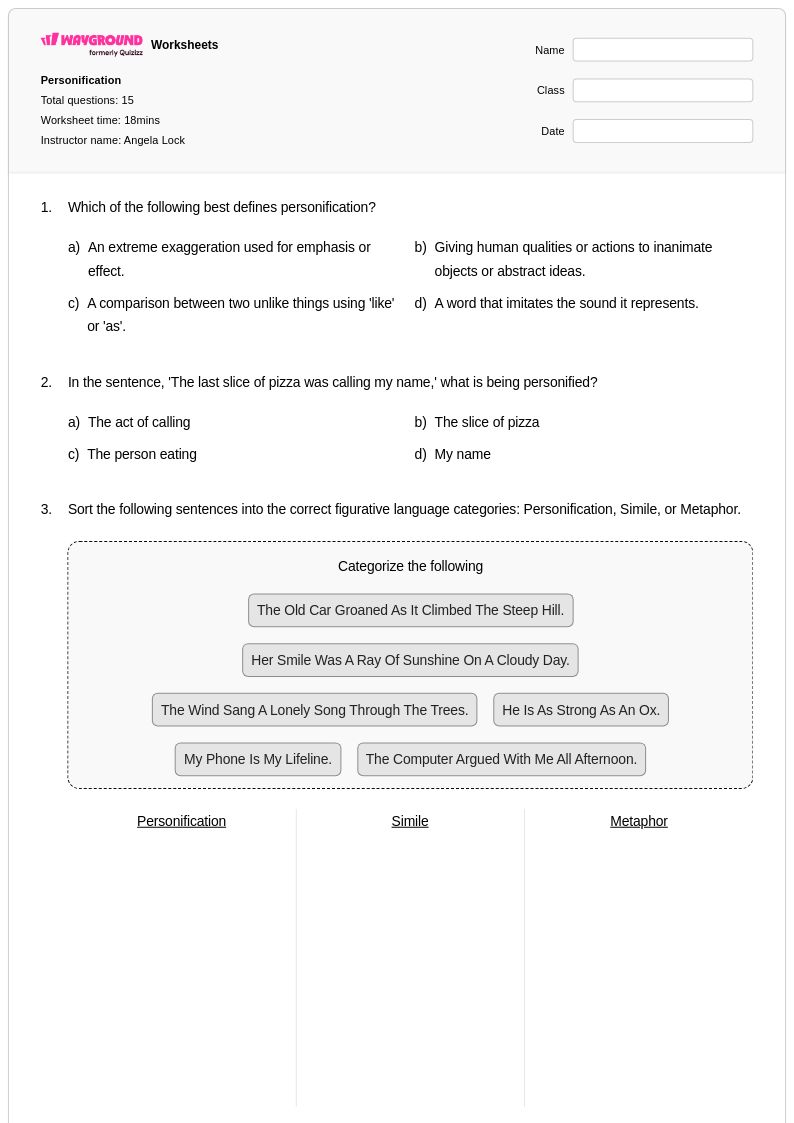
15 P
8th - Uni
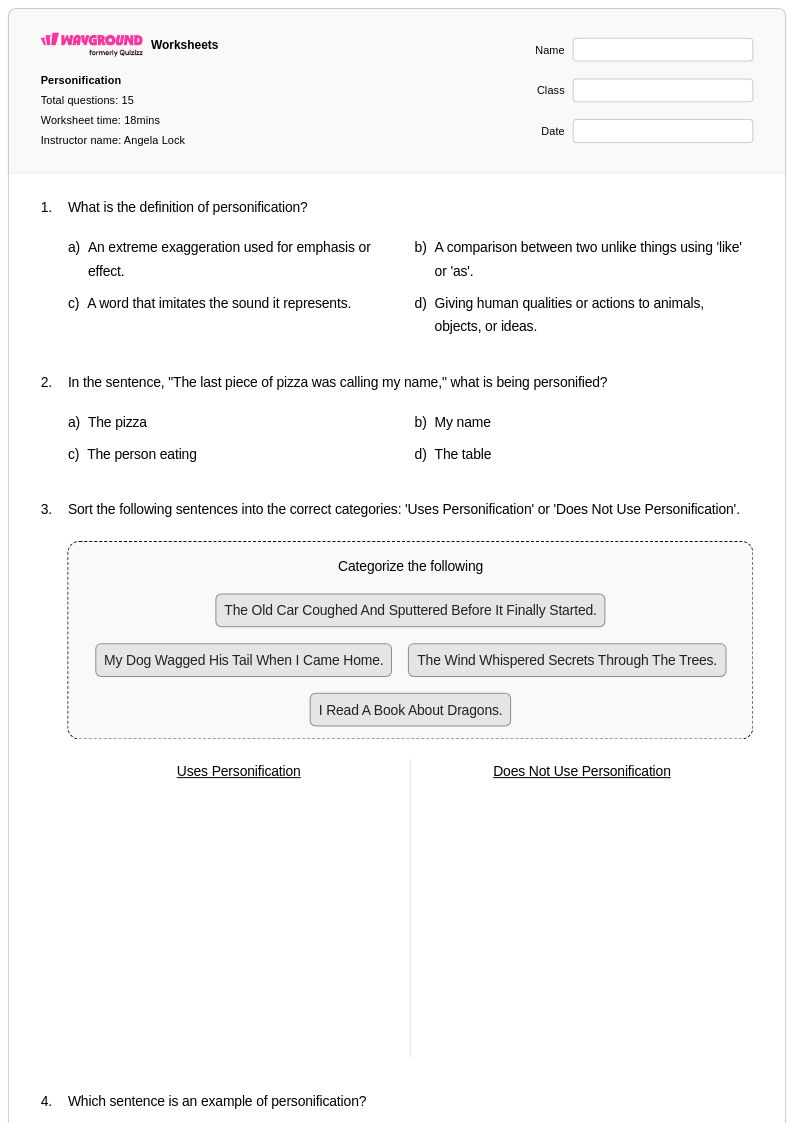
15 P
6th - Uni
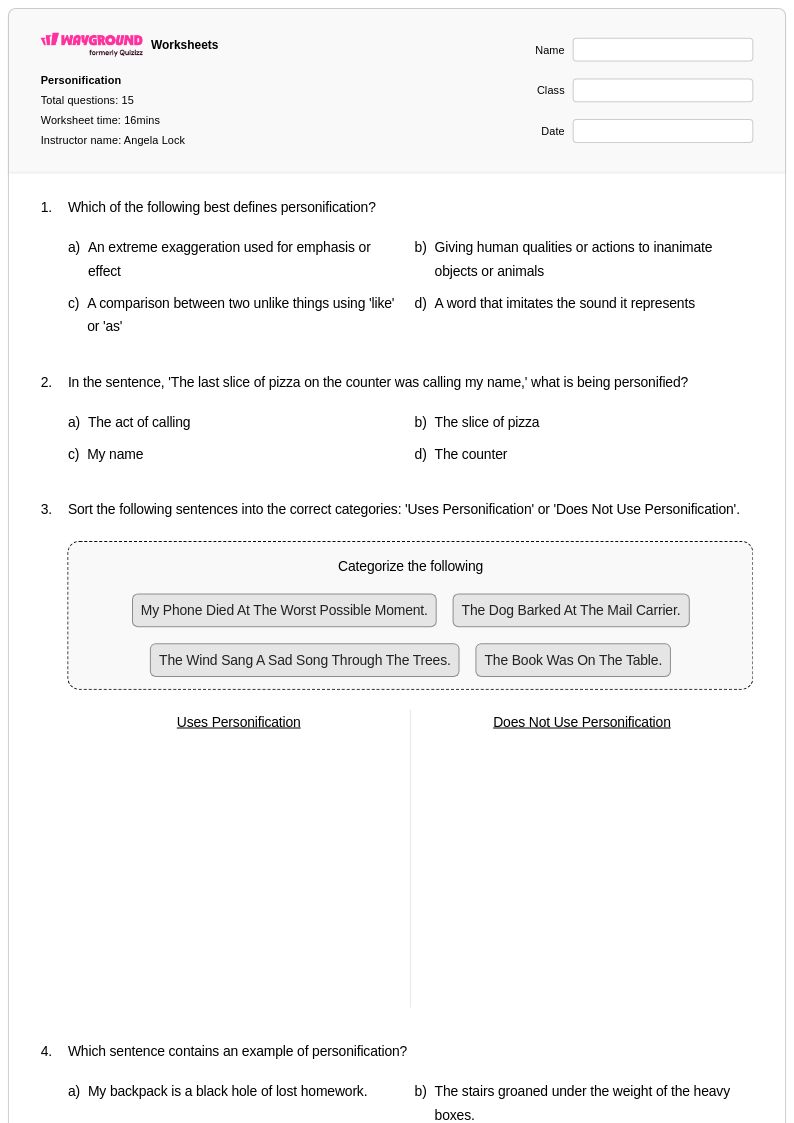
15 P
7th - Uni
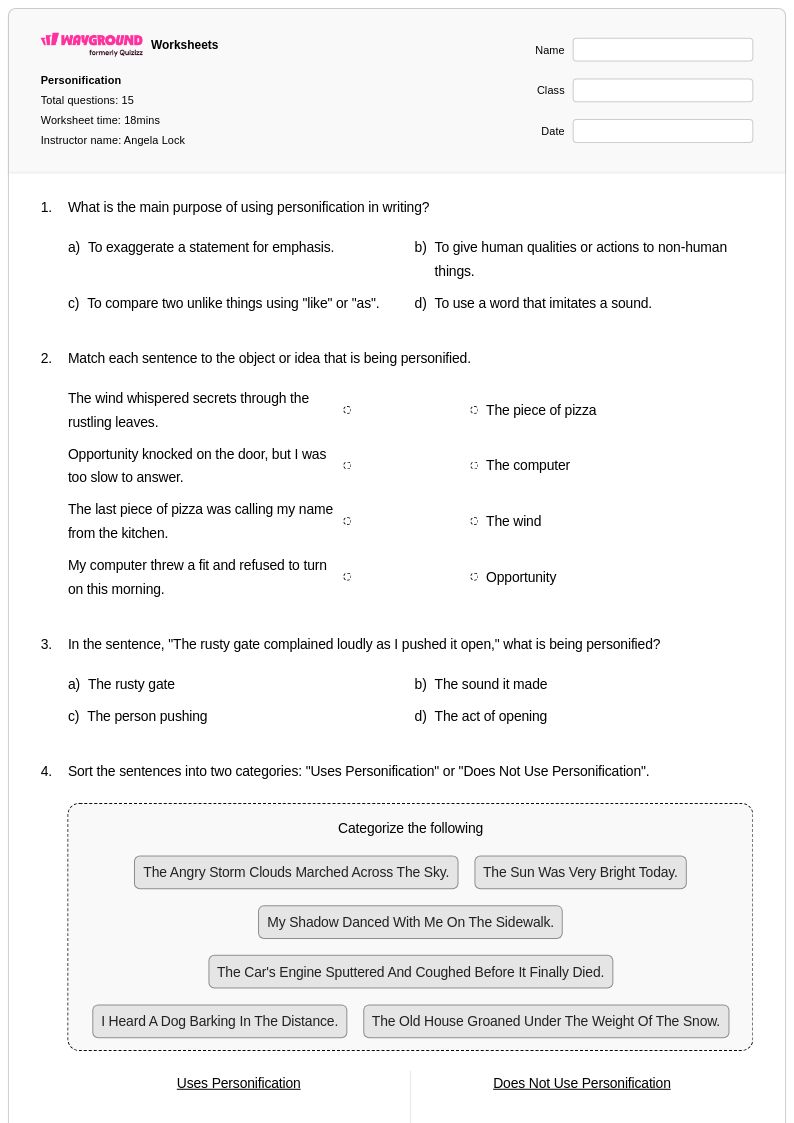
15 P
6th - Uni
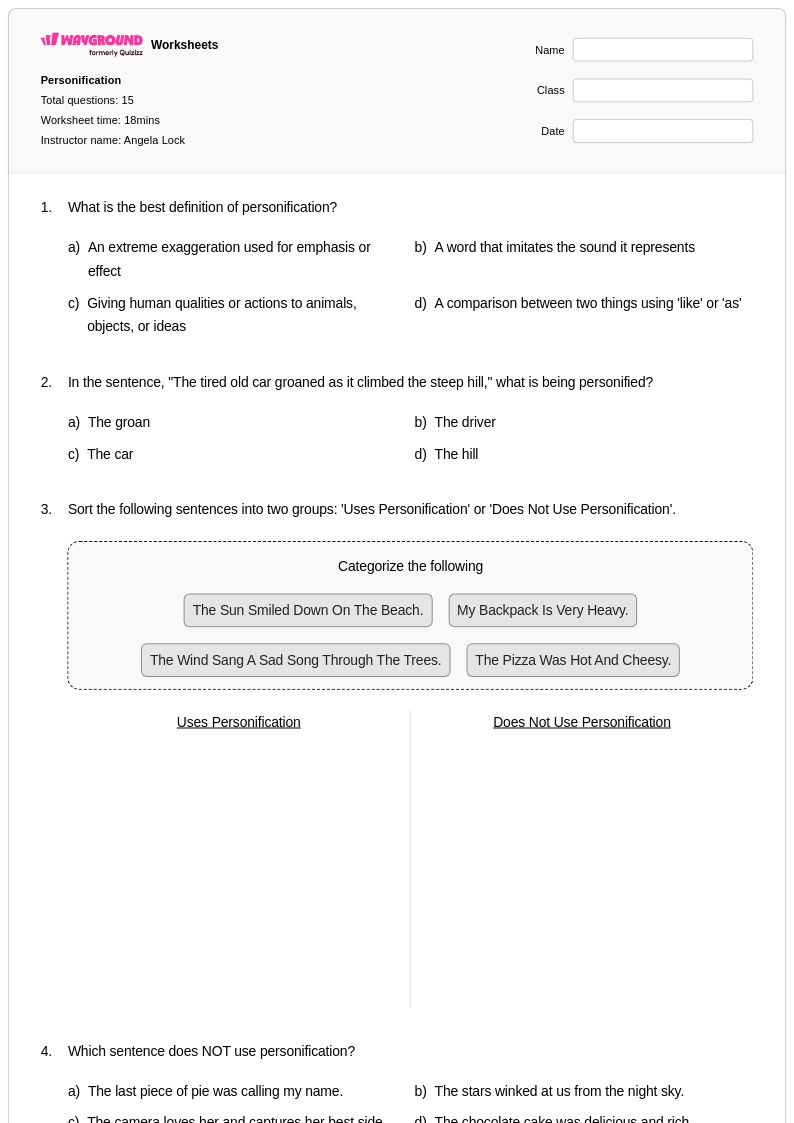
15 P
6th - Uni
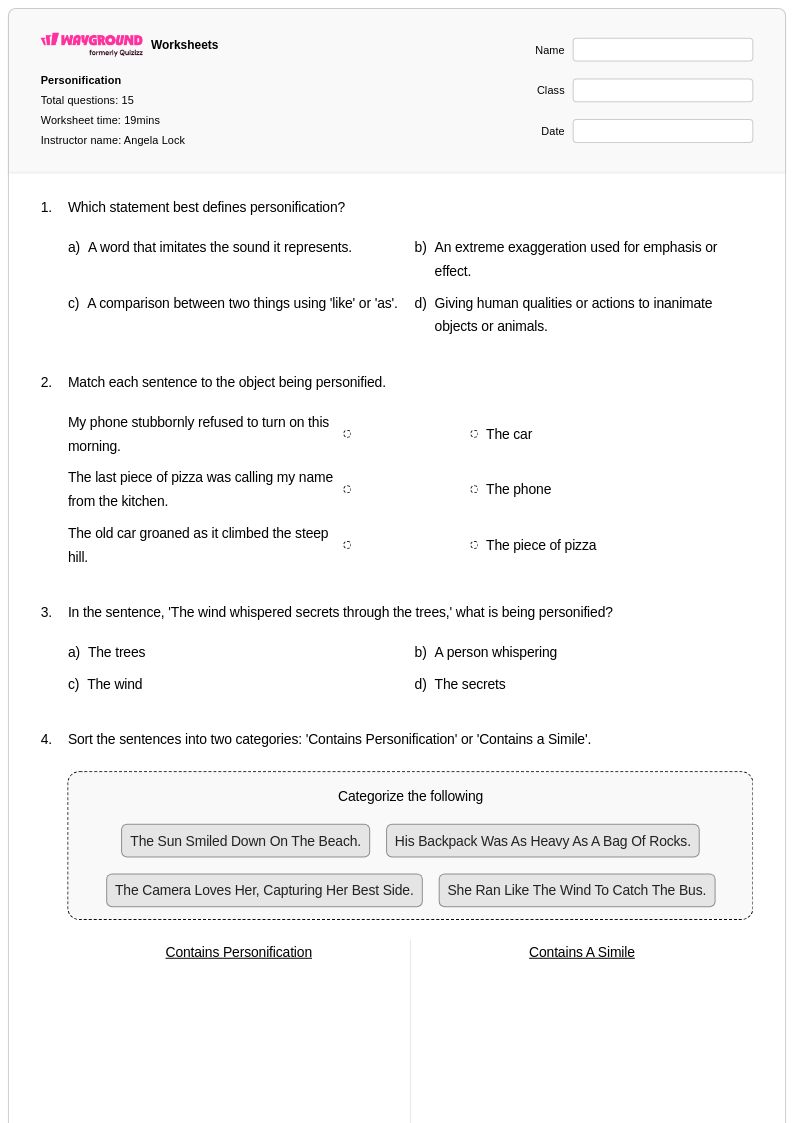
15 P
8th - Uni
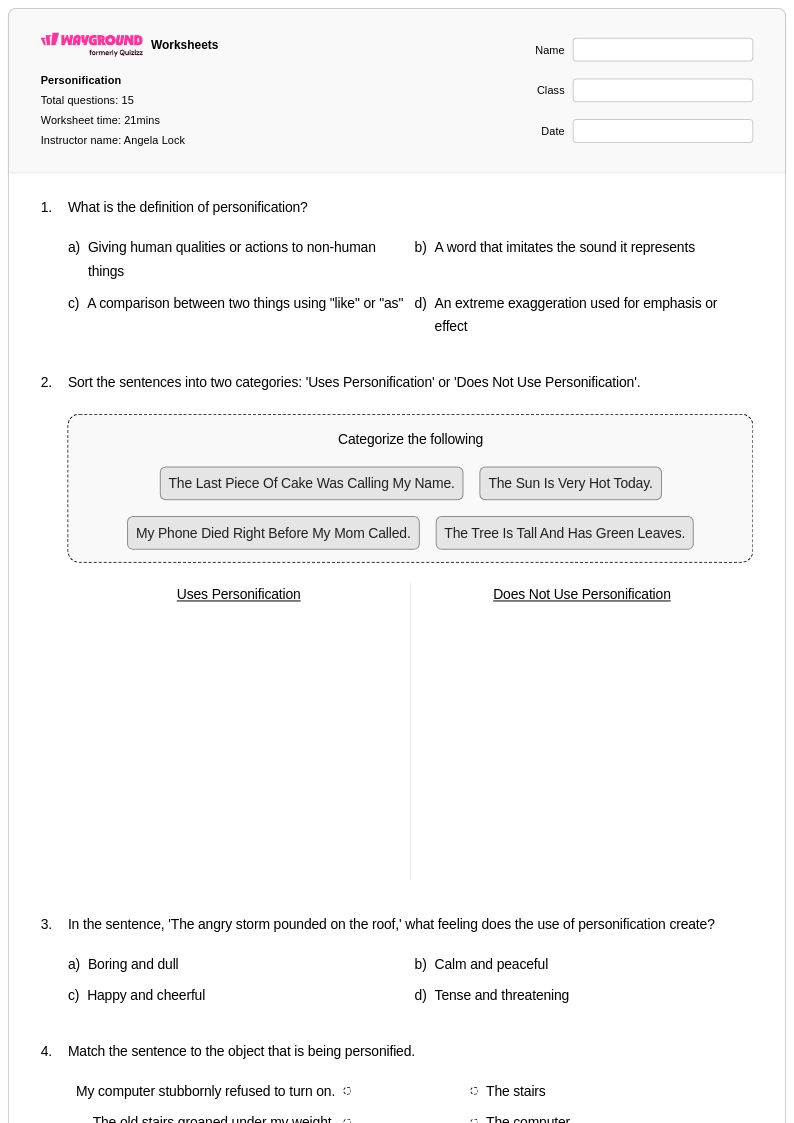
15 P
7th - Uni
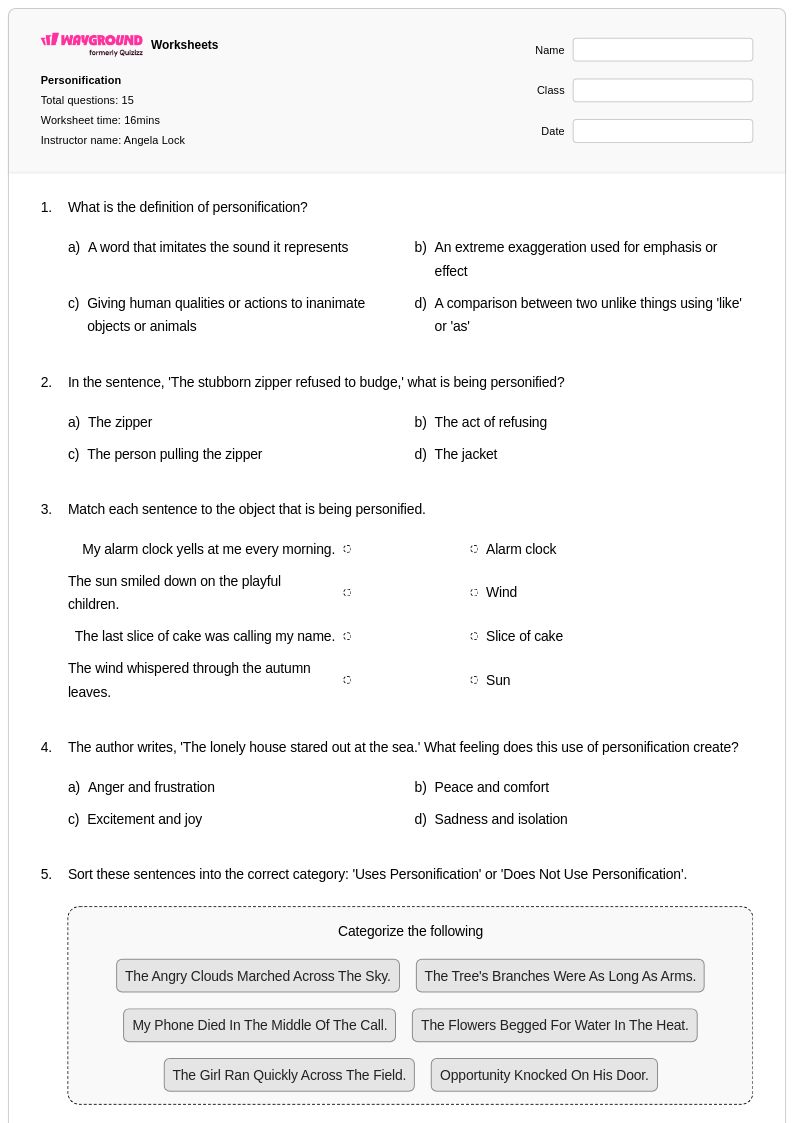
15 P
7th - Uni
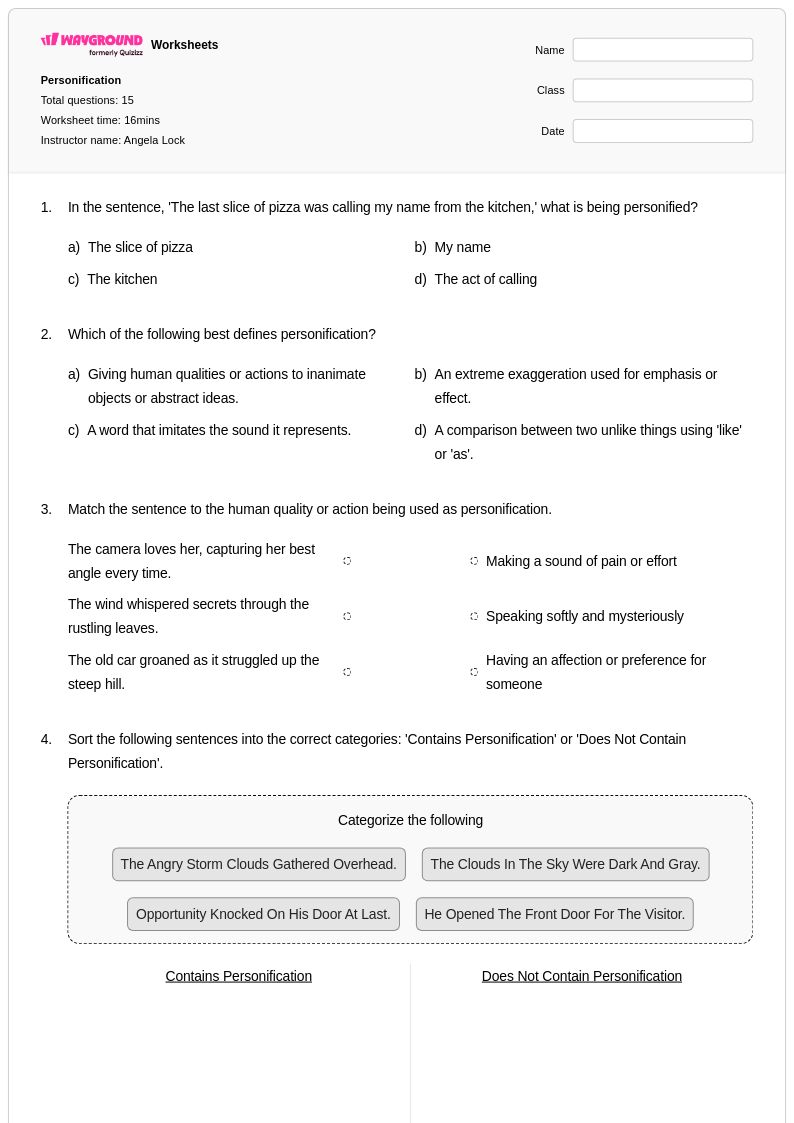
15 P
8th - Uni
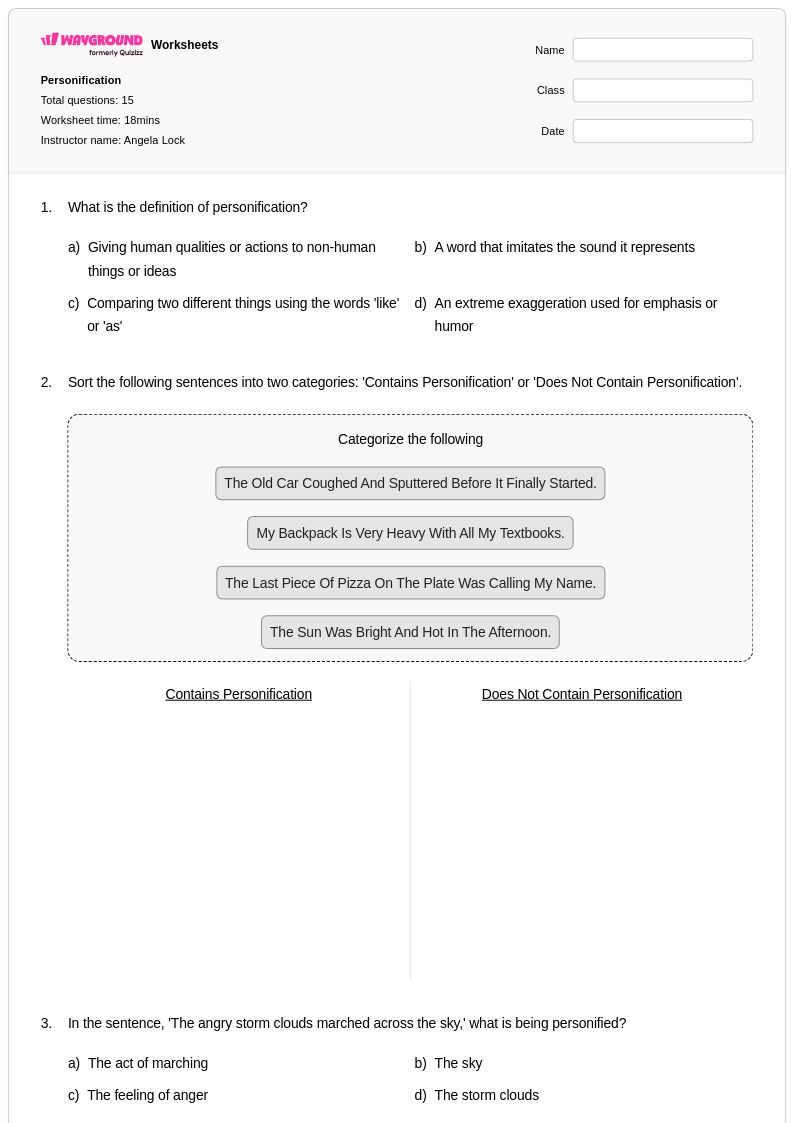
15 P
7th - Uni
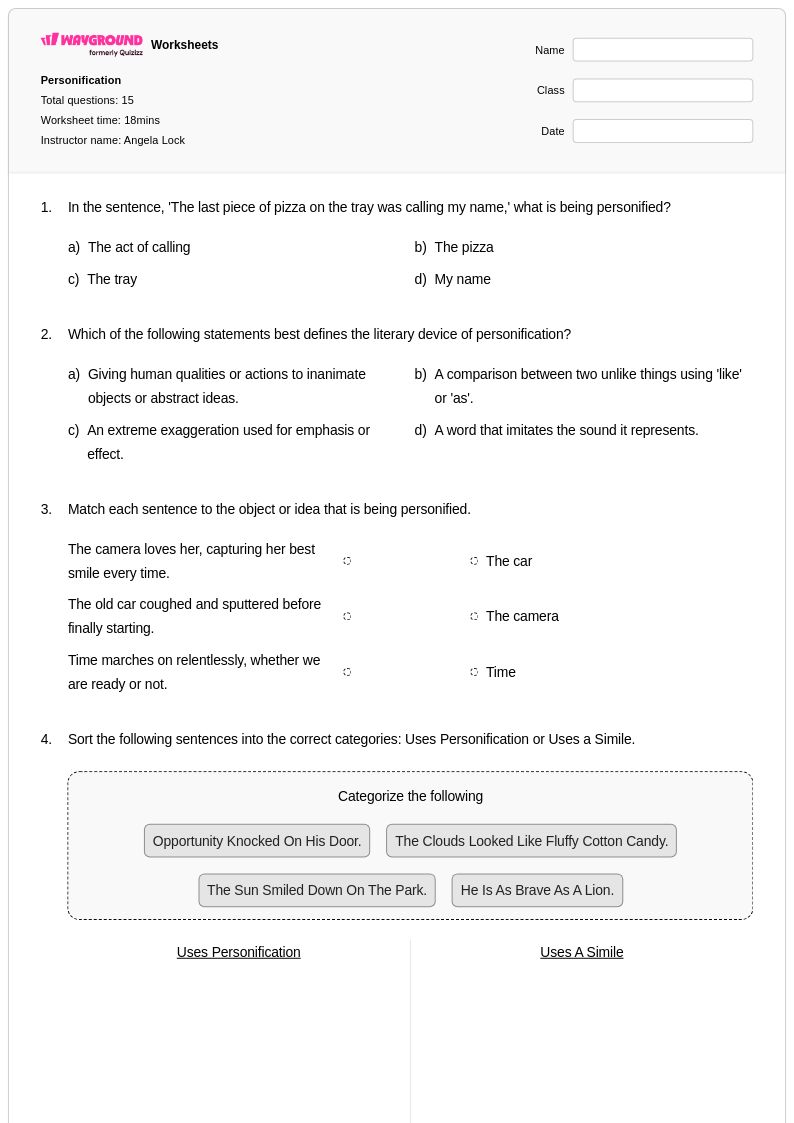
15 P
8th - Uni
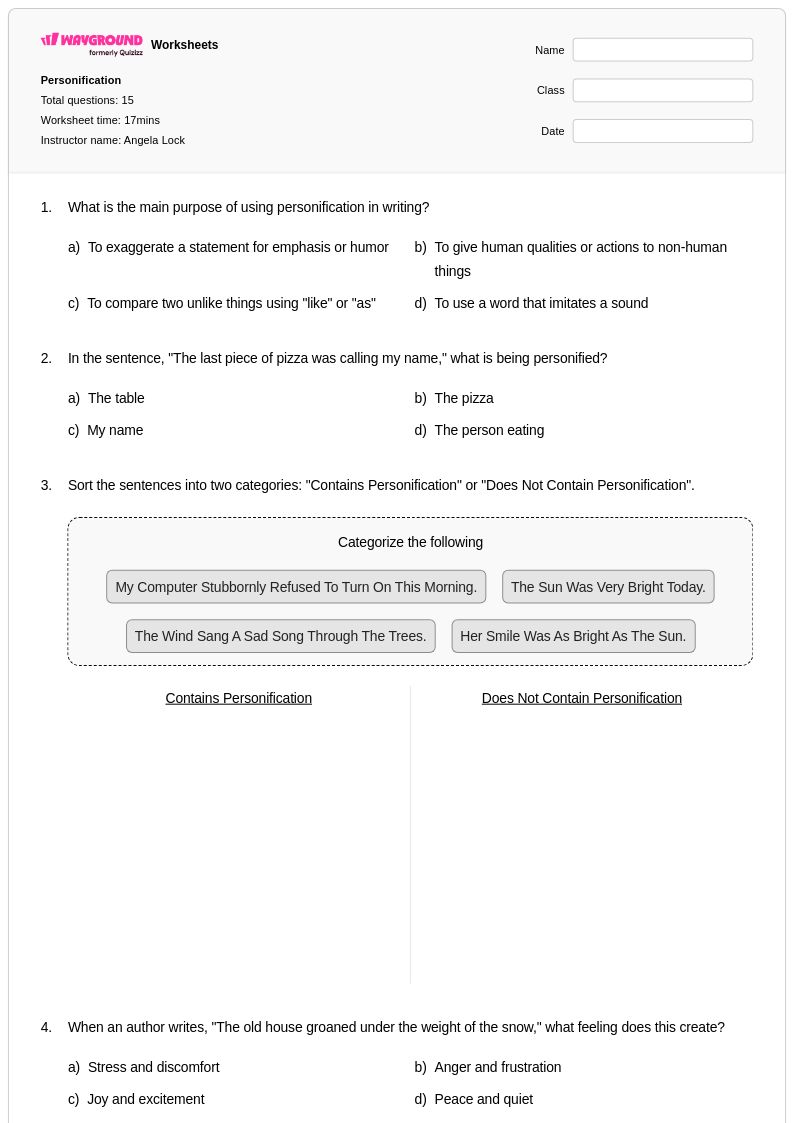
15 P
7th - Uni
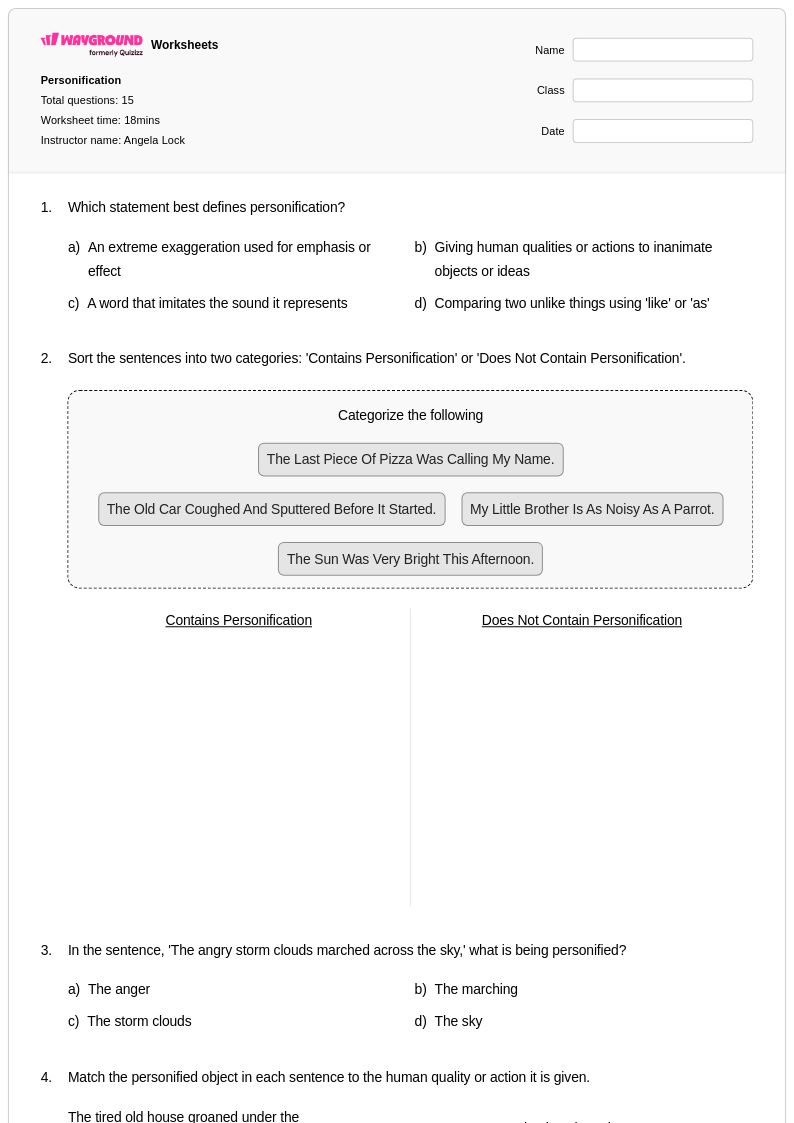
15 P
8th - Uni
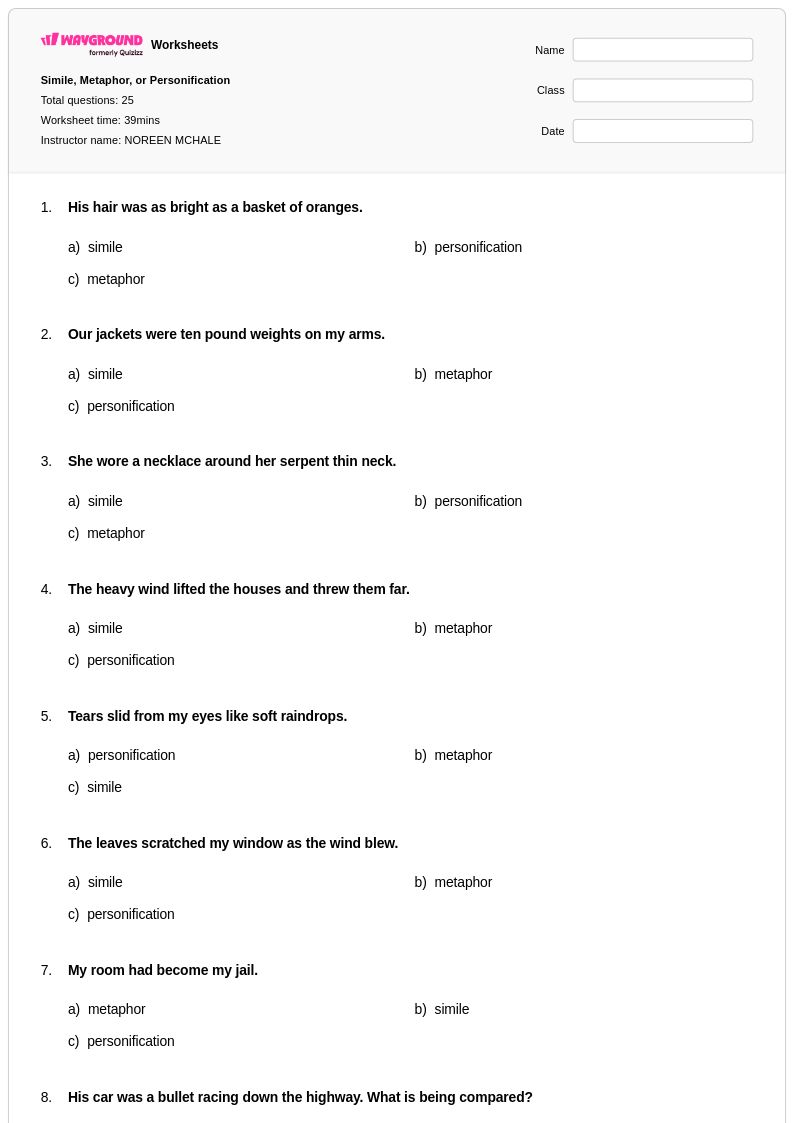
25 P
5th - 8th
10 P
6th - PD
15 P
6th - Uni
25 P
6th - Uni
25 P
5th - Uni
Przeglądaj Personification arkusze ćwiczeń według ocen
Przeglądaj inne arkusze tematyczne dla class 8
Explore printable Personification worksheets for Class 8
Class 8 personification worksheets available through Wayground (formerly Quizizz) provide comprehensive practice in identifying, analyzing, and creating this essential figurative language technique where human characteristics are attributed to non-human objects, animals, or abstract concepts. These expertly designed resources strengthen students' ability to recognize personification in literary texts, understand its effect on tone and meaning, and incorporate it effectively into their own writing. The worksheet collection includes practice problems that range from basic identification exercises to more complex analytical tasks where students explain how personification enhances imagery and emotional connection in poetry and prose. Each worksheet comes with a detailed answer key to support independent learning and self-assessment, while the free printable PDF format ensures easy classroom distribution and homework assignments.
Wayground (formerly Quizizz) supports educators with millions of teacher-created personification resources that streamline lesson planning and differentiated instruction for Class 8 English classrooms. The platform's robust search and filtering capabilities allow teachers to quickly locate worksheets aligned with specific learning standards and skill levels, while built-in differentiation tools enable customization for diverse learning needs within the same classroom. These resources are available in both printable and digital PDF formats, providing flexibility for in-person, remote, or hybrid learning environments. Teachers can effectively use these materials for initial skill introduction, targeted remediation for struggling learners, enrichment activities for advanced students, and ongoing practice to reinforce personification concepts throughout their figurative language curriculum units.
FAQs
How do I teach personification to students?
What exercises help students practice identifying personification?
What mistakes do students commonly make when learning personification?
How do I help students understand why authors use personification?
How do I use Wayground's personification worksheets in my classroom?
How can I differentiate personification instruction for struggling or advanced learners?