
Recommended Topics for you
- Consonance
- Hyperbole
- Idioms
- Imagery
- Metaphors
- Onomatopoeia
- Oxymoron
- Personification
- Pun
- Sarcasm
- Similes
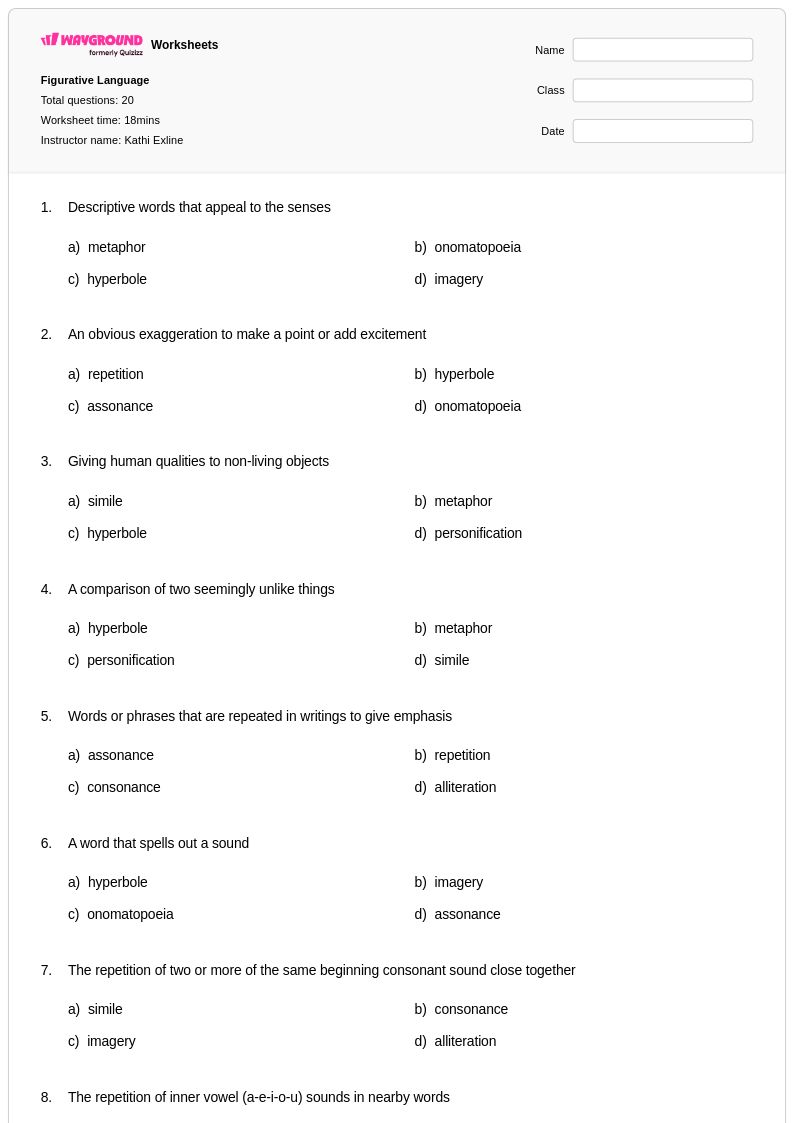
20 Q
6th - 8th
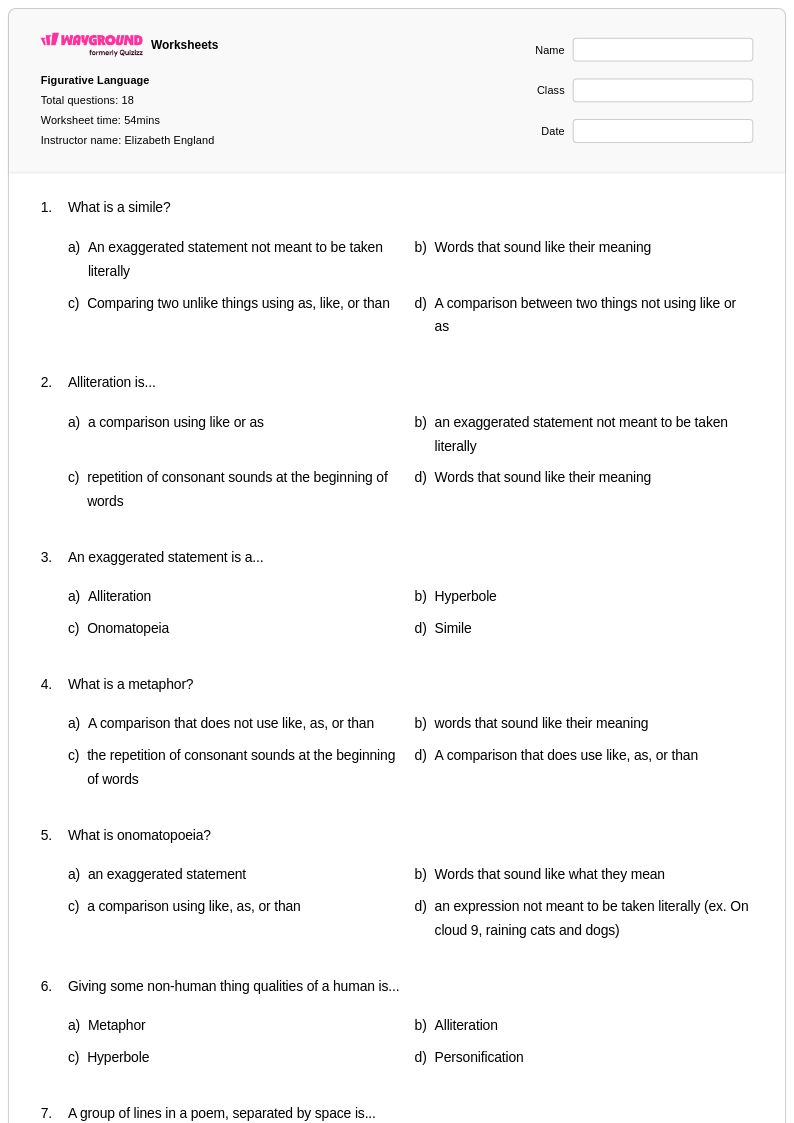
18 Q
5th - 8th
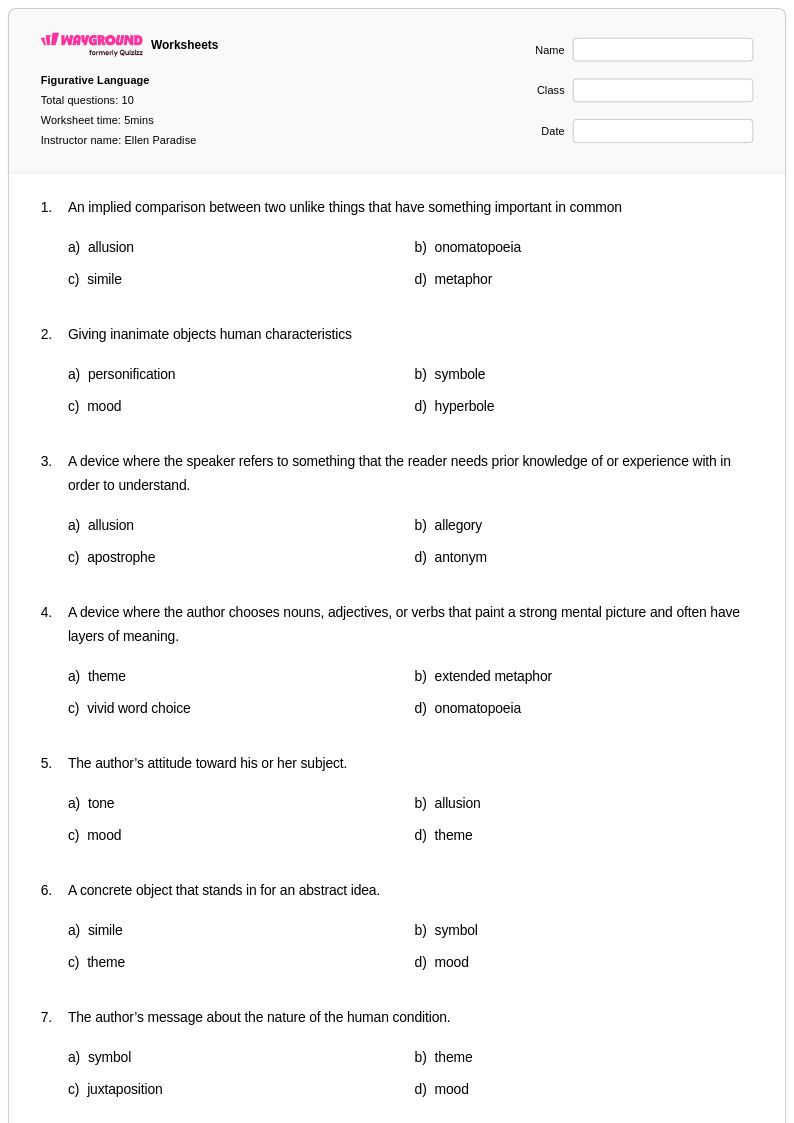
10 Q
8th
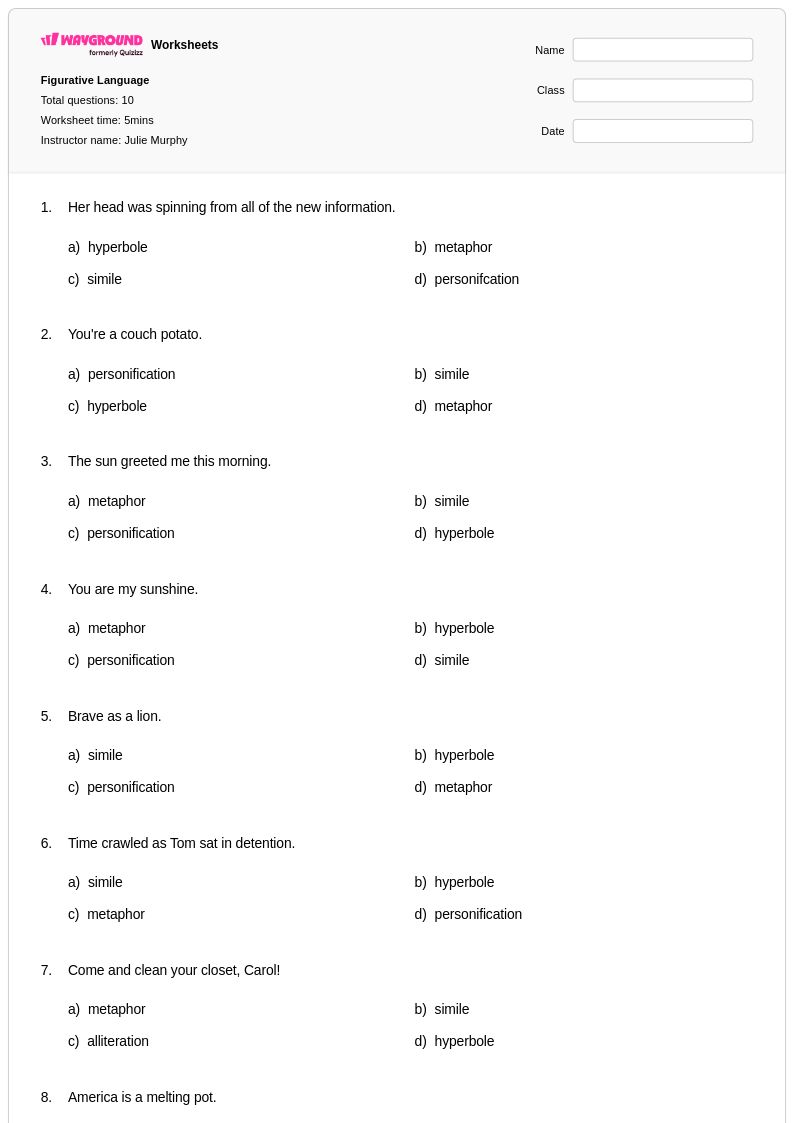
10 Q
8th
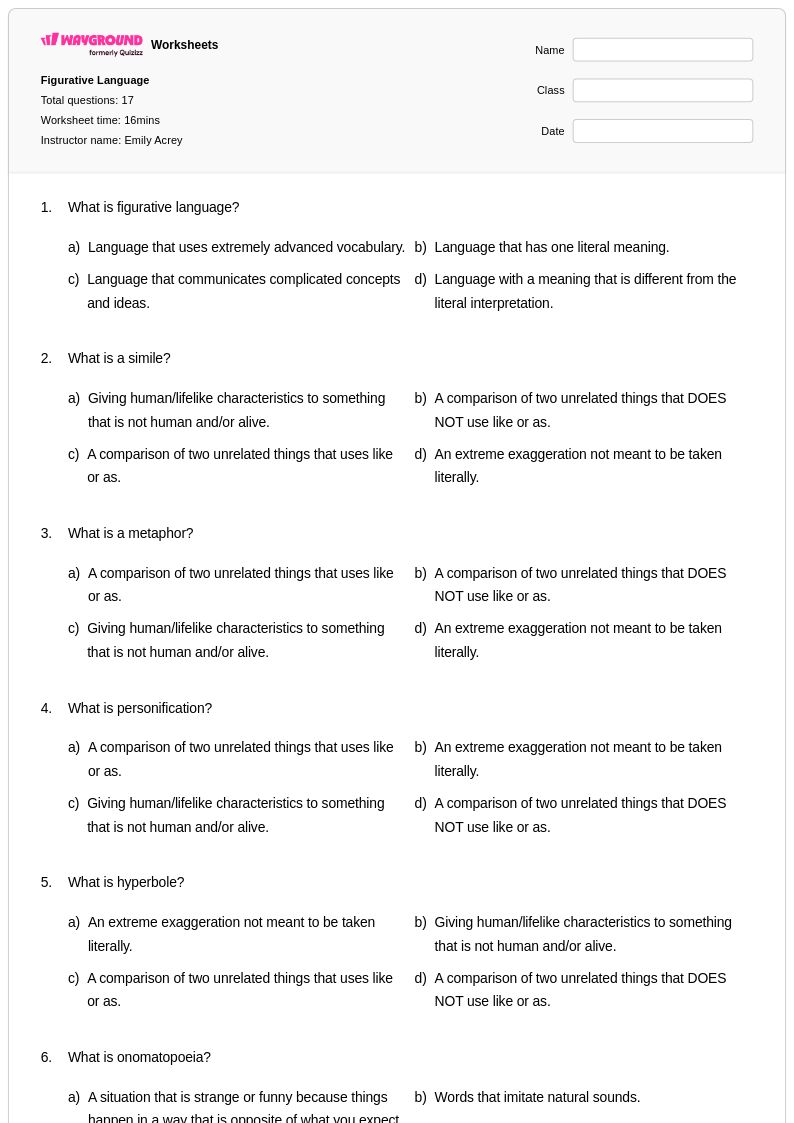
17 Q
6th - 8th
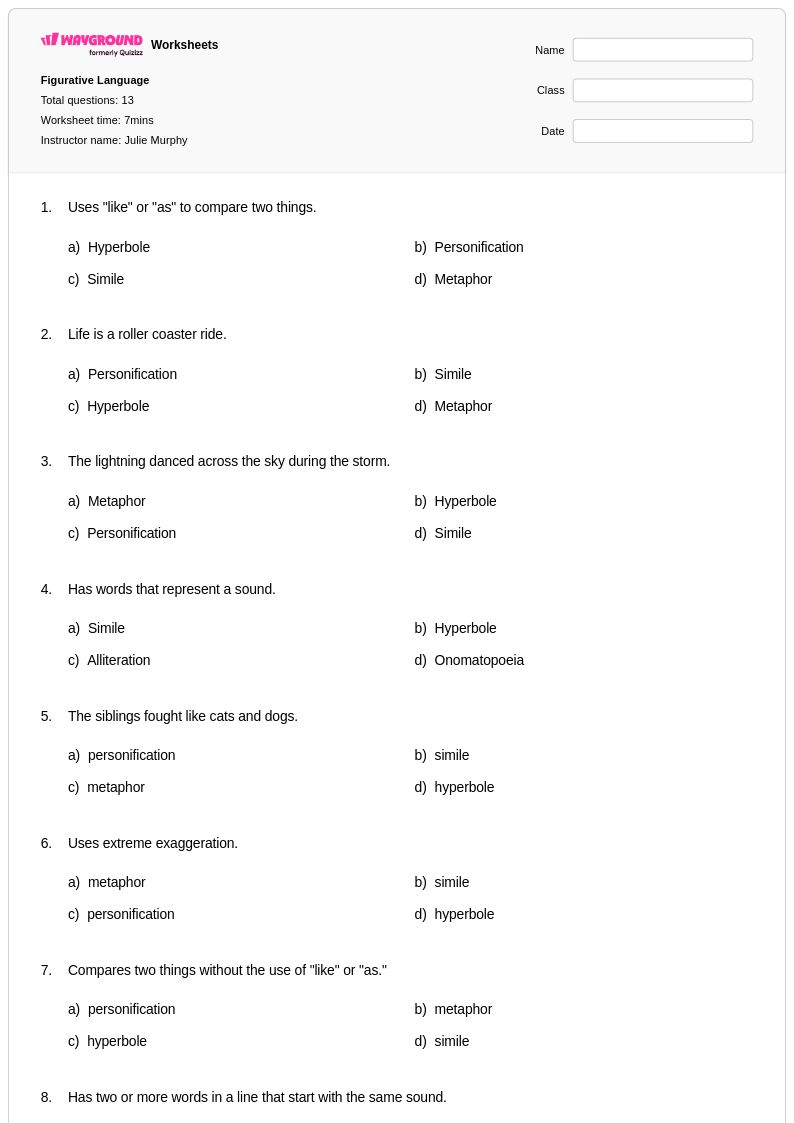
13 Q
8th
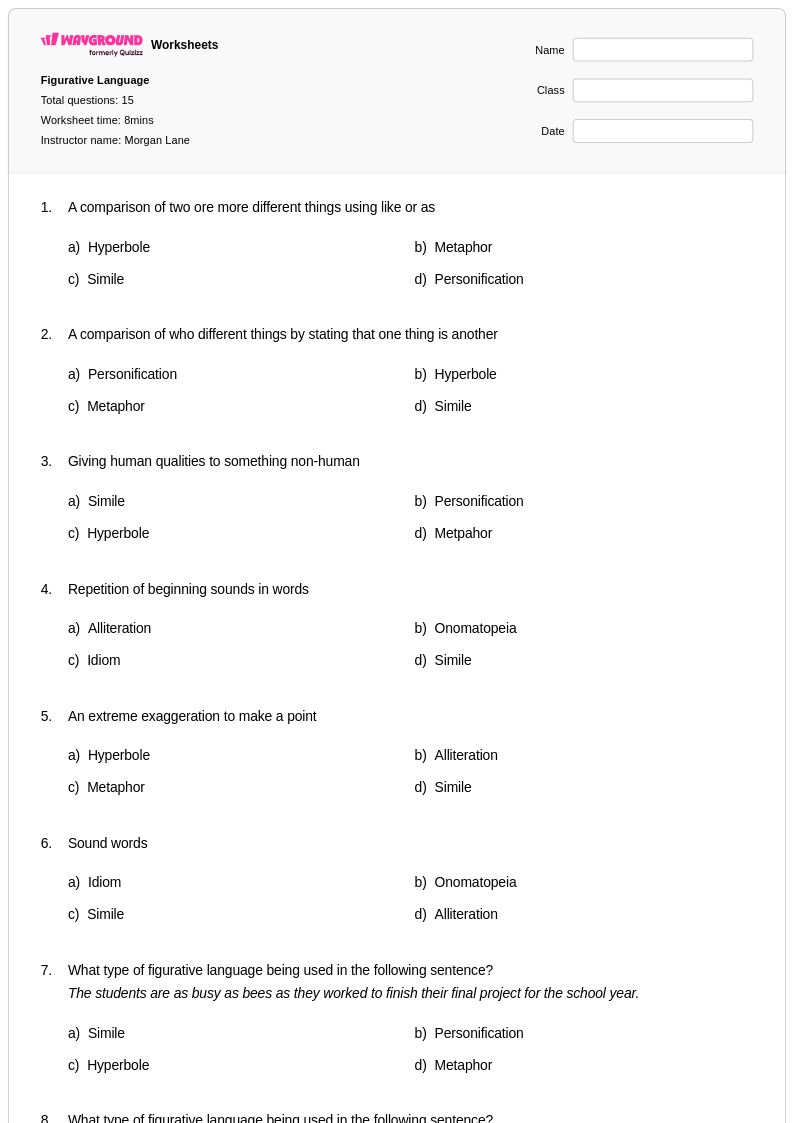
15 Q
5th - 8th
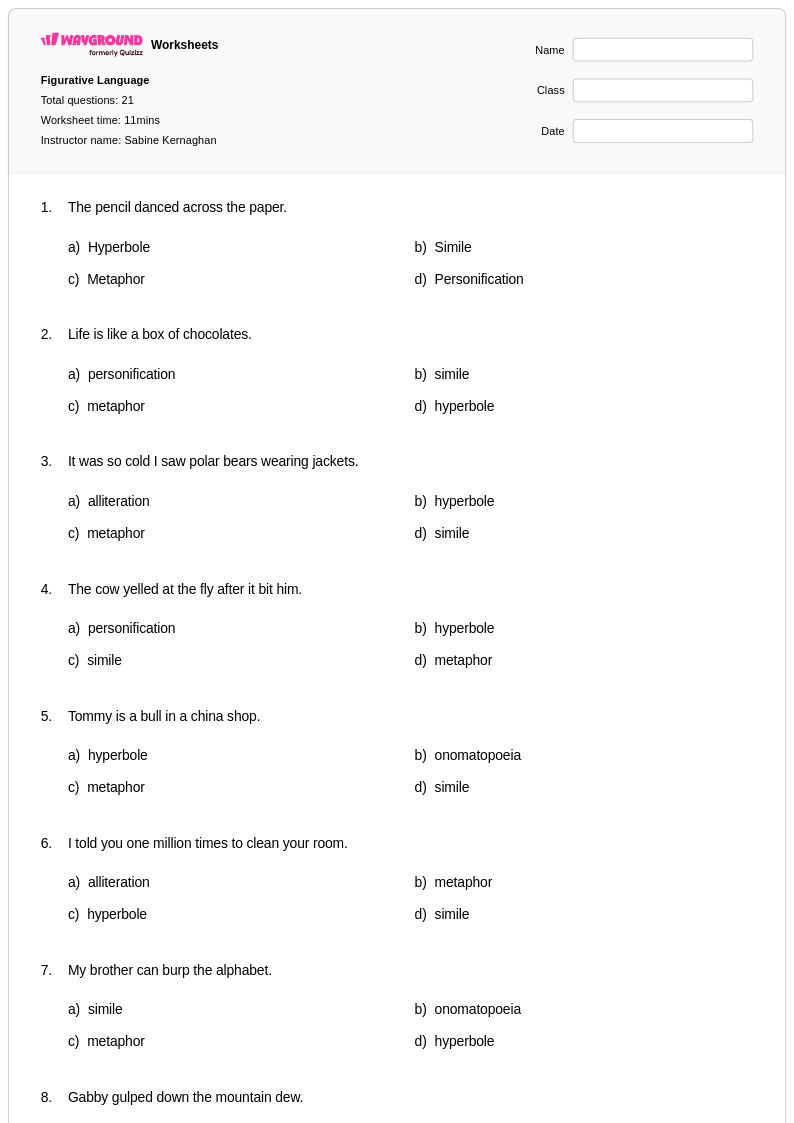
21 Q
5th - 8th
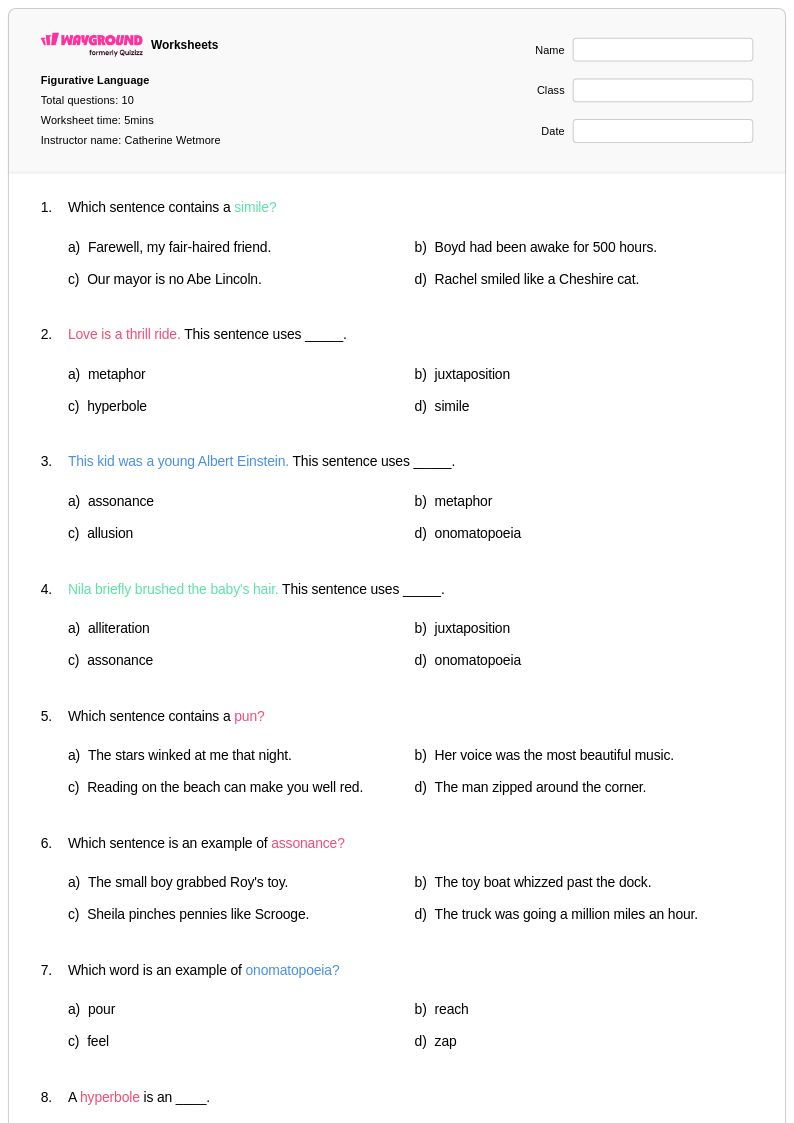
10 Q
6th - 8th
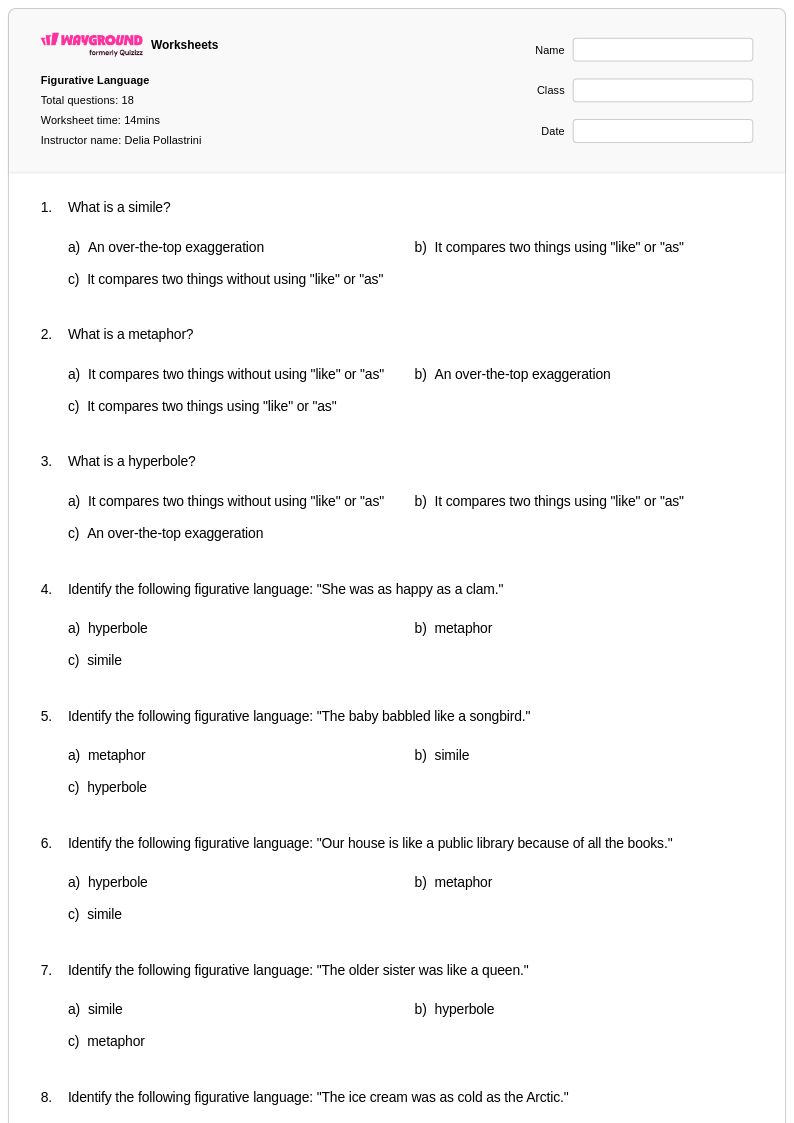
18 Q
5th - 8th
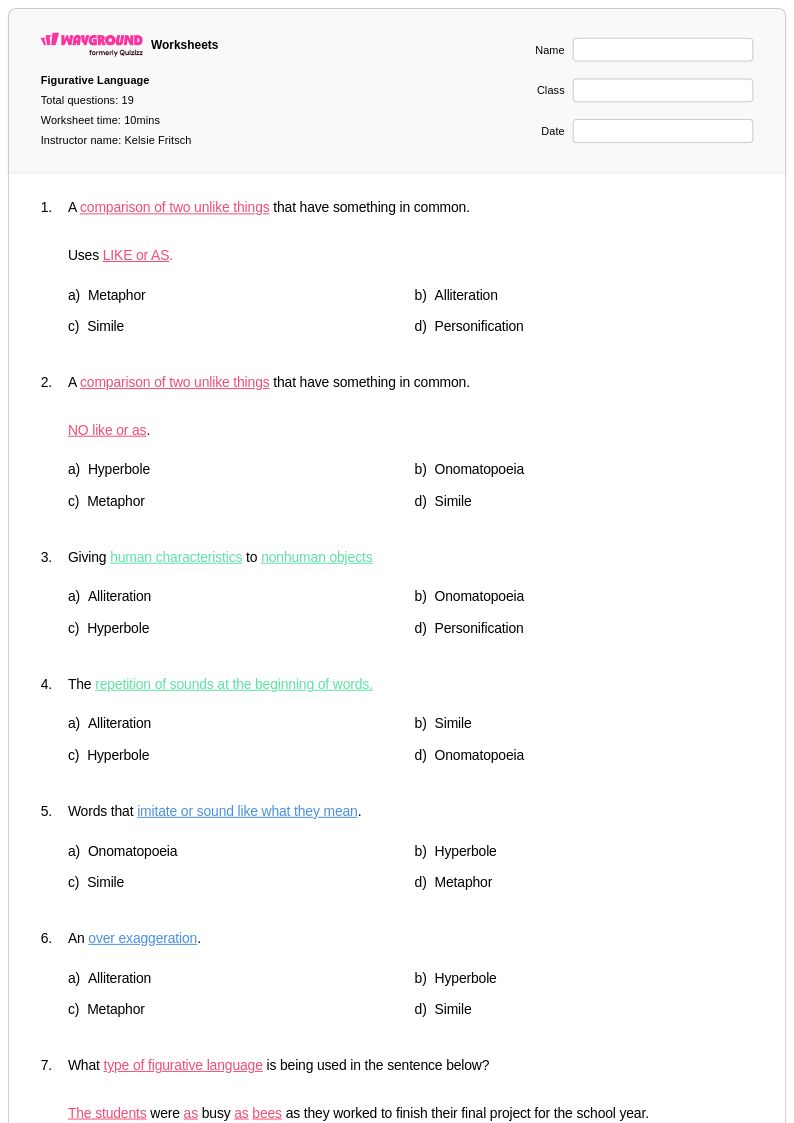
19 Q
6th - 8th
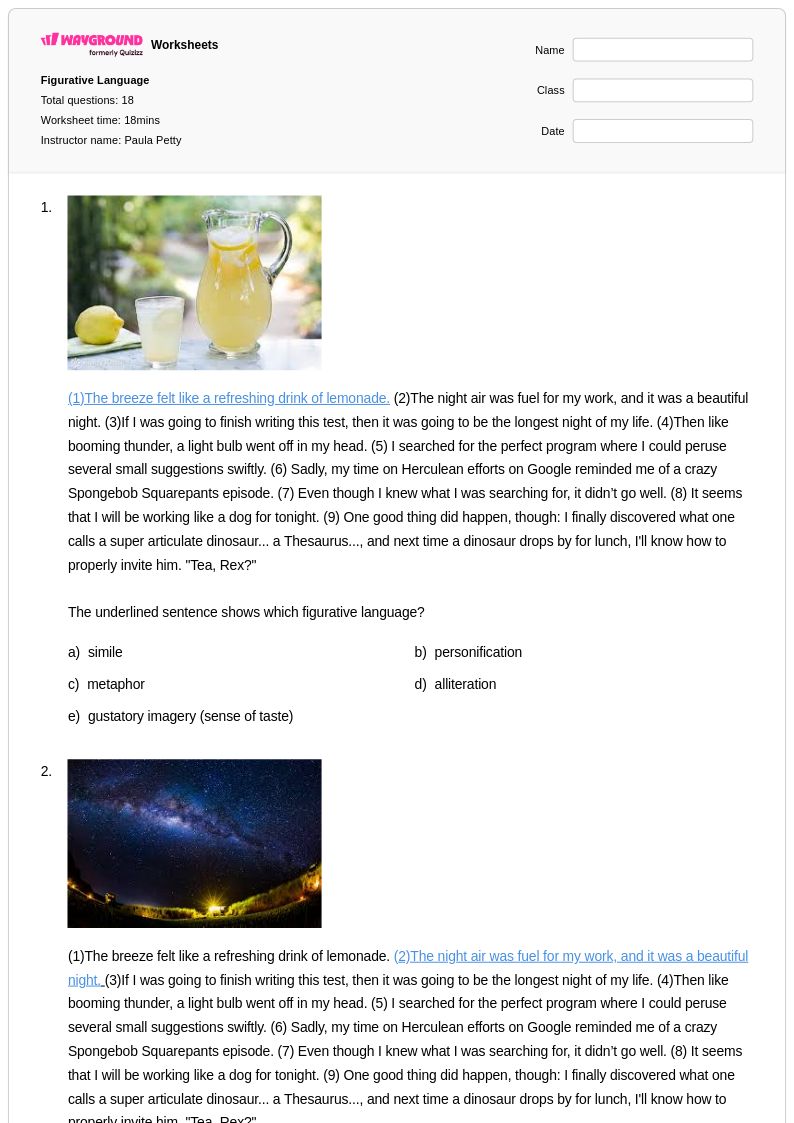
18 Q
8th
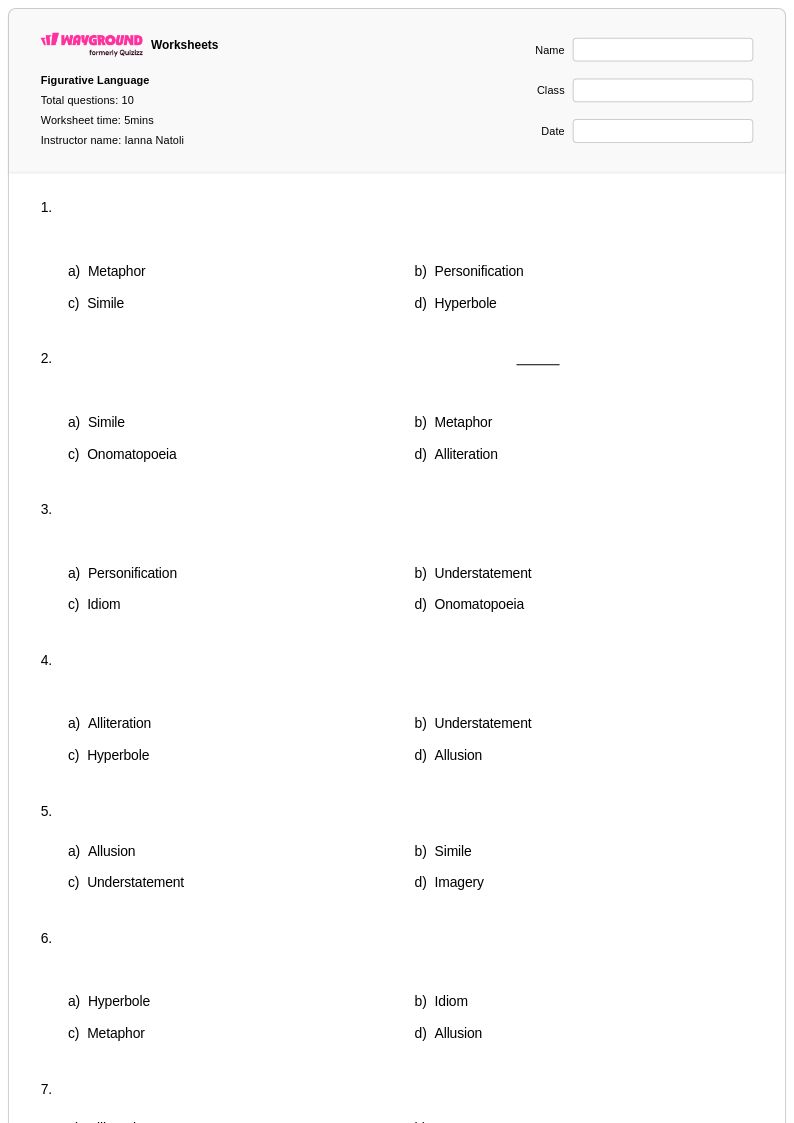
10 Q
8th - 12th
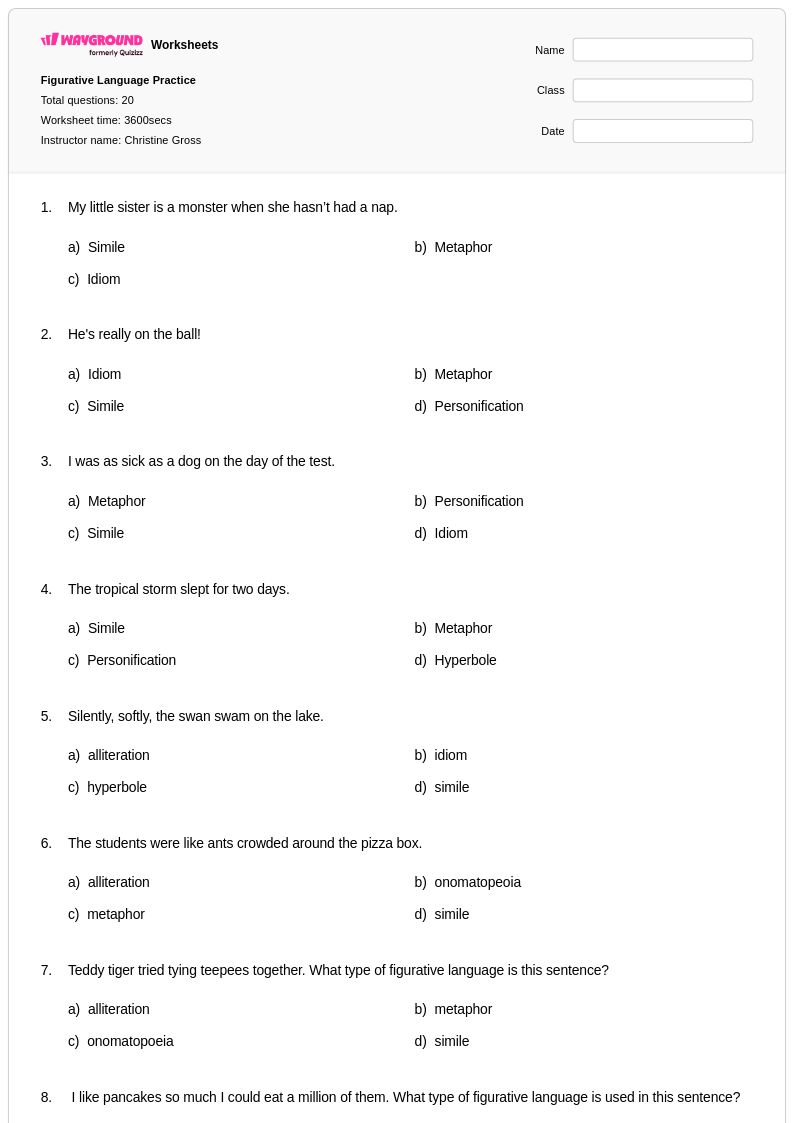
20 Q
6th - 8th
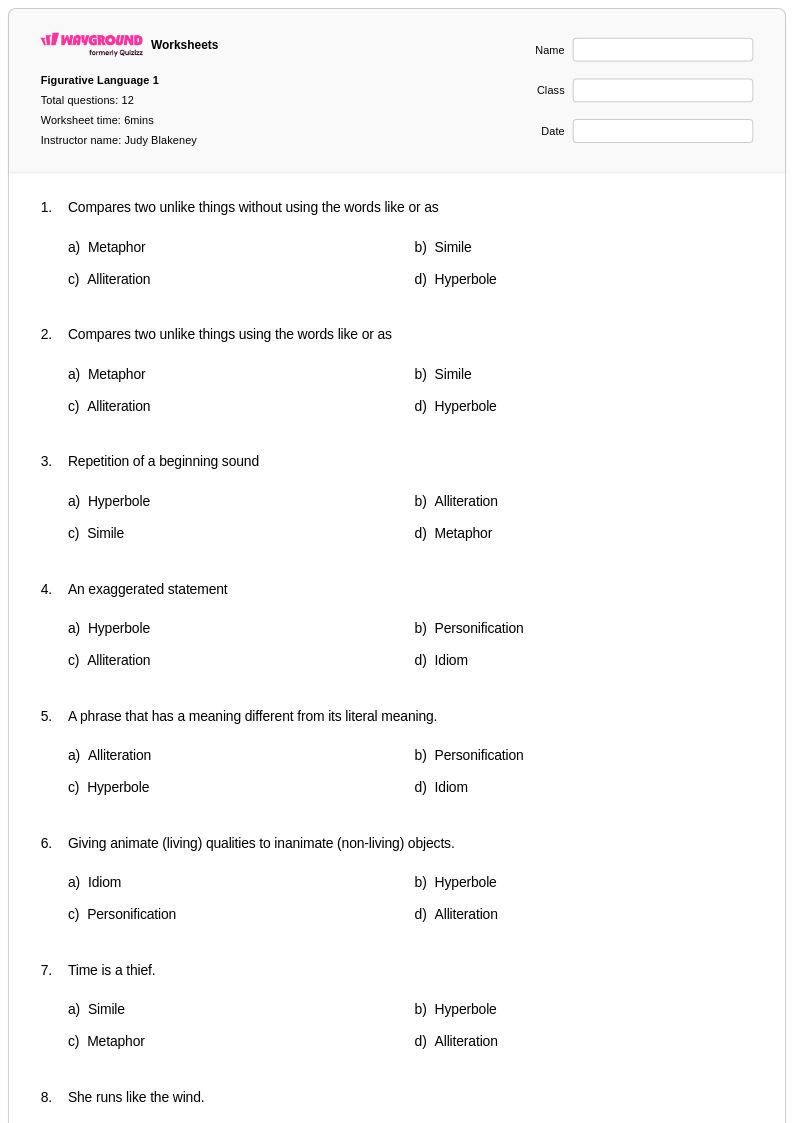
12 Q
6th - 8th
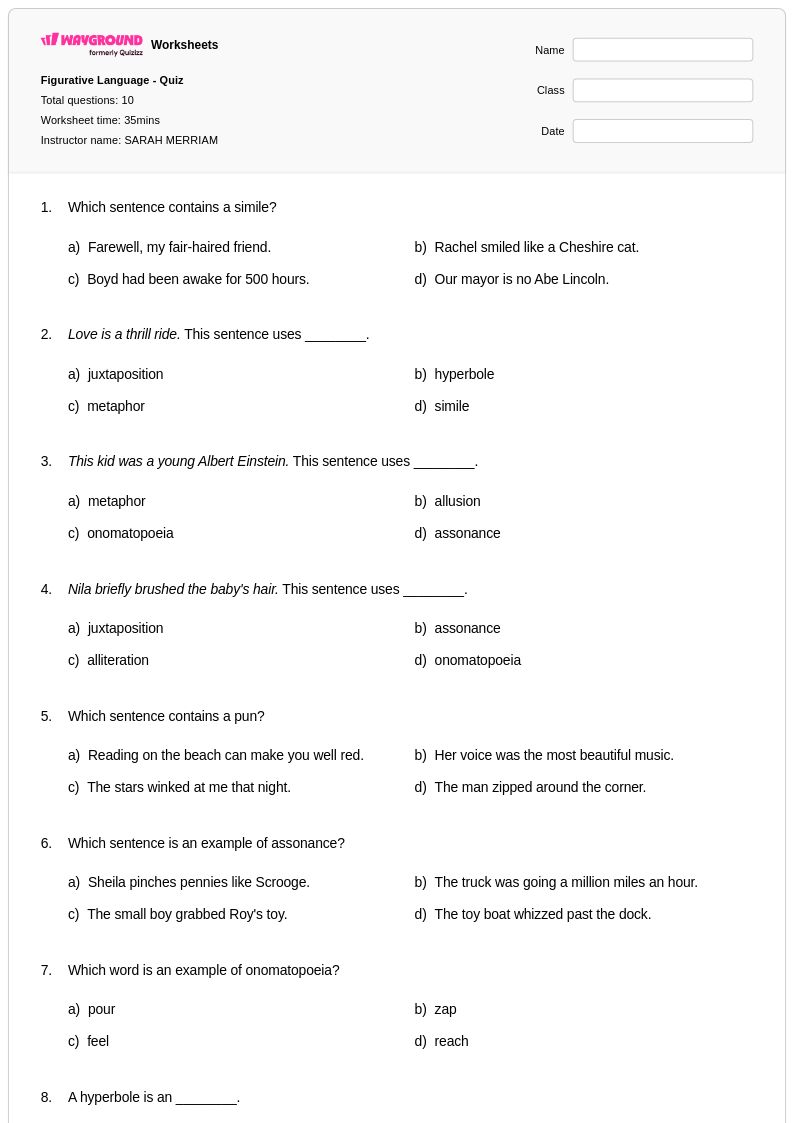
10 Q
6th - 8th
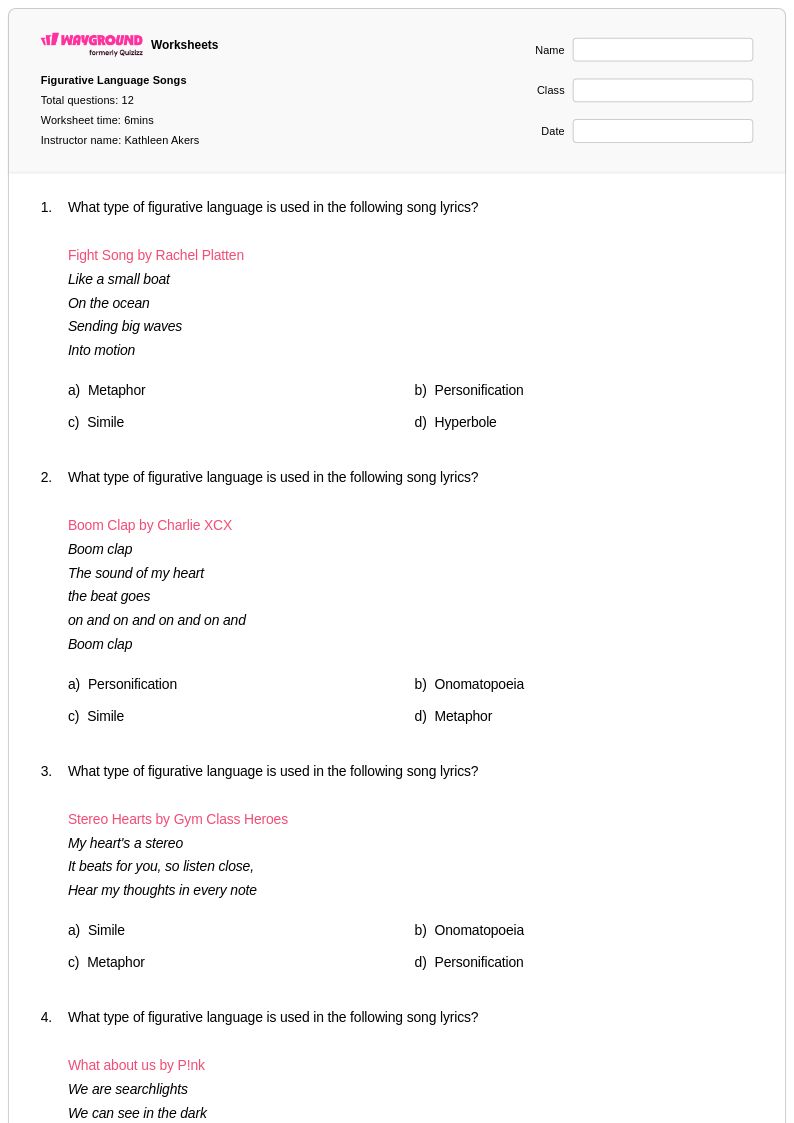
12 Q
6th - 8th
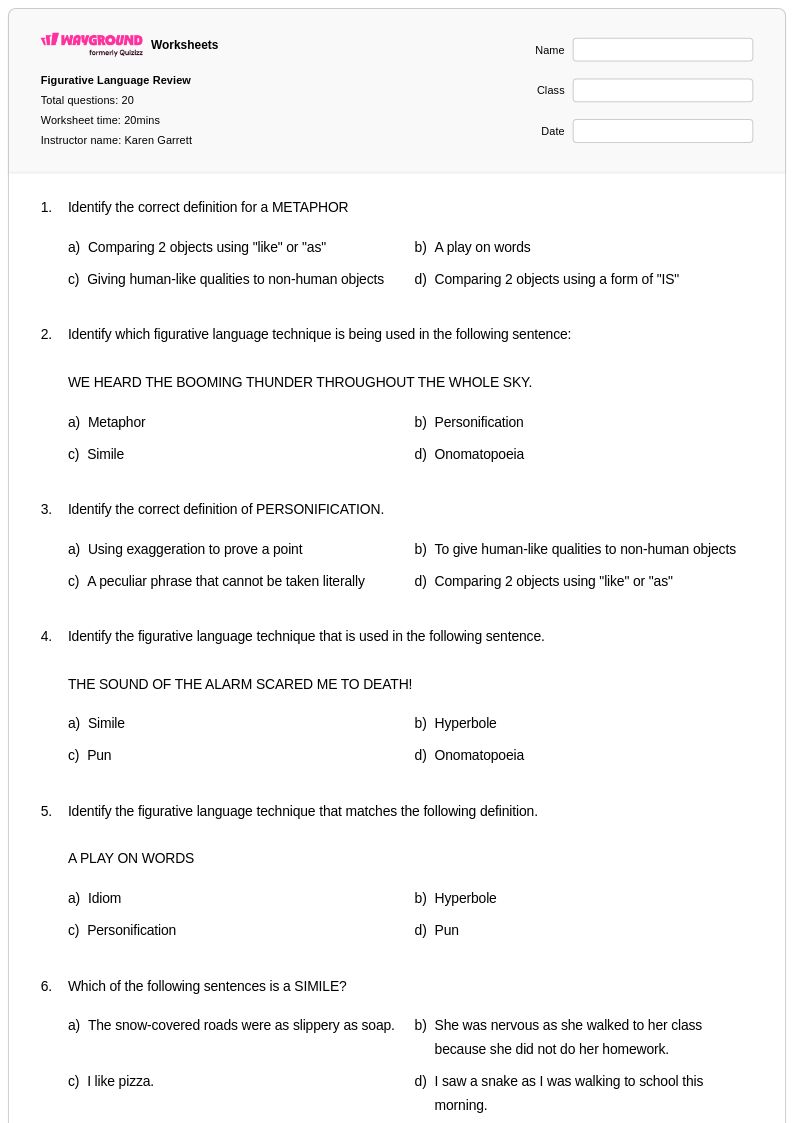
20 Q
8th
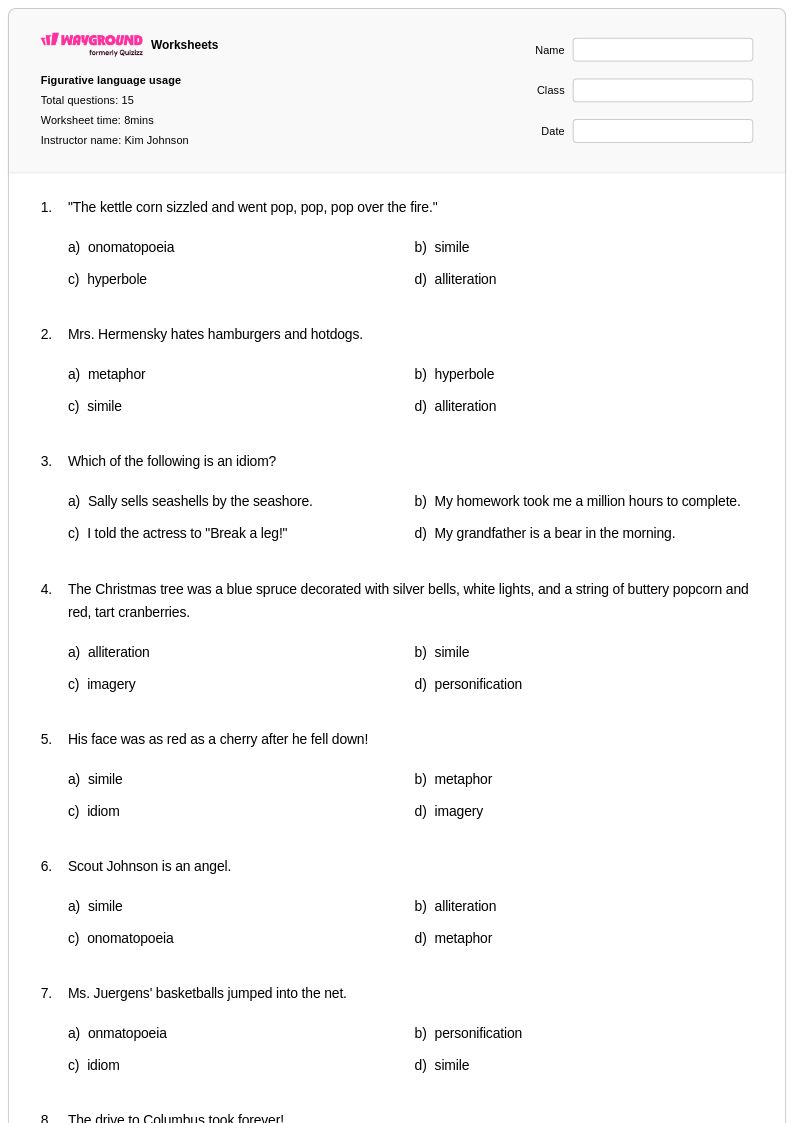
15 Q
4th - 8th
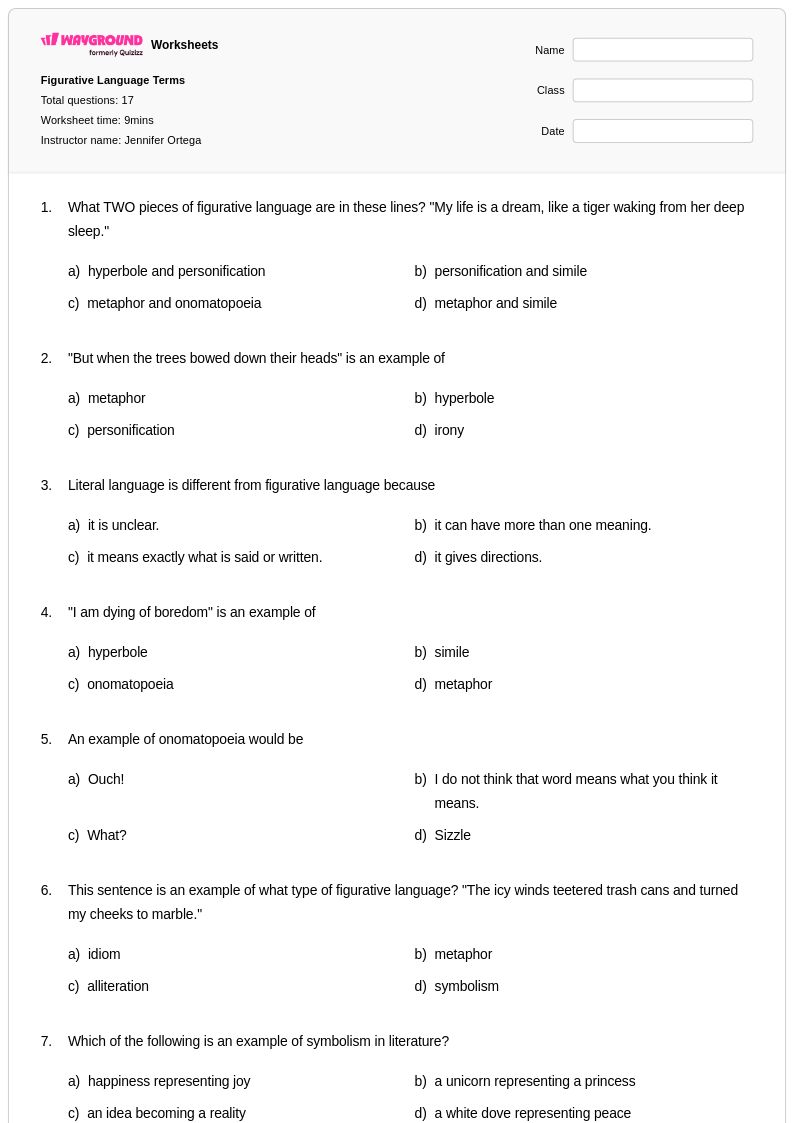
17 Q
6th - 8th
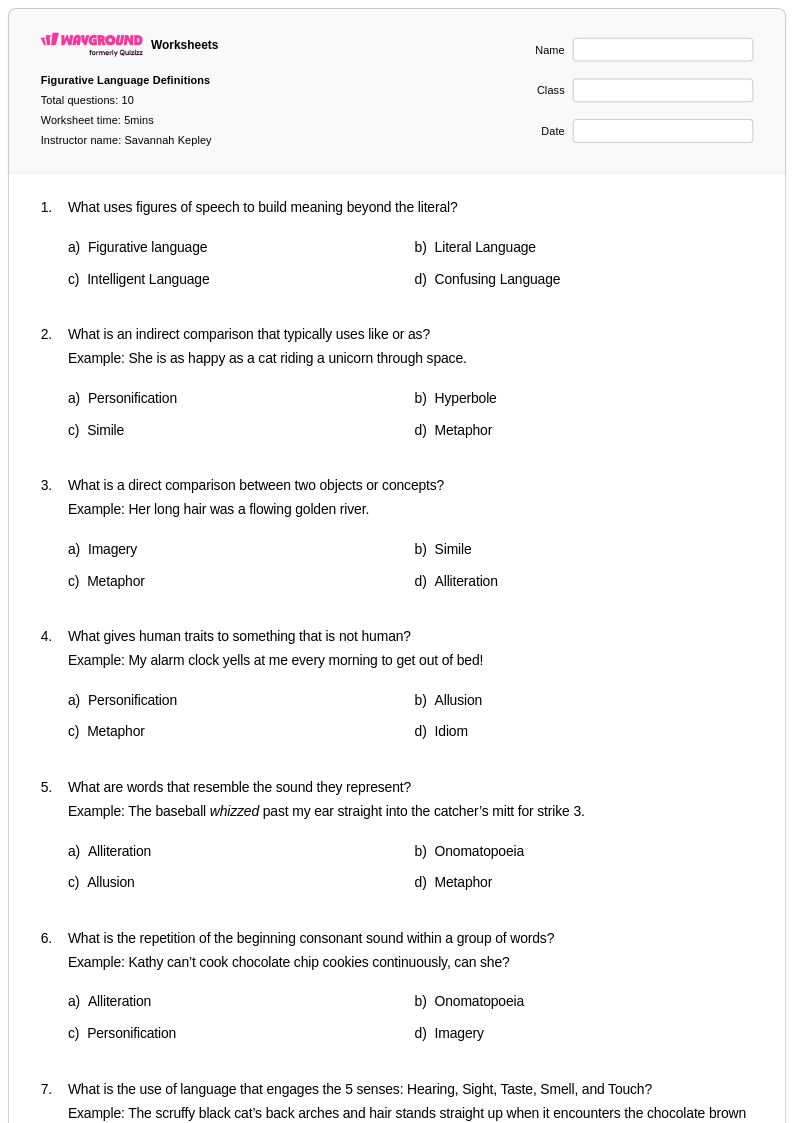
10 Q
6th - 8th
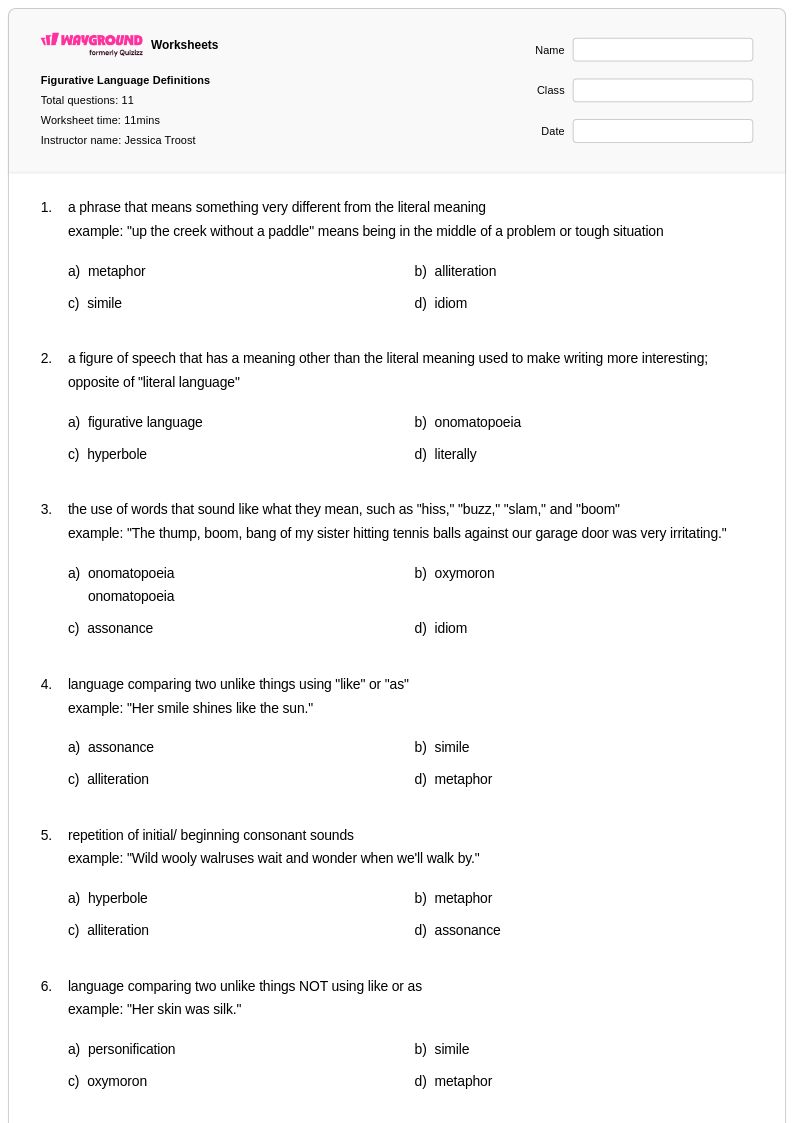
11 Q
5th - 8th
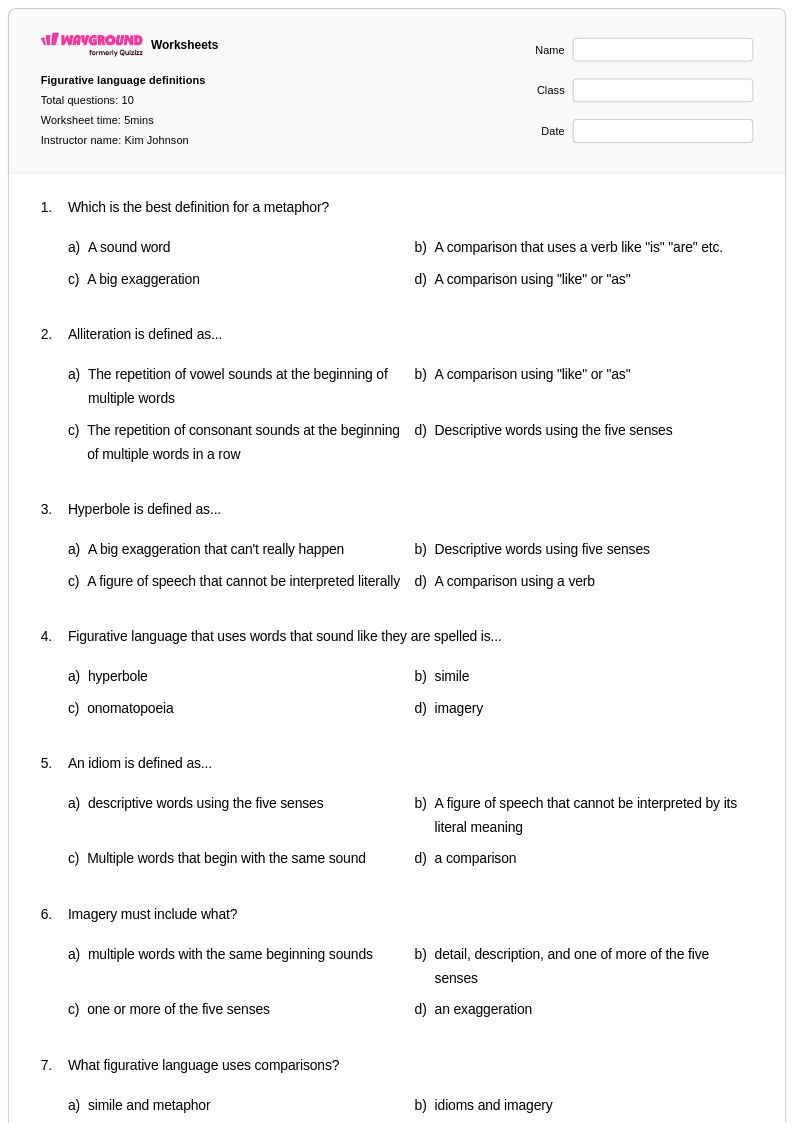
10 Q
4th - 8th
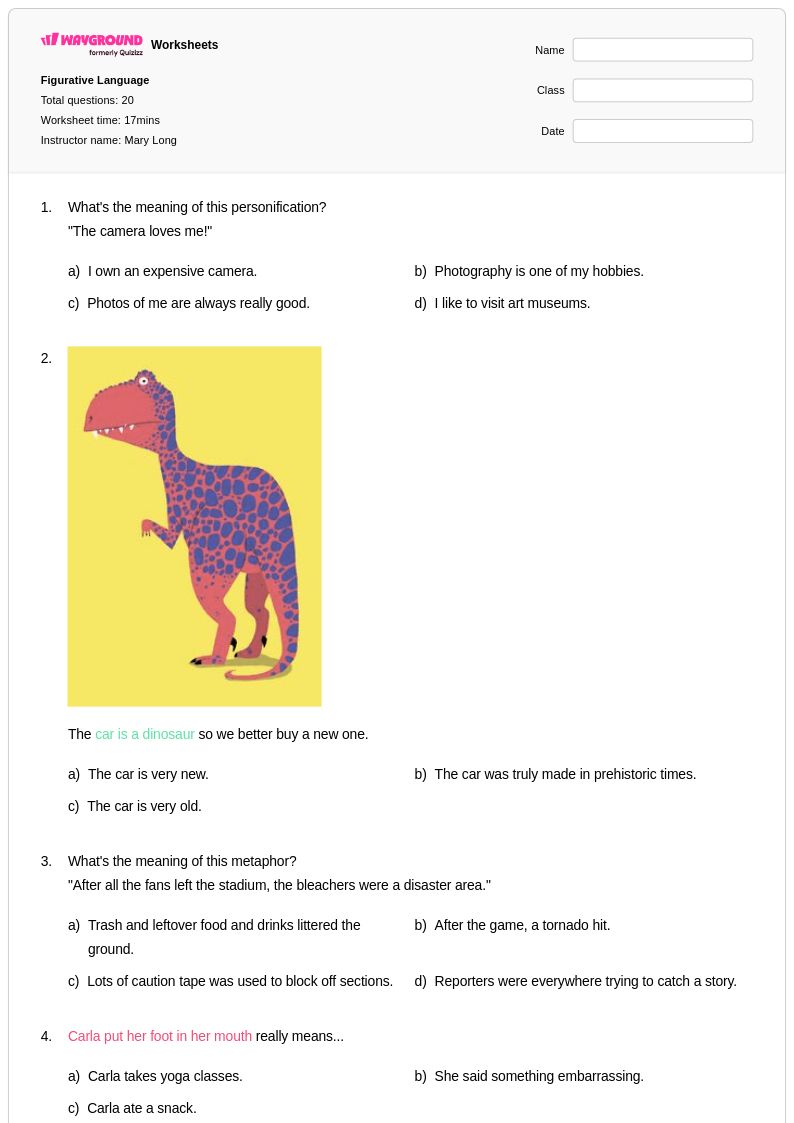
20 Q
8th
Explore Figurative Language Worksheets by Grades
Explore Figurative Language Worksheets for class 8 by Topic
Explore Other Subject Worksheets for class 8
Explore printable Figurative Language worksheets for Class 8
Figurative language worksheets for Class 8 students through Wayground (formerly Quizizz) provide comprehensive practice with literary devices that enhance reading comprehension and writing sophistication. These educational resources focus on metaphors, similes, personification, hyperbole, alliteration, onomatopoeia, and other essential figurative language techniques that eighth-grade students encounter in literature and use in their own writing. The worksheets strengthen critical thinking skills by requiring students to identify, analyze, and interpret figurative language within various text types, from poetry excerpts to prose passages. Each practice problem challenges students to distinguish between literal and figurative meanings while building vocabulary and deepening their understanding of how authors create vivid imagery and emotional impact. These free printables include detailed answer keys that support both independent study and classroom instruction, with pdf formats ensuring easy distribution and consistent formatting across different devices and printing systems.
Wayground (formerly Quizizz) empowers educators with millions of teacher-created figurative language resources specifically designed for Class 8 instruction, featuring robust search and filtering capabilities that align with state and national language arts standards. The platform's differentiation tools allow teachers to customize worksheets based on individual student needs, offering various complexity levels from basic identification exercises to advanced analysis tasks that require students to explain the effectiveness of specific figurative language choices. Teachers can seamlessly integrate these resources into lesson planning for initial instruction, targeted remediation for struggling learners, or enrichment activities for advanced students who need additional challenges. The flexibility of both printable and digital formats enables educators to adapt their figurative language instruction to diverse classroom environments, whether implementing traditional paper-based practice or incorporating interactive digital elements that enhance student engagement with literary analysis skills.
FAQs
How do I teach figurative language to middle school students?
What exercises help students practice identifying figurative language?
What mistakes do students commonly make when learning figurative language?
How can I differentiate figurative language instruction for struggling readers?
How do I use Wayground's figurative language worksheets in my classroom?
How do I assess whether students truly understand figurative language or are just memorizing definitions?