Free Printable Sequencing in Fiction Worksheets for Class 8
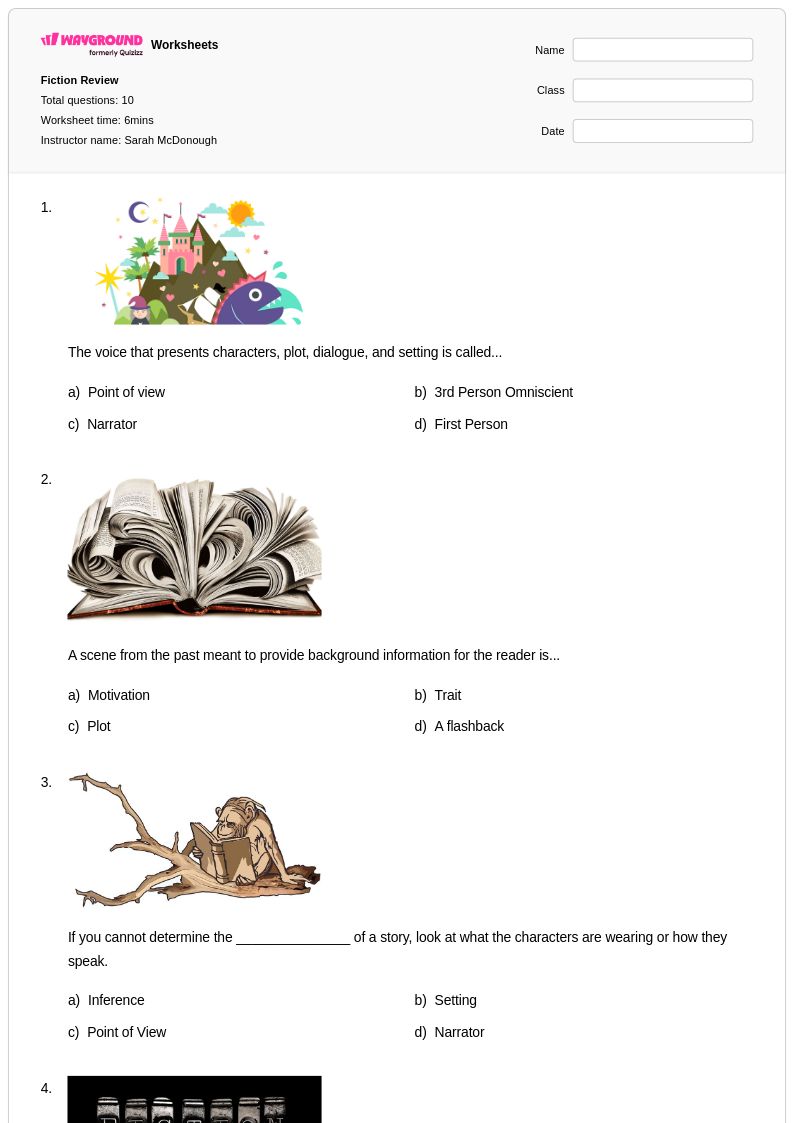
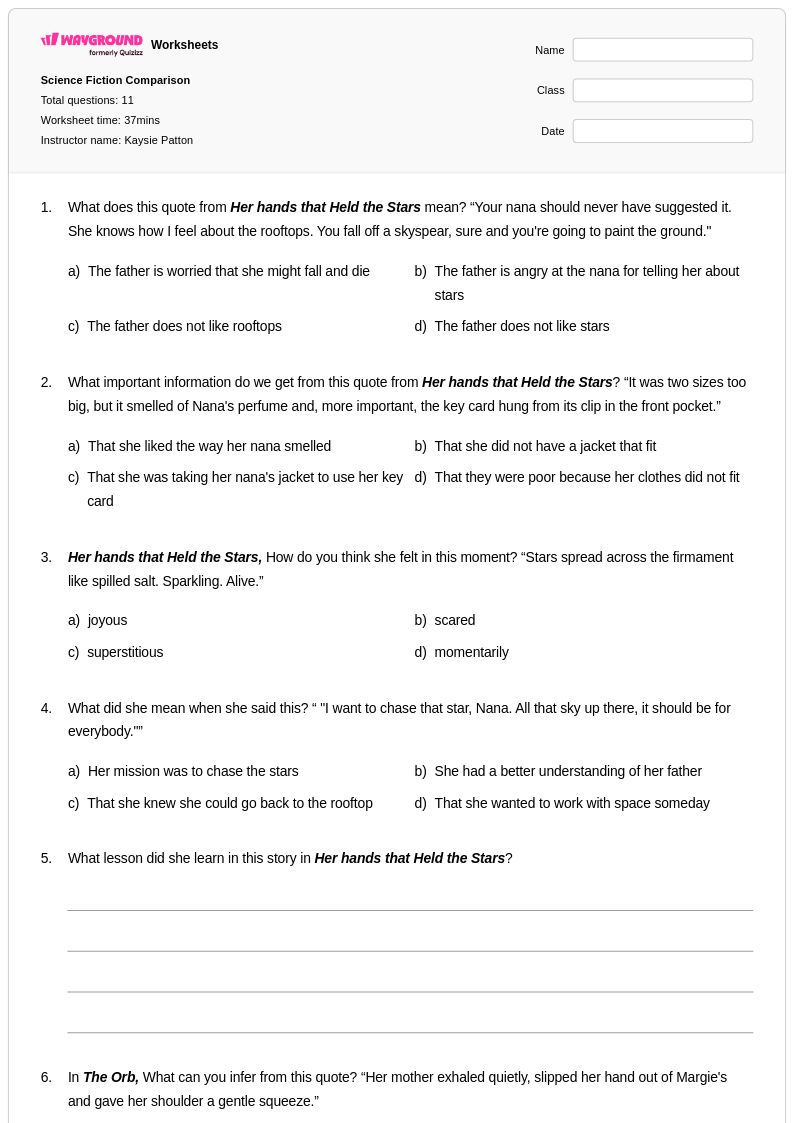
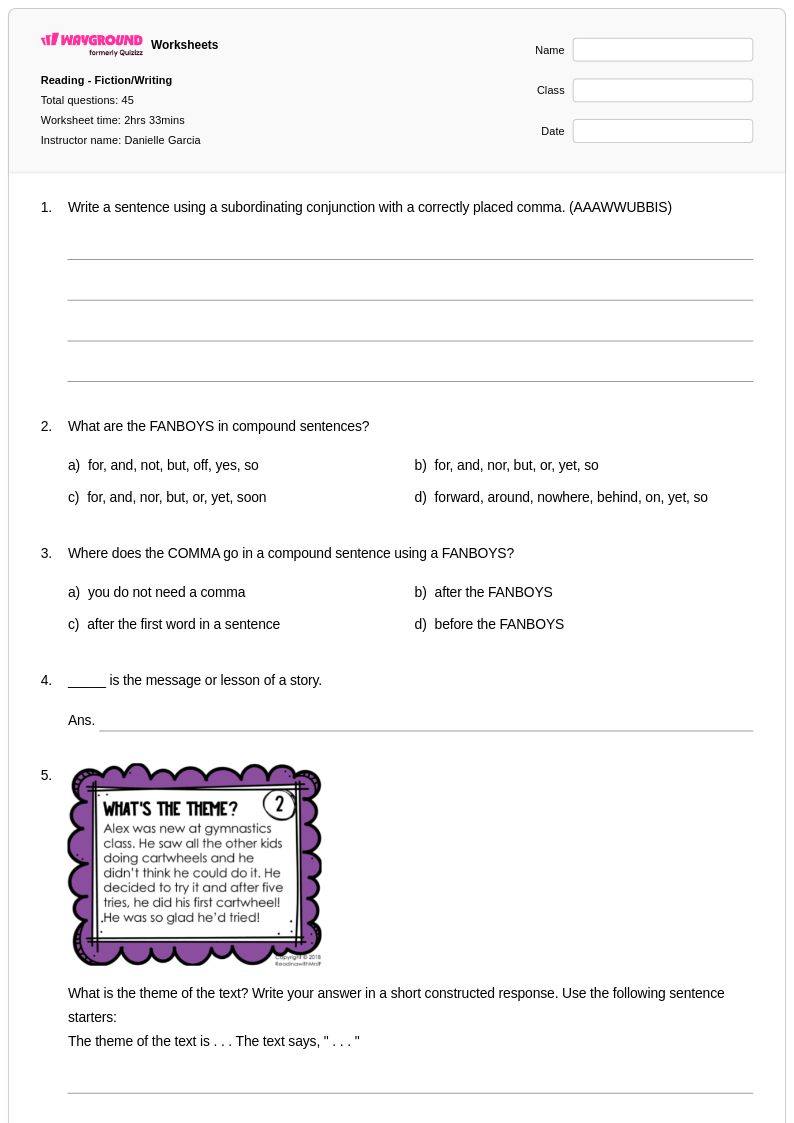
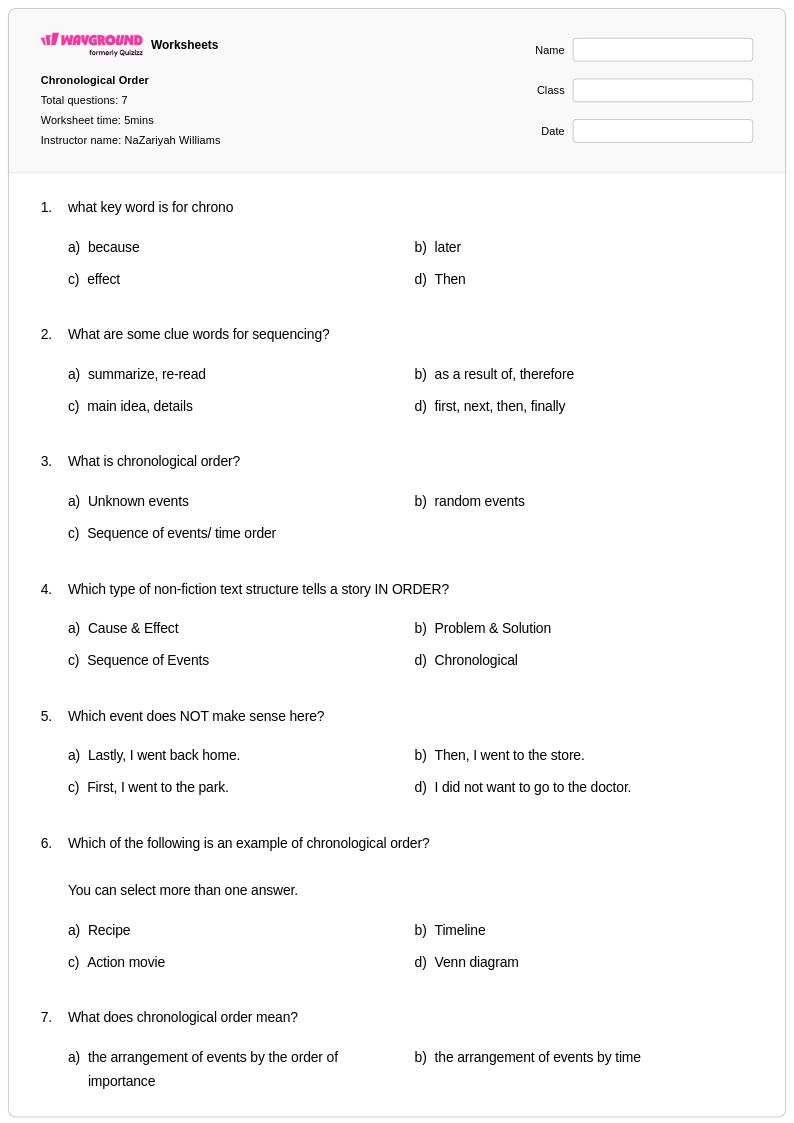
Class 8 sequencing in fiction worksheets from Wayground help students master chronological order and narrative structure through engaging printable practice problems with comprehensive answer keys.
Explore printable Sequencing in Fiction worksheets for Class 8
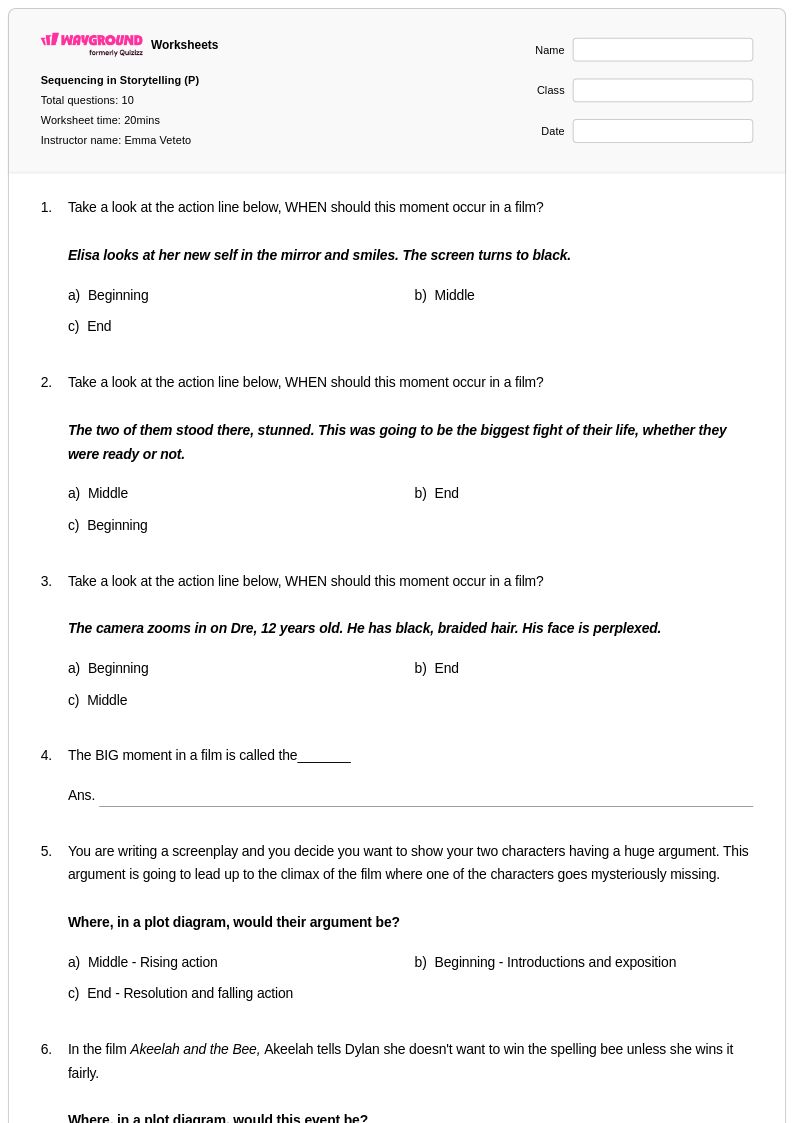
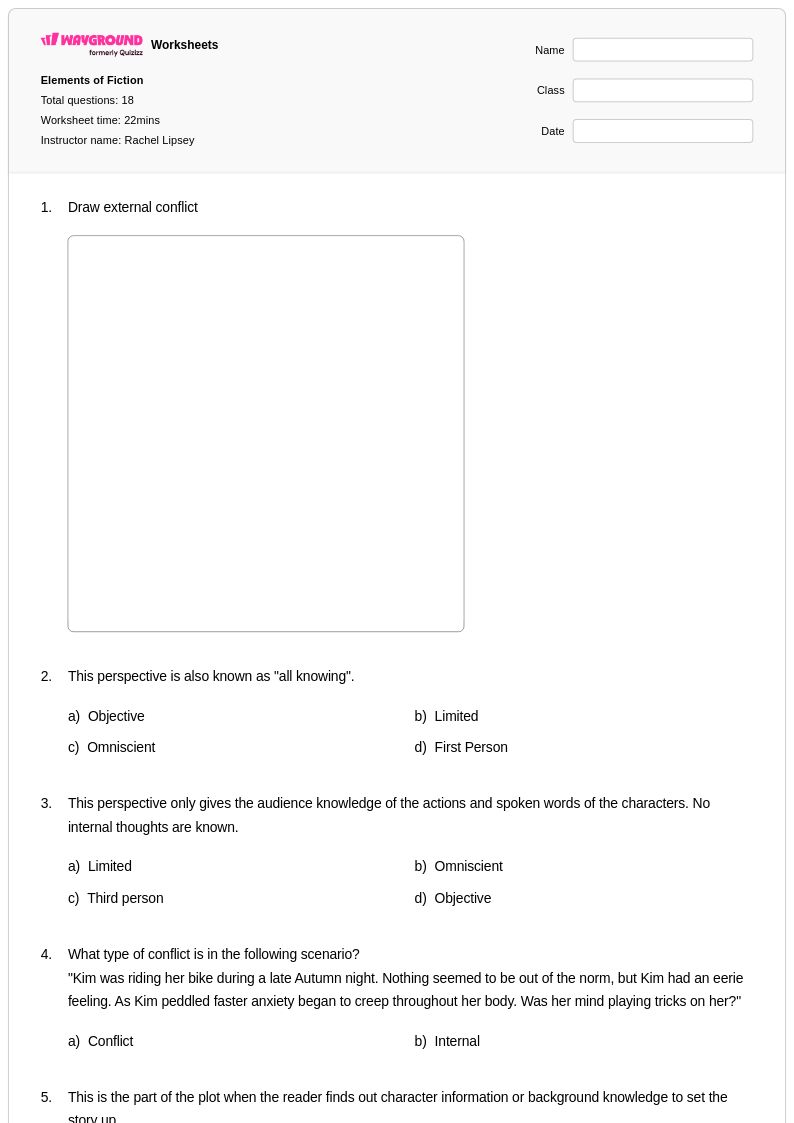
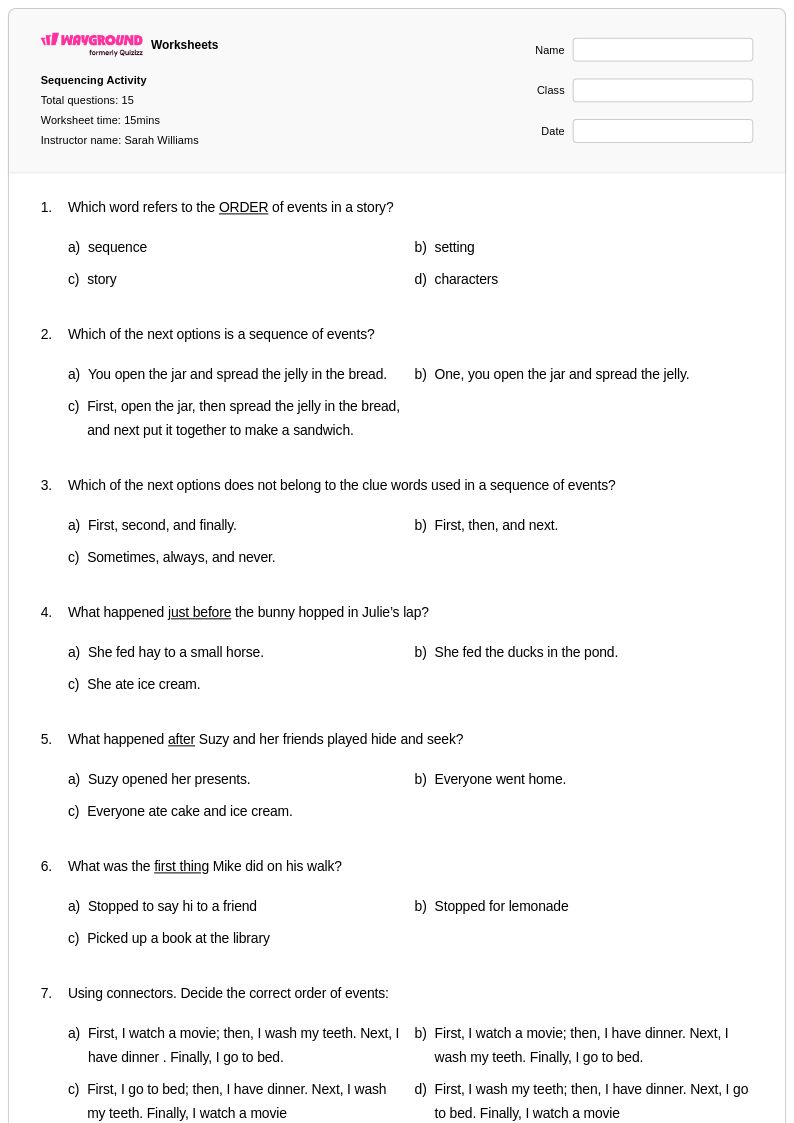
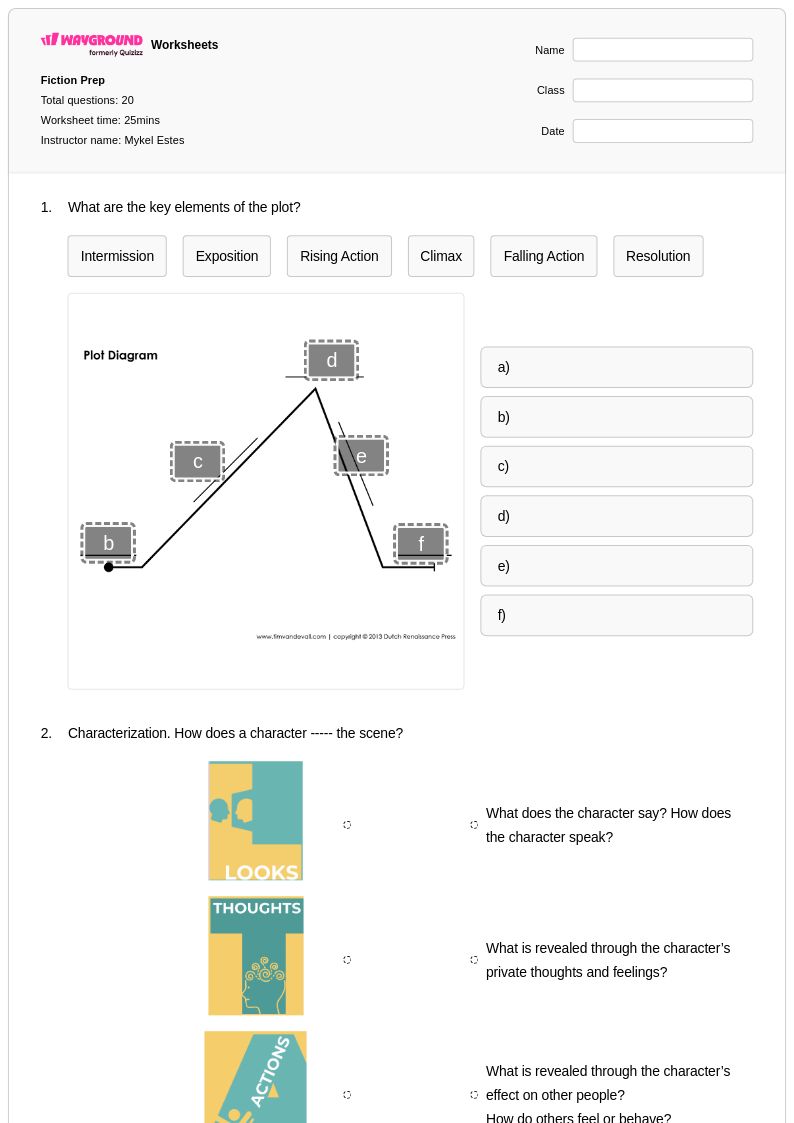
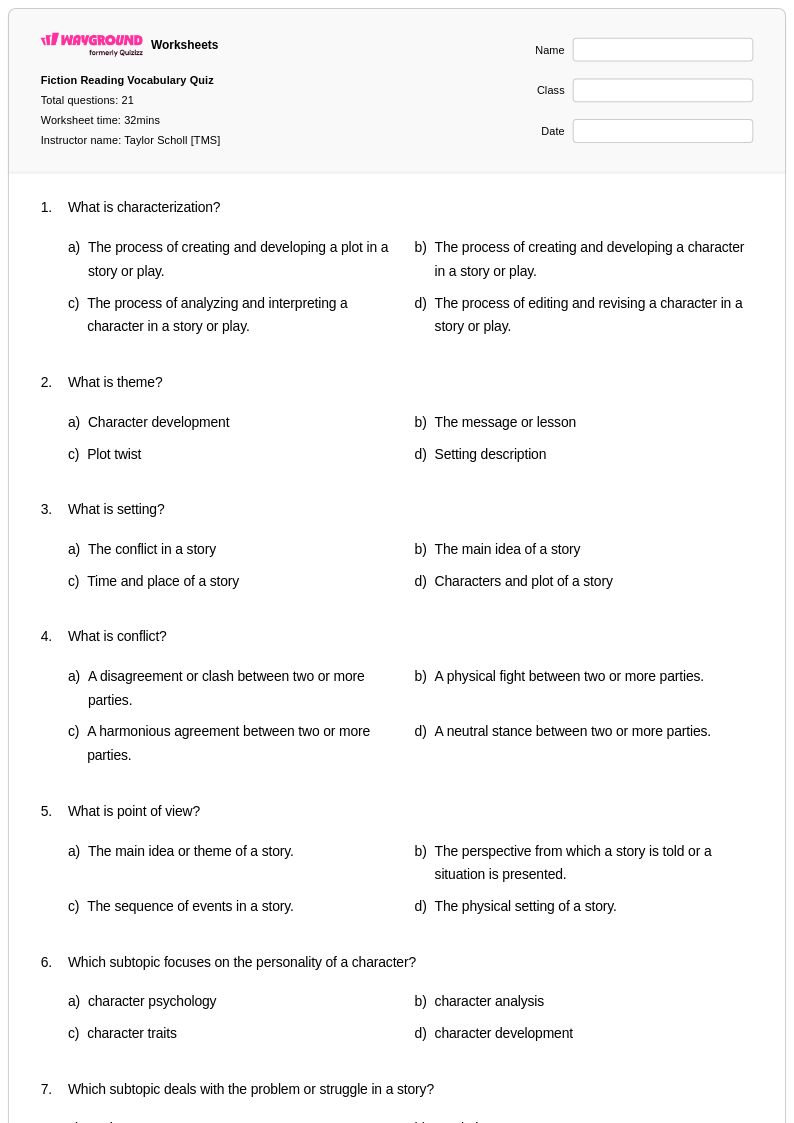
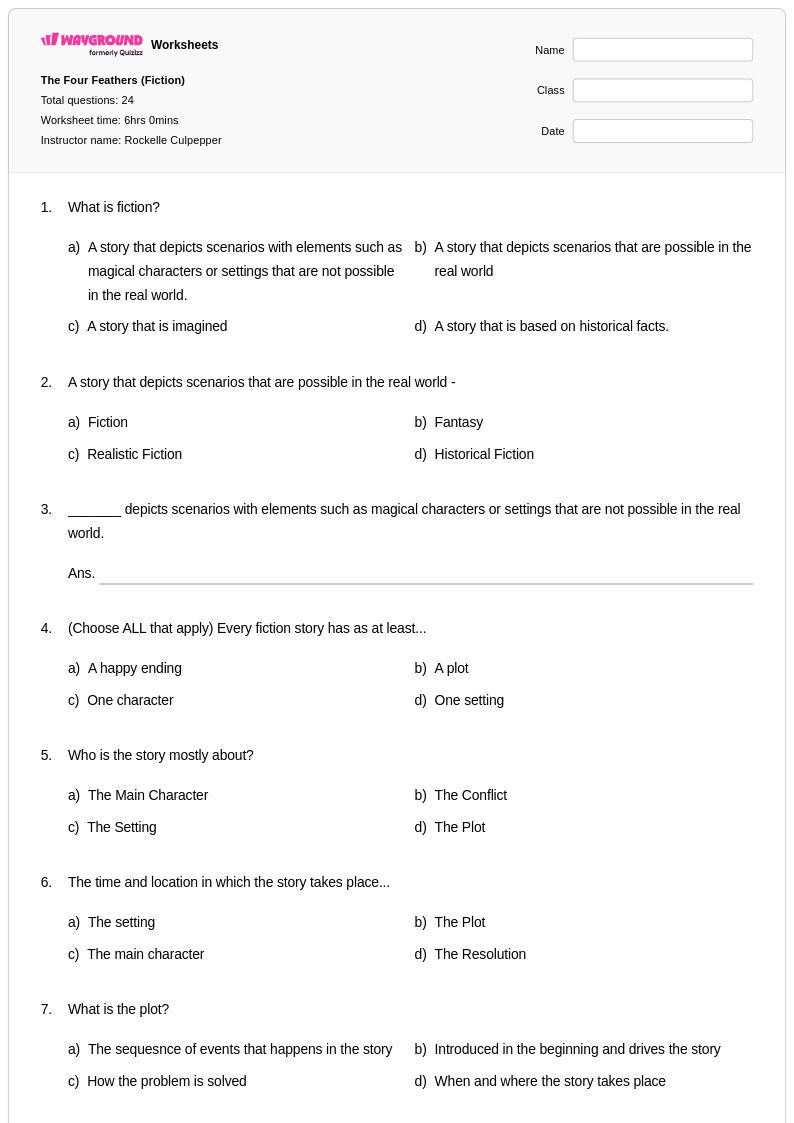
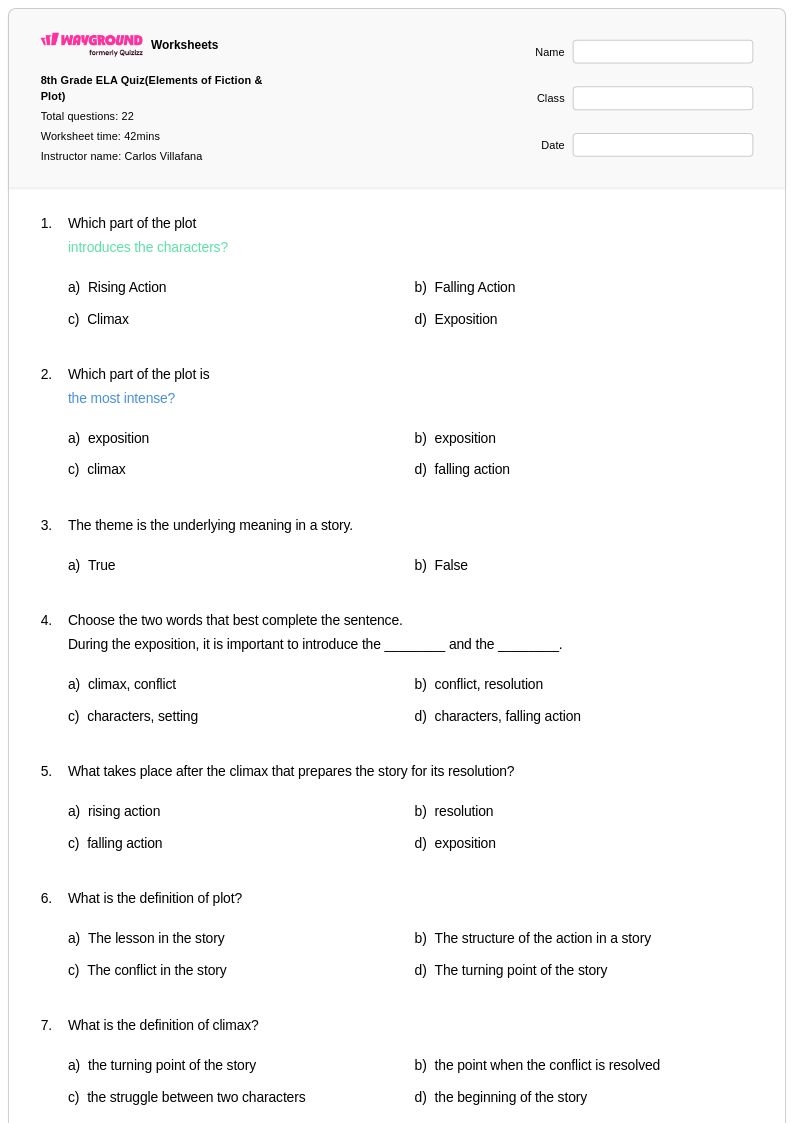
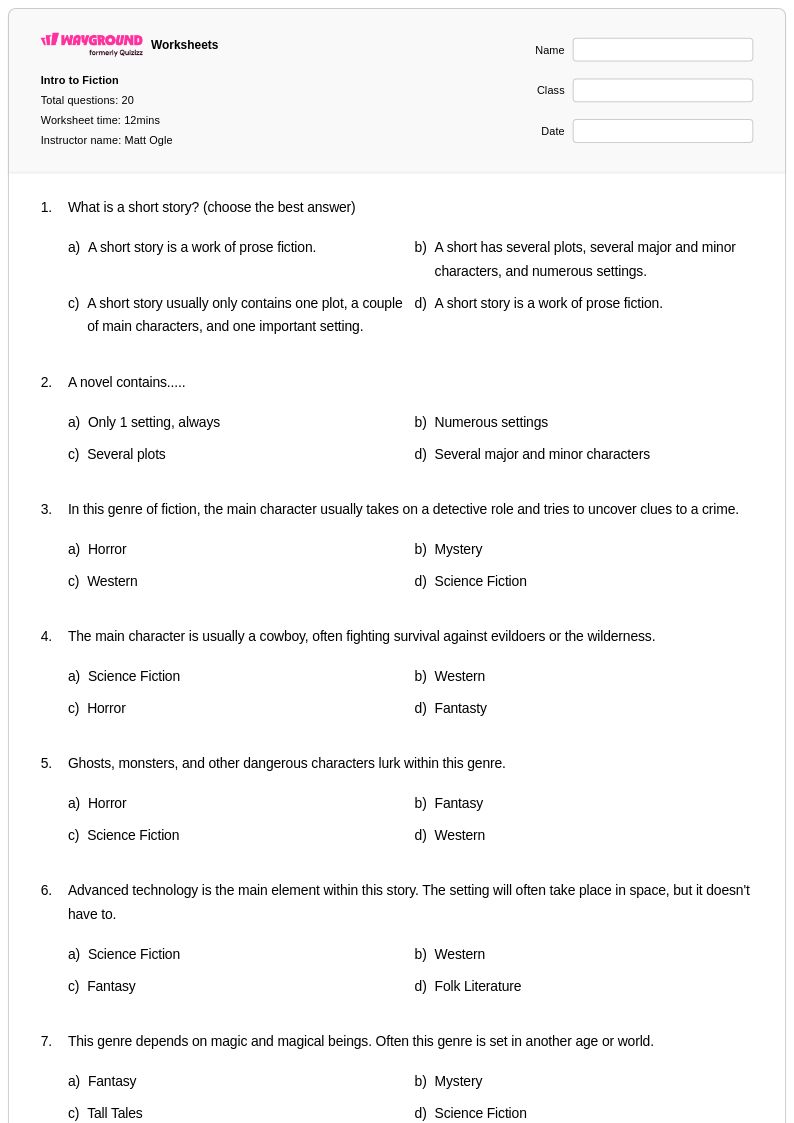
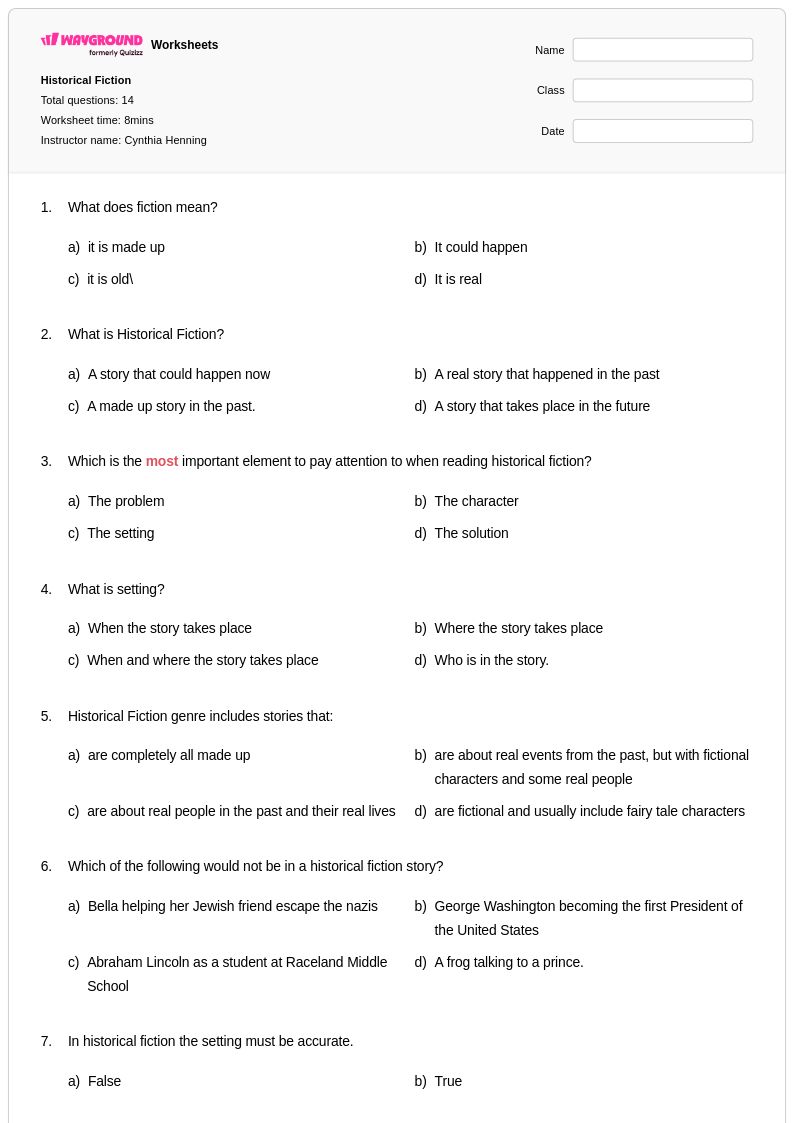
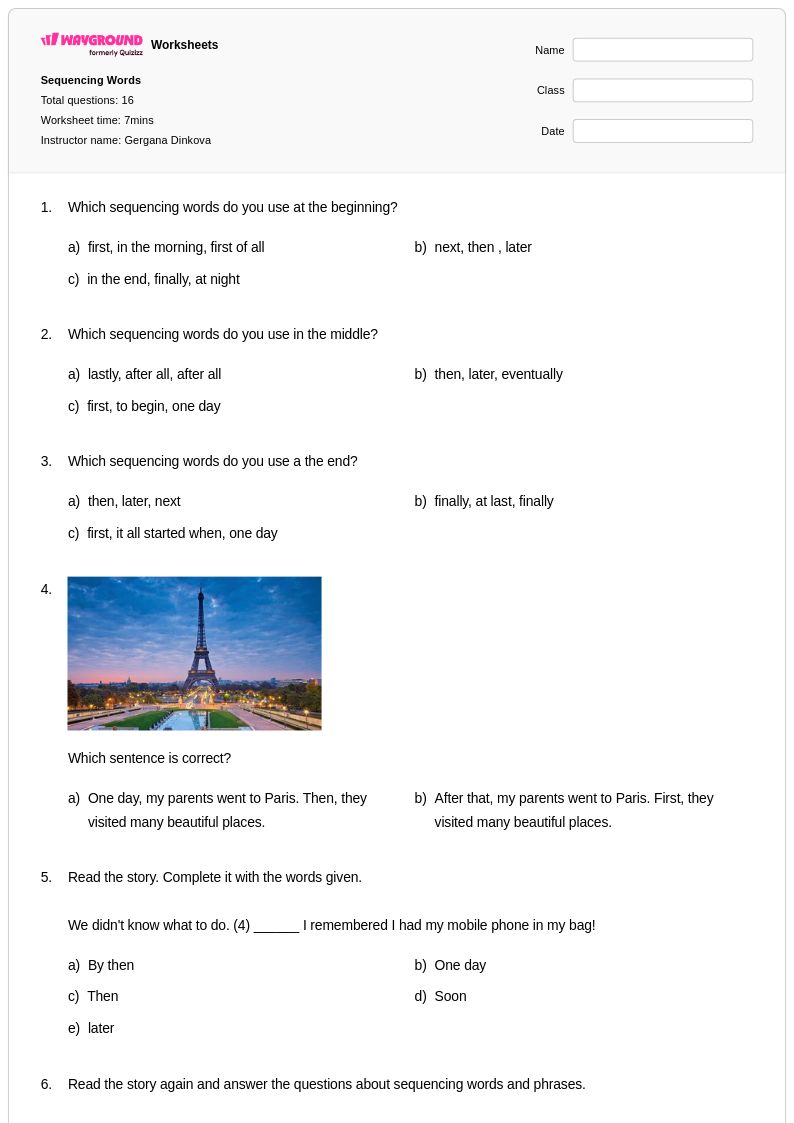
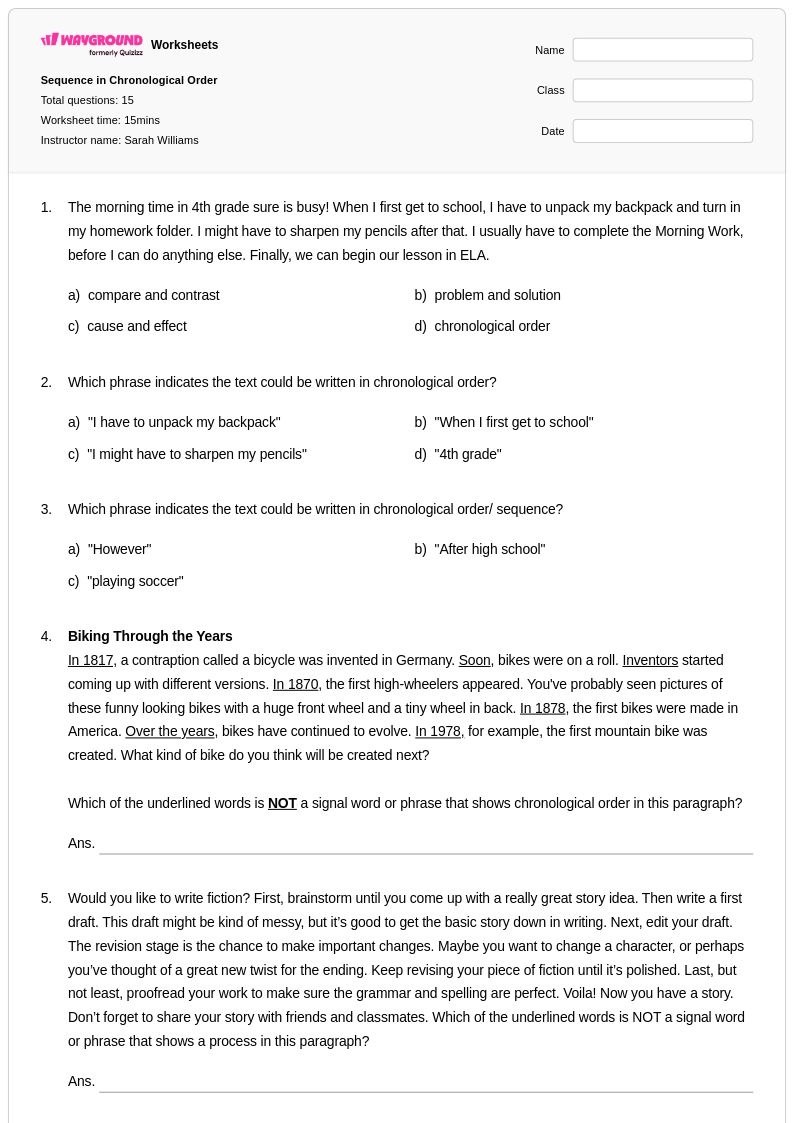
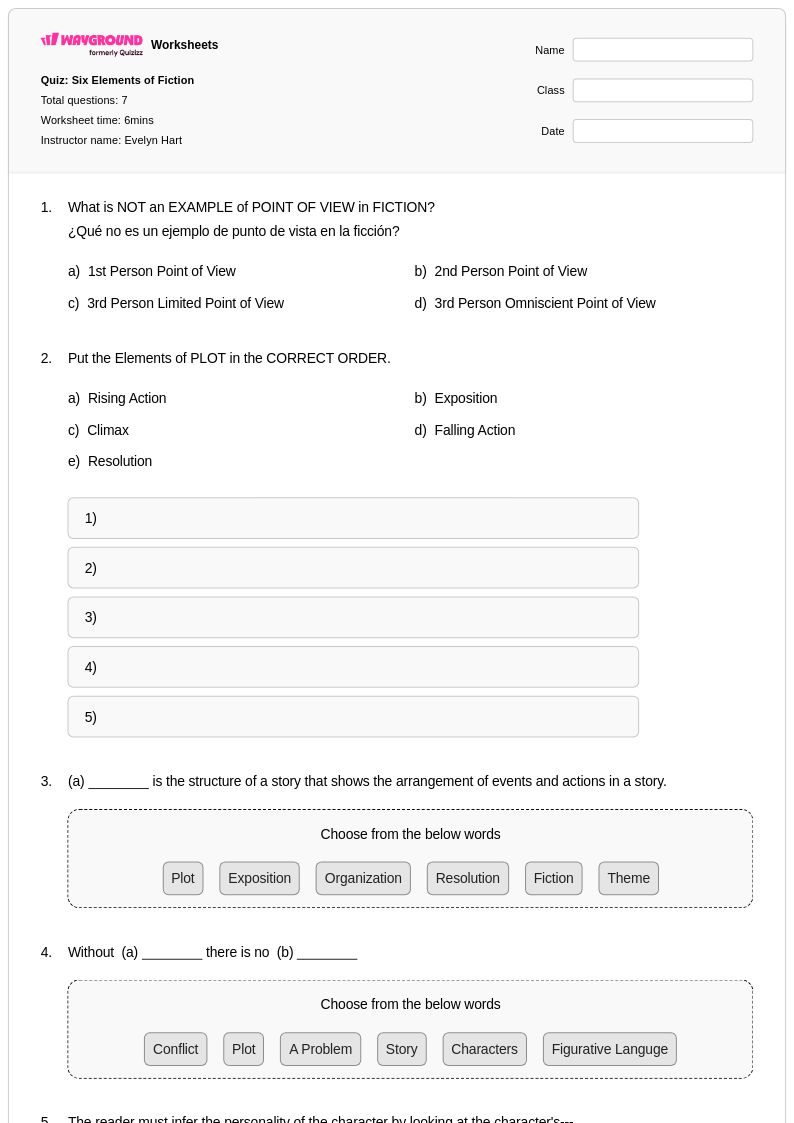
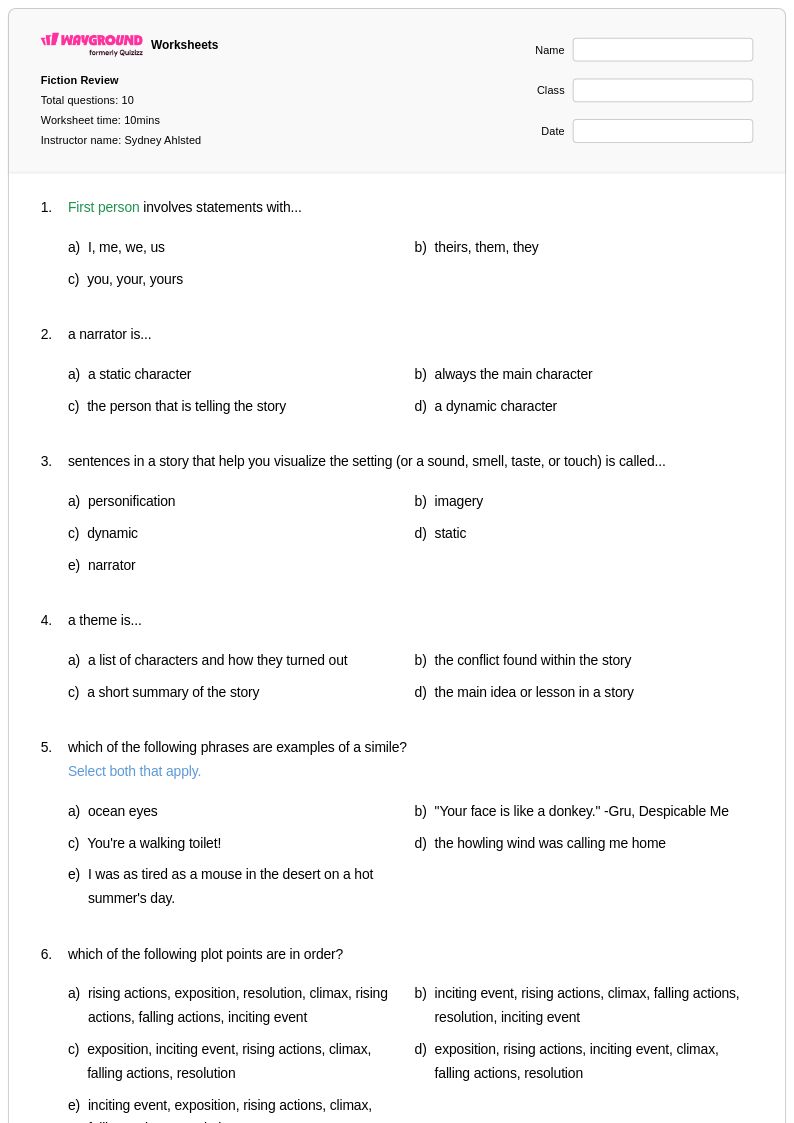
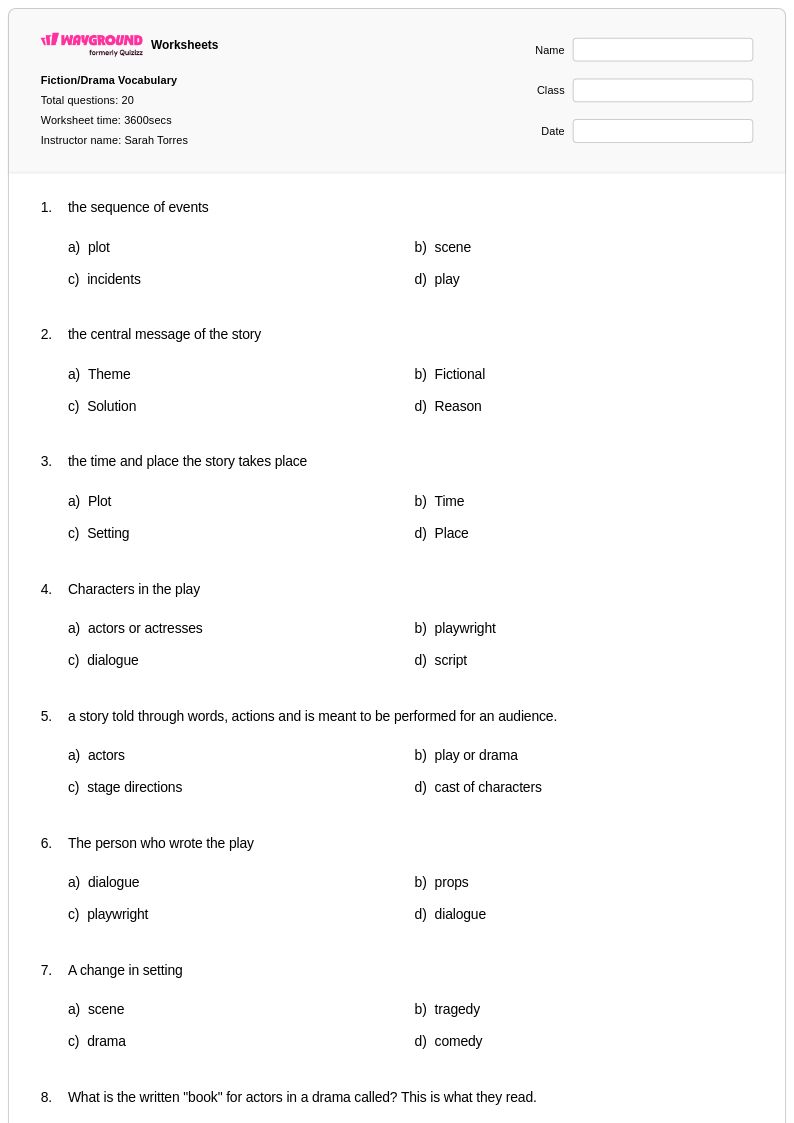
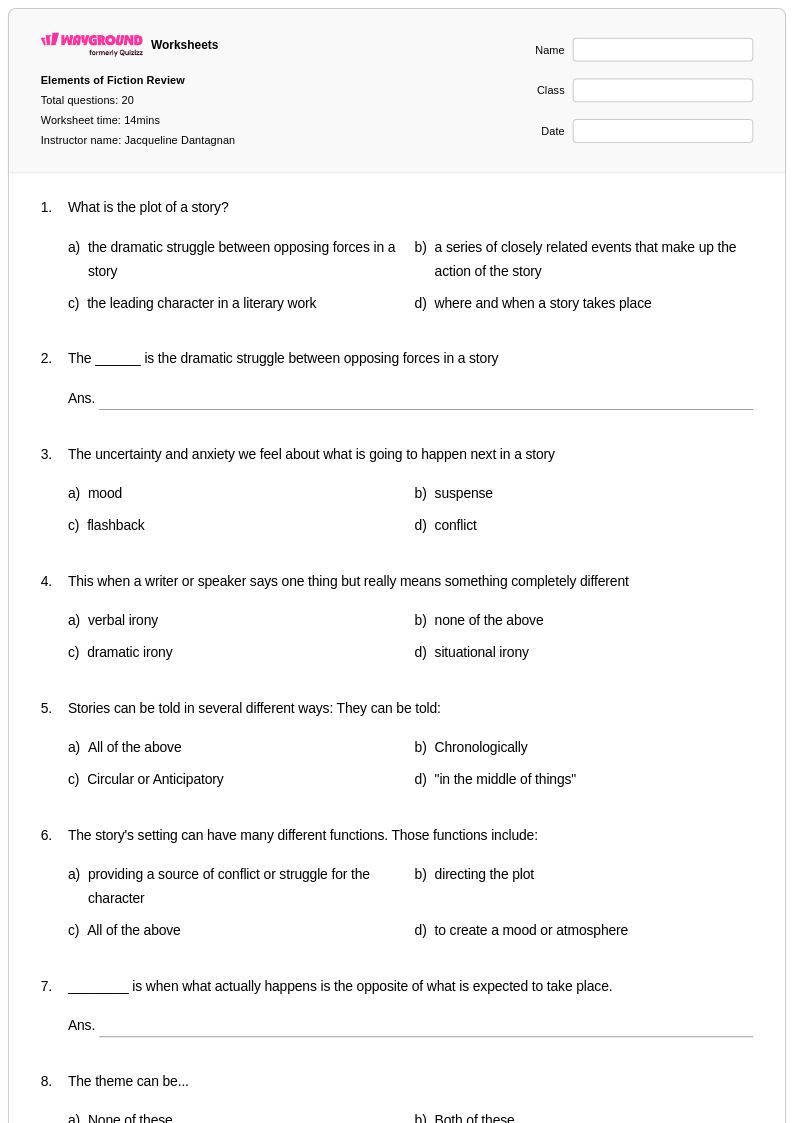
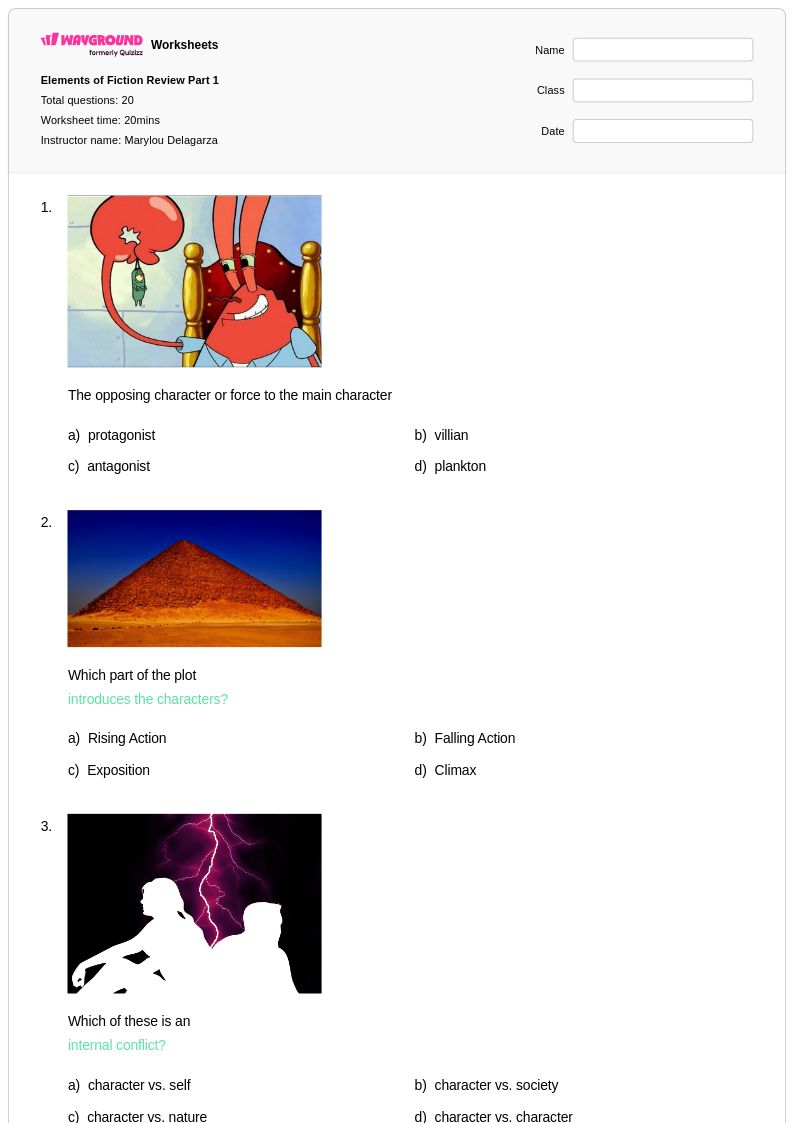
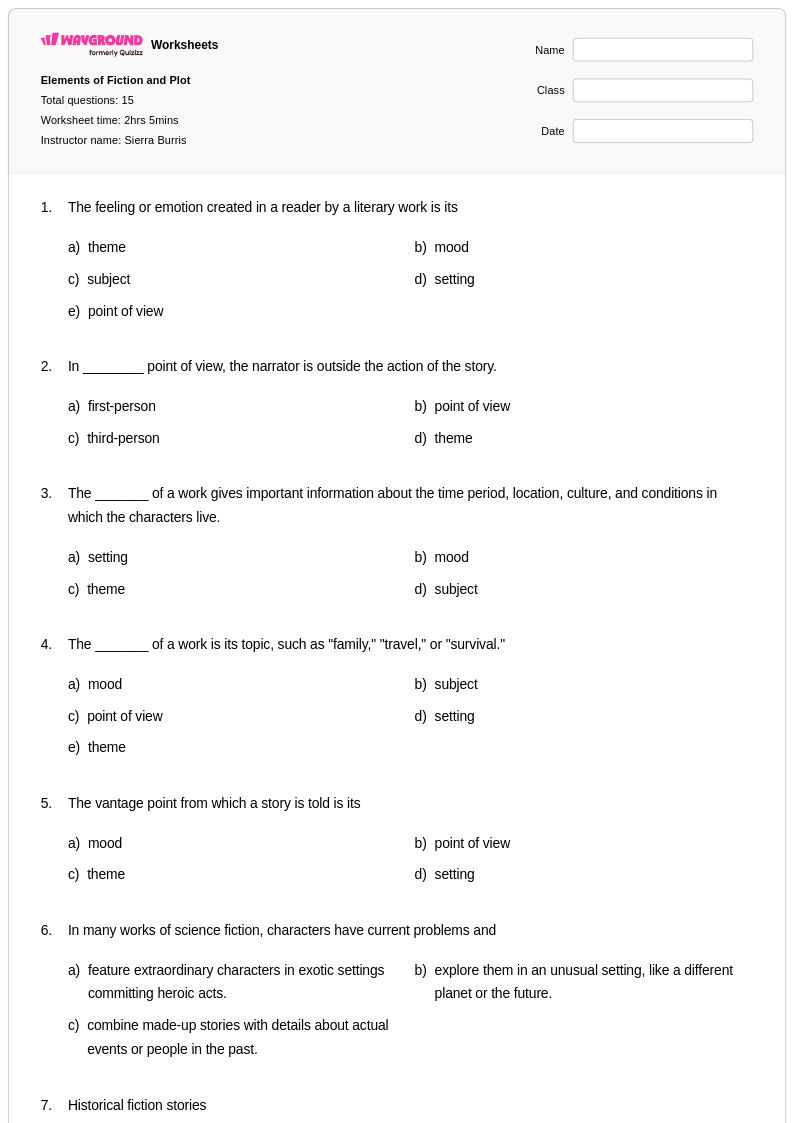
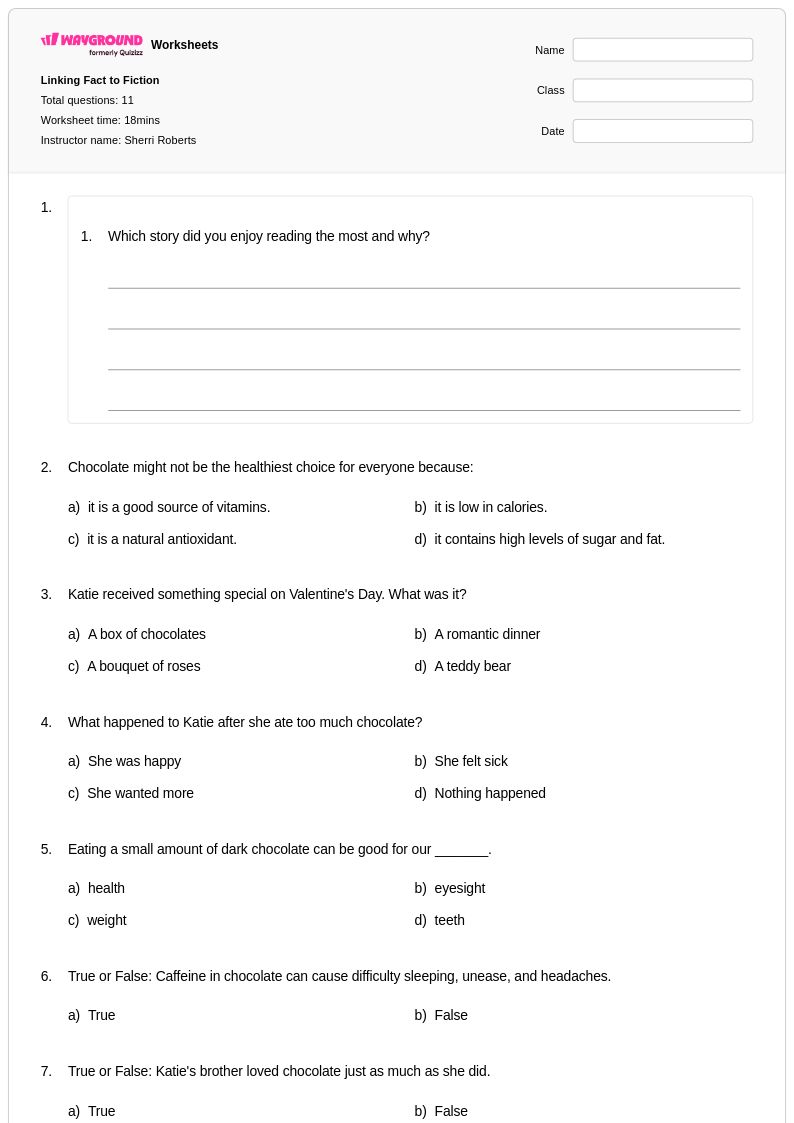
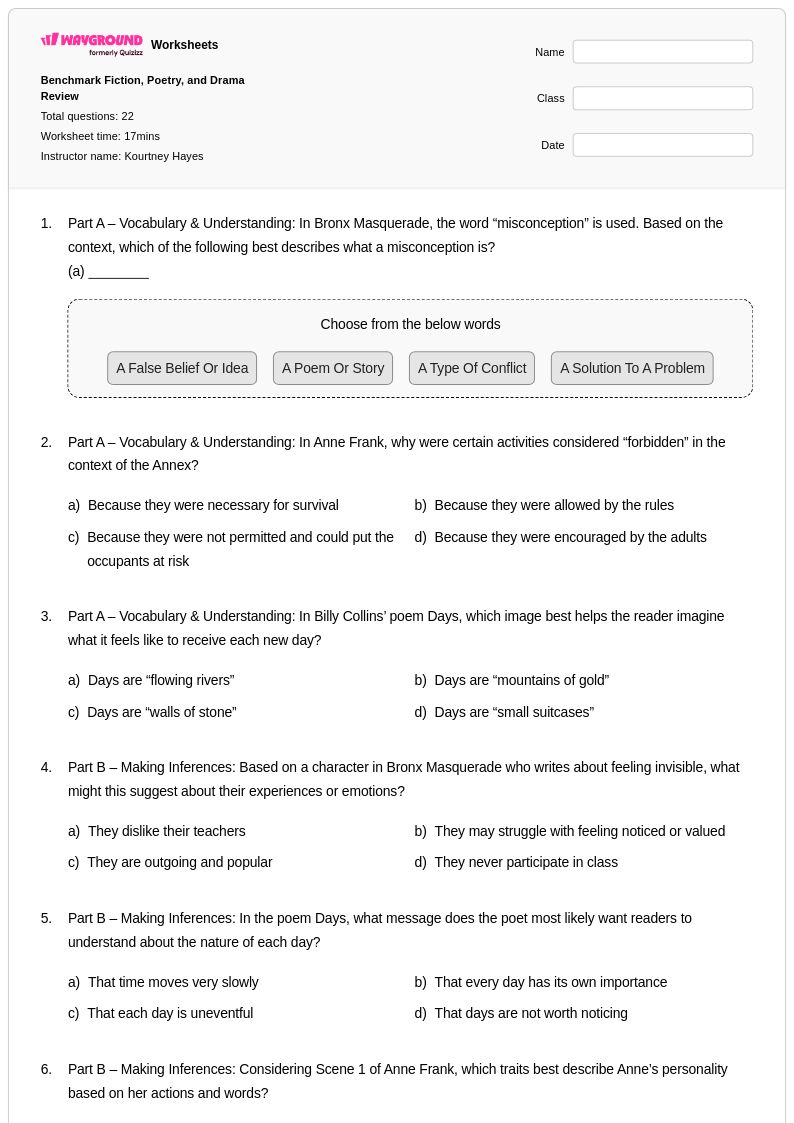
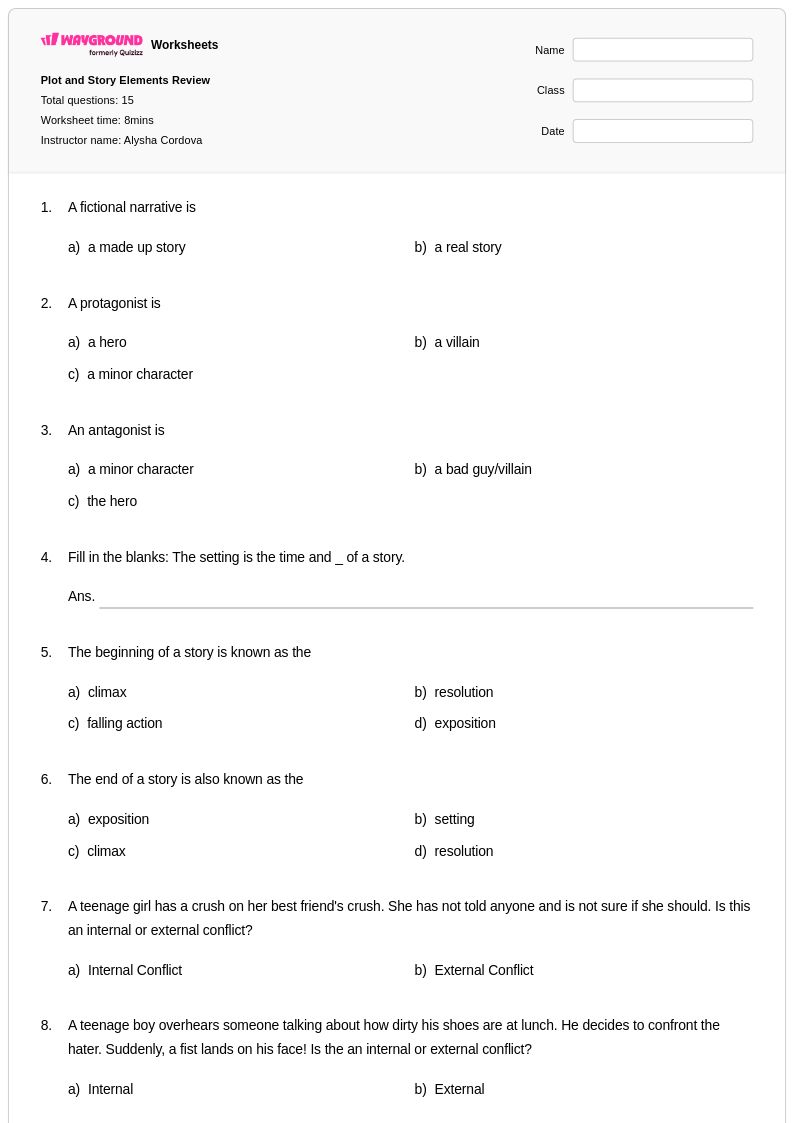
Sequencing in fiction worksheets for Class 8 students available through Wayground (formerly Quizizz) provide comprehensive practice in analyzing the chronological arrangement of events within narrative texts. These educational resources strengthen critical reading comprehension skills by challenging students to identify plot structures, recognize flashbacks and foreshadowing, and understand how authors manipulate time to create specific effects in storytelling. The worksheets feature diverse fiction excerpts and complete short stories, accompanied by practice problems that require students to map out event sequences, distinguish between chronological order and narrative order, and analyze how temporal shifts contribute to character development and thematic meaning. Each worksheet includes a detailed answer key and is available as a free printable PDF, making them accessible for both classroom instruction and independent study.
Wayground (formerly Quizizz) supports educators with an extensive collection of teacher-created resources focused on sequencing in fiction, drawing from millions of high-quality worksheets that align with Class 8 English language arts standards. The platform's robust search and filtering capabilities allow teachers to quickly locate materials that match their specific curriculum needs, whether targeting basic sequence identification or advanced analysis of complex narrative structures. These differentiation tools enable instructors to customize worksheets for various skill levels within their classrooms, supporting both remediation for struggling readers and enrichment activities for advanced students. Available in both printable and digital formats including PDF downloads, these resources streamline lesson planning while providing flexible options for skill practice, formative assessment, and reinforcement of essential literary analysis techniques that prepare students for more sophisticated textual interpretation.
FAQs
How do I teach sequencing in fiction to my students?
Start by modeling how to identify signal words like 'first,' 'then,' 'finally,' and 'meanwhile' in a short passage, then guide students through arranging key story events in chronological order. Gradually introduce more complex narrative structures such as flashbacks and foreshadowing, asking students to explain why an author might reorder events rather than present them chronologically. Visual timelines and story maps are especially effective tools for making narrative sequence concrete before students practice independently in writing.
What exercises help students practice sequencing in fiction?
Effective practice exercises include cut-and-sort activities where students physically arrange sentence strips or event cards in logical story order, as well as close-reading tasks that ask students to identify temporal transitions and cause-and-effect relationships within a passage. Sequencing in Fiction worksheets on Wayground challenge students to work with short stories, novel excerpts, and fictional passages, requiring them to recognize plot progression and analyze how authors manipulate time to create dramatic effect.
What common mistakes do students make when sequencing events in fiction?
The most frequent error is confusing the order in which events are narrated with the actual chronological order in which they occur, especially when a text includes flashbacks or foreshadowing. Students also tend to list only surface-level plot points rather than tracking cause-and-effect chains, which leads to incomplete or inaccurate sequences. Teaching students to distinguish between story time and narrative time, and to annotate temporal signal words as they read, significantly reduces both of these errors.
How do I help struggling readers understand sequencing in fiction?
For struggling readers, reduce the complexity of the source text before focusing on sequencing skills, using shorter passages with clear, linear plots and explicit signal words. On Wayground, teachers can apply individual accommodations such as Read Aloud, which allows the passage and questions to be read aloud to students who need it, and Reduced Answer Choices, which lowers cognitive load by limiting the number of options a student sees at once. These accommodations can be assigned to specific students without alerting the rest of the class, keeping the experience seamless for everyone.
How do I use Wayground's Sequencing in Fiction worksheets in my classroom?
Wayground's Sequencing in Fiction worksheets are available as printable PDFs for traditional classroom use and in digital formats for technology-integrated or remote learning environments, giving you flexibility regardless of your instructional setting. You can also host a worksheet directly as a quiz on Wayground, enabling real-time student responses and immediate feedback. Each worksheet includes a complete answer key, so students can self-assess after practice or you can use it for quick formative grading.
How does understanding sequencing in fiction support broader reading comprehension skills?
When students can accurately reconstruct the order of events in a story, they develop a stronger grasp of cause-and-effect logic, character motivation, and narrative arc, all of which are foundational to deep reading comprehension. Recognizing how authors deliberately manipulate time through flashbacks and foreshadowing also builds critical thinking skills that transfer to analyzing more complex literary works. In practice, students who are proficient in sequencing tend to perform better on inference and theme identification tasks because they understand how the structure of a story shapes its meaning.