Free Printable Sequencing Events Worksheets for Class 8
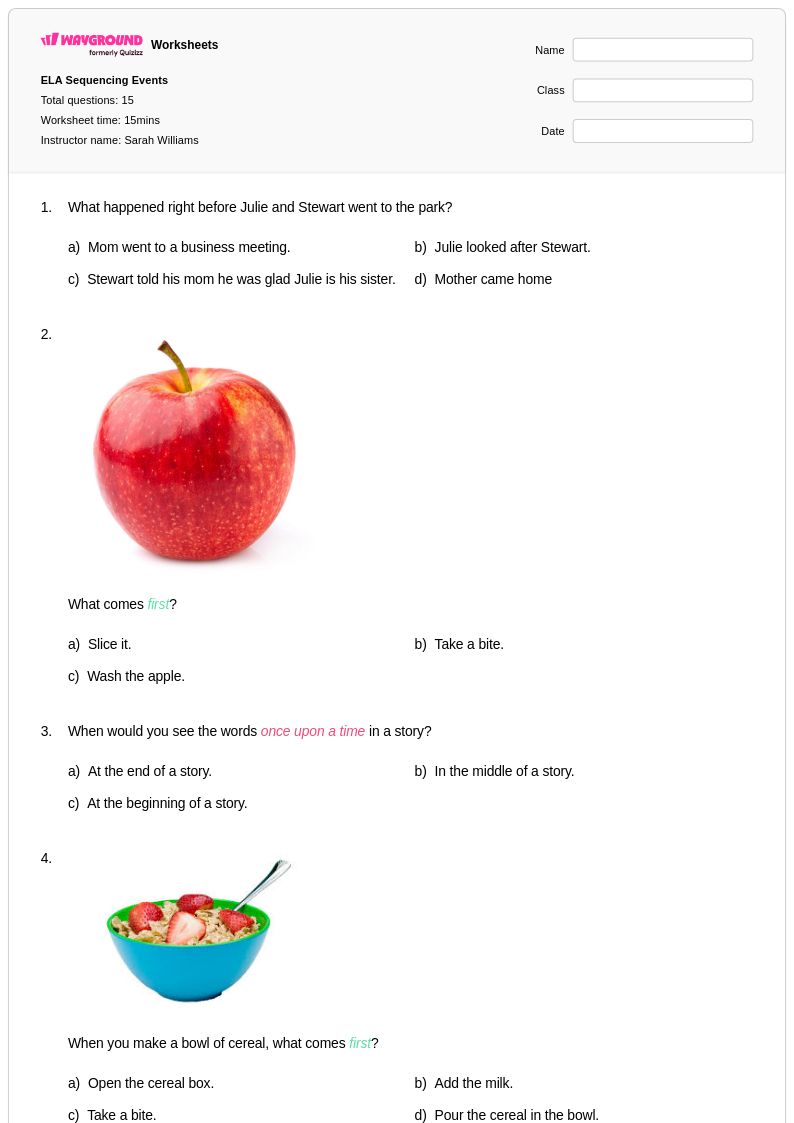
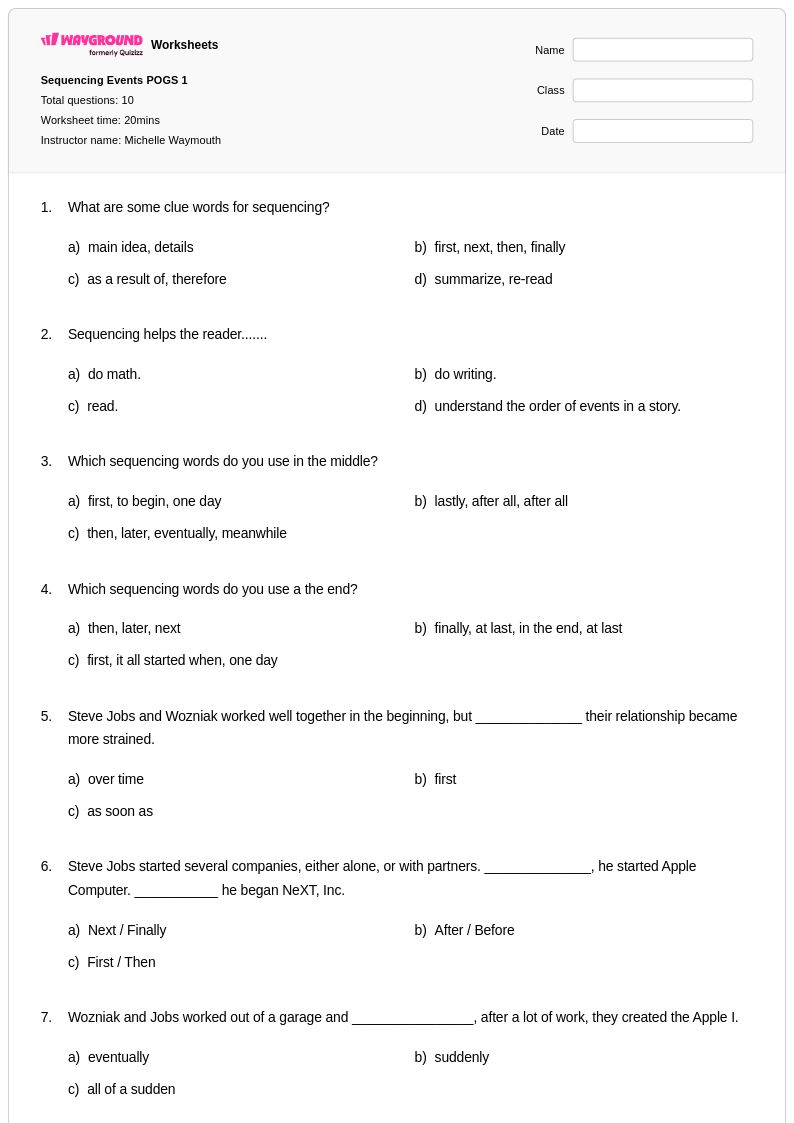
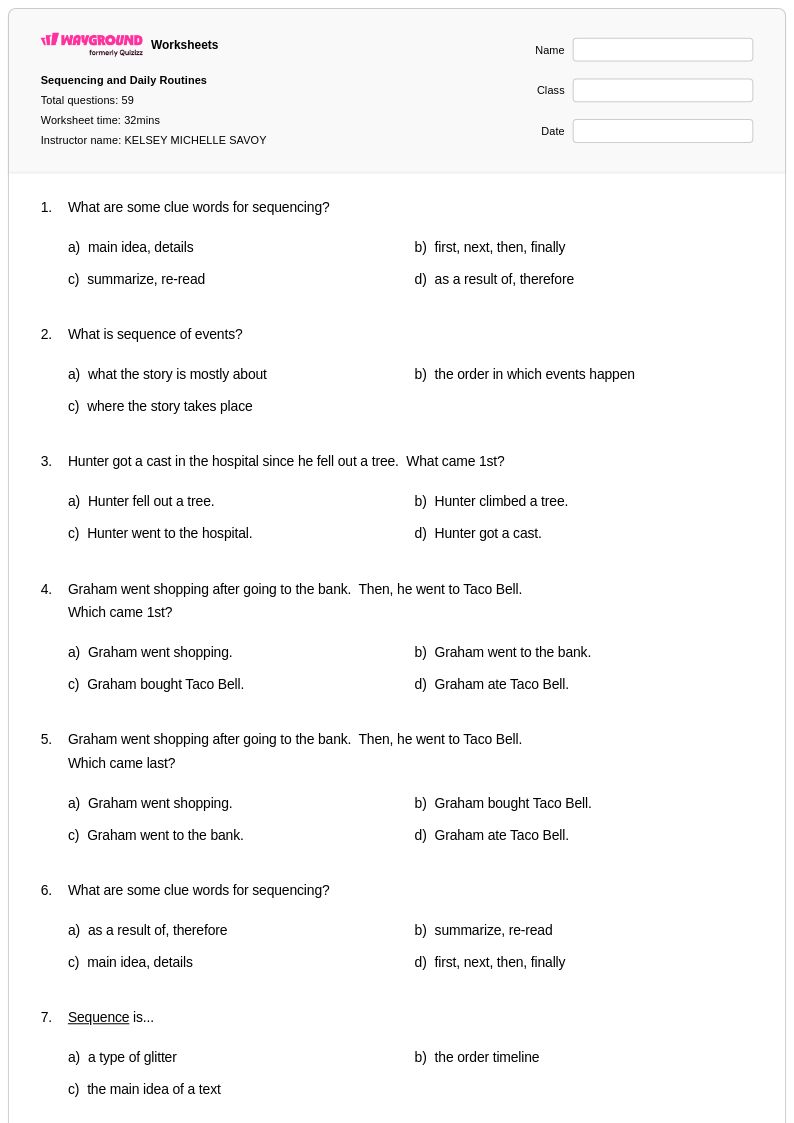
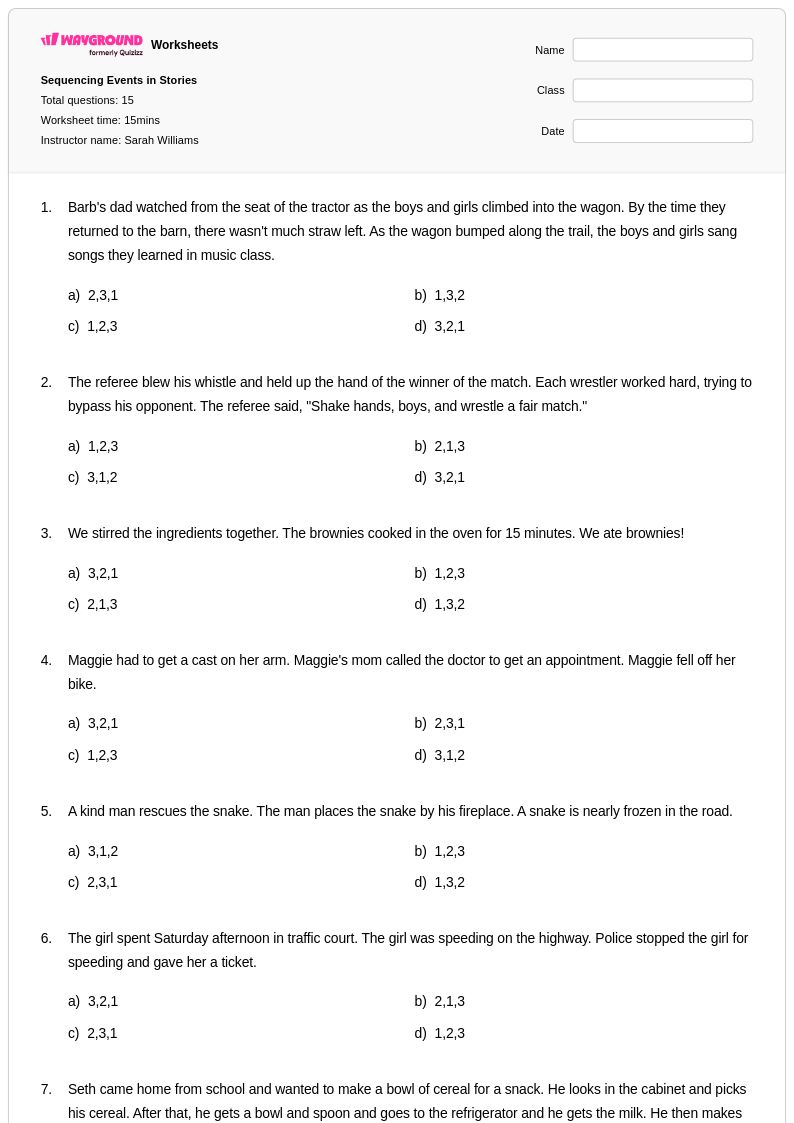
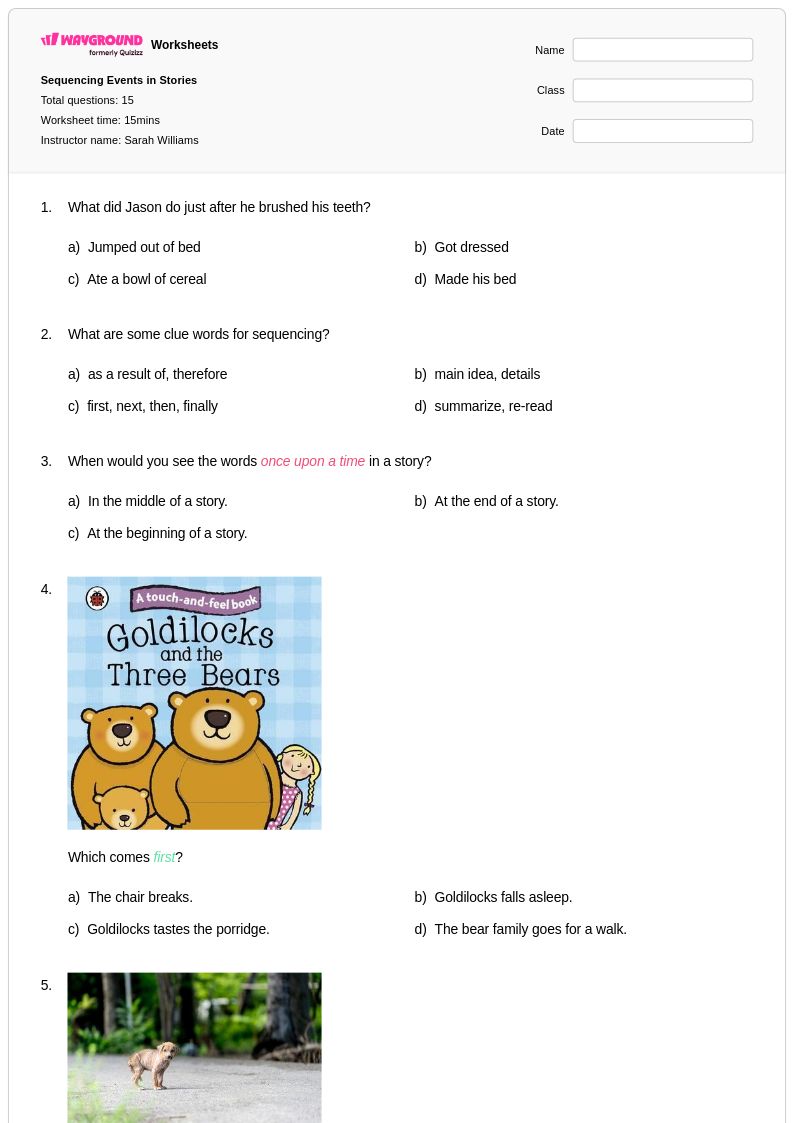
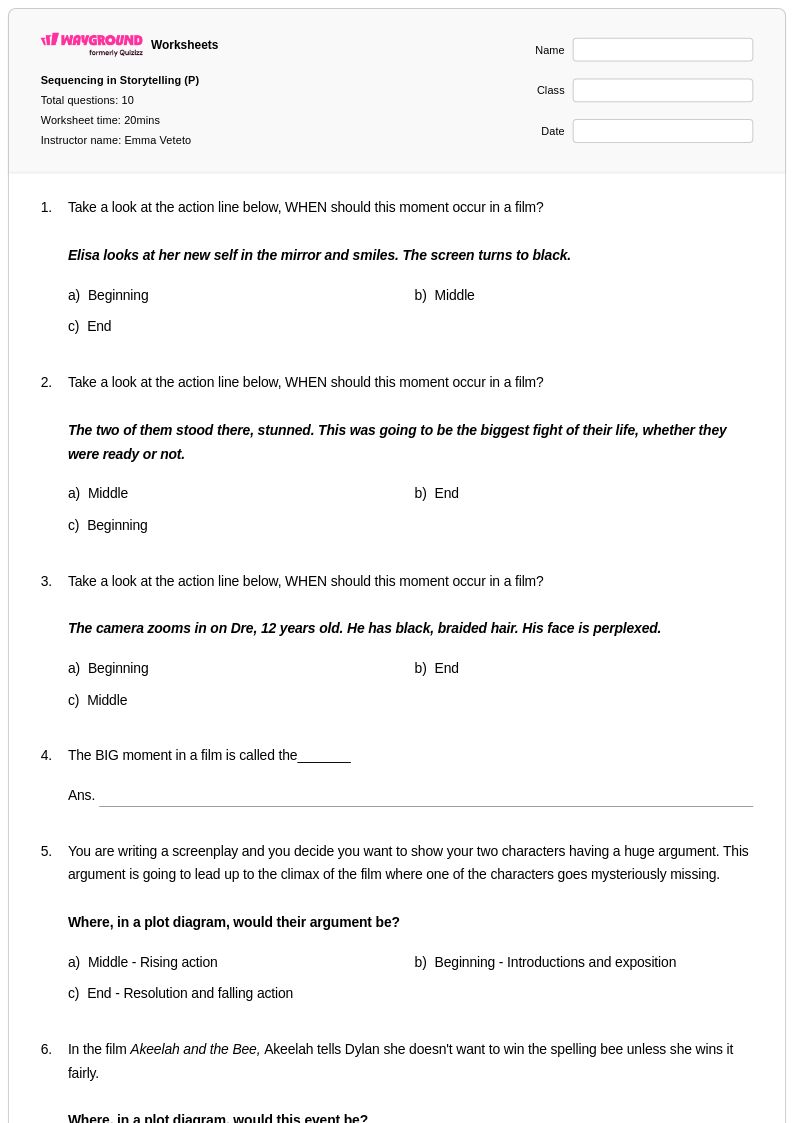
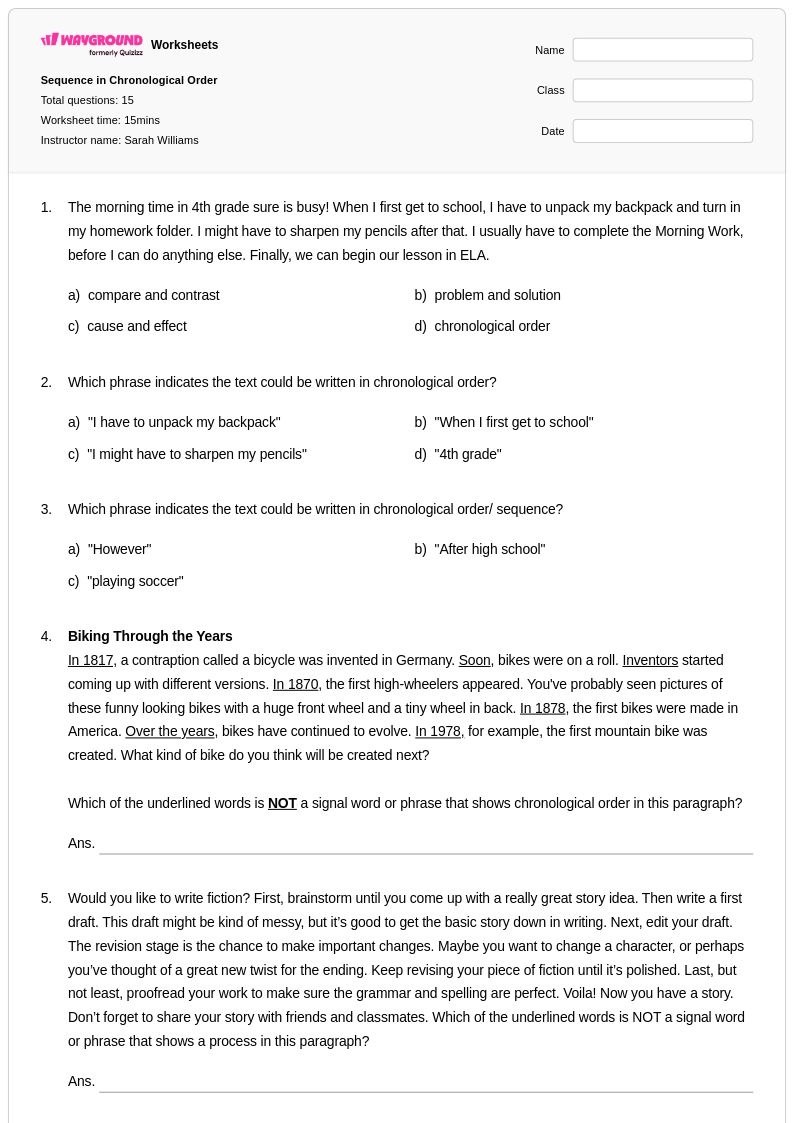
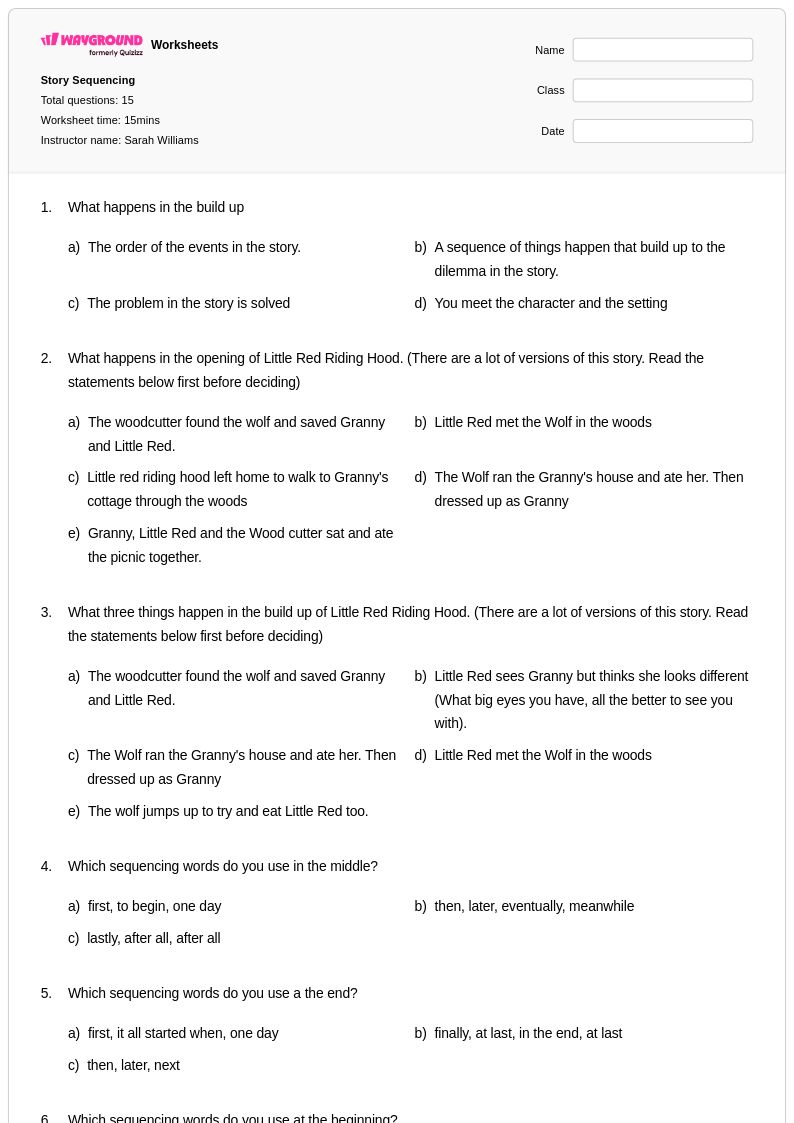
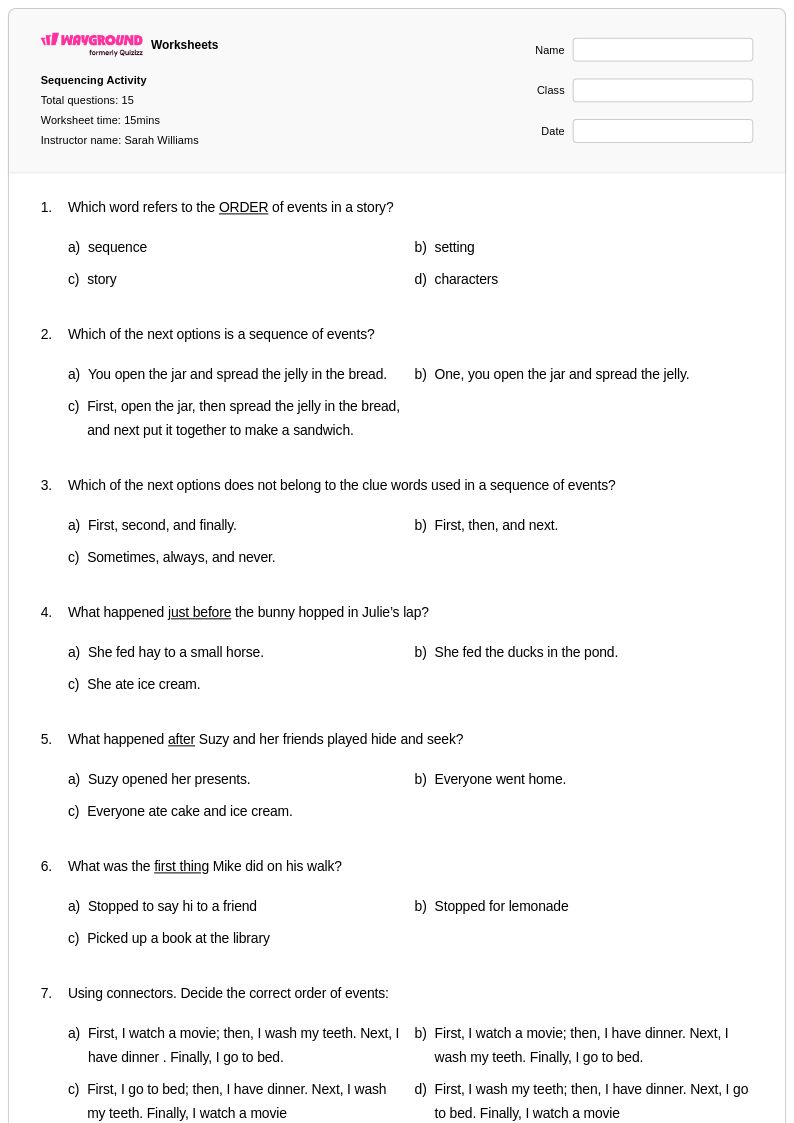
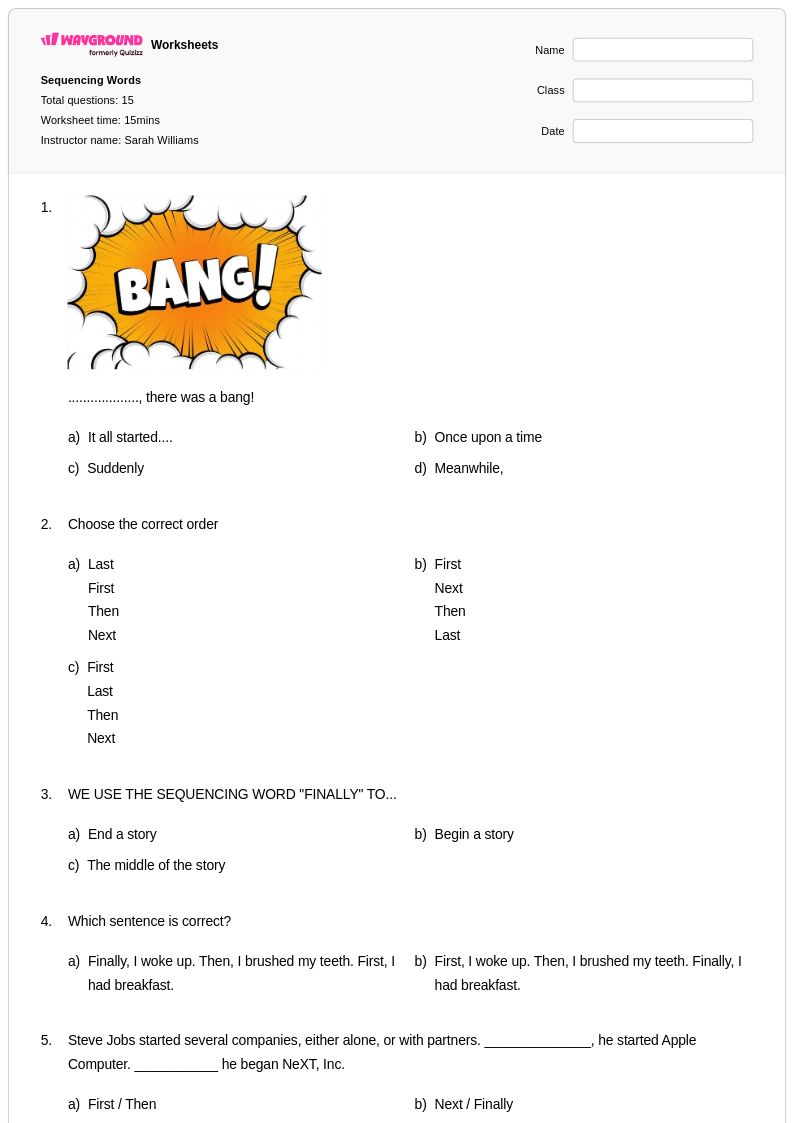
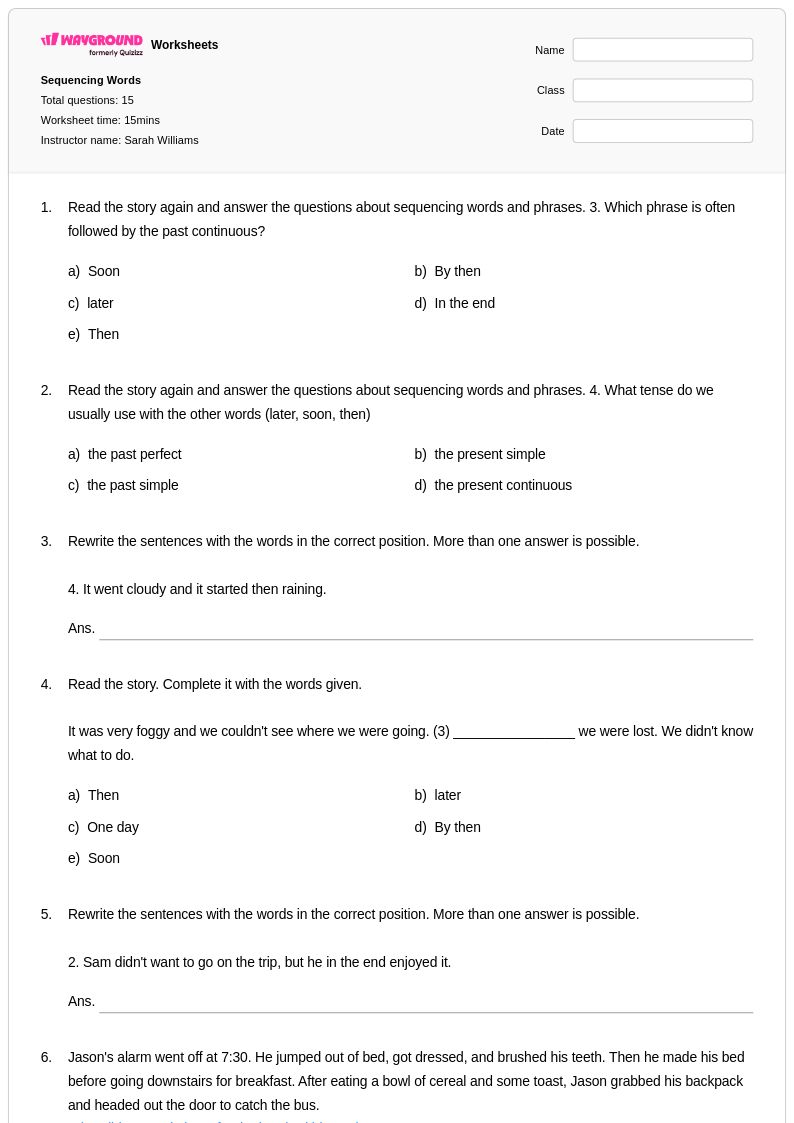
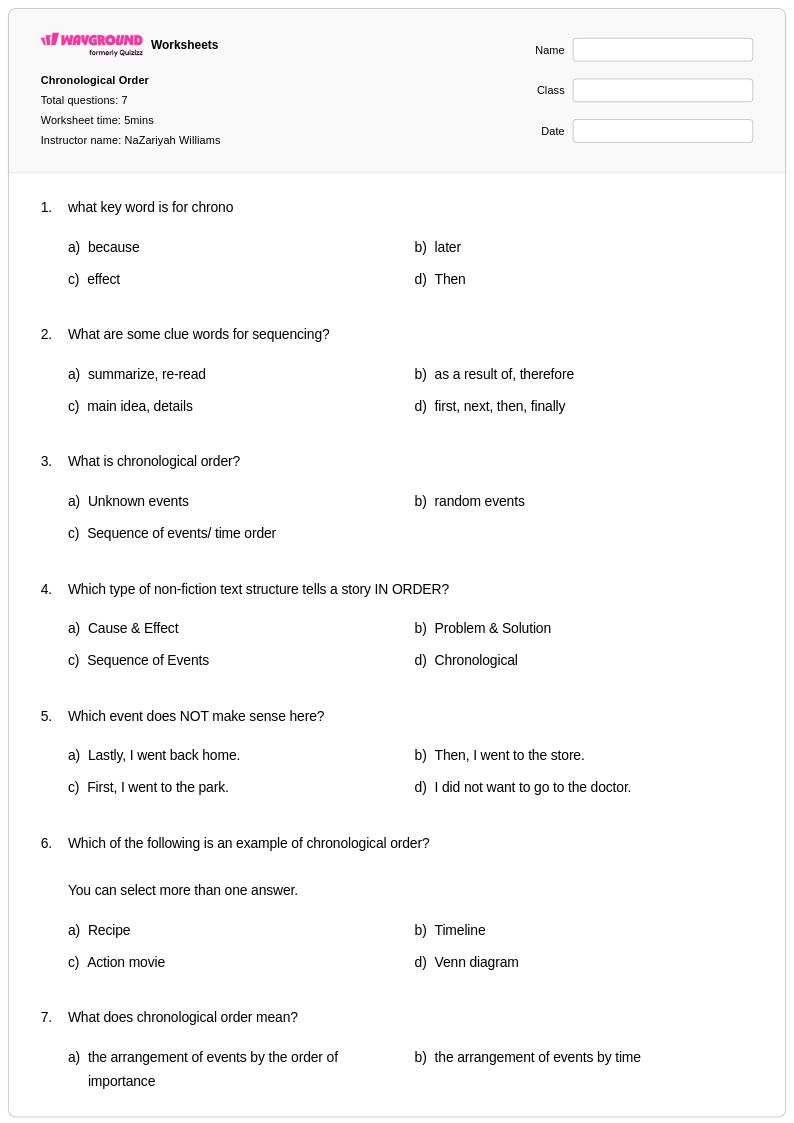
Class 8 sequencing events worksheets help students master chronological order and text structure through engaging reading comprehension practice problems, featuring free printables with answer keys and downloadable PDFs.
Explore printable Sequencing Events worksheets for Class 8
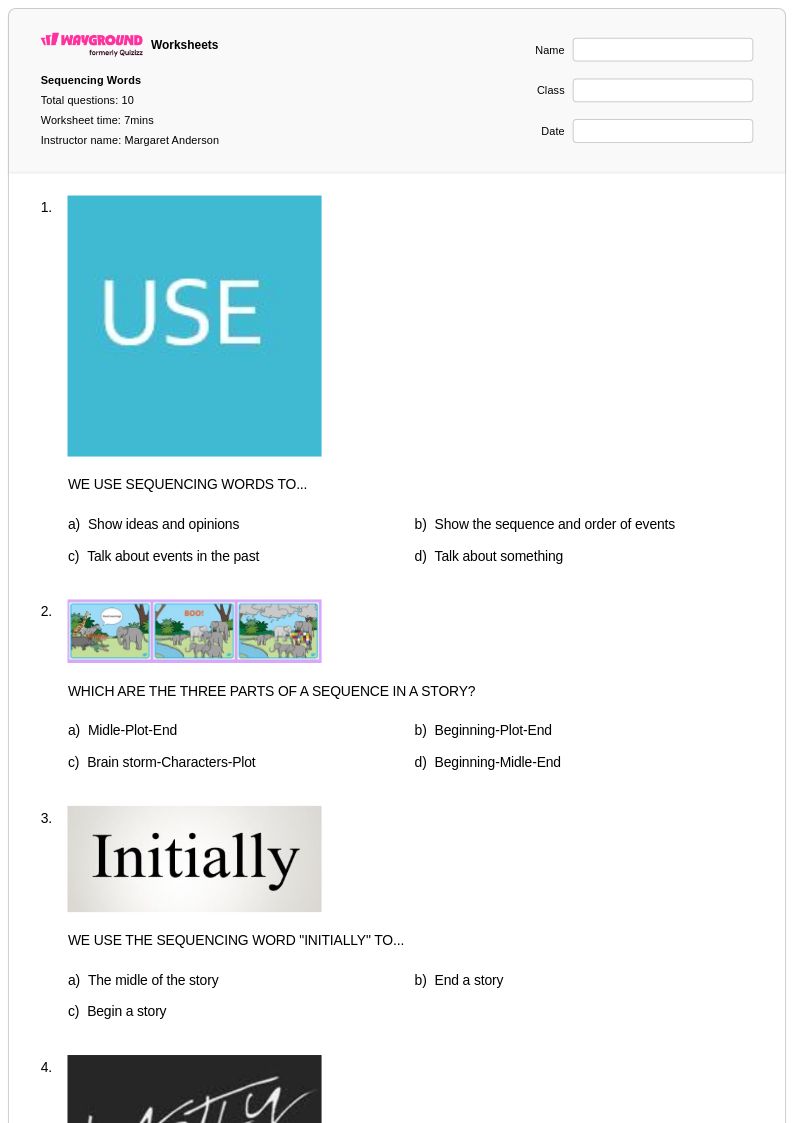
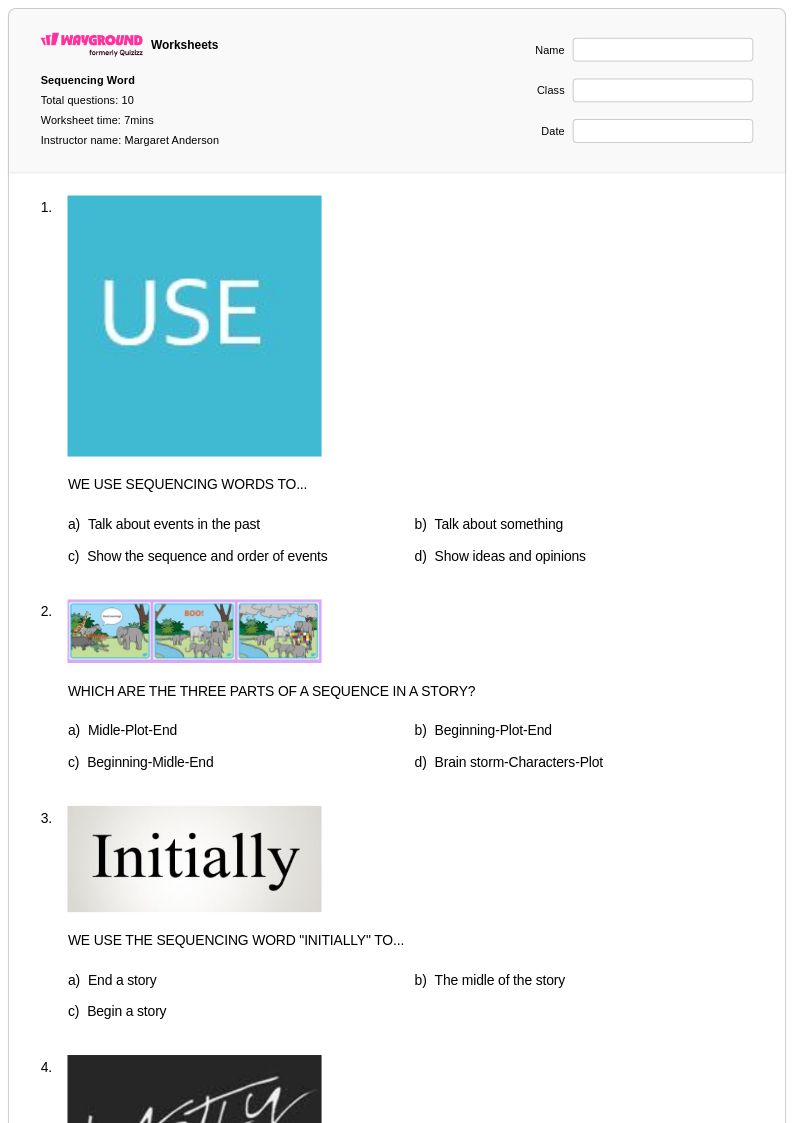
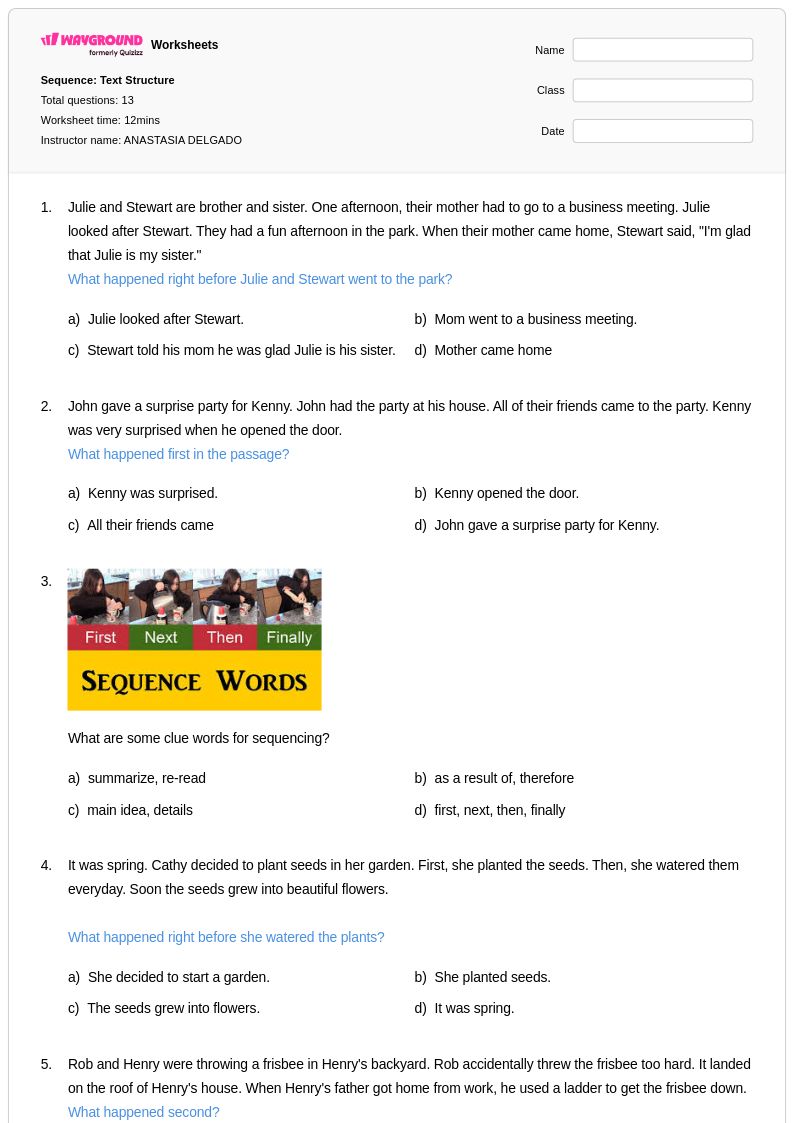
Sequencing events worksheets for Class 8 students available through Wayground (formerly Quizizz) provide comprehensive practice in organizing chronological information within complex texts. These expertly designed resources strengthen students' ability to identify temporal relationships, recognize signal words and phrases that indicate sequence, and construct logical timelines from both fiction and nonfiction passages. The worksheets feature varied practice problems that challenge eighth graders to analyze cause-and-effect relationships, distinguish between simultaneous and consecutive events, and demonstrate mastery through both multiple-choice and constructed response formats. Each printable resource includes a detailed answer key that supports independent learning and enables students to self-assess their comprehension of sequential text structures, while the free pdf format ensures accessibility for all learners.
Wayground (formerly Quizizz) empowers educators with millions of teacher-created sequencing events worksheets specifically aligned to Class 8 reading comprehension standards and curriculum expectations. The platform's robust search and filtering capabilities allow teachers to quickly locate resources that match specific text complexity levels, genre preferences, and skill focus areas, while built-in differentiation tools enable seamless adaptation for diverse learning needs within the classroom. These customizable worksheets are available in both printable and digital formats, including downloadable pdf versions, making them ideal for traditional instruction, remote learning environments, and hybrid teaching models. Teachers can efficiently plan targeted skill practice sessions, design remediation activities for struggling readers, and create enrichment opportunities for advanced students, all while tracking progress through comprehensive assessment features that inform data-driven instructional decisions.
FAQs
How do I teach sequencing events to students who struggle with chronological order?
Start by using familiar, concrete sequences before moving to text-based tasks — daily routines, recipes, or simple how-to procedures give students a low-stakes entry point. Once students can articulate order verbally, introduce signal words like 'first,' 'next,' 'then,' and 'finally,' and practice identifying them in short passages. Gradually transfer this skill to fiction and nonfiction texts, asking students to physically arrange sentence strips before completing written sequencing tasks.
What's the difference between teaching sequencing in fiction versus nonfiction?
In fiction, sequencing focuses on narrative structure — understanding how plot events build on one another to create cause-and-effect relationships and story arcs. In nonfiction, sequencing is often procedural or chronological, requiring students to track the order of historical events, scientific processes, or instructional steps. Both contexts use temporal signal words, but nonfiction sequencing often demands closer attention to factual accuracy and logical dependency between steps.
What exercises help students practice sequencing events in reading?
Effective practice includes cut-and-sort activities where students physically reorder scrambled sentences or paragraphs, as well as fill-in-the-blank timelines for nonfiction passages. Having students retell a story or process in their own words — without looking at the text — also reinforces internalized sequence. Worksheets that present both fiction and nonfiction contexts give students repeated exposure across genres, which builds transferable comprehension skills.
What mistakes do students commonly make when sequencing events?
The most common error is relying on surface-level signal words without reading for meaning — students may place an event labeled 'finally' at the end even when context makes it clear it occurred earlier. Students also frequently confuse the order events are mentioned in a text with the order they actually occurred, which is especially problematic in nonfiction texts that use flashbacks or non-linear structures. Teaching students to ask 'What had to happen before this could happen?' helps them build logical sequencing habits beyond word recognition.
How can I use sequencing events worksheets in my classroom?
Sequencing events worksheets on Wayground are available as printable PDFs and in digital formats, making them practical for whole-class instruction, independent center work, homework, or assessment. The digital format allows teachers to assign worksheets directly to students and host them as a quiz on Wayground, while printable versions work well for hands-on classroom activities. Each worksheet includes a complete answer key, so teachers can quickly check responses and identify students who need additional support with chronological reasoning.
How do I support students with different skill levels during a sequencing lesson?
For students who need additional scaffolding, reduce the number of events to sequence, provide a word bank of signal words, or pair visual supports like illustrated panels with the written text. On Wayground, teachers can apply accommodations such as reduced answer choices or read-aloud support to specific students while the rest of the class works with default settings, keeping differentiation seamless and unobtrusive. More advanced students can be challenged to sequence events across multiple paragraphs or to explain the causal relationships between steps rather than simply ordering them.