Free Printable Conjunctions Worksheets for Class 2
Class 2 conjunction worksheets and printables help young learners identify and use connecting words like "and," "but," and "or" through engaging practice problems with answer keys available as free PDF downloads.
Explore printable Conjunctions worksheets for Class 2
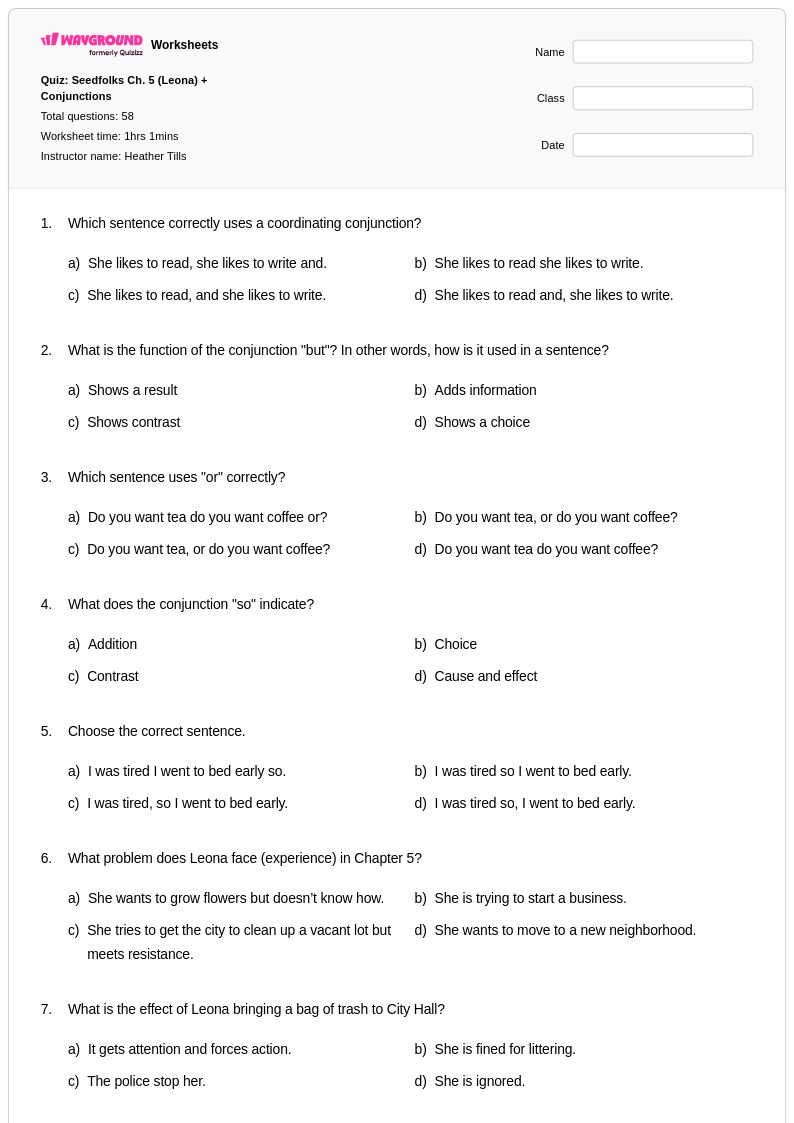
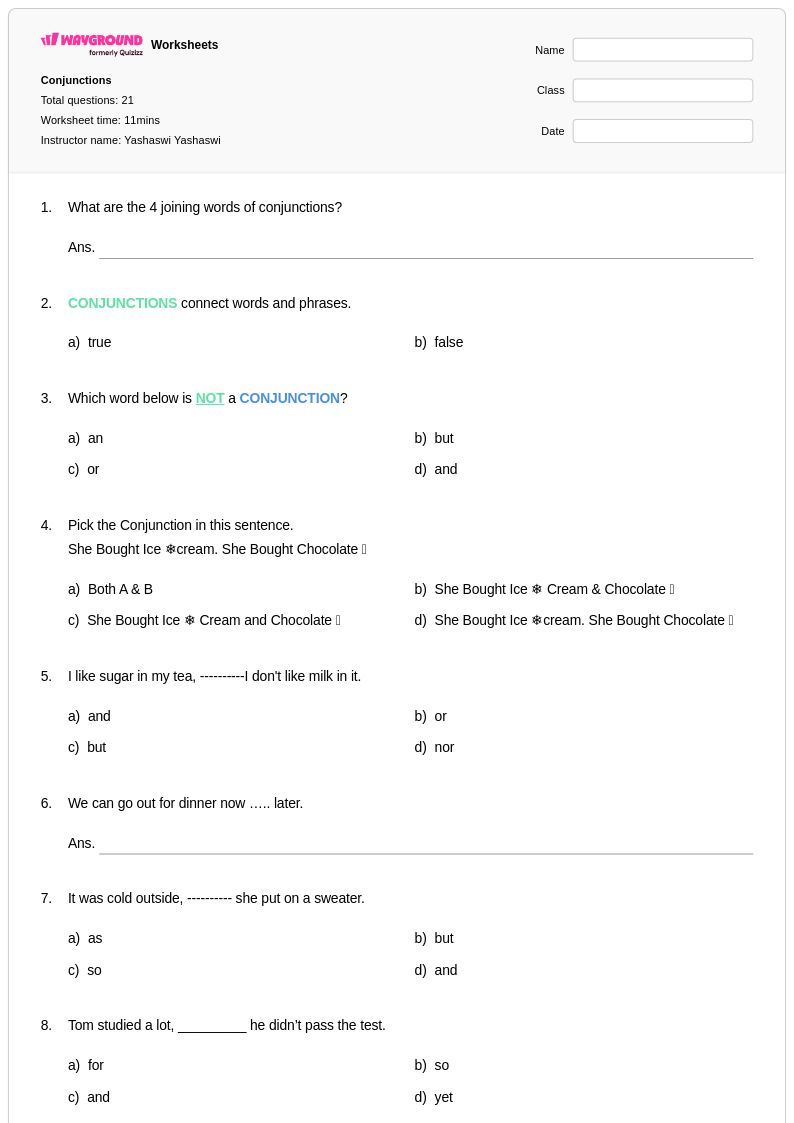
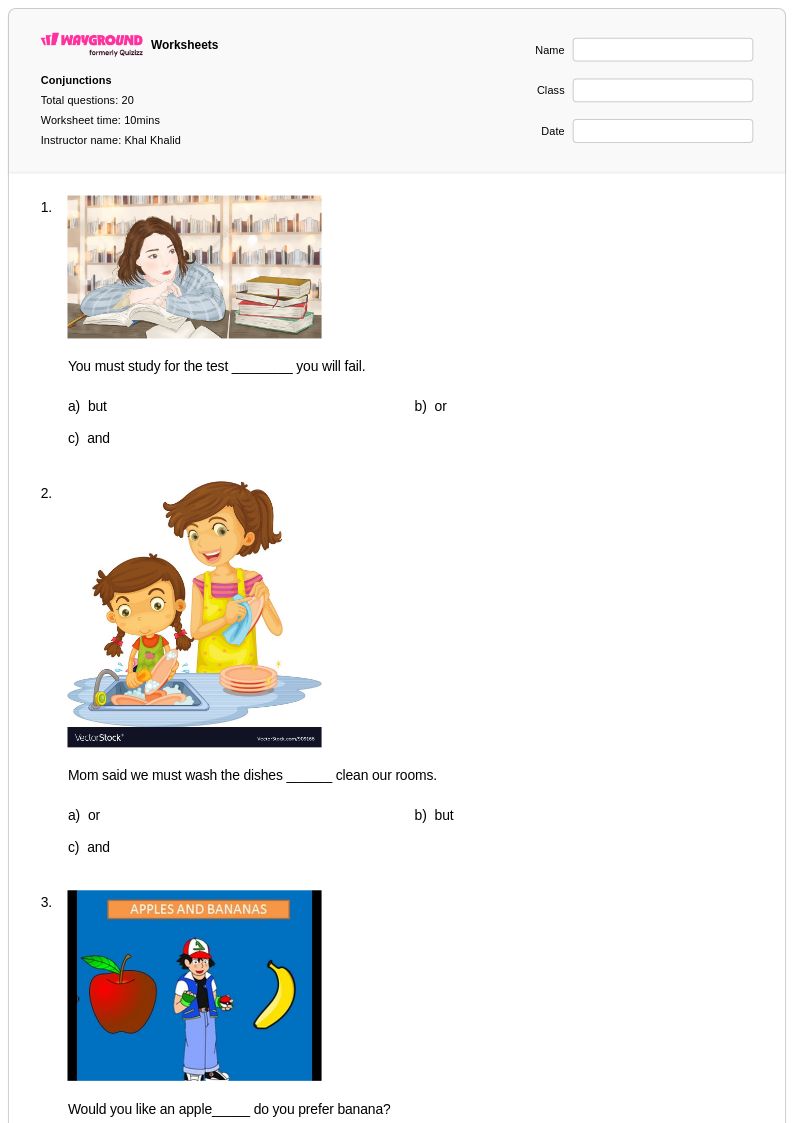
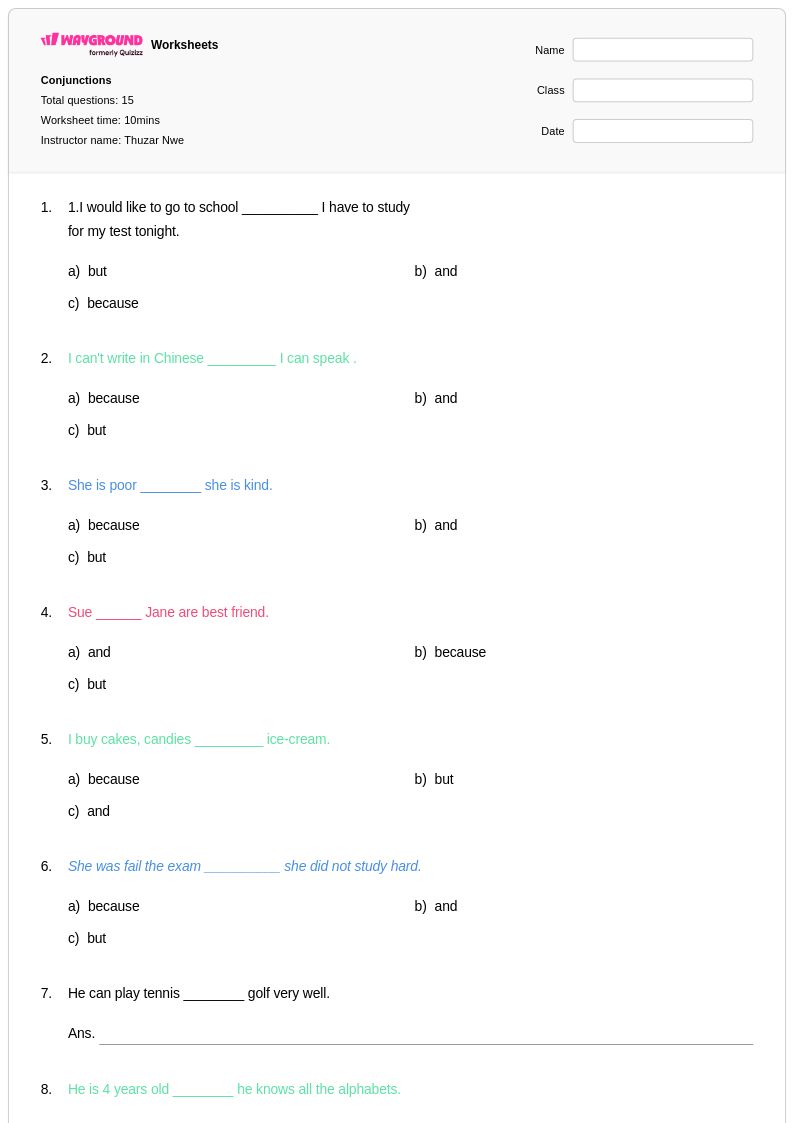
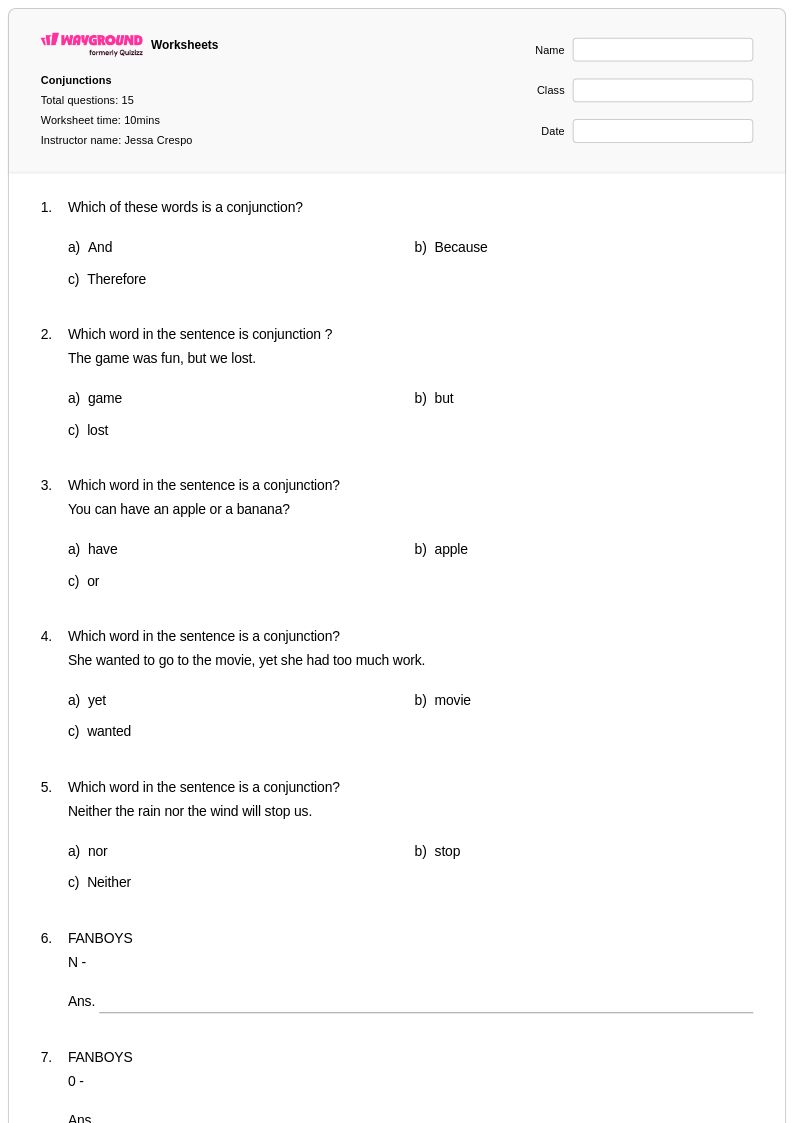
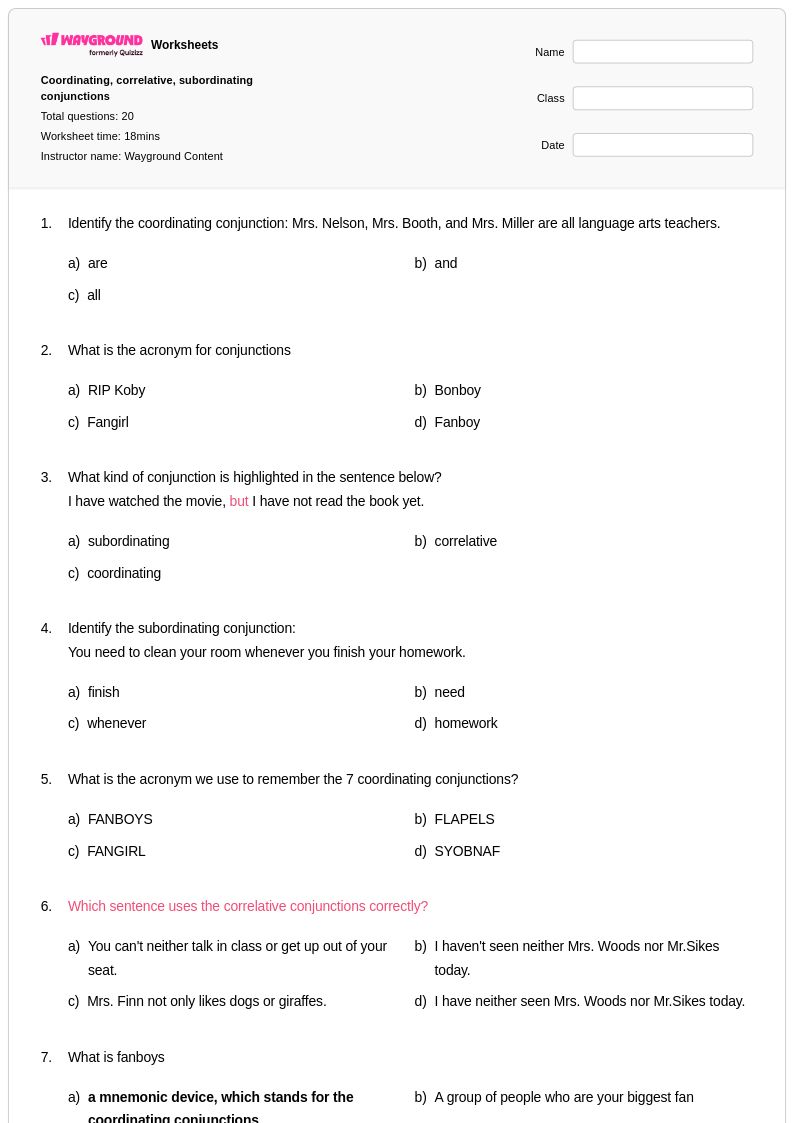
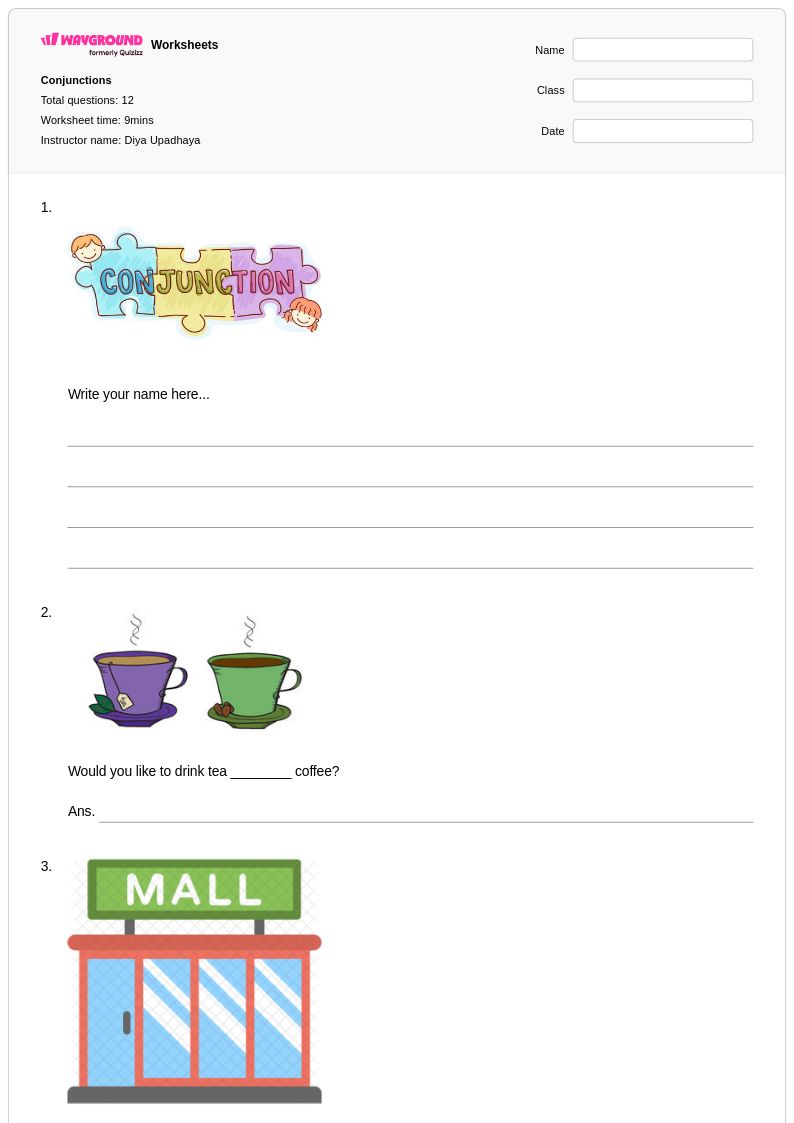
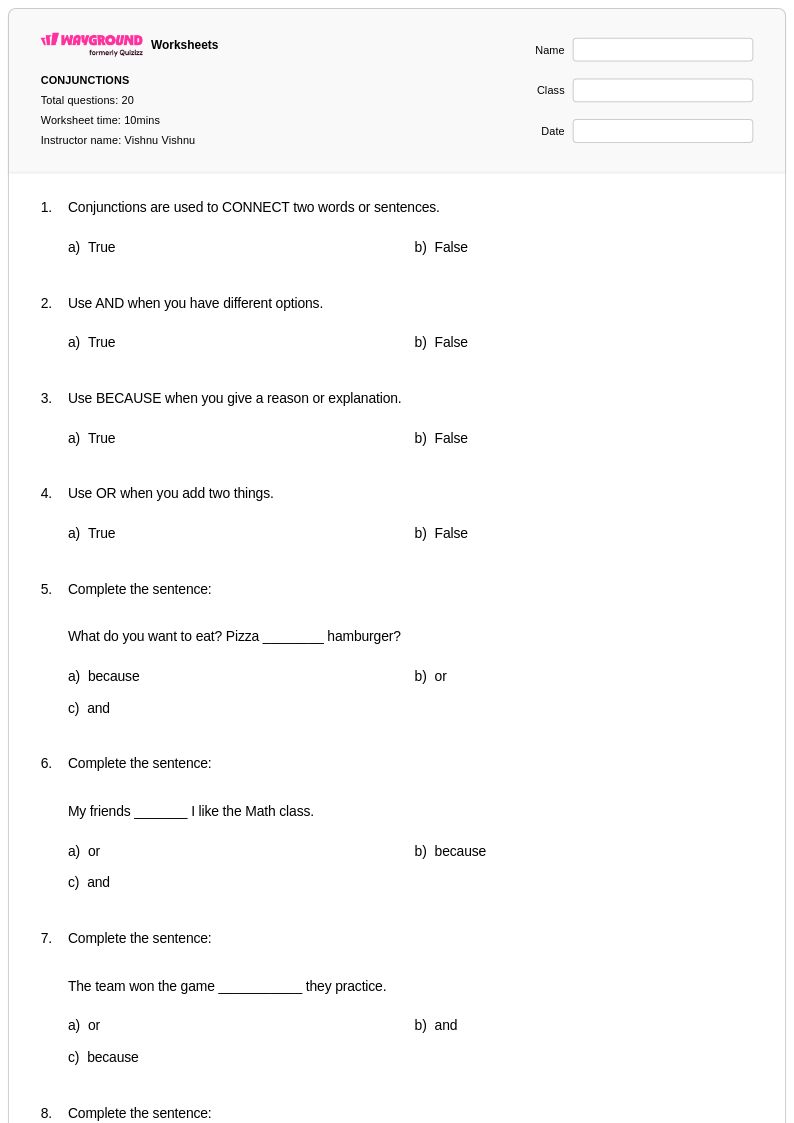
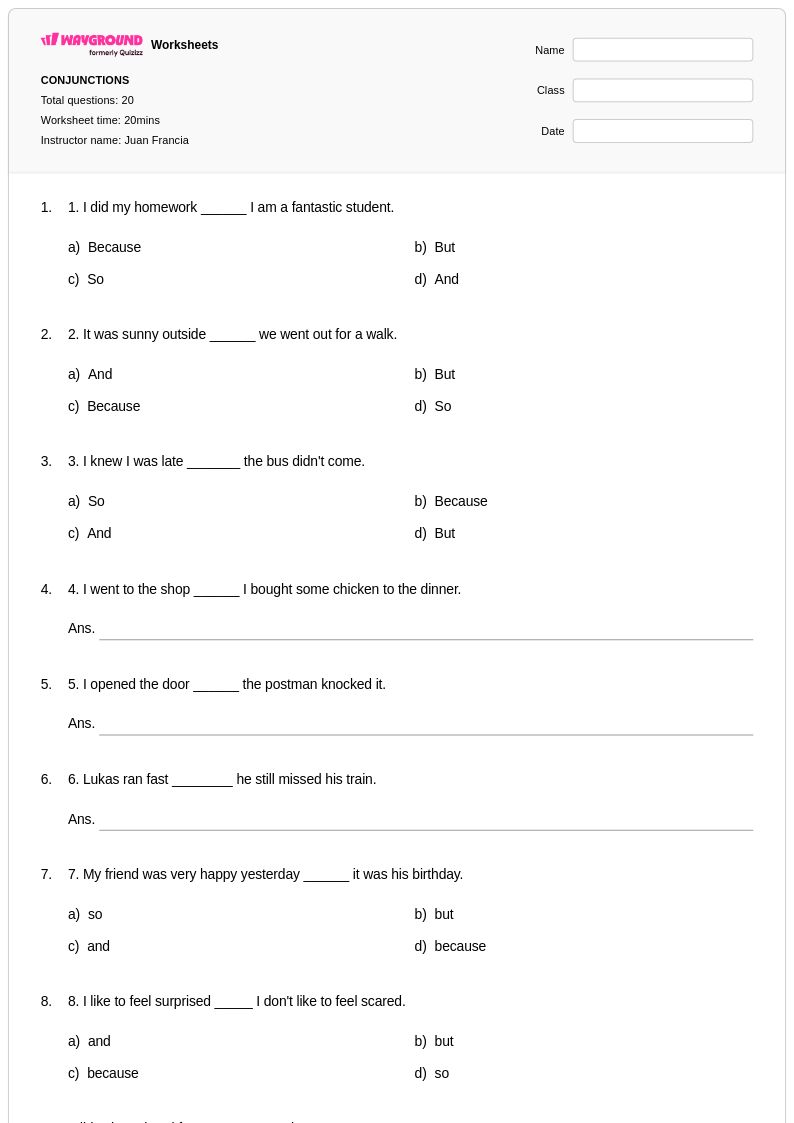
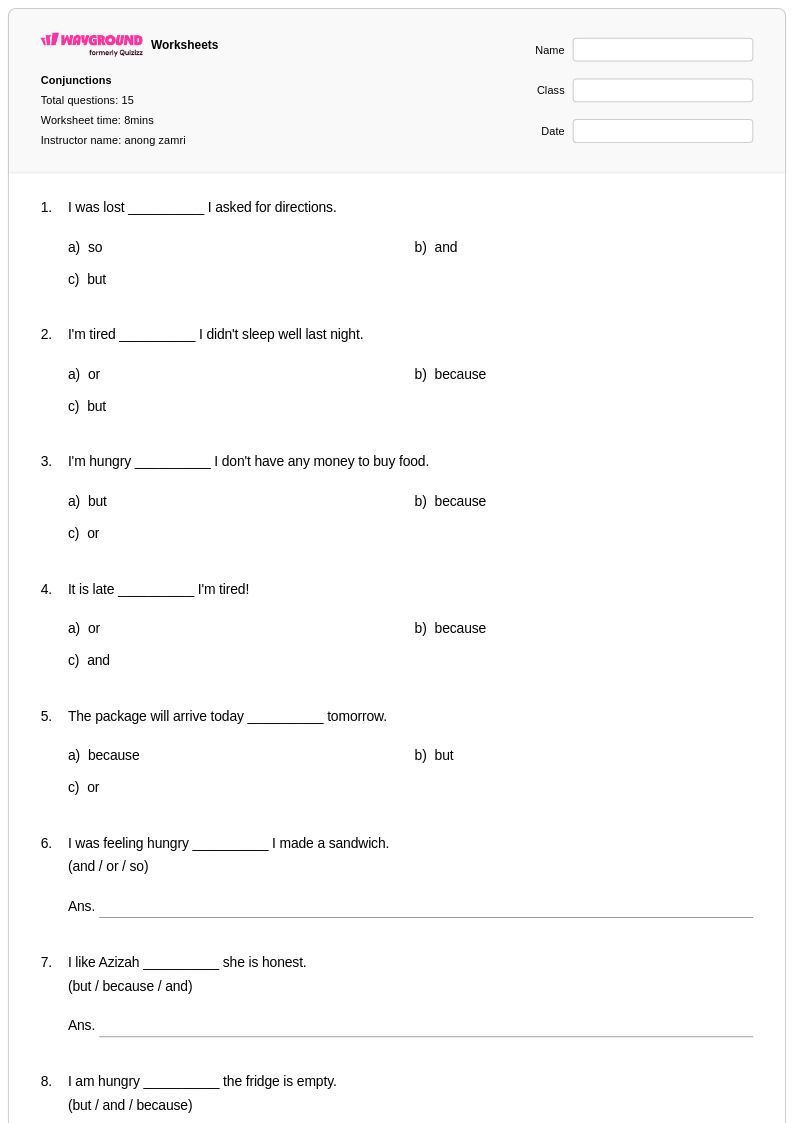
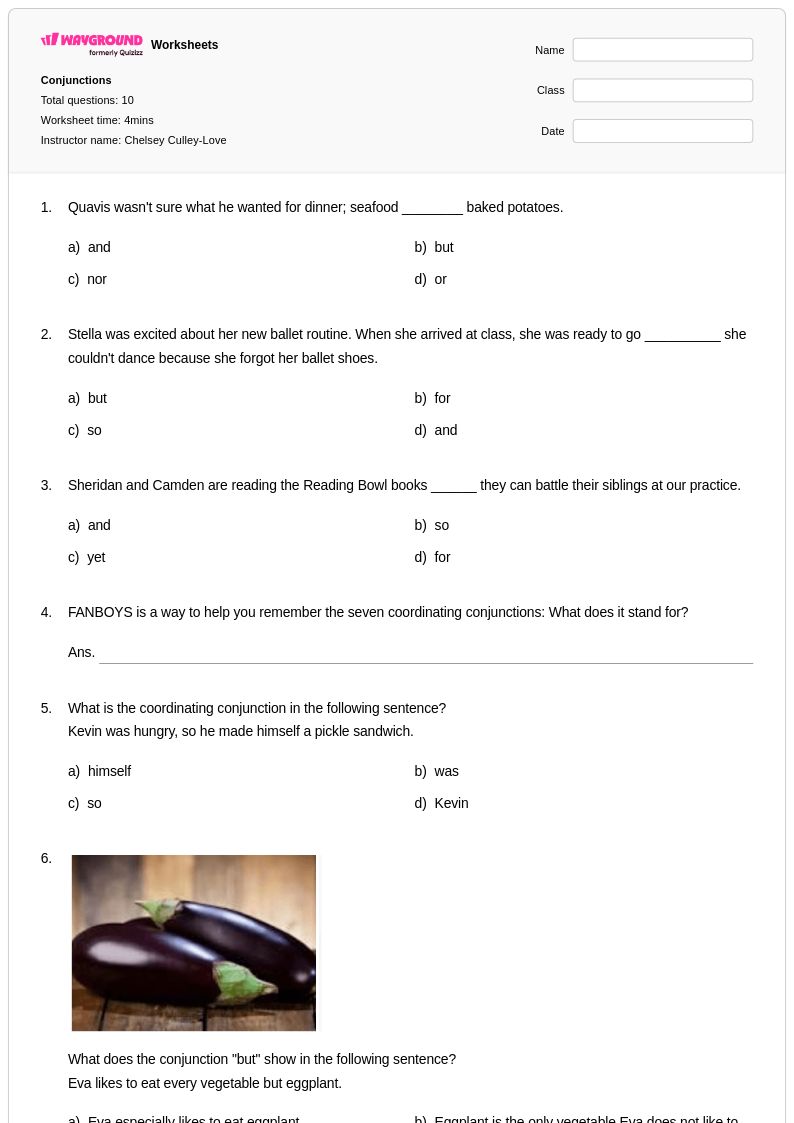
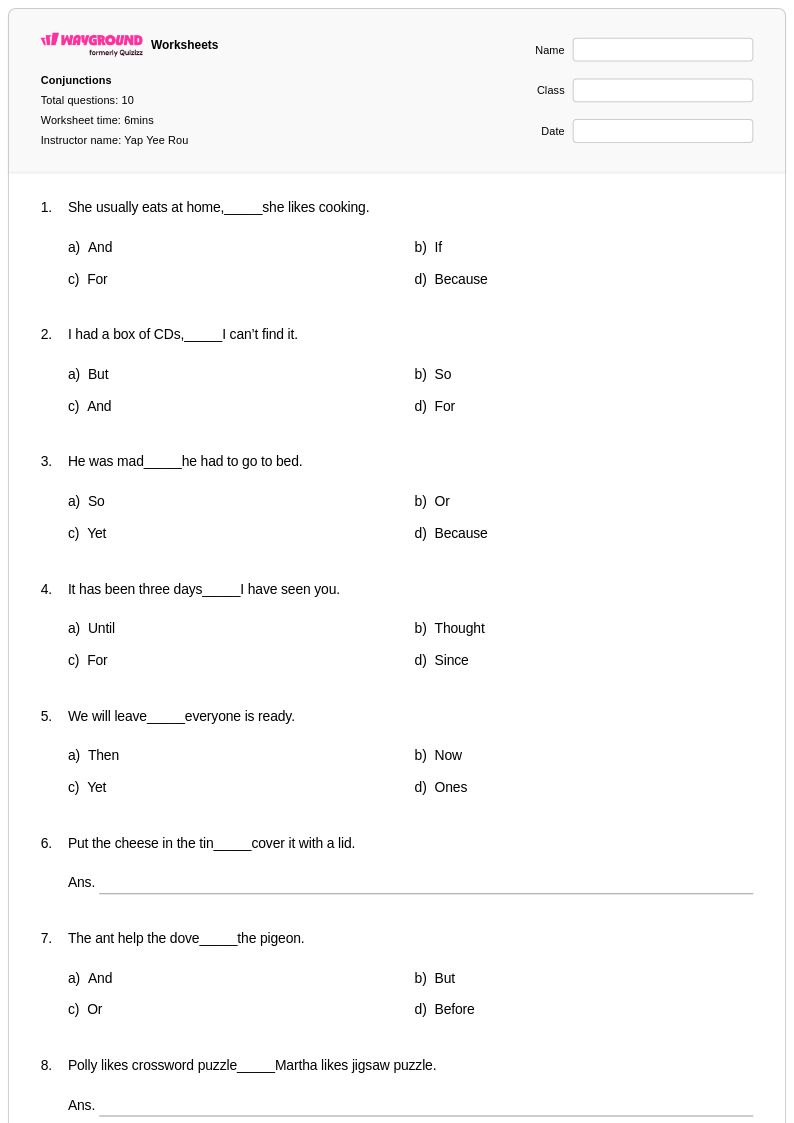
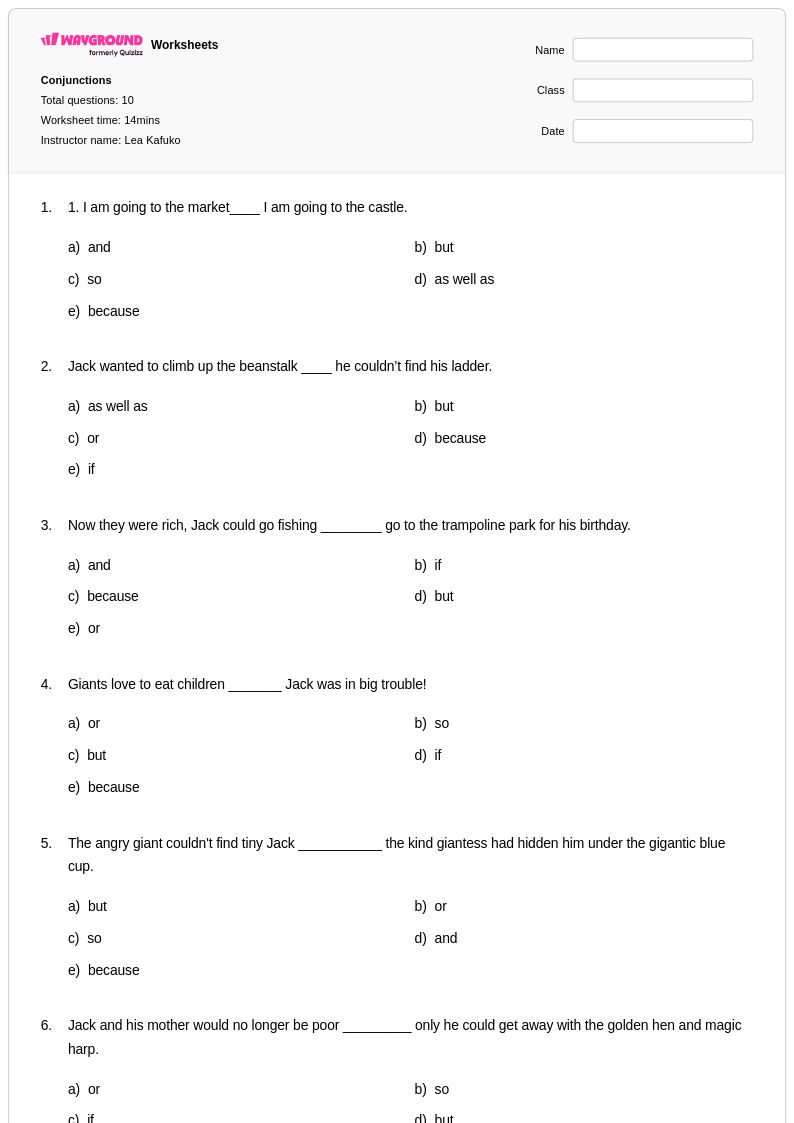
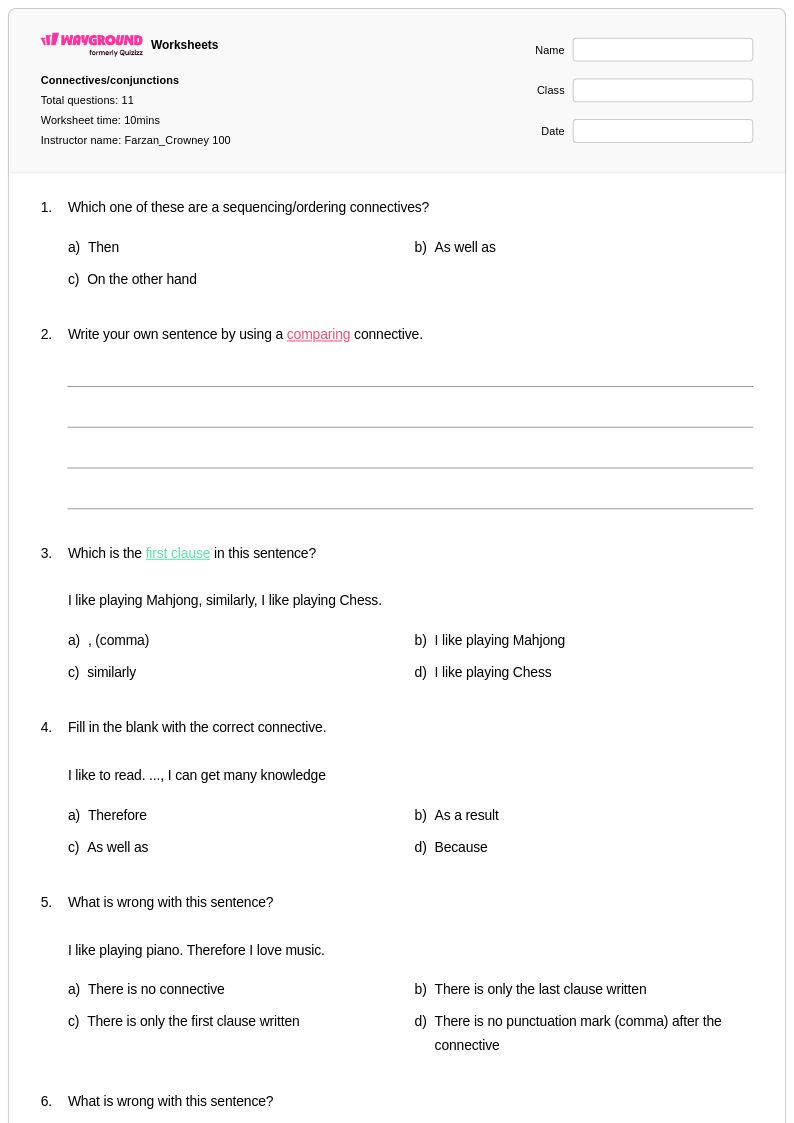
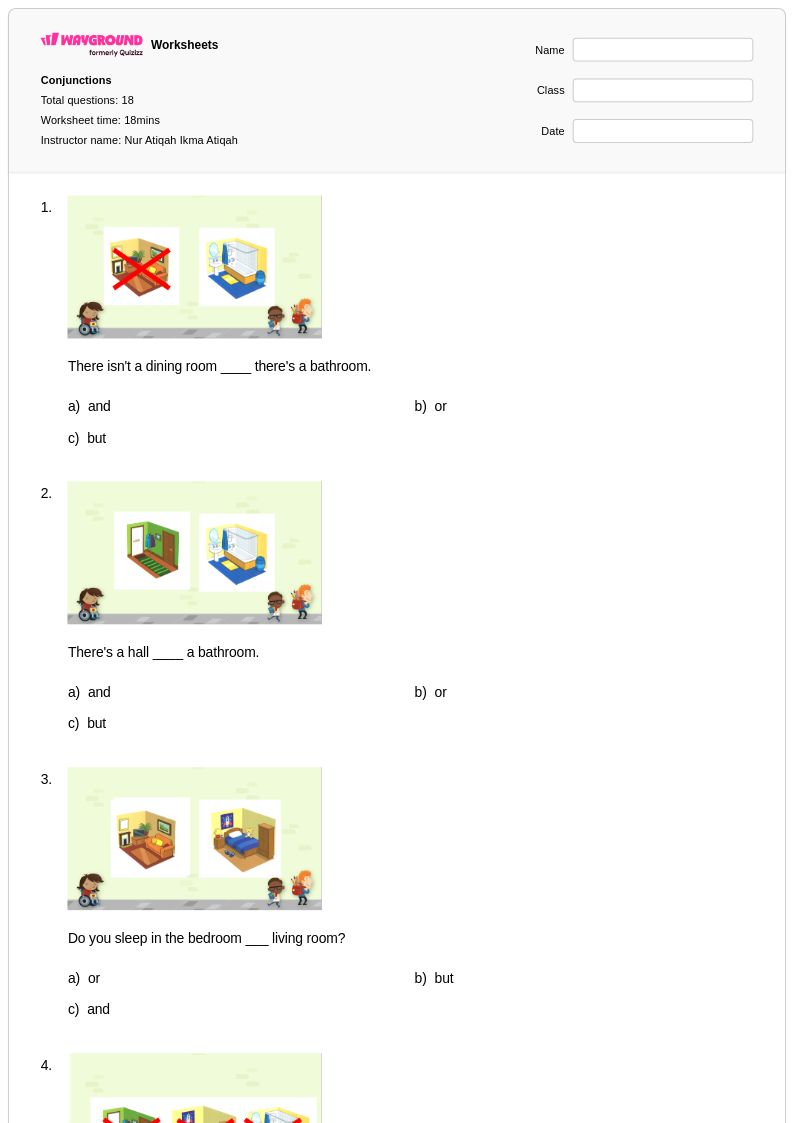
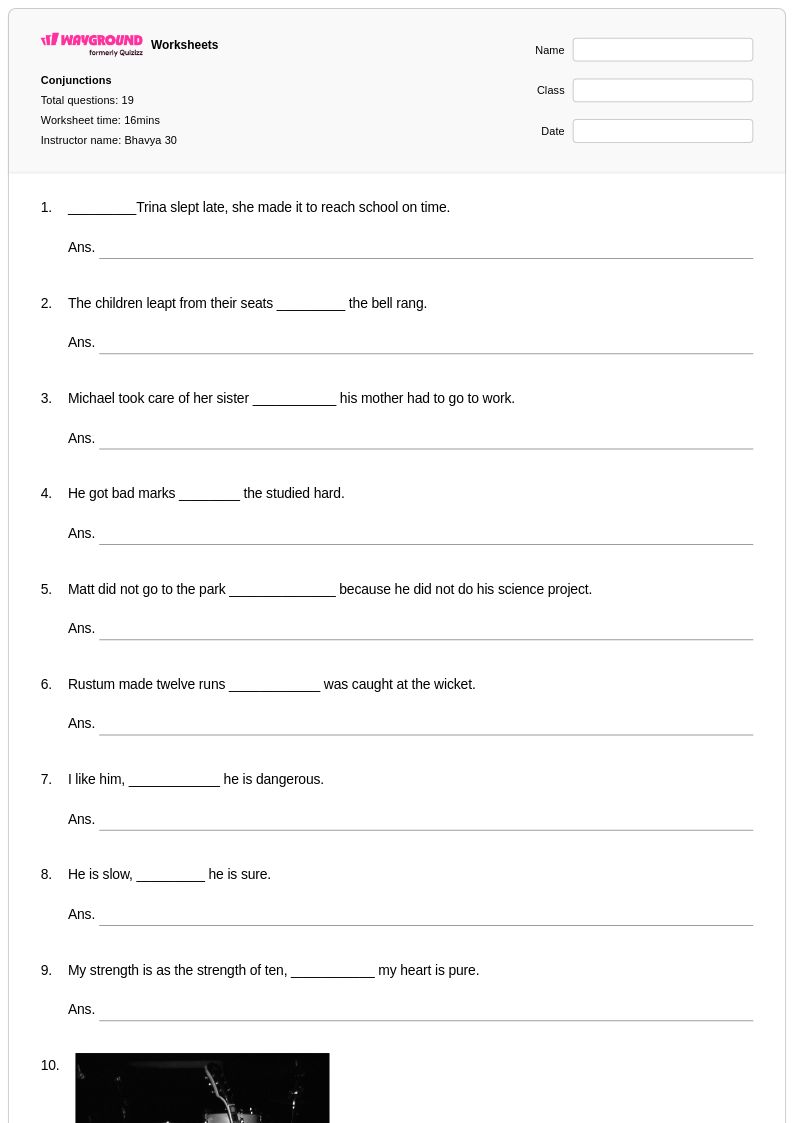
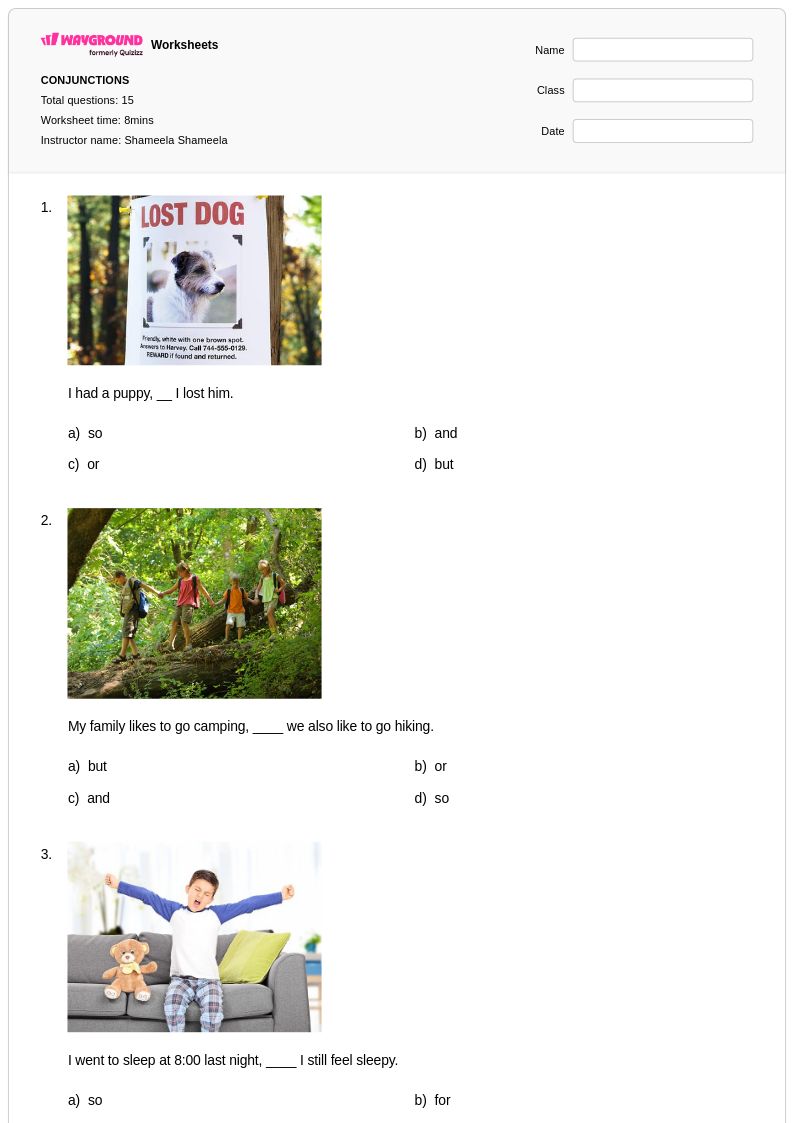
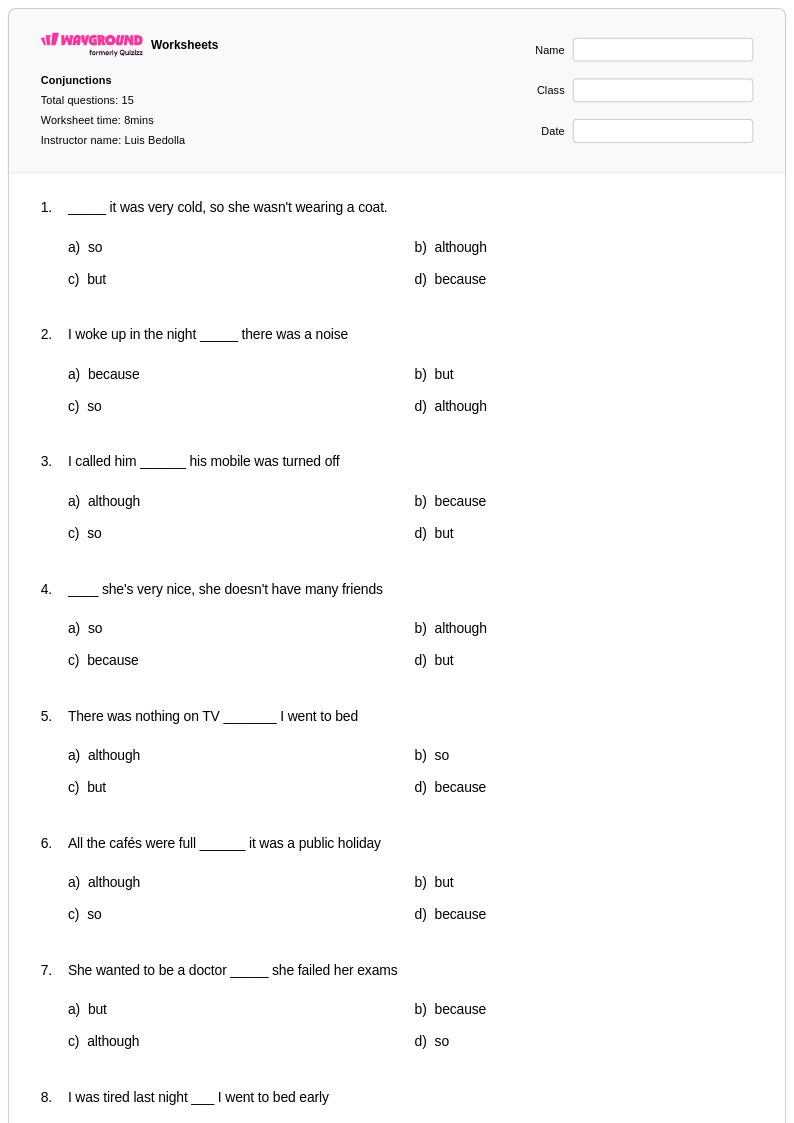
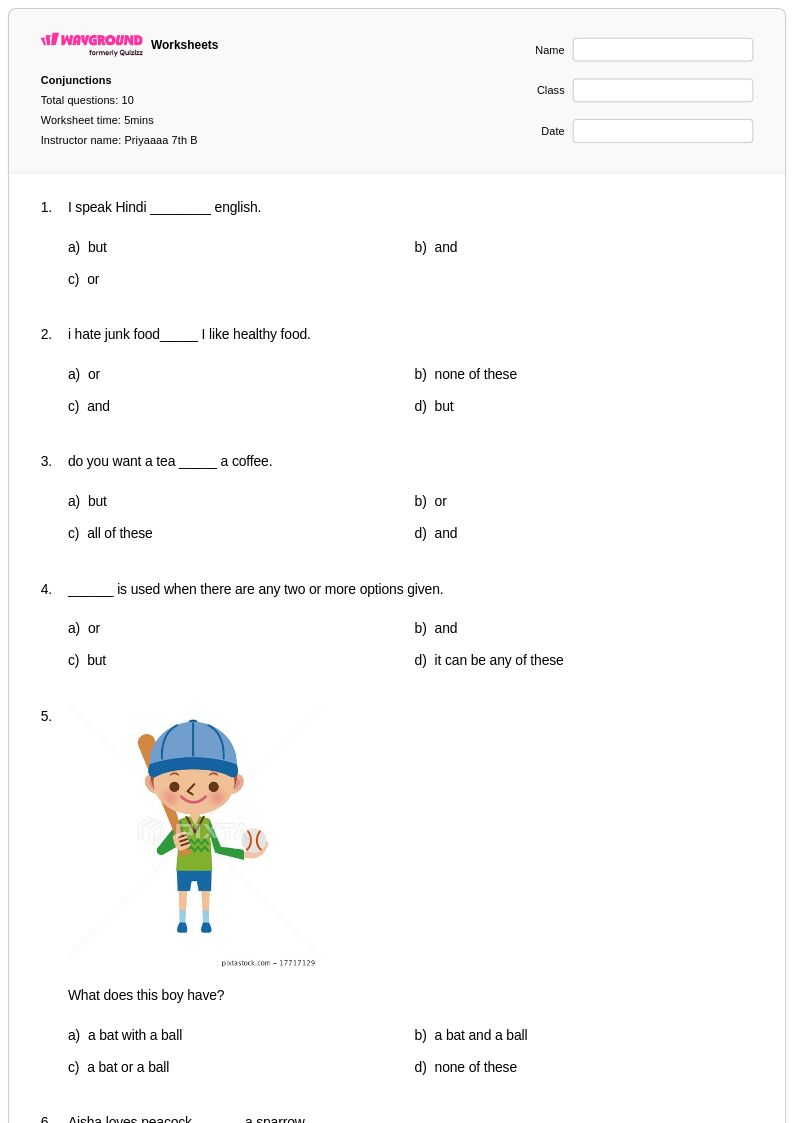
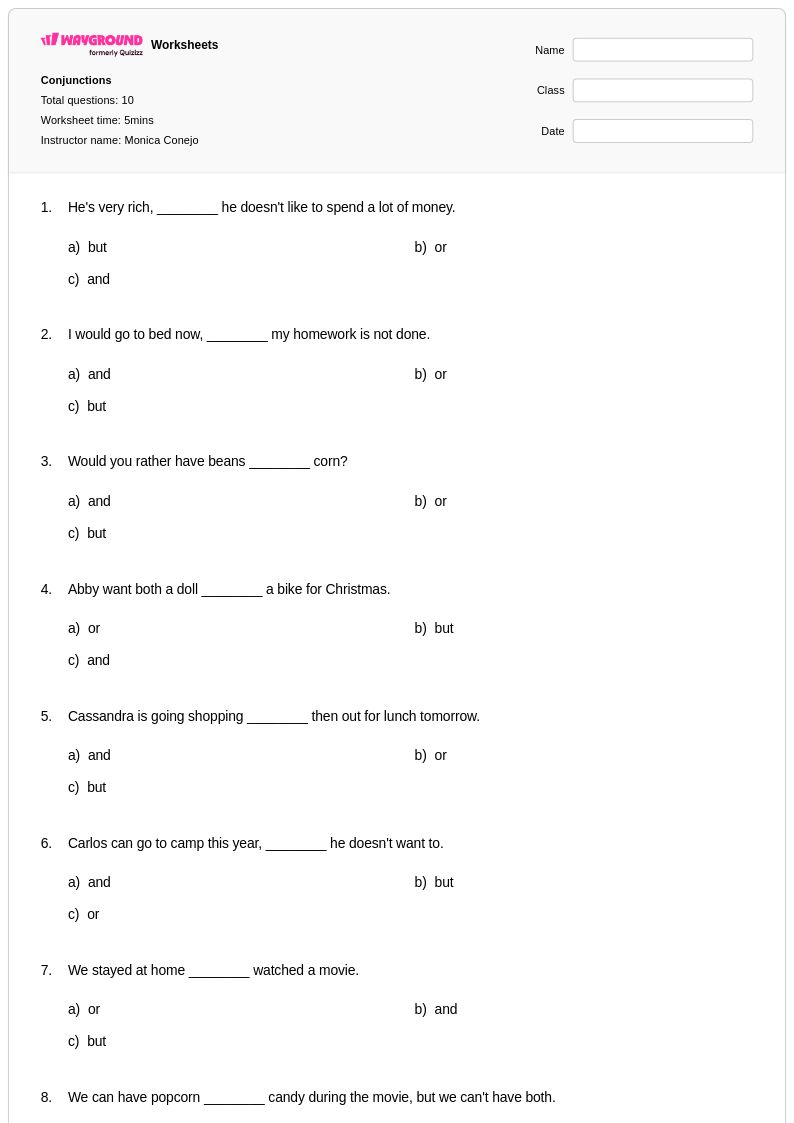
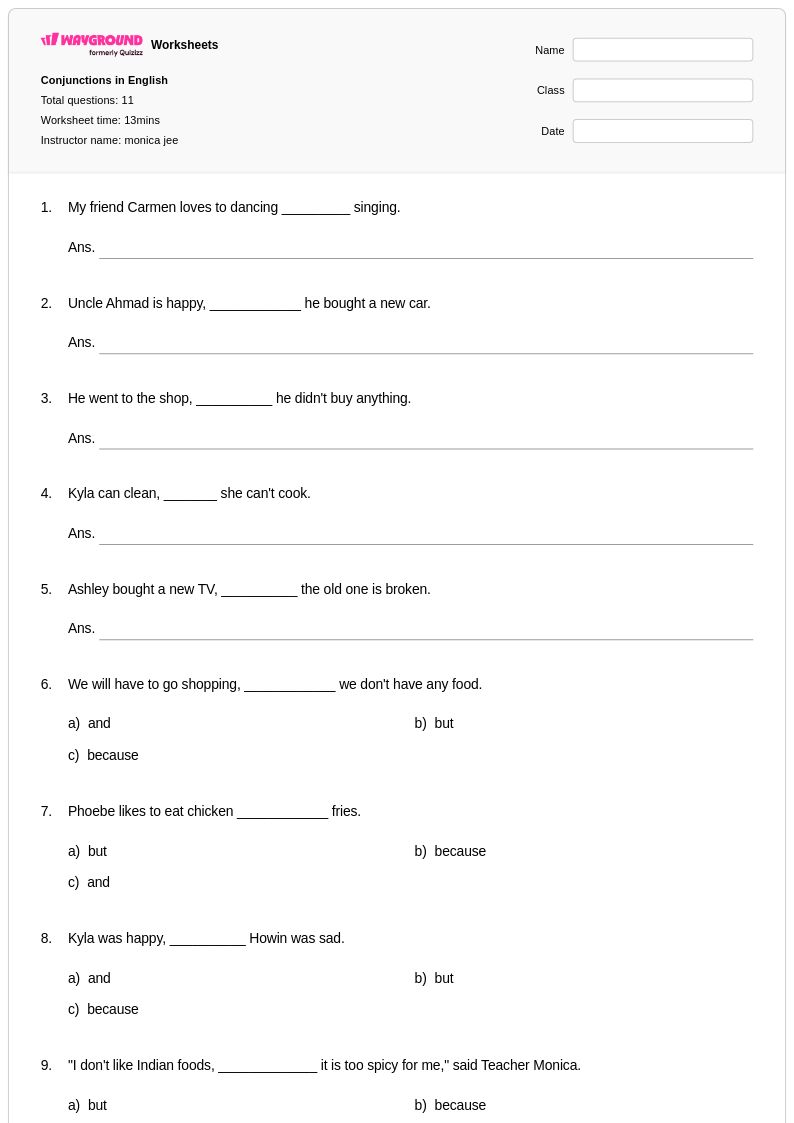
Conjunctions worksheets for Class 2 students available through Wayground (formerly Quizizz) provide essential practice in understanding and using connecting words that link ideas, sentences, and phrases. These carefully designed educational resources help young learners master fundamental conjunctions such as "and," "but," "or," and "so" through engaging exercises that build reading comprehension and writing fluency. The worksheets feature age-appropriate activities including sentence completion tasks, word choice exercises, and simple paragraph construction that strengthen students' ability to create compound sentences and express complex thoughts. Each printable worksheet comes with a comprehensive answer key, making it easy for educators to assess student progress and provide immediate feedback on conjunction usage and sentence structure skills.
Wayground (formerly Quizizz) empowers teachers with an extensive collection of conjunction worksheets created by millions of educators worldwide, offering robust search and filtering capabilities that align with state standards and curriculum requirements. The platform's differentiation tools allow instructors to customize worksheets based on individual student needs, whether for remediation of basic conjunction concepts or enrichment activities that challenge advanced learners. Teachers can access these resources in both printable pdf format for traditional classroom use and digital formats for interactive learning experiences, streamlining lesson planning while providing flexible options for skill practice. The comprehensive worksheet library supports targeted instruction in parts of speech, enabling educators to address specific learning gaps and reinforce conjunction mastery through varied practice problems that accommodate different learning styles and pacing requirements.
FAQs
How do I teach conjunctions effectively in the classroom?
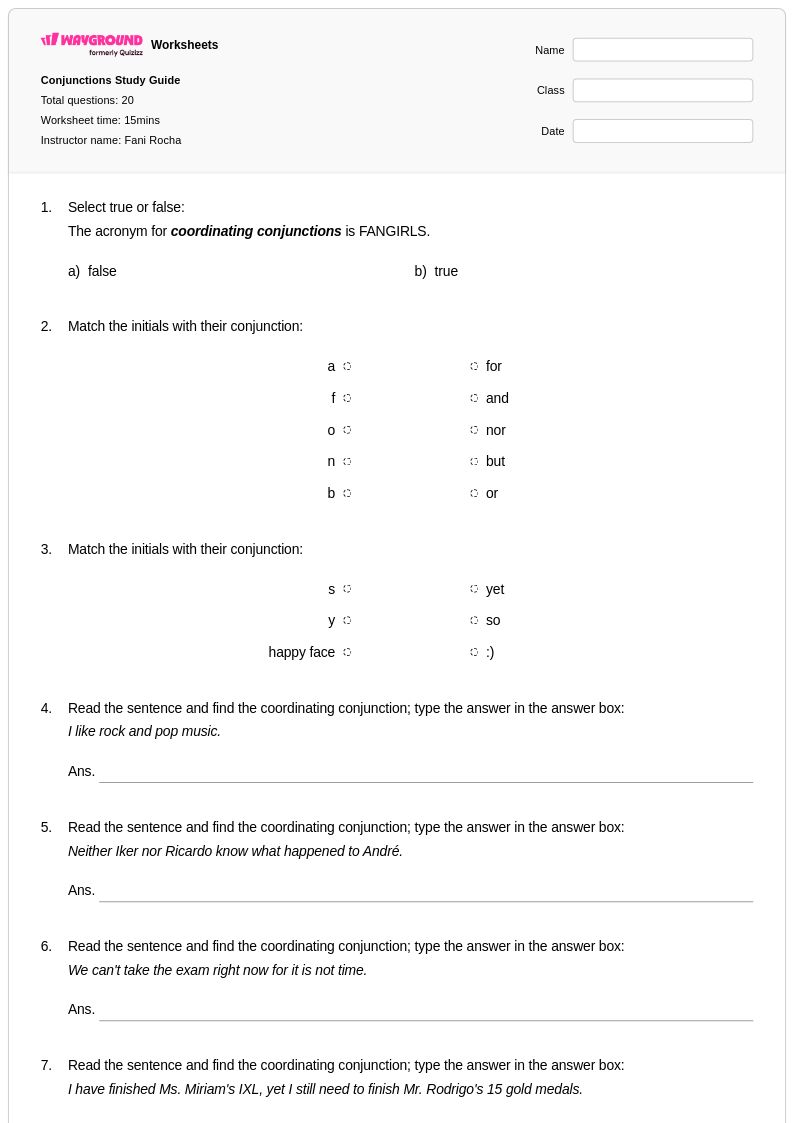
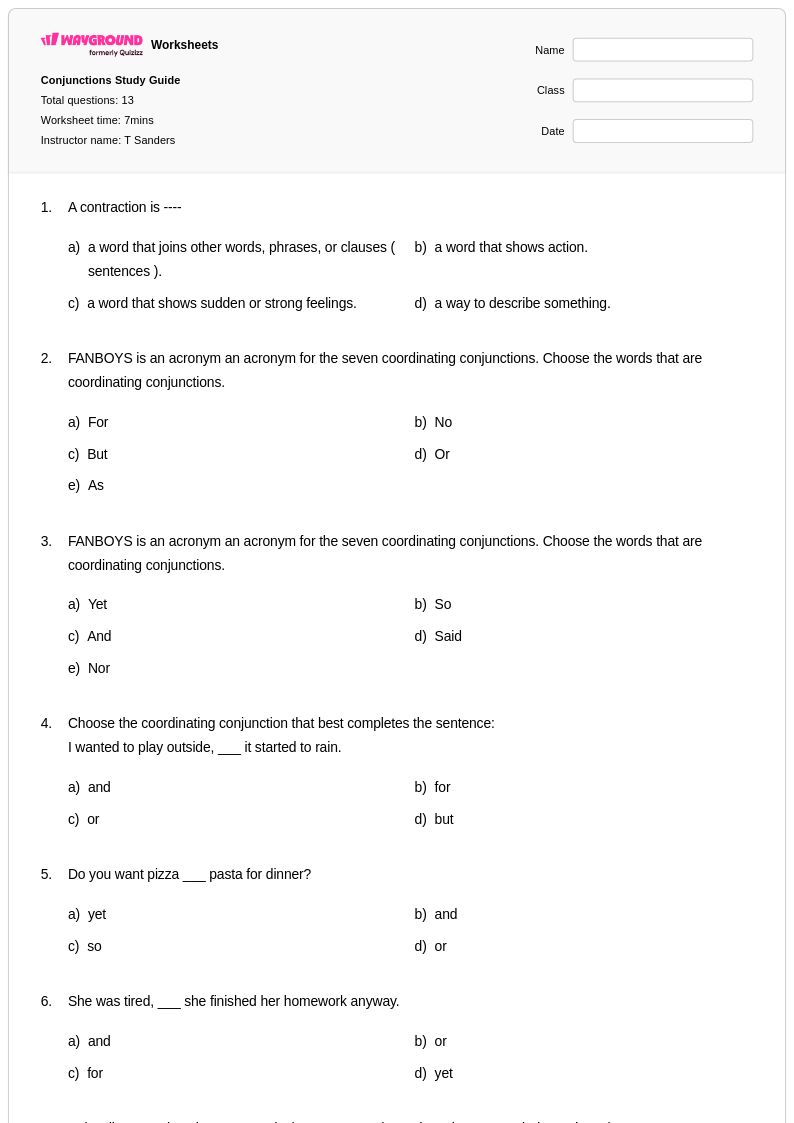
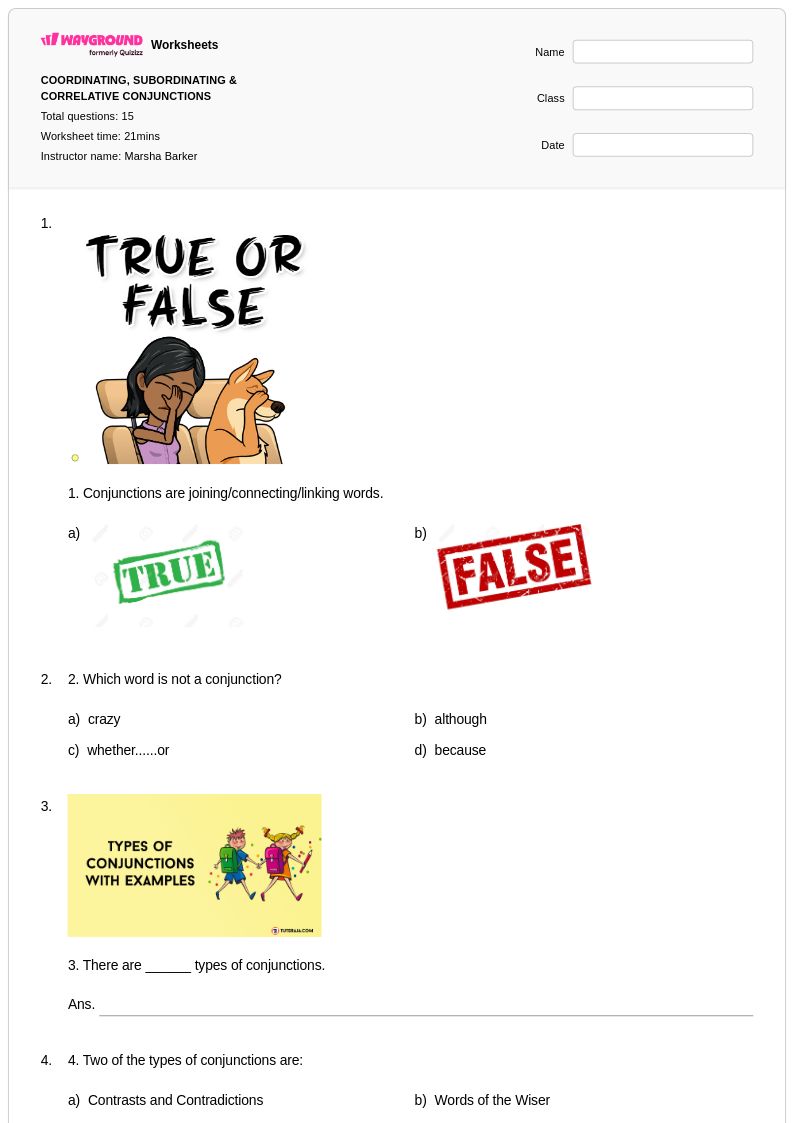
Start by anchoring instruction in the three main types: coordinating conjunctions (FANBOYS: for, and, nor, but, or, yet, so), subordinating conjunctions (because, although, while, since), and correlative conjunctions (either...or, both...and, not only...but also). Teach each type with clear sentence-level examples before asking students to produce their own. A common progression is identification first, then sentence combining, then original sentence construction — this builds both recognition and productive use of conjunctions in writing.
What exercises help students practice using conjunctions correctly?
Sentence-combining exercises are among the most effective practice formats because they require students to choose the right conjunction to express the intended logical relationship — contrast, cause, addition, or condition. Fill-in-the-blank exercises targeting specific conjunction types help students distinguish between coordinating and subordinating functions. Progressing from isolated sentence practice to paragraph-level editing gives students the chance to apply conjunction knowledge in authentic writing contexts.
What mistakes do students commonly make with conjunctions?
One of the most persistent errors is the comma splice, where students join independent clauses with a comma but no coordinating conjunction. Students also frequently confuse subordinating and coordinating conjunctions, placing a comma before 'because' or 'although' as if they function like 'but' or 'so.' With correlative conjunctions, students often create parallel structure errors — for example, writing 'either go to the store or buying groceries' instead of matching grammatical forms on both sides of the pair.
How can I differentiate conjunction instruction for students at different skill levels?
For students who are still developing foundational skills, start with coordinating conjunctions only and use visual FANBOYS anchor charts alongside guided practice. For more advanced students, shift focus to subordinating and correlative conjunctions and incorporate sentence-revision tasks that require them to evaluate which conjunction best captures the intended meaning. On Wayground, teachers can apply accommodations such as reduced answer choices and read-aloud support to individual students, allowing struggling learners to access the same worksheet content without modifying the task for the whole class.
How do I use conjunction worksheets from Wayground in my class?
Wayground conjunction worksheets are available as printable PDFs for traditional classroom use and in digital formats for technology-integrated instruction. Teachers can also host worksheets directly as a quiz on Wayground, making them suitable for whole-class instruction, independent seat work, or homework assignments. Each worksheet includes an answer key, which supports self-paced learning and reduces grading time — particularly useful when using the worksheets for review or formative practice.
How do I help students understand the difference between coordinating and correlative conjunctions?
Coordinating conjunctions connect grammatically equal elements using a single word (and, but, or), while correlative conjunctions work in pairs to link balanced sentence elements (both...and, either...or, neither...nor). A practical classroom strategy is to have students identify both parts of a correlative conjunction pair in a sentence and confirm that the elements on either side share the same grammatical form — noun with noun, verb phrase with verb phrase. Contrasting the two types through side-by-side examples helps students internalize the distinction rather than memorizing definitions in isolation.