Explore Wayground's free Class 2 adverbs worksheets and printables that help young learners identify, understand, and practice using descriptive words through engaging exercises, PDF downloads, and complete answer keys.
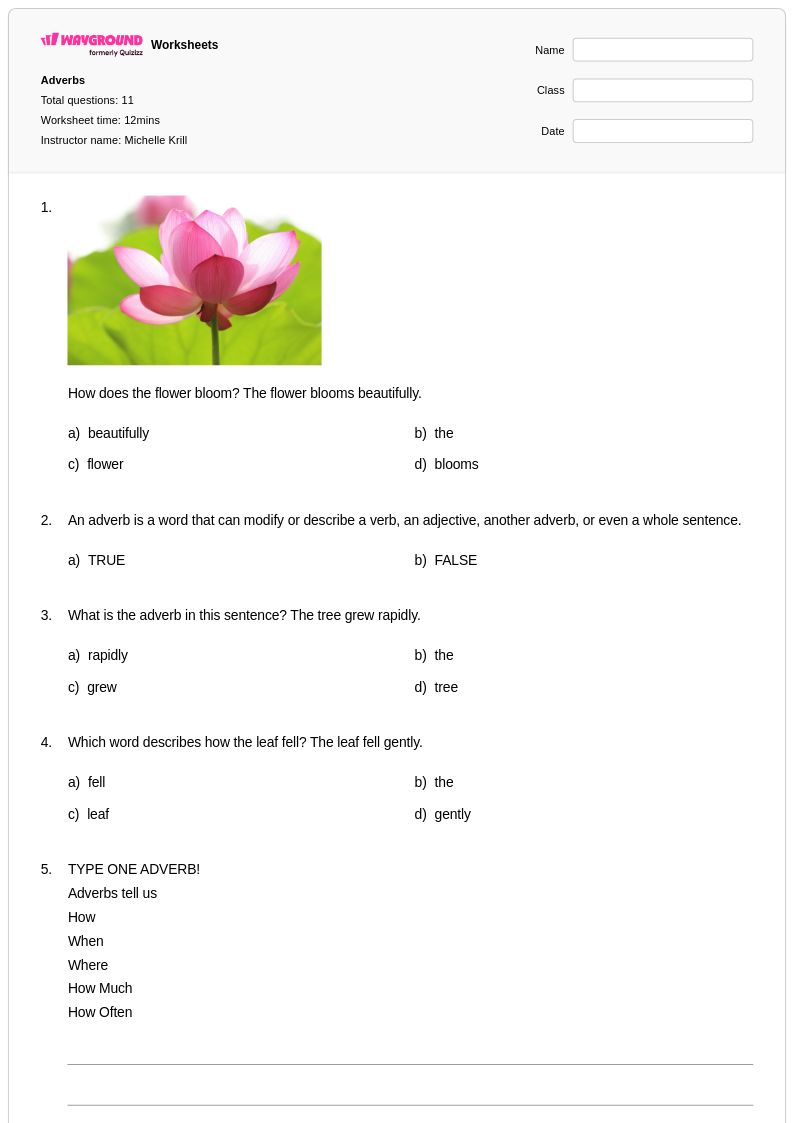
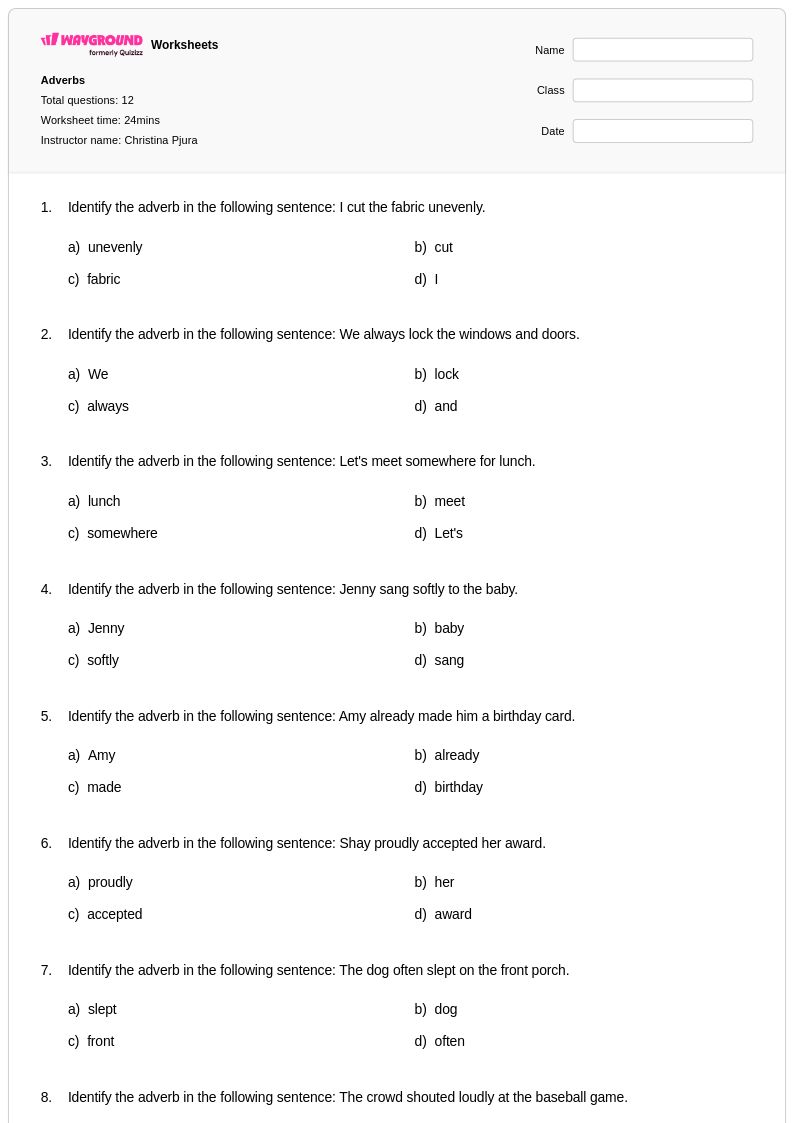
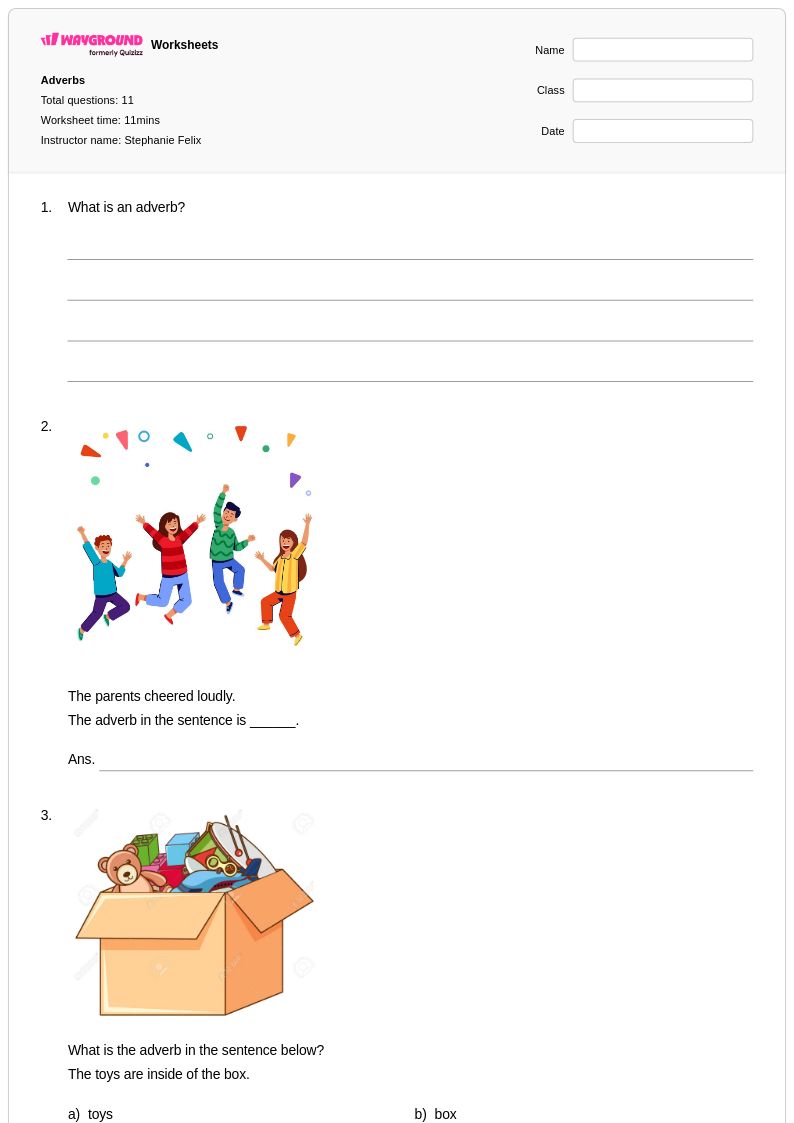
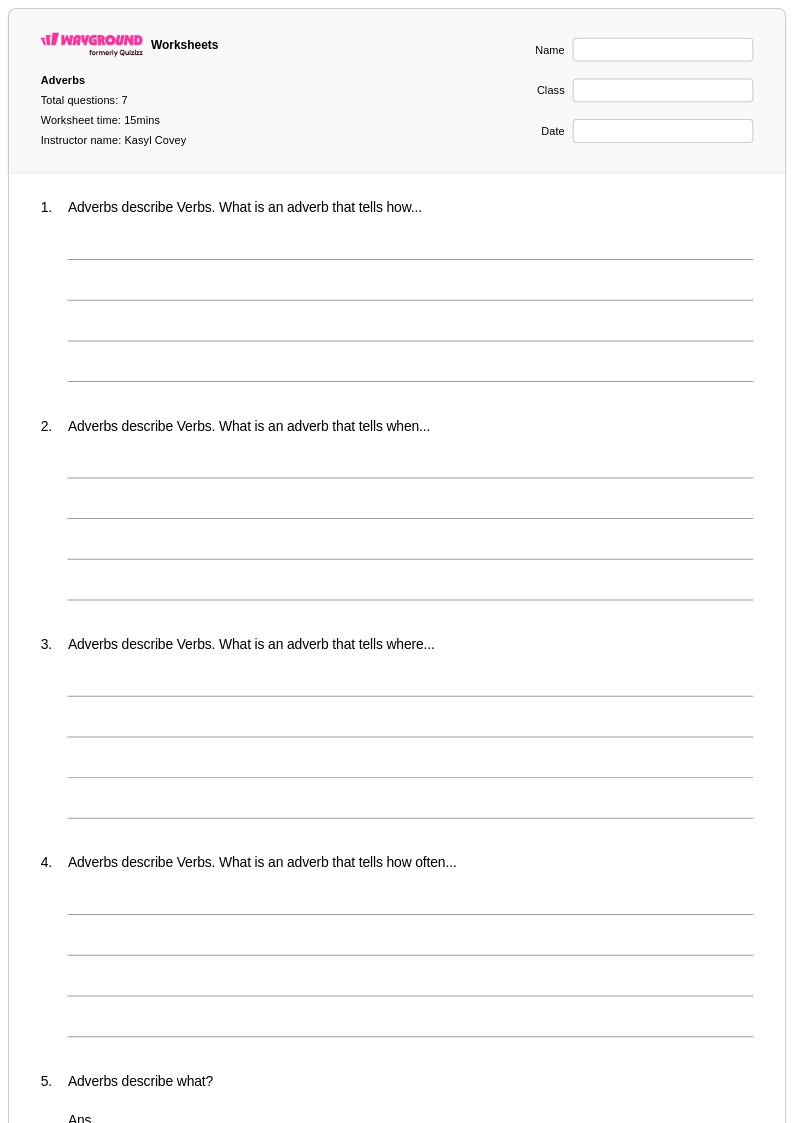
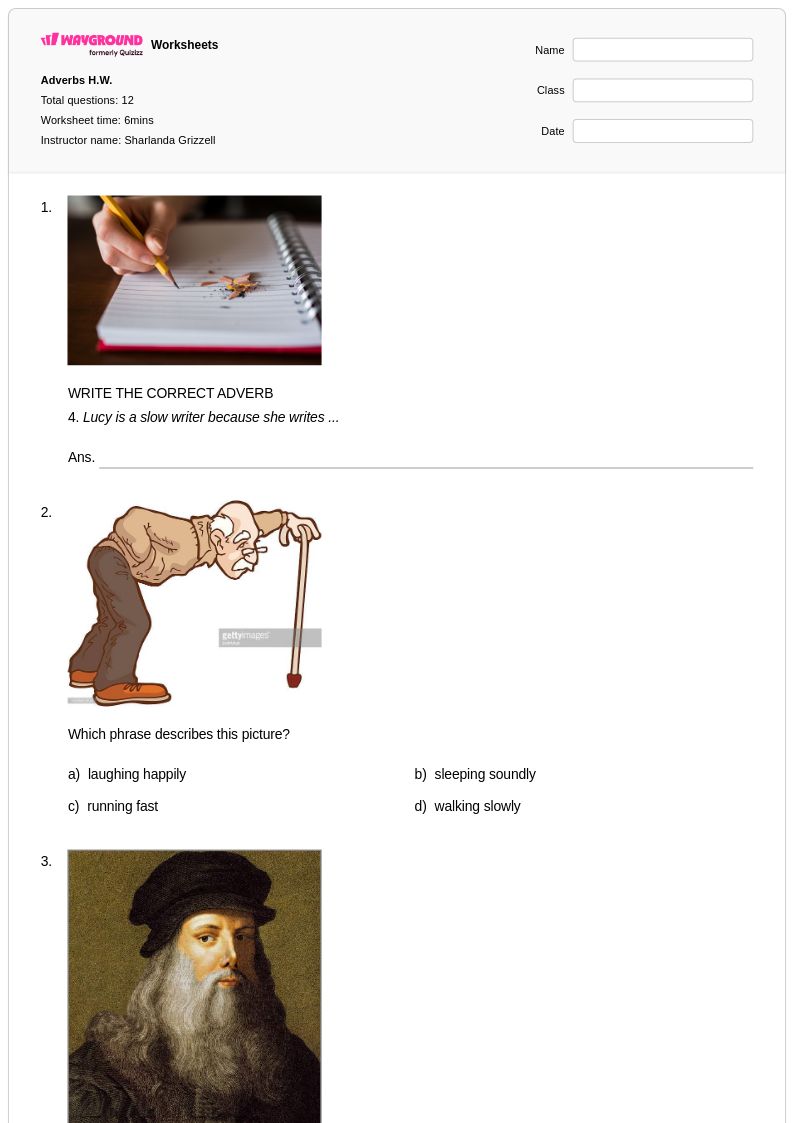
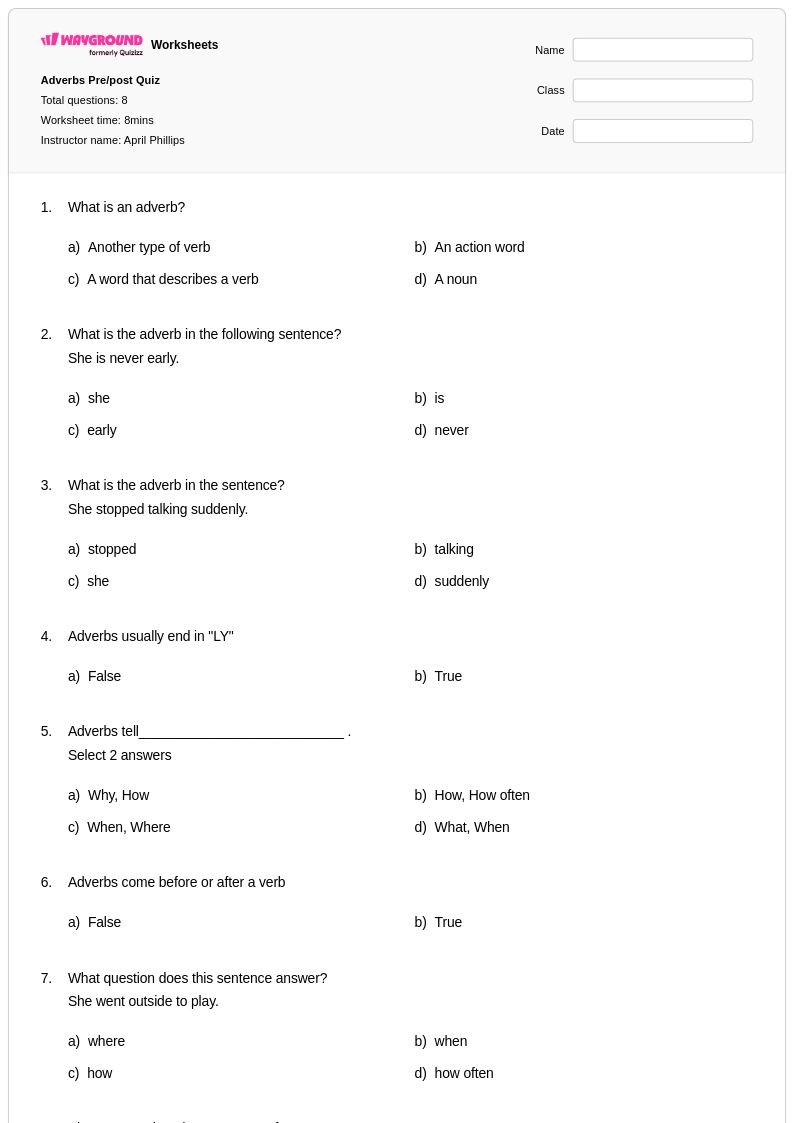
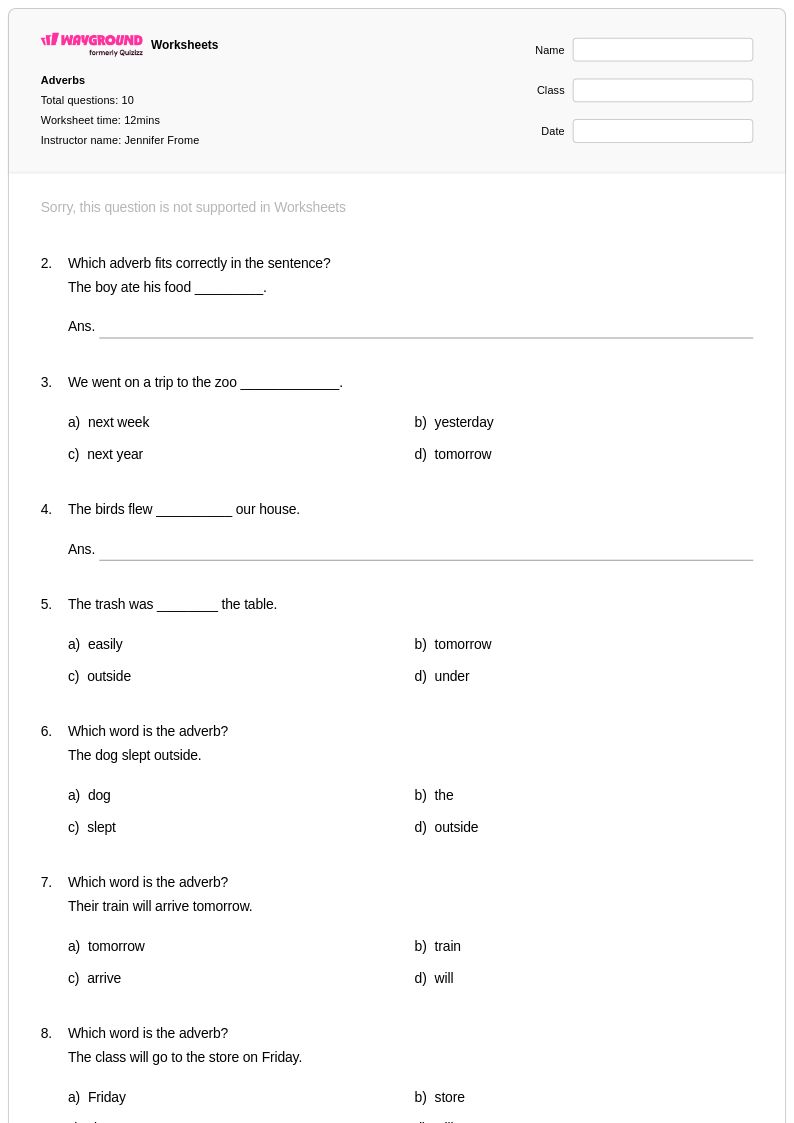
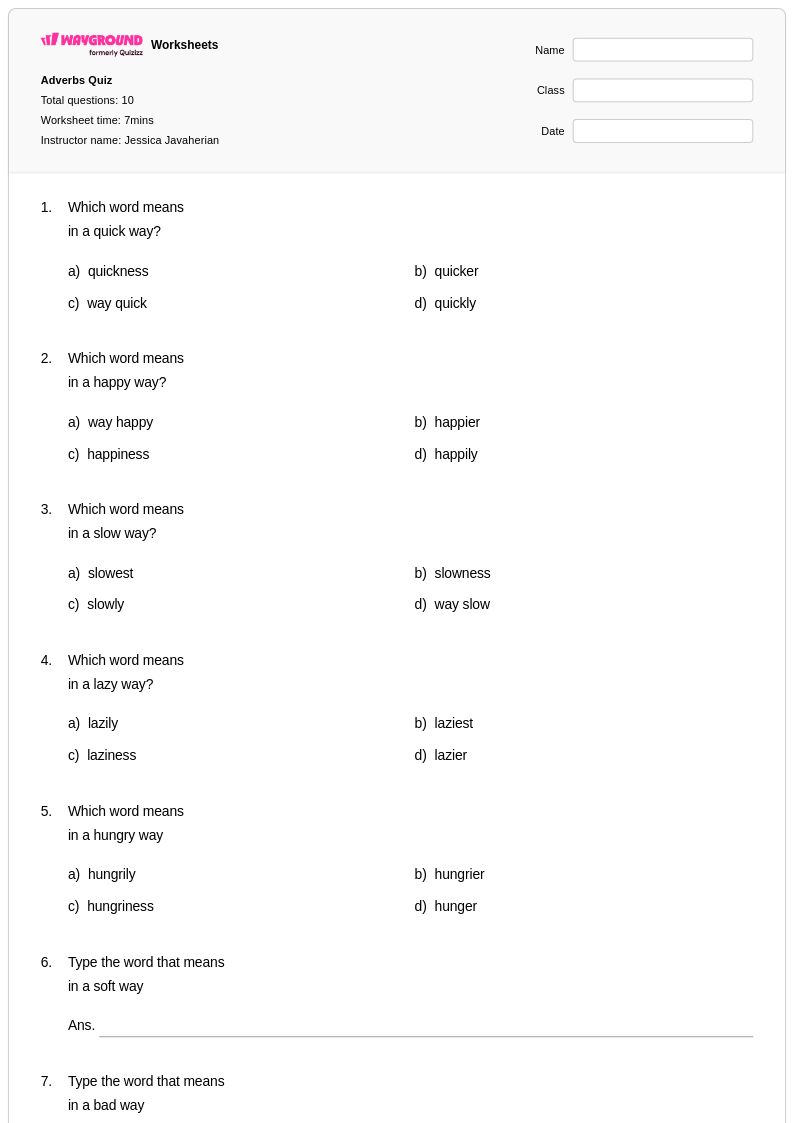
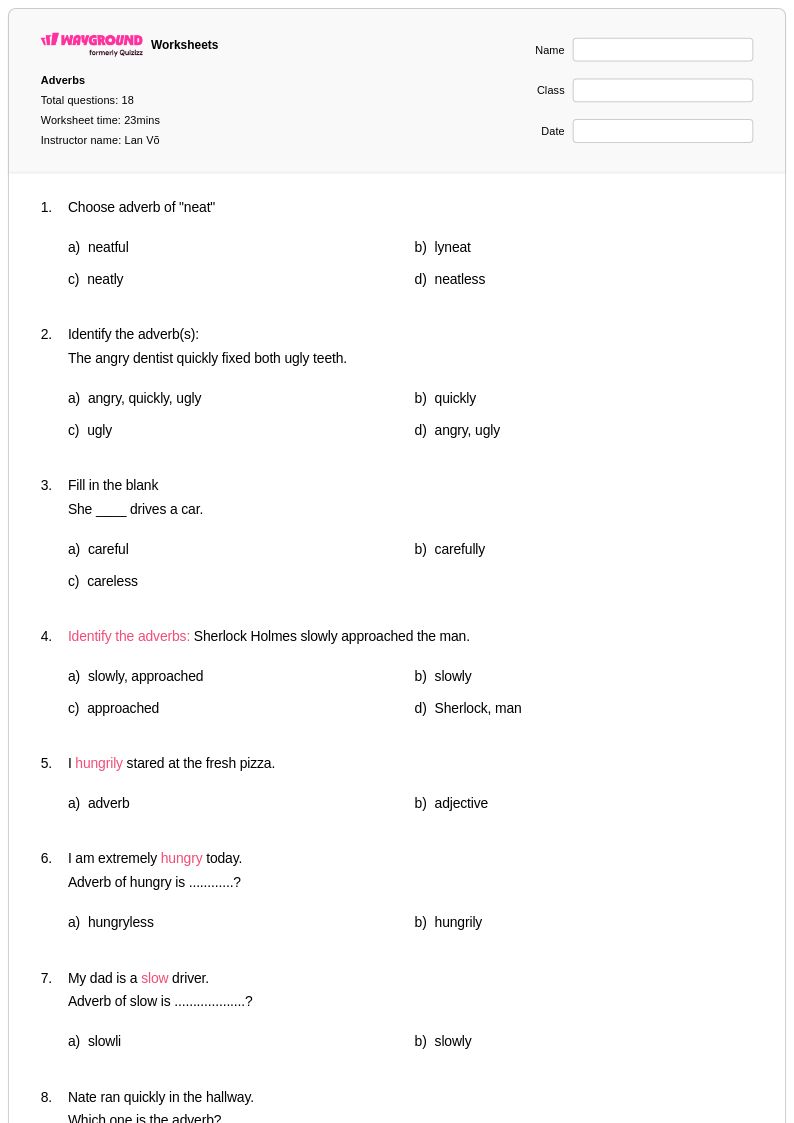
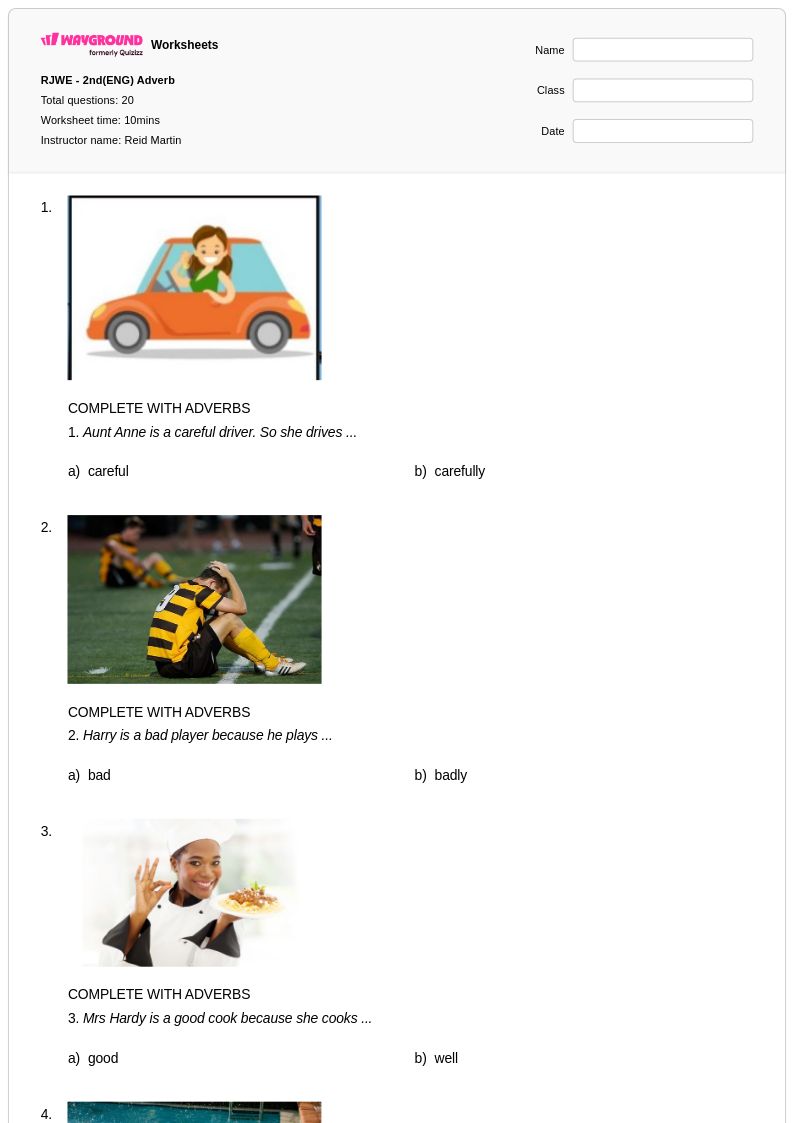
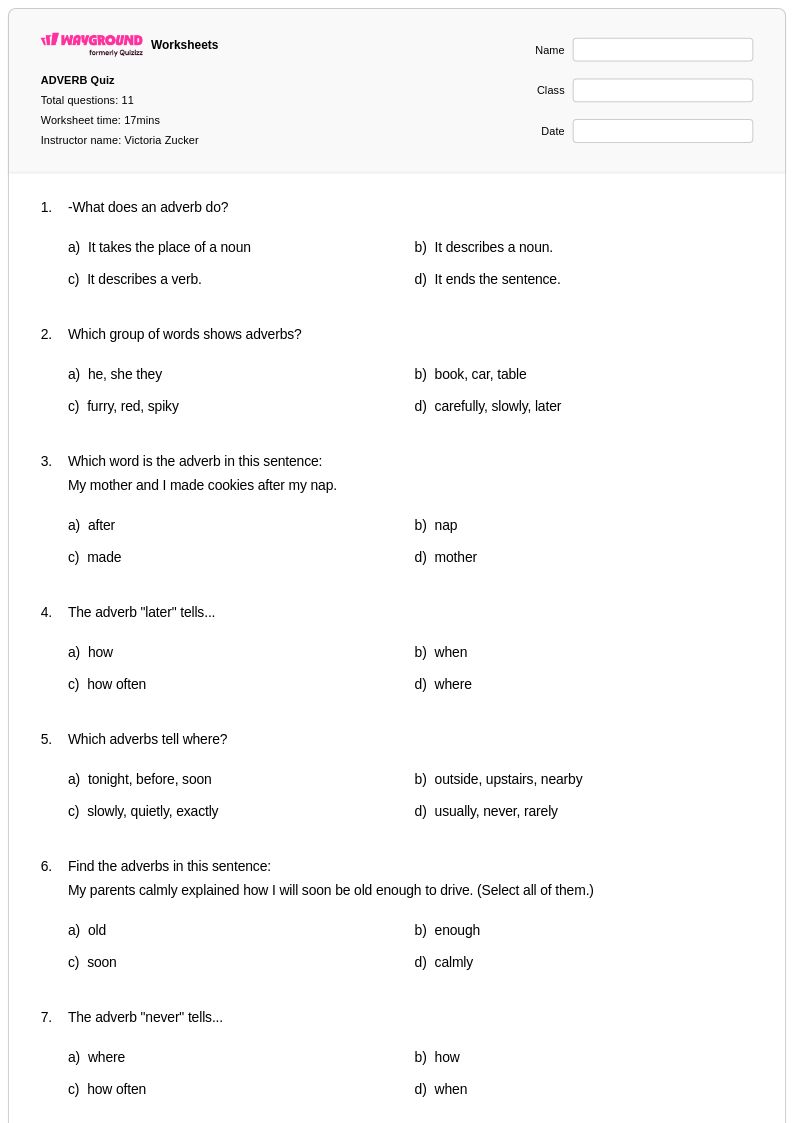
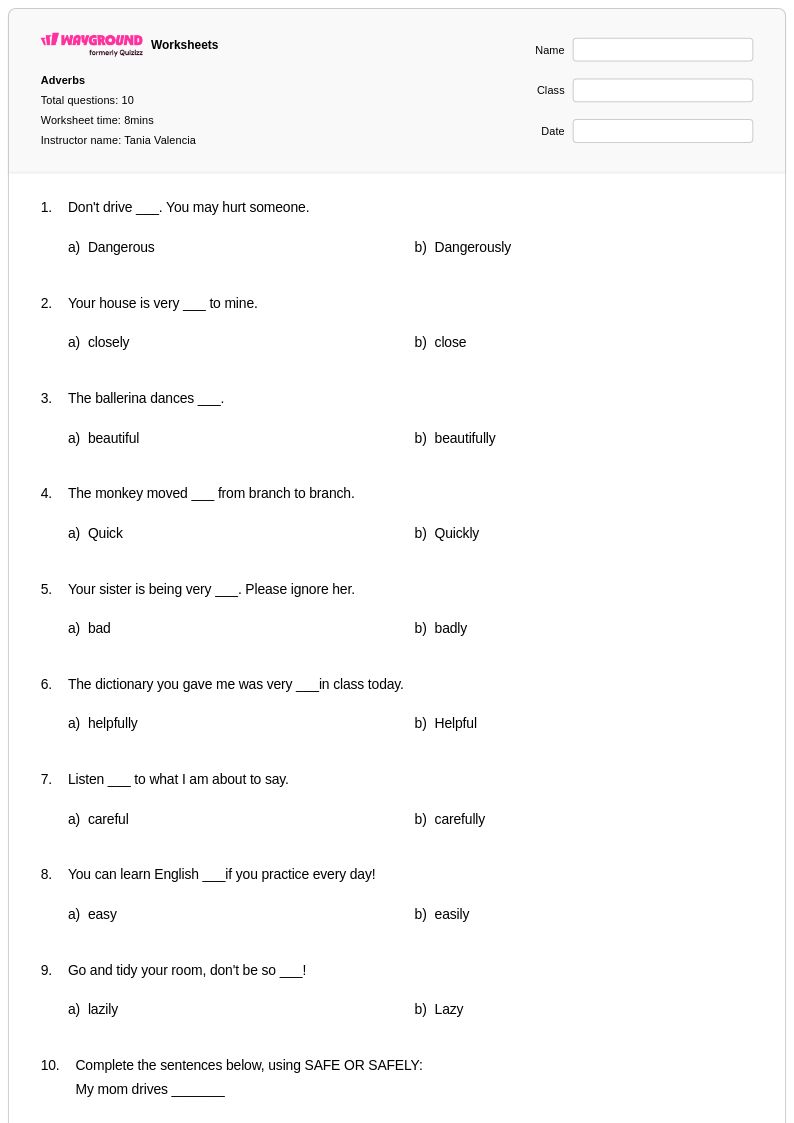
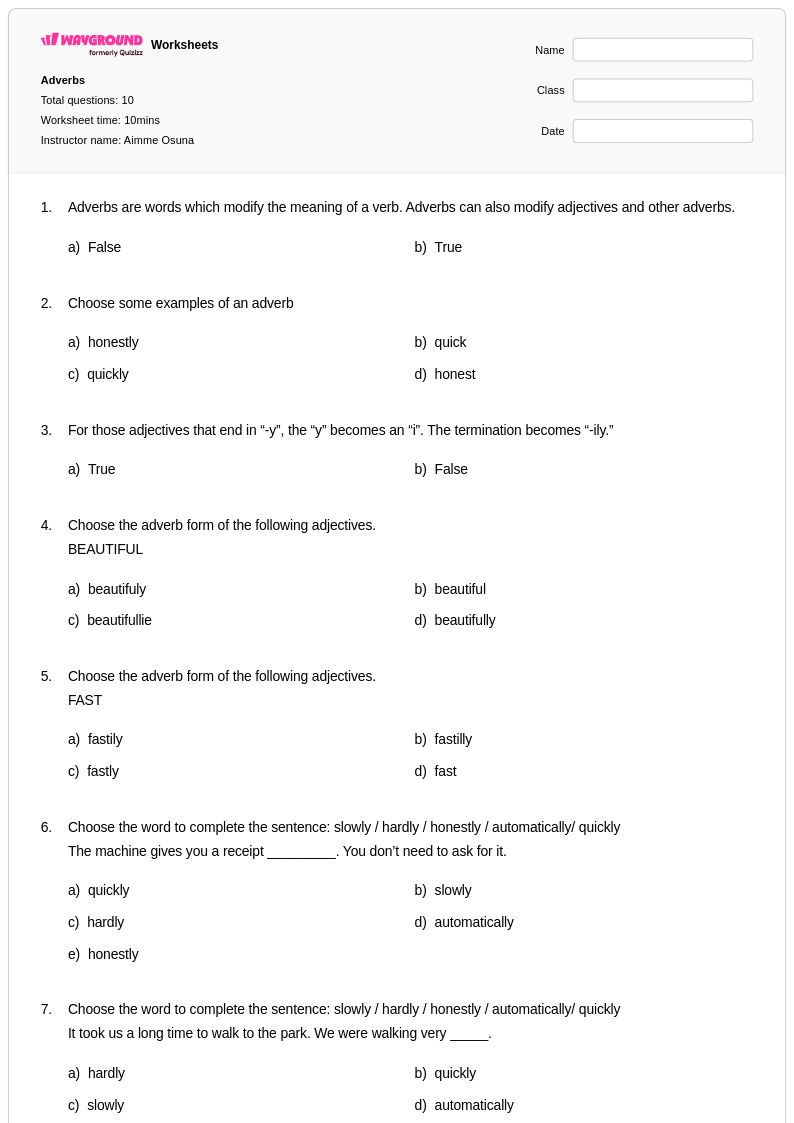
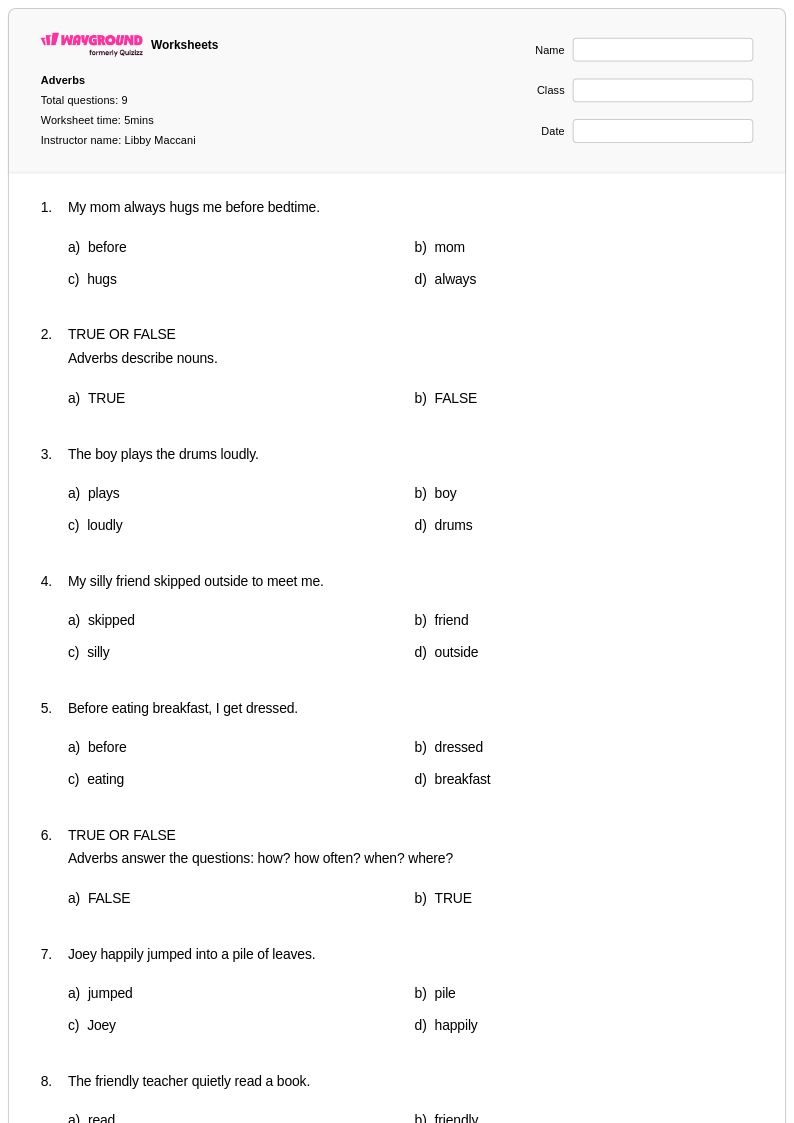
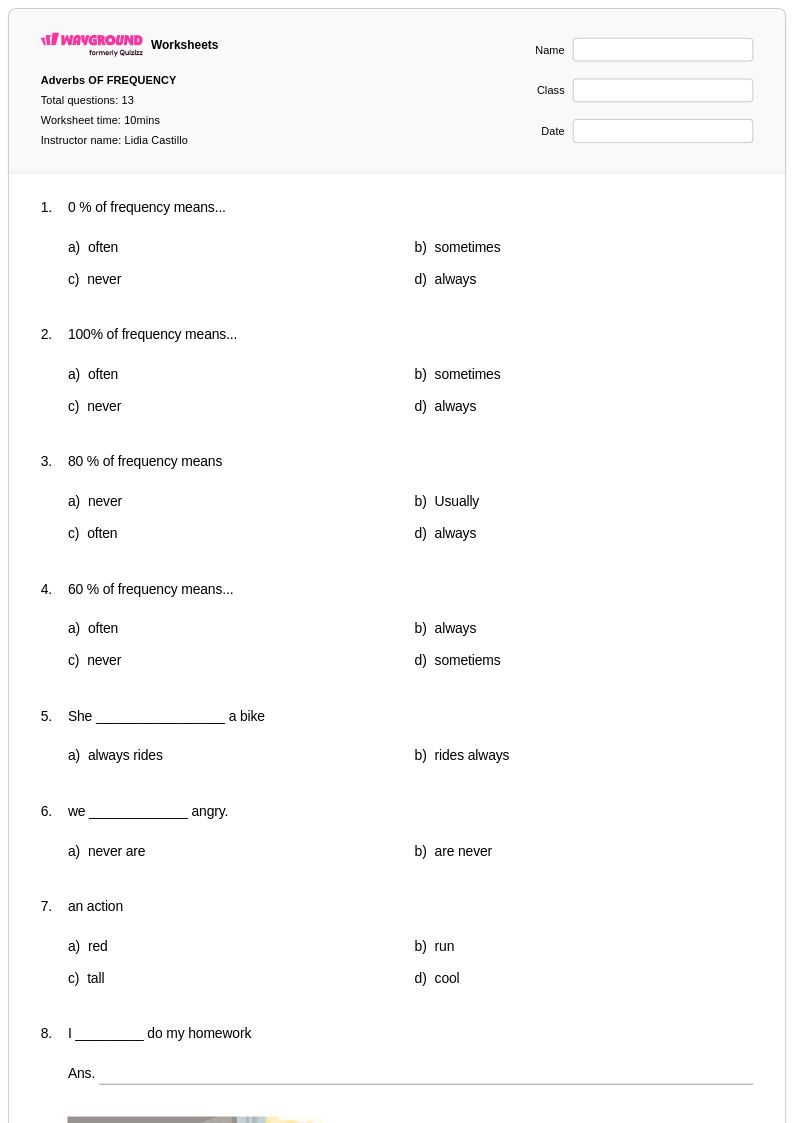
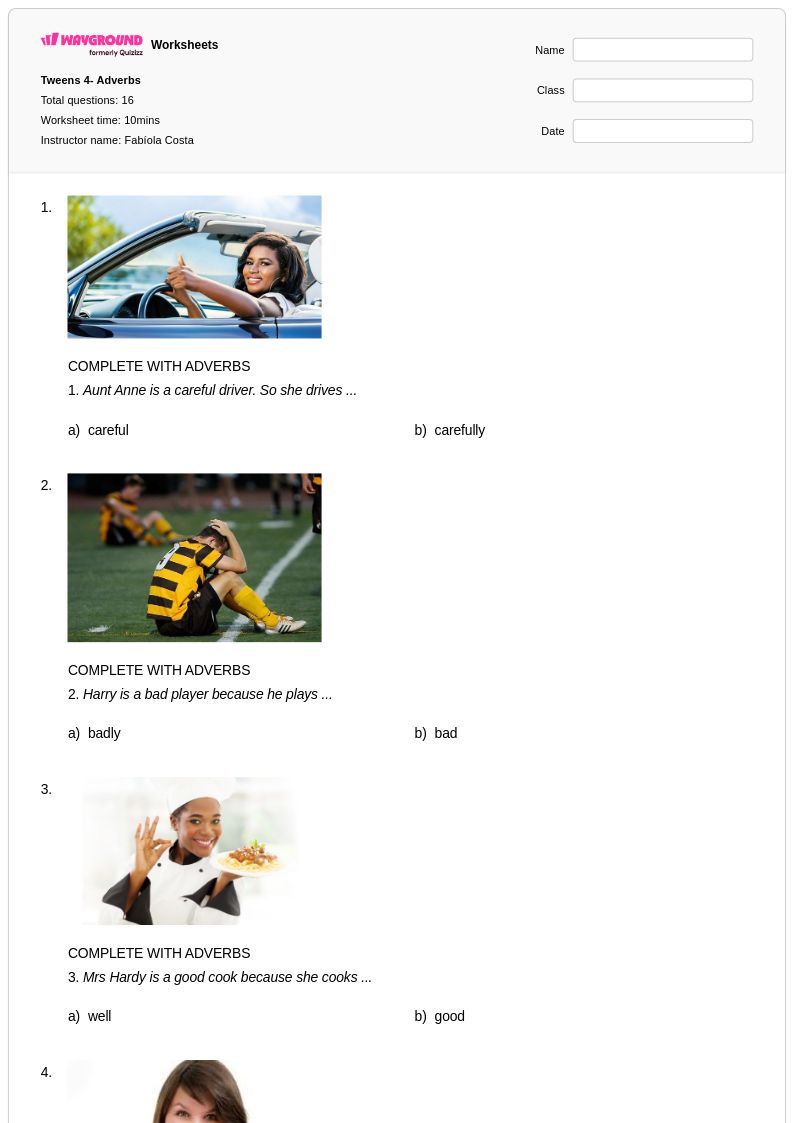
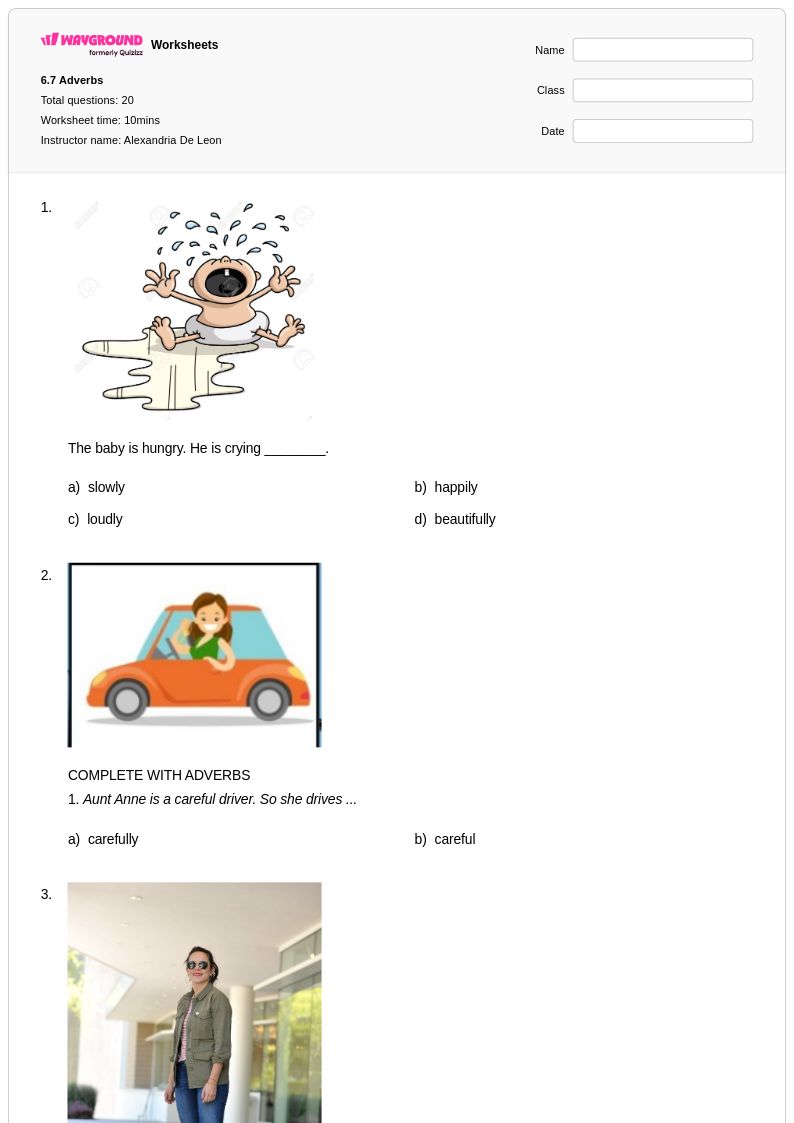
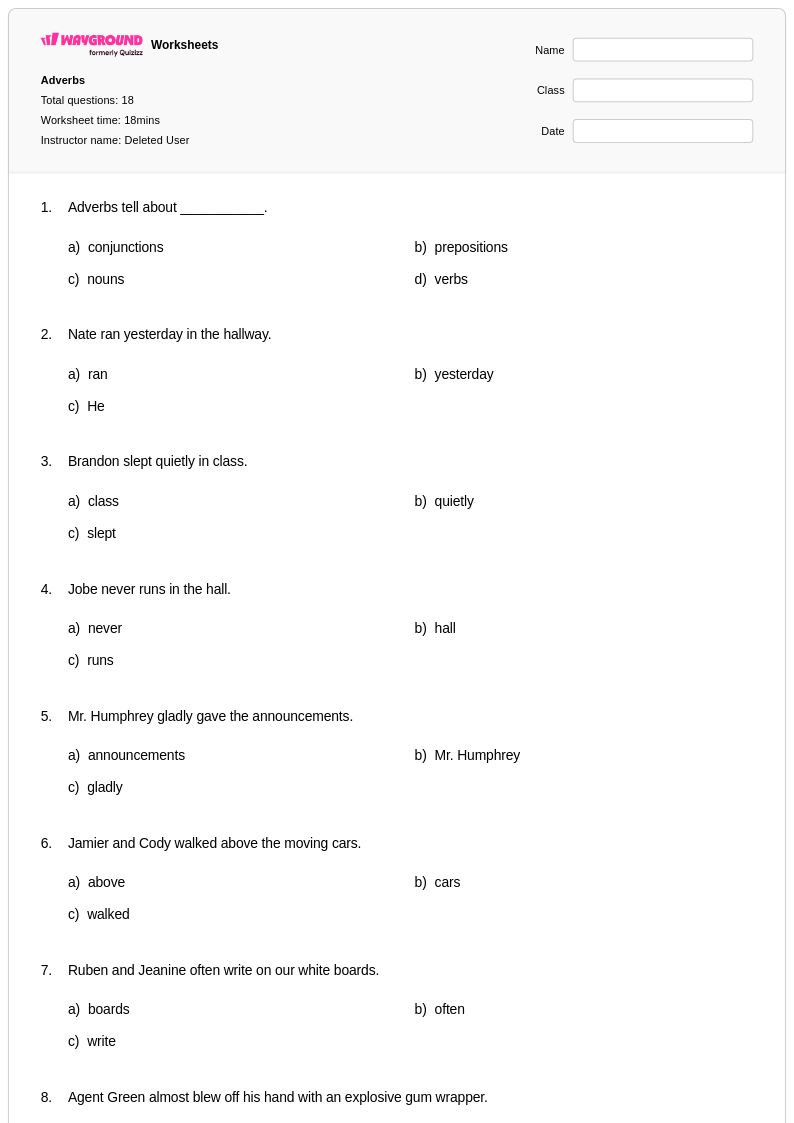
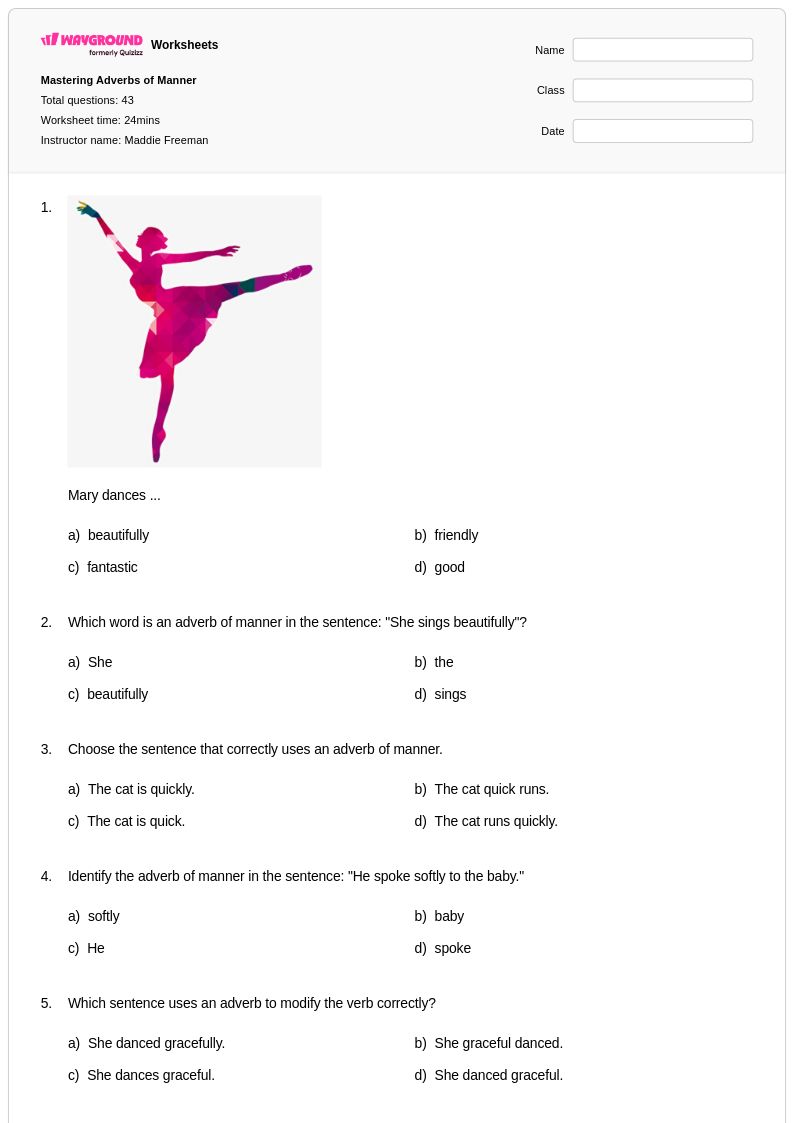
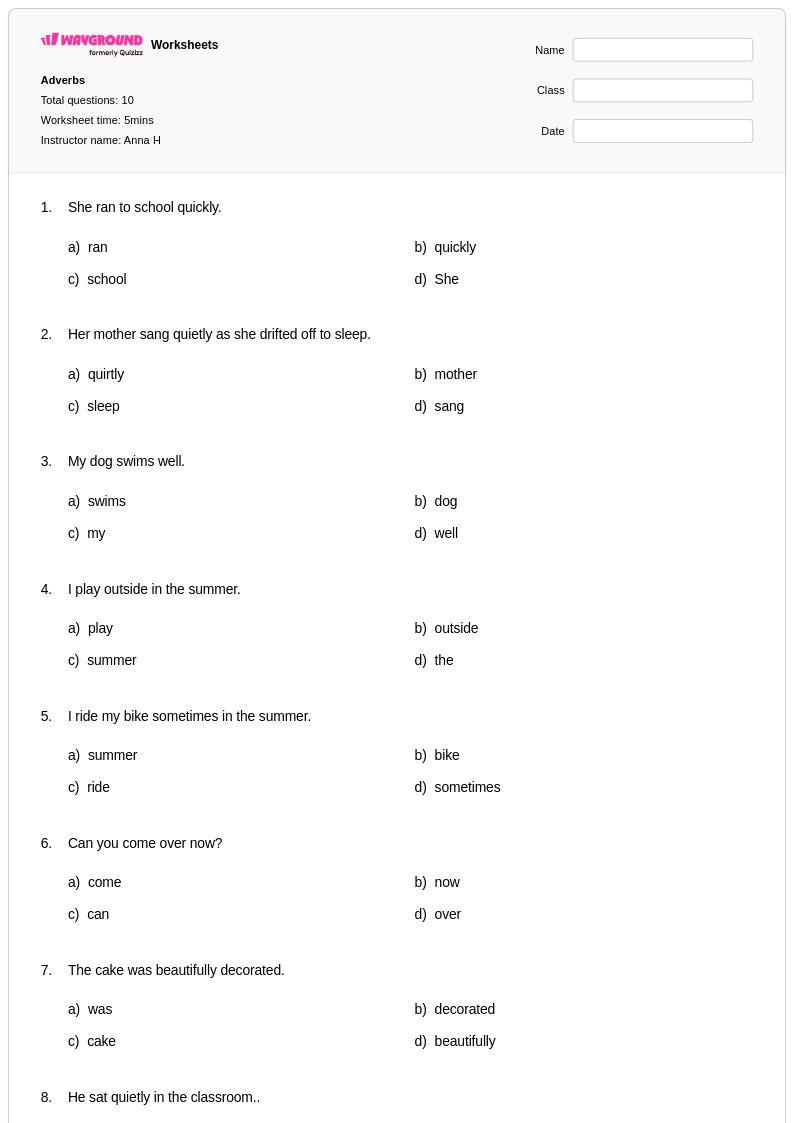
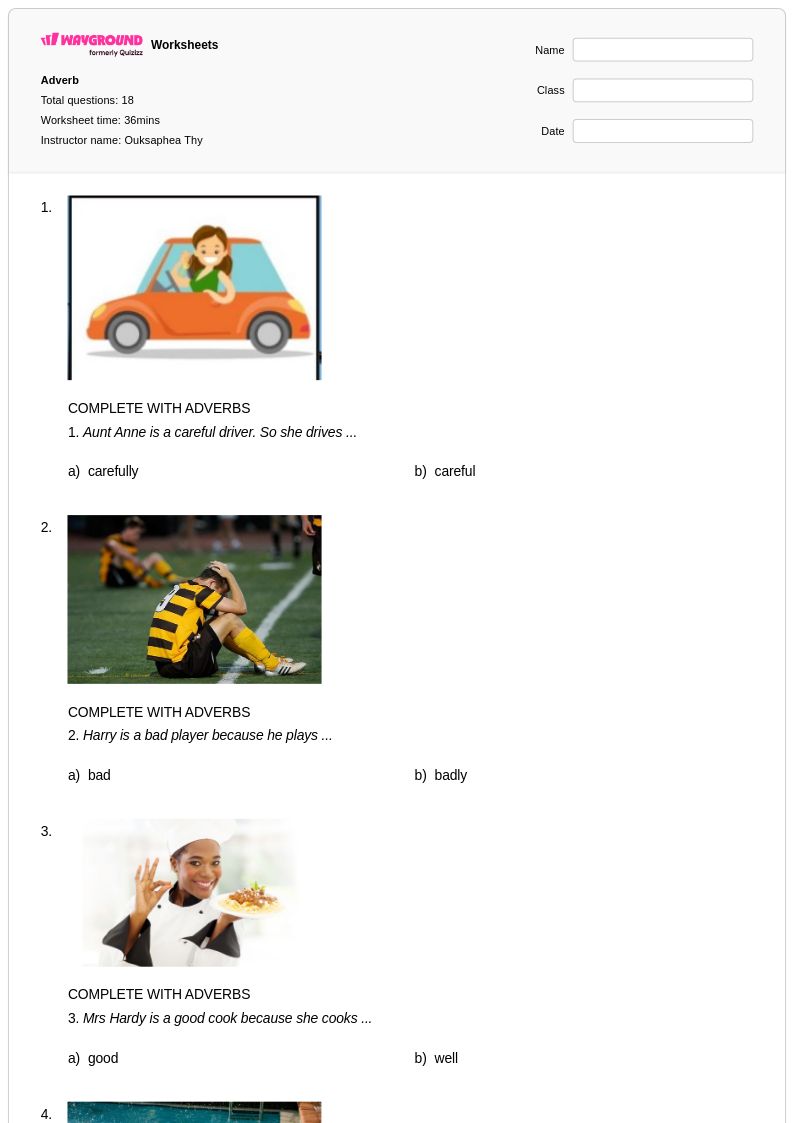
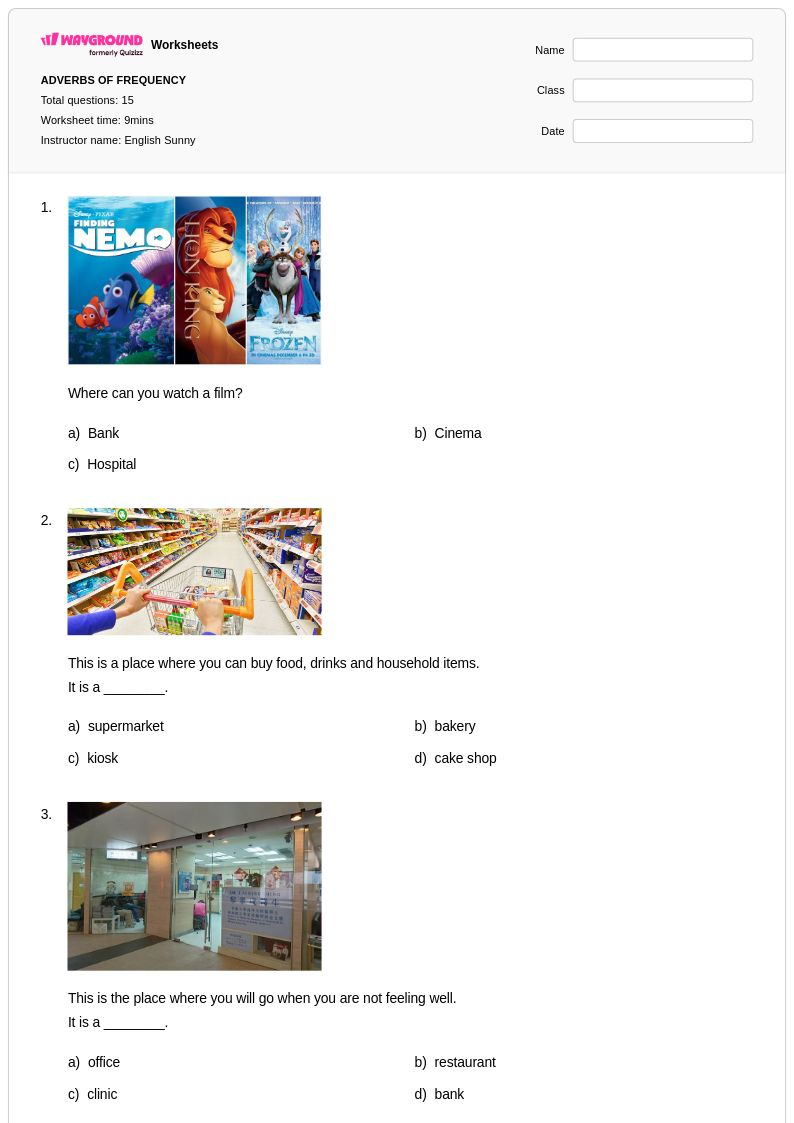
Adverbs for Class 2 students become accessible and engaging through Wayground's comprehensive collection of educational worksheets that focus on helping young learners identify and use descriptive words that modify verbs, adjectives, and other adverbs. These carefully crafted worksheets introduce second graders to common adverbs like quickly, slowly, carefully, and loudly through age-appropriate exercises that strengthen reading comprehension, writing skills, and grammatical understanding. Each worksheet includes practice problems that guide students through recognizing adverbs in sentences, understanding how adverbs answer questions like "how," "when," and "where," and applying adverbs correctly in their own writing. Teachers benefit from complete answer keys and free printable pdf formats that make classroom implementation seamless while supporting diverse learning needs through varied question types and visual elements designed specifically for emerging readers and writers.
Wayground, formerly Quizizz, empowers educators with millions of teacher-created adverb worksheets and resources that align with Class 2 language arts standards and provide extensive search and filtering capabilities to locate materials perfectly suited to individual classroom needs. The platform's differentiation tools allow teachers to customize worksheets for various skill levels, ensuring that struggling learners receive appropriate scaffolding while advanced students encounter enriching challenges that deepen their understanding of adverbial functions. Both printable and digital formats, including downloadable pdf versions, offer flexibility for in-person instruction, homework assignments, and remote learning scenarios, while the comprehensive resource library supports lesson planning, targeted remediation for students who need additional practice identifying adverbs, and skill-building activities that reinforce proper adverb usage in speaking and writing contexts throughout the academic year.
FAQs
How do I teach adverbs to elementary and middle school students?
Start by anchoring adverbs to verbs students already know — ask them to describe how, when, where, or how often an action happens, then label those answers as adverbs. Use mentor sentences from familiar texts to show adverbs in natural context before moving to identification exercises. Once students can recognize adverbs modifying verbs, introduce adverbs that modify adjectives and other adverbs as a progression, not all at once.
What types of adverbs should I cover in a grammar unit?
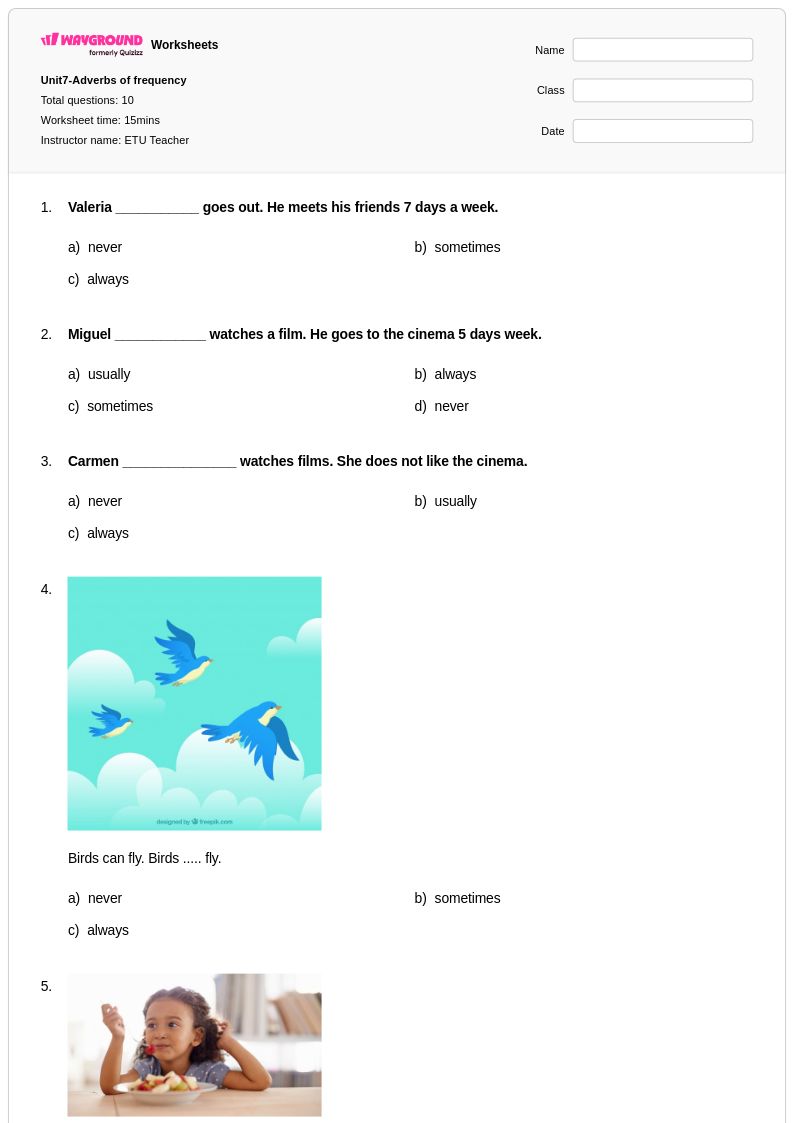
A complete adverb unit should cover adverbs of manner (quickly, carefully), time (yesterday, soon), place (here, outside), frequency (always, rarely), and degree (very, extremely). Students also benefit from learning comparative and superlative adverb forms (fast, faster, fastest) once they have a solid grasp of basic adverb functions. Covering each type with dedicated practice helps students distinguish them and use them accurately in writing.
What exercises help students practice identifying and using adverbs?
Effective practice exercises include underlining adverbs in sentences and labeling which word they modify, filling in blanks with adverbs that fit a given context, and rewriting sentences by adding or changing adverbs to shift meaning. Having students sort adverbs by type — manner, time, place, frequency, degree — reinforces categorical understanding alongside identification skills. Writing tasks that require students to incorporate specific adverb types into original sentences bridge recognition and application.
What mistakes do students commonly make when learning adverbs?
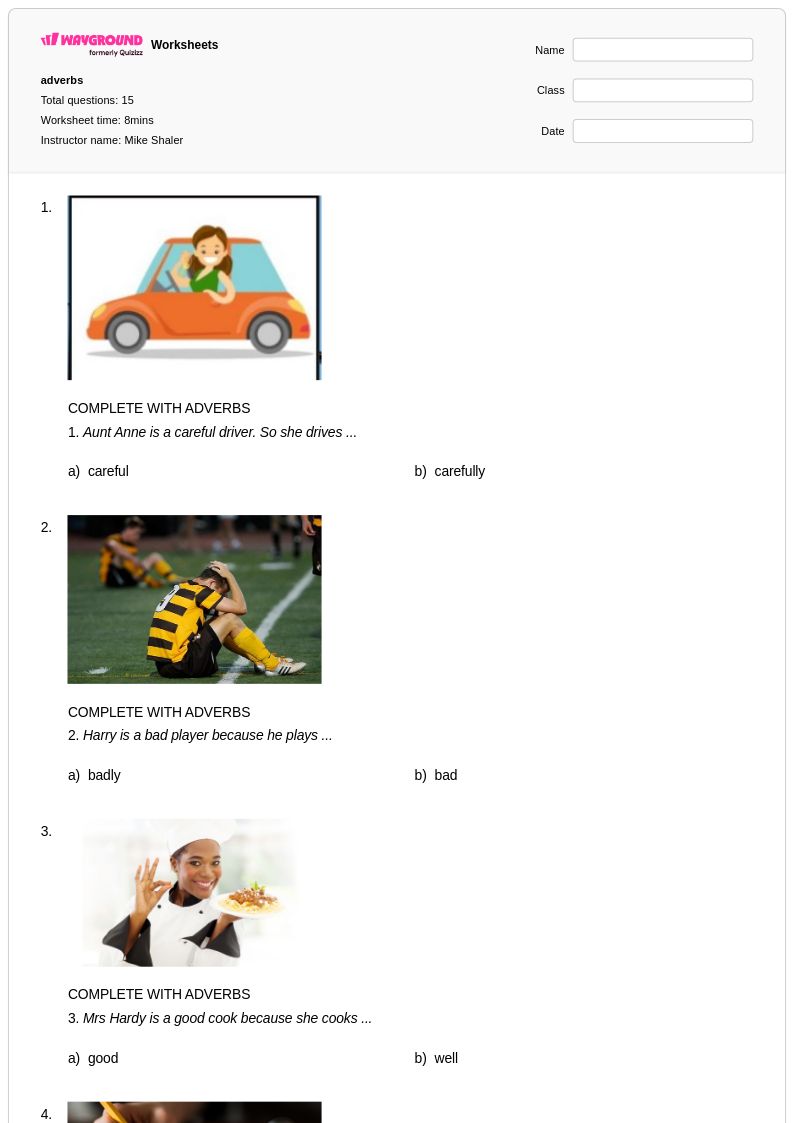
The most common error is confusing adverbs with adjectives, particularly with linking verbs — students often write 'she felt badly' instead of 'she felt bad' because they default to the adverb form after any verb. Students also frequently misplace adverbs in sentences, especially adverbs of frequency, placing 'always' or 'never' after the main verb rather than before it. Another persistent error is overusing degree adverbs like 'very' and 'really' without understanding that more precise word choice is often stronger.
How can I use Wayground's adverb worksheets in my classroom?
Wayground's adverb worksheets are available as printable PDFs for traditional classroom use and in digital formats for technology-integrated learning environments, making them suitable for in-class instruction, homework, or independent practice. Teachers can also host the worksheets as a quiz directly on Wayground, enabling real-time student responses and automatic scoring. For students who need additional support, Wayground allows teachers to apply individual accommodations such as read aloud, extended time, or reduced answer choices, so all learners can access the same material at an appropriate level.
How do I differentiate adverb instruction for students at different skill levels?
For emerging learners, focus on adverbs of manner and time using simple, high-frequency examples before introducing adverbs of degree or comparative forms. On-level students benefit from mixed identification and application tasks that span multiple adverb types. Advanced students can work with more complex sentence structures, analyze how adverb placement changes meaning, or explore stylistic adverb choices in published writing. Wayground supports this differentiation by offering worksheets at varying complexity levels and individual student accommodations such as reduced answer choices or read aloud for those who need it.