
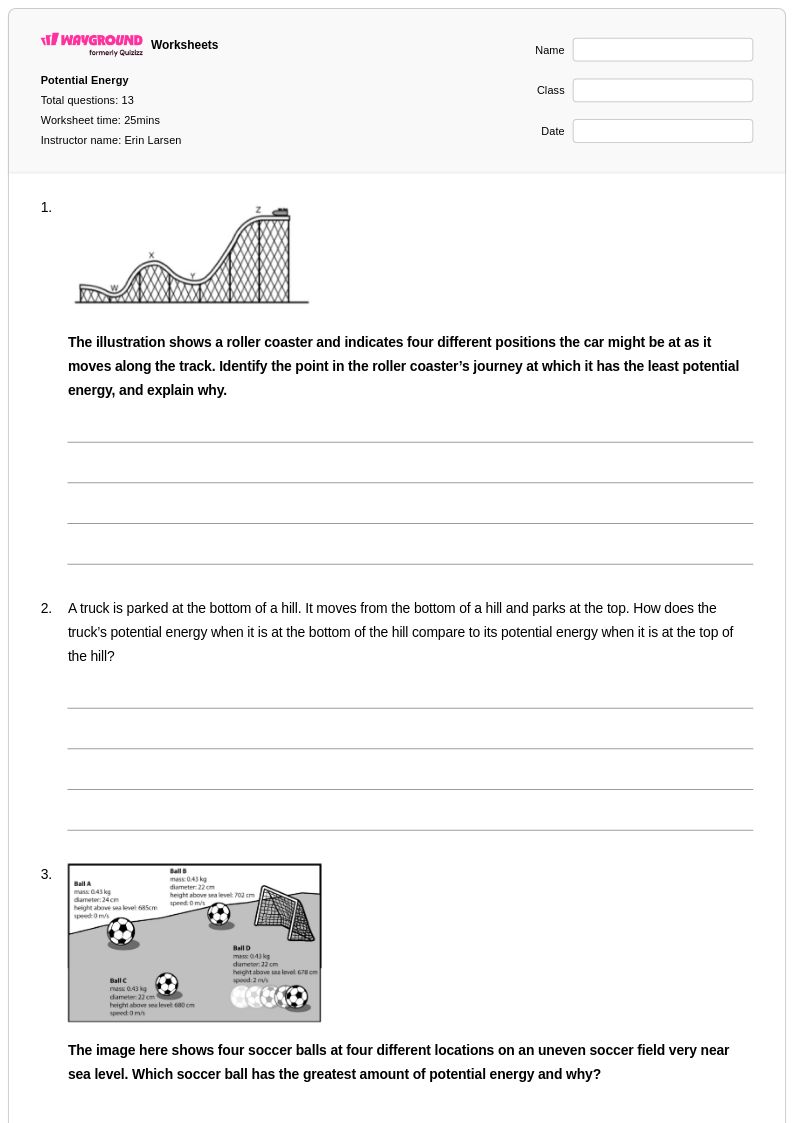
13Q
8th
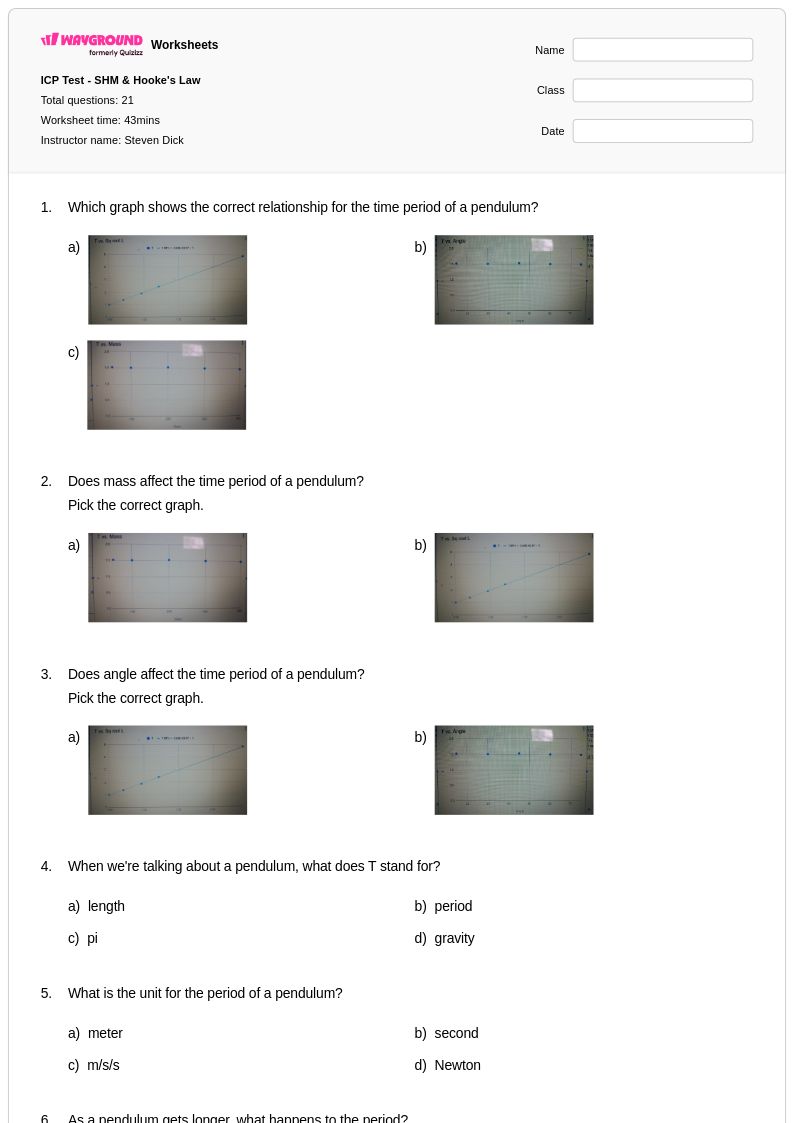
21Q
10th - 12th
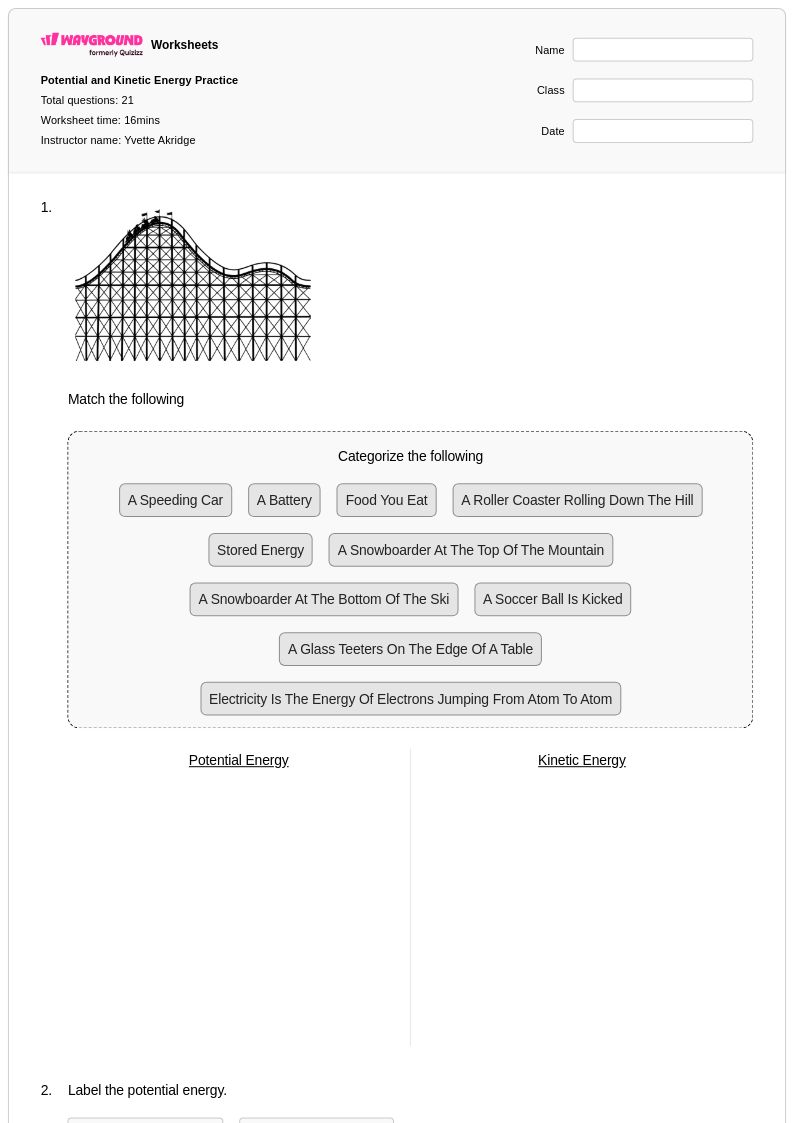
21Q
8th
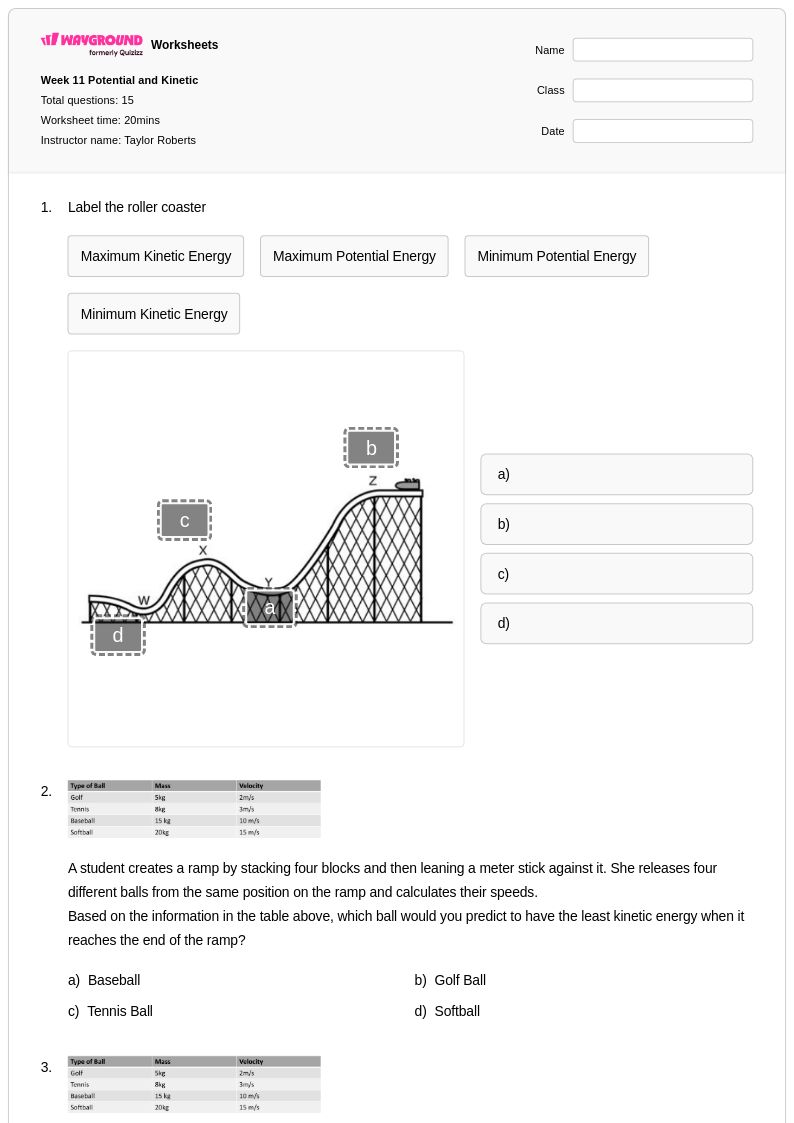
15Q
6th
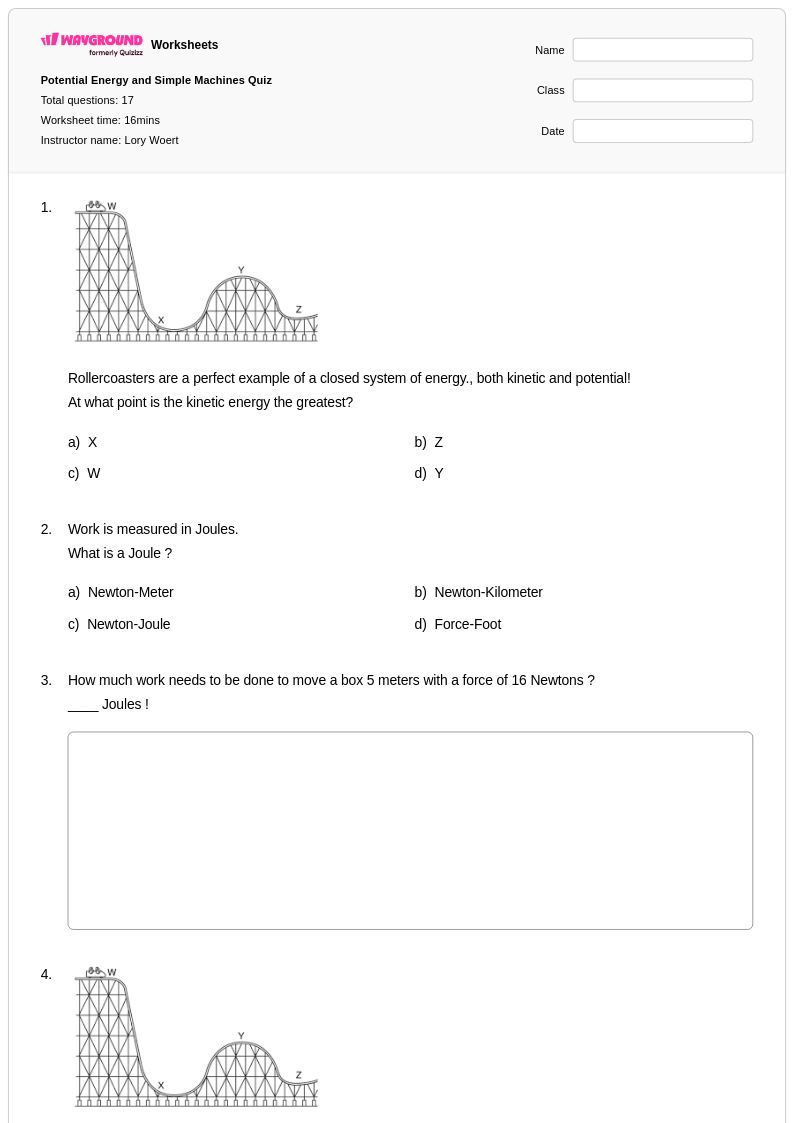
17Q
8th
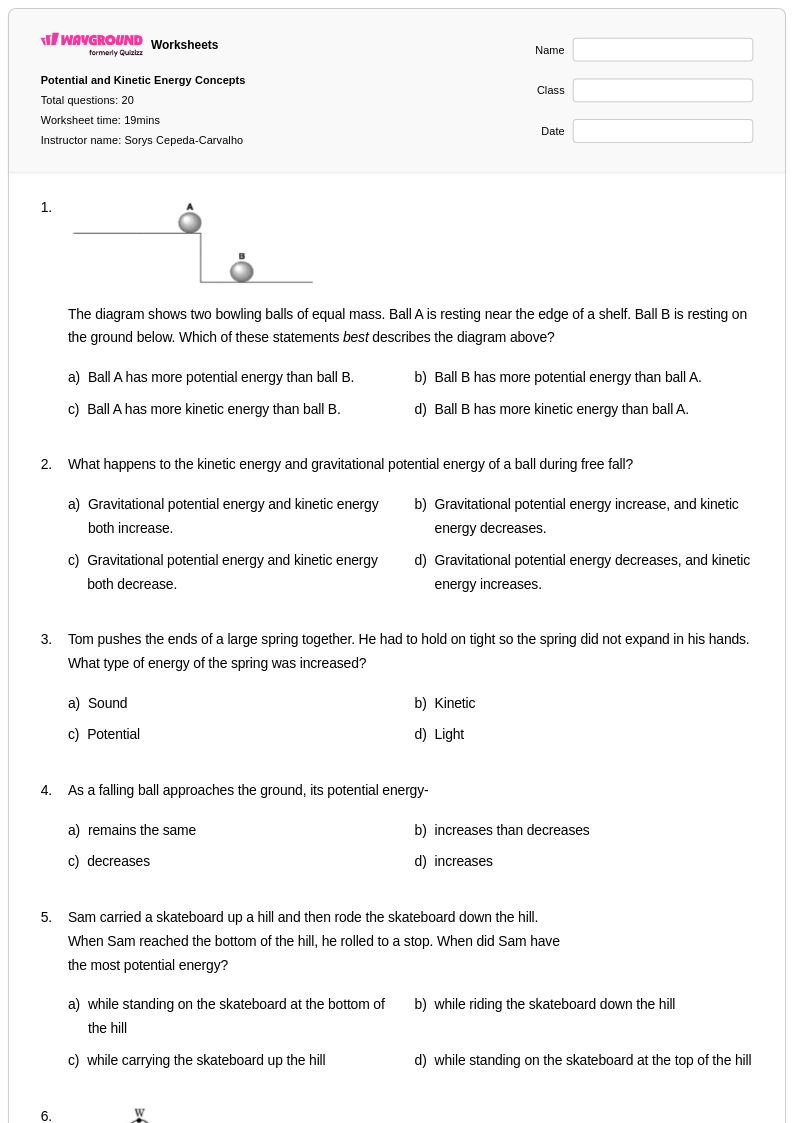
20Q
8th
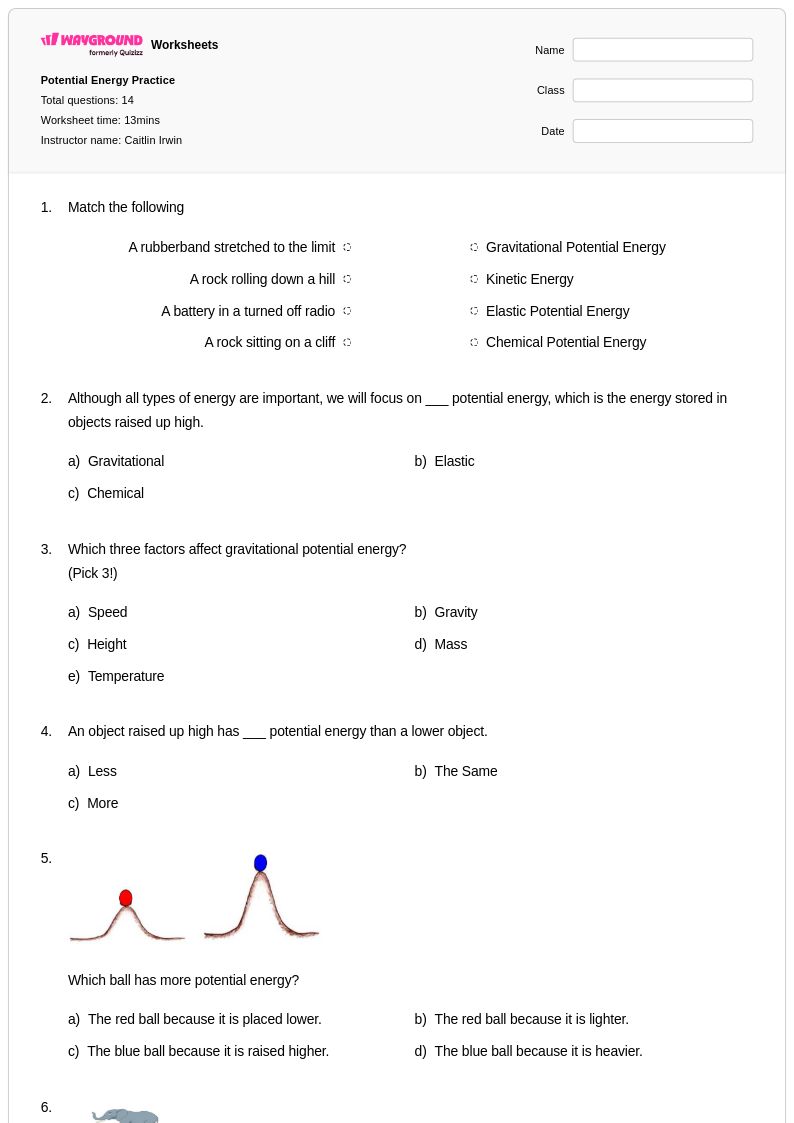
14Q
6th - 8th
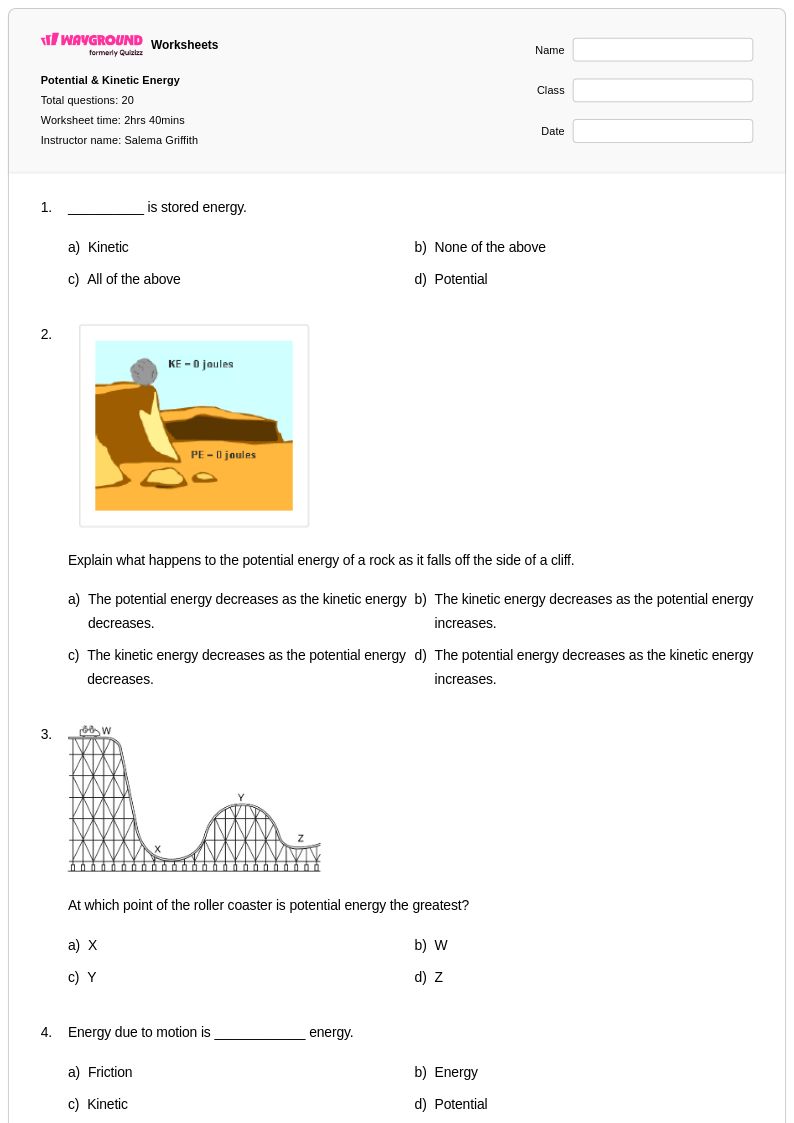
20Q
6th
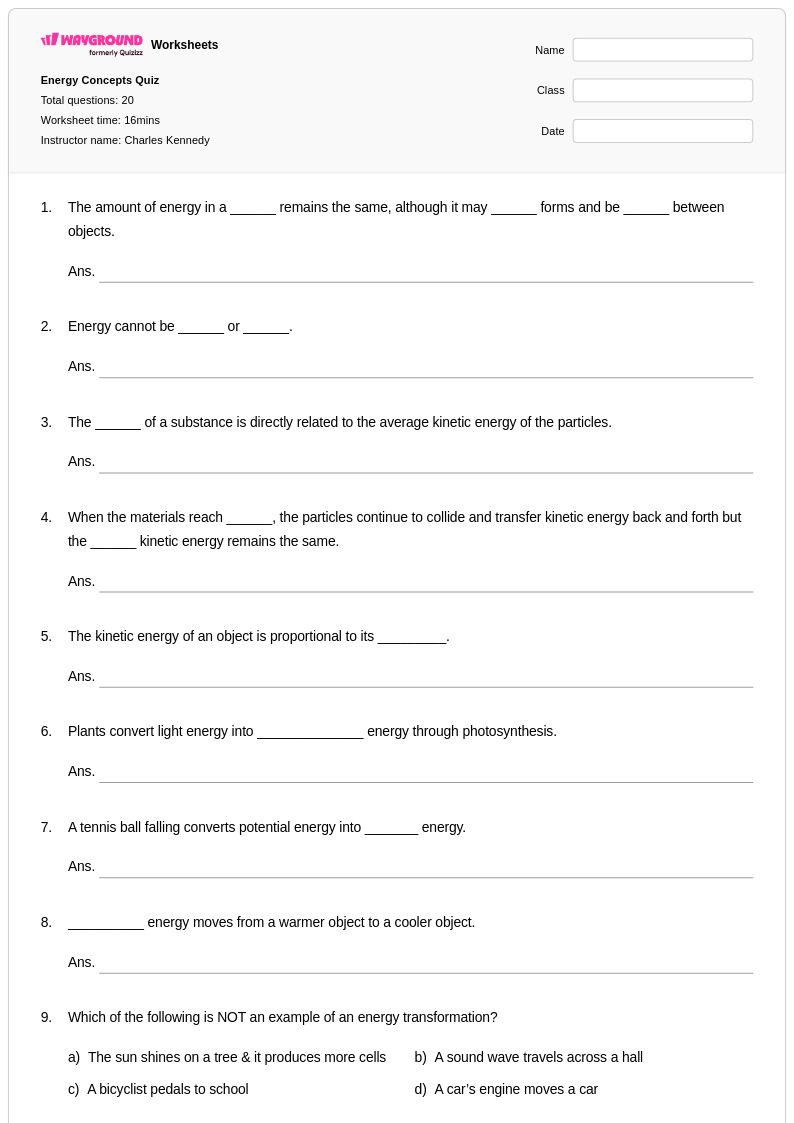
20Q
6th
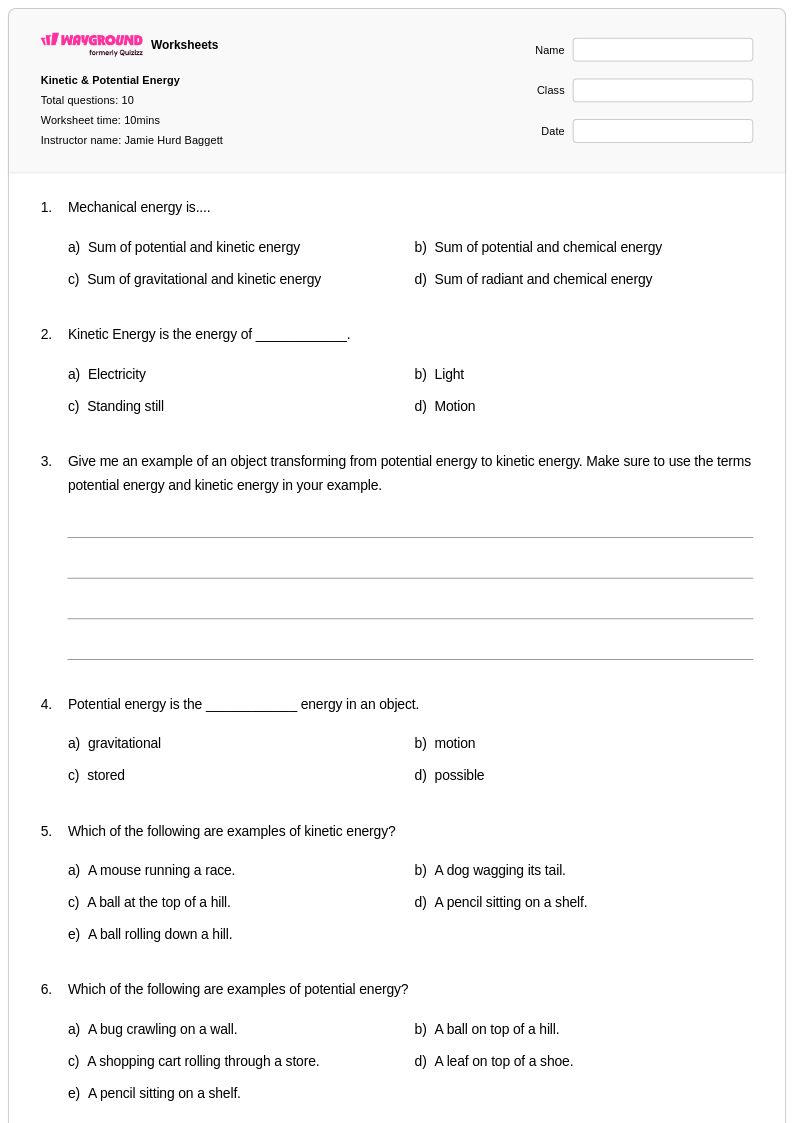
10Q
8th
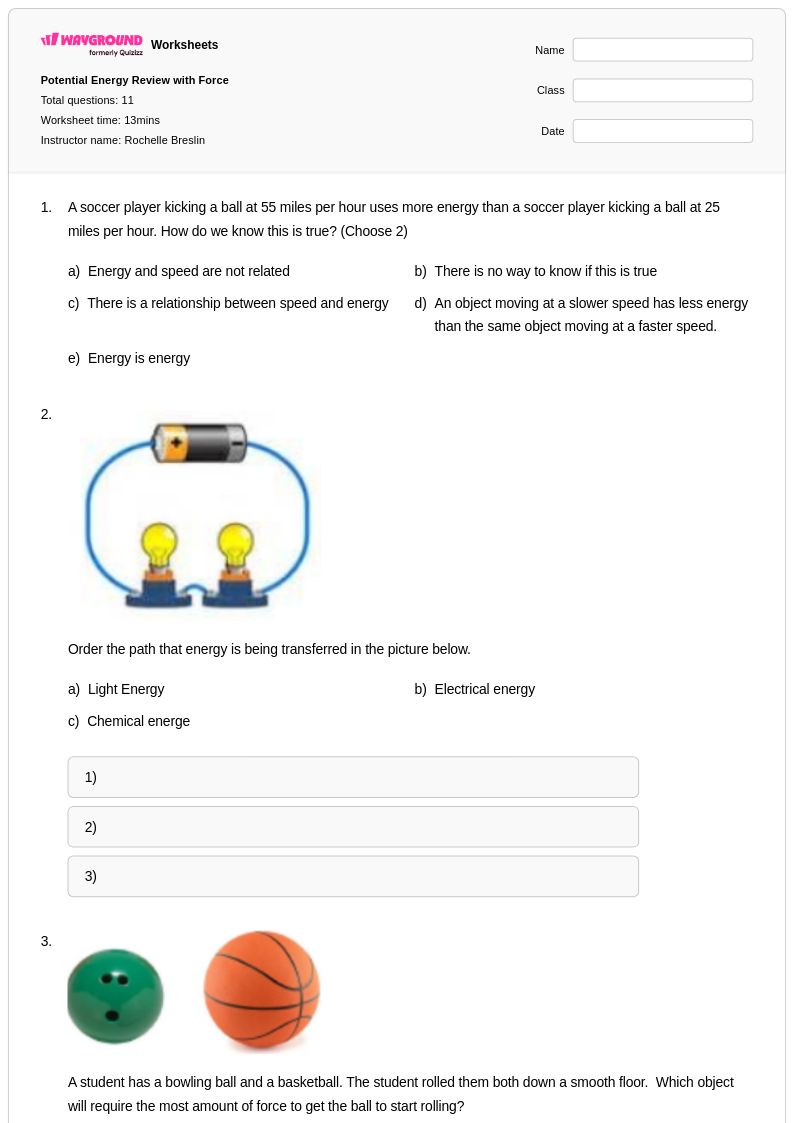
11Q
4th
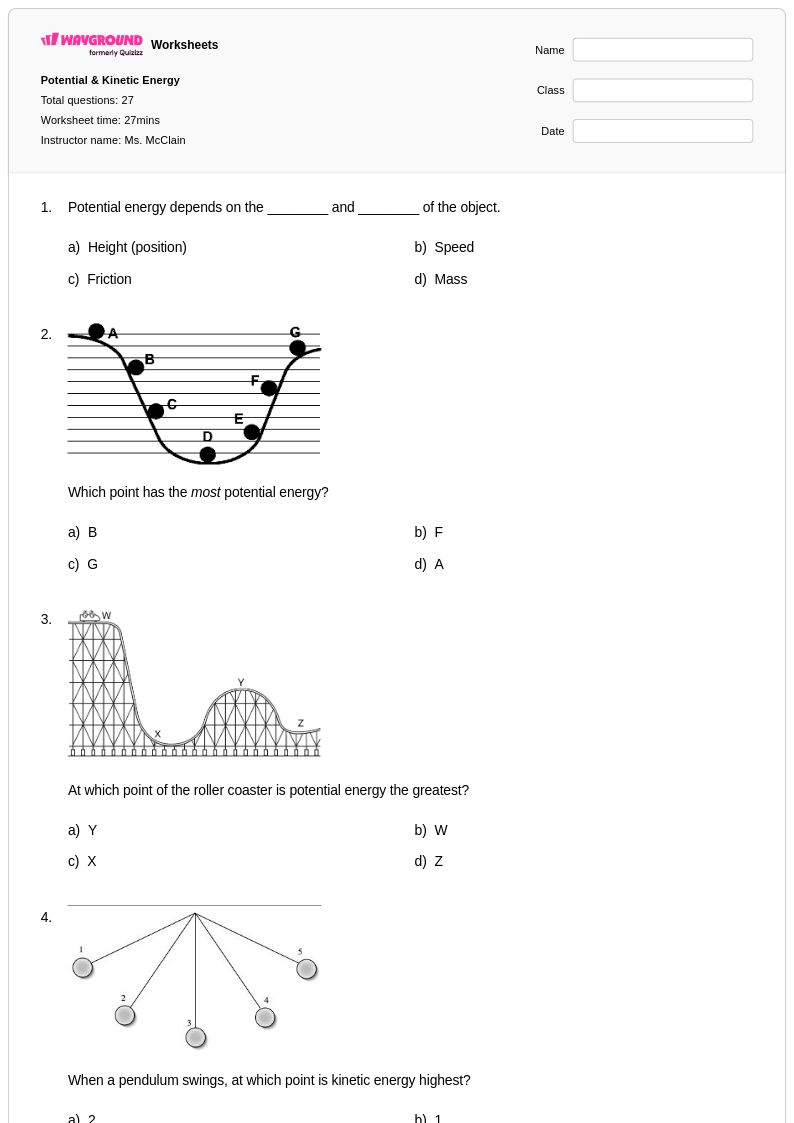
27Q
6th - 8th
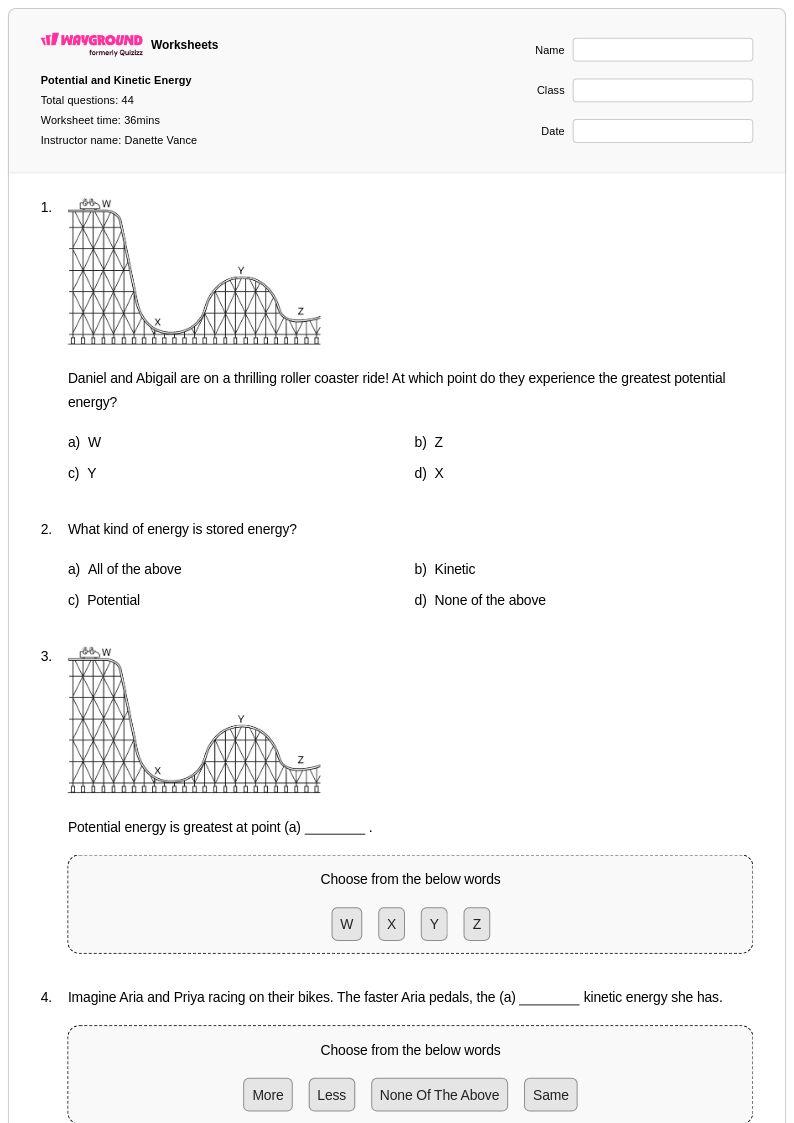
44Q
6th
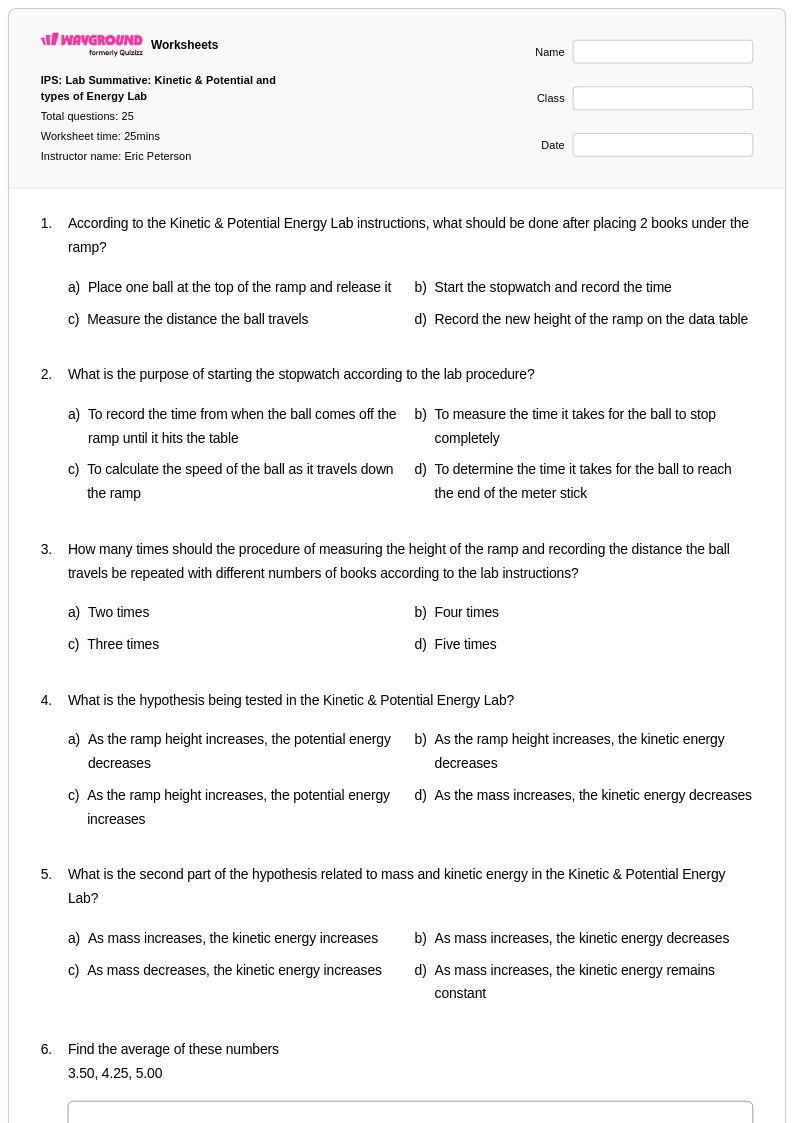
25Q
11th
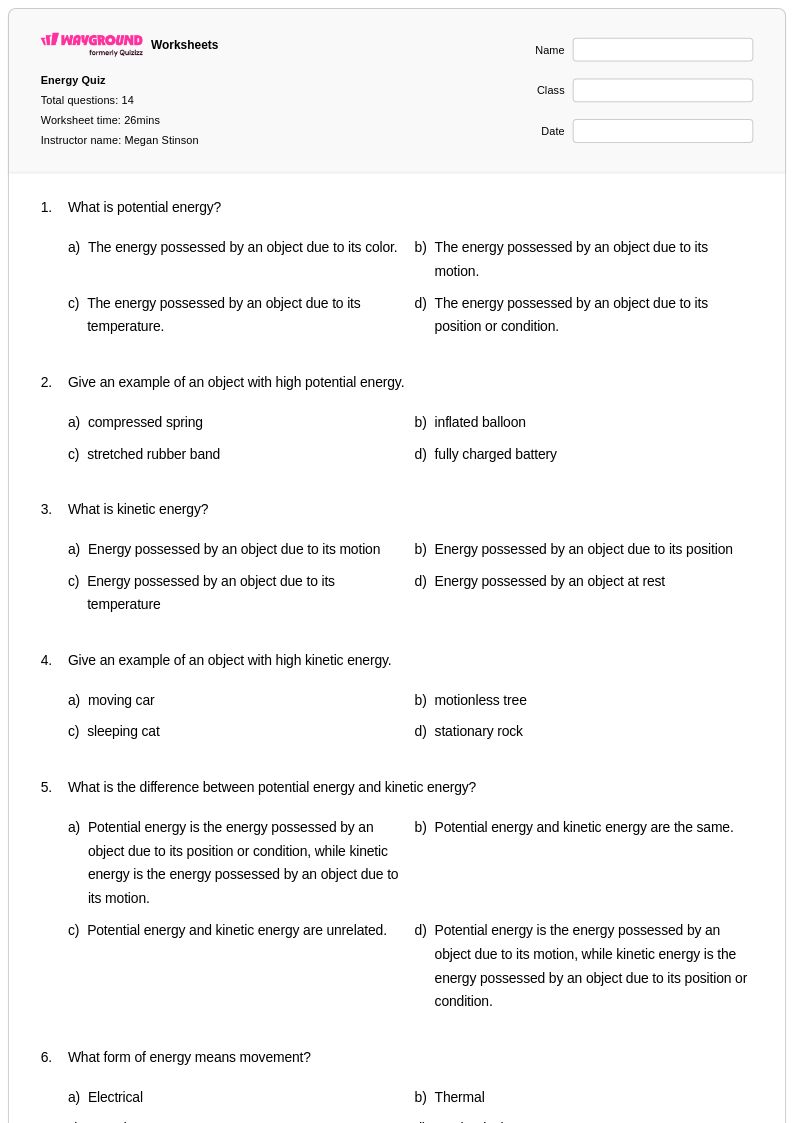
17Q
4th
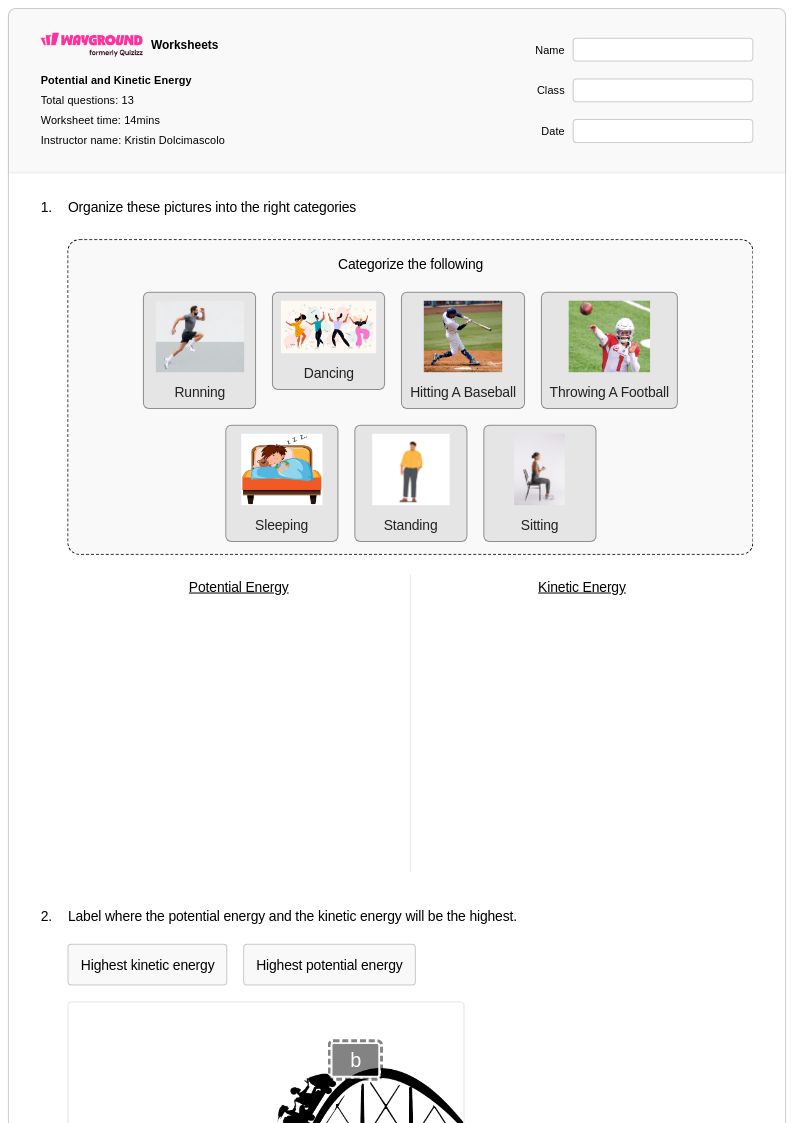
13Q
8th
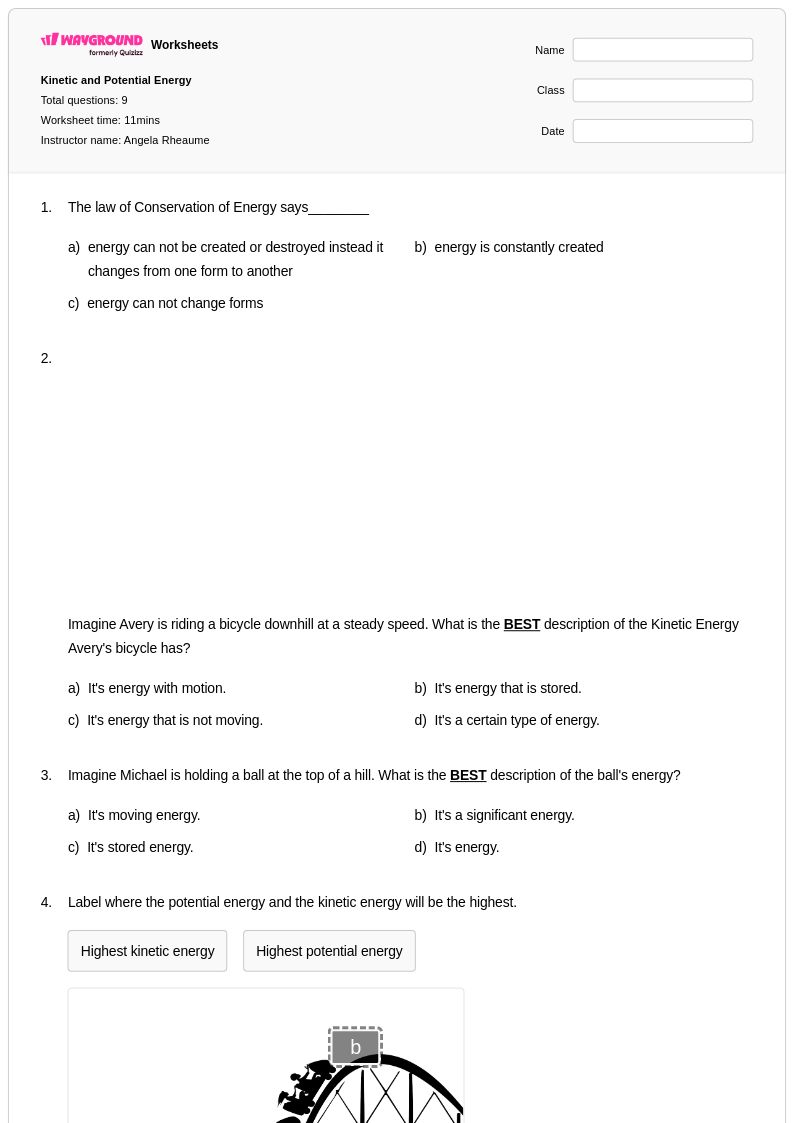
9Q
8th
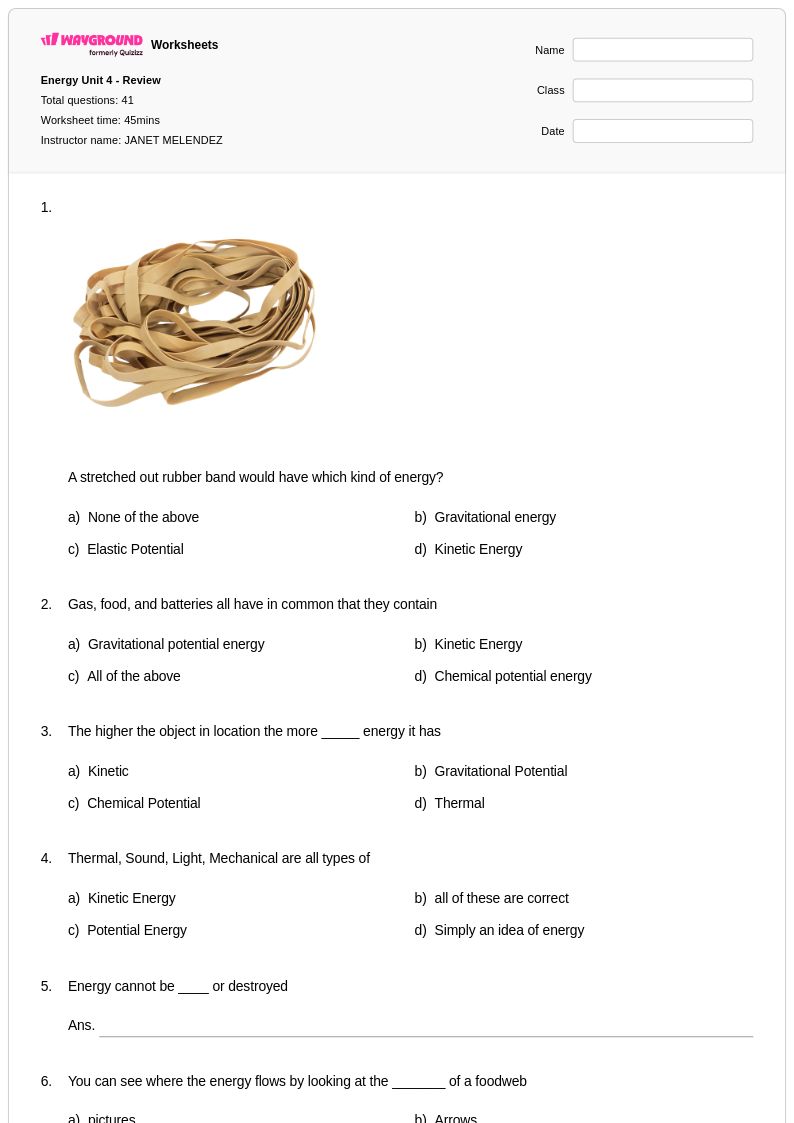
41Q
6th - 8th
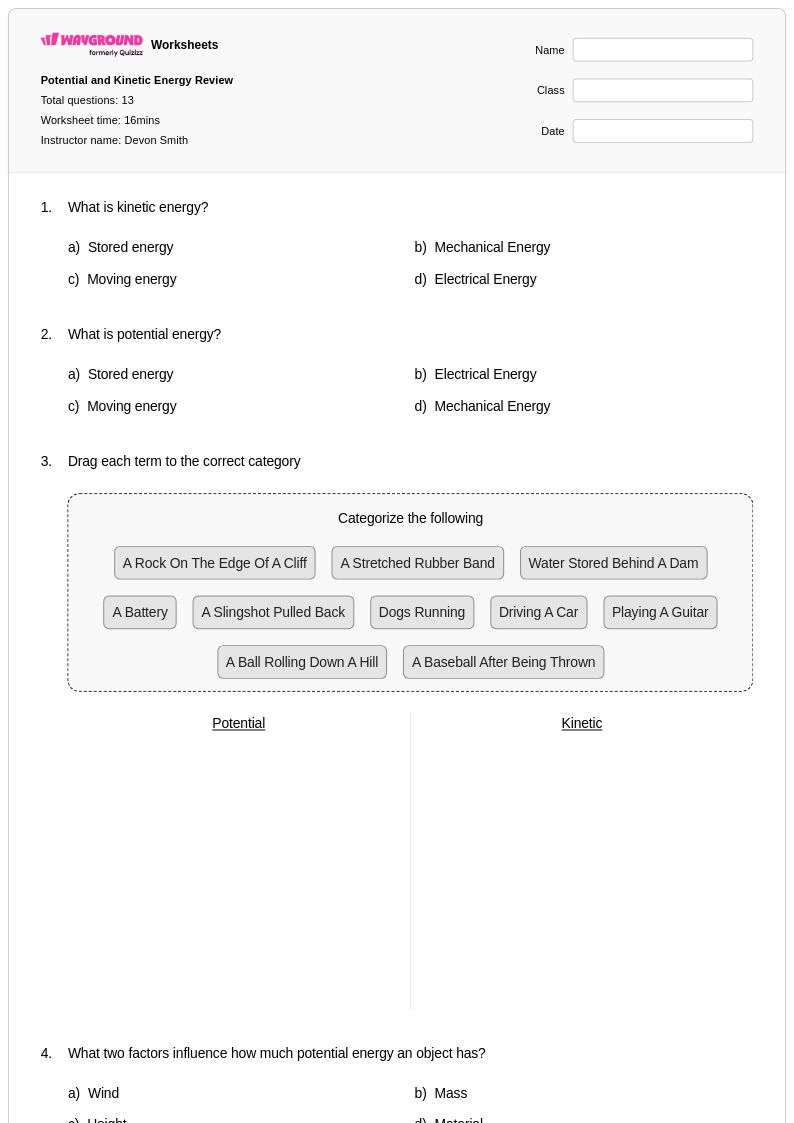
13Q
6th
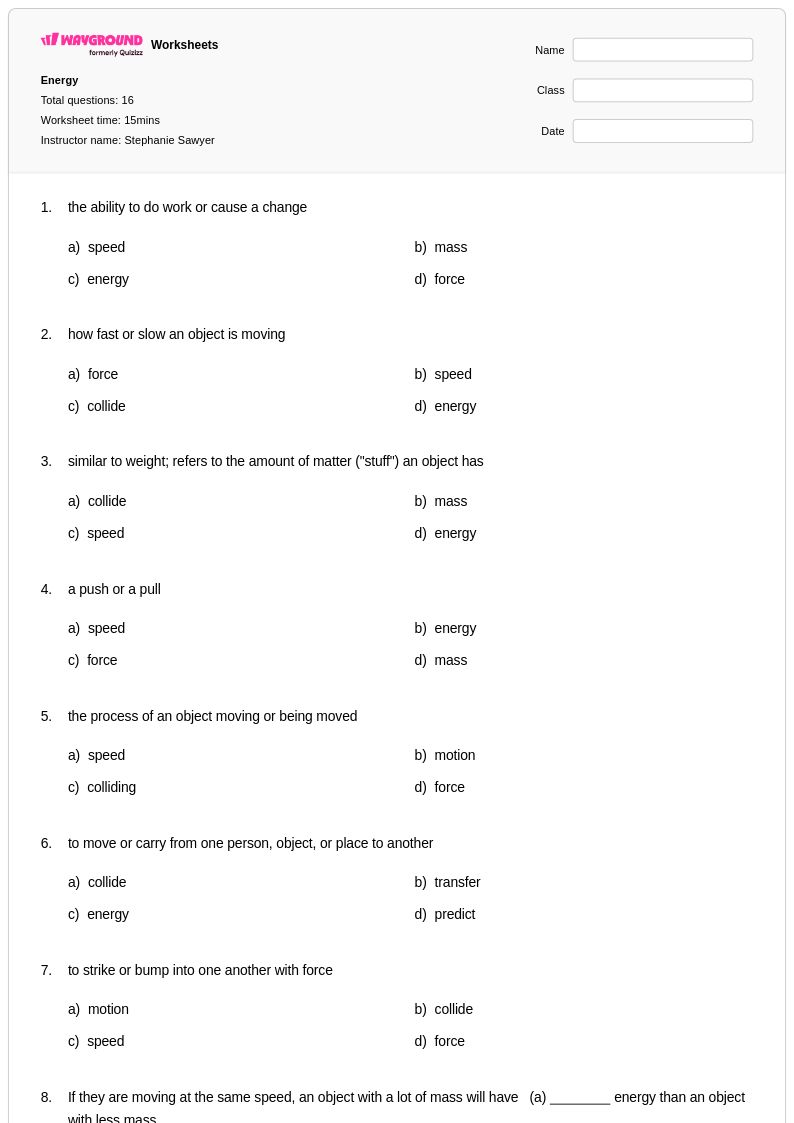
16Q
4th
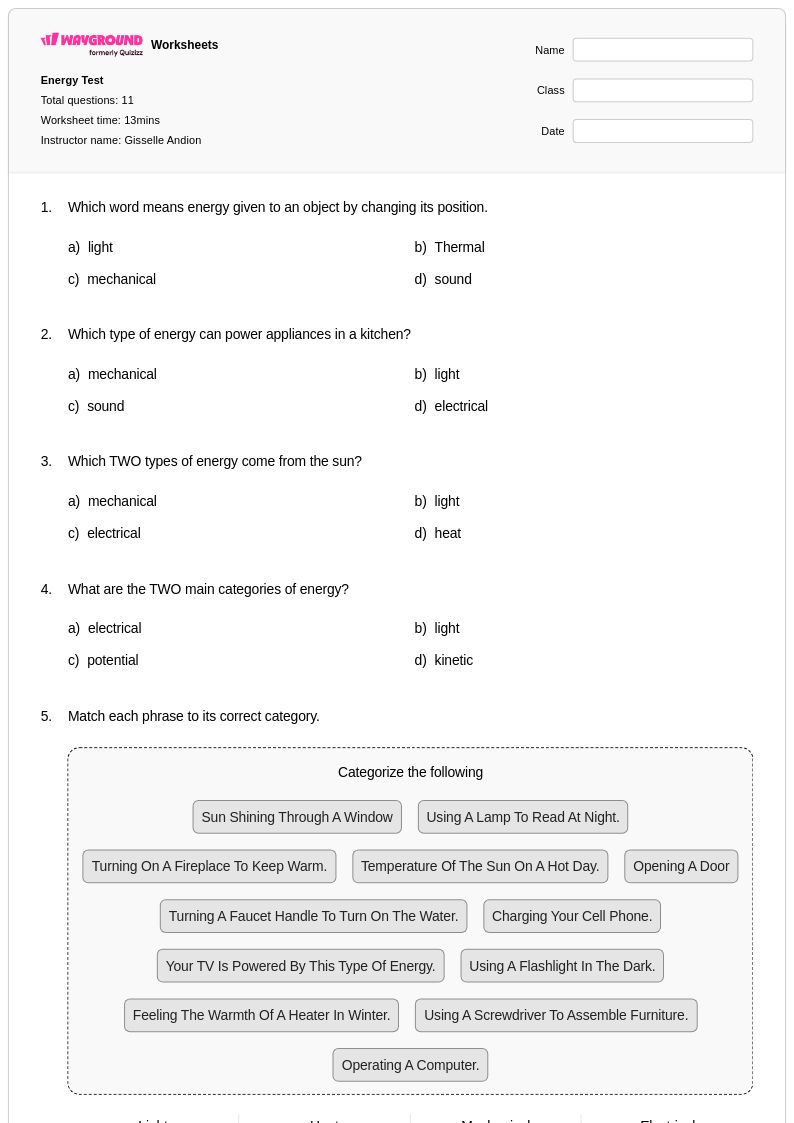
11Q
3rd
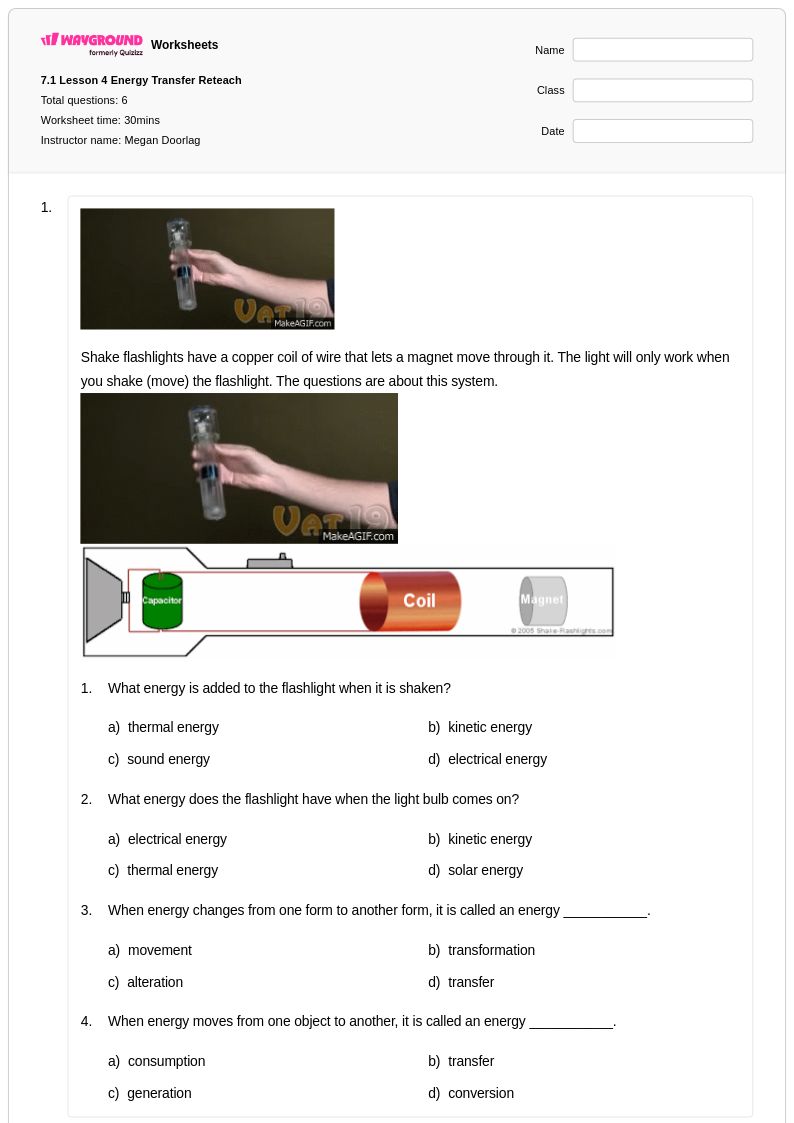
15Q
7th
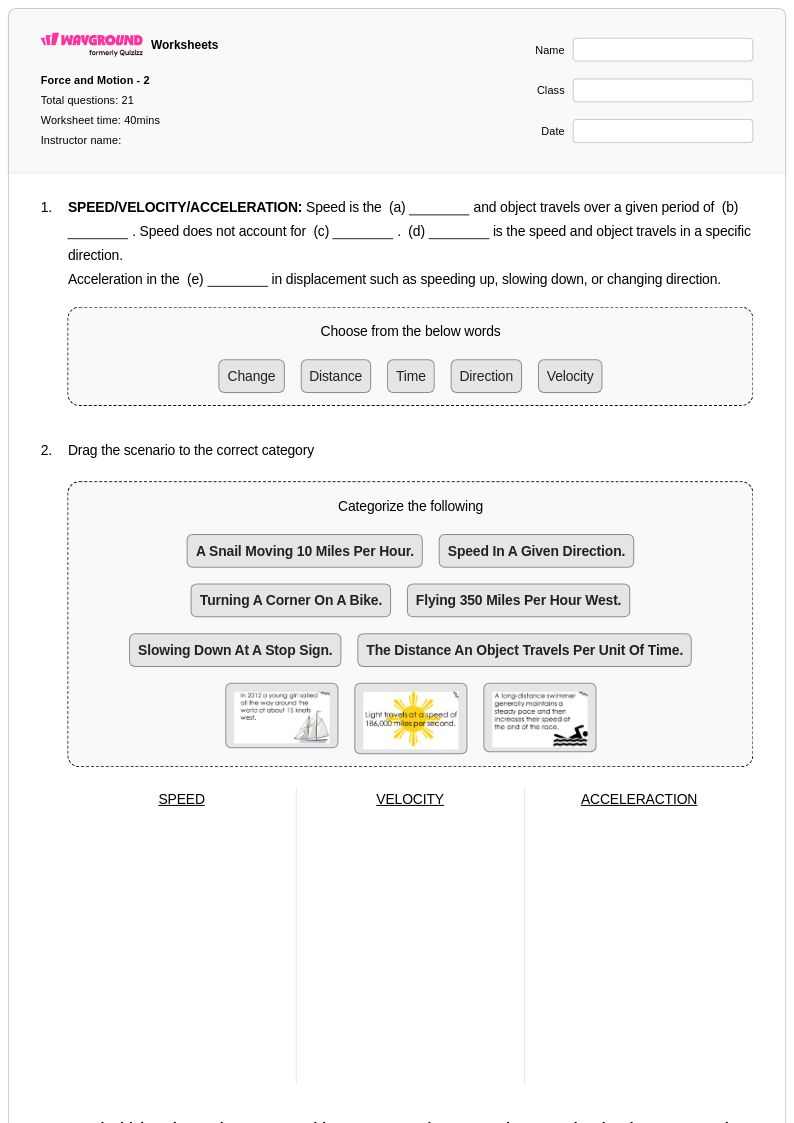
21Q
8th
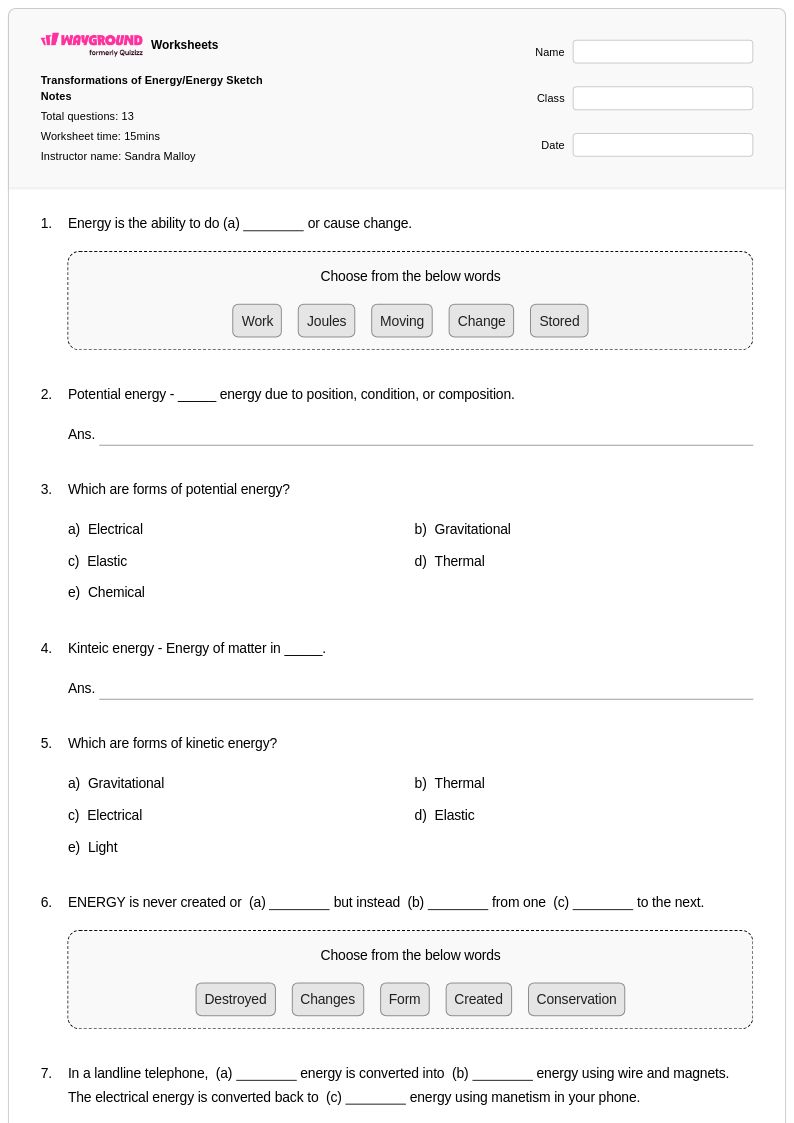
13Q
7th
Explore planilhas por assuntos
Explore printable Spring Potential Energy and Hookes Law worksheets
Spring potential energy and Hooke's Law worksheets available through Wayground (formerly Quizizz) provide comprehensive practice materials that help students master the fundamental relationship between elastic force and displacement in spring systems. These carefully designed worksheets guide learners through calculating spring potential energy using the formula PE = ½kx², understanding the linear relationship described by Hooke's Law (F = -kx), and analyzing real-world applications of elastic potential energy in mechanical systems. Students develop critical problem-solving skills by working through practice problems that involve determining spring constants, calculating energy transformations between kinetic and potential energy, and interpreting force-displacement graphs. Each worksheet collection includes detailed answer keys and is available as free printable PDFs, enabling students to work through complex physics concepts at their own pace while building confidence in energy conservation principles and elastic mechanics.
Wayground (formerly Quizizz) empowers educators with access to millions of teacher-created spring potential energy and Hooke's Law resources that streamline lesson planning and enhance student understanding of elastic systems. The platform's robust search and filtering capabilities allow teachers to quickly locate worksheets aligned with specific physics standards and learning objectives, while built-in differentiation tools enable customization for students with varying skill levels and learning needs. Teachers can seamlessly adapt these materials for remediation sessions with struggling learners, enrichment activities for advanced students, or regular skill practice across diverse classroom settings. The flexible format options, including both printable and digital PDF versions, support various instructional approaches from traditional paper-based assignments to technology-integrated lessons, ensuring that every educator can effectively incorporate spring mechanics and energy concepts into their physics curriculum regardless of their classroom environment or teaching style.