Enhance Class 7 students' understanding of similes through Wayground's comprehensive collection of free worksheets, printable PDFs, and practice problems with detailed answer keys for effective figurative language mastery.
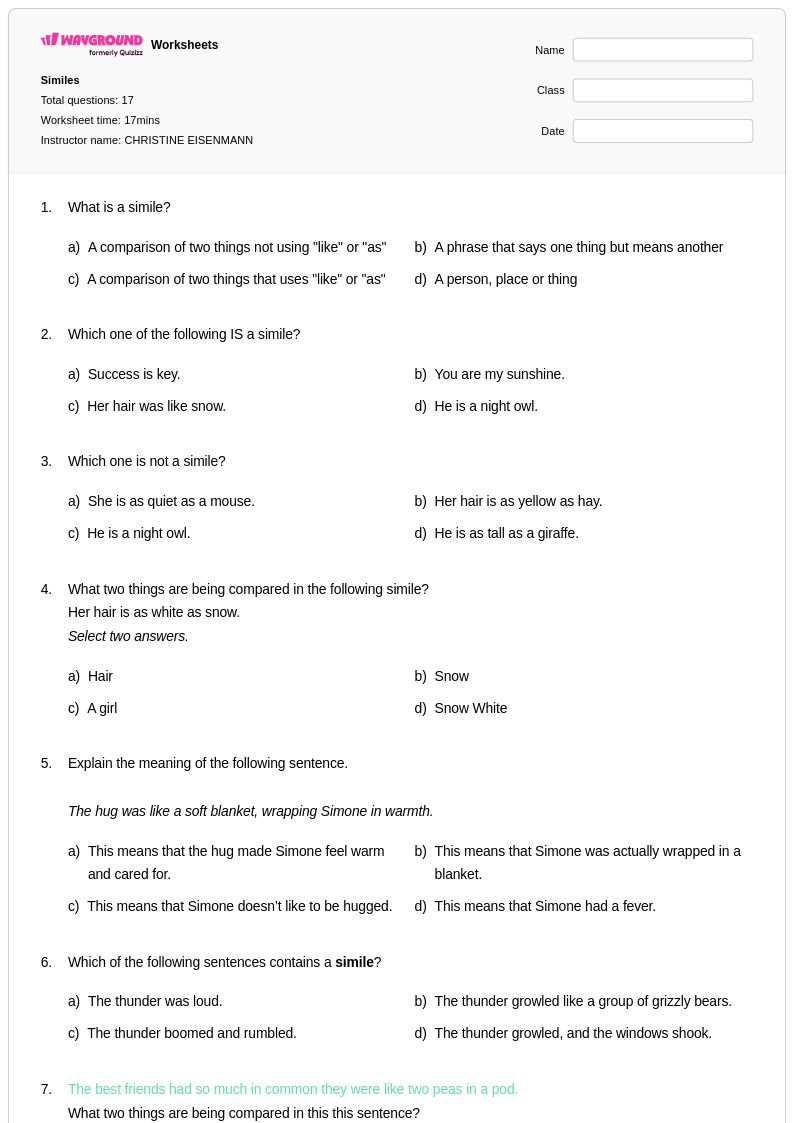
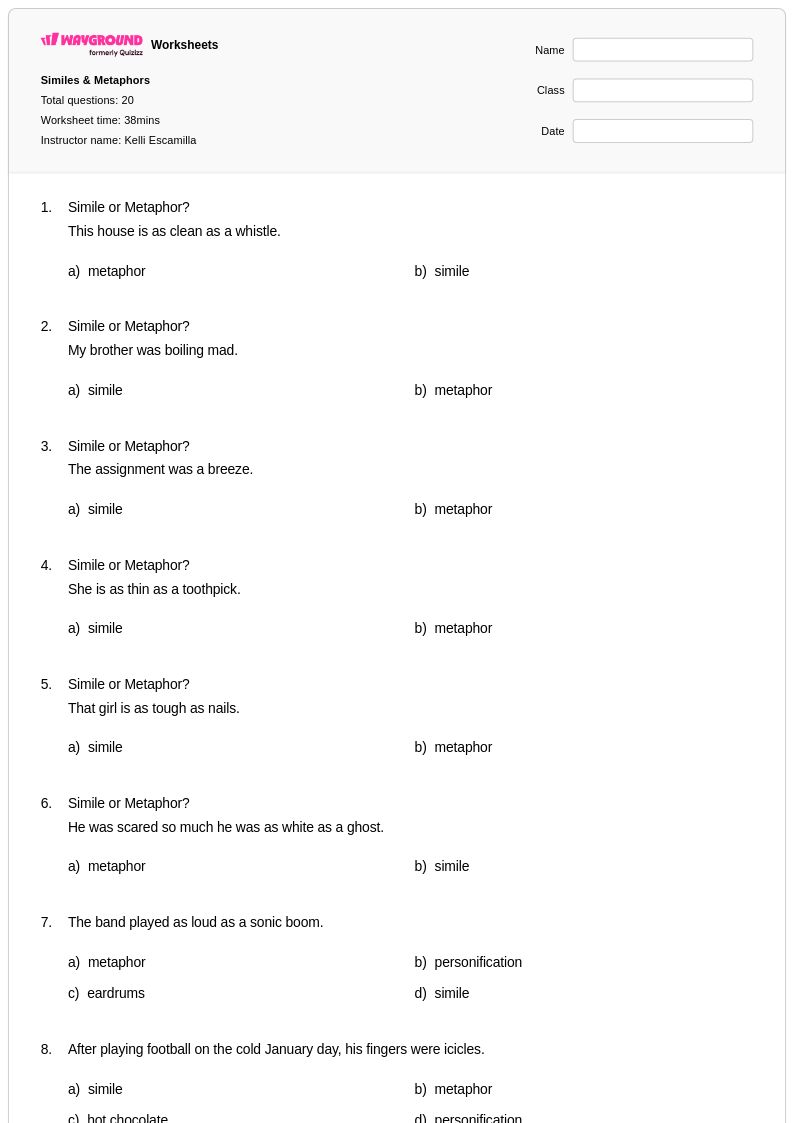
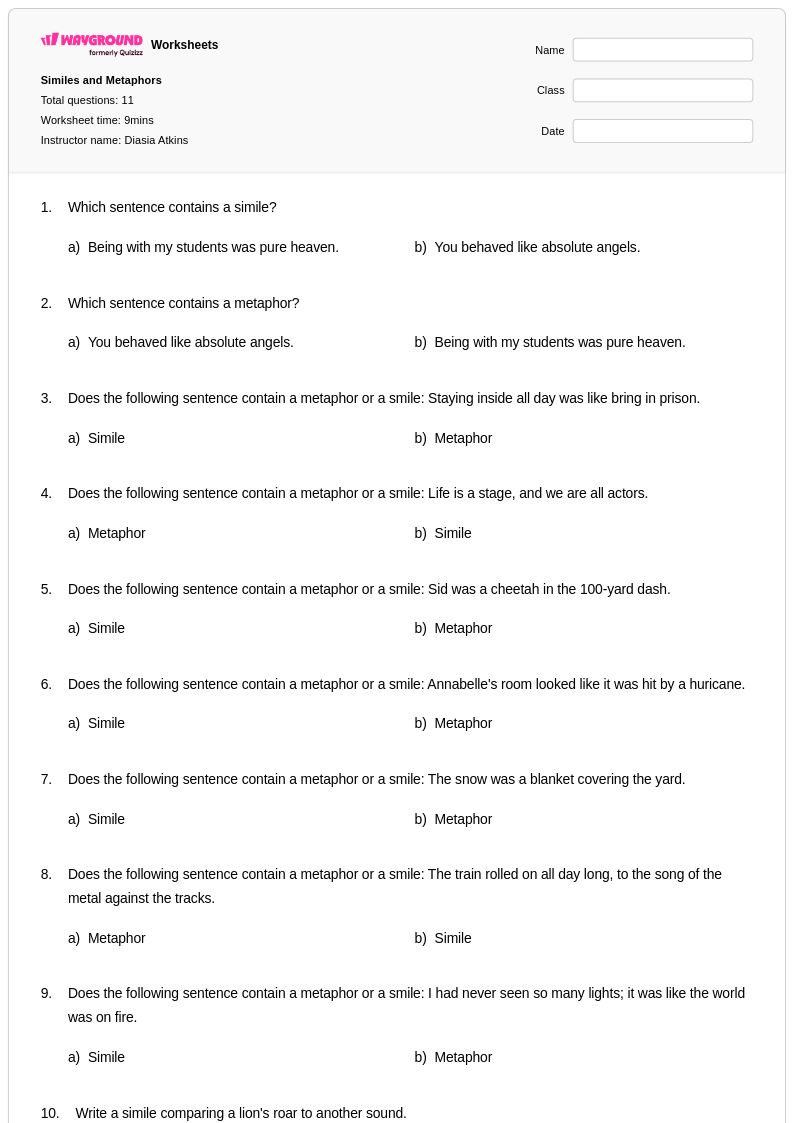
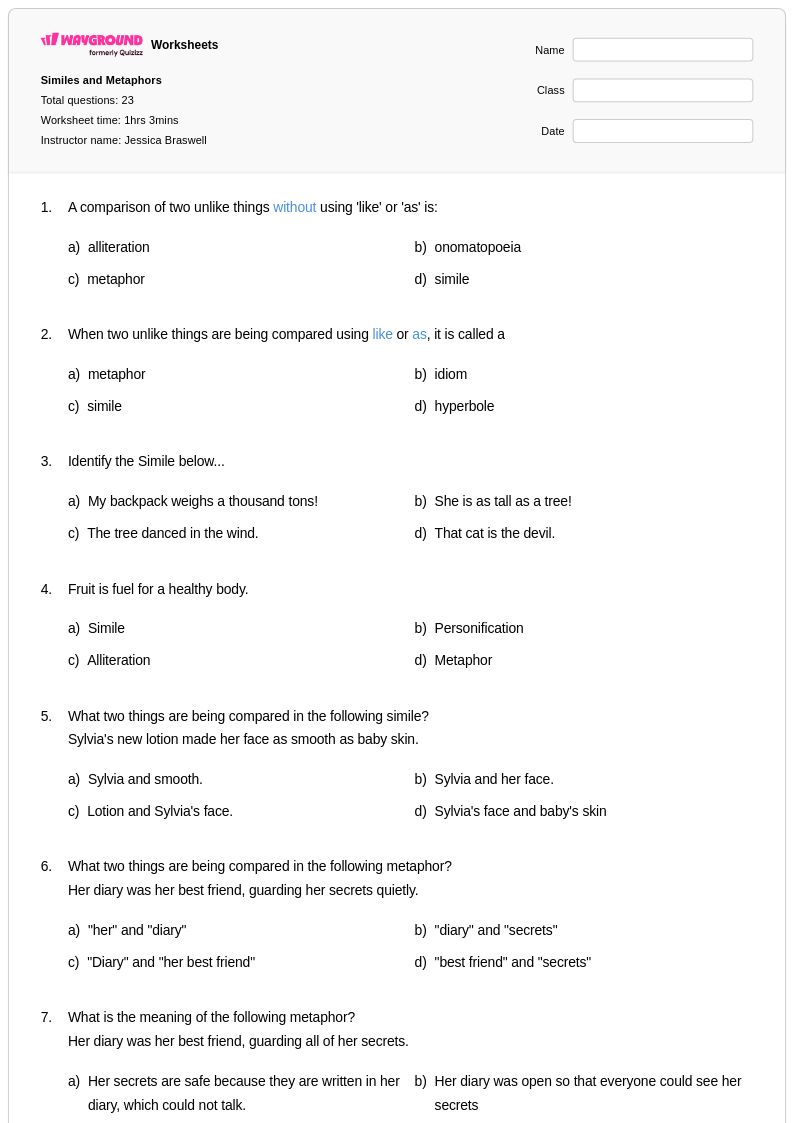
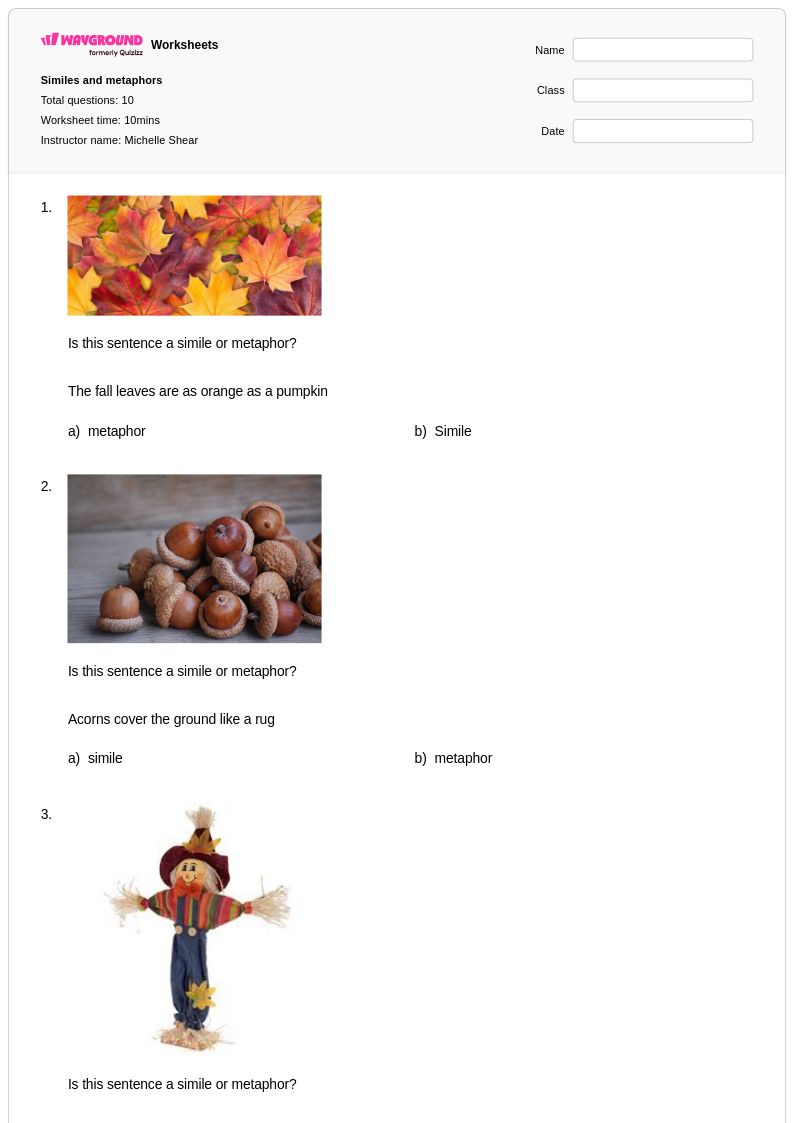
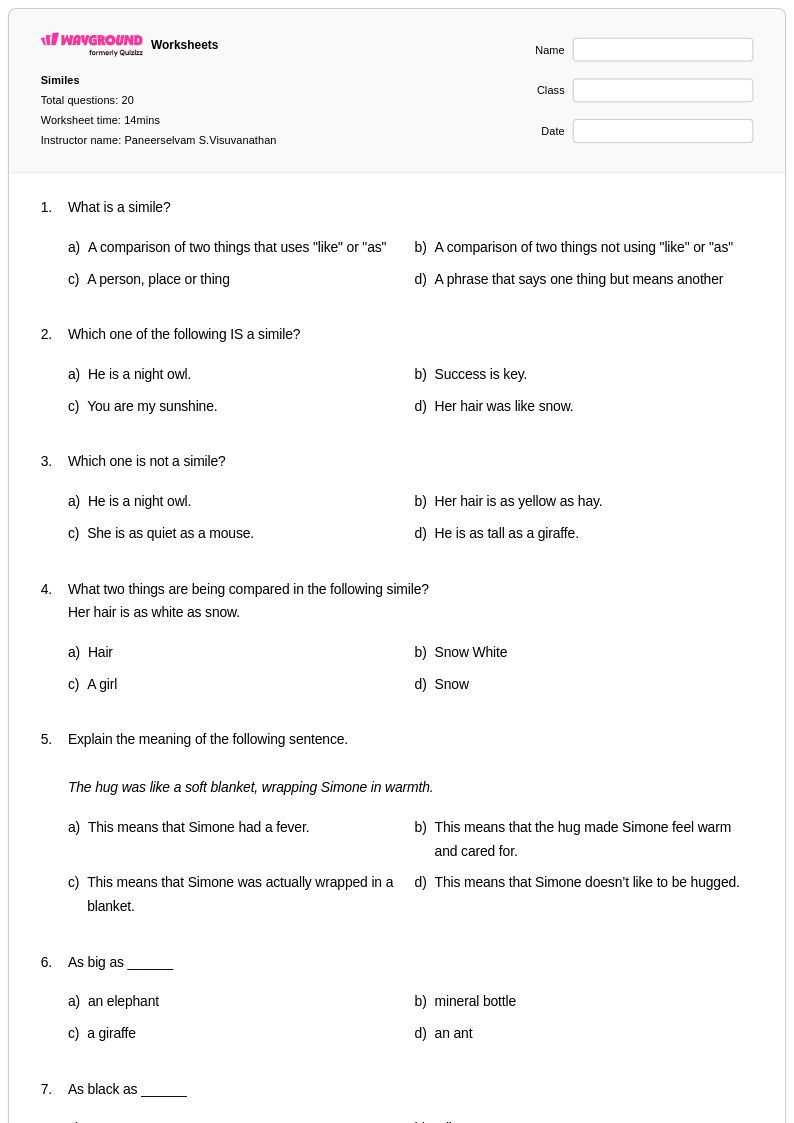
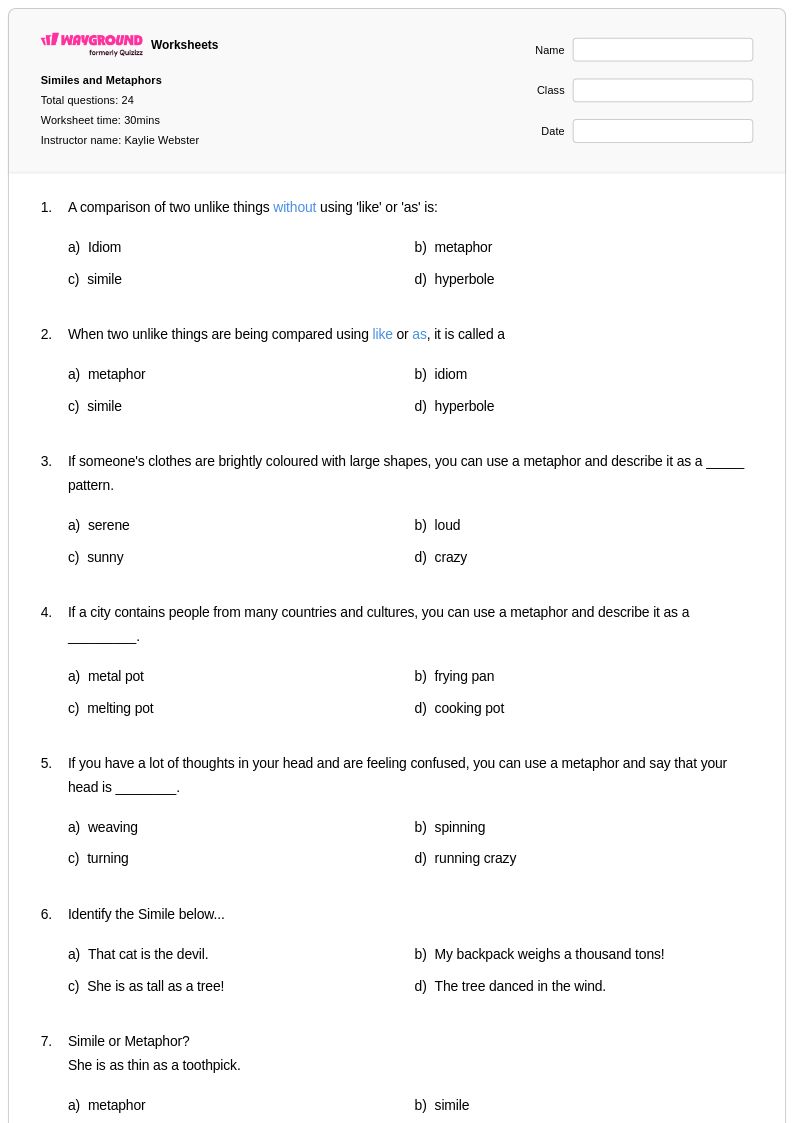
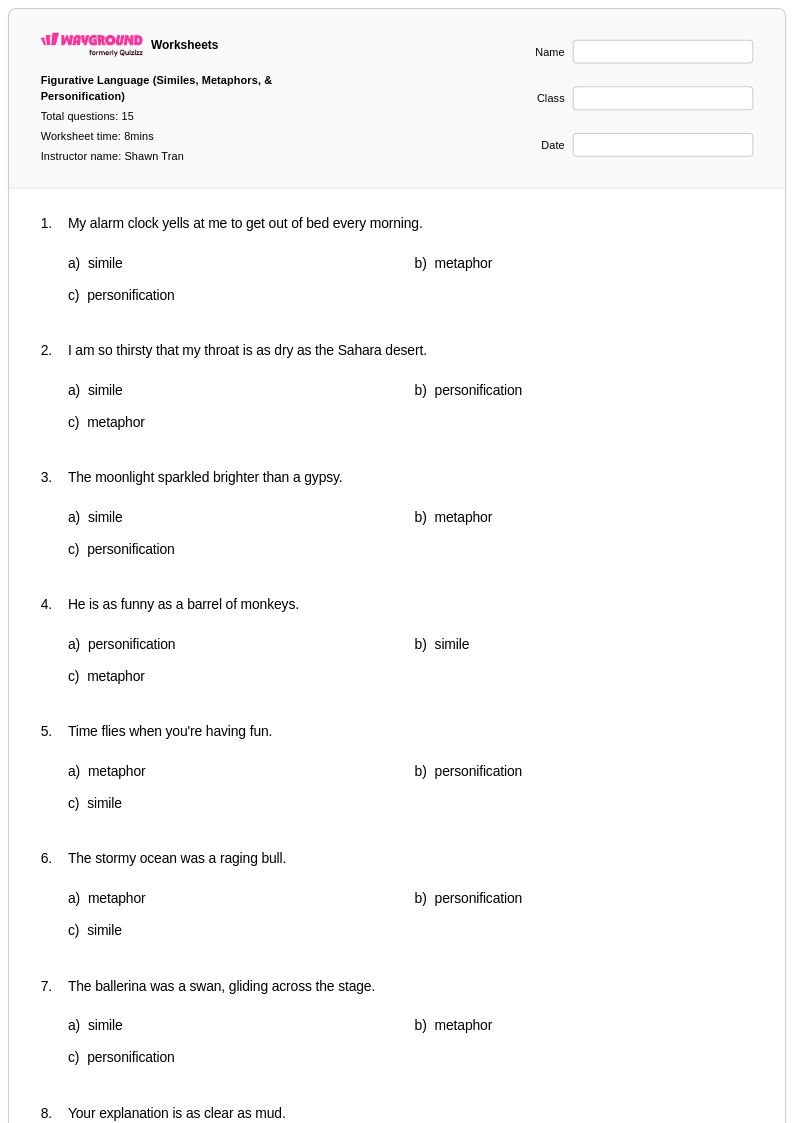
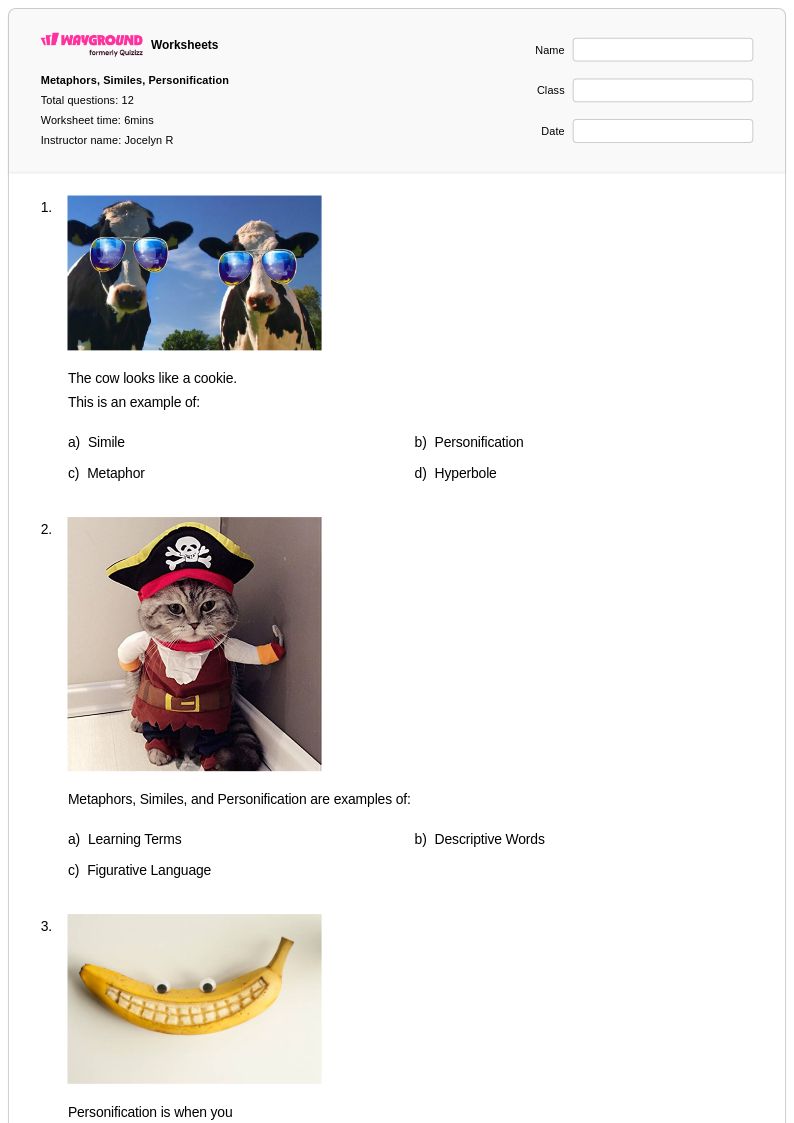
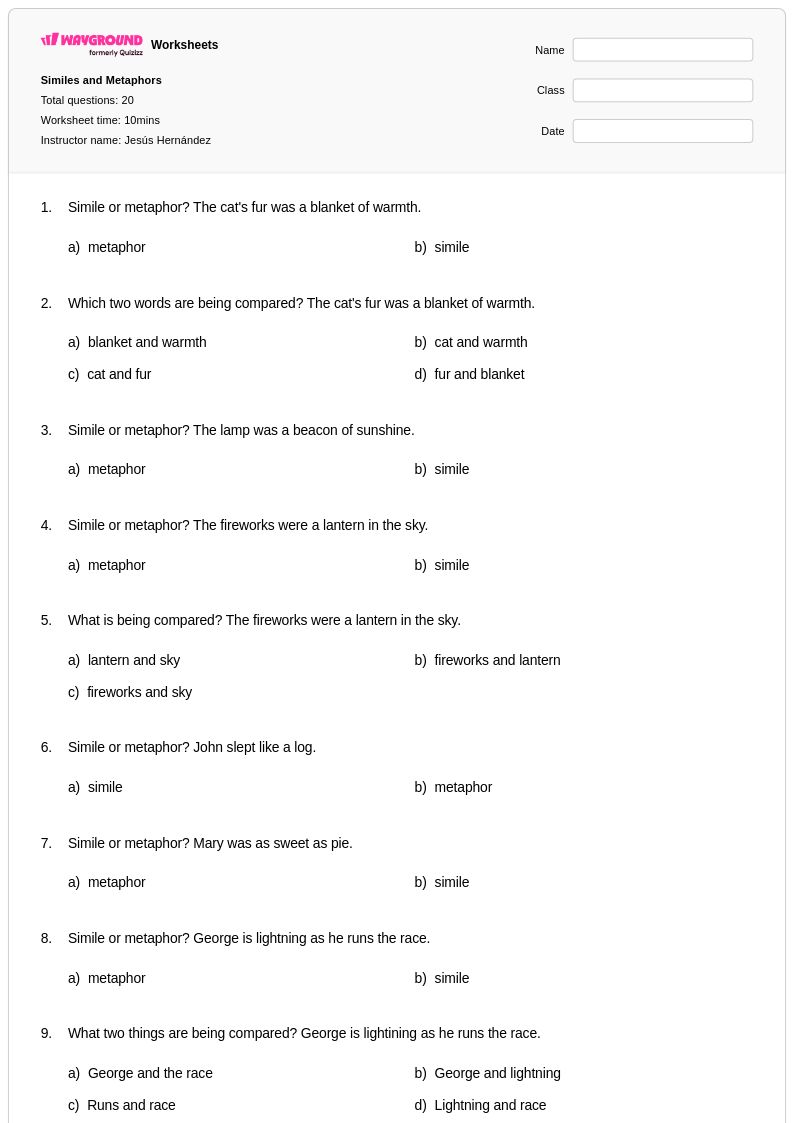
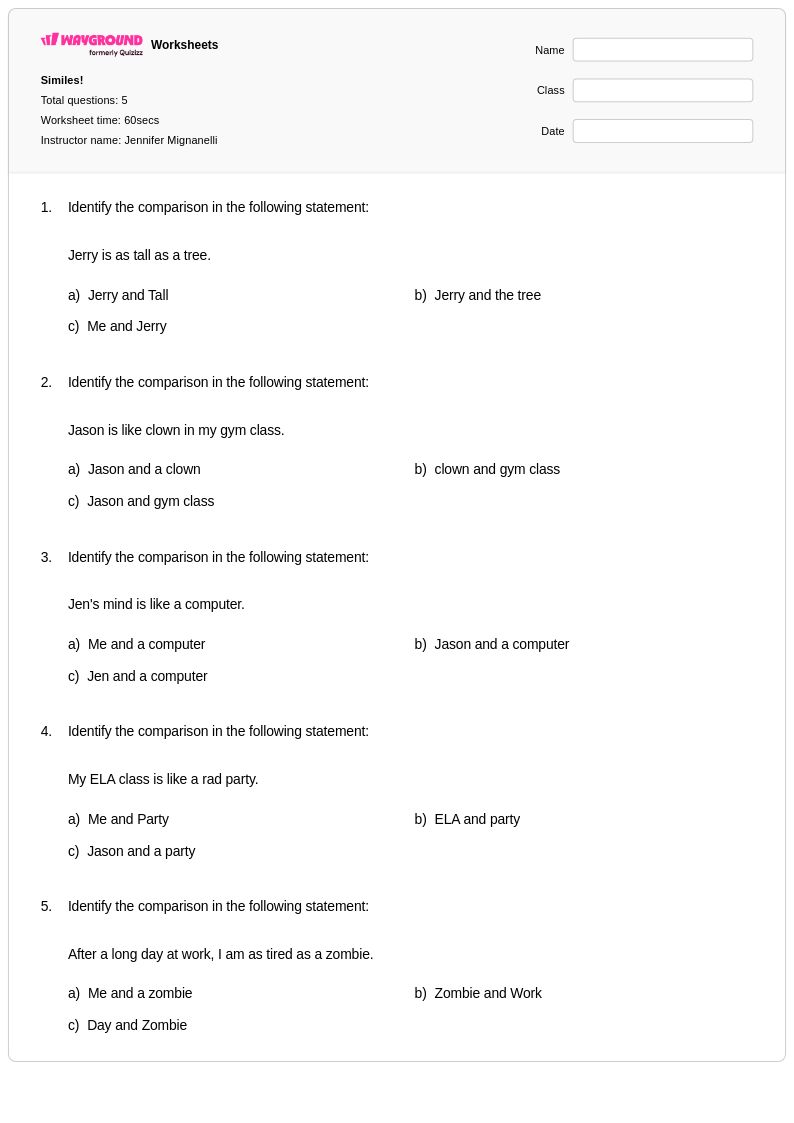
Class 7 similes worksheets available through Wayground (formerly Quizizz) provide comprehensive practice for students developing their understanding of this essential figurative language device. These educational resources strengthen critical reading and writing skills by helping seventh graders identify, analyze, and create effective similes that use "like" or "as" to make vivid comparisons between seemingly unrelated objects or concepts. The worksheets feature diverse practice problems ranging from recognition exercises where students spot similes in literary passages to creative writing activities where they craft original comparisons to enhance their descriptive language. Each printable resource includes a detailed answer key to support independent learning and self-assessment, with free pdf formats ensuring easy classroom distribution and homework assignments.
Wayground (formerly Quizizz) empowers educators with an extensive collection of teacher-created similes worksheets drawn from millions of available resources, all searchable through sophisticated filtering tools that allow precise targeting by difficulty level, text complexity, and specific learning objectives. The platform's standards alignment features ensure these figurative language materials meet curriculum requirements while differentiation tools enable teachers to customize worksheets for diverse learning needs within their Class 7 classrooms. Available in both printable pdf and interactive digital formats, these resources seamlessly integrate into lesson planning for initial instruction, targeted remediation for struggling students, and enrichment activities for advanced learners, providing flexible options for whole-class instruction, small group work, and individual skill practice that builds confidence in literary analysis and creative expression.
FAQs
How do I teach similes to students for the first time?
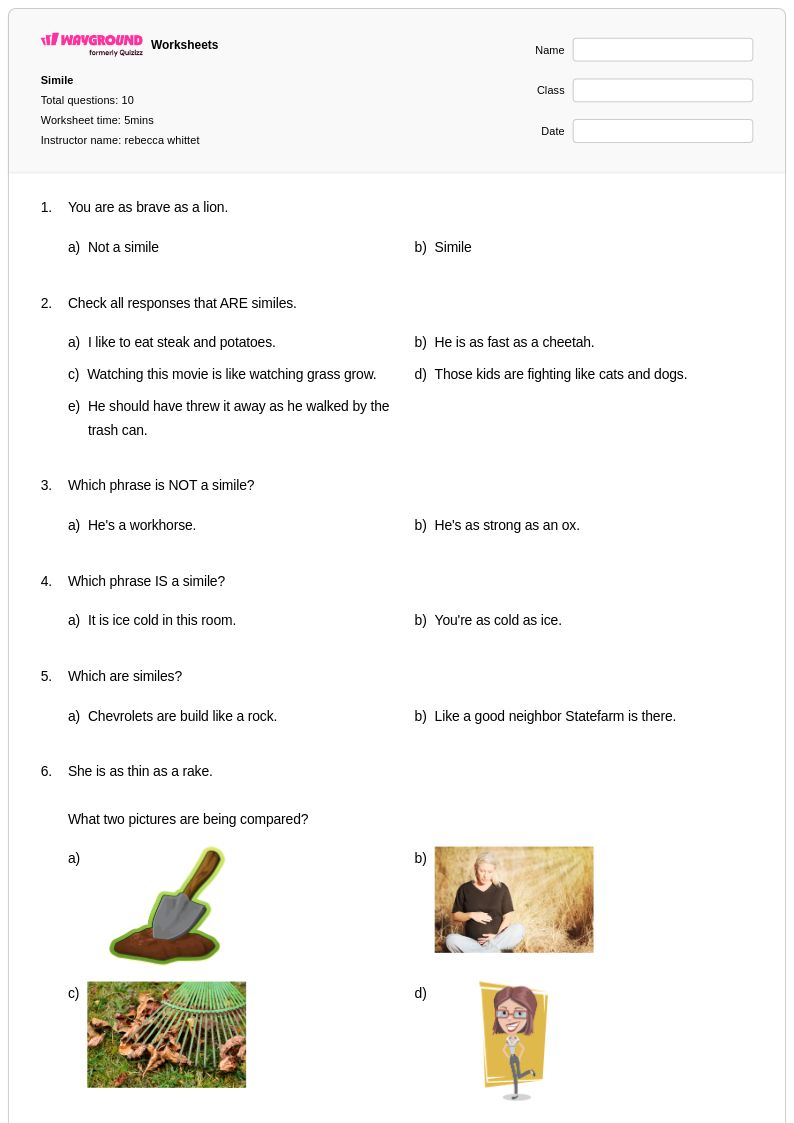
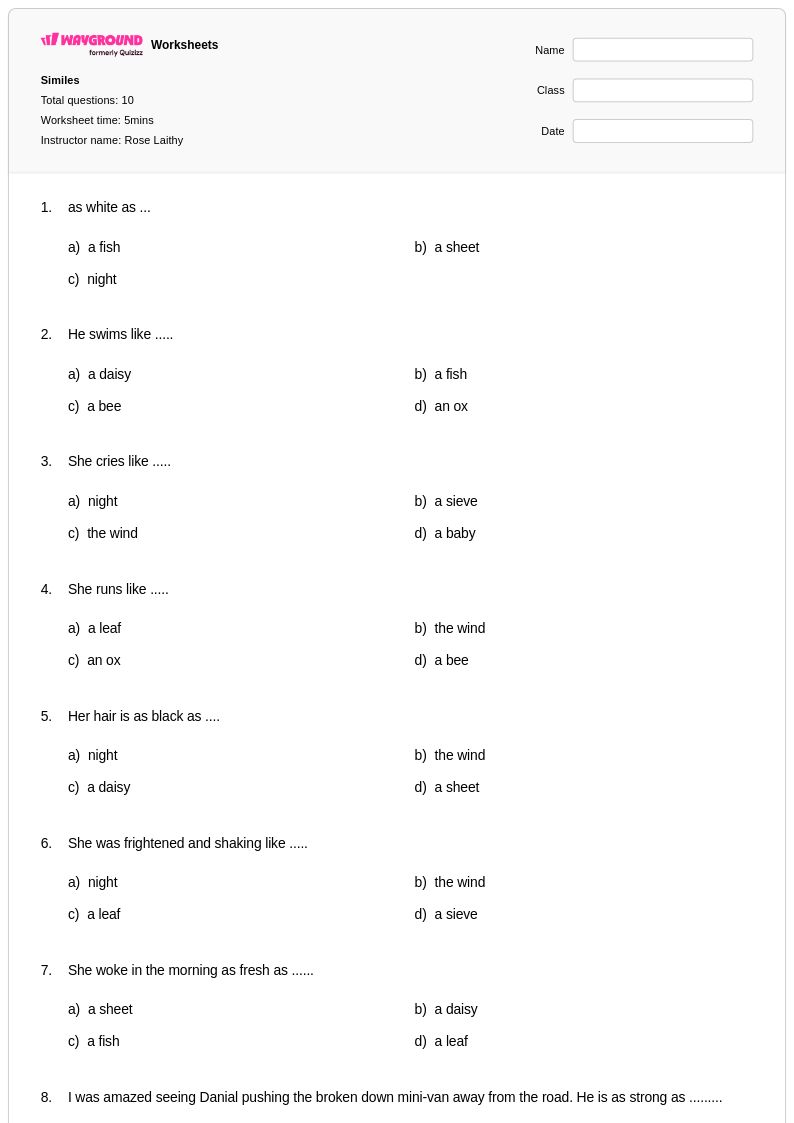
Start by anchoring the concept with two anchor words: 'like' and 'as.' Introduce similes as deliberate comparisons between two unlike things that use one of these signal words to create a vivid image — for example, 'brave as a lion' or 'runs like the wind.' Use familiar examples from students' everyday language before moving to literary texts, so learners can see that similes are already part of how they communicate. Once students can identify the two things being compared and explain what the comparison reveals, they're ready to begin writing their own.
What exercises help students practice identifying and writing similes?
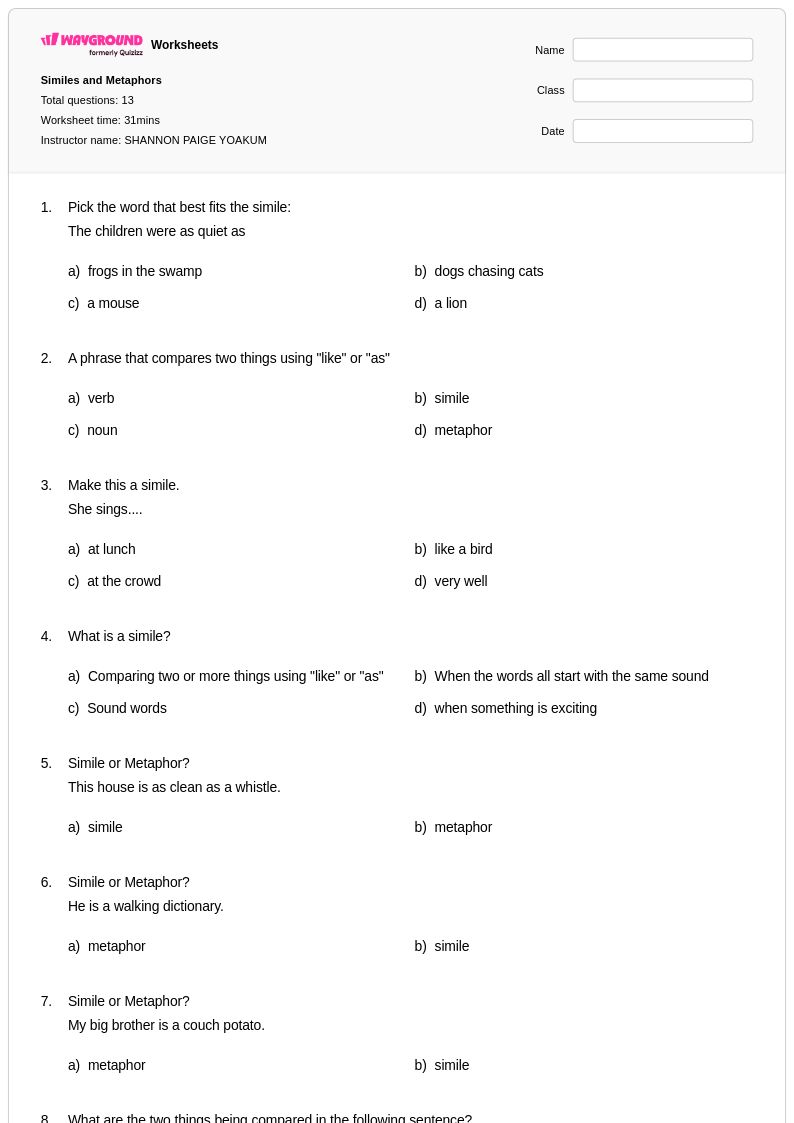
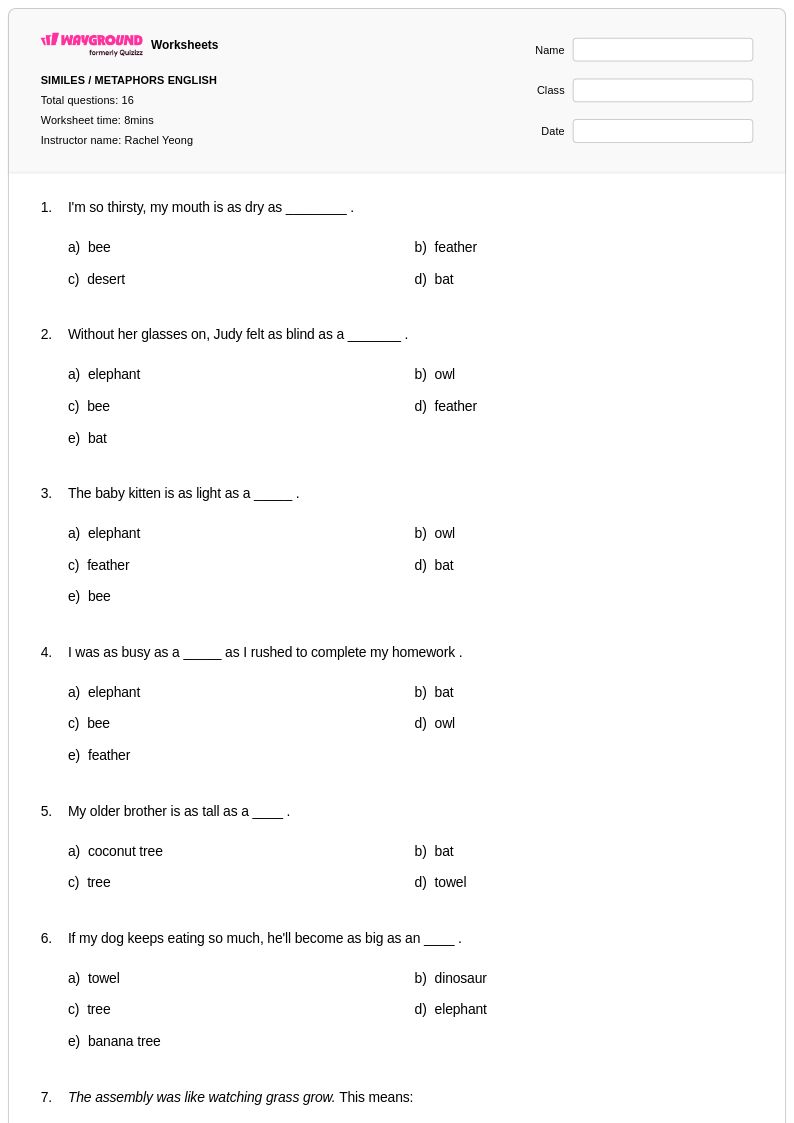
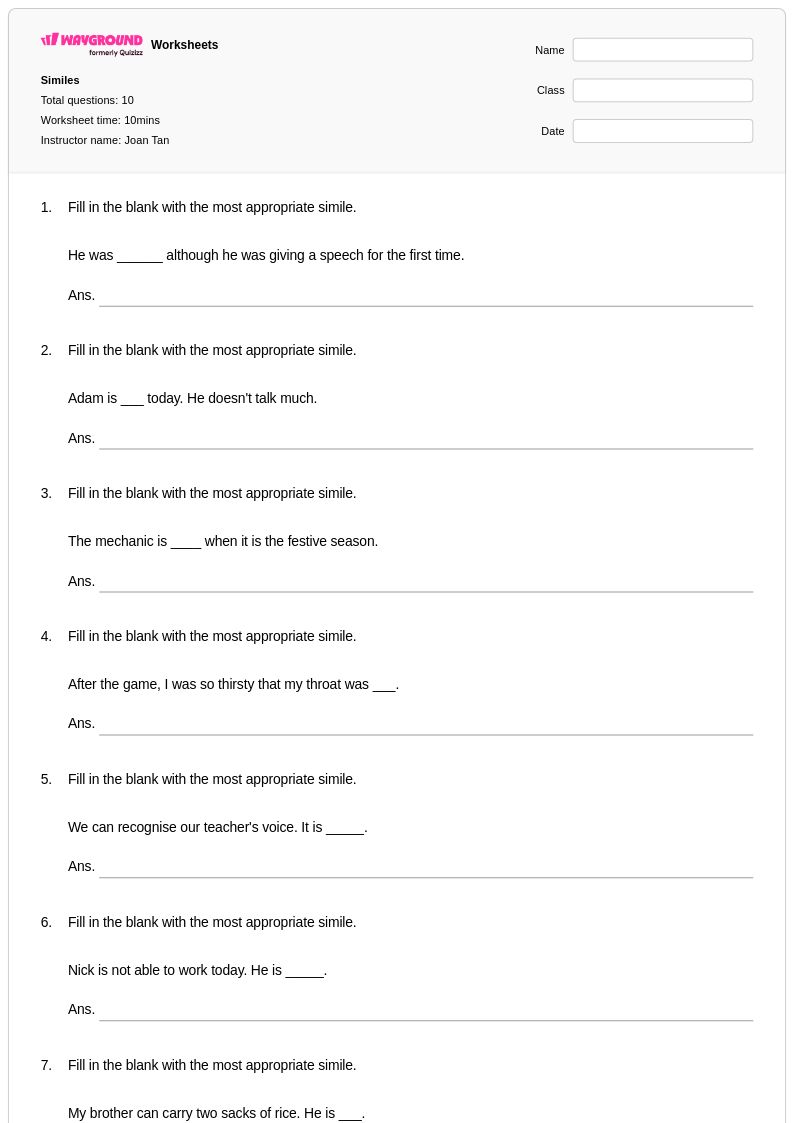
Effective simile practice moves from recognition to creation in deliberate stages. Begin with identification exercises where students underline similes in sentences or short passages and name the two things being compared. Progress to sentence-completion tasks — 'The classroom was as quiet as ___' — which scaffold original writing without a blank page. For deeper practice, have students analyze why an author chose a specific simile and whether it strengthens the writing, building both comprehension and craft awareness.
What mistakes do students commonly make when working with similes?
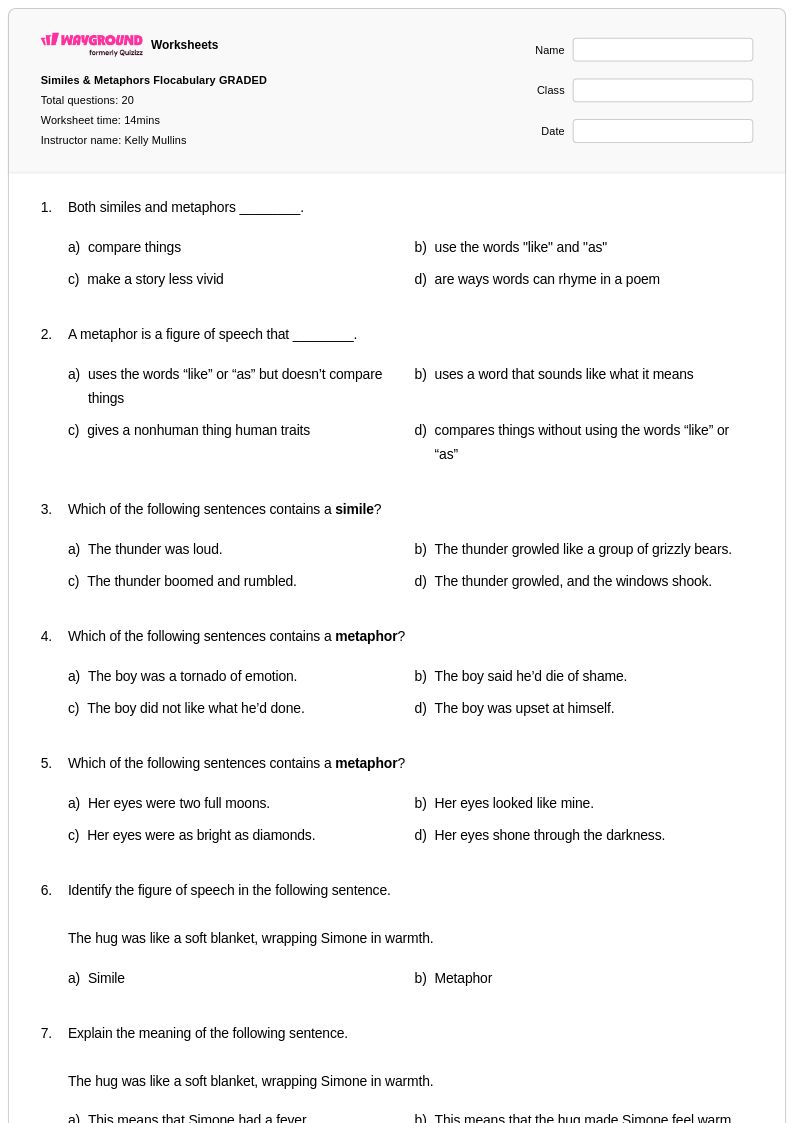
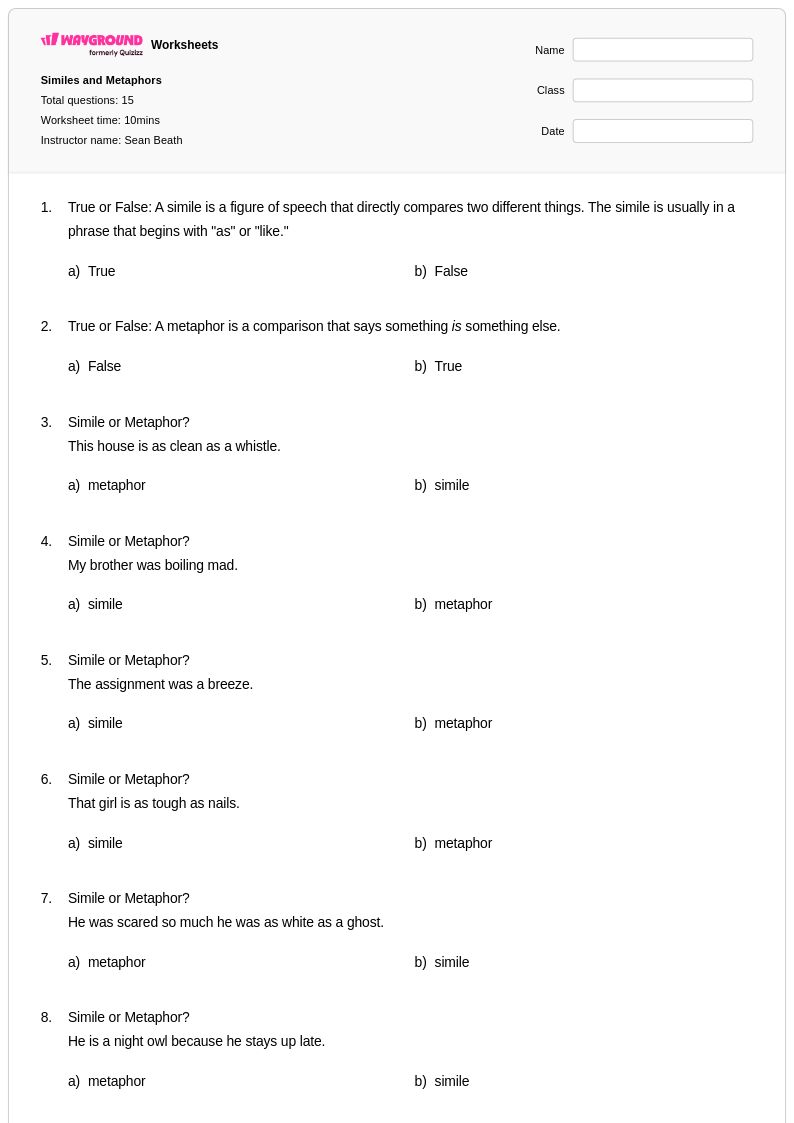
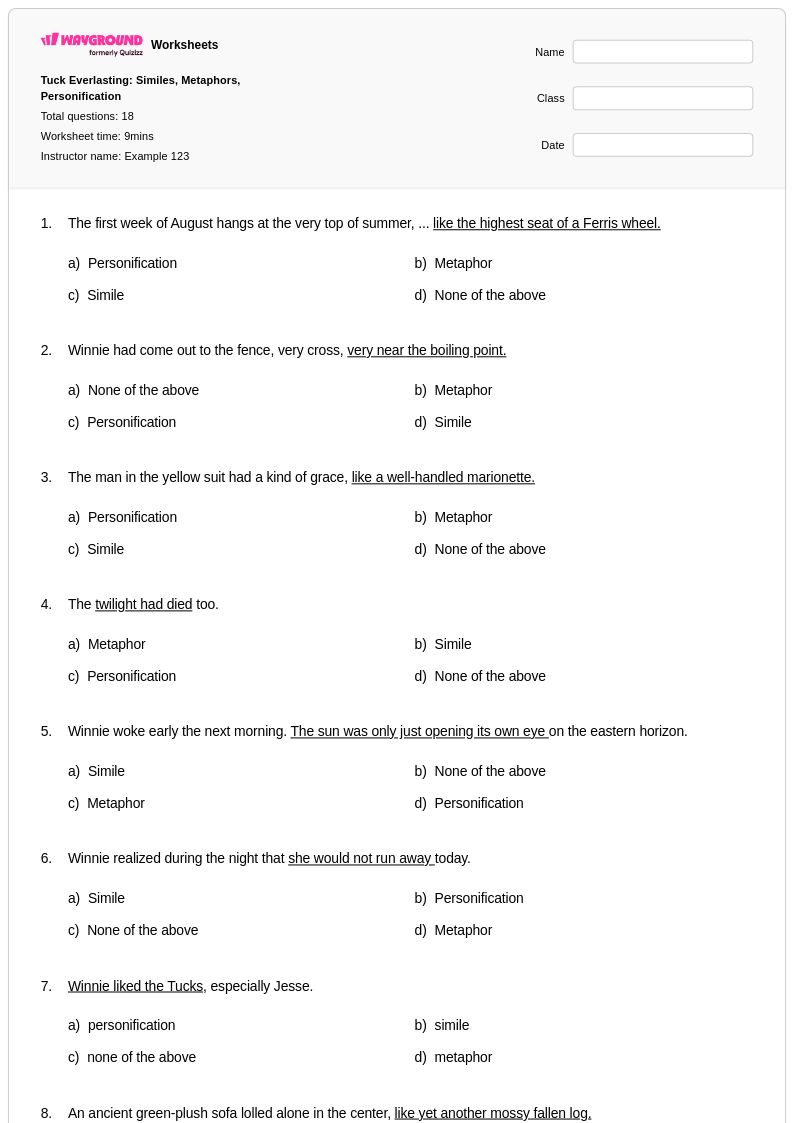
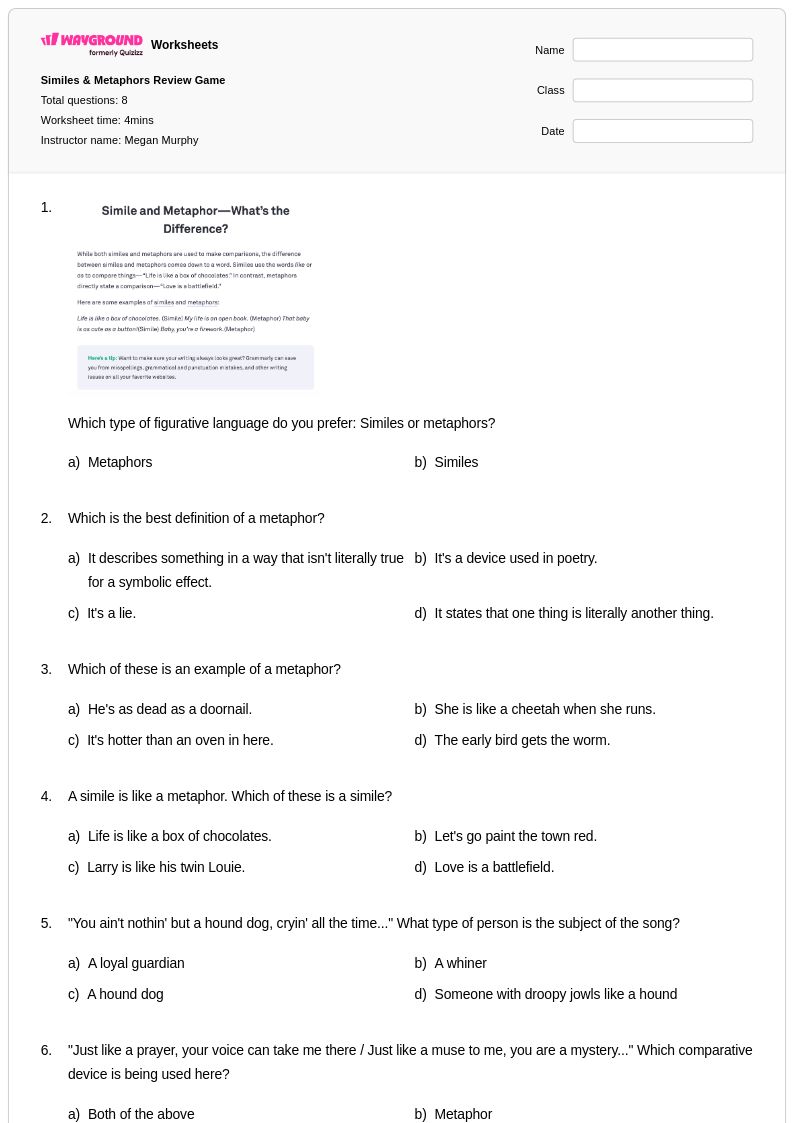
The most frequent error is confusing similes with metaphors — students often overlook whether 'like' or 'as' is present and incorrectly label direct comparisons as similes. A second common mistake is identifying the signal word without locating both elements of the comparison, which means students can spot a simile but cannot explain what it means. Students also tend to write generic or clichéd similes during original composition tasks, such as 'fast as a cheetah,' rather than crafting comparisons that are specific and purposeful.
How do I use Wayground's similes worksheets in my classroom?
Wayground's similes worksheets are available as printable PDFs for traditional classroom use and in digital formats for technology-integrated lessons, giving teachers flexibility regardless of their classroom setup. The digital format also allows teachers to host a worksheet as a quiz directly on Wayground, making it easy to assign practice, collect responses, and review results in one place. Each worksheet includes an answer key, so teachers can use them for guided instruction, independent practice, or self-paced review with equal efficiency.
How can I differentiate simile instruction for students at different skill levels?
For students who are still building foundational understanding, reduce cognitive load by focusing exclusively on identification tasks with shorter, simpler texts before introducing analysis or writing. Advanced learners benefit from tasks that ask them to evaluate simile effectiveness — comparing two versions of a sentence and defending which simile is stronger. On Wayground, teachers can apply accommodations such as read aloud, reduced answer choices, or extended time to individual students, ensuring every learner accesses the same content at an appropriate level of support.
How do similes fit into broader figurative language and writing instruction?
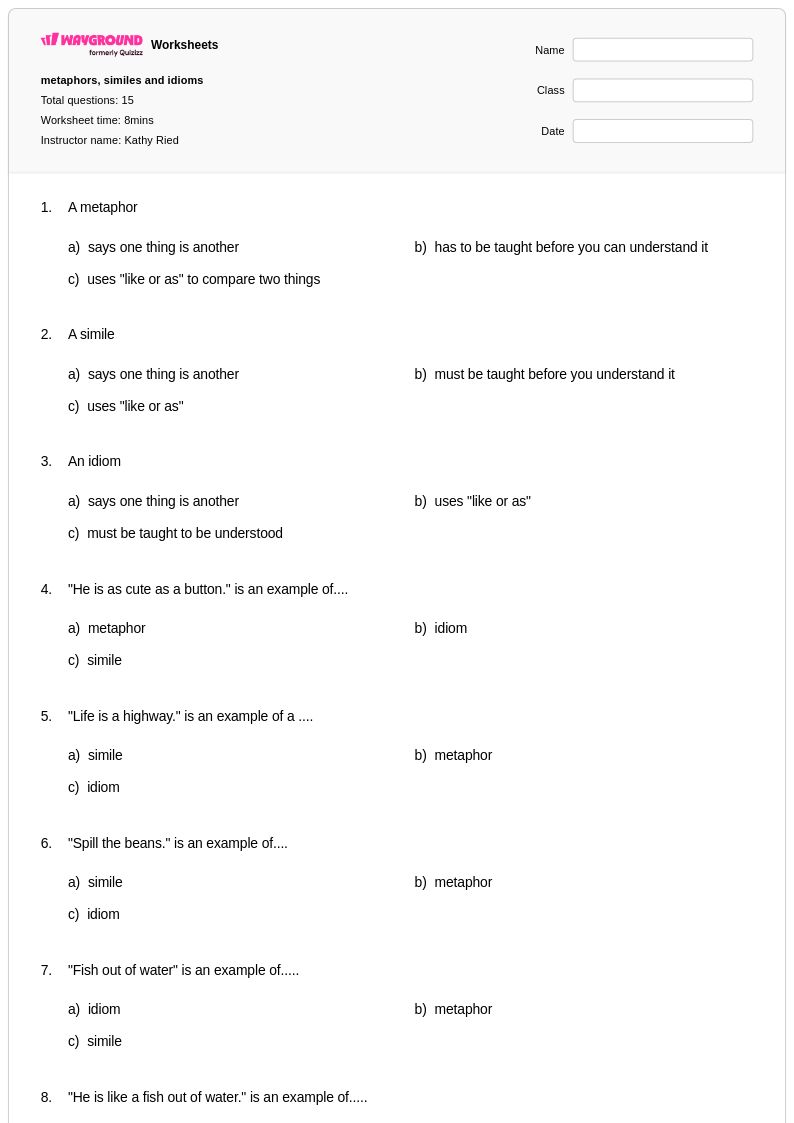
Similes are typically taught as an entry point into figurative language because the signal words 'like' and 'as' make them the most explicitly identifiable device. Once students master similes, they have a foundation for understanding metaphors, personification, and analogies — all of which rely on the same comparative logic without the explicit markers. In writing instruction, teaching similes directly improves descriptive writing quality because students learn to move beyond literal description and use comparison to create imagery and emotional resonance.