Free Printable Punnett Squares Worksheets for Class 12
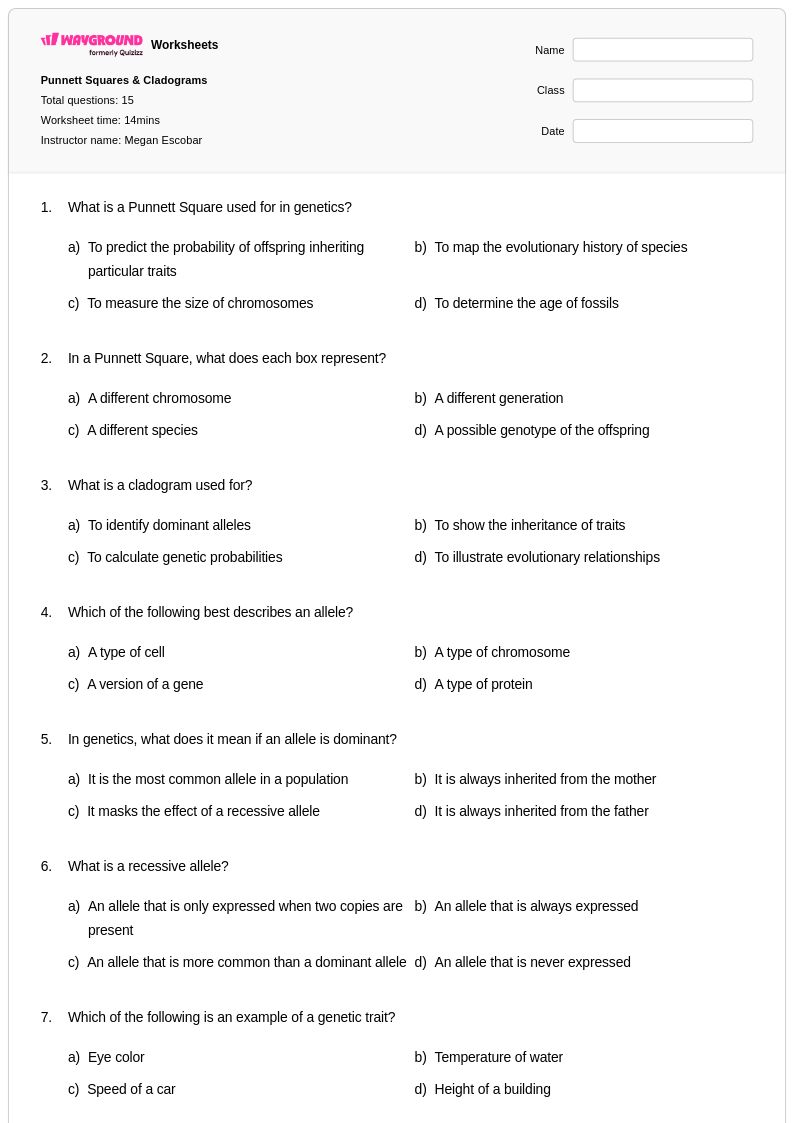
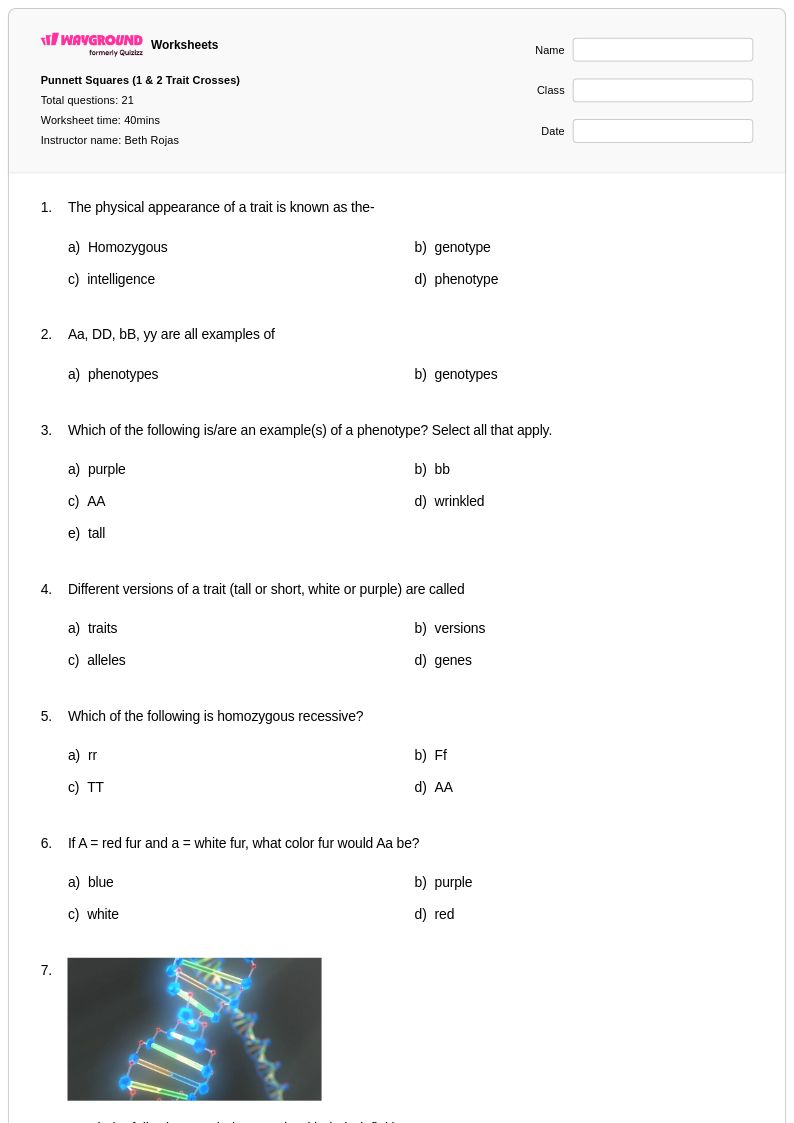
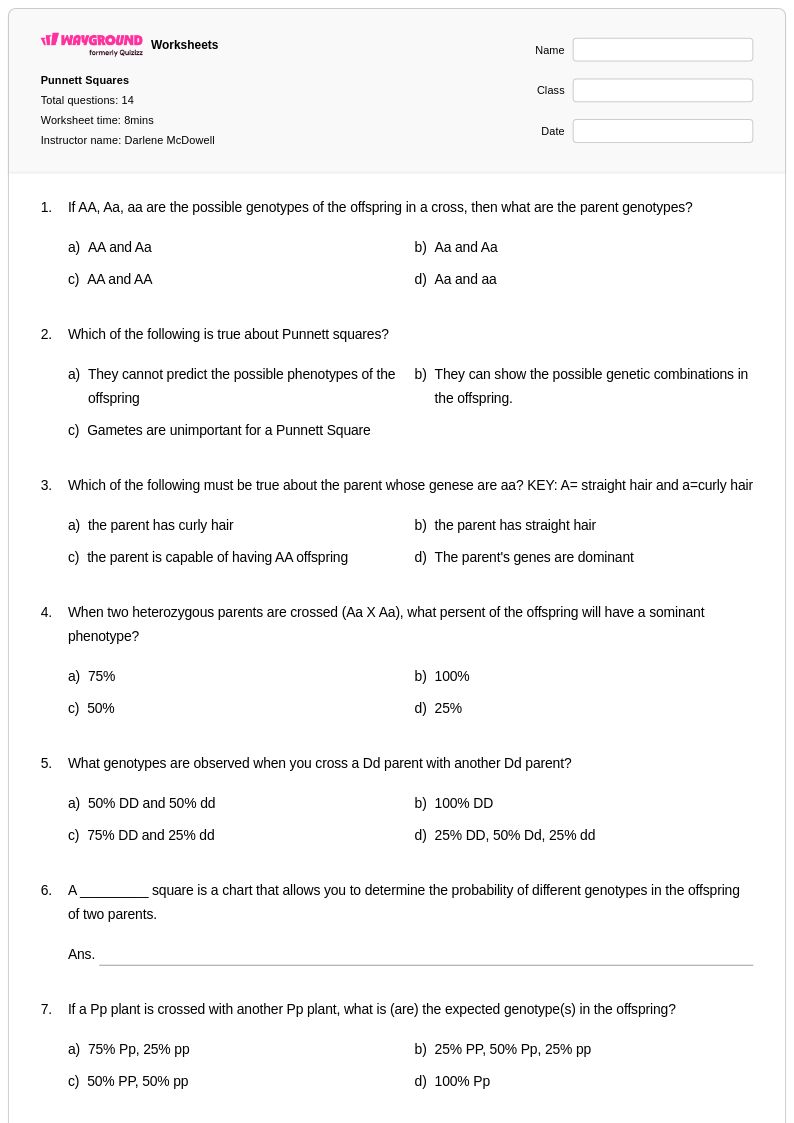
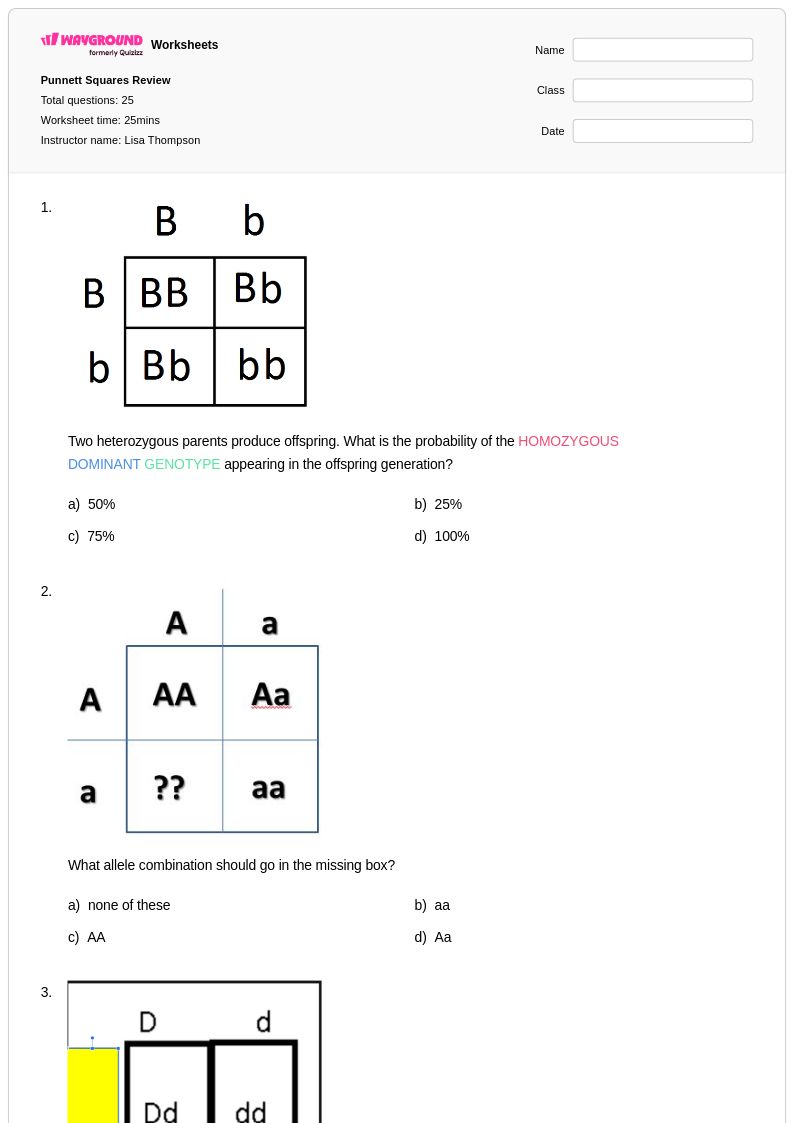
Class 12 Punnett Squares worksheets from Wayground help students master genetic inheritance patterns through comprehensive printables, practice problems, and answer keys available as free PDF downloads.
Explore printable Punnett Squares worksheets for Class 12
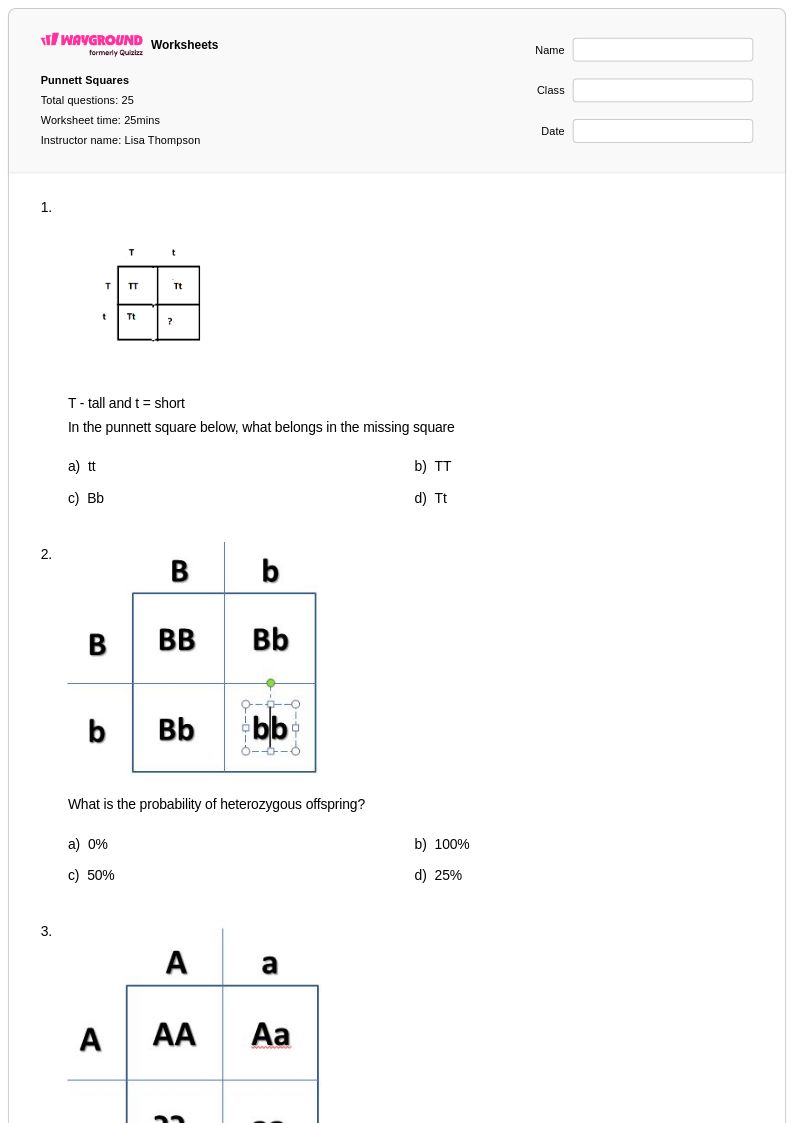
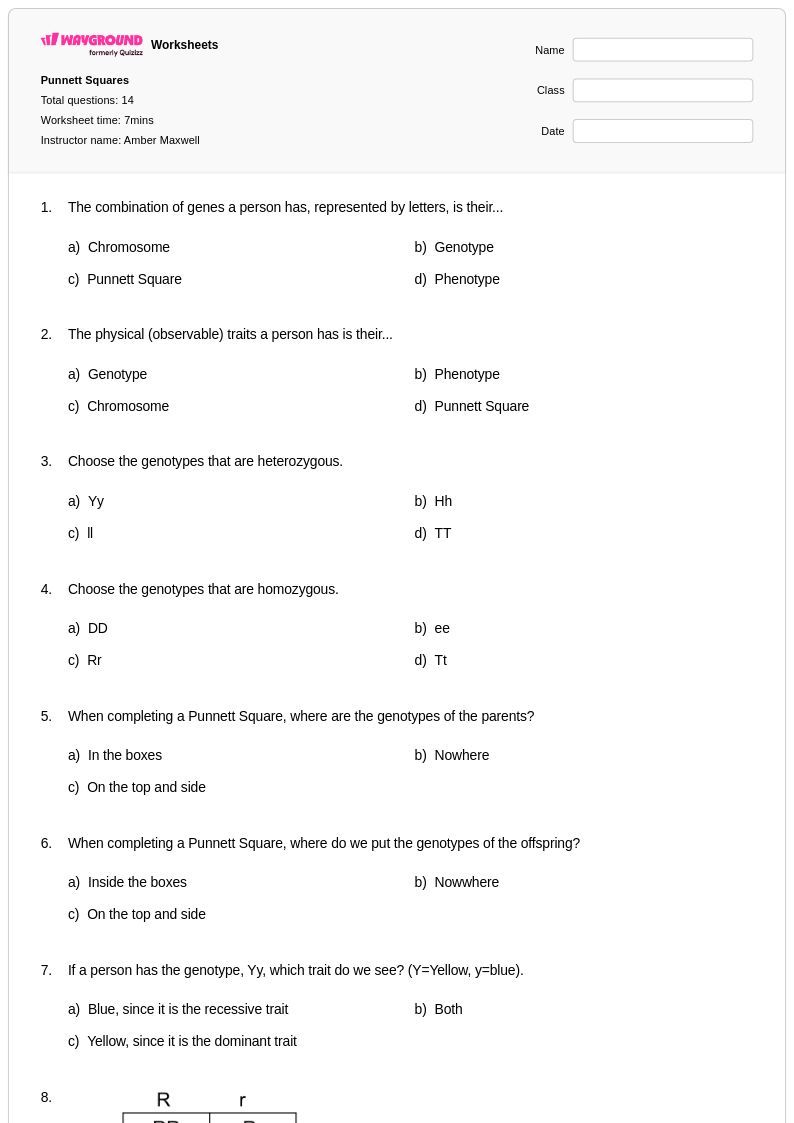
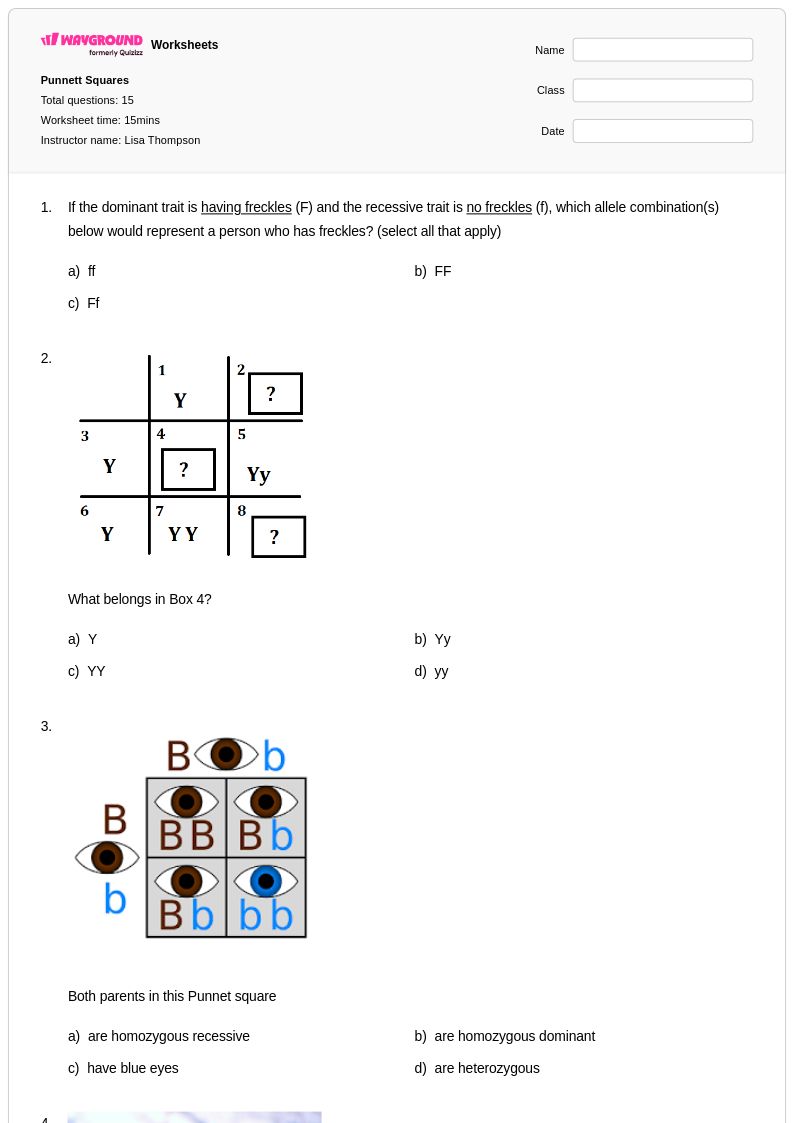
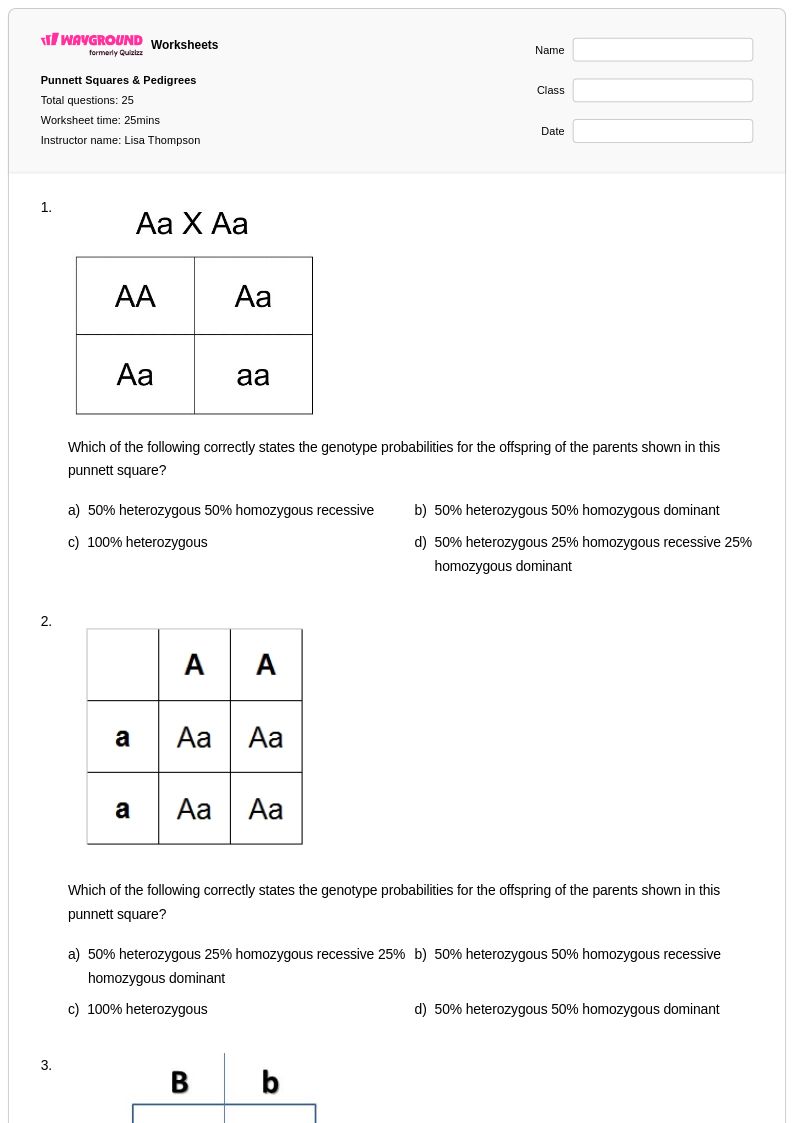
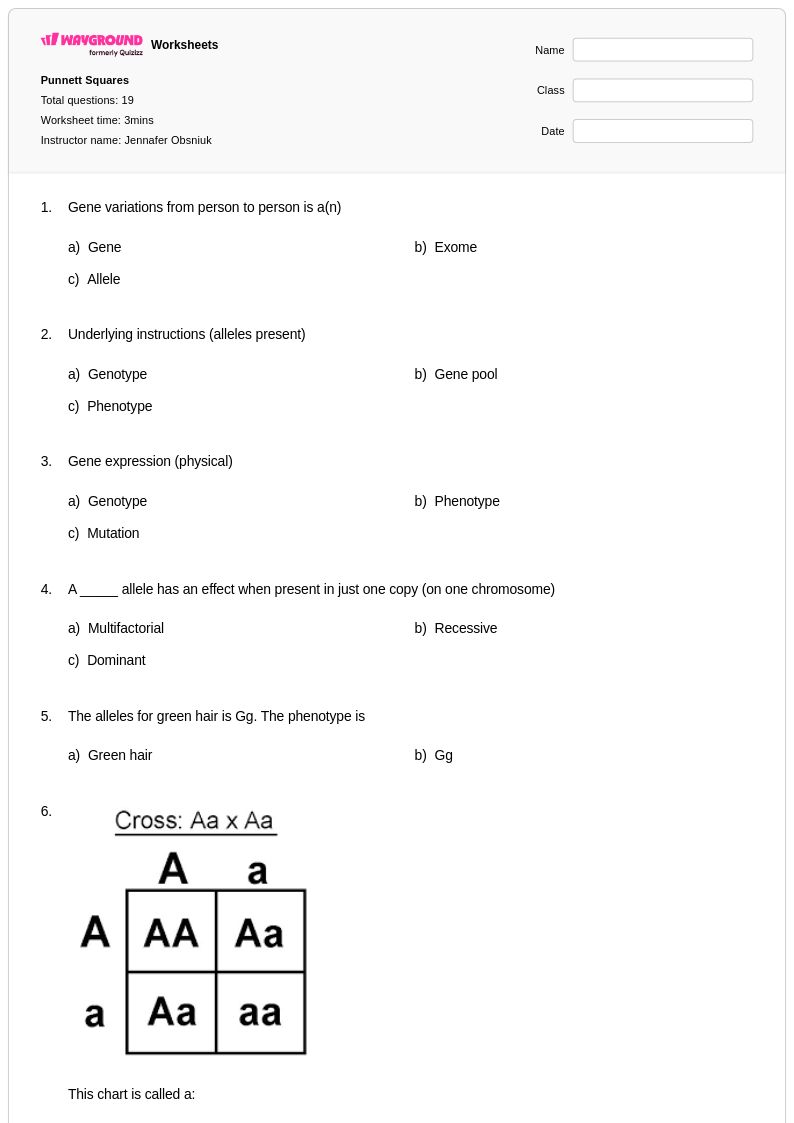
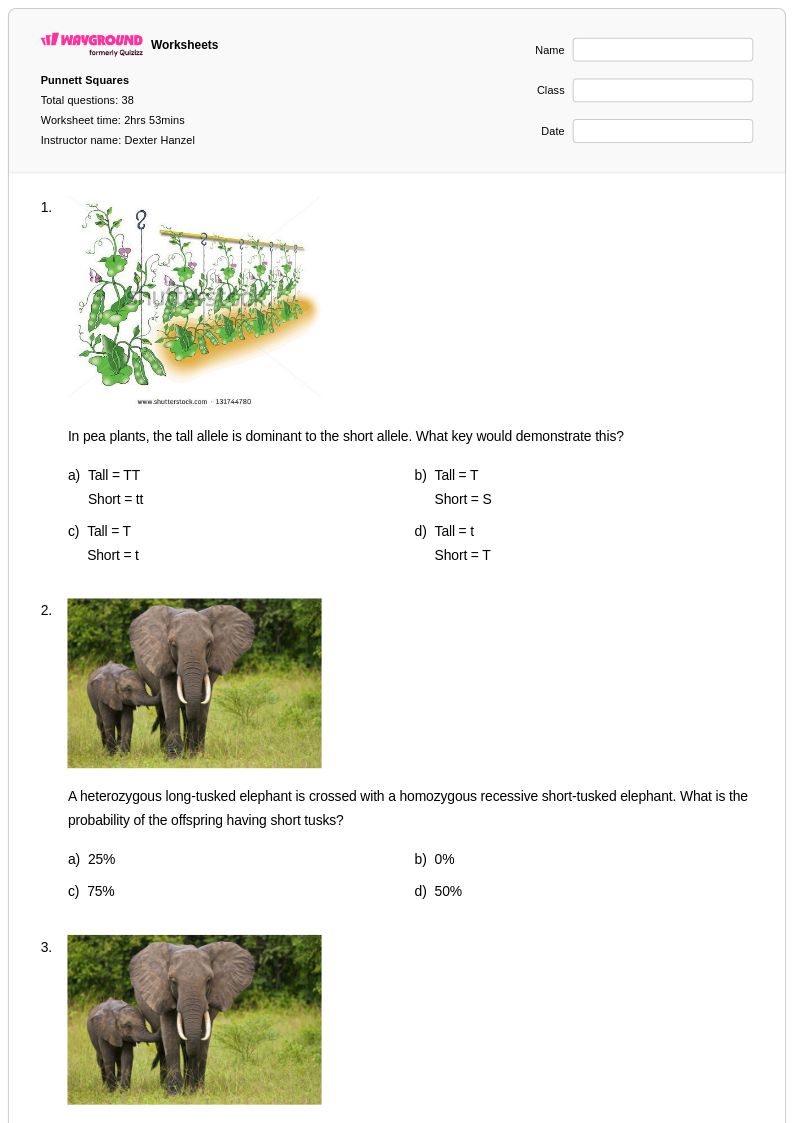
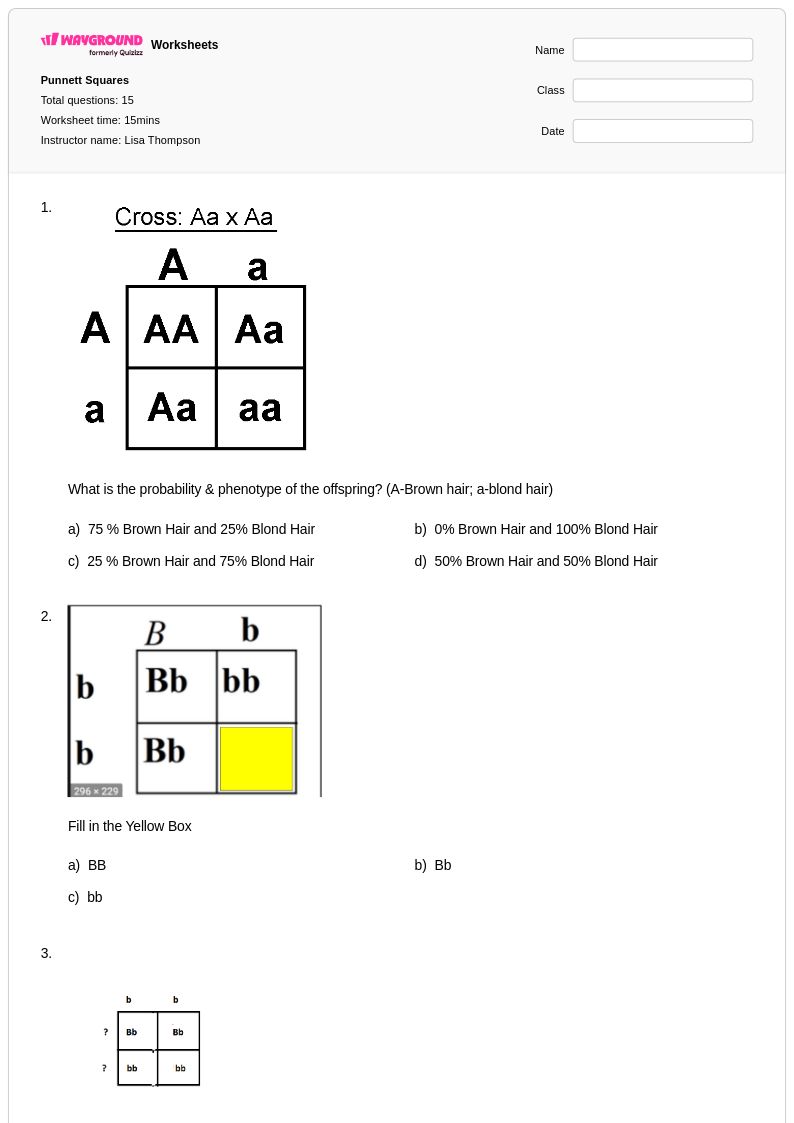
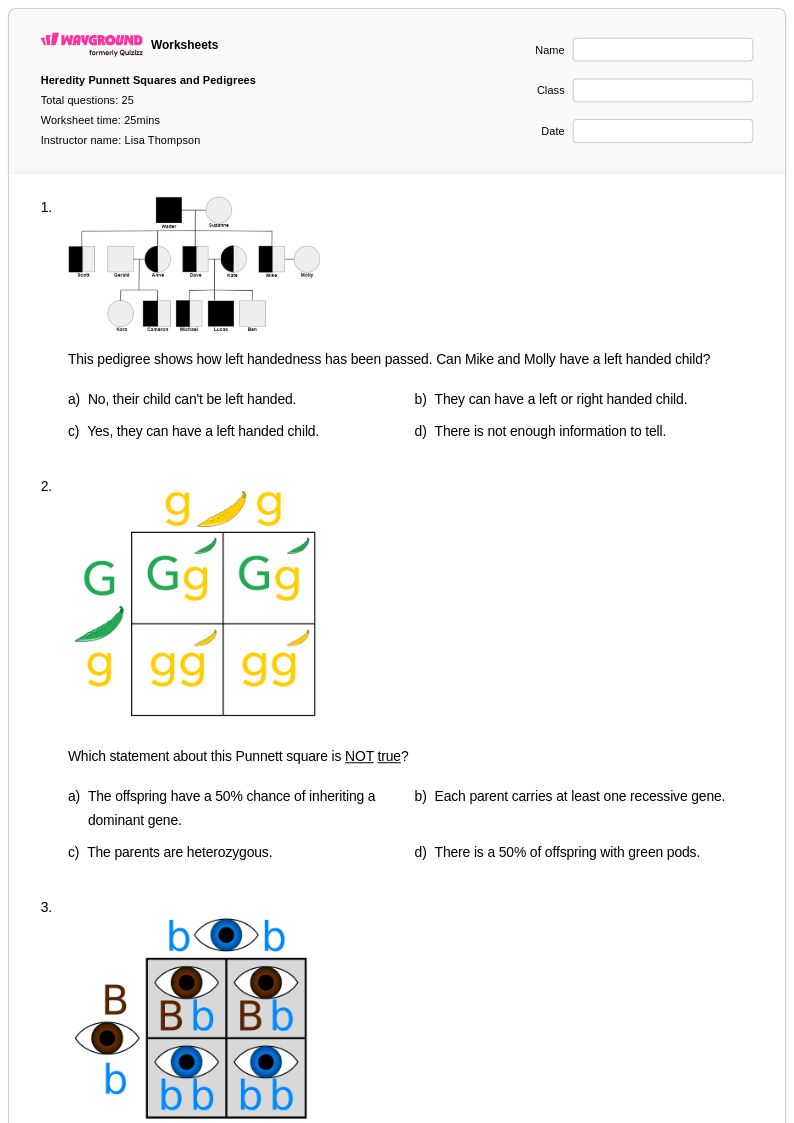
Punnett squares serve as fundamental tools in Class 12 biology, enabling students to predict genetic outcomes and understand inheritance patterns with mathematical precision. Wayground's comprehensive collection of Punnett square worksheets guides advanced students through complex genetic crosses, from basic monohybrid scenarios to intricate dihybrid and test crosses involving multiple alleles, codominance, and sex-linked traits. These carefully crafted practice problems strengthen critical thinking skills by requiring students to analyze genotype and phenotype ratios, calculate probability outcomes, and interpret genetic data. Each worksheet includes detailed answer keys that support independent learning, while the free printable format ensures accessibility for both classroom instruction and individual study sessions.
Wayground's extensive library, drawing from millions of teacher-created resources, provides biology educators with expertly curated Punnett square materials that align with advanced genetics standards and accommodate diverse learning needs. The platform's sophisticated search and filtering capabilities allow teachers to quickly locate worksheets targeting specific genetic concepts, difficulty levels, or problem types, streamlining lesson planning and assessment preparation. These differentiation tools prove invaluable for remediation support, enrichment activities, and targeted skill practice, while the flexible customization options enable educators to modify content for their unique classroom requirements. Available in both digital and printable PDF formats, these resources seamlessly integrate into various instructional models, supporting everything from traditional genetics units to flipped classroom approaches where students need reliable practice materials for mastering complex heredity calculations.
FAQs
How do I teach Punnett squares to high school biology students?
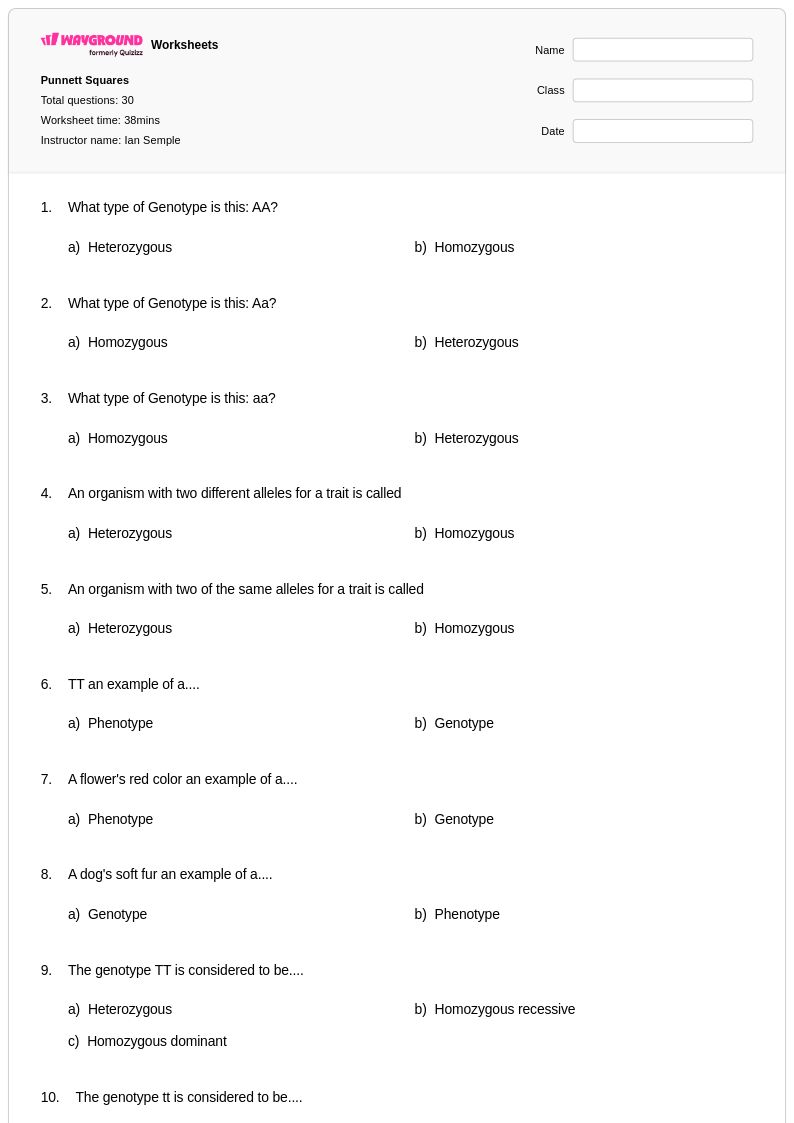
Begin by establishing the vocabulary of alleles, genotypes, and phenotypes before introducing the grid itself. Demonstrate a monohybrid cross using a single trait with clear dominant and recessive alleles, walking students through how to place parent alleles on the grid axes and fill in offspring genotypes. Once students reliably complete monohybrid crosses, progress to dihybrid crosses where they must track two independent traits simultaneously using a 4x4 grid.
What exercises help students practice Punnett square problems?
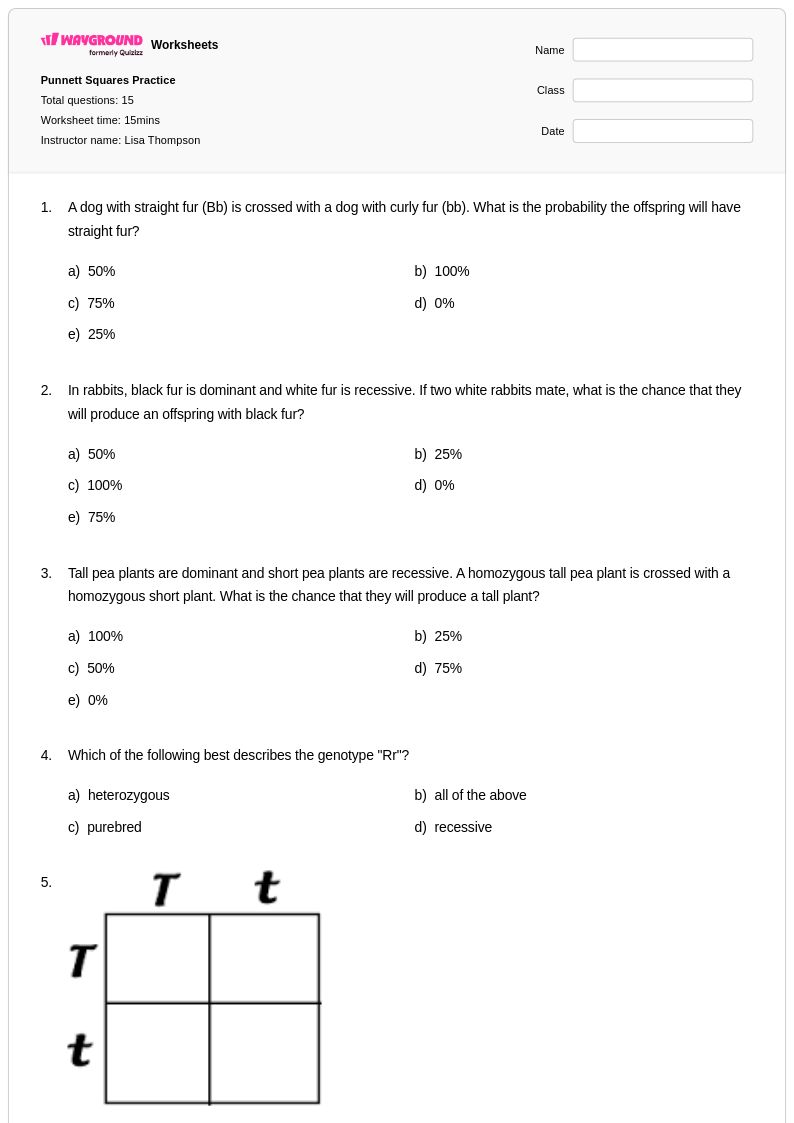
Start with worksheets that provide parent genotypes and ask students to complete the grid and list offspring genotypic and phenotypic ratios. Progress to problems where students must determine parent genotypes from offspring data, which requires reverse reasoning. Dihybrid cross worksheets and problems combining Punnett squares with pedigree analysis build advanced skills in applying probability to inheritance patterns across multiple generations.
What common mistakes do students make with Punnett squares?
The most common error is placing both alleles from one parent on the same axis instead of splitting them across the top and side of the grid. Students frequently confuse genotype with phenotype, listing allele combinations when asked for observable traits and vice versa. Another persistent mistake is assuming that a 3:1 phenotypic ratio means exactly three out of every four offspring will show the dominant trait, rather than understanding it as a probability.
How do I assess whether students can apply Punnett squares to genetics problems?
Use worksheets that present a scenario -- such as two parents with known genotypes -- and require students to construct the Punnett square, calculate genotypic and phenotypic ratios, and predict the probability of a specific offspring outcome. Problems that give offspring data and ask students to determine the parent genotypes test deeper understanding than simple grid completion. Including pedigree-based questions where students must infer allele assignments from family trait patterns assesses the ability to apply Punnett squares in context.
How do I use Punnett square worksheets in my classroom?
These worksheets are available as printable PDFs for traditional classroom use and in digital formats for technology-integrated learning environments. Use monohybrid cross worksheets as guided practice immediately after direct instruction, then assign dihybrid and pedigree-integrated problems as independent practice or homework. Answer keys are included for student self-checking, making these worksheets effective for both formative practice and summative review before genetics assessments.
How do I differentiate Punnett square instruction for struggling and advanced students?
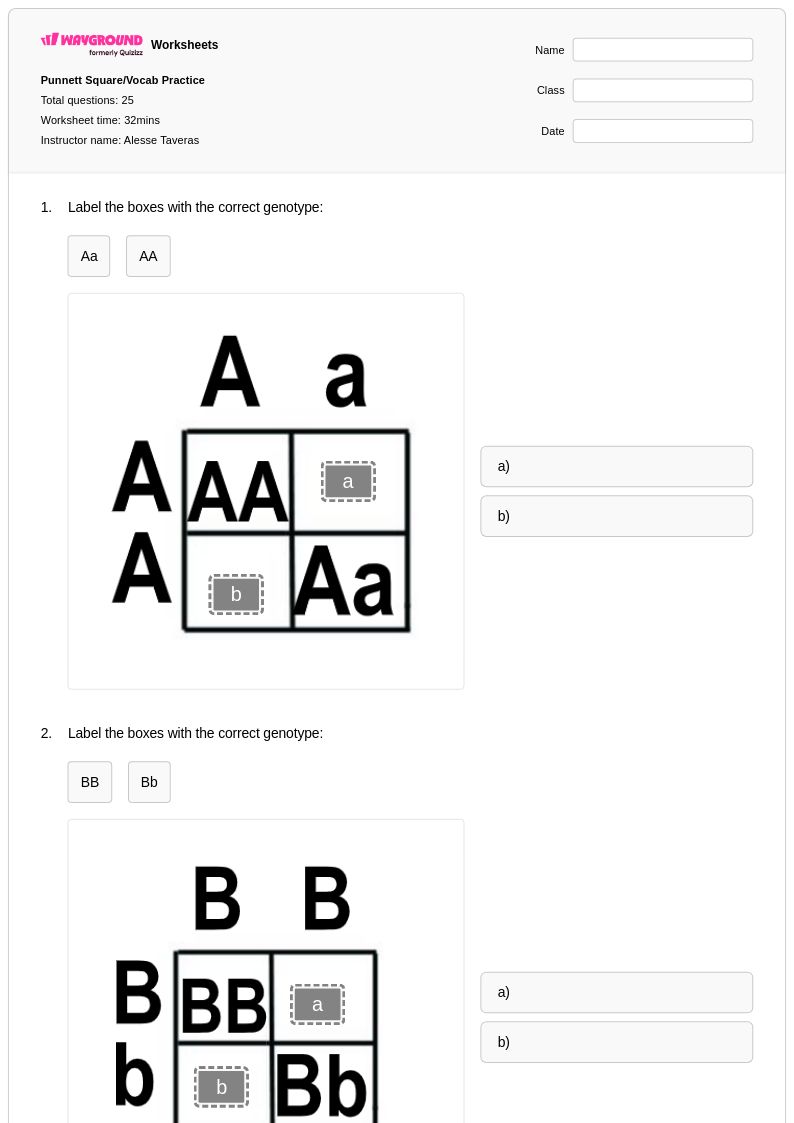
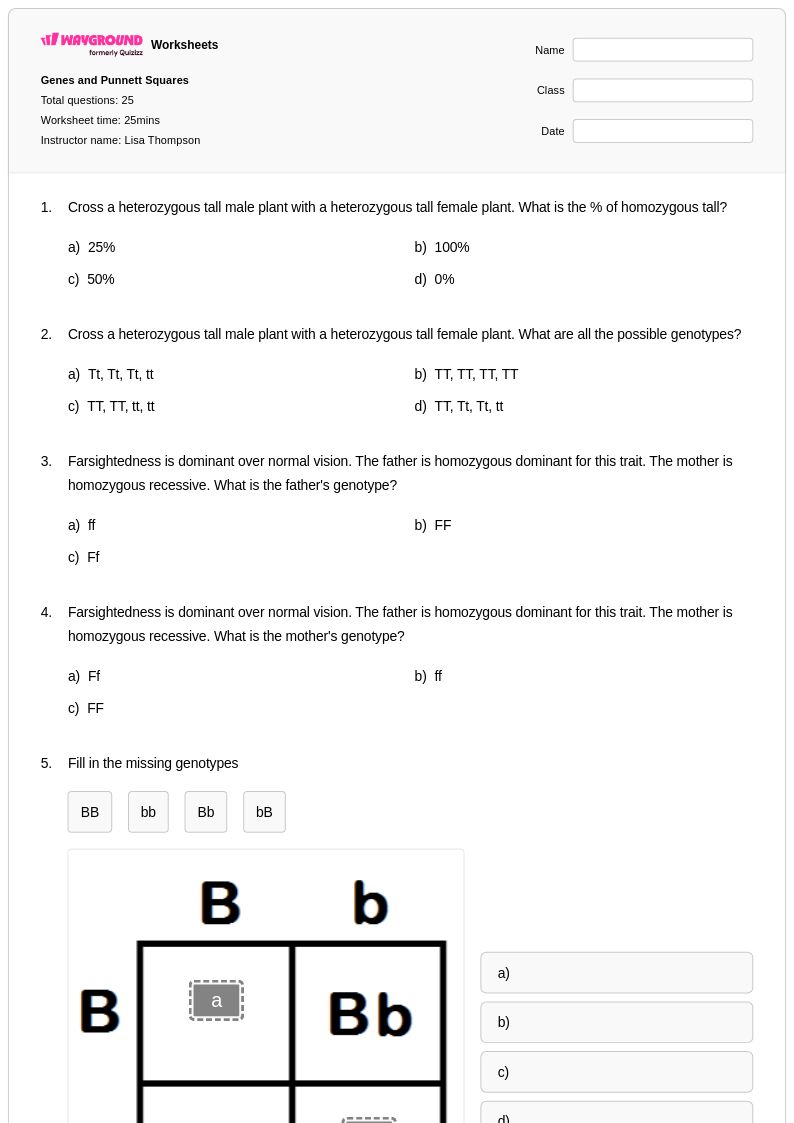
For students who struggle, provide worksheets with pre-drawn grids, labeled axes, and word banks listing possible allele combinations so they focus on the logic rather than setup. For advanced students, assign incomplete dominance, codominance, or sex-linked trait problems that extend beyond simple dominant-recessive Punnett squares. Wayground's customizable difficulty levels allow teachers to assign varied complexity within the same genetics topic based on individual student readiness.
What grade levels are Punnett square worksheets appropriate for?
Punnett square worksheets are designed for grades 6 through 12, with content complexity scaled to each level. Grades 6-8 focus on basic monohybrid crosses with dominant and recessive alleles and calculating simple genotypic ratios. Grades 9-12 advance to dihybrid crosses, pedigree analysis, probability calculations for specific offspring outcomes, and non-Mendelian inheritance patterns including incomplete dominance and codominance.