
Recommended Topics for you
- Antecedents
- Demonstrative Pronouns
- Indefinite Pronouns
- Pronoun-antecedent Agreement
- Reflexive Pronouns
20 Q
5th - 7th
20 Q
3rd - 5th
10 Q
1st - 5th
17 Q
4th - 5th
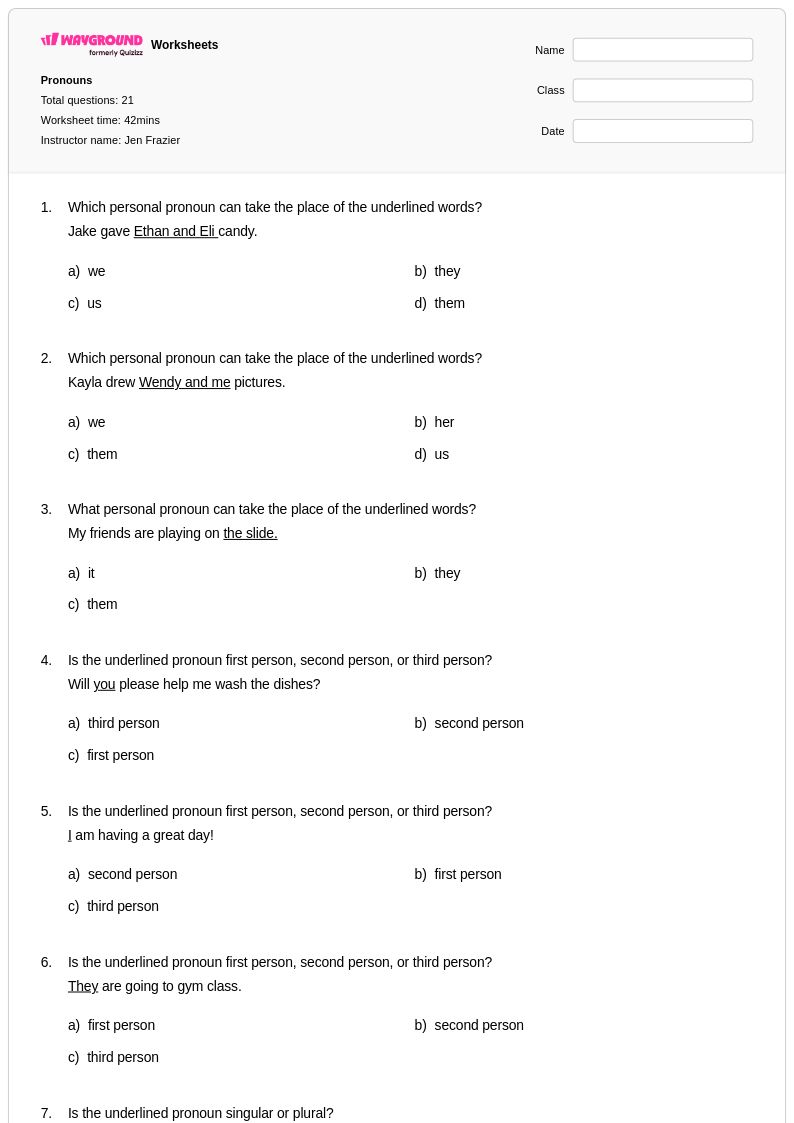
21 Q
4th - 5th
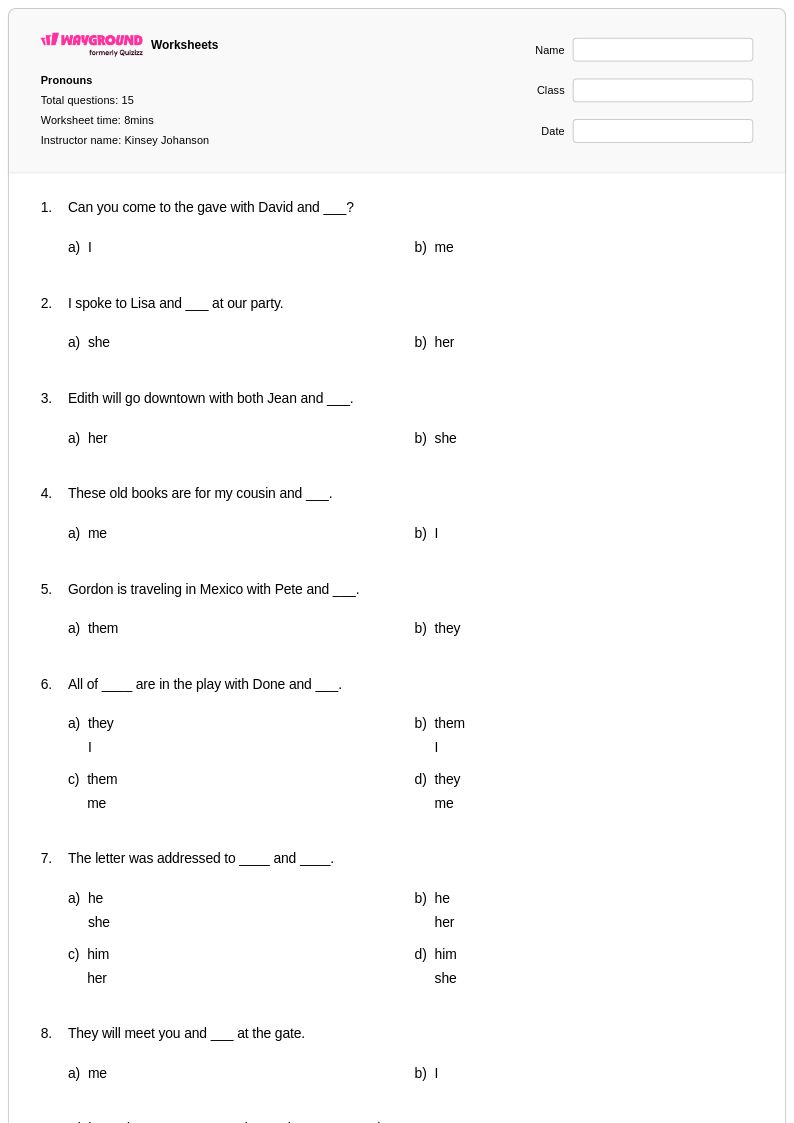
15 Q
5th - 8th
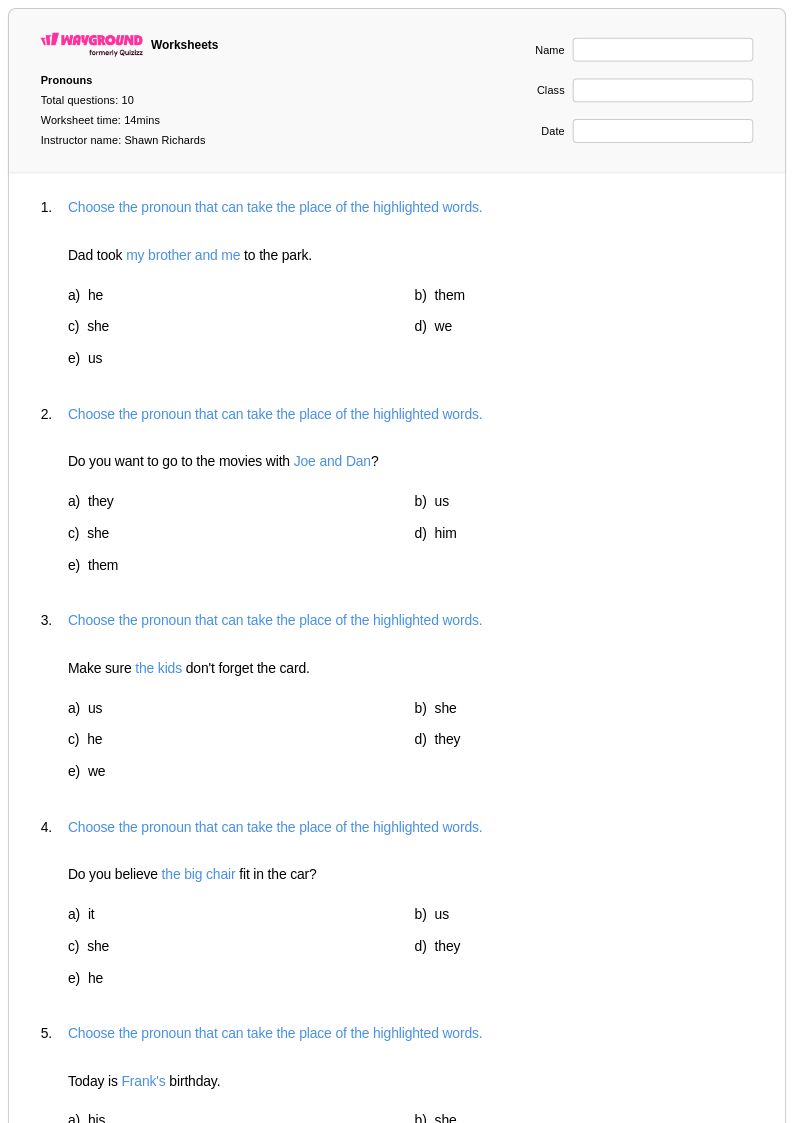
10 Q
5th
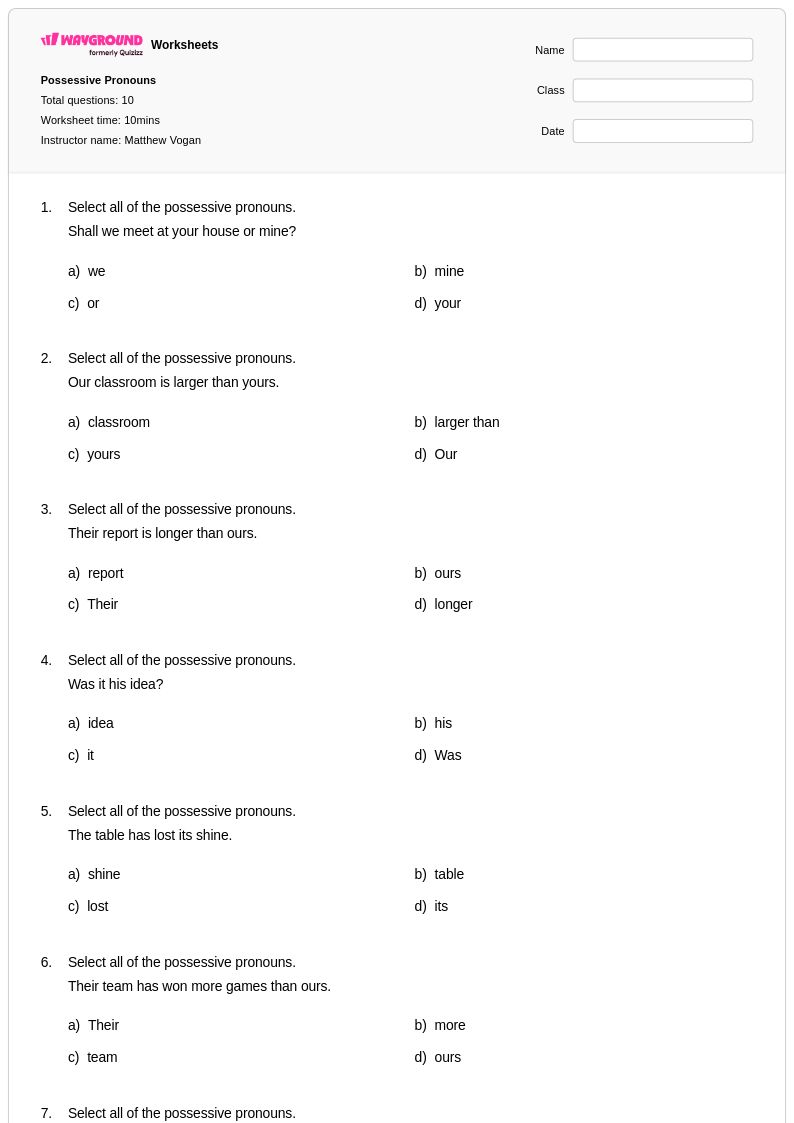
10 Q
5th - 6th
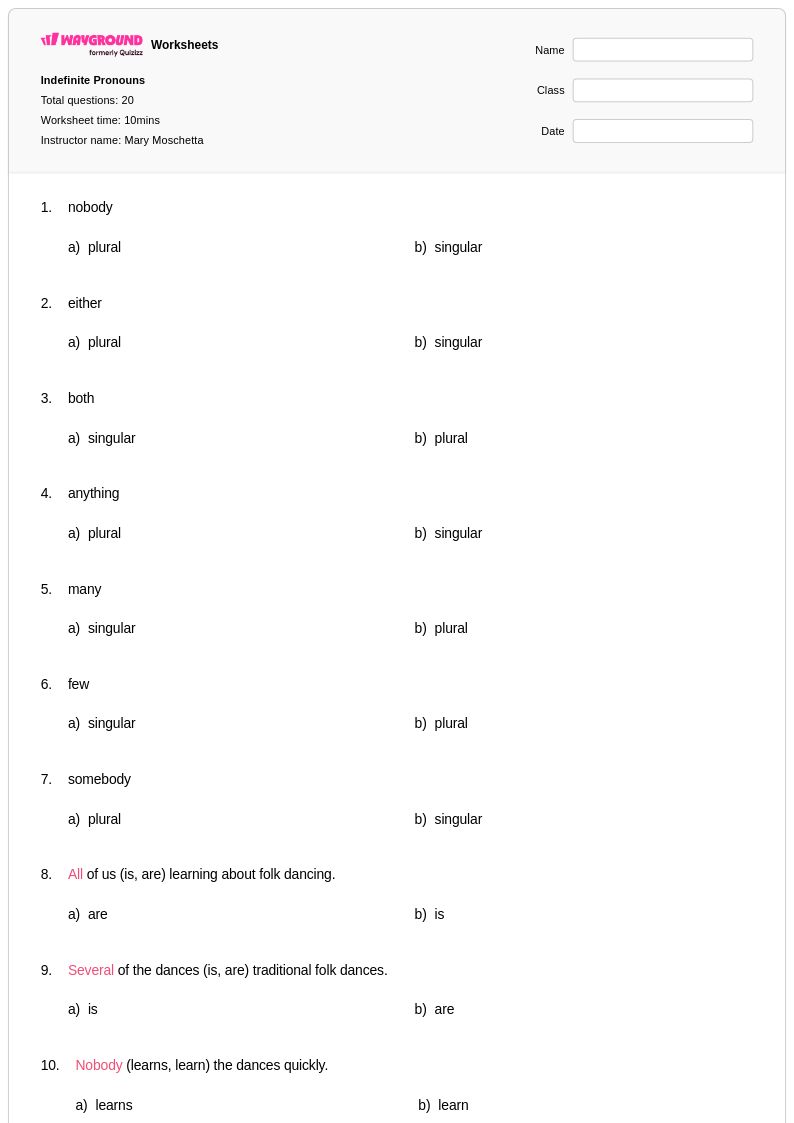
20 Q
5th - 9th
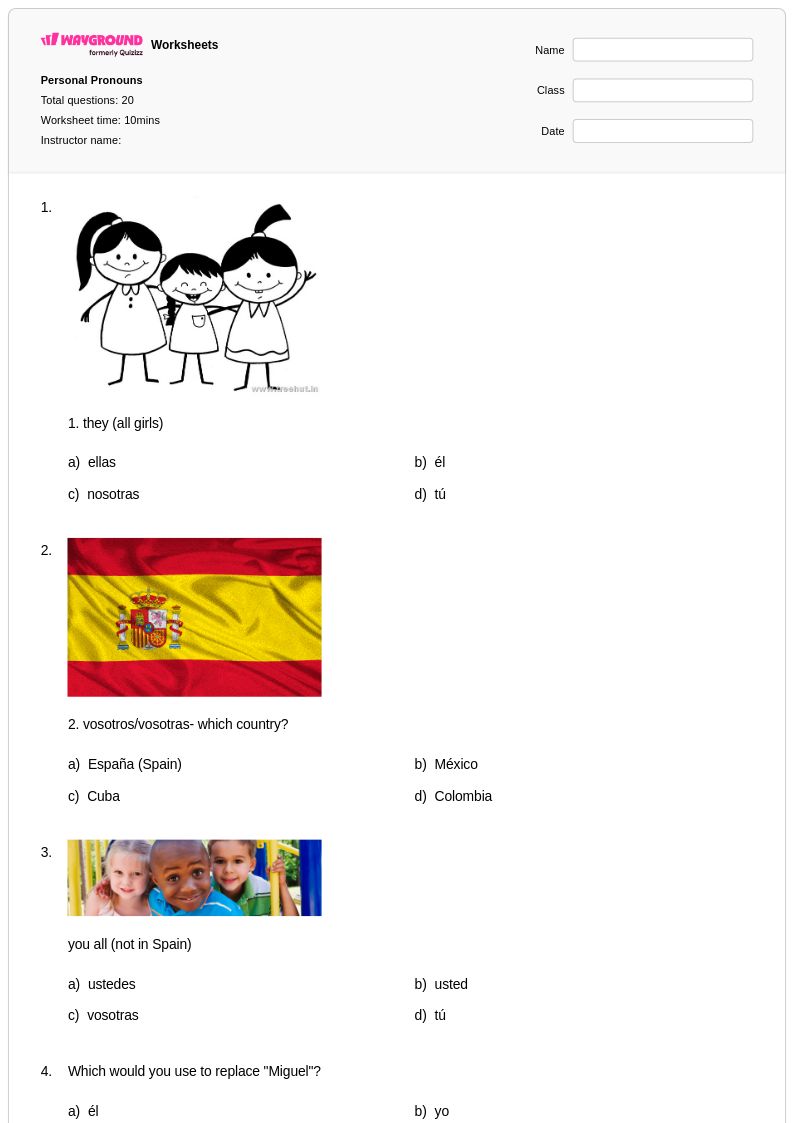
20 Q
5th - 8th
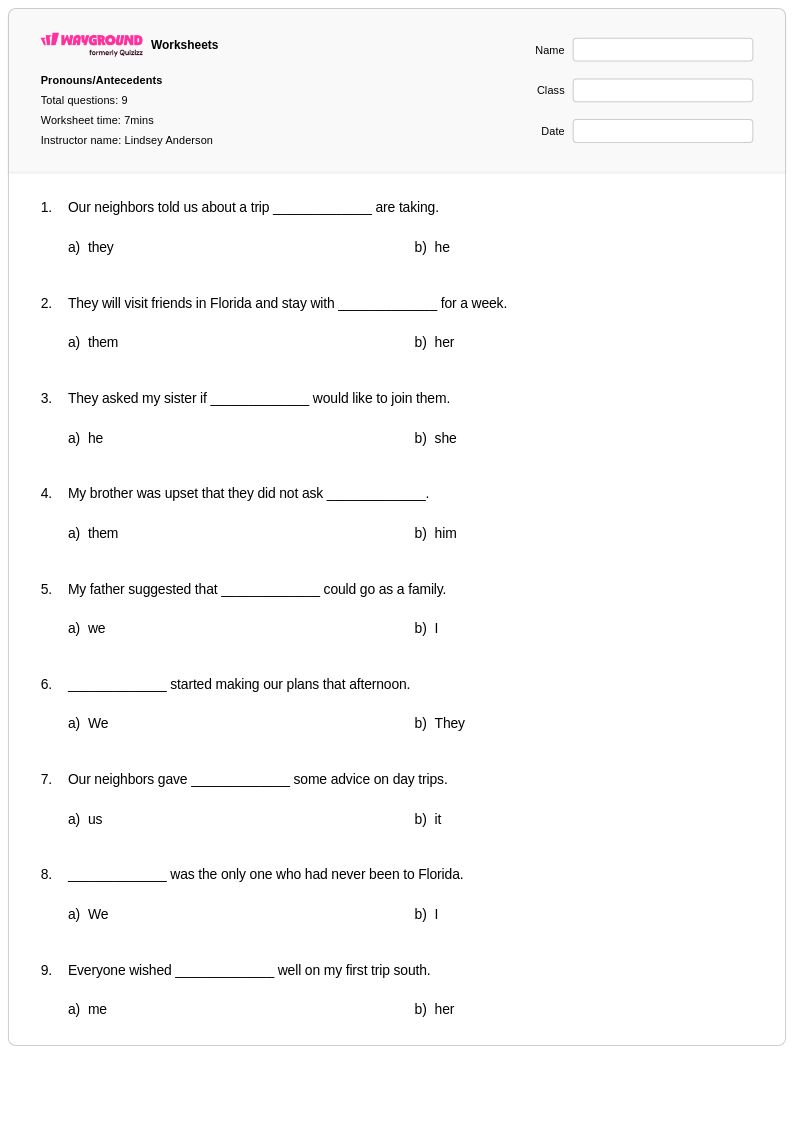
9 Q
5th
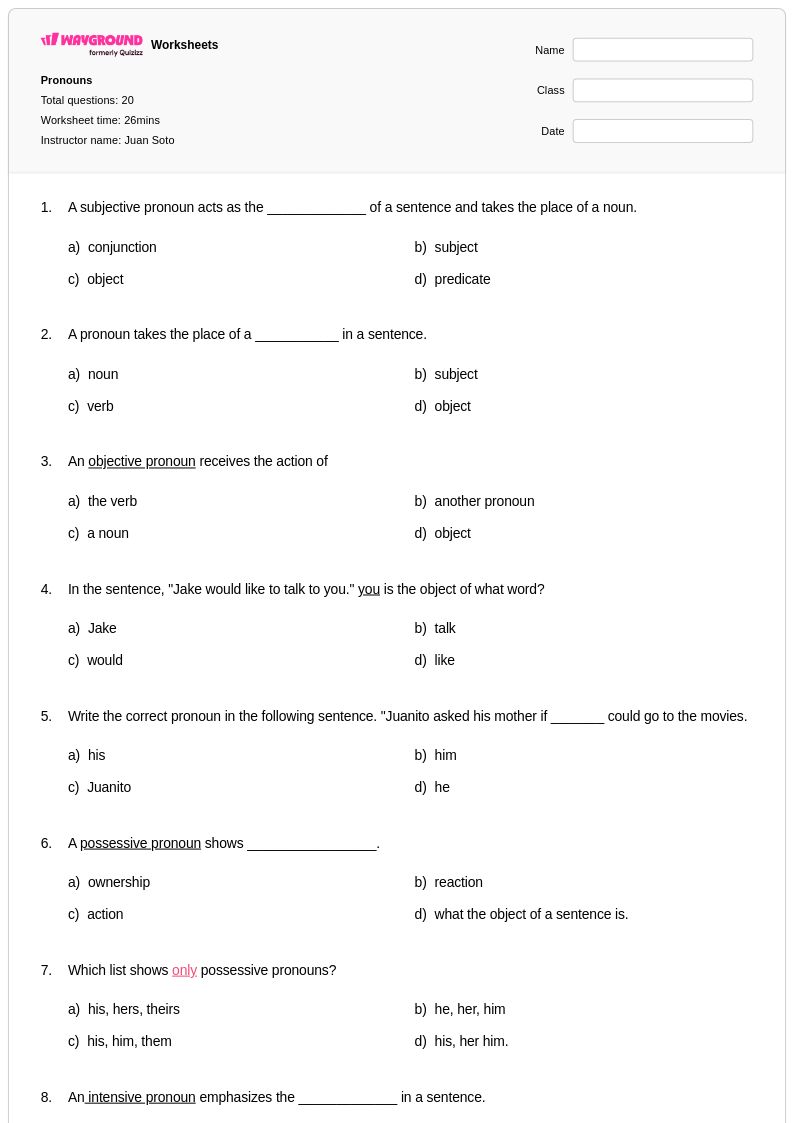
20 Q
5th - 6th
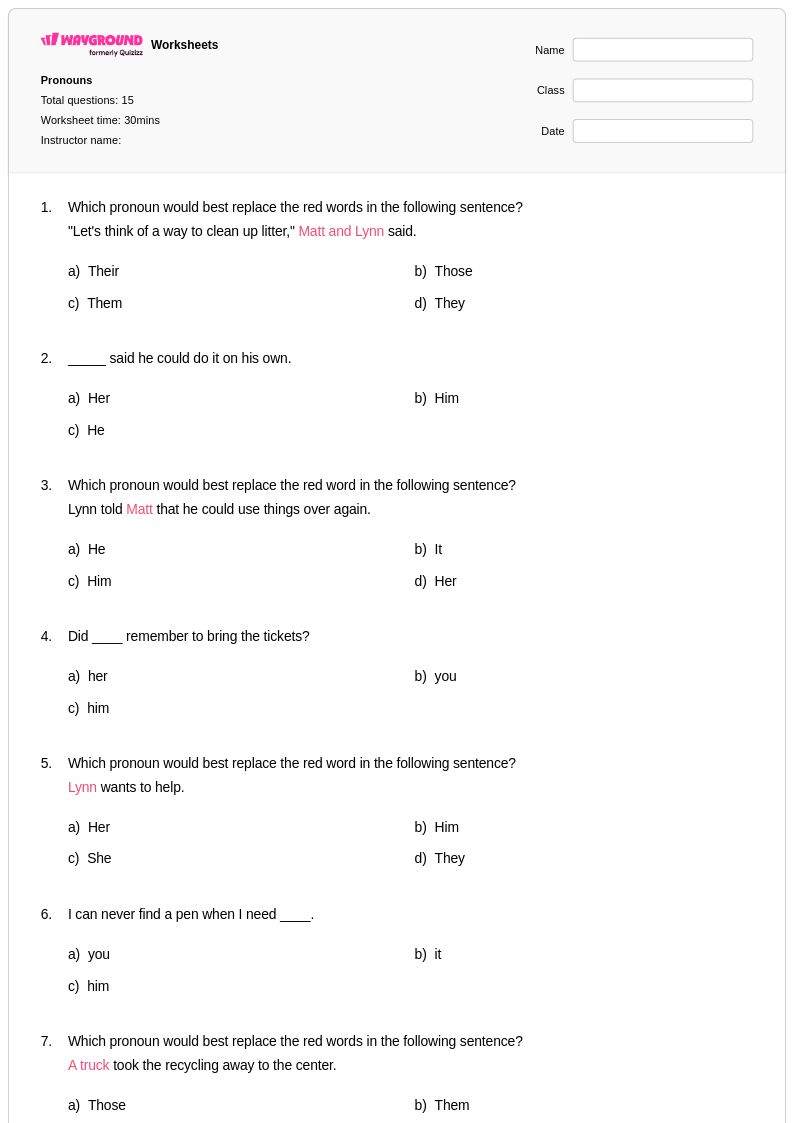
15 Q
3rd - 5th
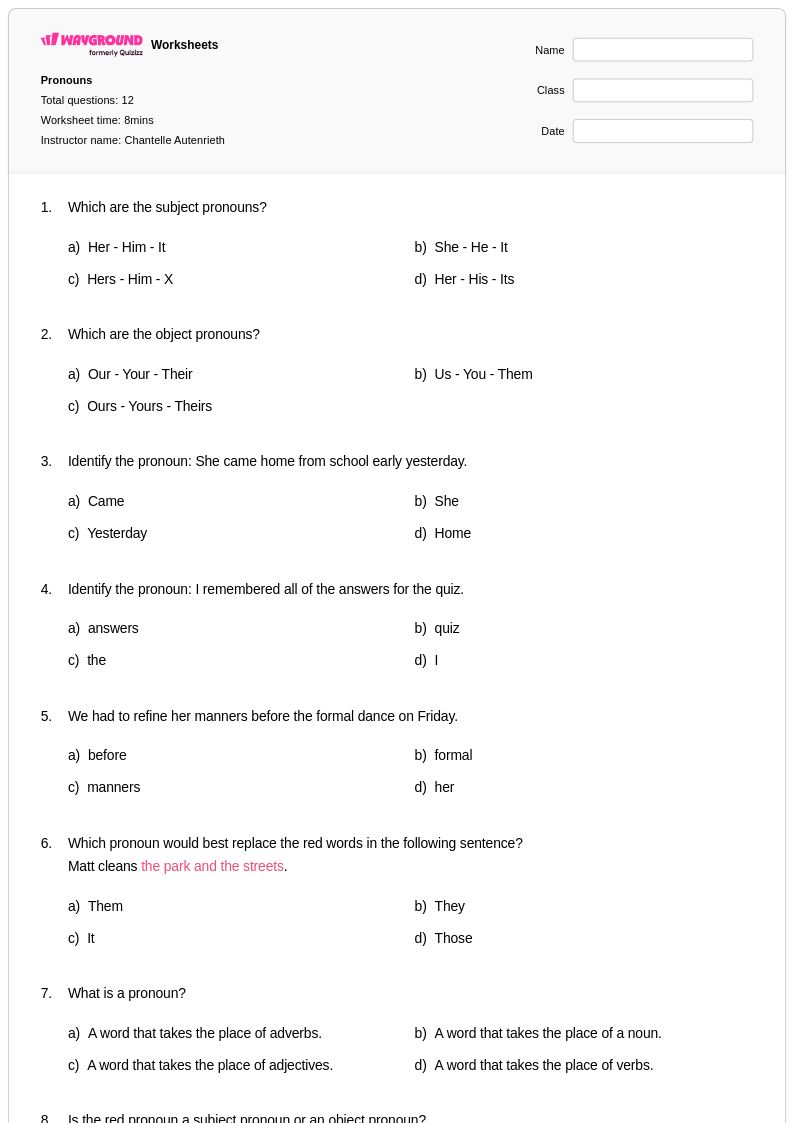
12 Q
5th - 6th
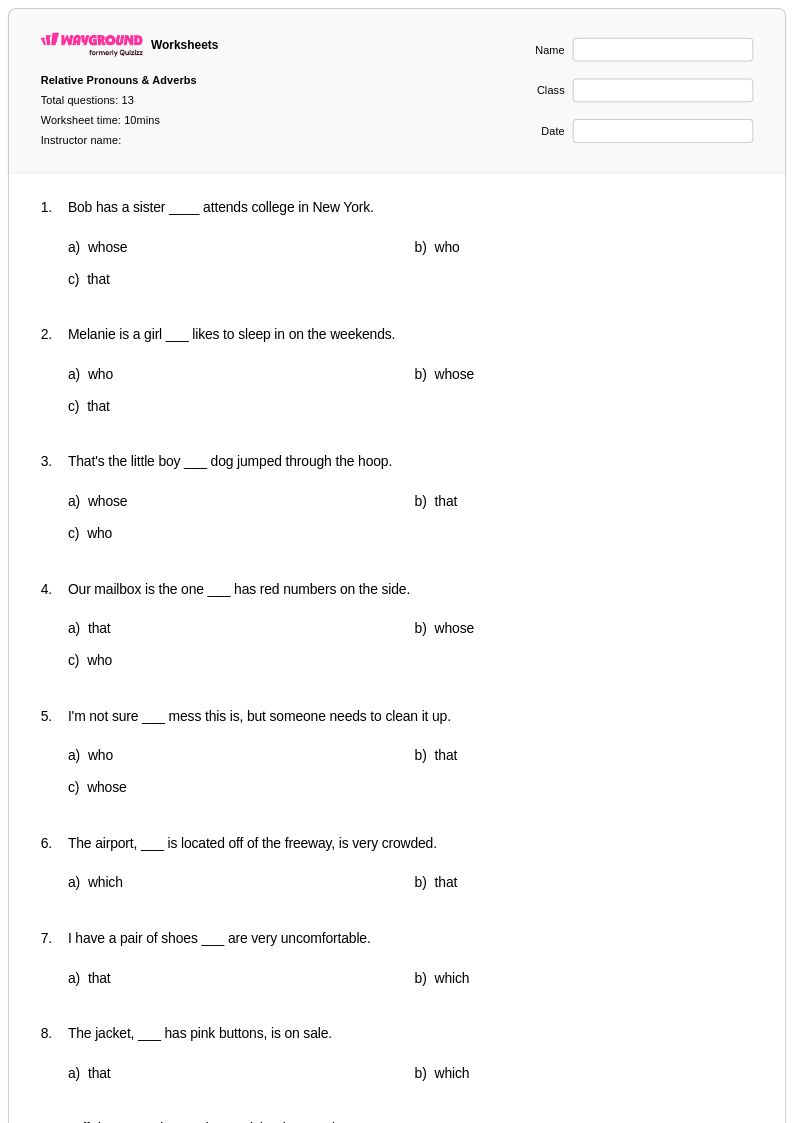
13 Q
3rd - 5th
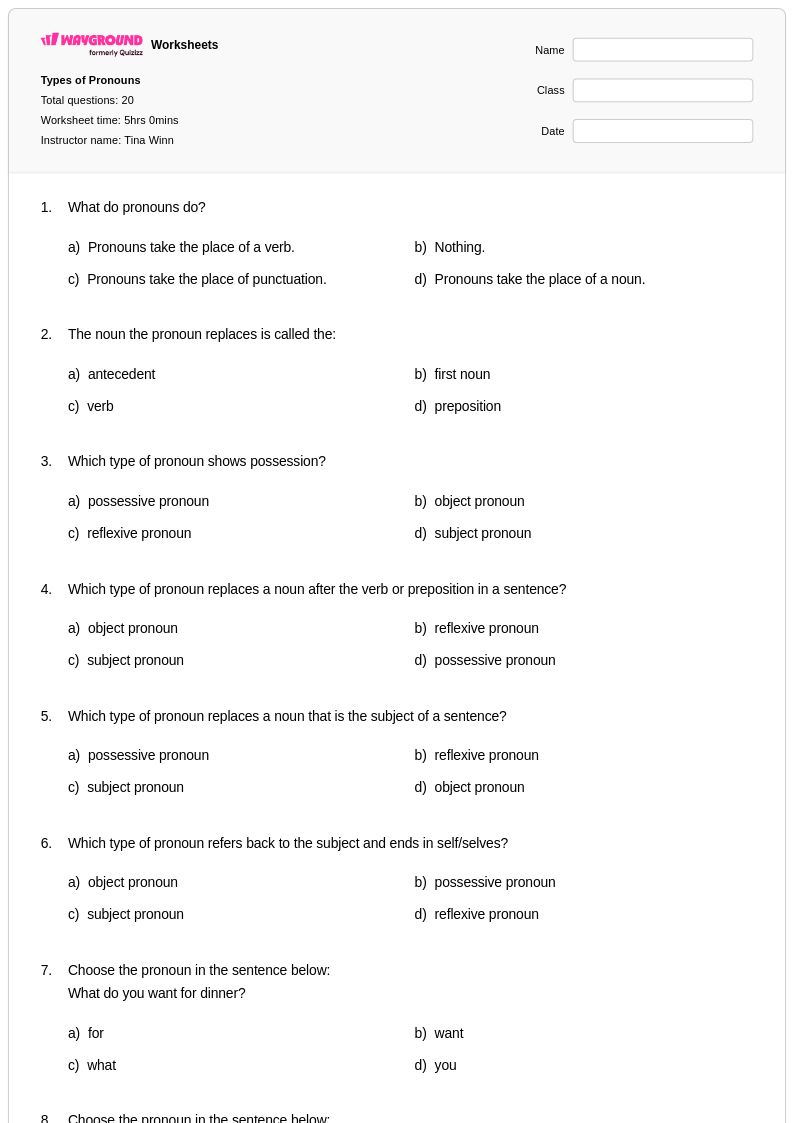
20 Q
5th
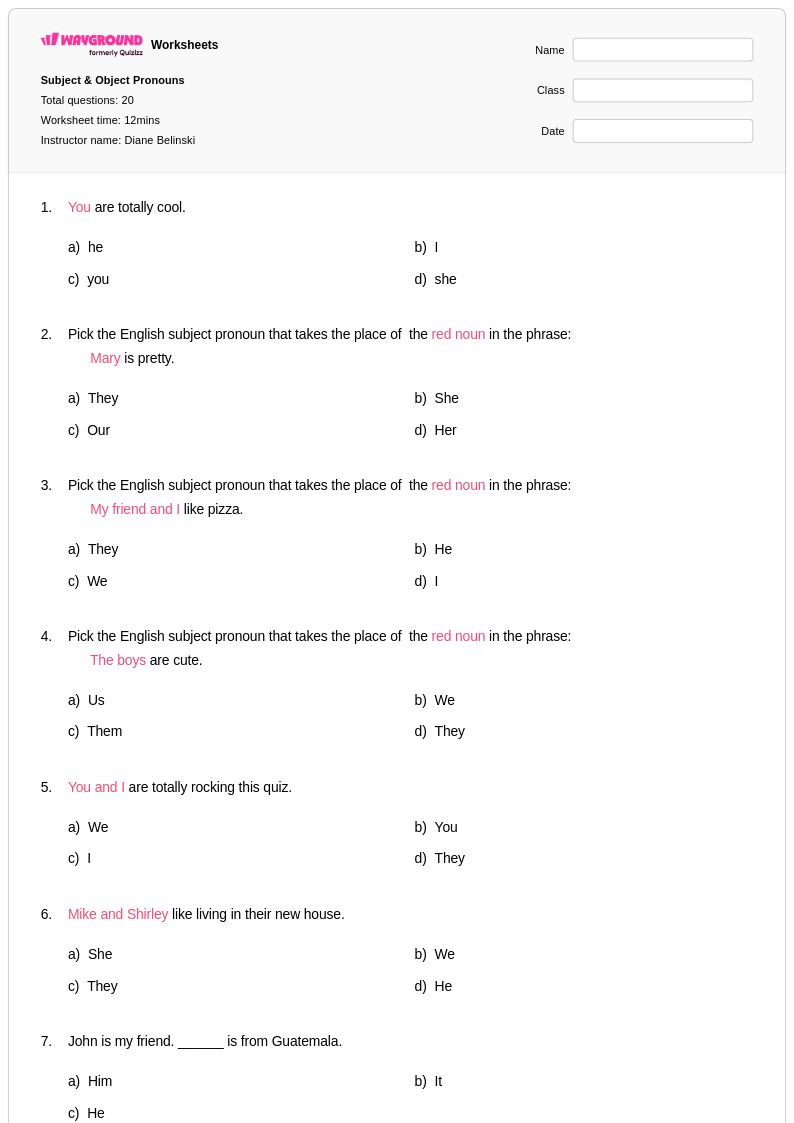
20 Q
5th - 7th
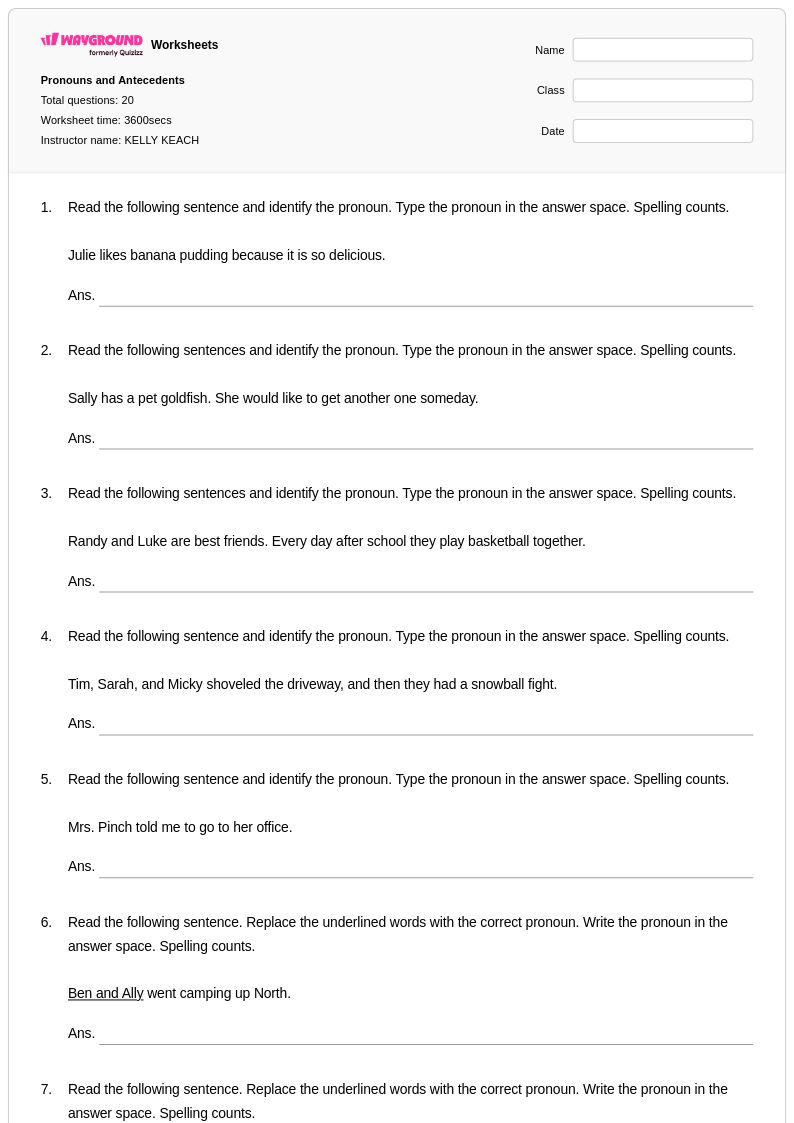
20 Q
5th - 6th
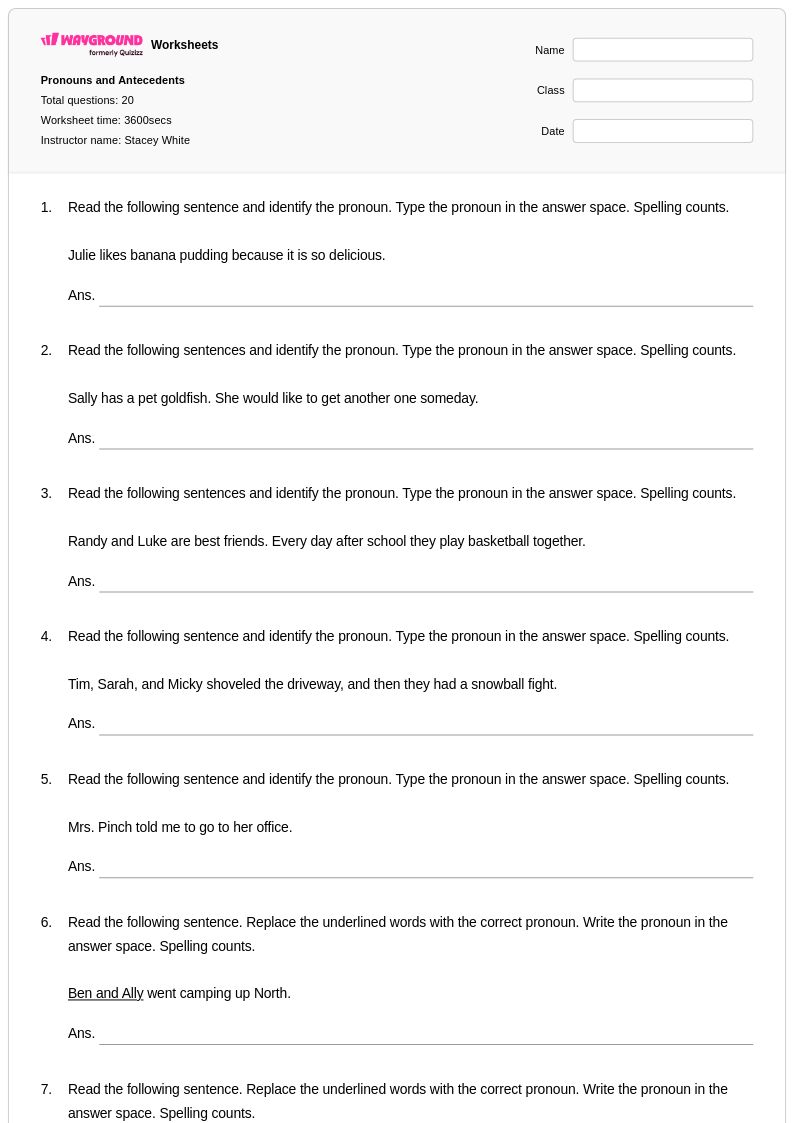
20 Q
3rd - 5th
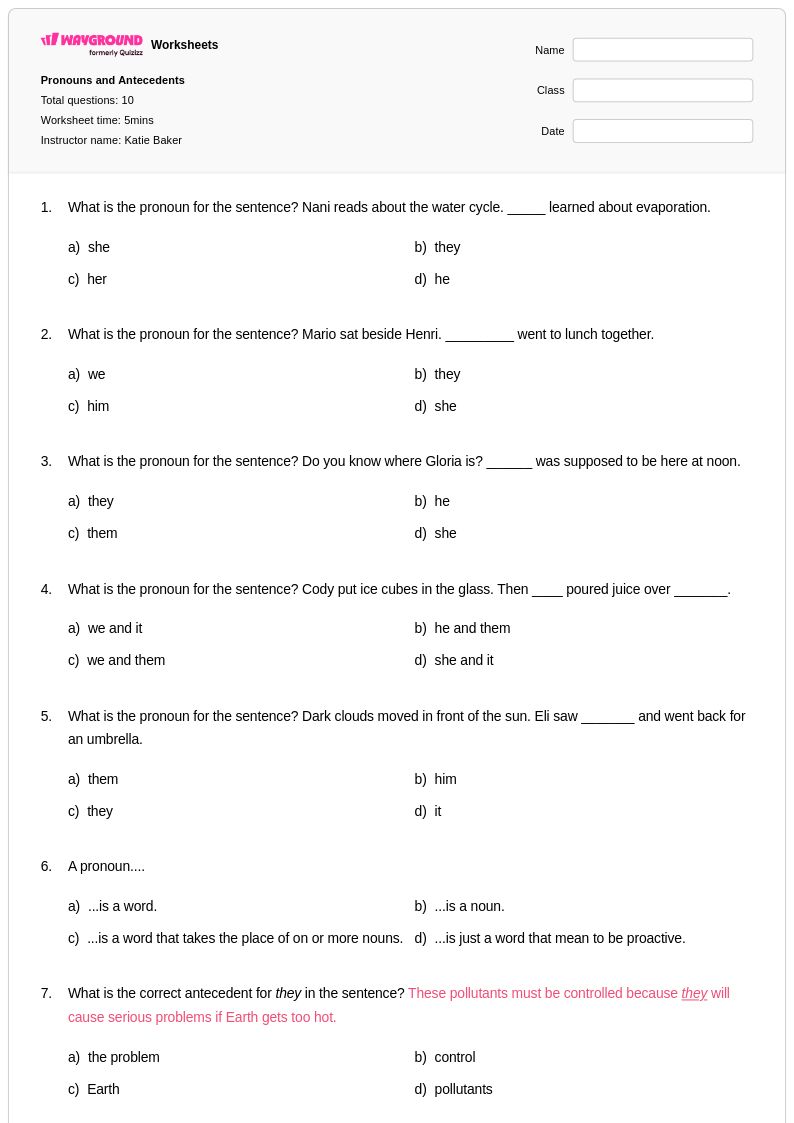
10 Q
5th
18 Q
5th - 9th
20 Q
5th - 8th
10 Q
5th - 6th
15 Q
5th - 7th
Explore Pronouns Worksheets by Grades
Explore Pronouns Worksheets for class 5 by Topic
Explore Other Subject Worksheets for class 5
Explore printable Pronouns worksheets for Class 5
Class 5 pronoun worksheets available through Wayground (formerly Quizizz) provide comprehensive practice opportunities for students to master this essential grammatical concept. These expertly designed resources help fifth-grade learners identify, classify, and correctly use personal pronouns, possessive pronouns, demonstrative pronouns, and interrogative pronouns in various sentence structures. The worksheets strengthen critical language arts skills including sentence construction, reading comprehension, and written communication by offering targeted practice problems that reinforce pronoun-antecedent agreement and proper pronoun case usage. Each printable resource comes with a complete answer key, making assessment and self-correction seamless for both teachers and students, while the free pdf format ensures easy accessibility and distribution in any learning environment.
Wayground (formerly Quizizz) empowers educators with an extensive collection of millions of teacher-created pronoun worksheets specifically aligned with fifth-grade language arts standards and curriculum requirements. The platform's robust search and filtering capabilities allow teachers to quickly locate resources that match their students' specific learning needs, whether for initial instruction, remediation, or enrichment activities. These versatile materials are available in both printable and digital formats, including downloadable pdfs, enabling seamless integration into classroom instruction, homework assignments, or independent study sessions. The platform's differentiation tools and flexible customization options support teachers in adapting worksheets to accommodate diverse learning styles and ability levels, ensuring that every Class 5 student receives appropriate challenge and support while developing mastery of pronoun usage and grammatical understanding.
FAQs
How do I teach the different types of pronouns to students?
What exercises help students practice pronoun-antecedent agreement?
What mistakes do students commonly make with pronouns?
How do I help students understand vague pronoun references in their writing?
What is the difference between reflexive and intensive pronouns, and how do I teach it?
How do I use pronoun worksheets from Wayground in my classroom?