Free Printable Onsets and Rimes Worksheets for Class 4
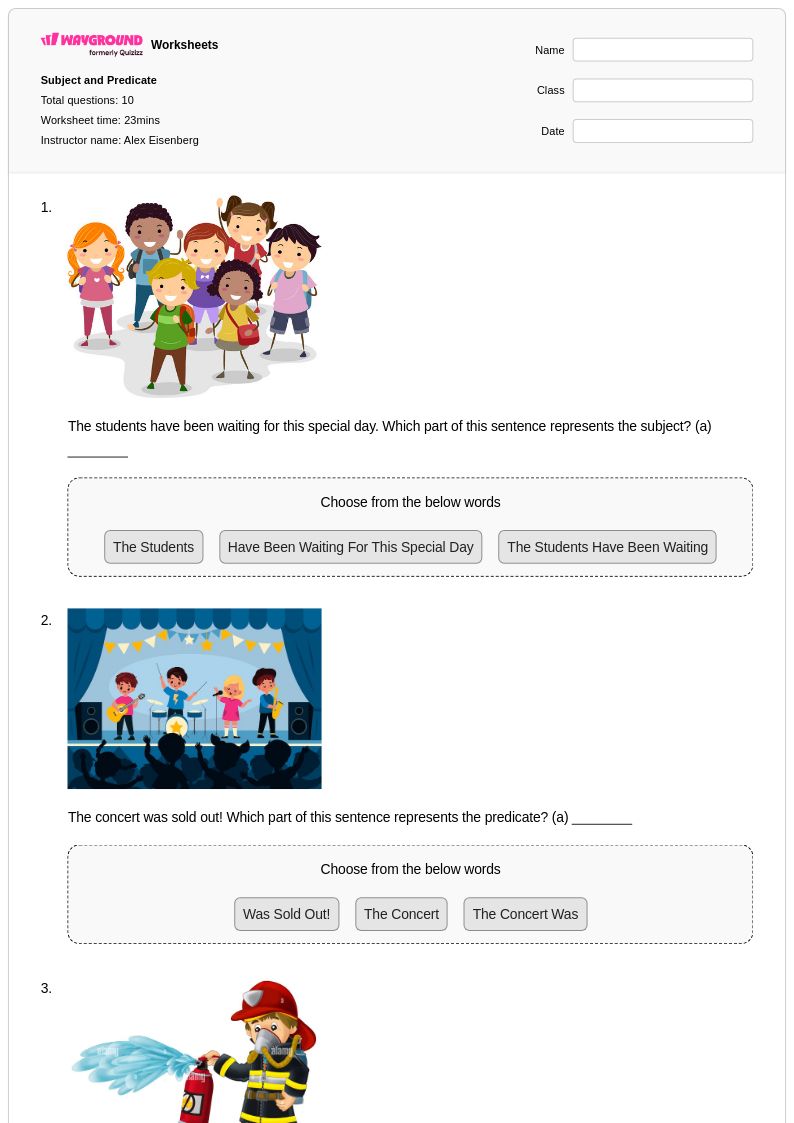
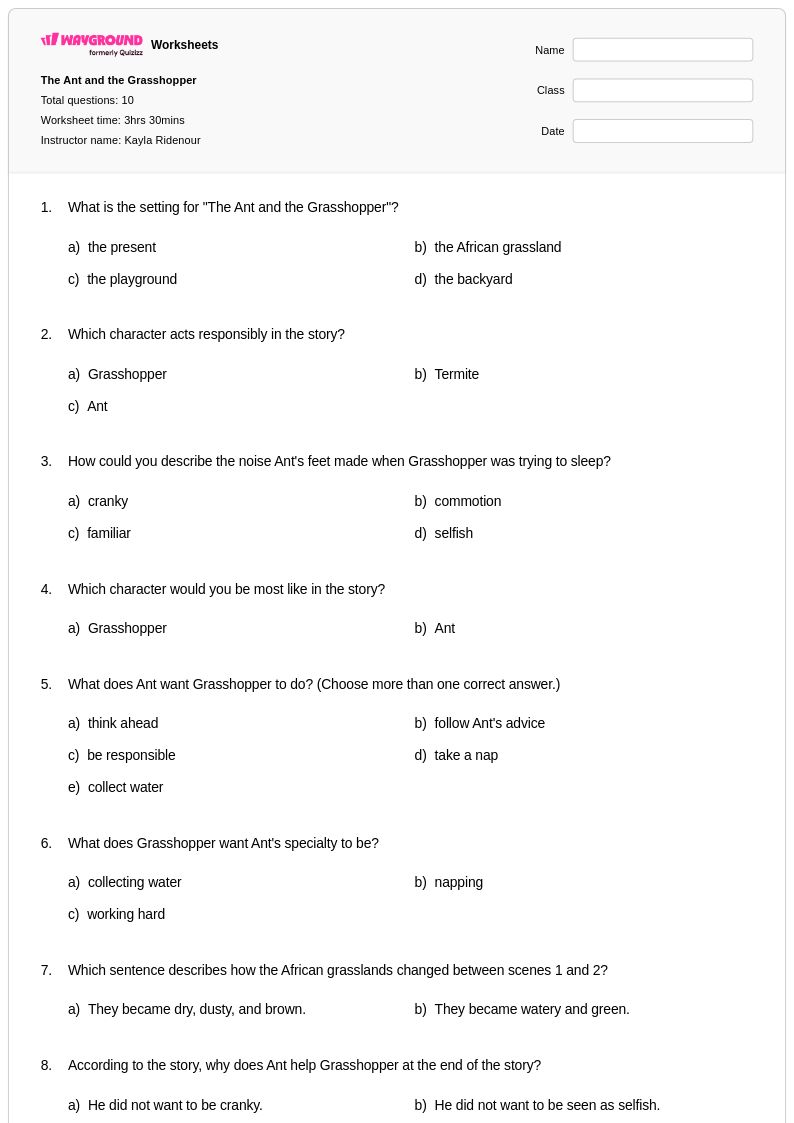
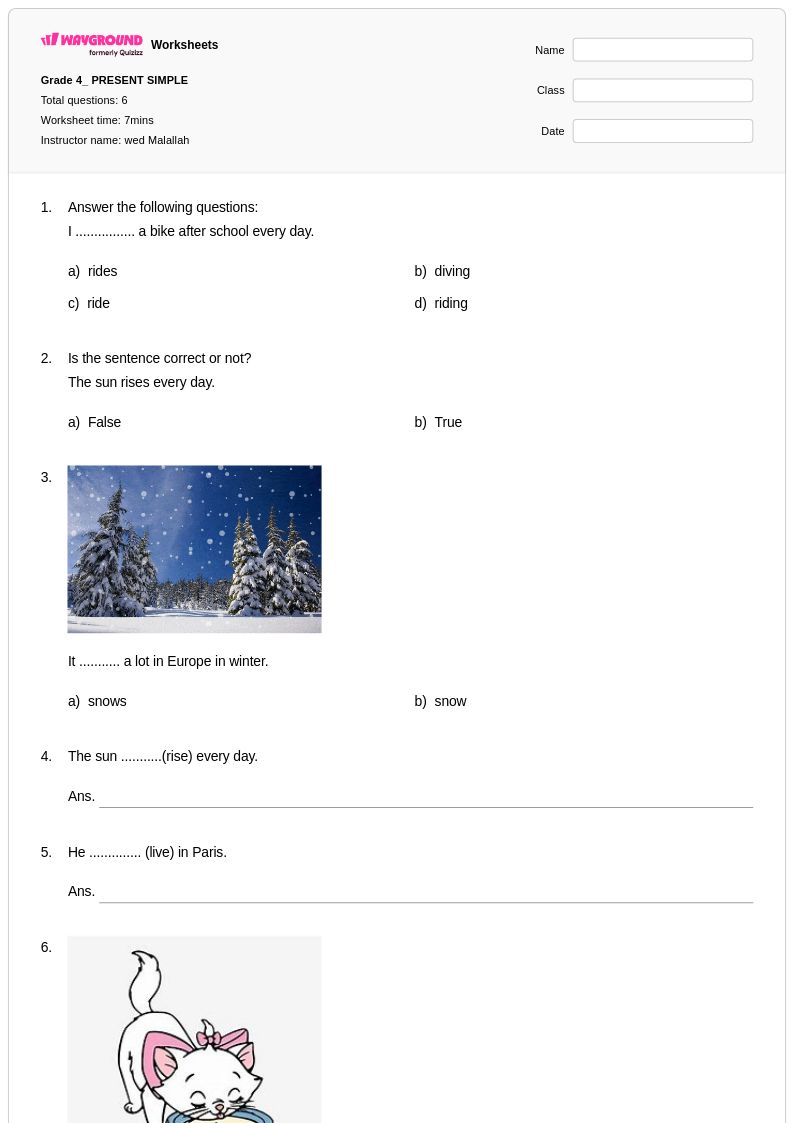
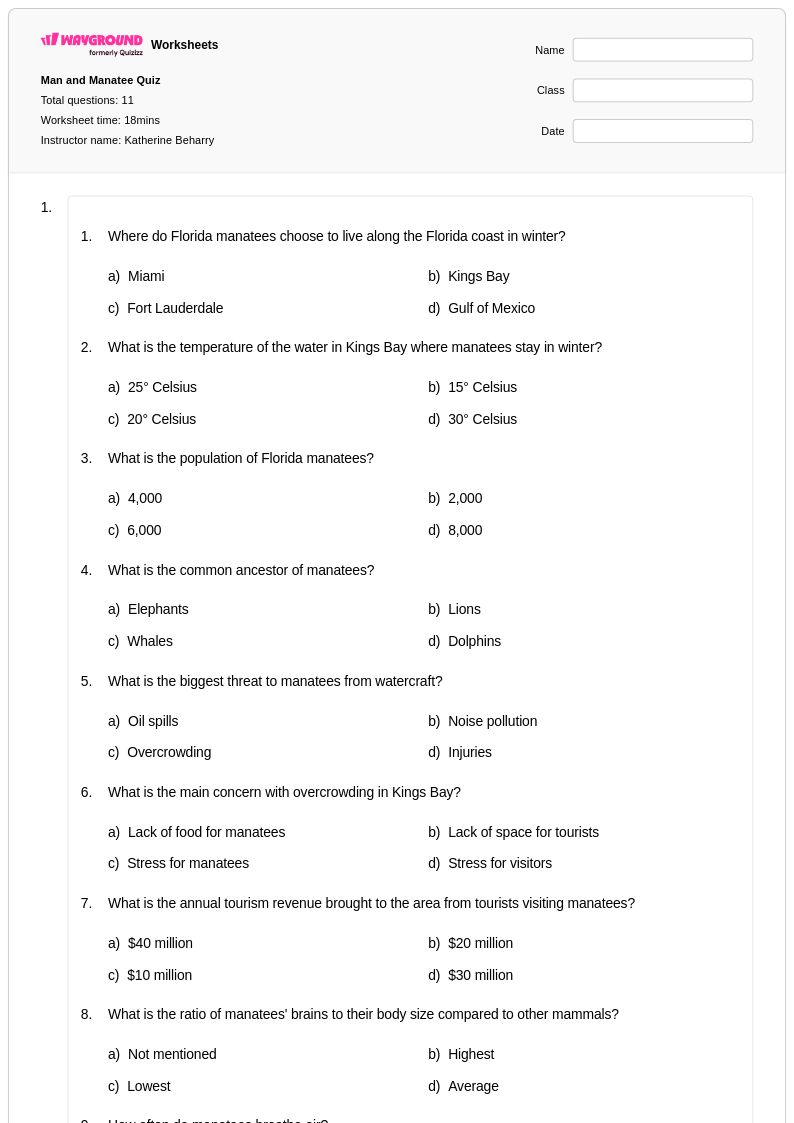
Class 4 onsets and rimes worksheets from Wayground help students master word pattern recognition through engaging printables and practice problems, complete with answer keys for effective phonics learning.
Explore printable Onsets and Rimes worksheets for Class 4
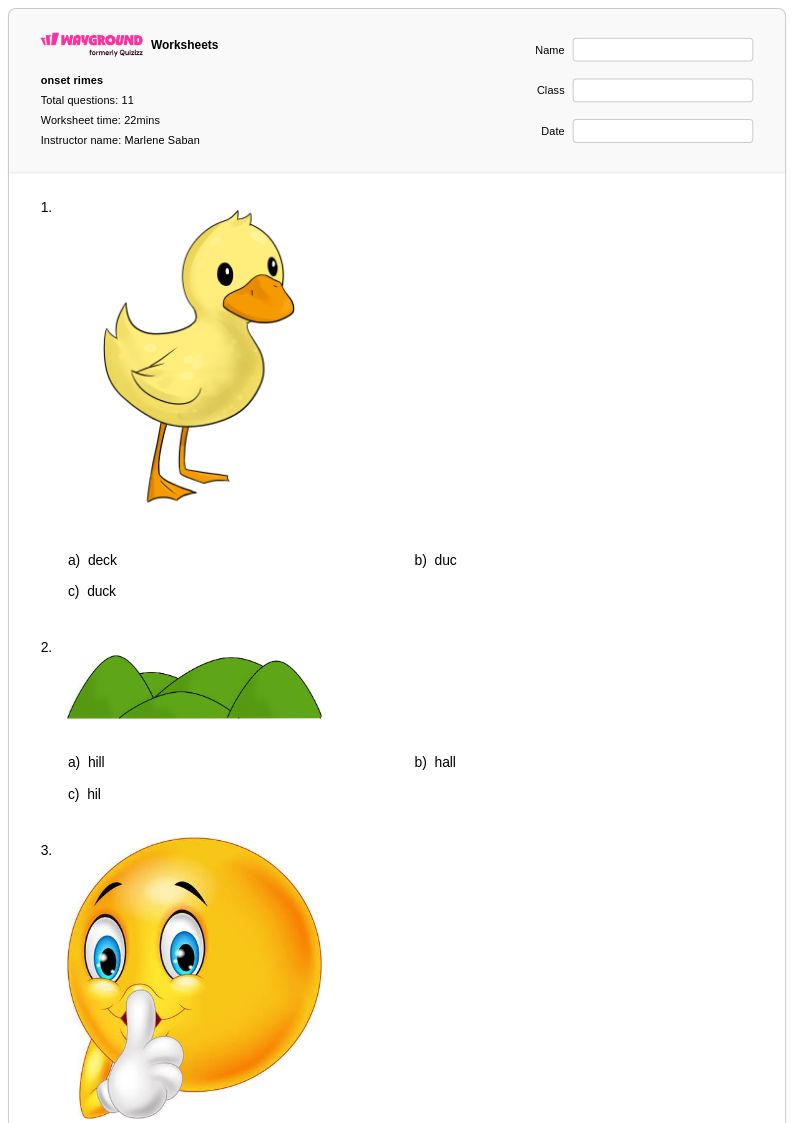
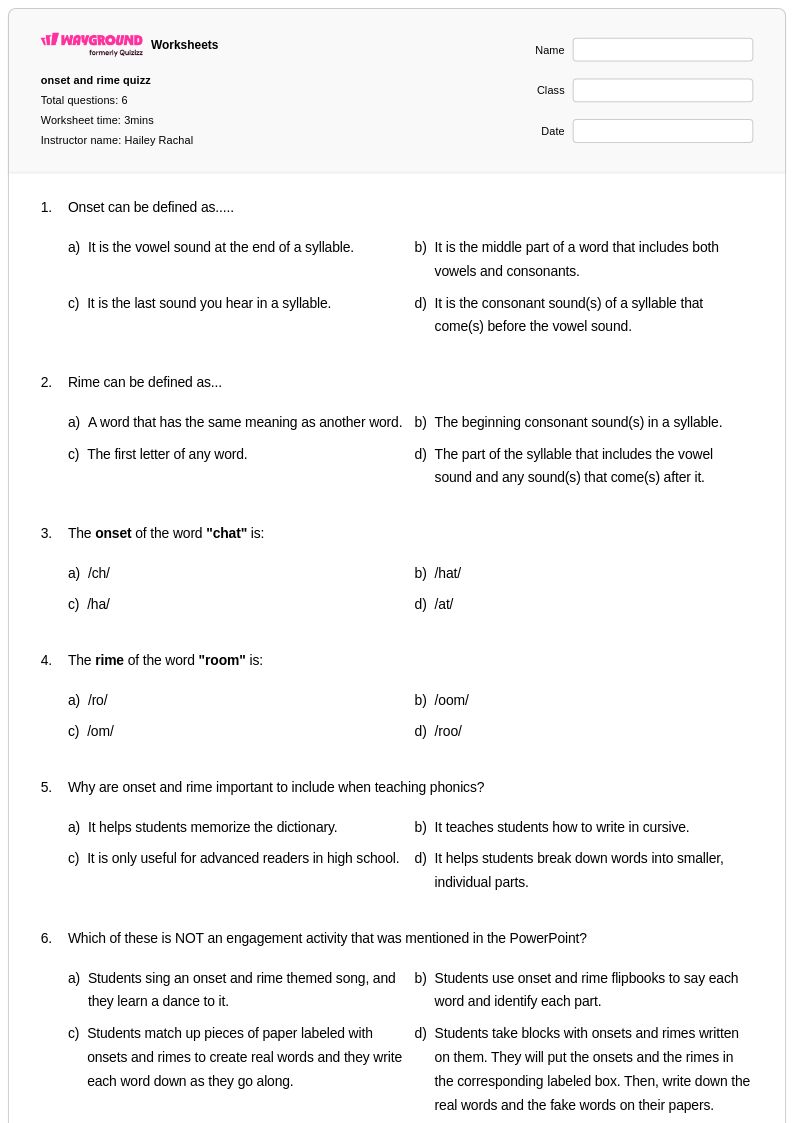
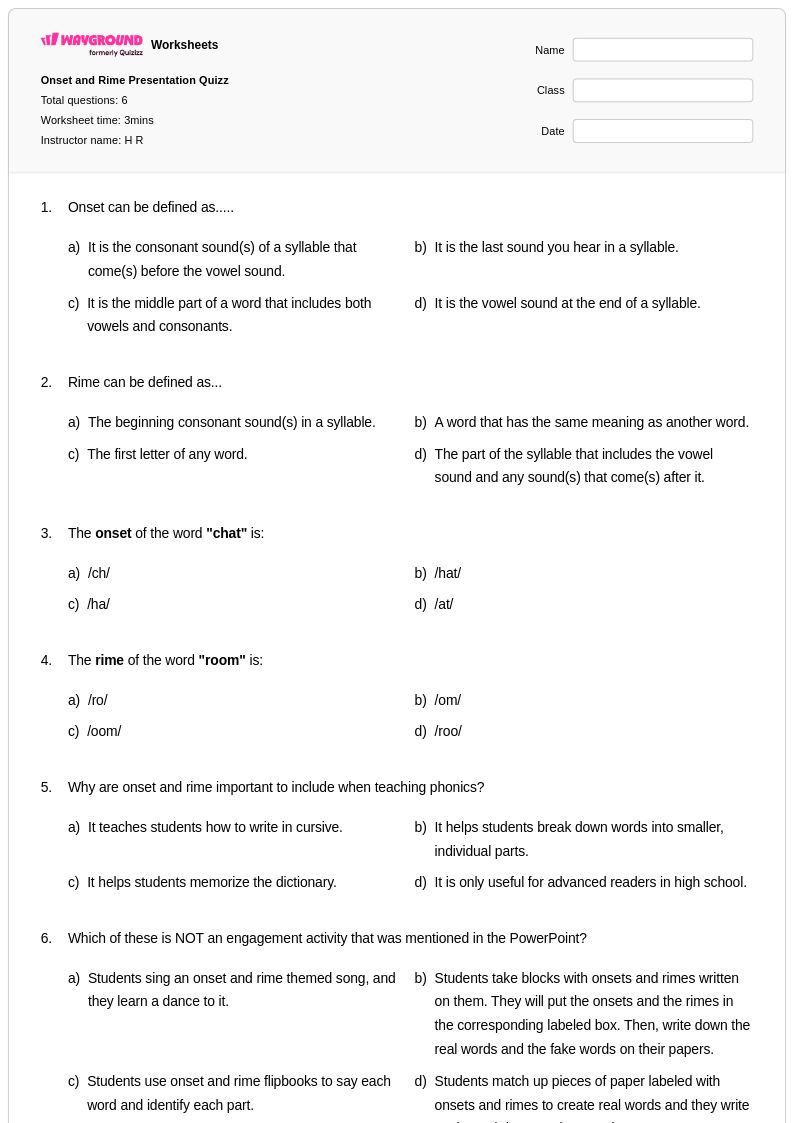
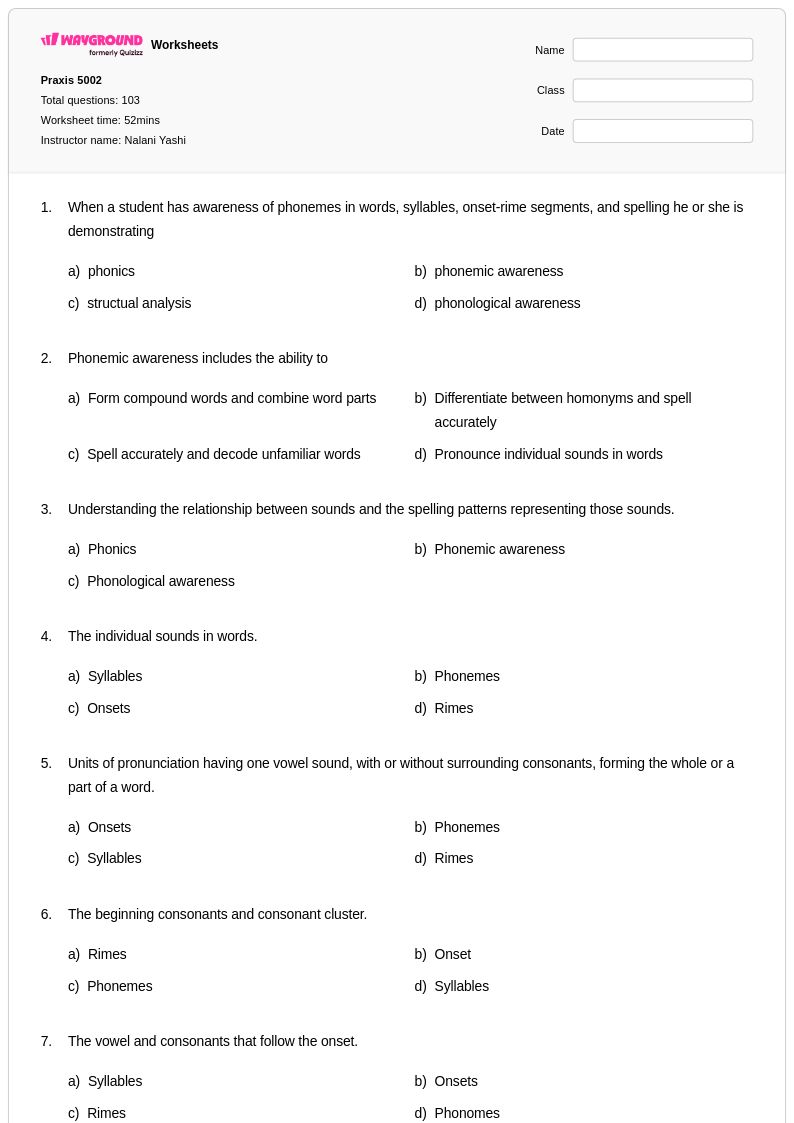
Onsets and rimes worksheets for Class 4 students through Wayground (formerly Quizizz) provide targeted practice in recognizing and manipulating the fundamental building blocks of syllables and words. These comprehensive resources strengthen students' phonological awareness by helping them identify onsets (the initial consonant or consonant cluster) and rimes (the vowel and any following consonants) within single-syllable words. Through systematic practice problems, students develop crucial decoding skills that directly support reading fluency and spelling accuracy. Each worksheet collection includes detailed answer keys and is available as free printables in convenient pdf format, allowing educators to seamlessly integrate onset and rime instruction into their literacy curriculum while building students' confidence with phonetic patterns.
Wayground (formerly Quizizz) empowers teachers with an extensive library of millions of teacher-created onsets and rimes resources specifically designed for Class 4 instruction. The platform's robust search and filtering capabilities enable educators to quickly locate worksheets aligned with specific learning standards and differentiate instruction based on individual student needs. Teachers can customize existing materials or create new practice sets, with all resources available in both printable pdf format and interactive digital versions. This flexibility supports comprehensive lesson planning while providing targeted remediation for struggling readers and enrichment opportunities for advanced students, ensuring that onset and rime skill practice meets the diverse learning requirements of every Class 4 classroom.
FAQs
How do I teach onsets and rimes to early readers?
Start by helping students hear the two parts of a single-syllable word: the onset (the initial consonant or consonant cluster before the vowel) and the rime (the vowel and everything that follows). Use word families like -at, -ing, and -ock to make the rime pattern visible and consistent, then practice swapping onsets to build new words. Blending and segmenting activities done aloud before moving to print help students internalize the pattern before applying it to reading and spelling.
What activities help students practice onsets and rimes?
Effective practice activities include matching onsets to rime cards to form real words, sorting words into rime families, and substituting different onsets onto the same rime to generate new words. Writing activities that ask students to produce their own word family lists reinforce both the phonological pattern and spelling. Mixing oral blending tasks with written exercises ensures students can both hear and apply the concept.
What common mistakes do students make when learning onsets and rimes?
A frequent error is treating the onset as a full syllable rather than just the consonant sound before the vowel, which causes confusion when students encounter blends like 'str-' or 'bl-'. Some students also struggle to isolate the rime from the full word and may segment at the wrong boundary, splitting the vowel from the following consonants. Consistent practice with the same rime families across multiple words helps students recognize the stable vowel-consonant pattern.
How does onset and rime instruction support phonemic awareness?
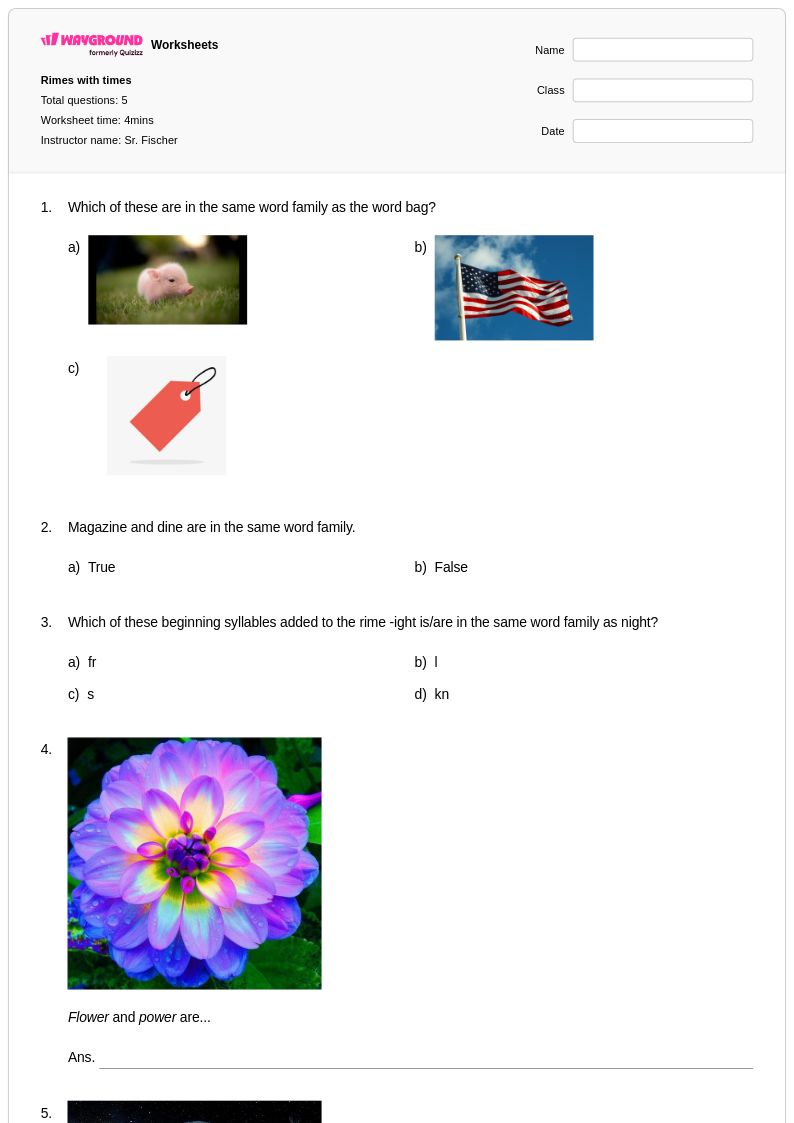
Onset and rime work is one of the most direct bridges between phonemic awareness and phonics because it teaches students to manipulate sub-syllabic units, not just individual phonemes. Recognizing that 'cat,' 'bat,' and 'sat' all share the -at rime helps students decode unfamiliar words by analogy rather than sounding out every letter individually. This pattern recognition builds reading fluency and spelling confidence simultaneously.
How can I use Wayground's onsets and rimes worksheets in my classroom?
Wayground's onsets and rimes worksheets are available as printable PDFs for direct classroom use and in digital formats for technology-integrated or remote learning settings, and teachers can also host them as a quiz directly on Wayground. The worksheets include complete answer keys, making them practical for independent practice, homework, or small-group work without additional prep. For students who need support, Wayground's accommodation tools allow teachers to enable read-aloud, extended time, or reduced answer choices on an individual basis.
How do I differentiate onset and rime instruction for struggling readers?
For students who are still developing phonological awareness, reduce cognitive load by starting with a single, high-frequency rime family and pairing it with only two or three onsets before expanding. Providing visual anchor charts that display the rime pattern consistently helps students focus on the changing onset. On Wayground, teachers can apply individual accommodations such as read-aloud and reduced answer choices to specific students without signaling those adjustments to the rest of the class.