Discover free printable worksheets and practice problems that help students master irregular plural forms through engaging exercises, complete with answer keys and downloadable PDF formats.
Explore printable Irregular Plural Forms worksheets
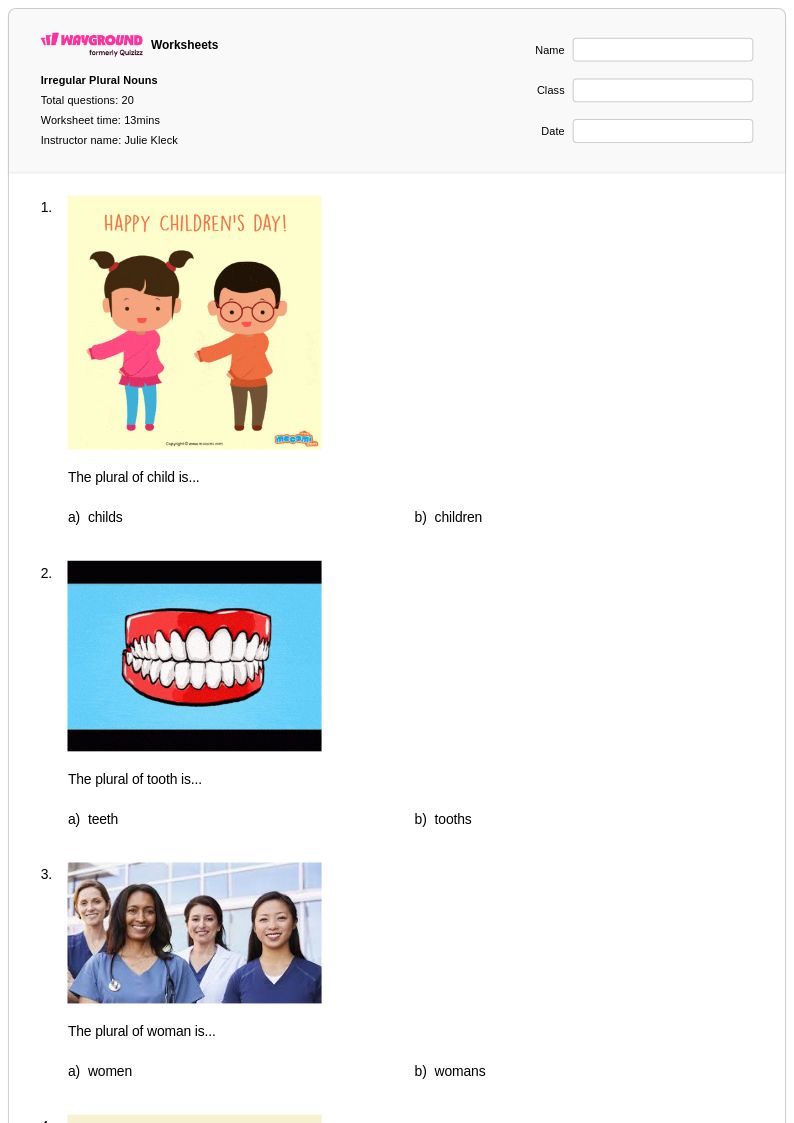
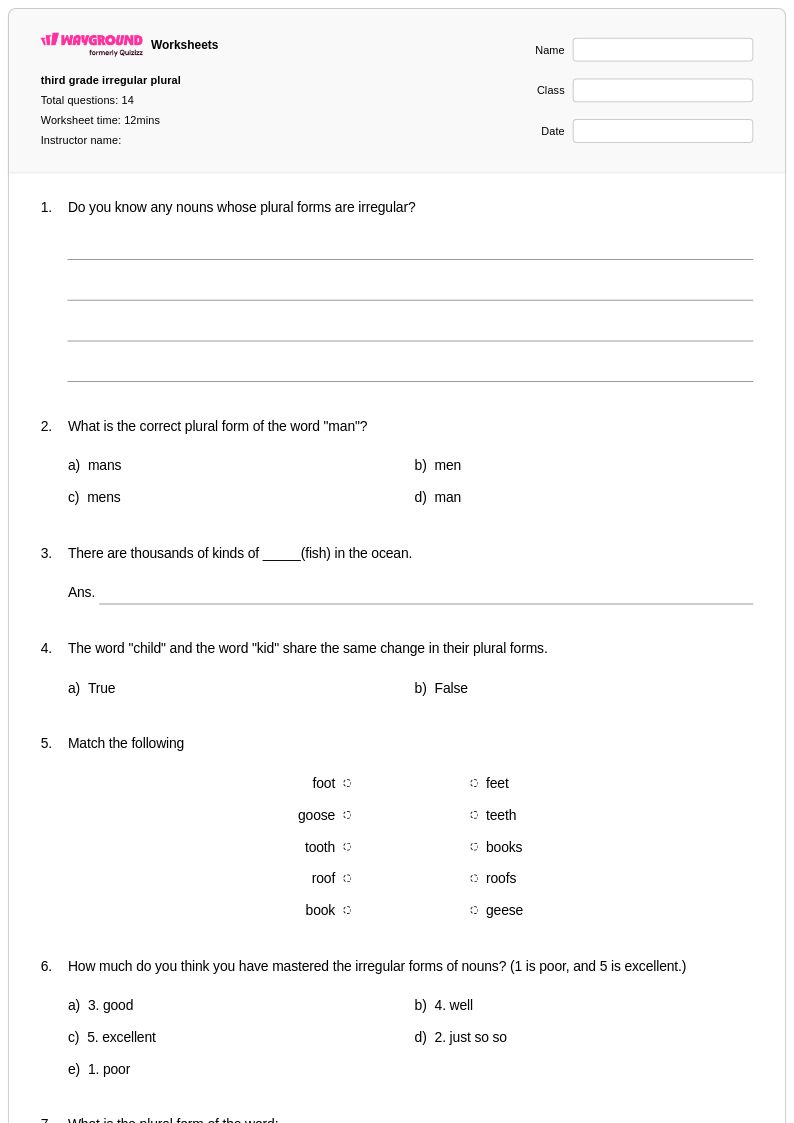
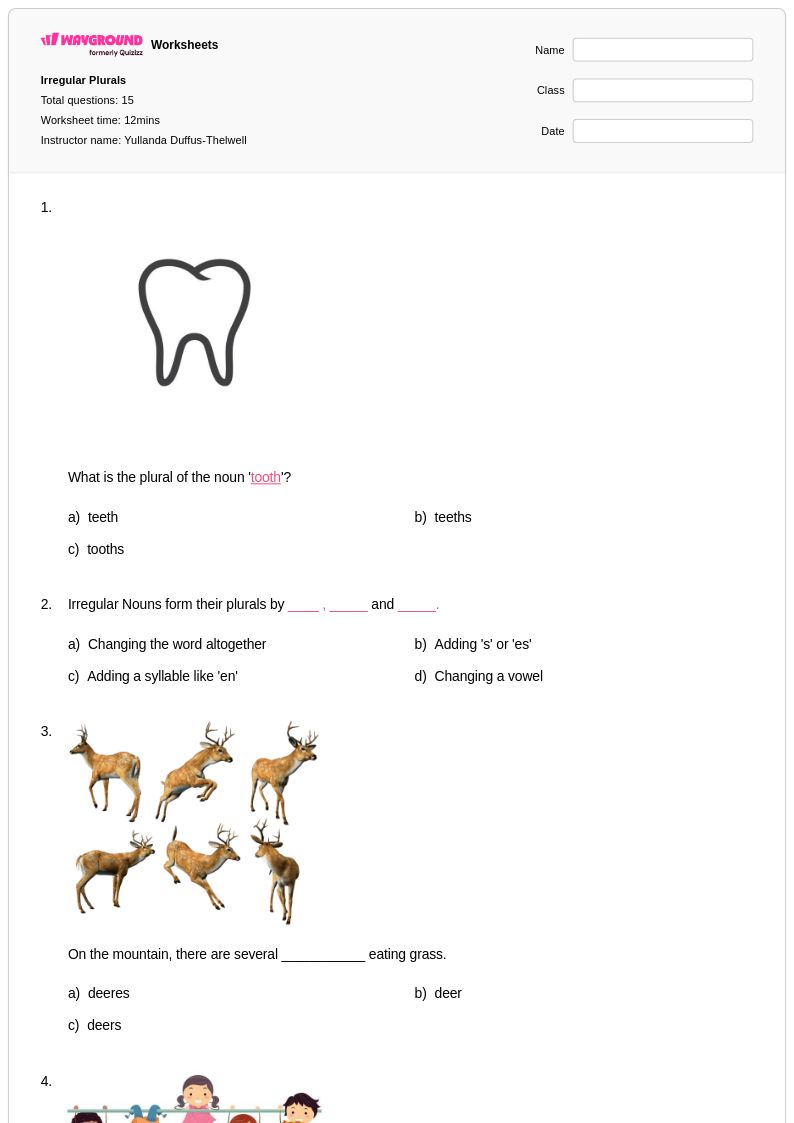
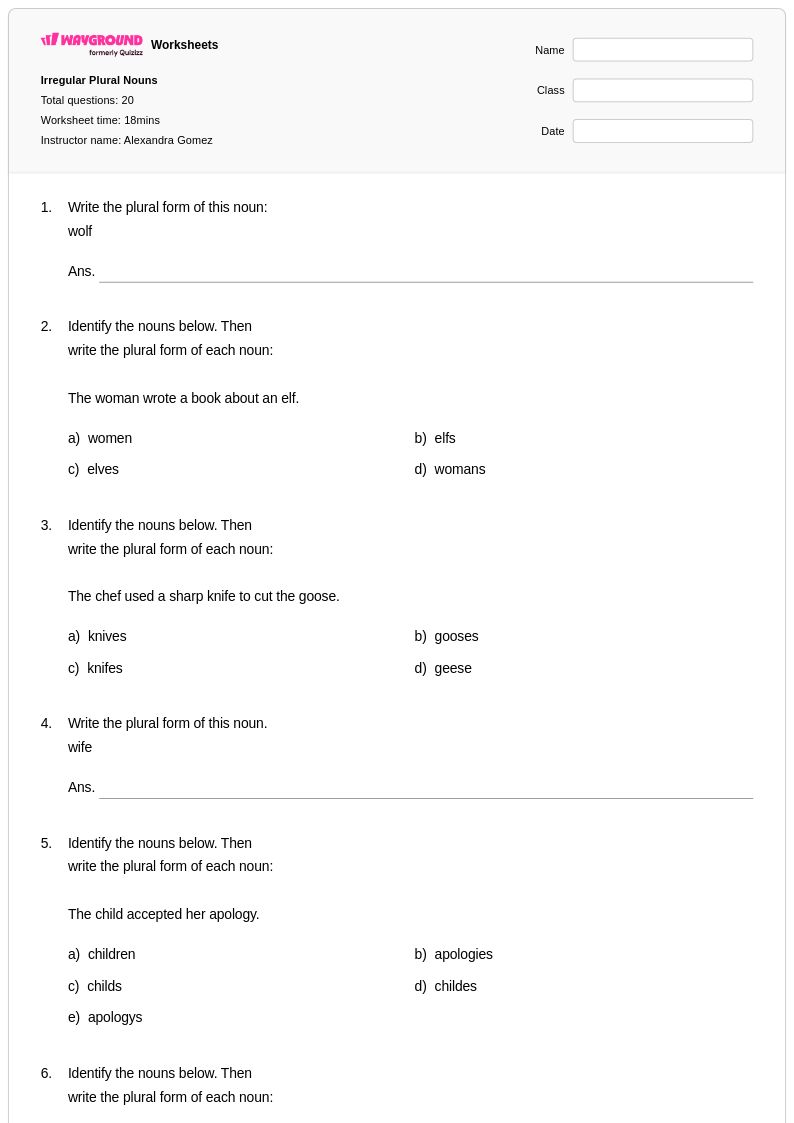
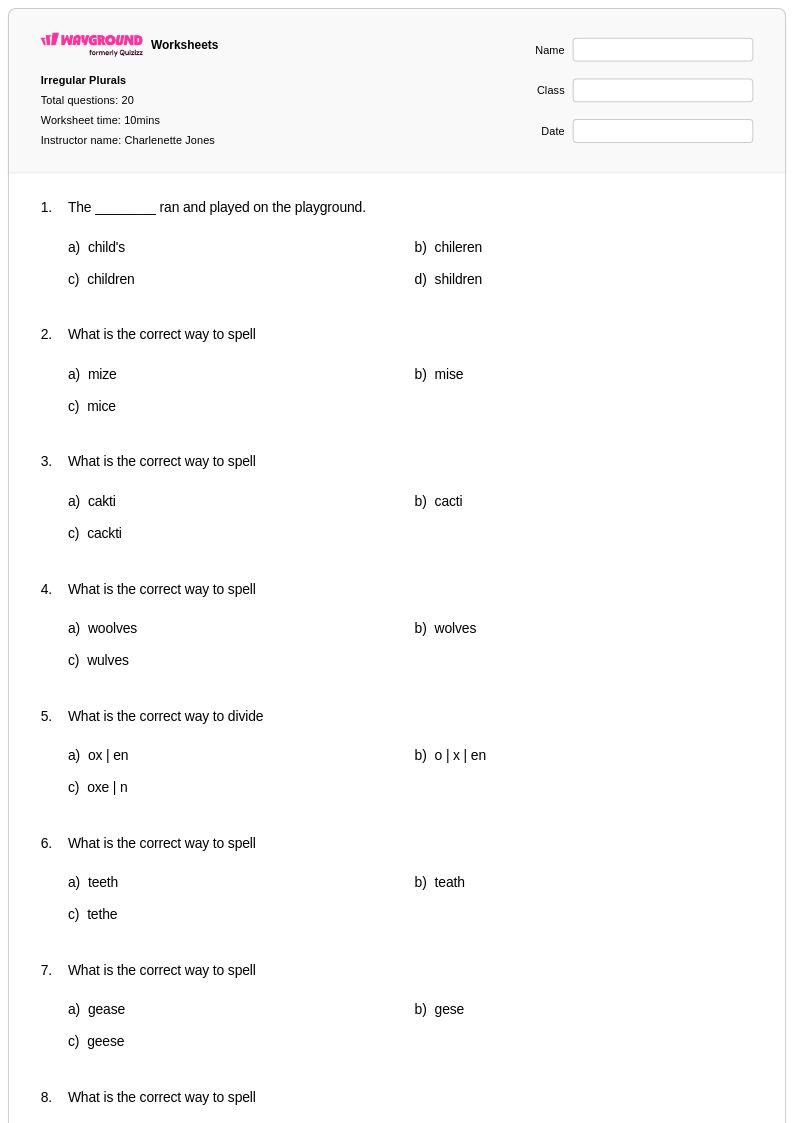
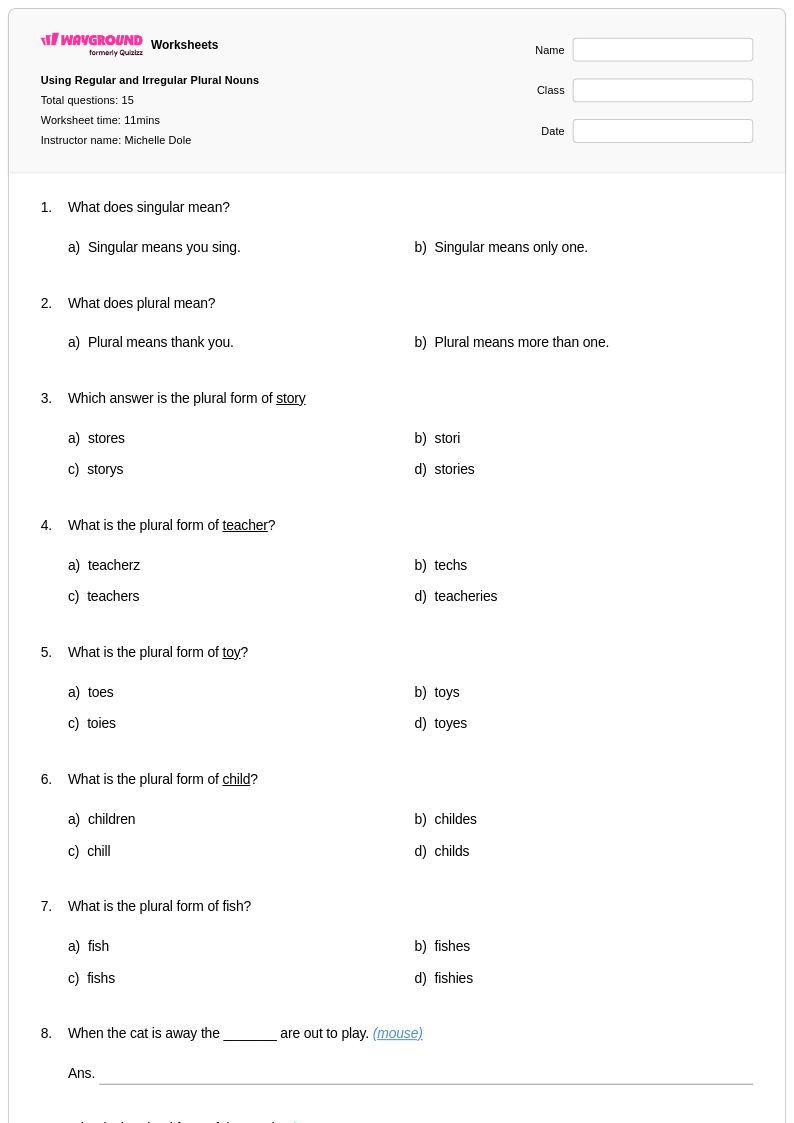
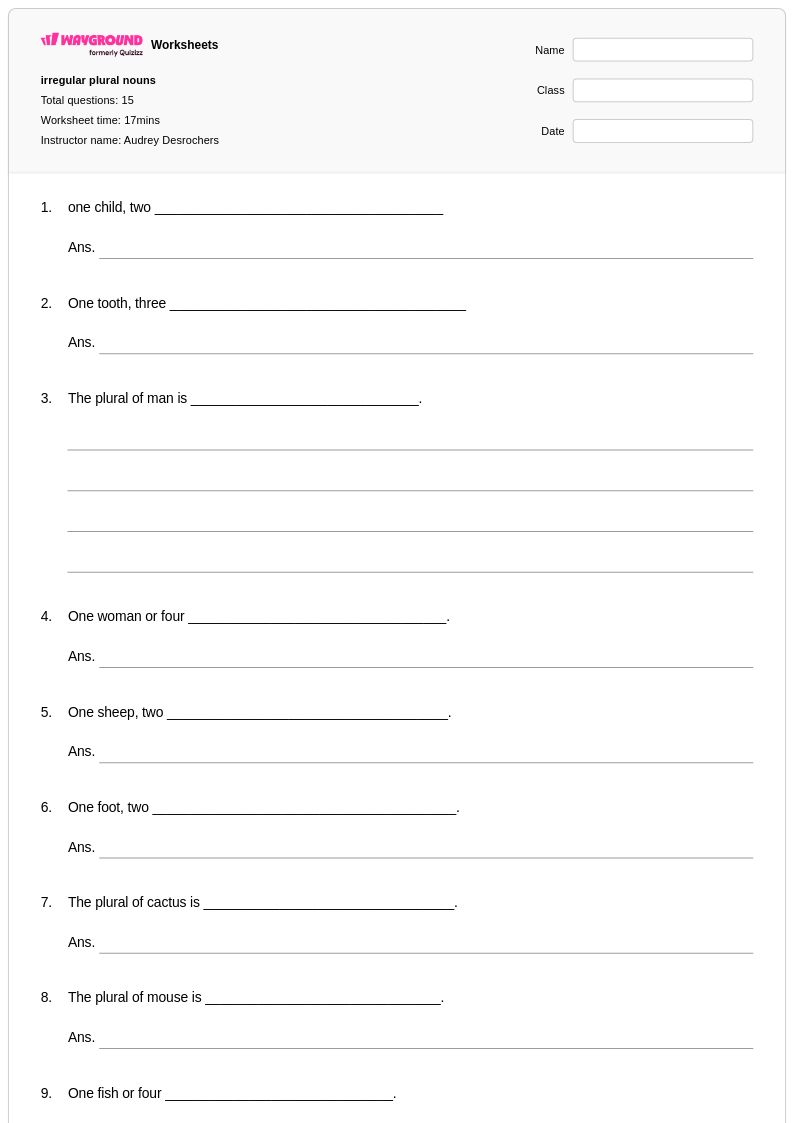
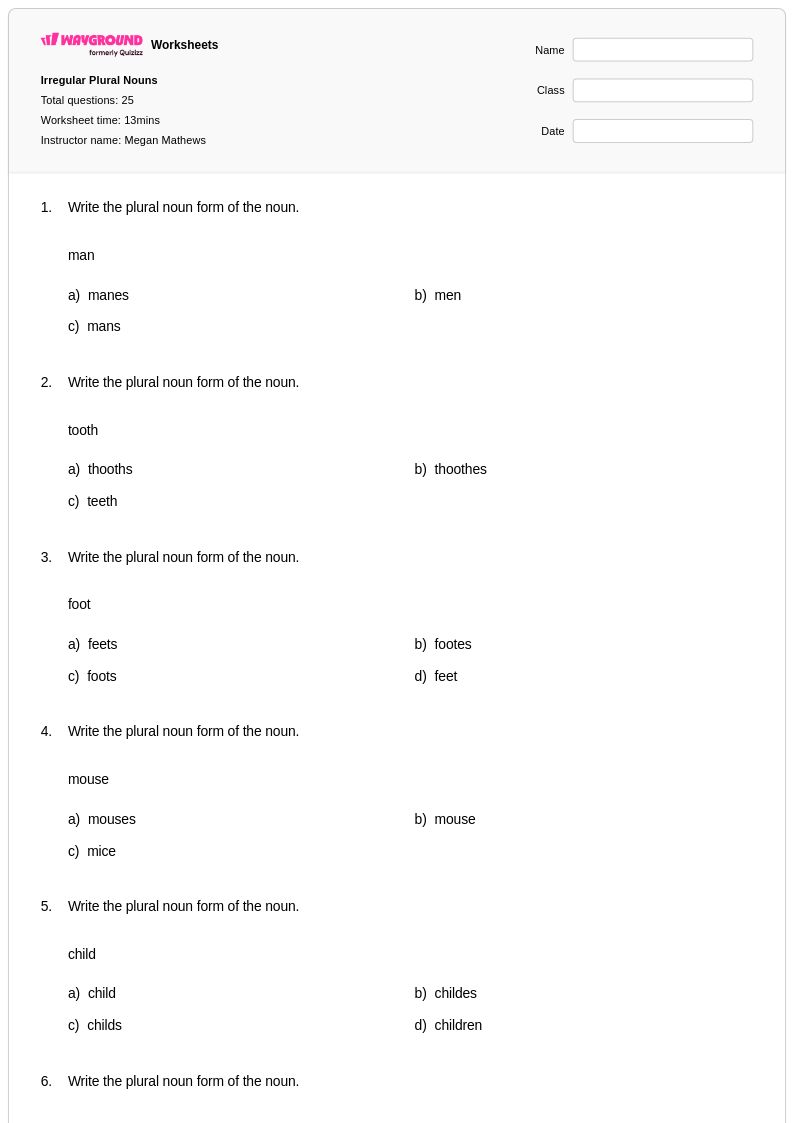
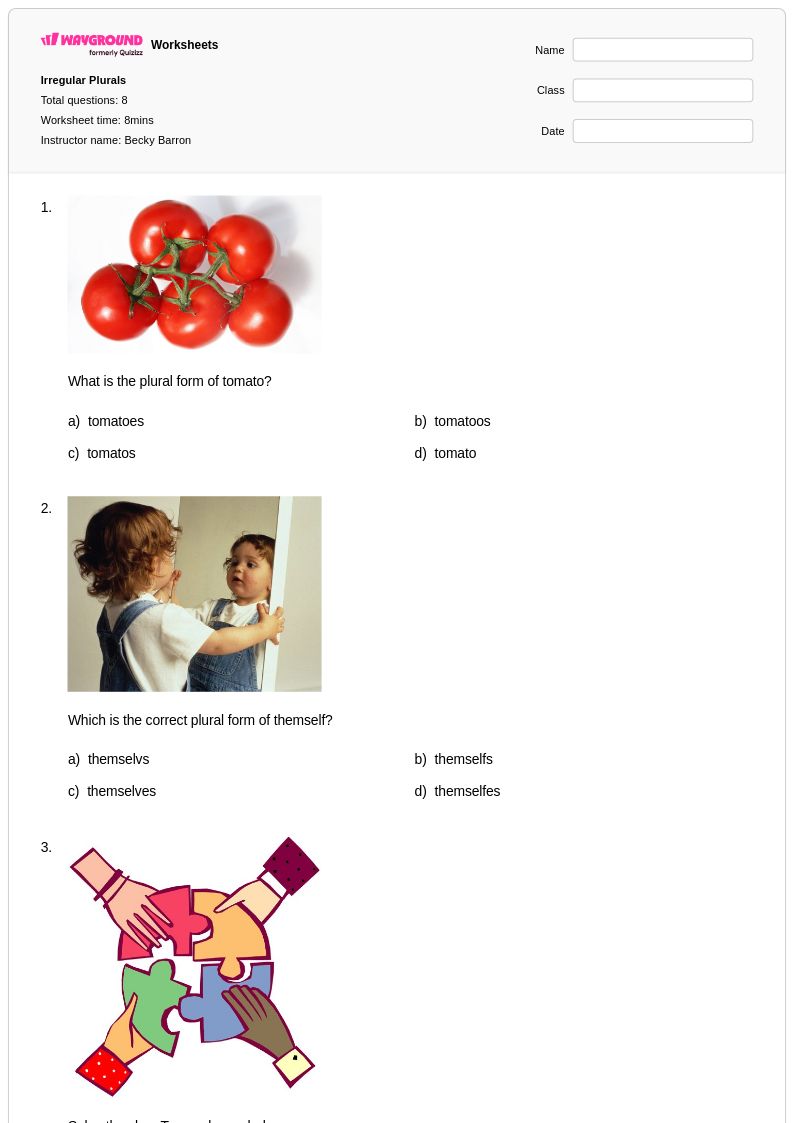
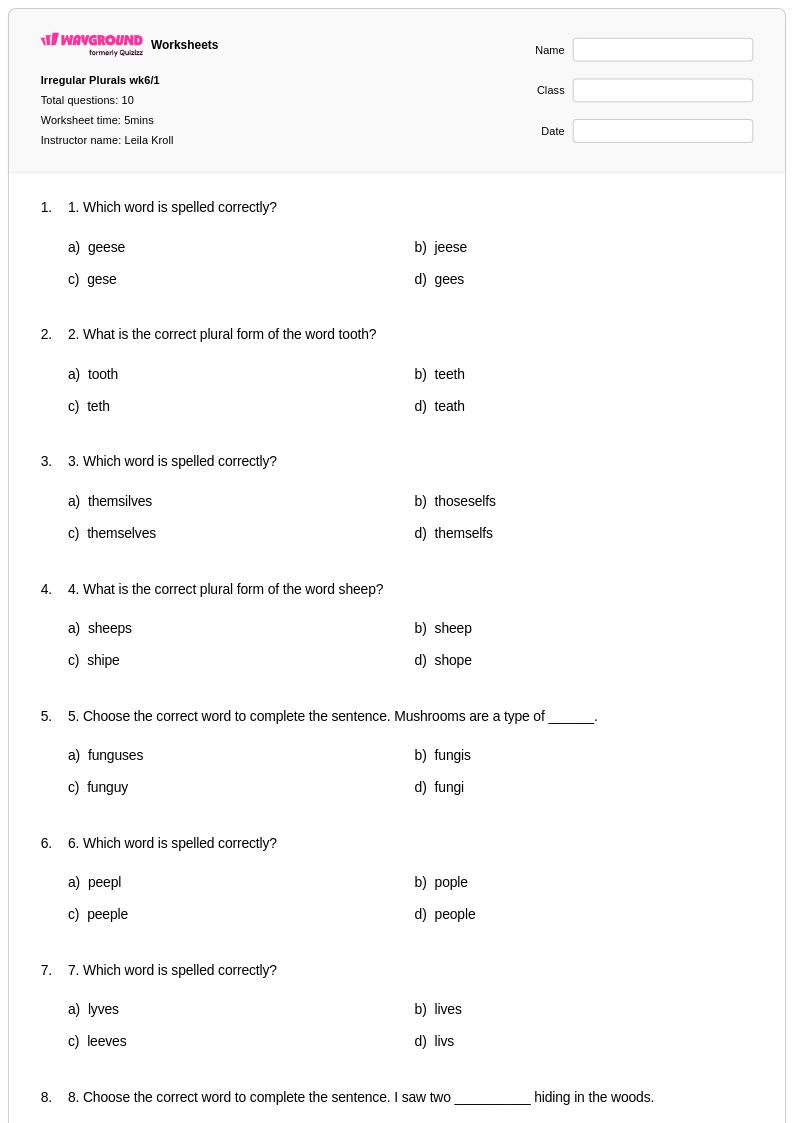
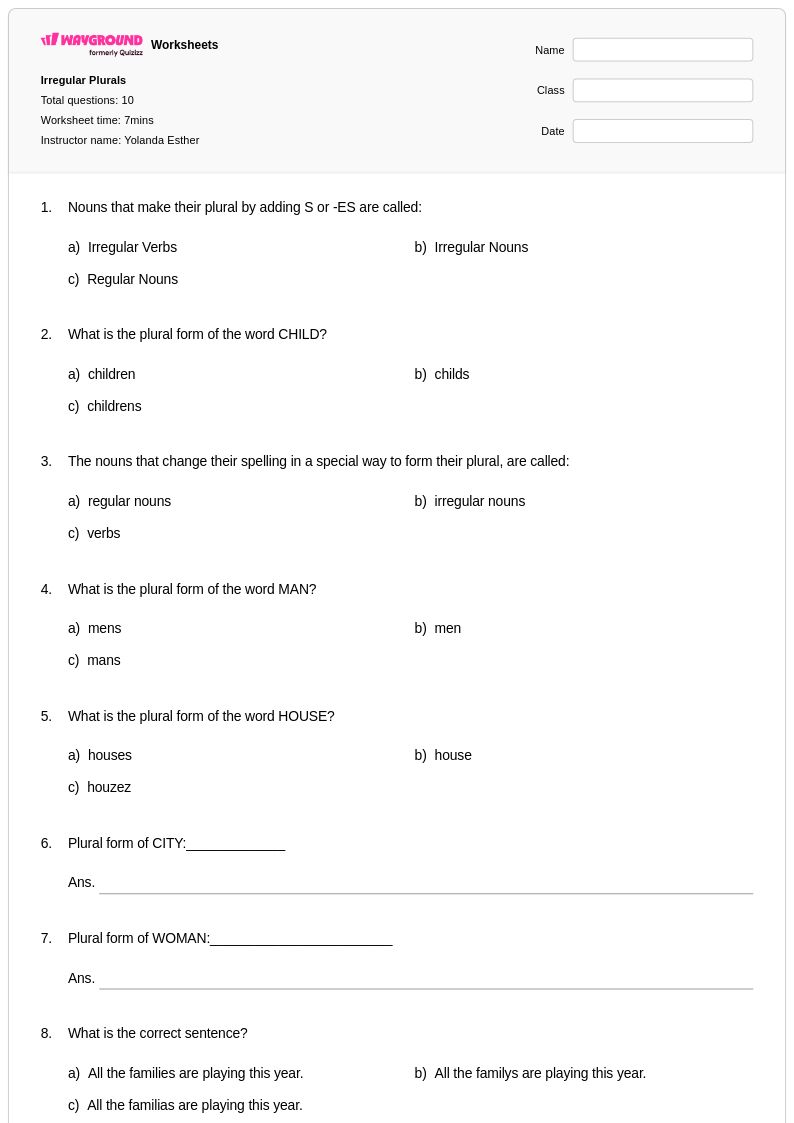
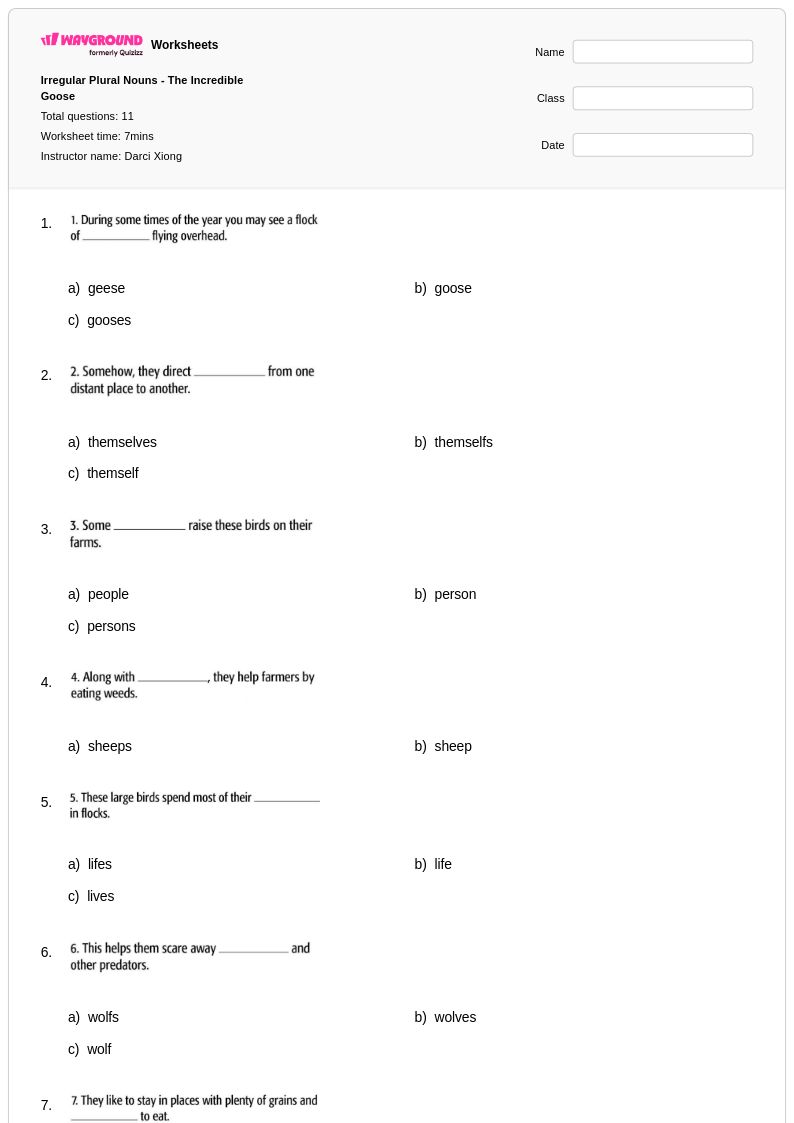
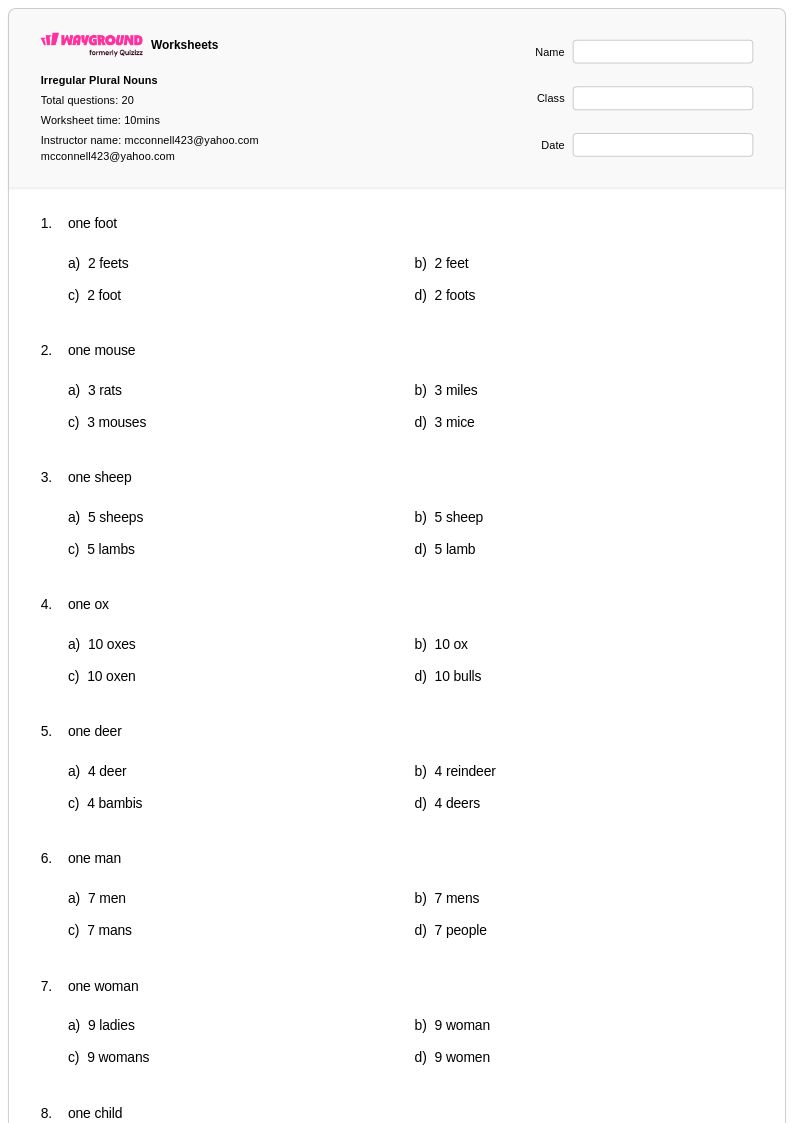
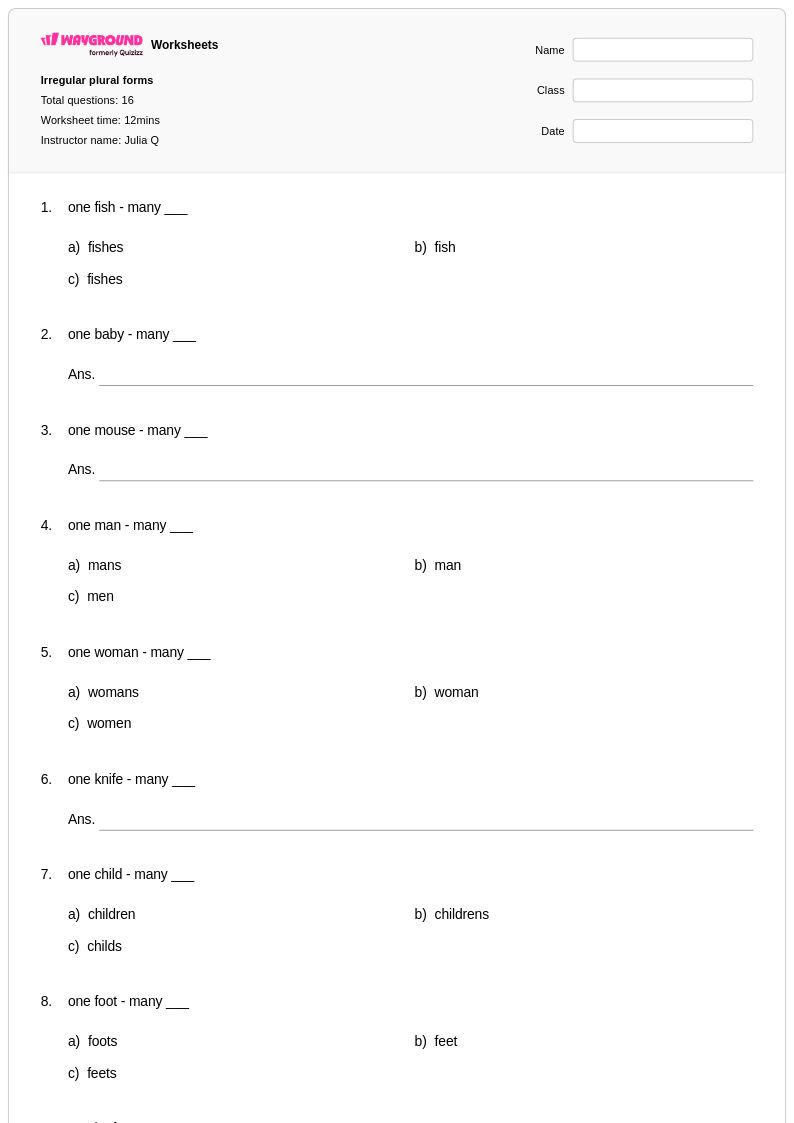
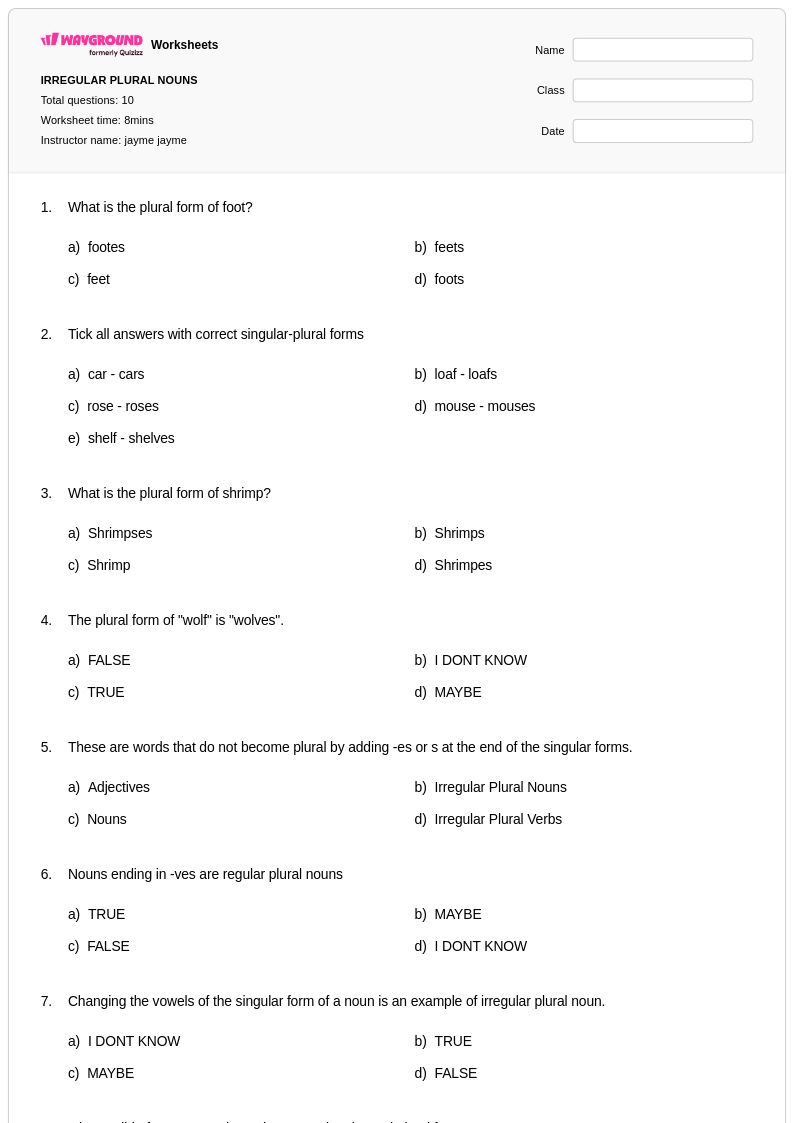
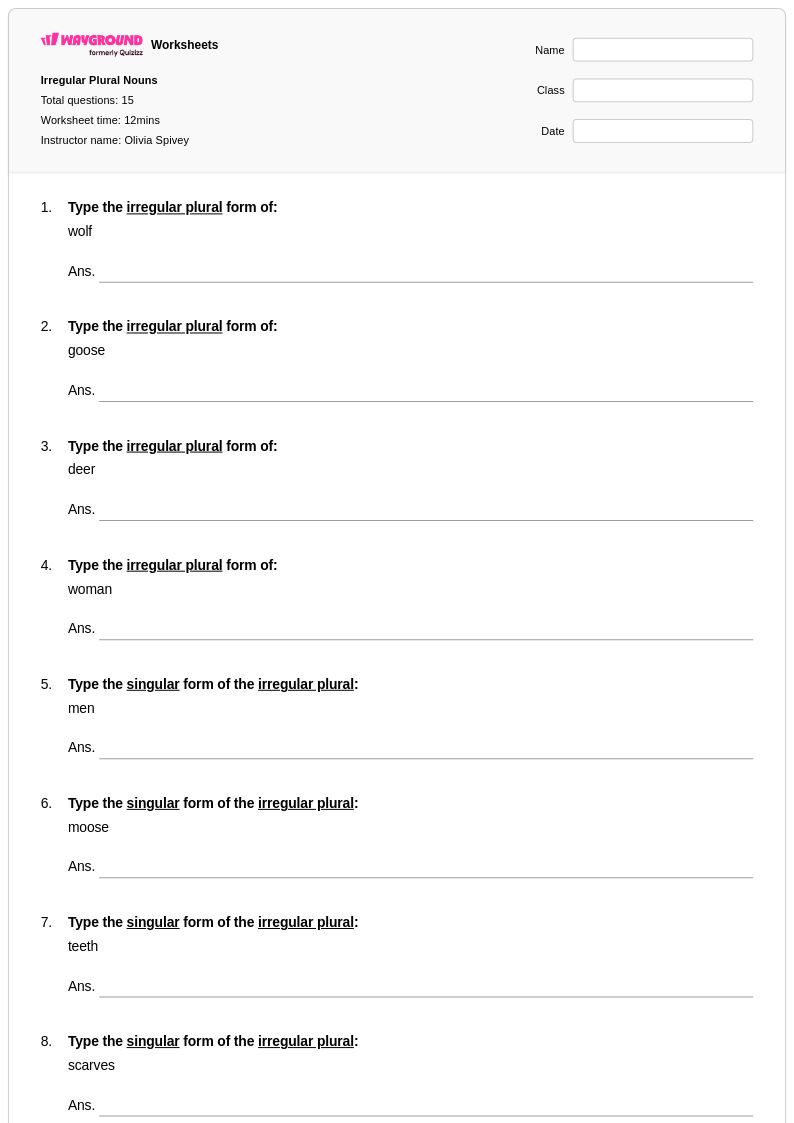
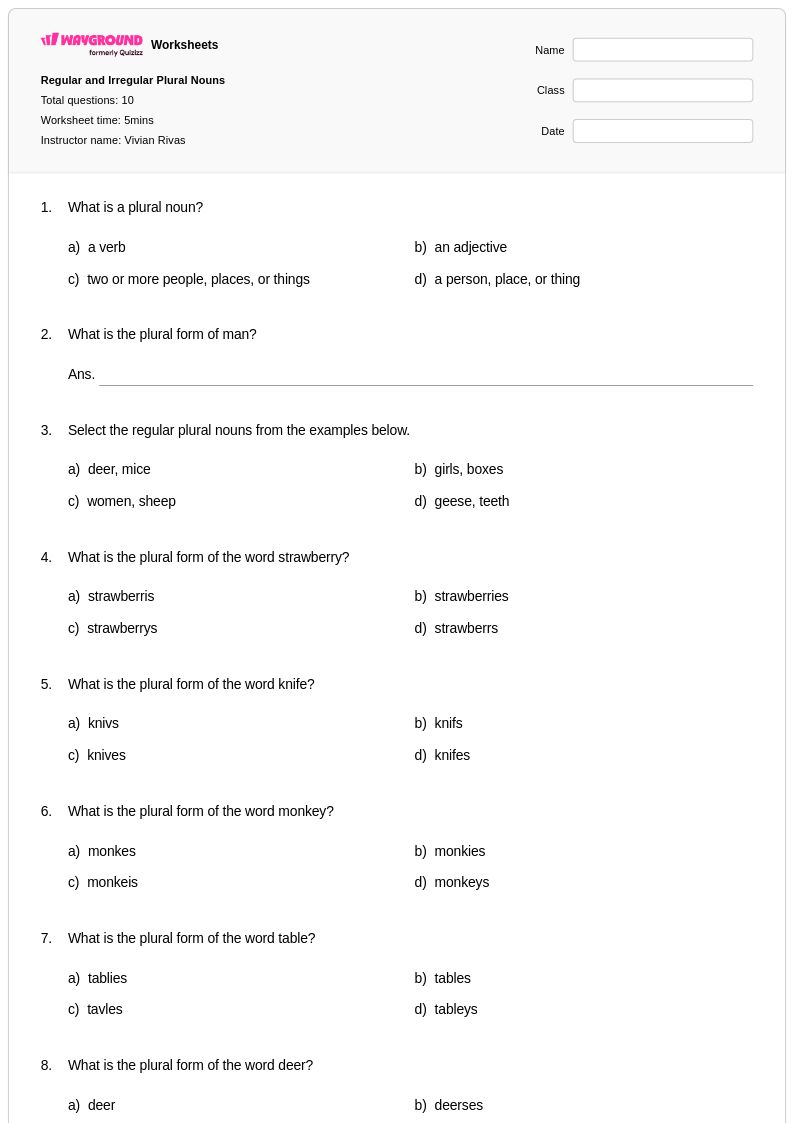
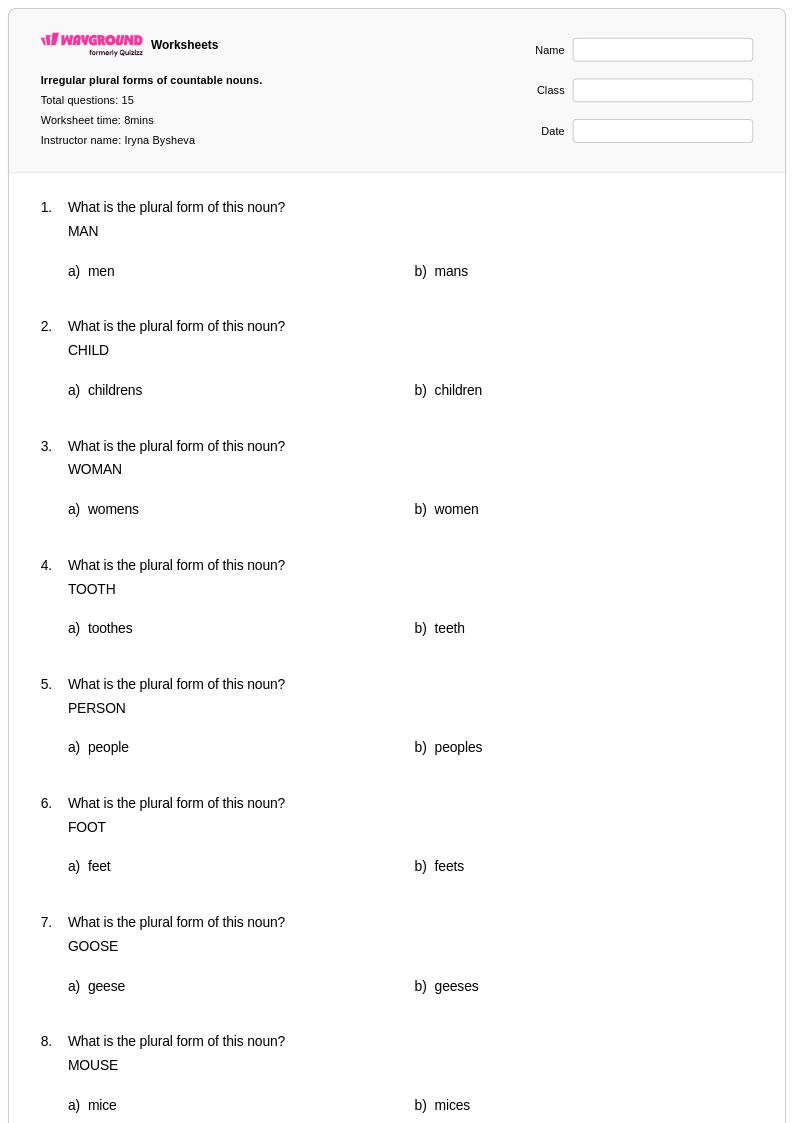
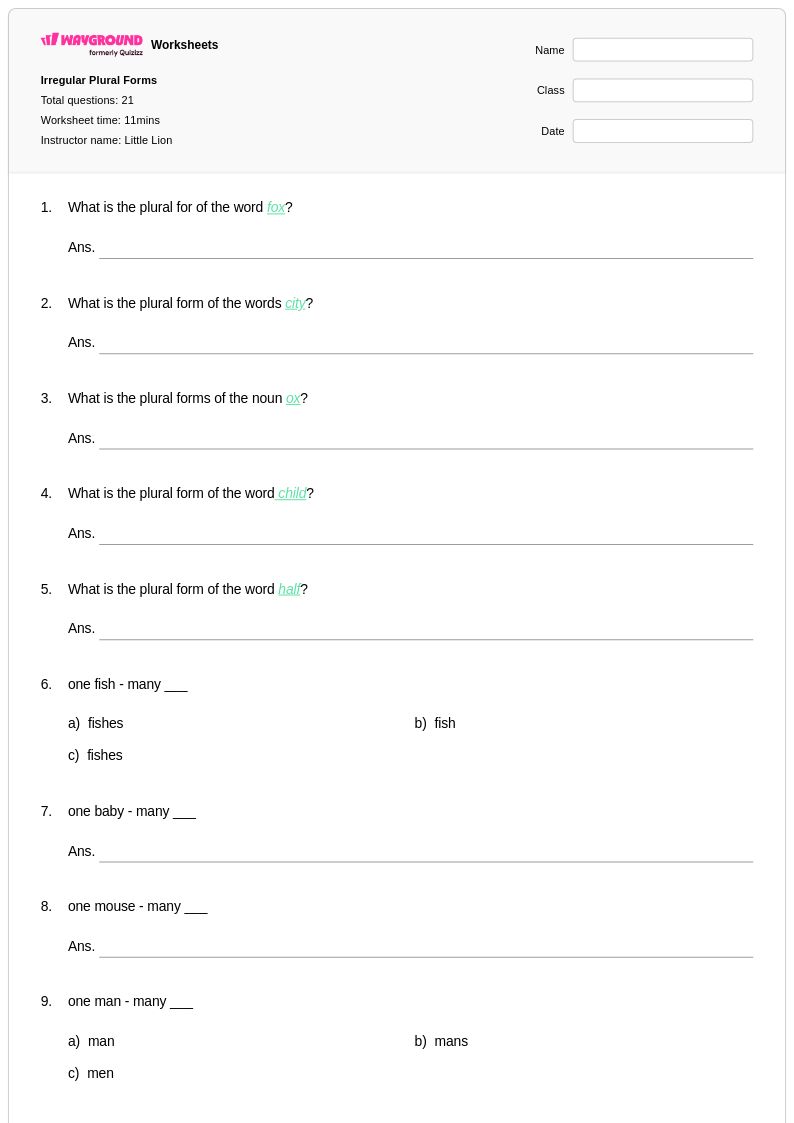
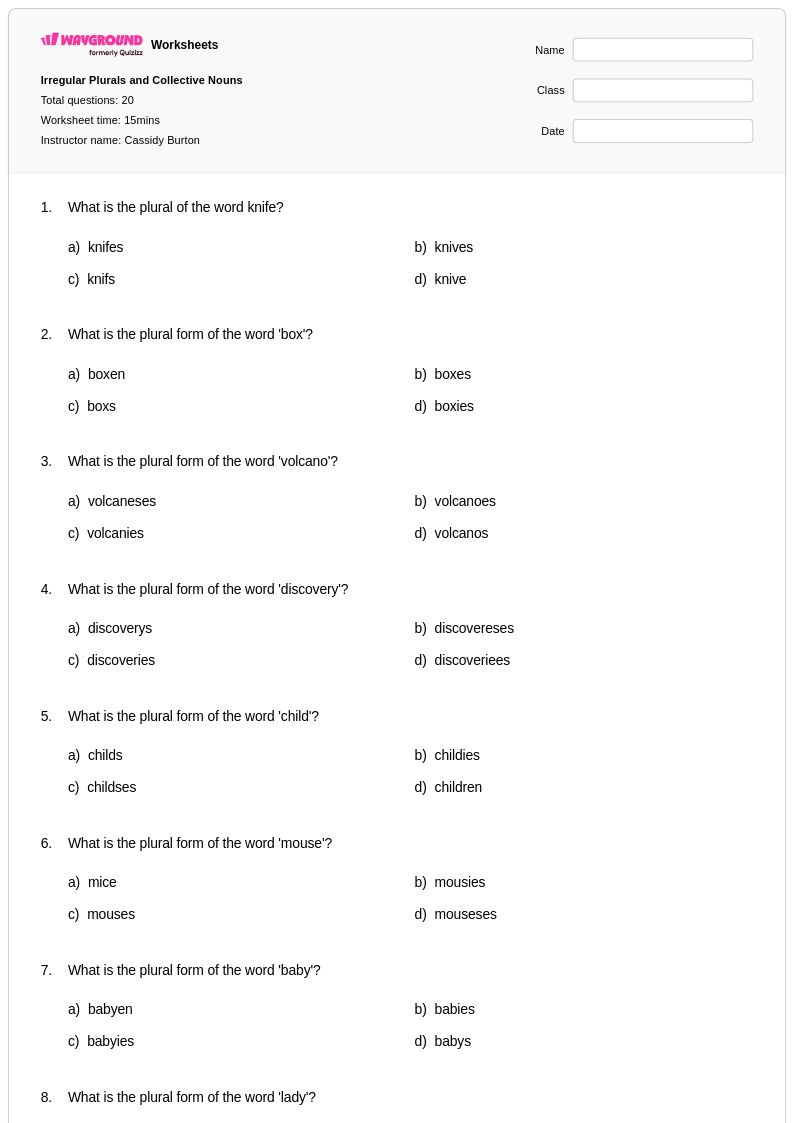
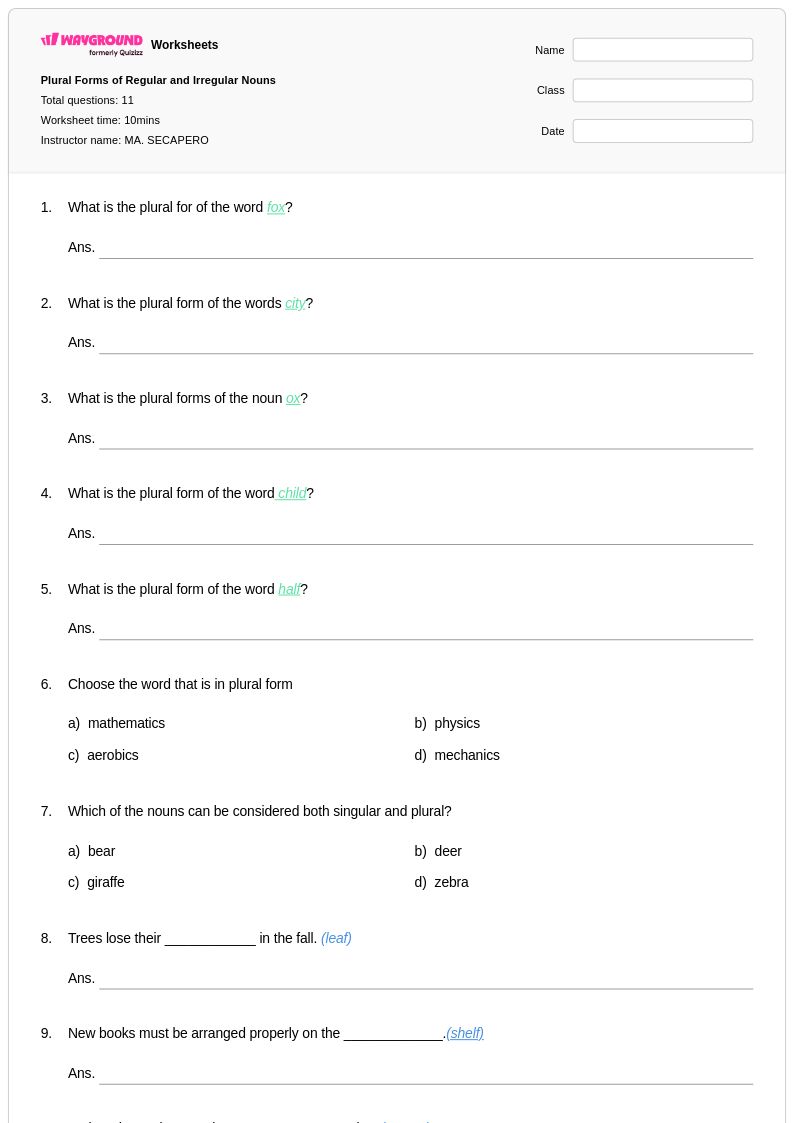
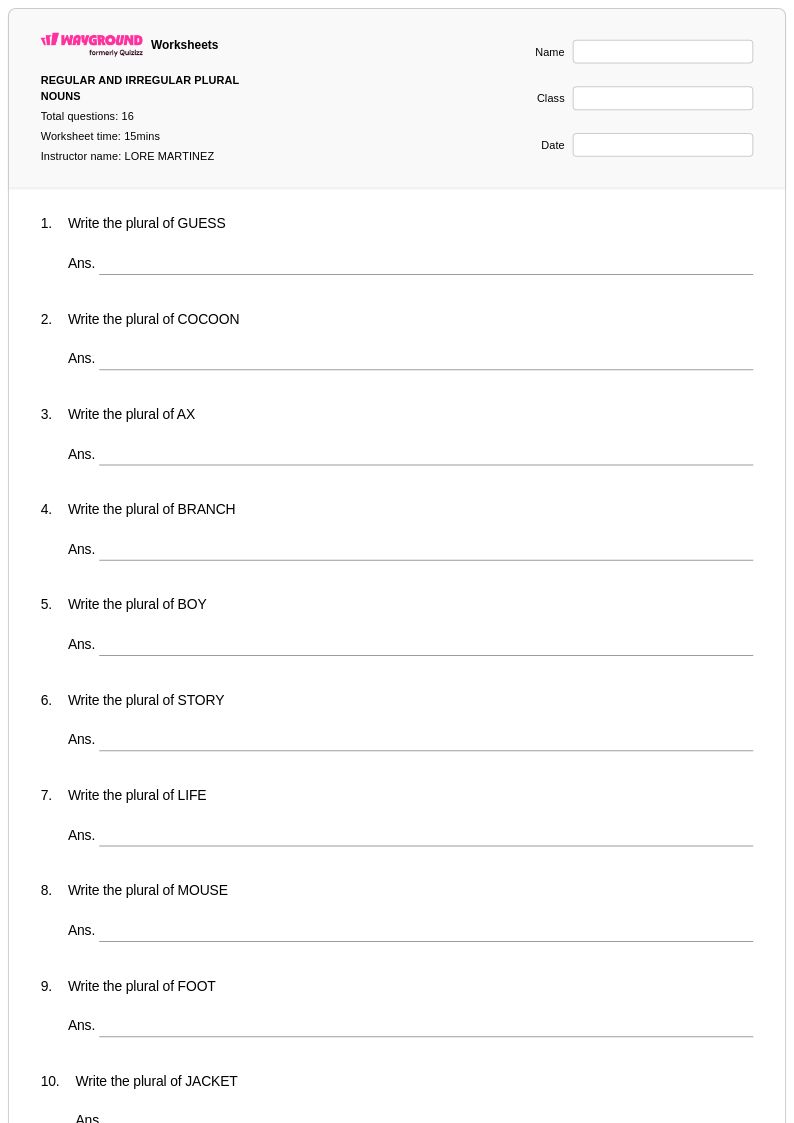
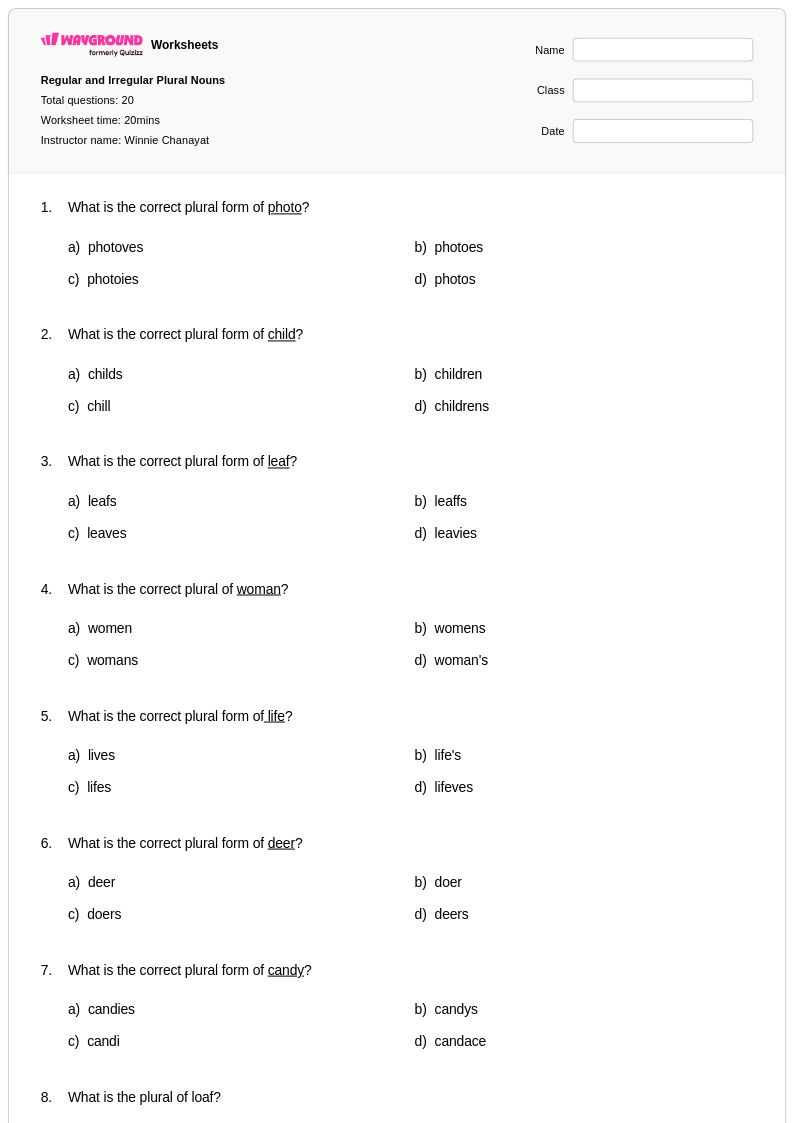
Irregular plural forms represent one of the most challenging aspects of English grammar, requiring students to master exceptions to standard pluralization rules through dedicated practice and reinforcement. Wayground's comprehensive collection of irregular plural worksheets provides targeted instruction on words that don't follow the typical "-s" or "-es" patterns, including common transformations like child to children, foot to feet, and mouse to mice. These educational resources strengthen students' understanding of unpredictable plural formations through systematic practice problems that cover high-frequency irregular nouns, helping learners recognize patterns within seemingly random changes. Each worksheet includes a complete answer key and is available as a free printable pdf, enabling educators to seamlessly integrate these materials into their grammar instruction while providing students with essential reference tools for independent study and review.
Wayground's platform empowers teachers with access to millions of educator-created resources specifically designed to address the complexities of irregular plural instruction across diverse learning environments. The robust search and filtering capabilities allow instructors to quickly locate worksheets that align with specific curriculum standards and match their students' proficiency levels, while built-in differentiation tools enable seamless customization for remediation or enrichment purposes. These irregular plural collections are available in both printable and digital formats, including downloadable pdf versions that facilitate flexible lesson planning and accommodate various classroom technologies. Teachers can efficiently supplement their core grammar instruction with these targeted practice materials, ensuring students receive adequate exposure to irregular plural patterns while building the foundational skills necessary for advanced writing and communication competency.
FAQs
How do I teach irregular plural forms to students?
Teaching irregular plural forms works best when you group words by transformation pattern rather than presenting them as a random list. For example, cluster vowel-change plurals together (foot/feet, tooth/teeth, goose/geese) and zero-change nouns together (sheep, deer, fish) so students can recognize internal logic. Repeated exposure through reading, writing, and retrieval practice helps these forms move into long-term memory.
What exercises help students practice irregular plural forms?
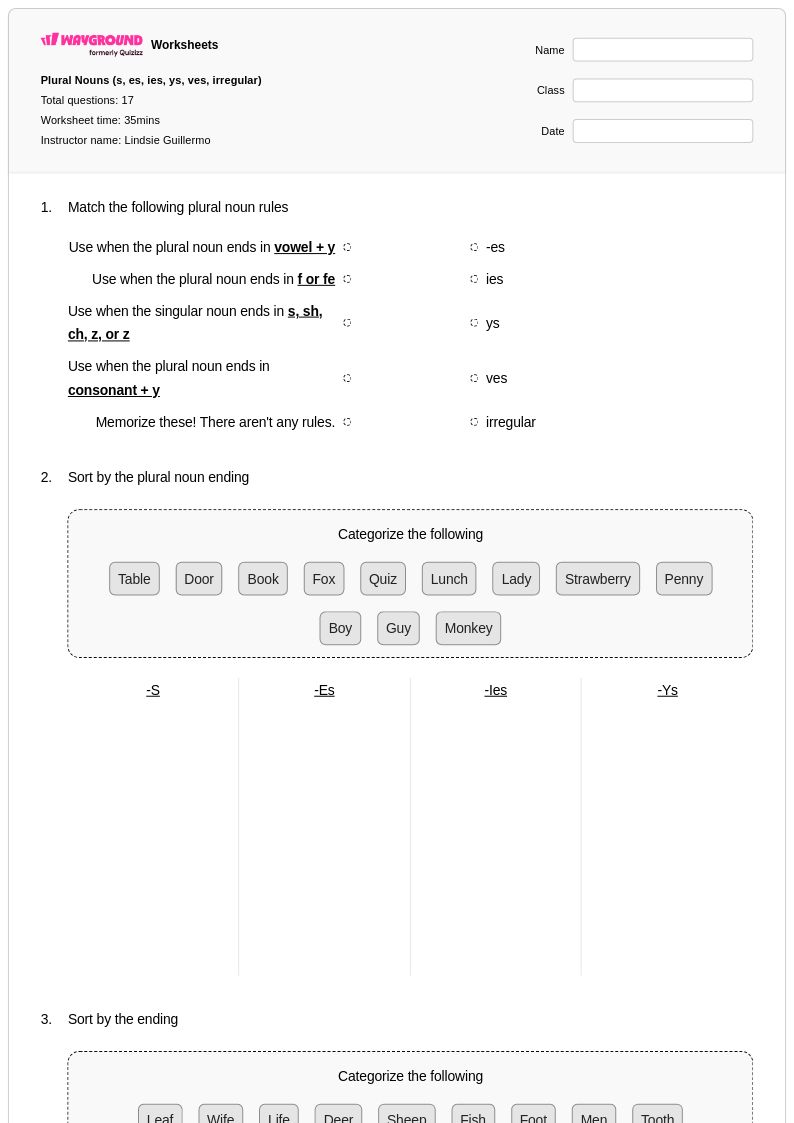
Effective practice exercises include fill-in-the-blank sentences, word sorting tasks that group irregular nouns by transformation type, and error-correction activities where students identify and fix incorrect plural usage. Repeated low-stakes retrieval practice, such as flashcard drills or quick written responses, is especially effective for cementing high-frequency irregular nouns like child/children and mouse/mice.
What are the most common mistakes students make with irregular plural forms?
The most common error is overapplying the standard '-s' or '-es' rule to irregular nouns, producing forms like 'childs', 'mouses', or 'foots'. Students also frequently confuse irregular plurals that look singular (sheep, deer) and either add an unnecessary '-s' or treat them as already plural in the wrong context. Targeted practice with high-frequency irregular nouns helps correct these patterns before they become ingrained habits.
How do I differentiate irregular plural forms instruction for struggling learners?
For struggling learners, narrow the scope to the highest-frequency irregular nouns first and provide visual anchor charts grouping words by transformation type. On Wayground, teachers can enable Read Aloud so students hear irregular plural forms spoken aloud, and Reduced Answer Choices to lower cognitive load during practice. Extended time can also be assigned per student without affecting the rest of the class, allowing differentiated pacing within the same lesson.
How do I use Wayground's irregular plural forms worksheets in my classroom?
Wayground's irregular plural forms worksheets are available as free printable PDFs for traditional classroom use and in digital formats for technology-integrated environments, including the option to host them as a quiz directly on Wayground. Teachers can use the search and filtering tools to find worksheets aligned to their curriculum standards and student proficiency levels. Each worksheet includes a complete answer key, making them efficient for both guided instruction and independent student review.
At what grade level should students learn irregular plural forms?
Irregular plural forms are typically introduced in early elementary grades, around first and second grade, as students build foundational grammar and vocabulary skills. However, reinforcement and systematic instruction often continue through upper elementary grades as students encounter less common irregular nouns in reading and writing. Targeted worksheets can support both initial instruction and remediation at multiple grade levels.