
Recommended Topics for you
- Commas After an Introductory Phrase
- Commas in a Series
- Commas with Coordinate Adjectives
- Commas with Nonrestrictive Elements
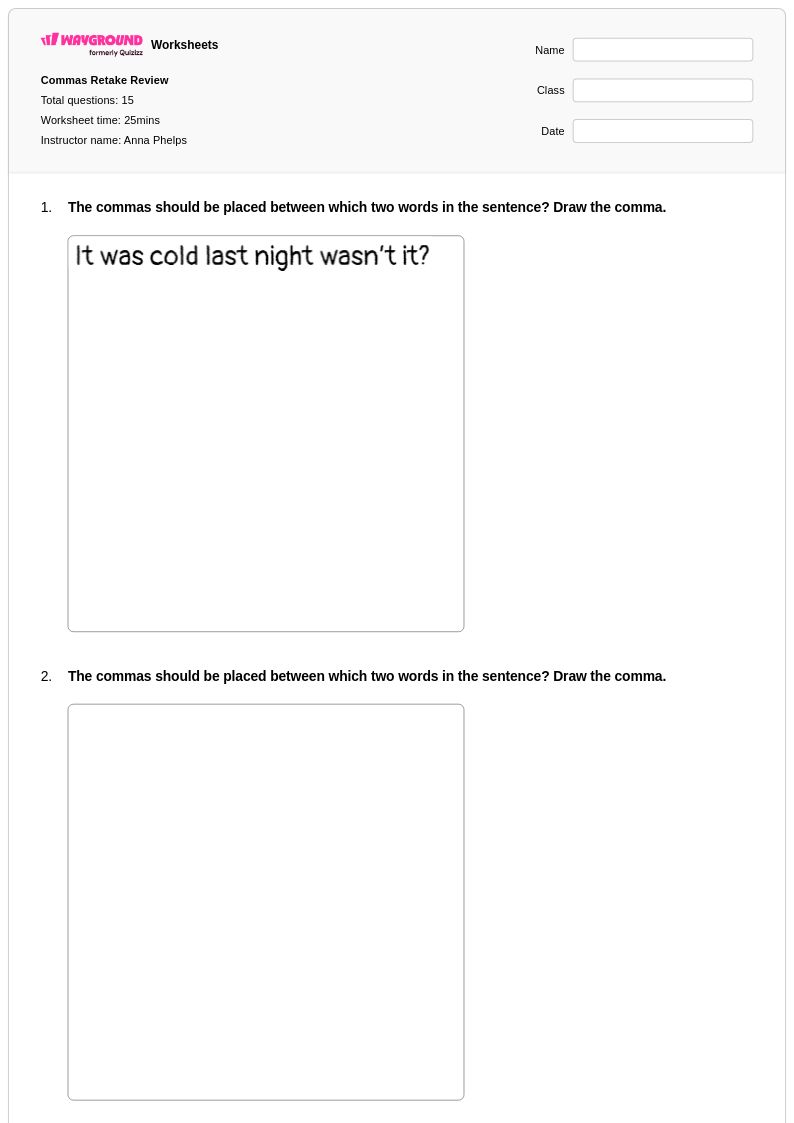
15 Q
7th
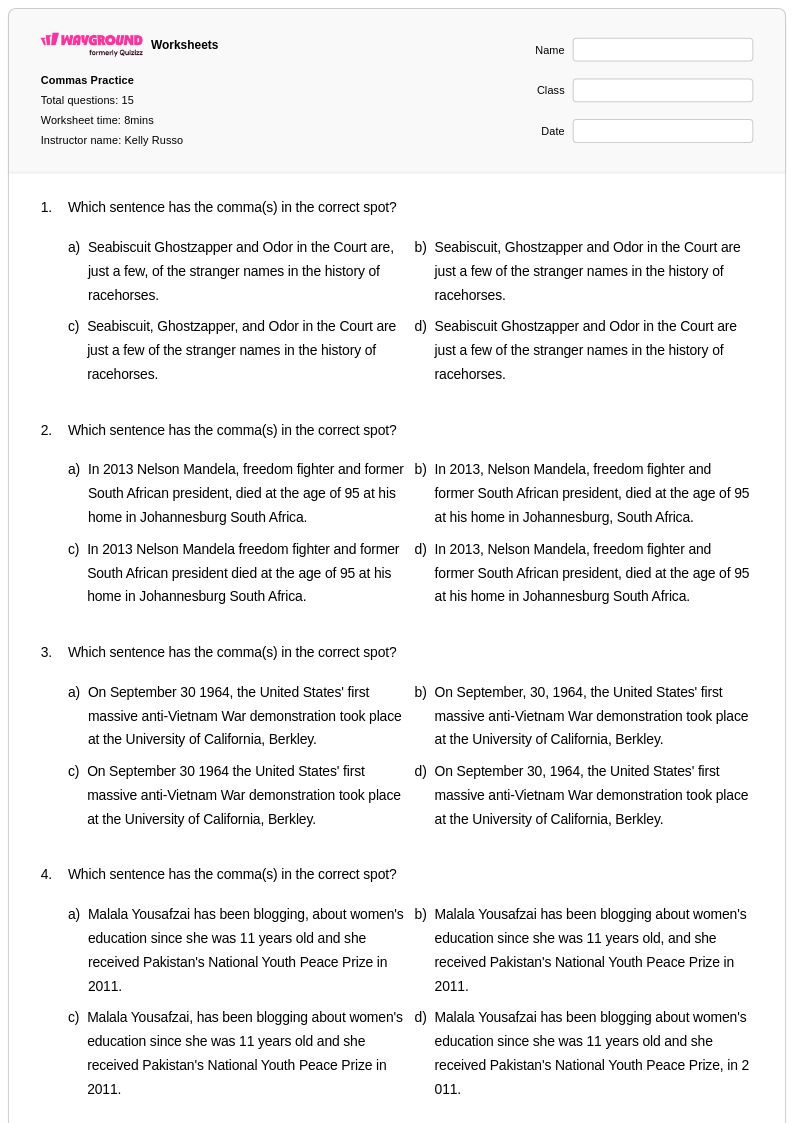
15 Q
7th
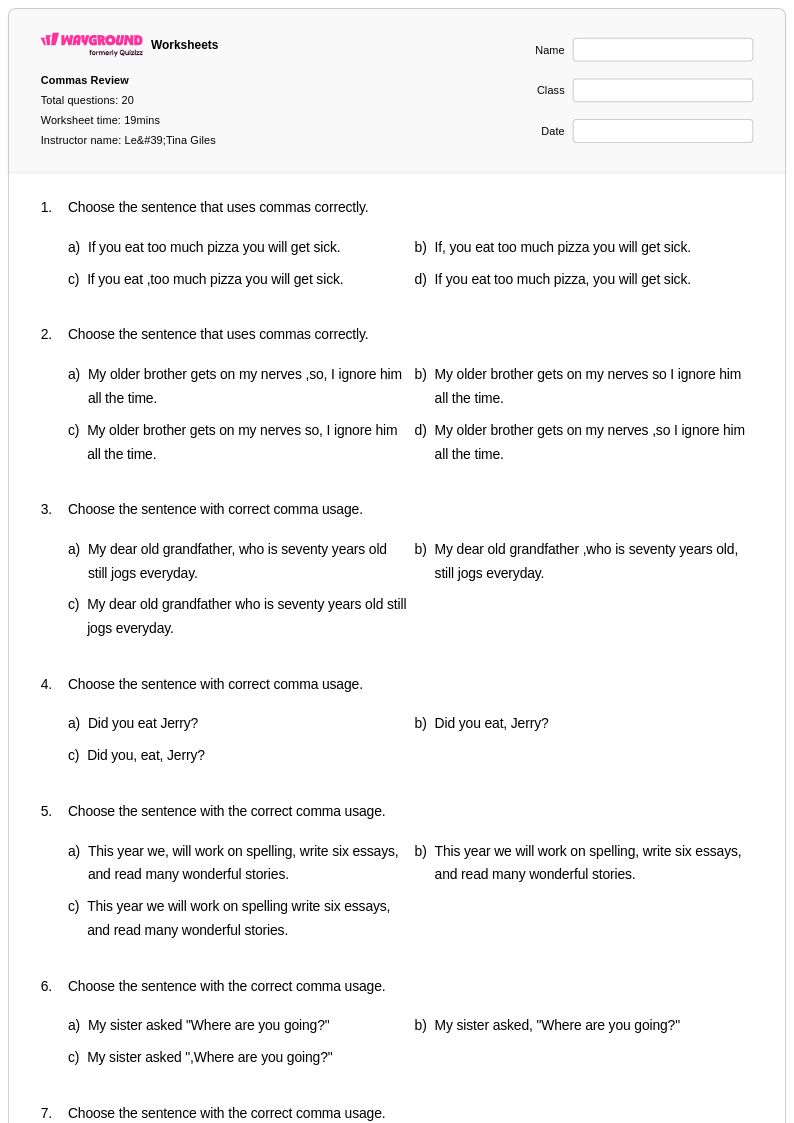
20 Q
6th - 8th
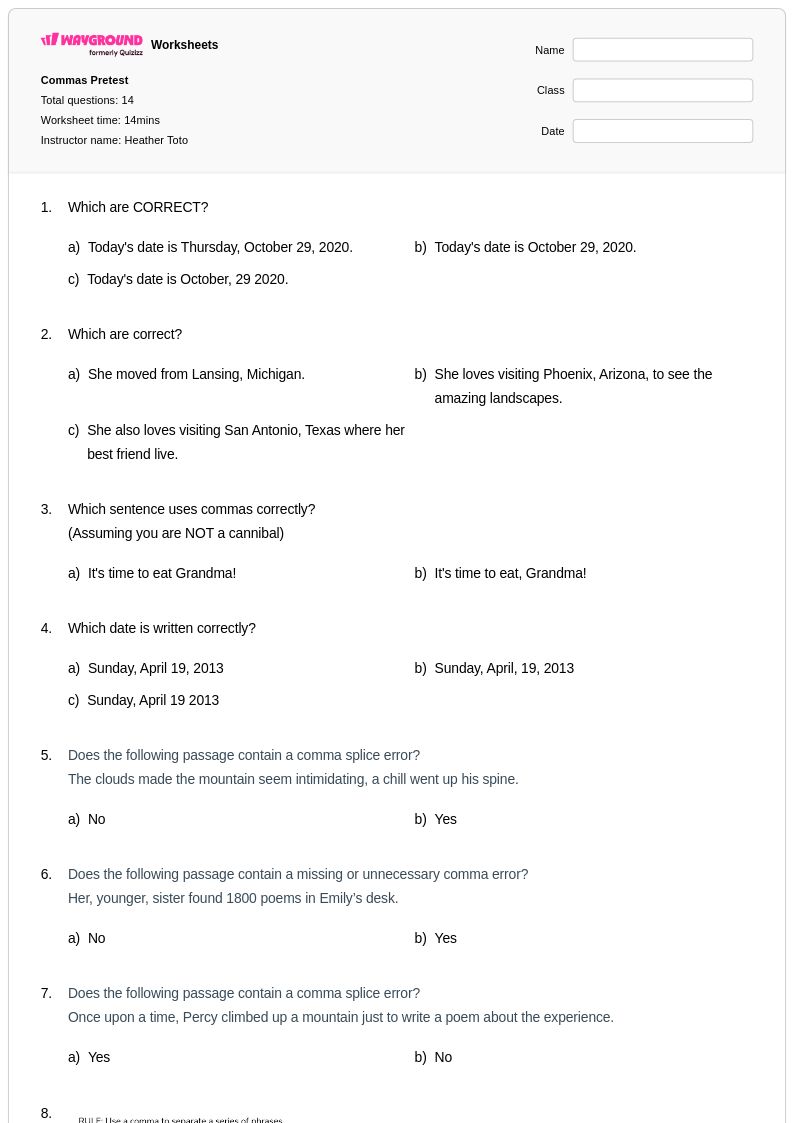
14 Q
7th
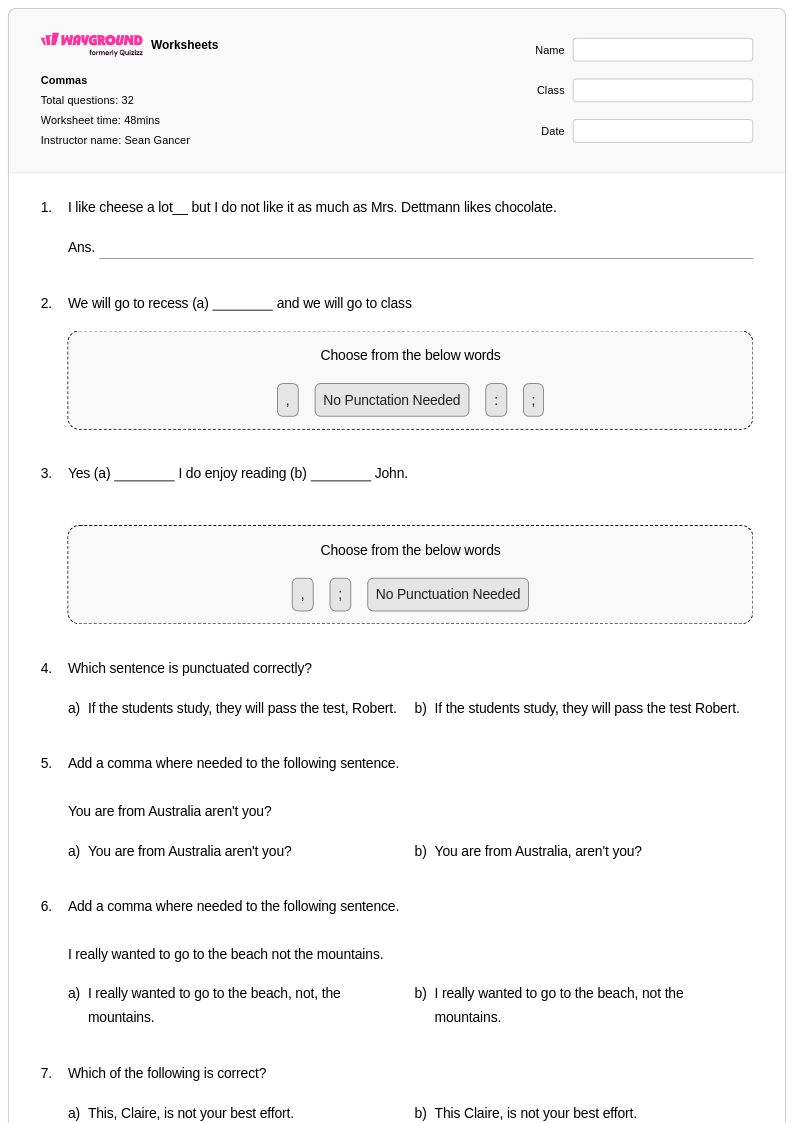
32 Q
7th
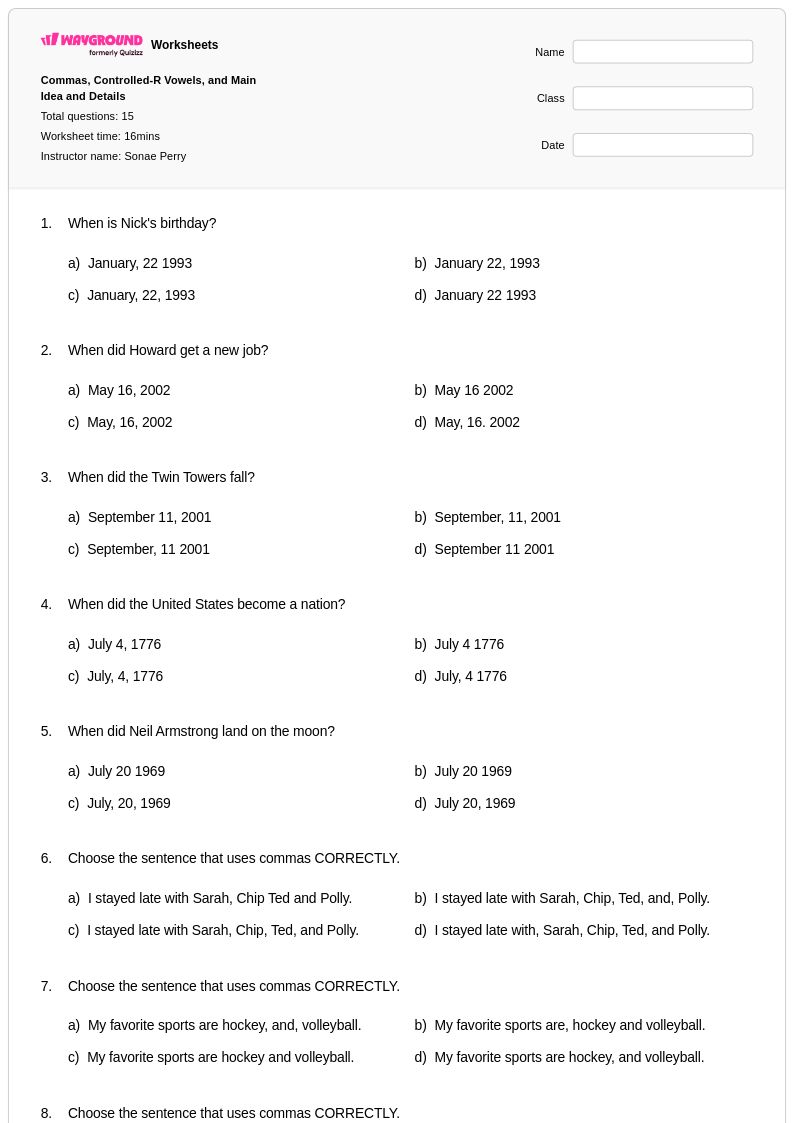
15 Q
7th
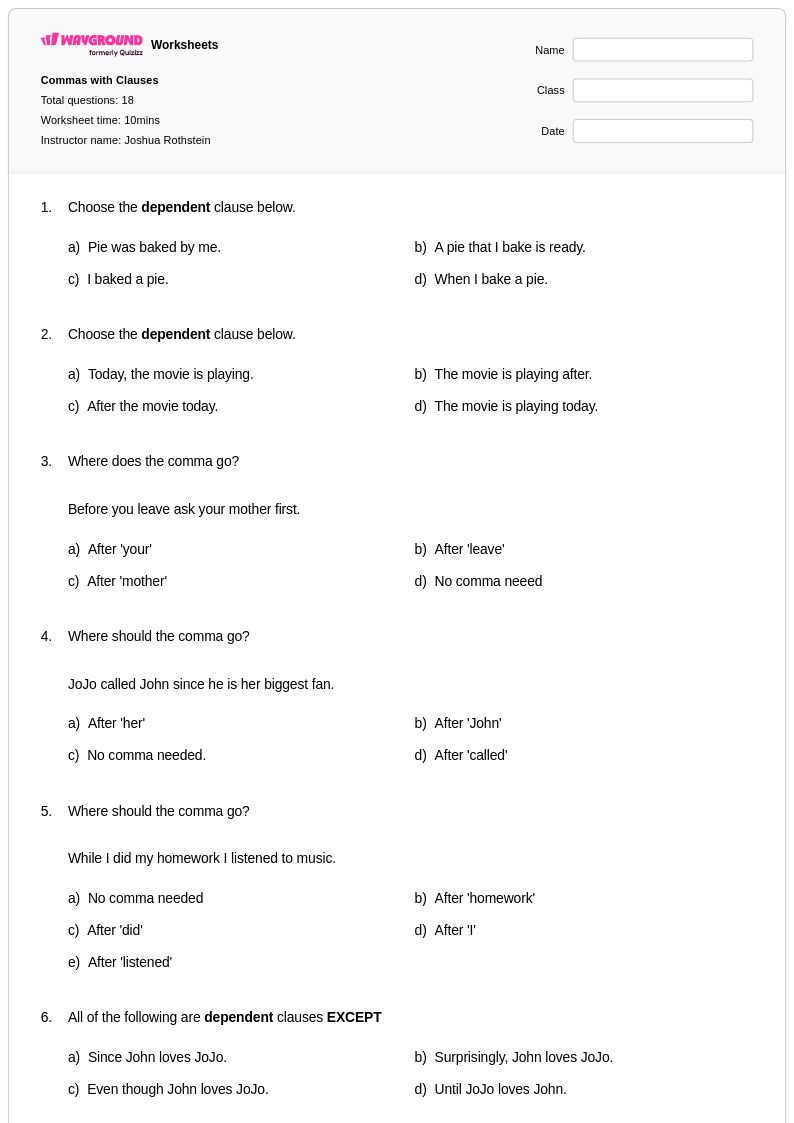
18 Q
7th - 9th
10 Q
6th - 8th
10 Q
7th
20 Q
6th - 10th
13 Q
6th - 9th
10 Q
6th - 8th
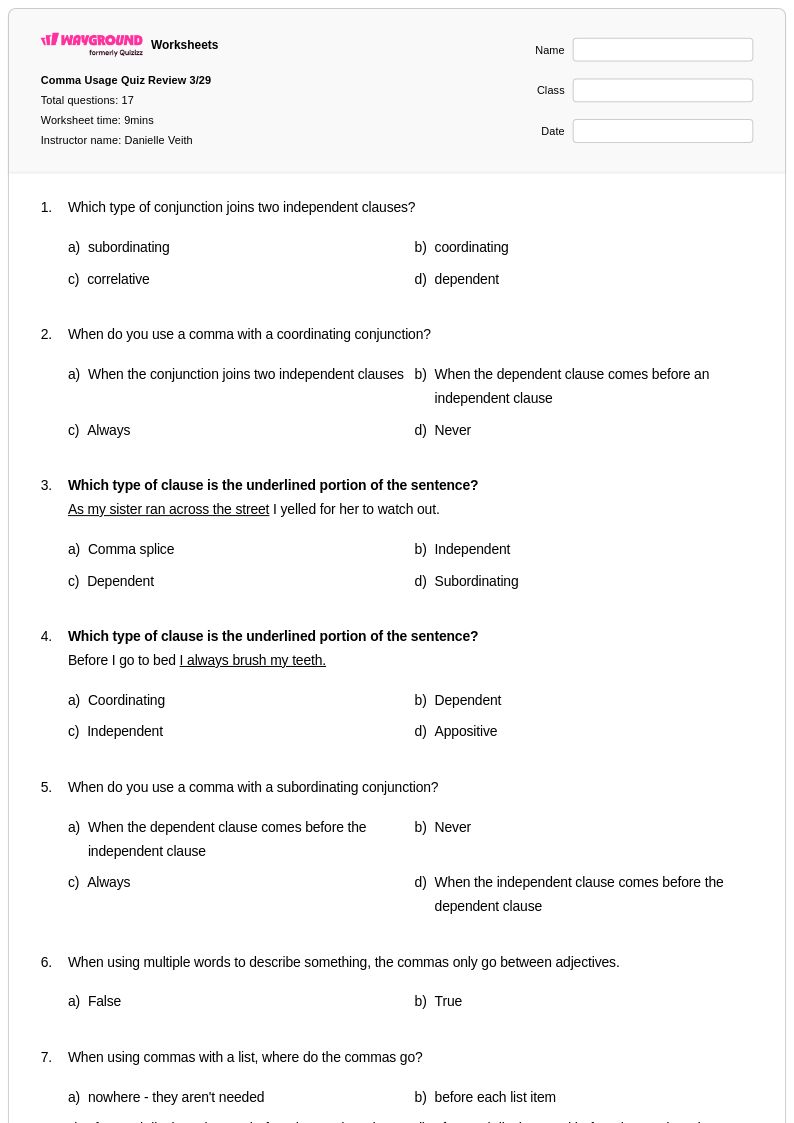
17 Q
7th
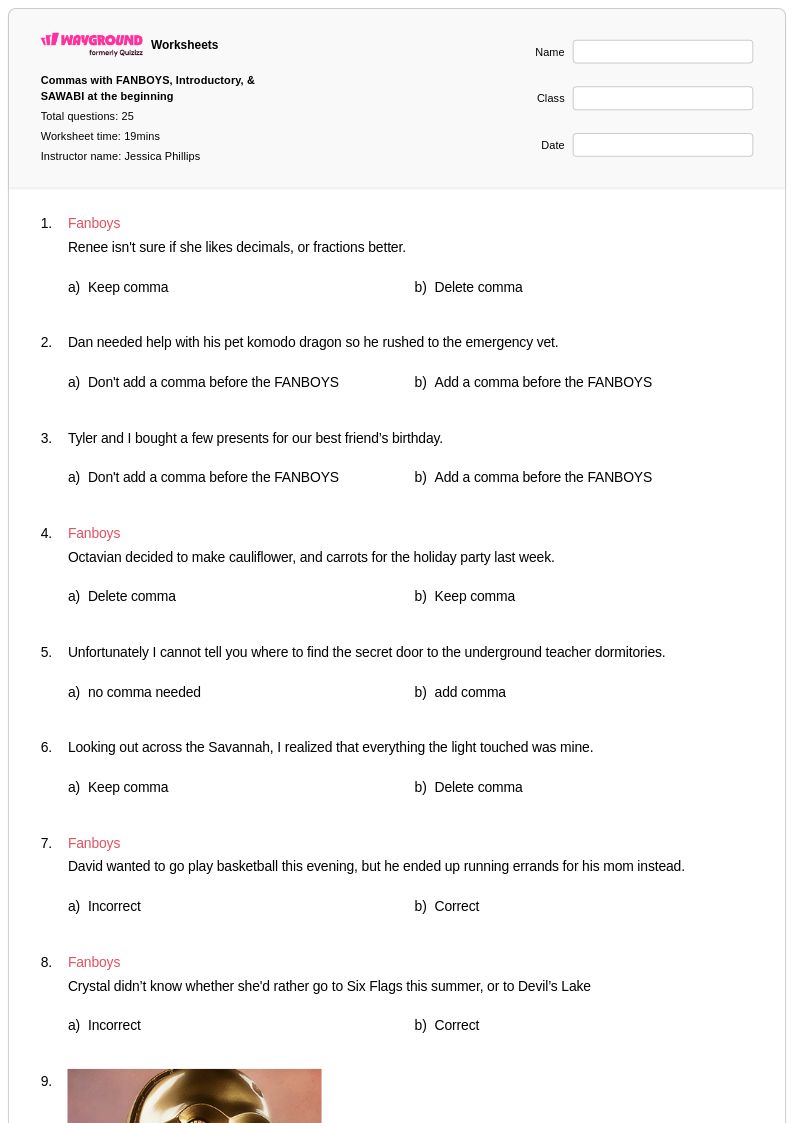
25 Q
7th
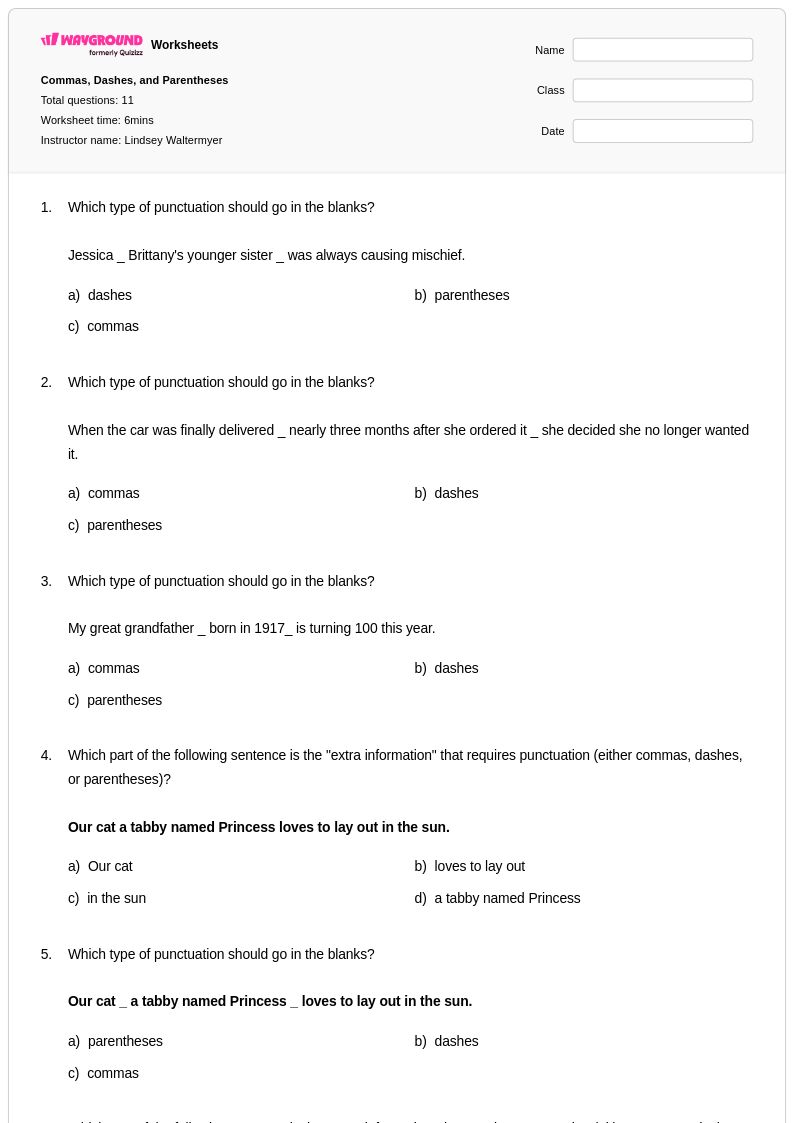
11 Q
5th - 7th
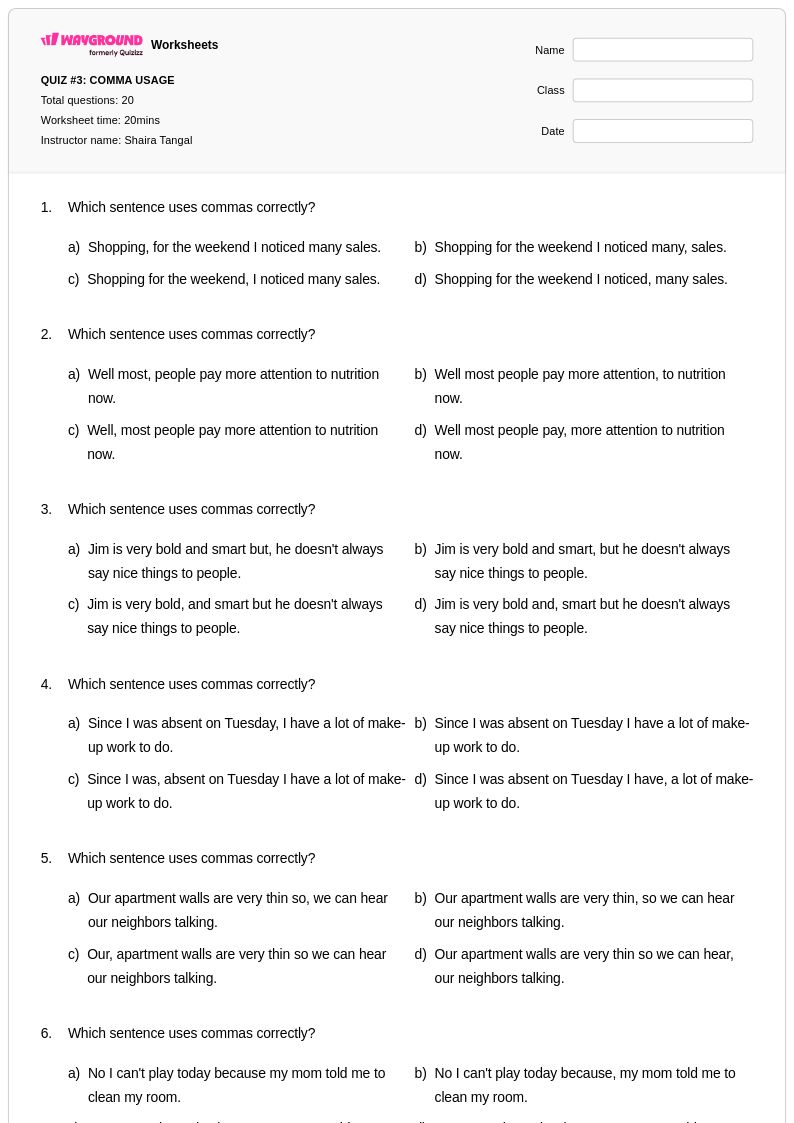
20 Q
7th
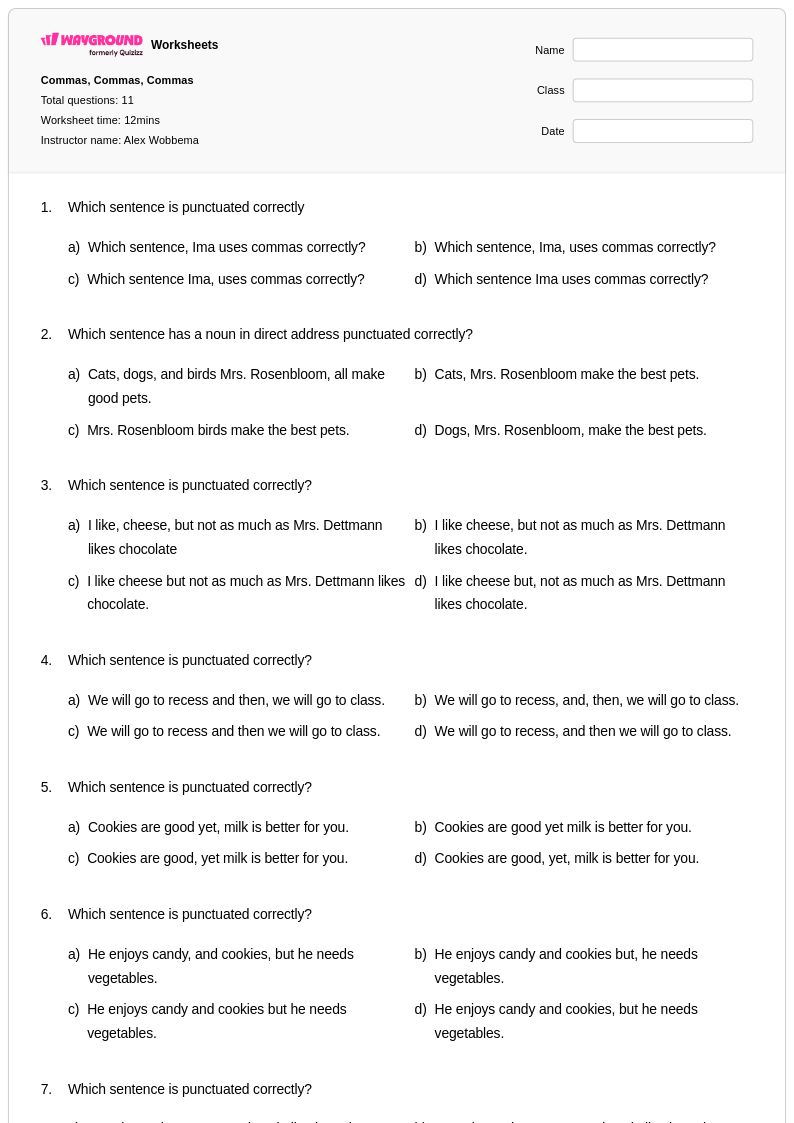
11 Q
7th
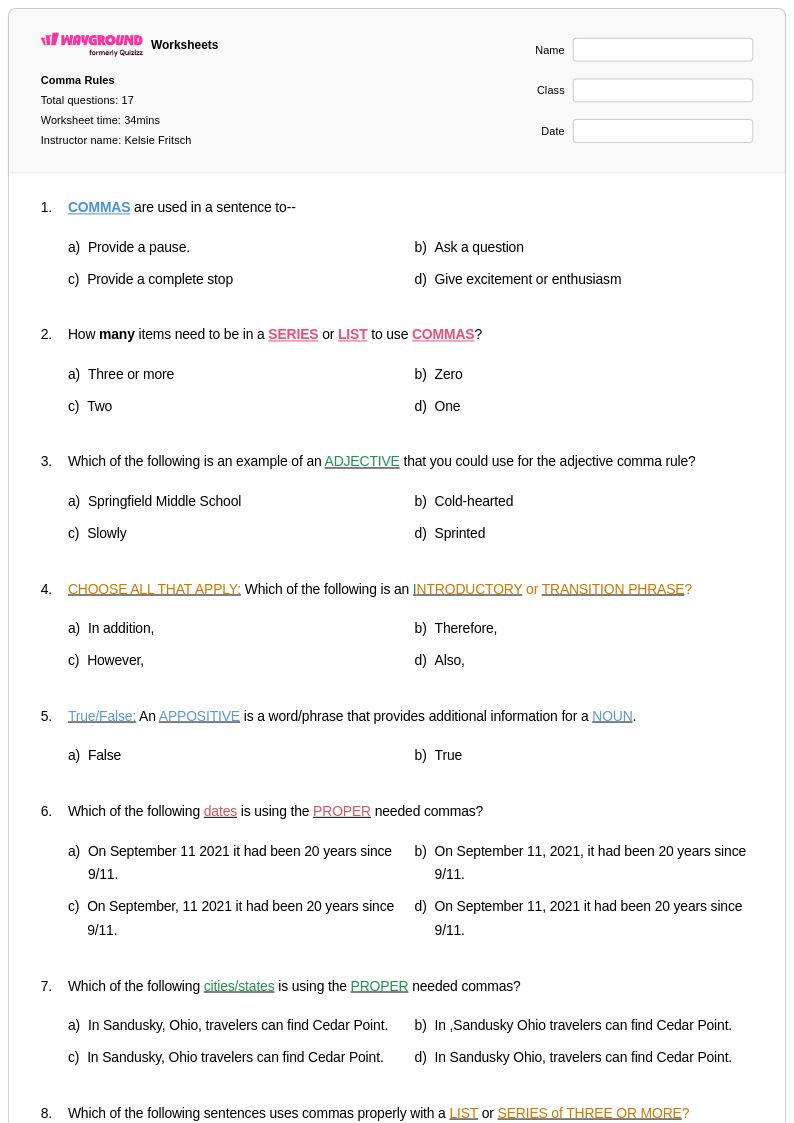
17 Q
6th - 8th
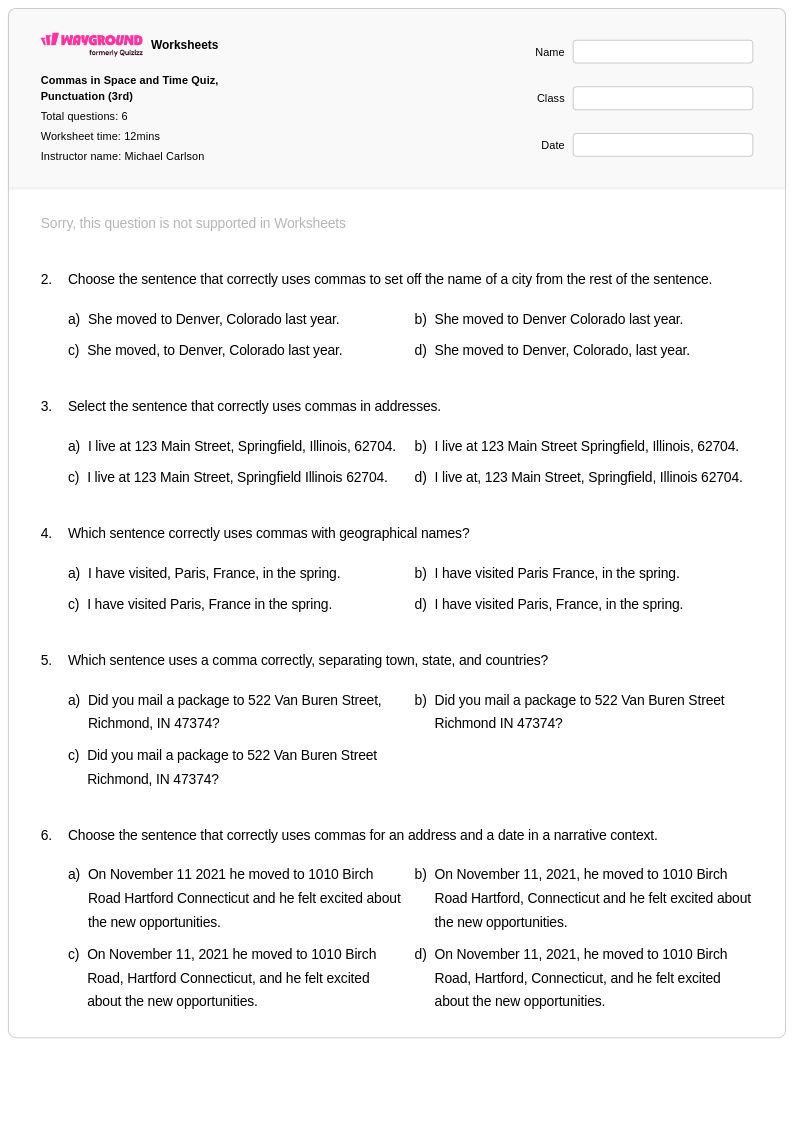
16 Q
7th
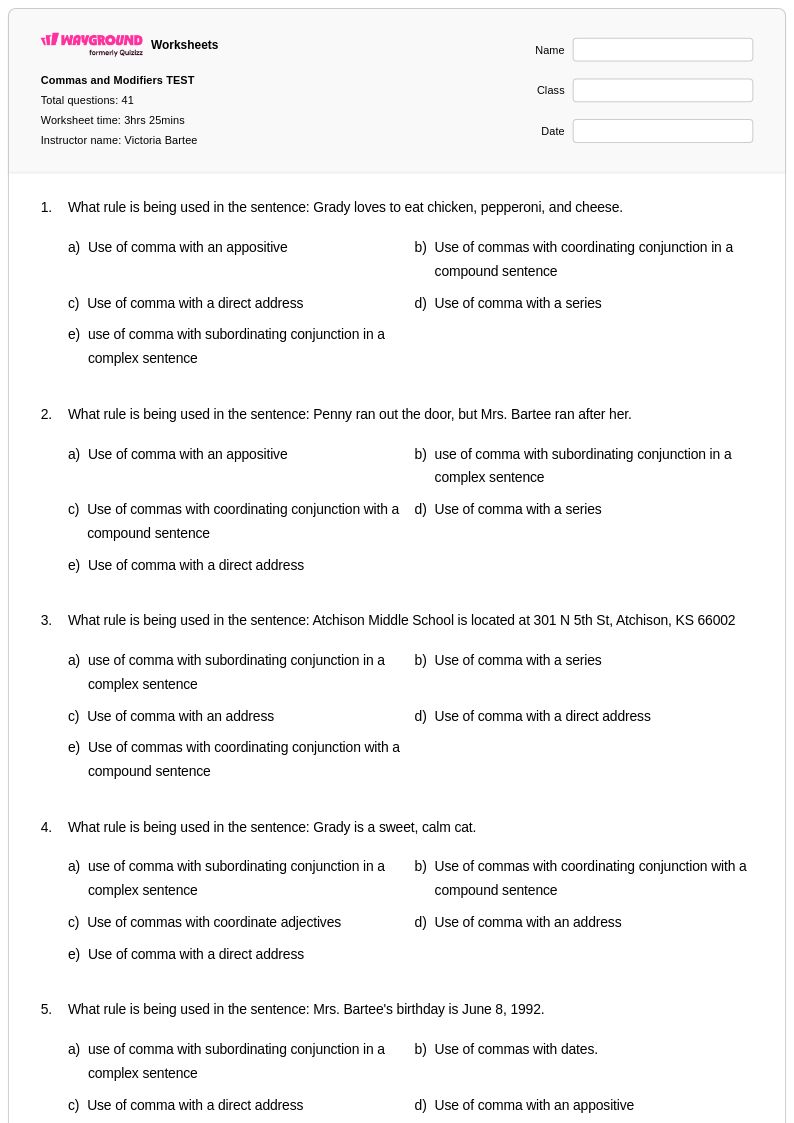
41 Q
3rd - 11th
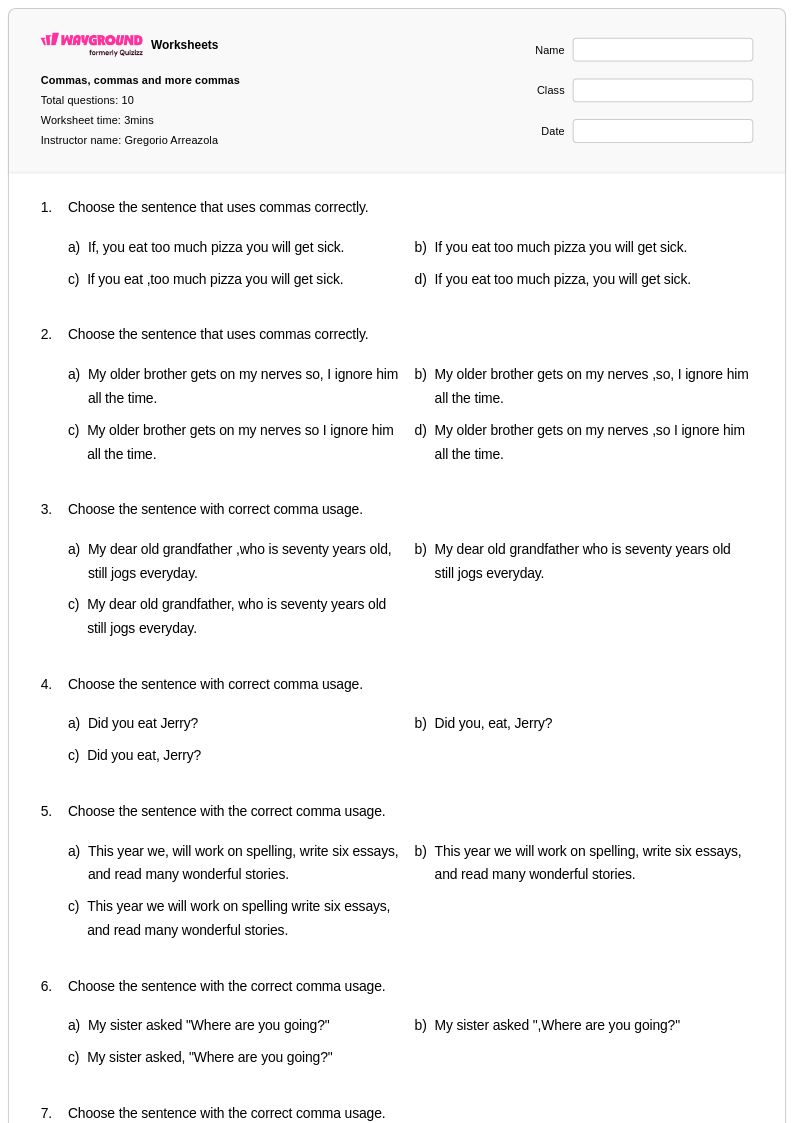
10 Q
7th
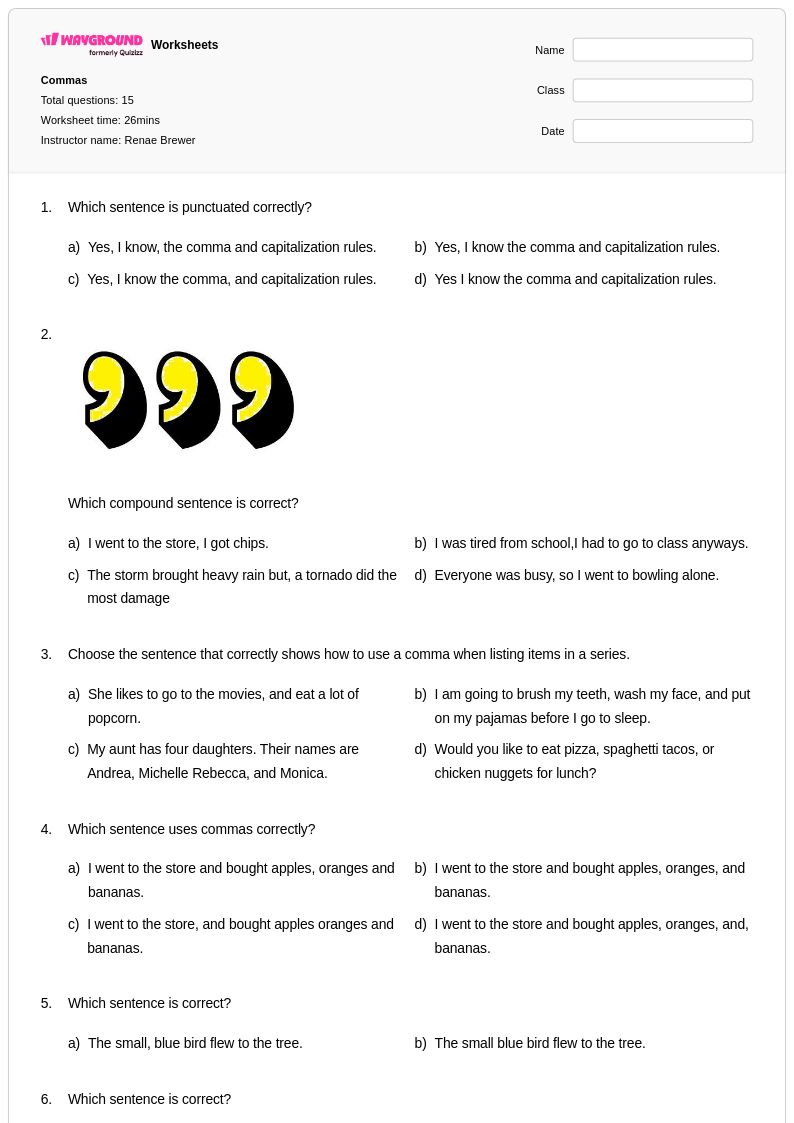
15 Q
7th
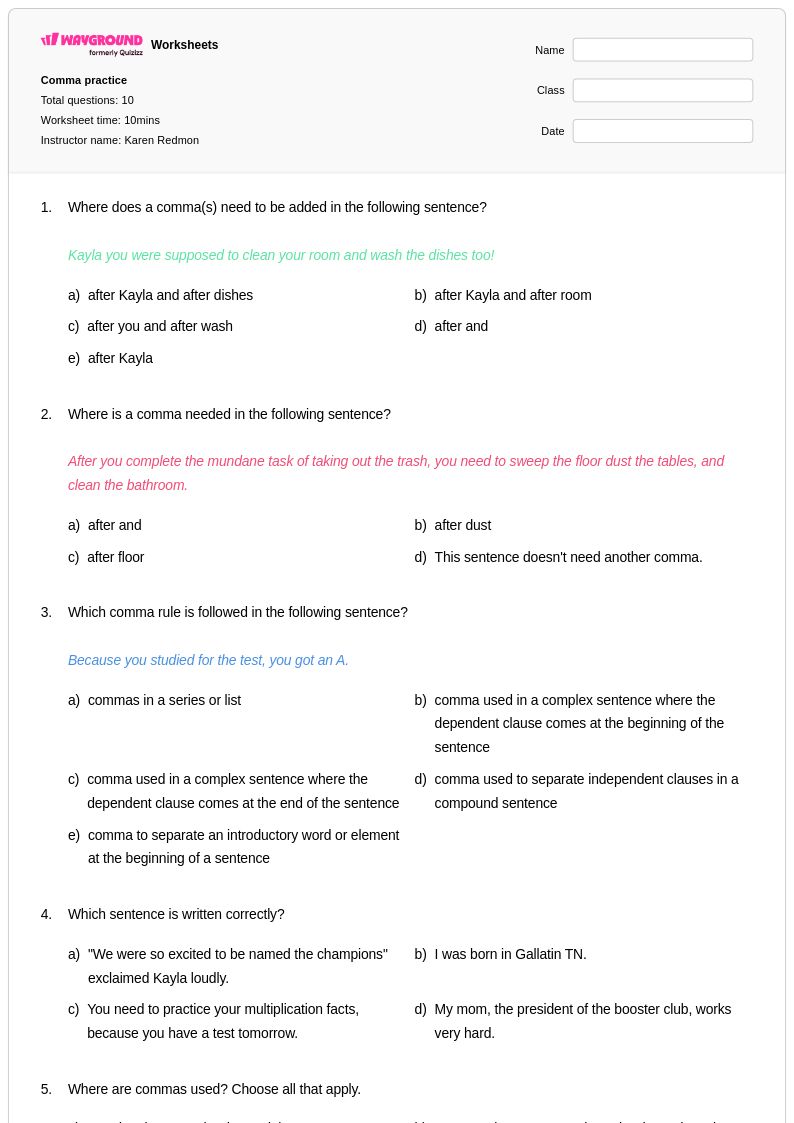
10 Q
7th
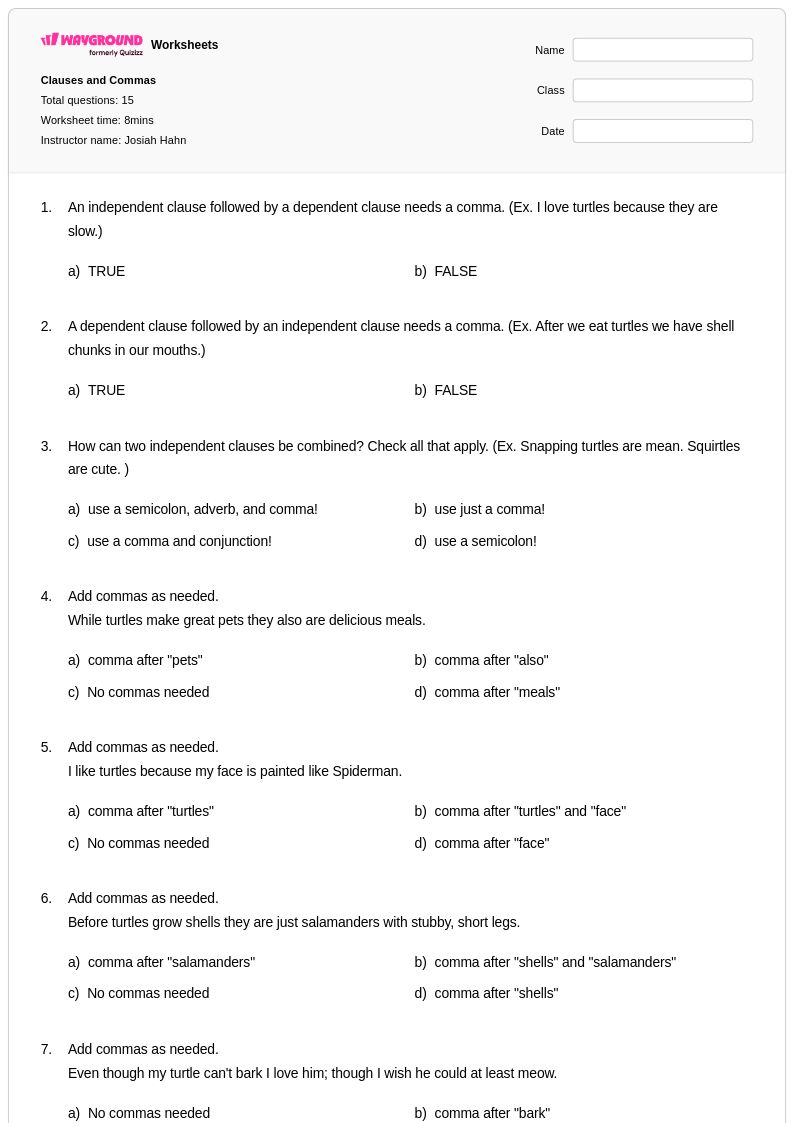
15 Q
6th - 8th
Explore Commas Worksheets by Grades
Explore Commas Worksheets for class 7 by Topic
Explore Other Subject Worksheets for class 7
Explore printable Commas worksheets for Class 7
Comma usage worksheets for Class 7 students through Wayground (formerly Quizizz) provide comprehensive practice in mastering one of the most essential punctuation skills in English writing. These carefully designed resources help seventh-grade students develop proficiency in using commas correctly across various contexts, including separating items in series, setting off introductory elements, joining independent clauses with coordinating conjunctions, and punctuating nonessential information. Each worksheet focuses on building students' understanding of comma rules through engaging practice problems that progress from basic applications to more complex sentence structures. The collection includes detailed answer keys that allow students to check their work independently, and all materials are available as free printables in convenient pdf format, making them accessible for both classroom instruction and independent study.
Wayground (formerly Quizizz) empowers educators with an extensive library of millions of teacher-created comma worksheets specifically designed for Class 7 English instruction. The platform's robust search and filtering capabilities enable teachers to quickly locate resources that align with curriculum standards and match their students' specific learning needs. These differentiation tools support varied instructional approaches, allowing educators to customize worksheets for remediation, standard practice, or enrichment activities. Teachers can seamlessly integrate these resources into their lesson planning, whether they need printable worksheets for traditional classroom activities or digital formats for online learning environments. The flexibility of the platform ensures that comma instruction can be tailored to individual student requirements while maintaining consistent focus on building strong foundational punctuation skills that will serve students throughout their academic careers.
FAQs
How do I teach comma rules to students who keep getting them wrong?
What exercises help students practice comma placement?
What comma mistakes do students make most often?
How do I help students understand the difference between restrictive and nonrestrictive clauses?
How do I use Wayground's comma worksheets in my classroom?
How can I differentiate comma practice for students at different skill levels?