Free Printable The Digestive and Excretory Systems Worksheets for Class 9
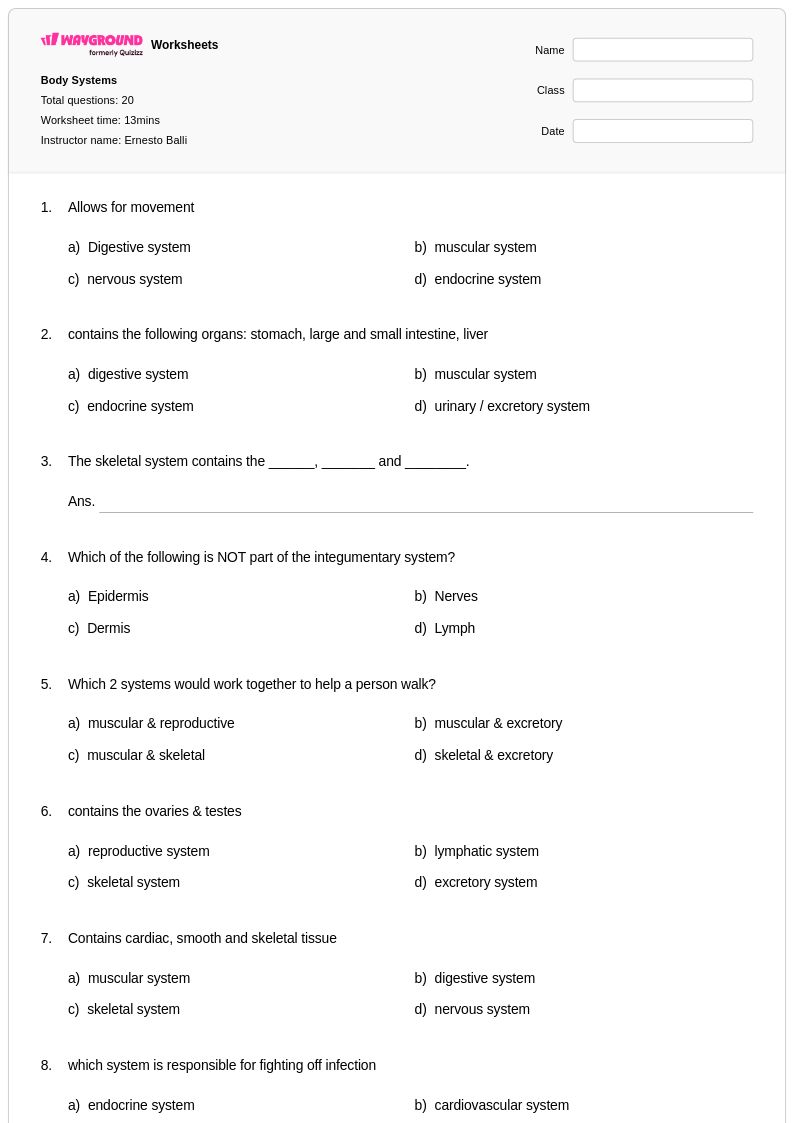
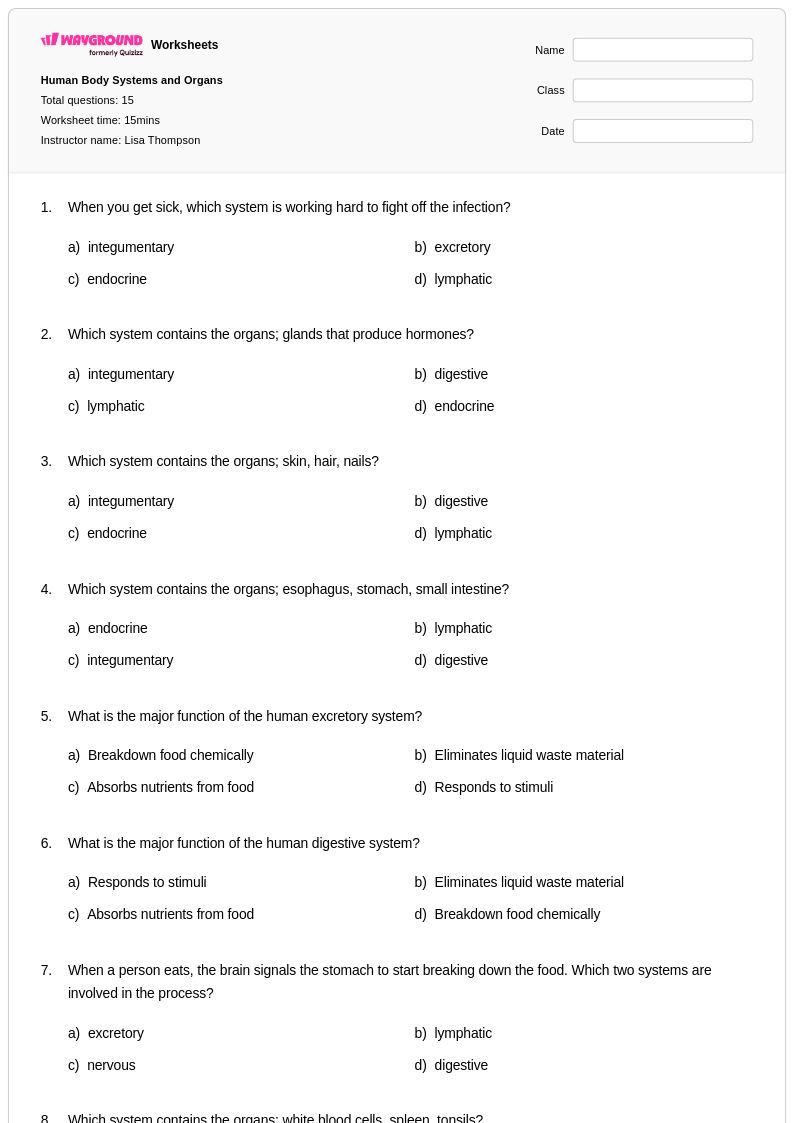
Class 9 digestive and excretory systems worksheets from Wayground provide free printable PDFs with practice problems and answer keys to help students master human body processes and organ functions.
Explore printable The Digestive and Excretory Systems worksheets for Class 9
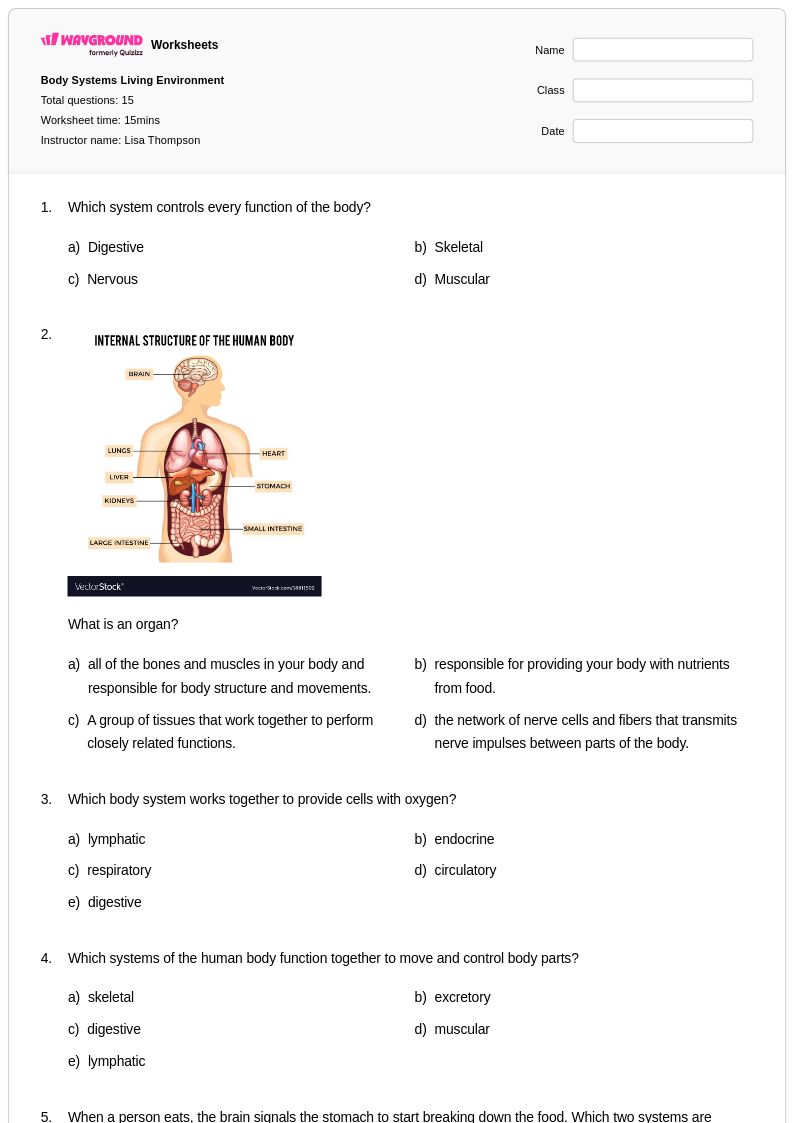
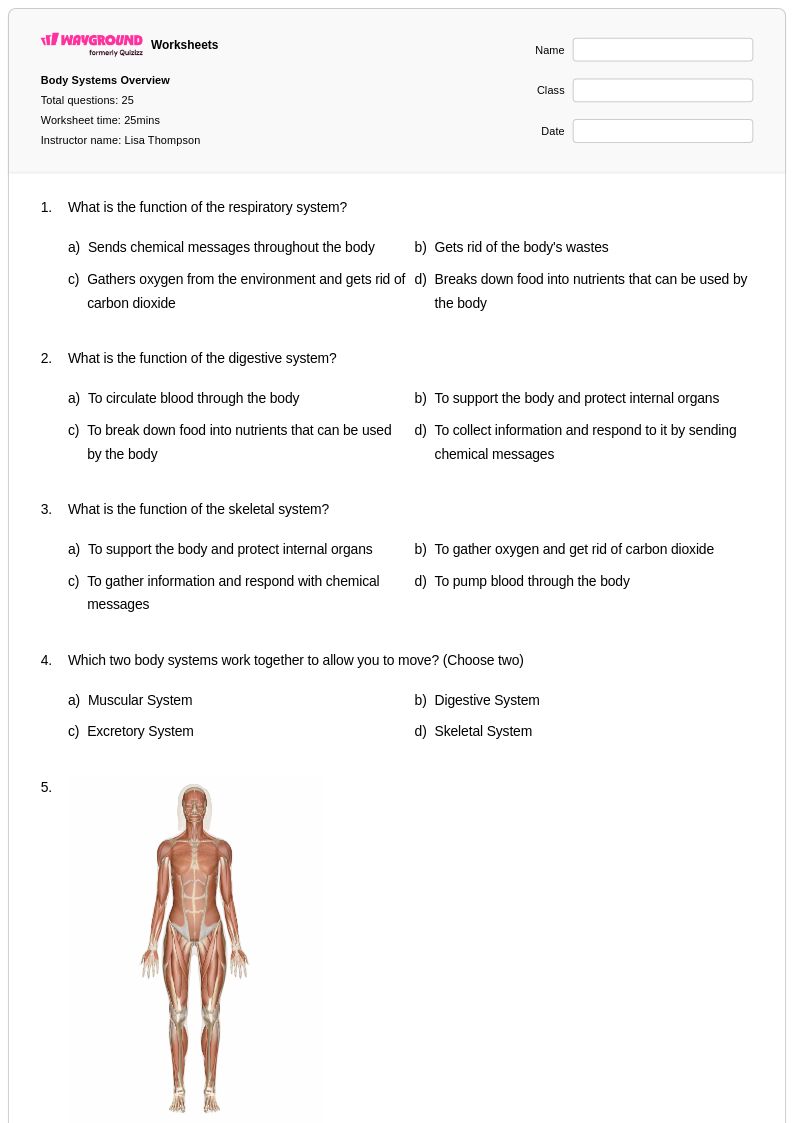
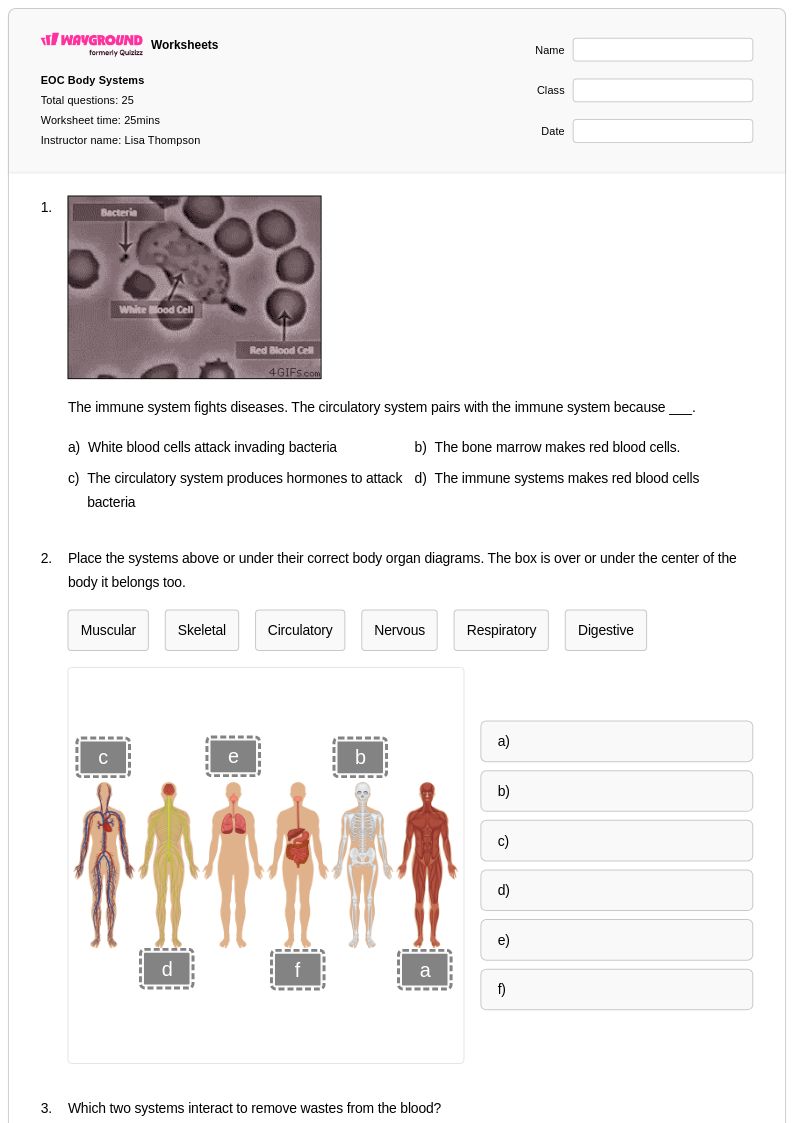
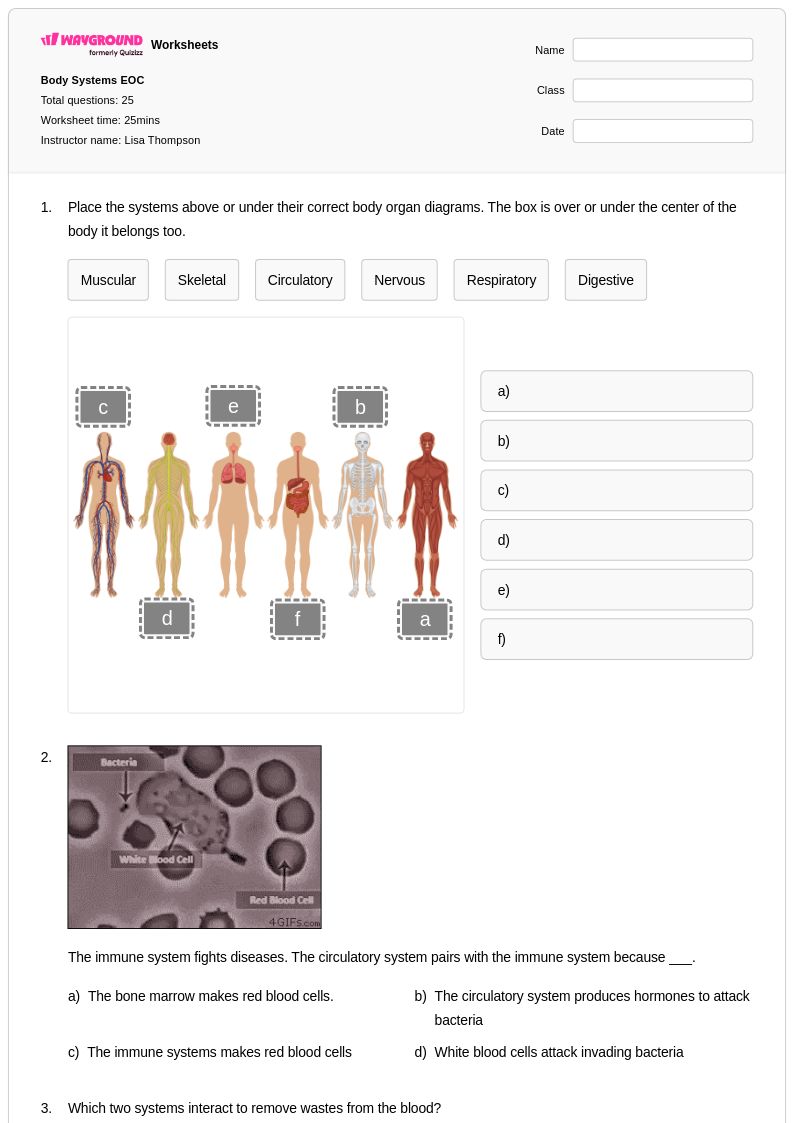
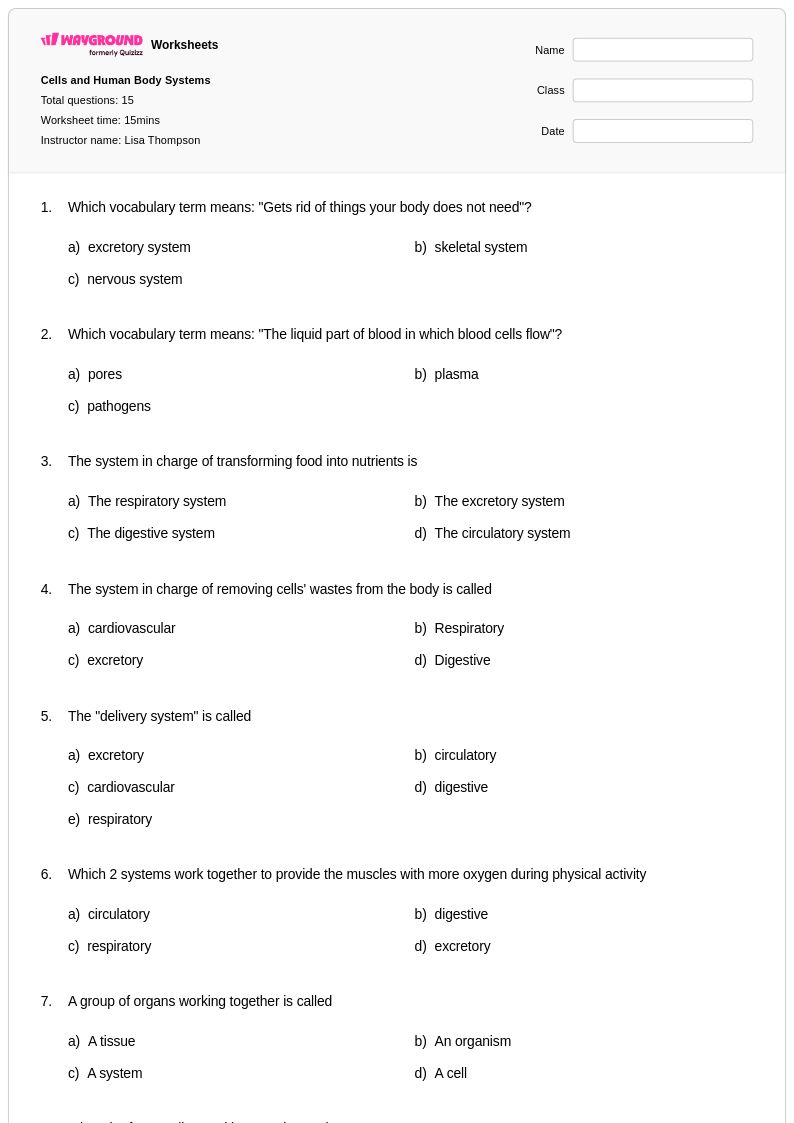
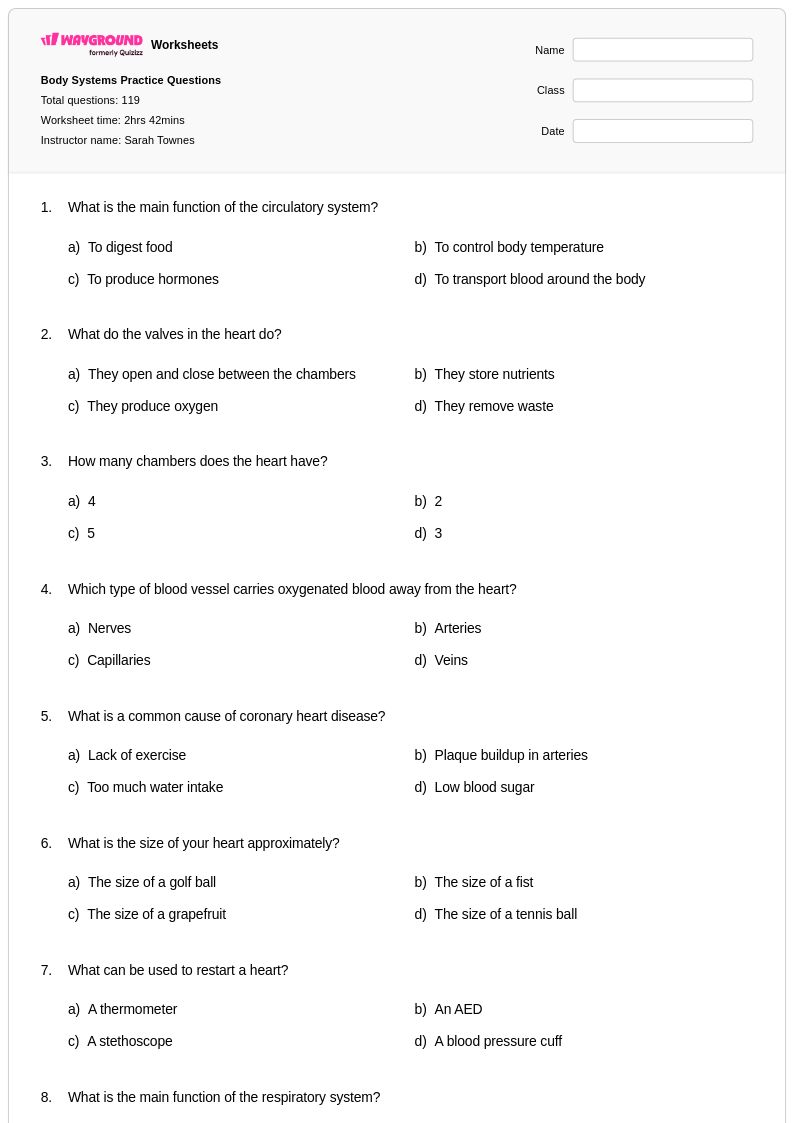
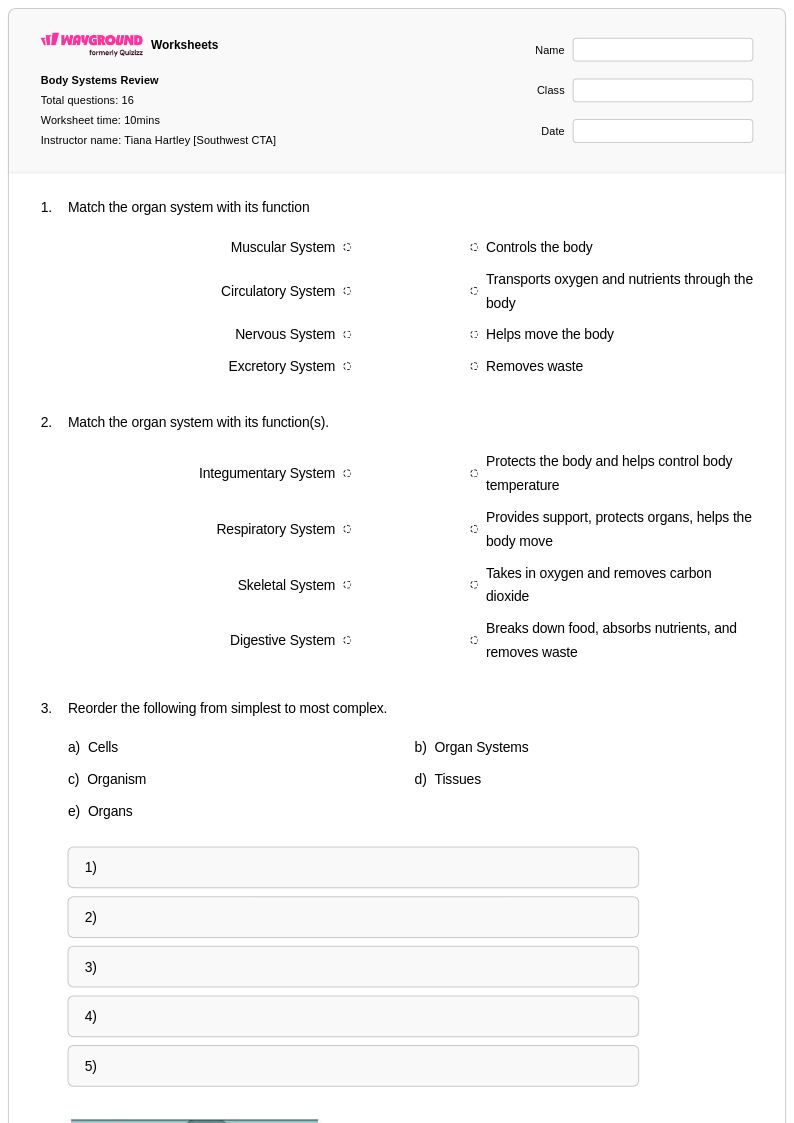
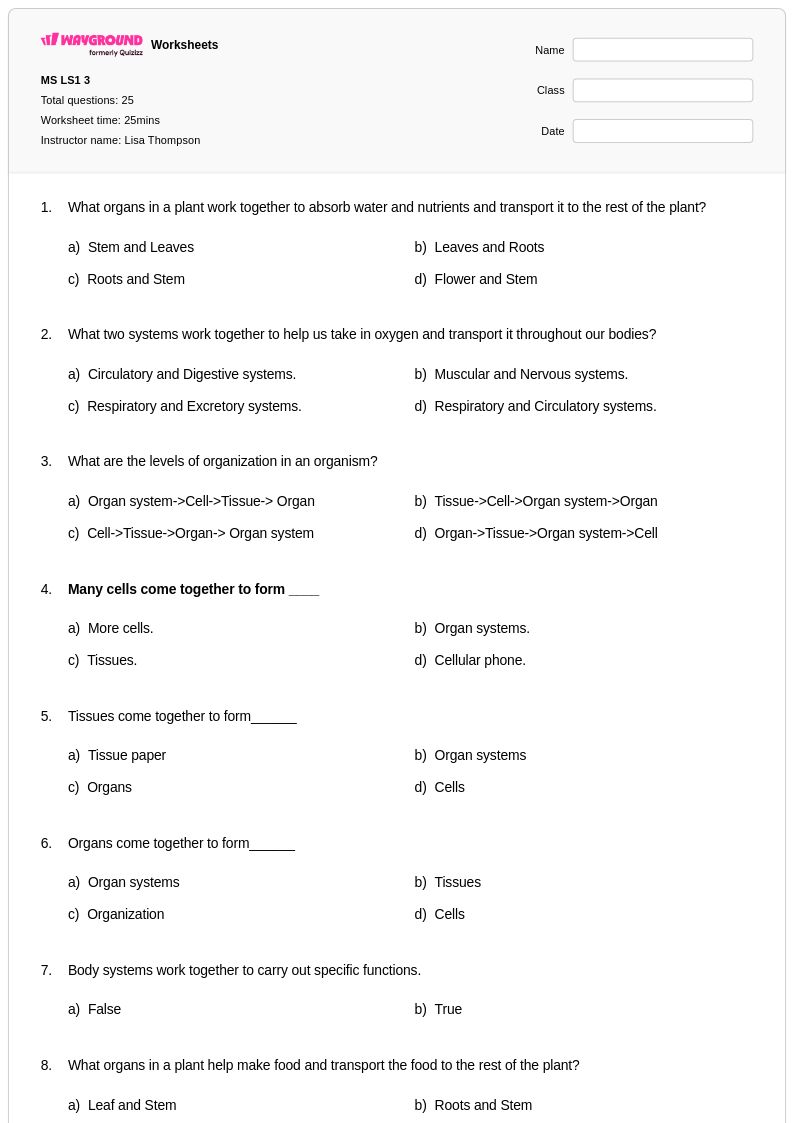
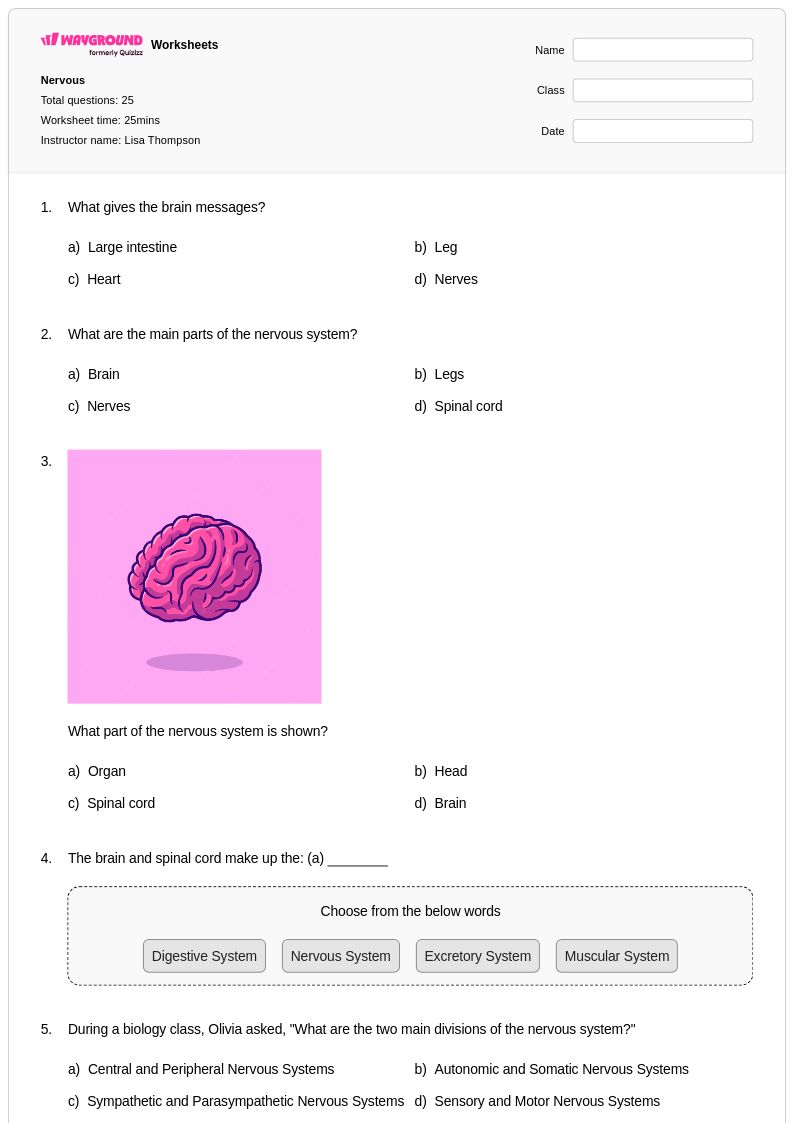
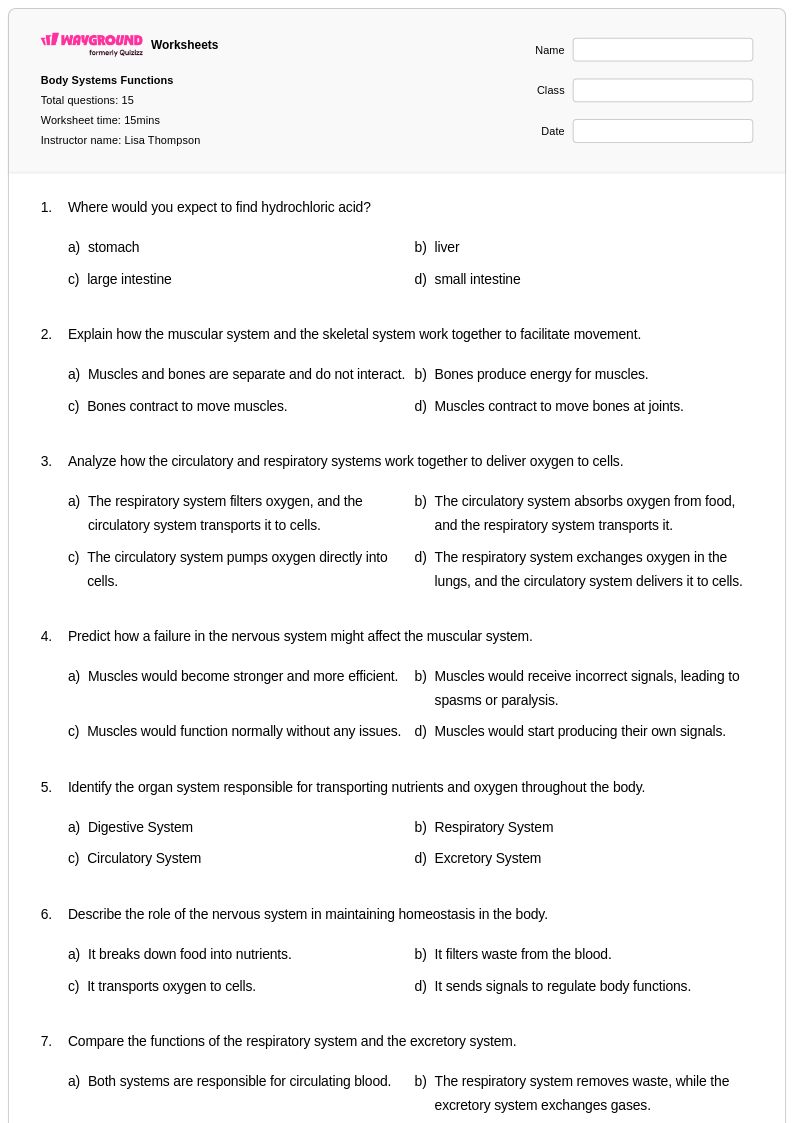
Class 9 students studying the digestive and excretory systems require comprehensive practice materials that reinforce their understanding of these complex biological processes. Wayground's extensive collection of digestive and excretory systems worksheets provides students with detailed practice problems covering nutrient absorption, enzyme function, kidney filtration, and waste elimination pathways. These free printable resources strengthen critical thinking skills as students trace the journey of food through the digestive tract, analyze the role of specialized organs like the liver and pancreas, and examine how the kidneys maintain homeostasis through filtration and reabsorption. Each worksheet includes a corresponding answer key in PDF format, enabling students to verify their understanding of concepts such as peristalsis, nephron structure, and the coordination between digestive and excretory processes in maintaining bodily functions.
Wayground's robust platform supports biology educators with millions of teacher-created resources specifically designed for Class 9 digestive and excretory system instruction. The advanced search and filtering capabilities allow teachers to quickly locate worksheets aligned with specific curriculum standards, whether focusing on mechanical versus chemical digestion or comparing different excretory organs across species. These differentiation tools enable instructors to customize materials for varying skill levels, providing remediation support for students struggling with complex processes like bile production or enrichment activities that explore disorders of the digestive and excretory systems. Available in both printable PDF format and interactive digital versions, these worksheet collections streamline lesson planning while offering flexible options for in-class practice, homework assignments, and targeted skill reinforcement in this essential area of human biology.
FAQs
How do I teach the digestive and excretory systems together in one unit?
Teaching these two systems together works well because they are functionally linked — the digestive system breaks down food and absorbs nutrients, while the excretory system removes the metabolic waste those processes generate. Start by establishing the digestive pathway from ingestion to absorption, then introduce the excretory system as the body's mechanism for maintaining chemical balance after nutrients are used. Connecting both systems under the umbrella of homeostasis helps students see them as interdependent rather than isolated topics. Labeling diagrams and process sequencing activities are especially effective for reinforcing how these systems work in sequence.
What exercises help students practice identifying digestive system organs and their functions?
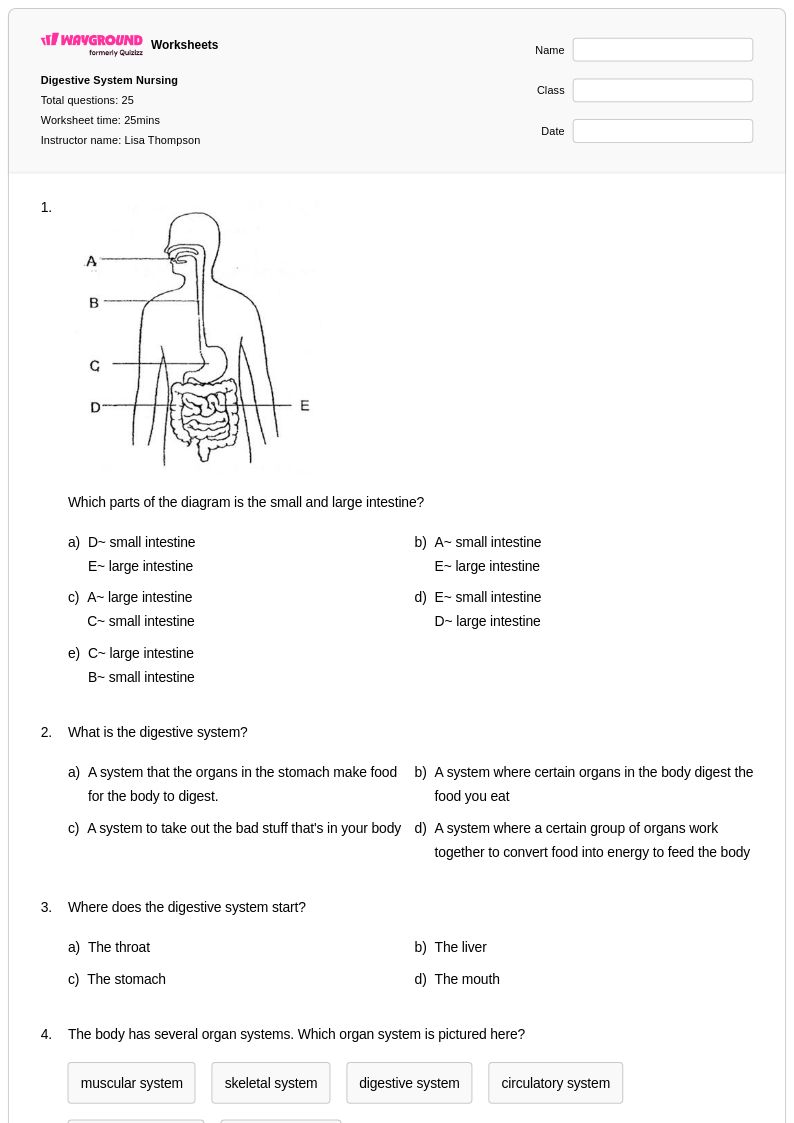
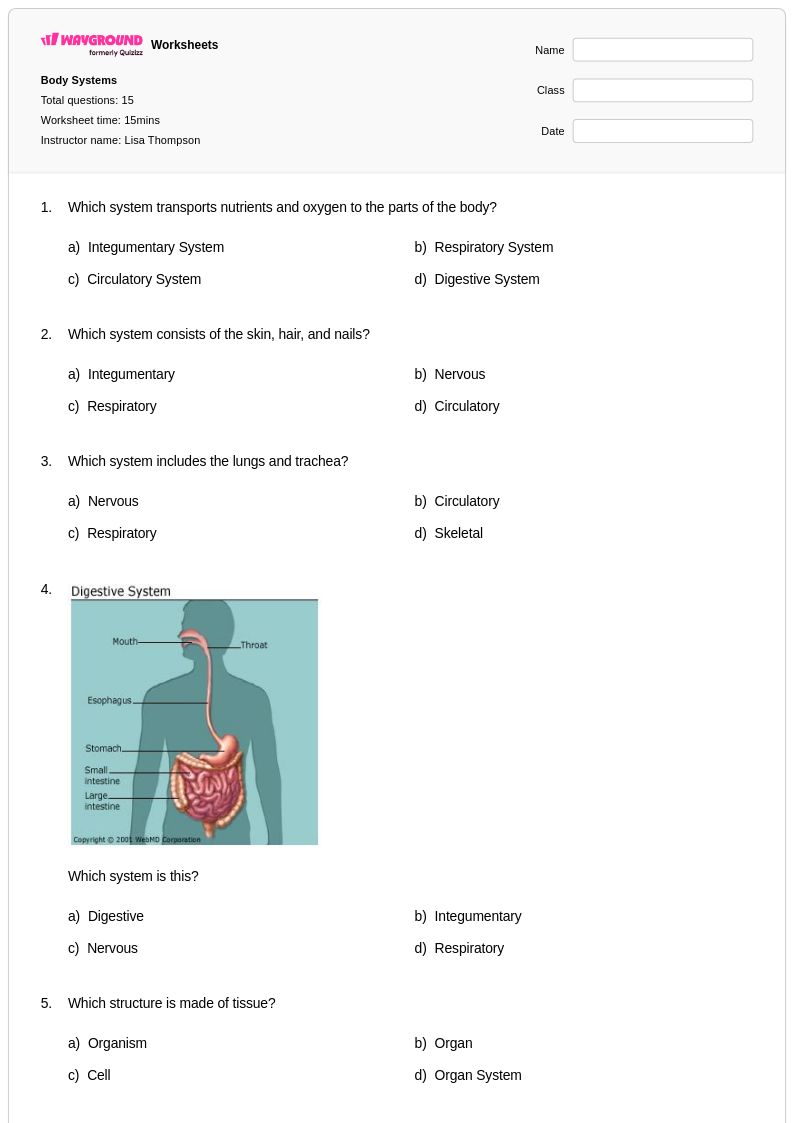
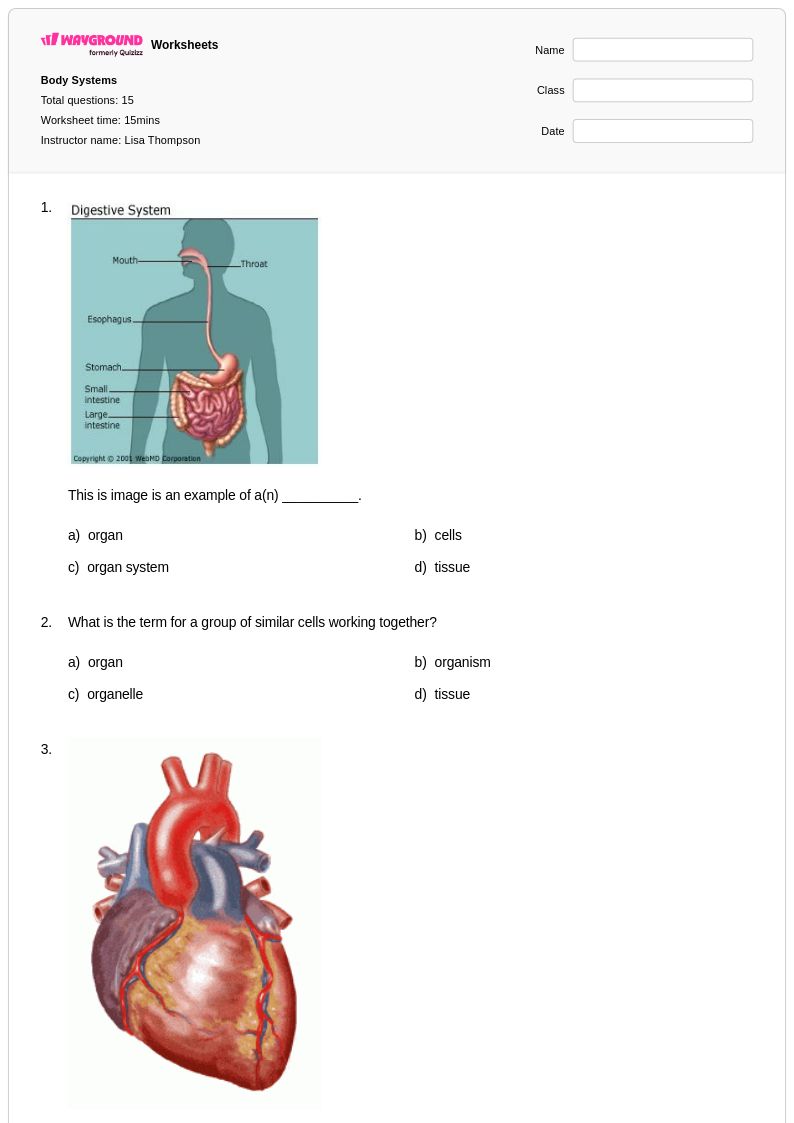
Labeling diagrams of the digestive tract is one of the most effective practice formats because it requires students to recall both organ names and their anatomical positions simultaneously. Process sequencing activities — where students order the stages of digestion from ingestion through elimination — build procedural understanding alongside vocabulary. Practice problems that ask students to match organs to their specific functions, such as linking the small intestine to nutrient absorption or the stomach to mechanical and chemical digestion, reinforce the functional logic of the system rather than rote memorization.
What common mistakes do students make when learning about the excretory system?
A frequent misconception is that the excretory system refers only to the kidneys and urinary tract. In reality, the skin, lungs, and liver also play excretory roles, and students often overlook these organs when asked to describe waste elimination. Another common error is confusing excretion with egestion — students sometimes conflate the removal of metabolic waste (excretion) with the elimination of undigested material through the digestive tract (egestion). Addressing this distinction directly and early in the unit prevents persistent confusion on assessments.
How do students often confuse the digestive and excretory systems?
Students frequently treat the large intestine and rectum as excretory organs when they are actually part of the digestive system responsible for water reabsorption and waste compaction. The confusion arises because both systems ultimately produce waste that leaves the body, making the functional boundary feel blurry. Clarifying that excretion specifically refers to the removal of metabolic by-products produced by cells — such as urea, carbon dioxide, and excess salts — while digestion handles the processing of ingested material helps students draw a clean conceptual line between the two.
How can I use digestive and excretory systems worksheets in my classroom?
These worksheets are available as free printable PDFs, making them easy to distribute for in-class instruction, homework, or test preparation without requiring additional resources. They are also available in digital formats, which supports technology-integrated classrooms and remote learning scenarios. Teachers can host the worksheets as a quiz directly on Wayground, enabling real-time student responses and automated grading. Each worksheet includes a complete answer key, so teachers can use them for self-paced independent practice, small group review, or formative assessment with minimal preparation time.
How can I differentiate digestive and excretory systems worksheets for students with different learning needs?
When using these worksheets digitally on Wayground, teachers can apply student-level accommodations including Read Aloud, which audio-reads questions for students who need support accessing text-heavy content. Reduced answer choices can be enabled for individual students to lower cognitive load on labeling or matching questions without altering the content for the rest of the class. Extended time settings can also be configured per student, ensuring that pacing accommodations are applied automatically whenever that student accesses the material. These settings are saved and reusable across future sessions, reducing setup time for recurring accommodations.