Free Printable Teachings Confucius Worksheets for Class 7
Class 7 students can explore Confucius's philosophical teachings through our comprehensive collection of free Social Studies worksheets, featuring engaging printables, practice problems, and complete answer keys in PDF format.
Explore printable Teachings Confucius worksheets for Class 7
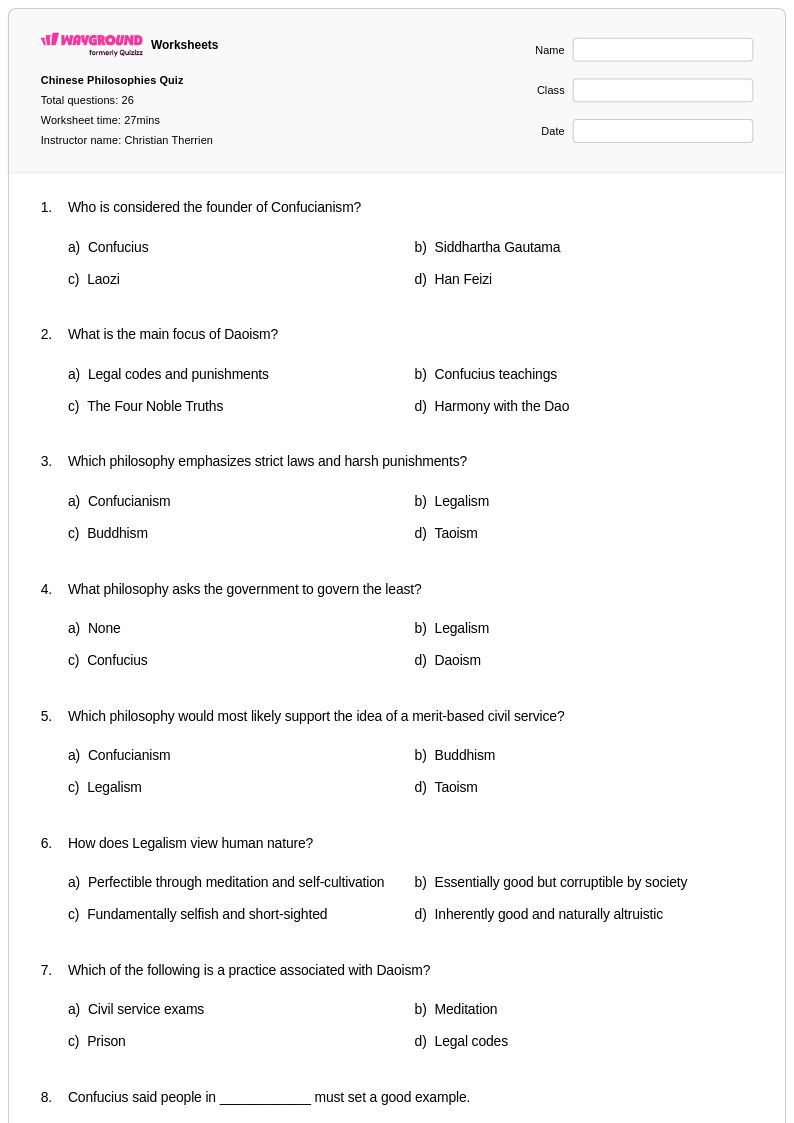
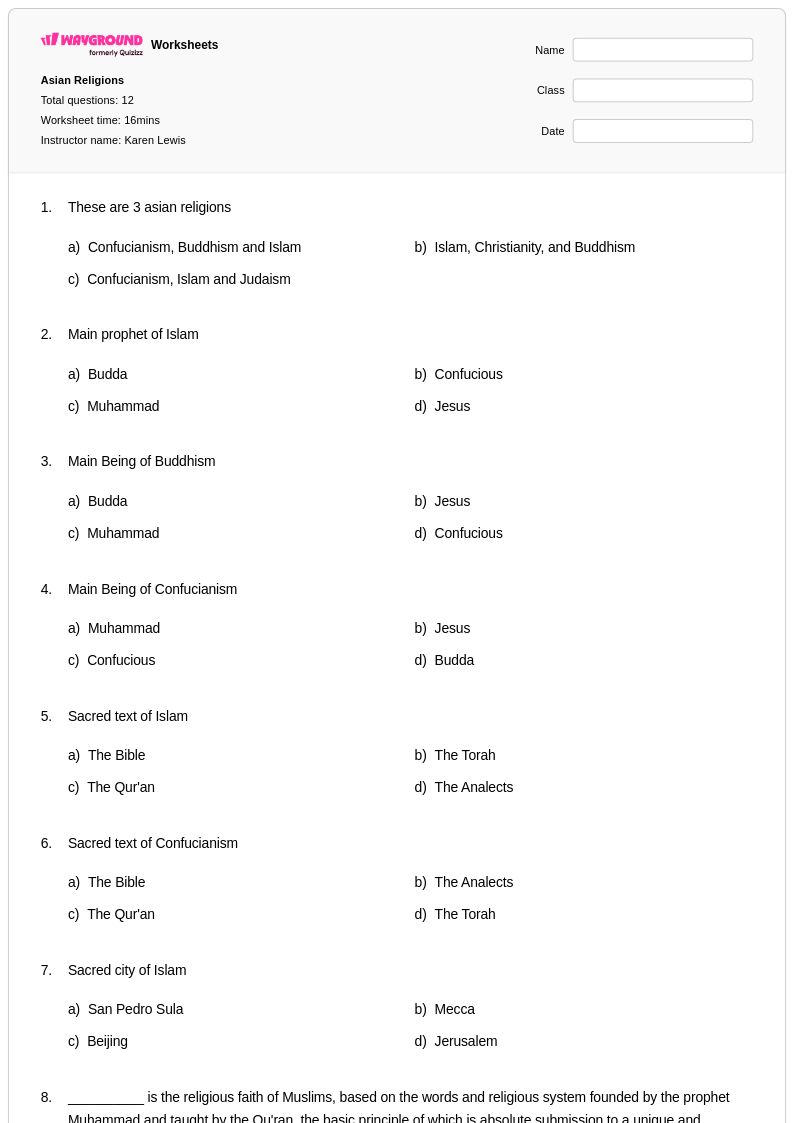
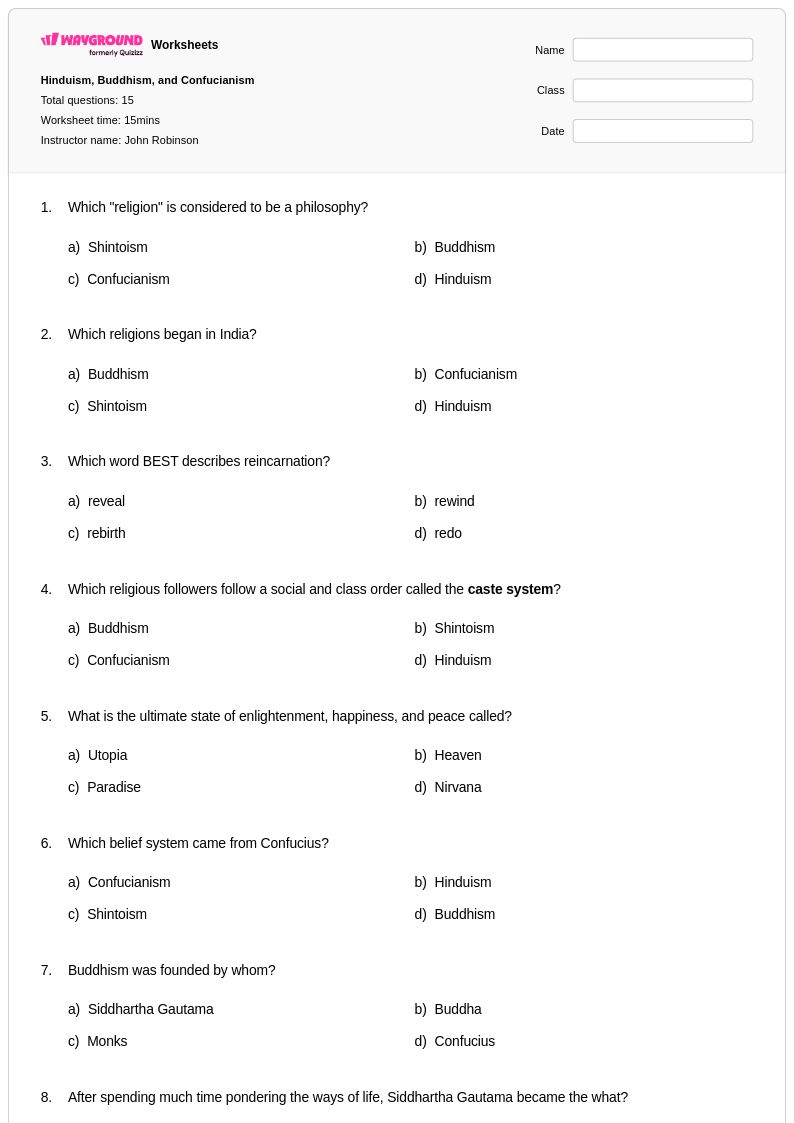
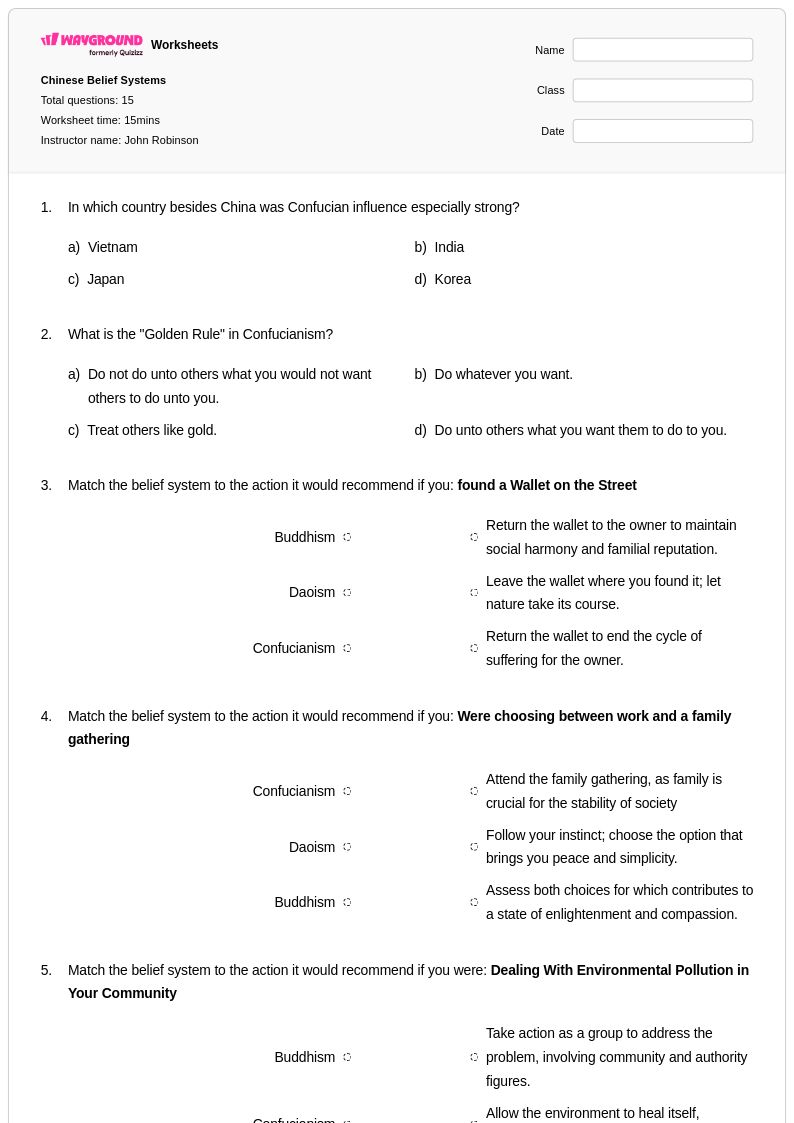
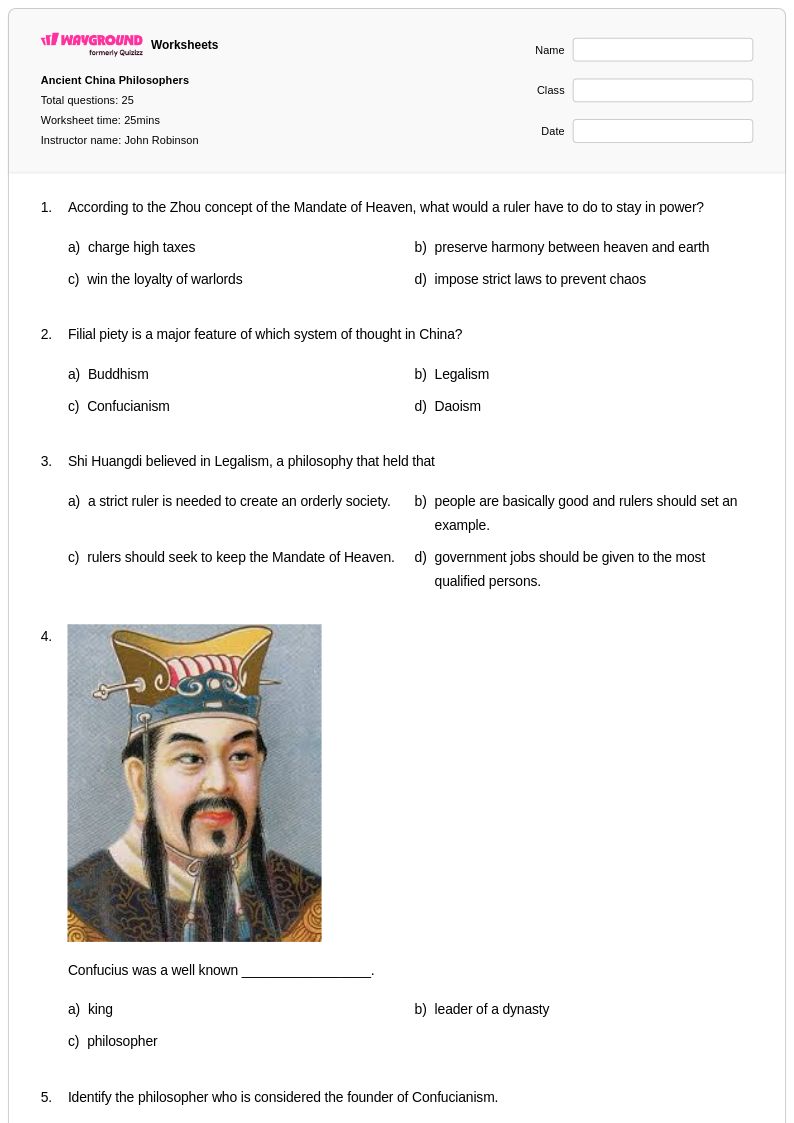
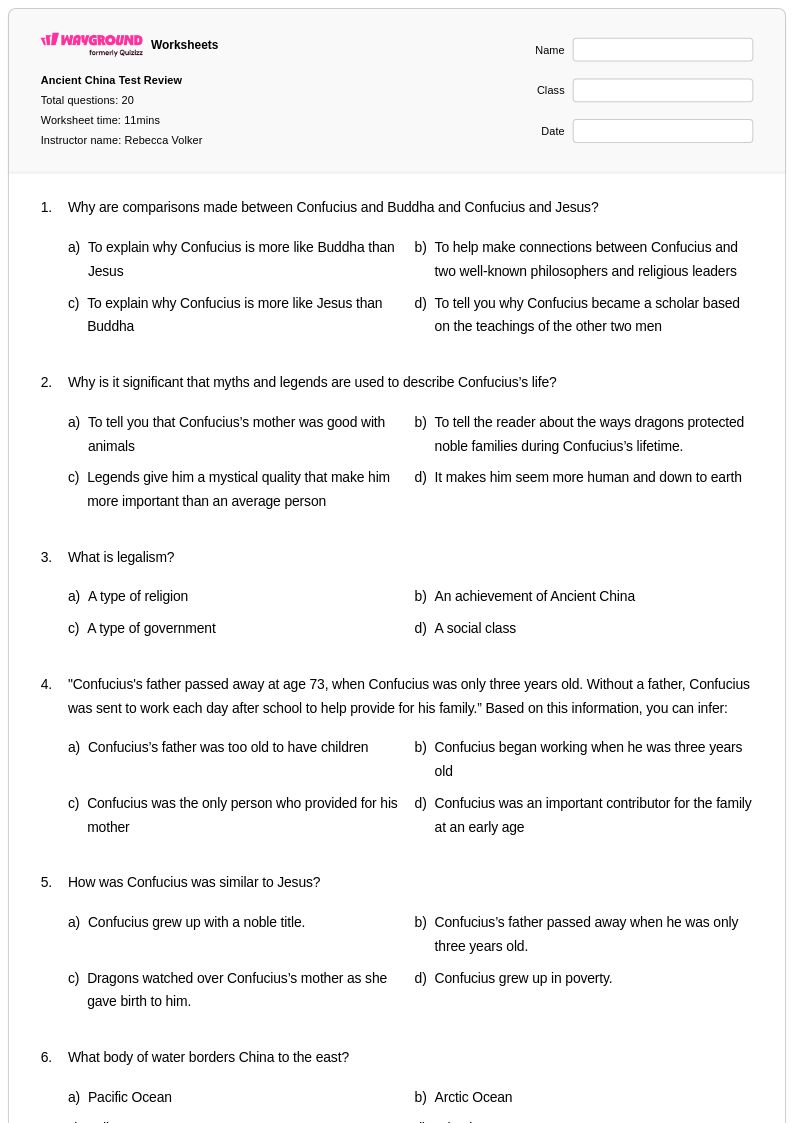
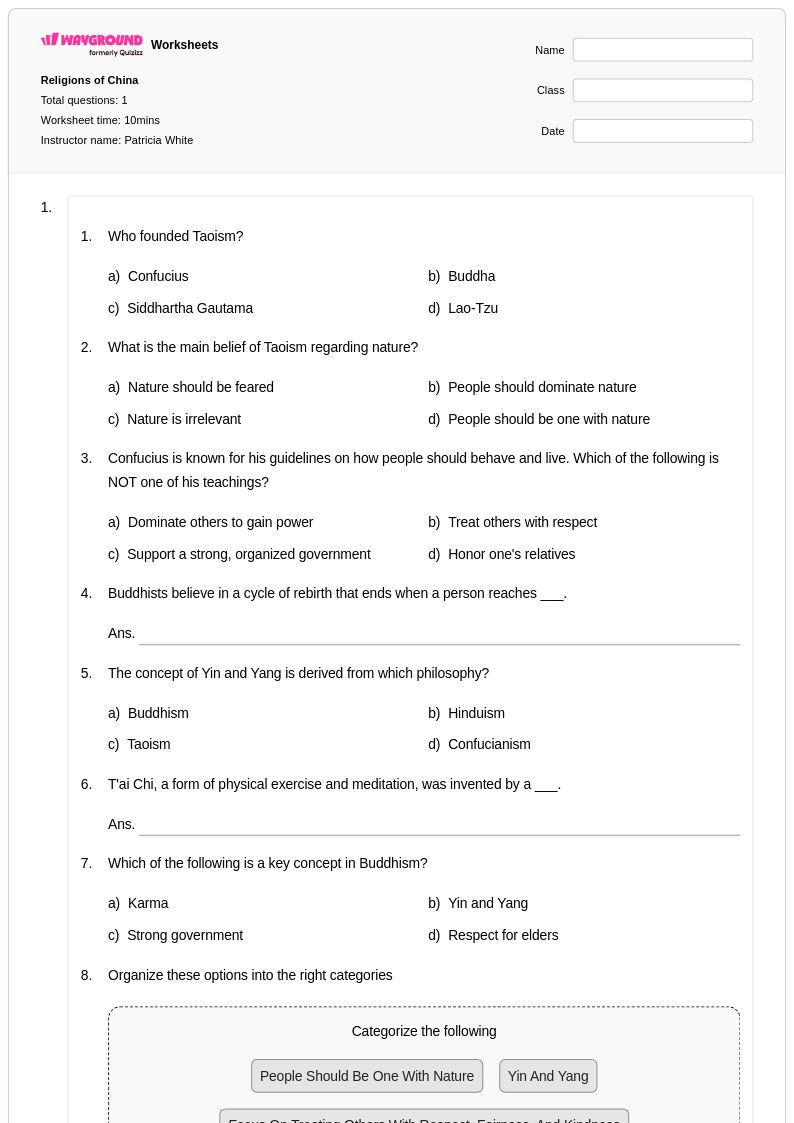
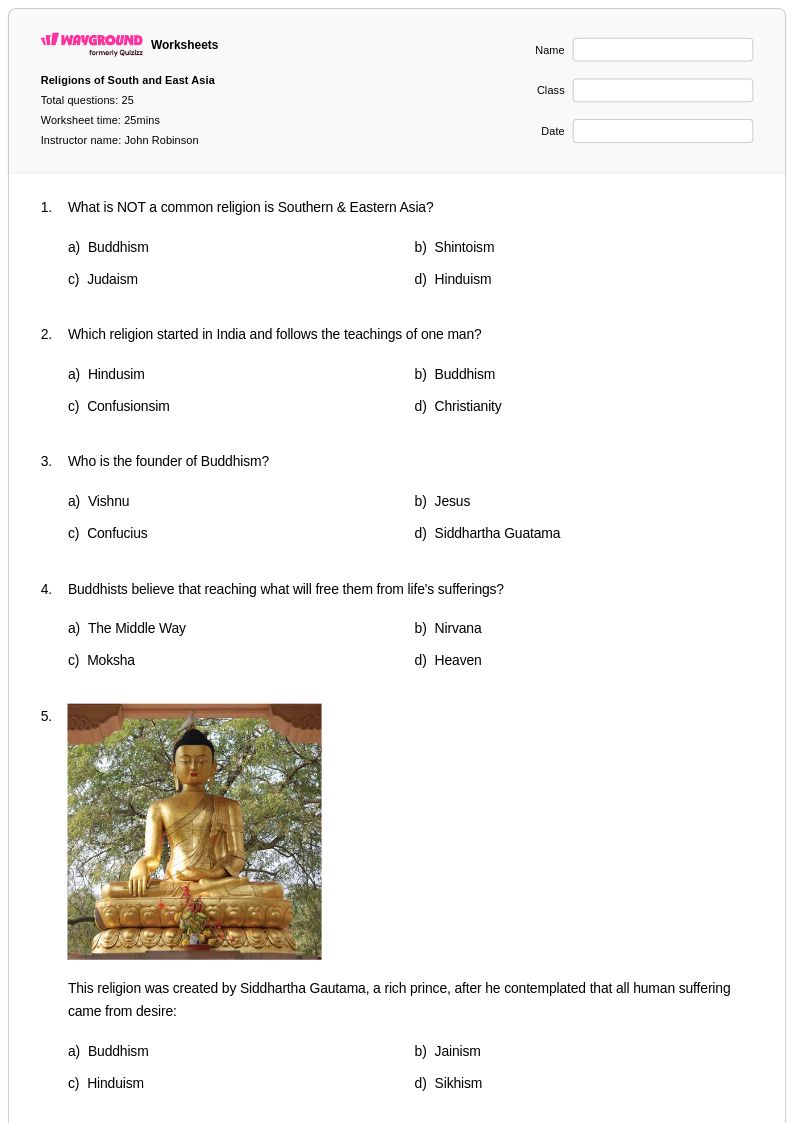
Teachings of Confucius worksheets for Class 7 students available through Wayground provide comprehensive exploration of one of history's most influential philosophical traditions. These carefully designed educational resources help seventh-grade learners understand Confucian principles such as filial piety, social harmony, and ethical governance while developing critical thinking skills about ancient Chinese philosophy and its lasting global impact. Students engage with primary source excerpts, analyze core Confucian concepts like ren (benevolence) and li (proper conduct), and examine how these teachings shaped Chinese society for over two millennia. Each worksheet includes structured practice problems that guide students through complex philosophical ideas, complete answer keys for immediate feedback, and free printable formats that support both classroom instruction and independent study.
Wayground's extensive collection of teacher-created resources supports educators in delivering engaging Class 7 lessons on Confucian philosophy through millions of high-quality worksheets and supplementary materials. The platform's robust search and filtering capabilities allow teachers to quickly locate resources aligned with social studies standards while accessing differentiation tools that accommodate diverse learning needs and skill levels. Teachers can customize worksheets to emphasize specific aspects of Confucian thought, whether focusing on historical context, philosophical principles, or contemporary relevance, with materials available in both digital and printable PDF formats for maximum classroom flexibility. These comprehensive resources streamline lesson planning while providing targeted practice opportunities for skill development, remediation support for struggling learners, and enrichment activities that challenge advanced students to think critically about how ancient wisdom continues to influence modern society.
FAQs
How do I teach the teachings of Confucius in a social studies or world history class?
Start by grounding students in the historical context of Confucius's life in ancient China (551–479 BCE) before introducing core concepts like ren (benevolence), li (proper conduct), and filial piety. Use primary source excerpts from the Analects to let students engage directly with Confucian thought, then guide discussion on how these principles shaped Chinese governance, family structure, and ethics. Comparing Confucianism with other philosophical traditions — such as Daoism or Greek philosophy — helps students place these ideas in a broader intellectual context.
What exercises help students practice analyzing Confucian philosophy?
The most effective practice exercises ask students to interpret direct quotations from Confucian texts, identify which core principle (such as ren, li, or filial piety) is being illustrated, and explain the reasoning in their own words. Comparison tasks — matching Confucian ideals against real historical or modern scenarios — push students to evaluate relevance rather than just recall definitions. Structured written responses that ask students to agree or disagree with a Confucian principle using evidence also build critical thinking alongside content knowledge.
What misconceptions do students commonly have about Confucian teachings?
A frequent misconception is that Confucianism is a religion in the same sense as Buddhism or Taoism, when it is primarily a system of ethical and social philosophy centered on human relationships and moral cultivation. Students also tend to conflate filial piety with blind obedience, missing the reciprocal nature of Confucian relationships — where authority figures also carry significant moral responsibilities. Another common error is treating Confucian thought as static or monolithic, when in fact it evolved considerably across dynasties and continues to be reinterpreted today.
How can I use Confucius worksheets to support students with different learning needs?
Wayground's digital worksheets include built-in accommodation tools that allow teachers to assign extended time, enable read-aloud functionality for students who benefit from audio support, and reduce answer choices to lower cognitive load for selected students. These settings can be applied individually without notifying other students, so differentiation happens seamlessly within the same assignment. For students working above grade level, worksheets can be extended with prompts that ask them to evaluate the contemporary relevance of Confucian ethics or compare Confucianism with Western ethical frameworks.
How do I use Wayground's Teachings of Confucius worksheets in my classroom?
Wayground's Teachings of Confucius worksheets are available as printable PDFs for traditional classroom use and in digital formats for technology-integrated or remote learning environments. Teachers can also host them as an interactive quiz directly on Wayground, giving students immediate feedback while generating data on comprehension gaps. Each worksheet includes a complete answer key, making them practical for independent practice, homework, guided group work, or targeted remediation of specific Confucian concepts.
How did the teachings of Confucius influence Chinese society and government?
Confucian philosophy became the ideological foundation of Chinese governance for over two millennia, particularly through the imperial examination system that required mastery of Confucian texts for entry into civil service. Its emphasis on hierarchical relationships, moral leadership, and social harmony shaped family structures, legal codes, and educational priorities across East Asia. Understanding this influence is essential for students studying Chinese history, as Confucianism remained a dominant framework through multiple dynasties and continues to inform cultural values in many East Asian societies today.