Free Printable Electric Power and Dc Circuits Worksheets for Class 12
Class 12 electric power and DC circuits worksheets from Wayground provide comprehensive printables and practice problems with answer keys to help students master voltage, current, resistance calculations, and circuit analysis through engaging free PDF resources.
Explore printable Electric Power and Dc Circuits worksheets for Class 12
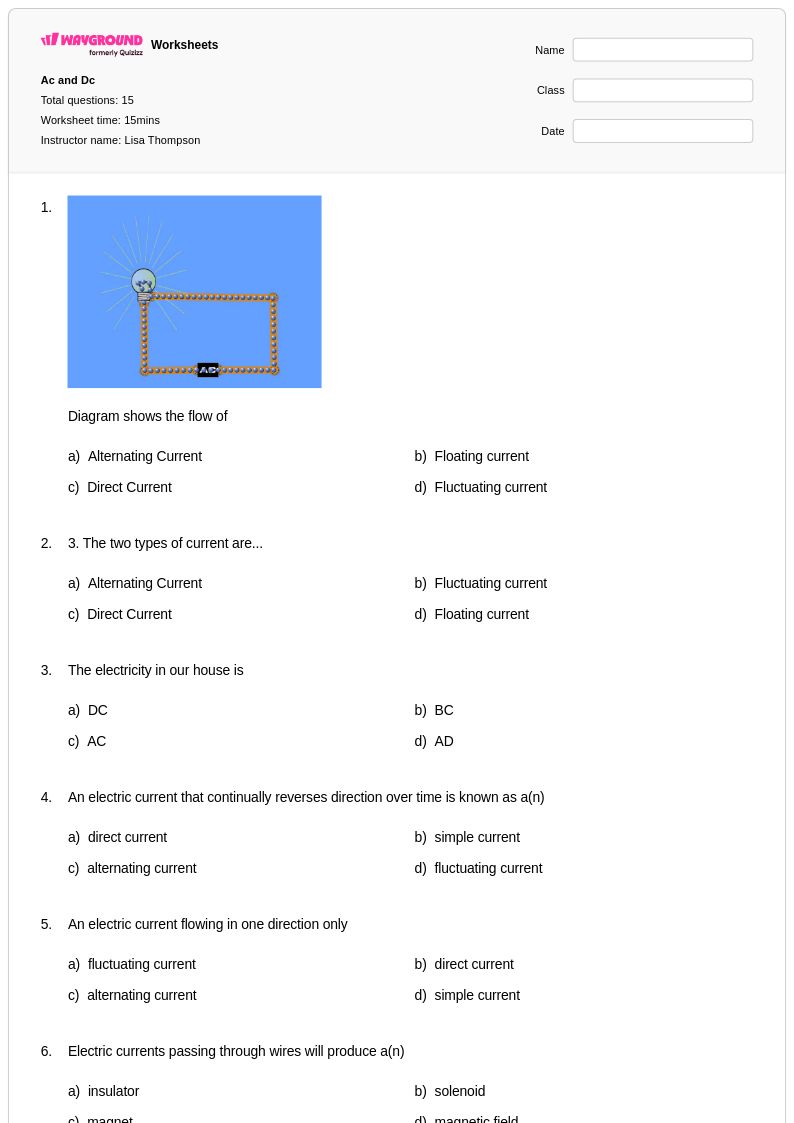
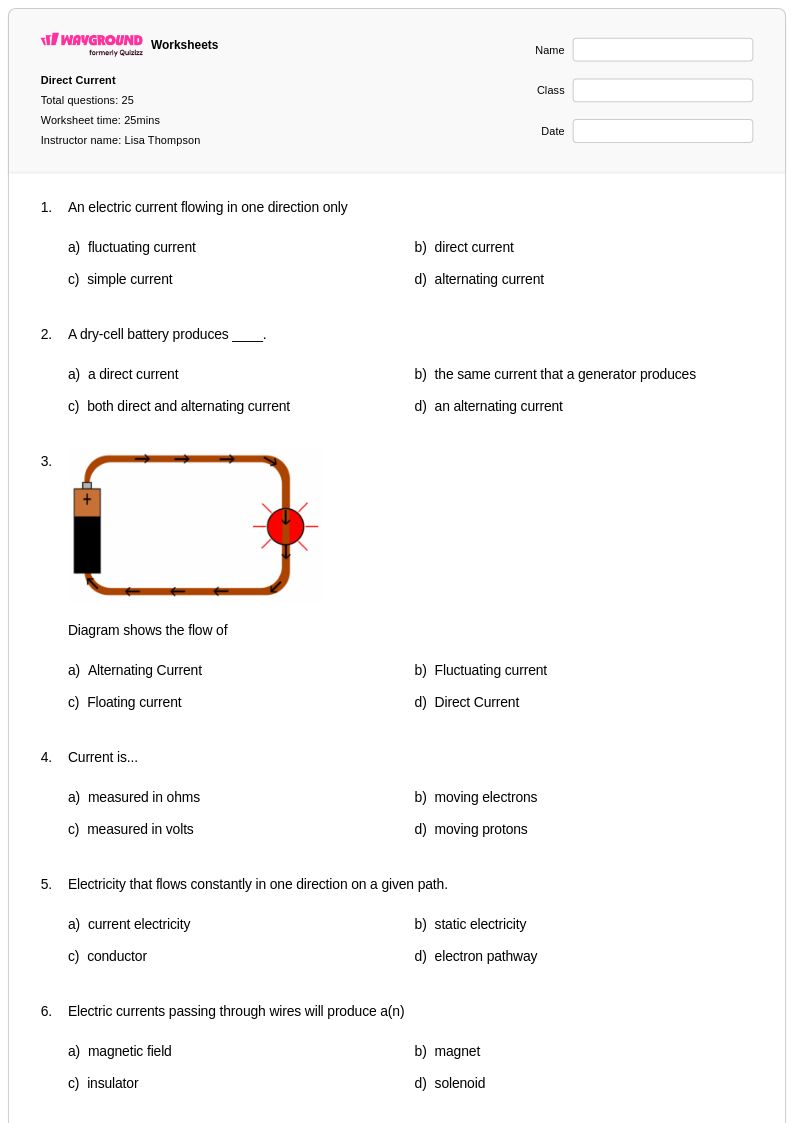
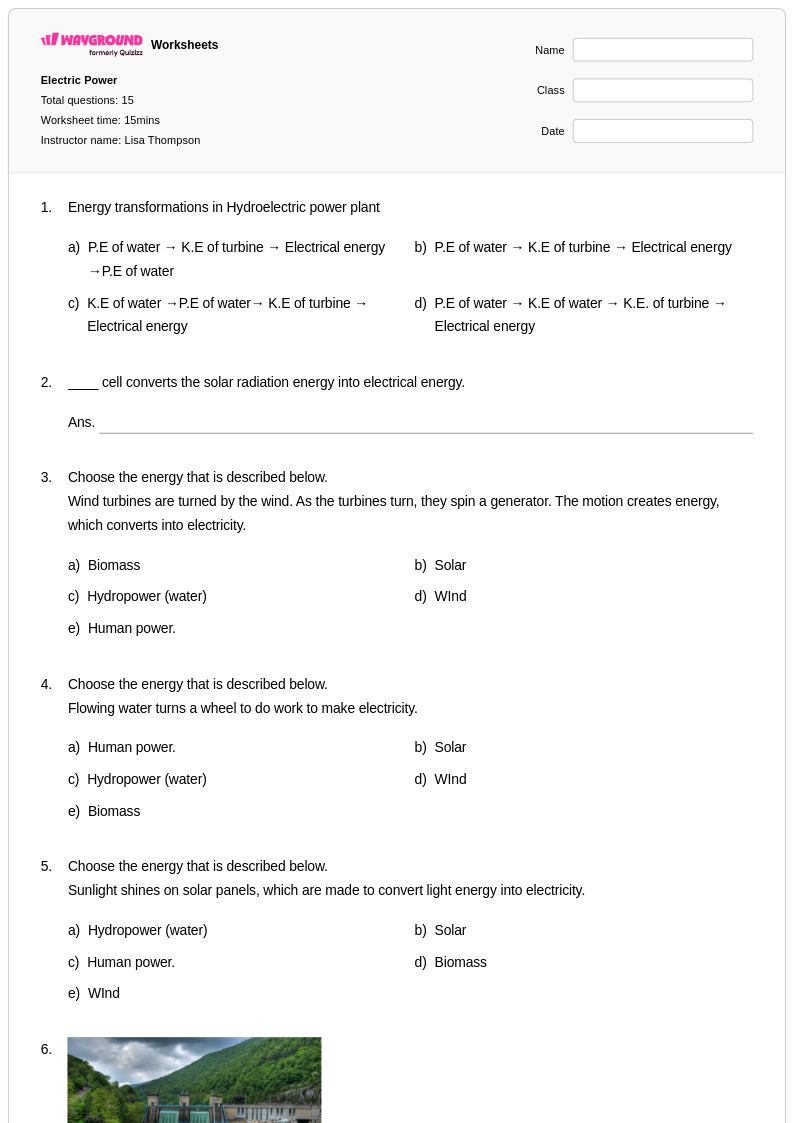
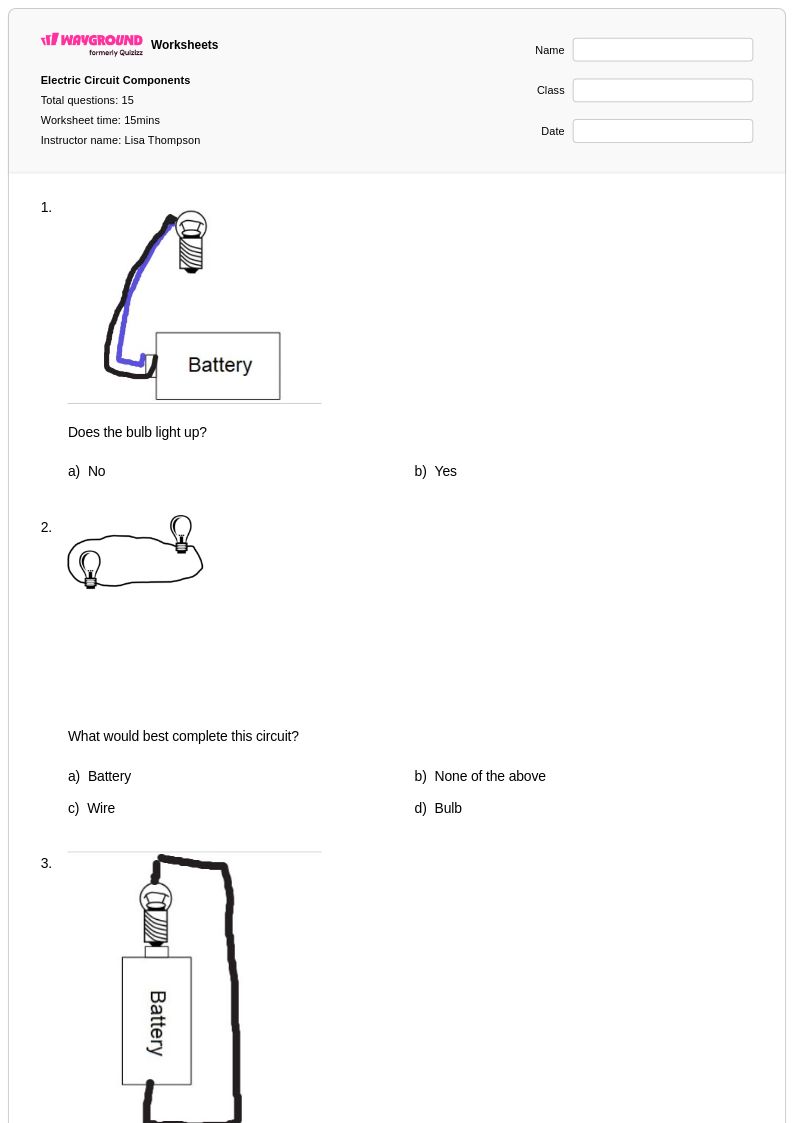
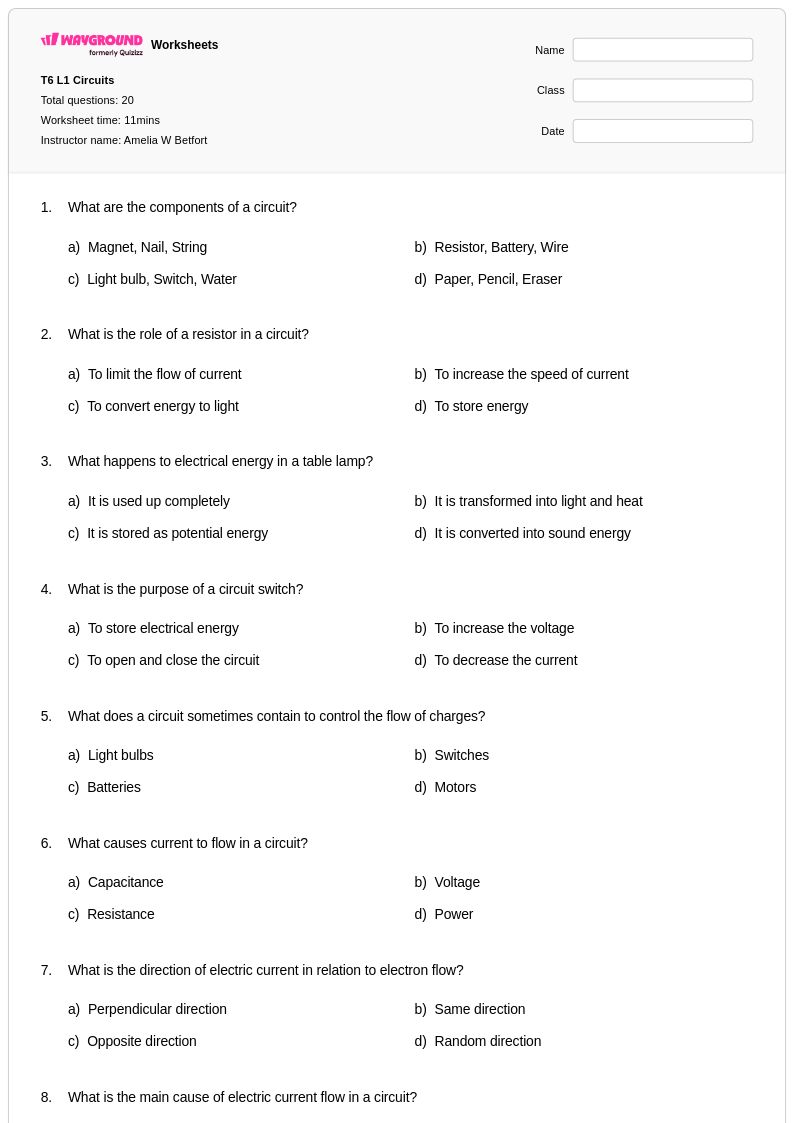
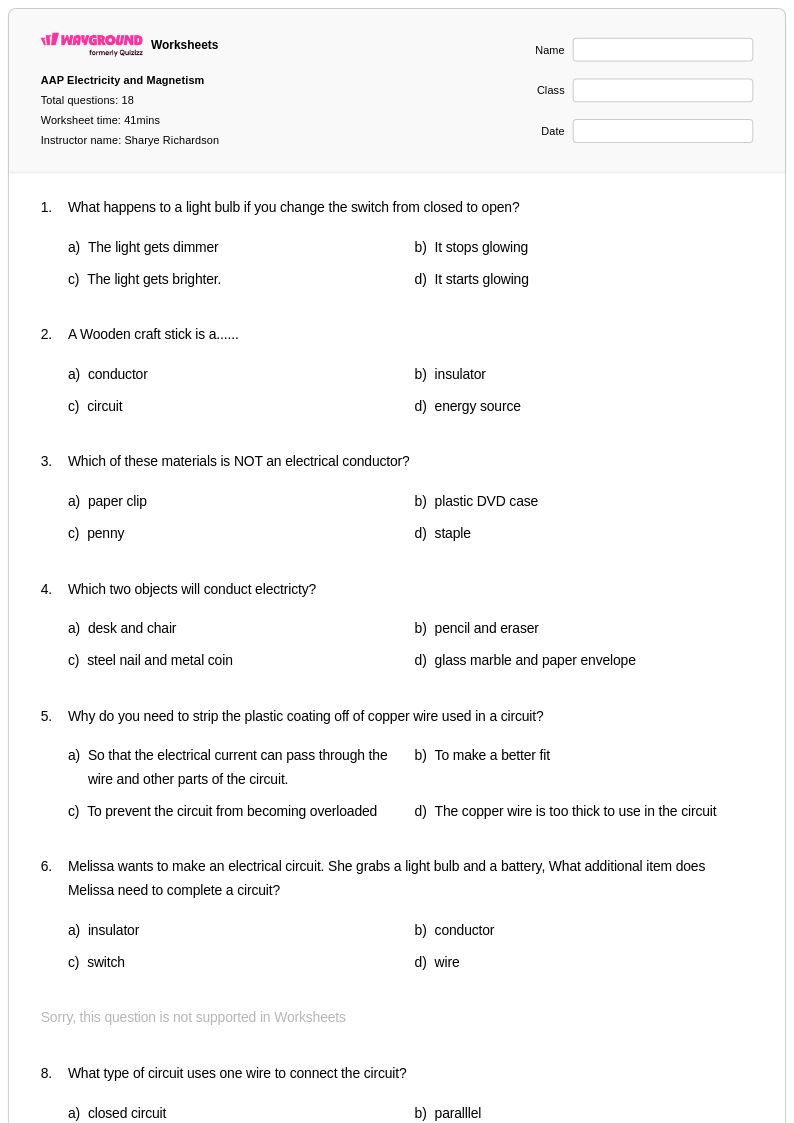
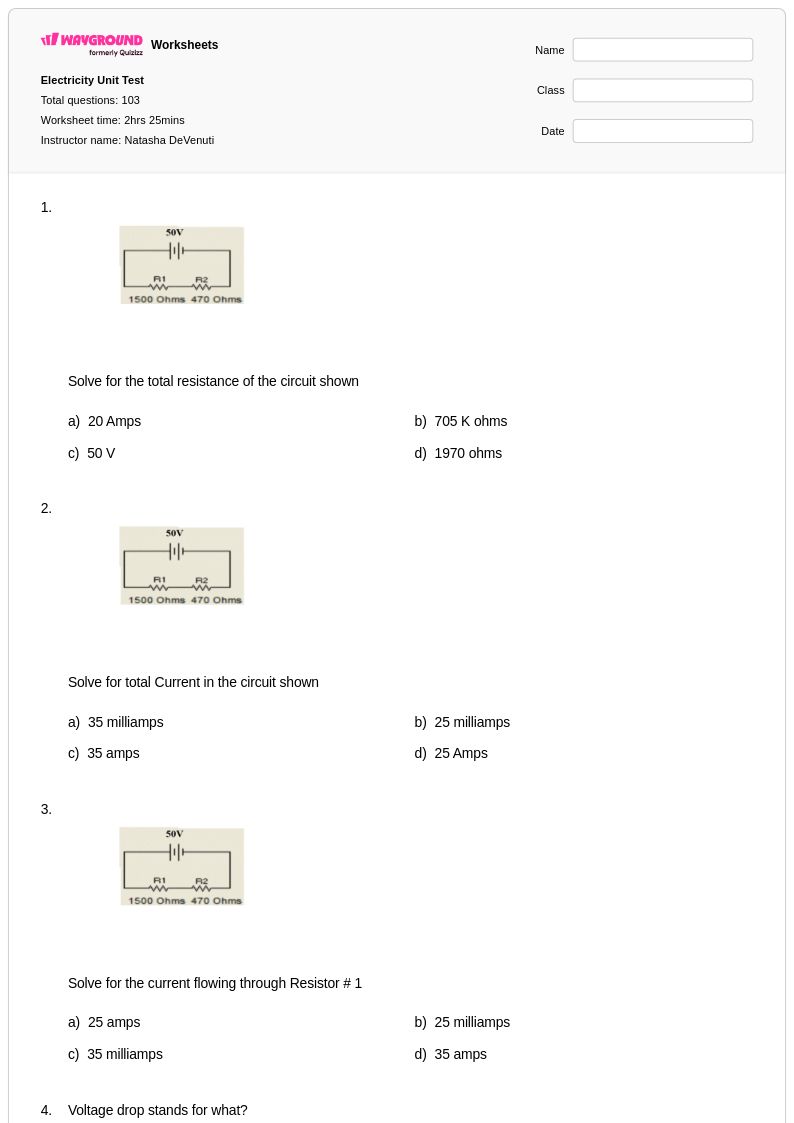
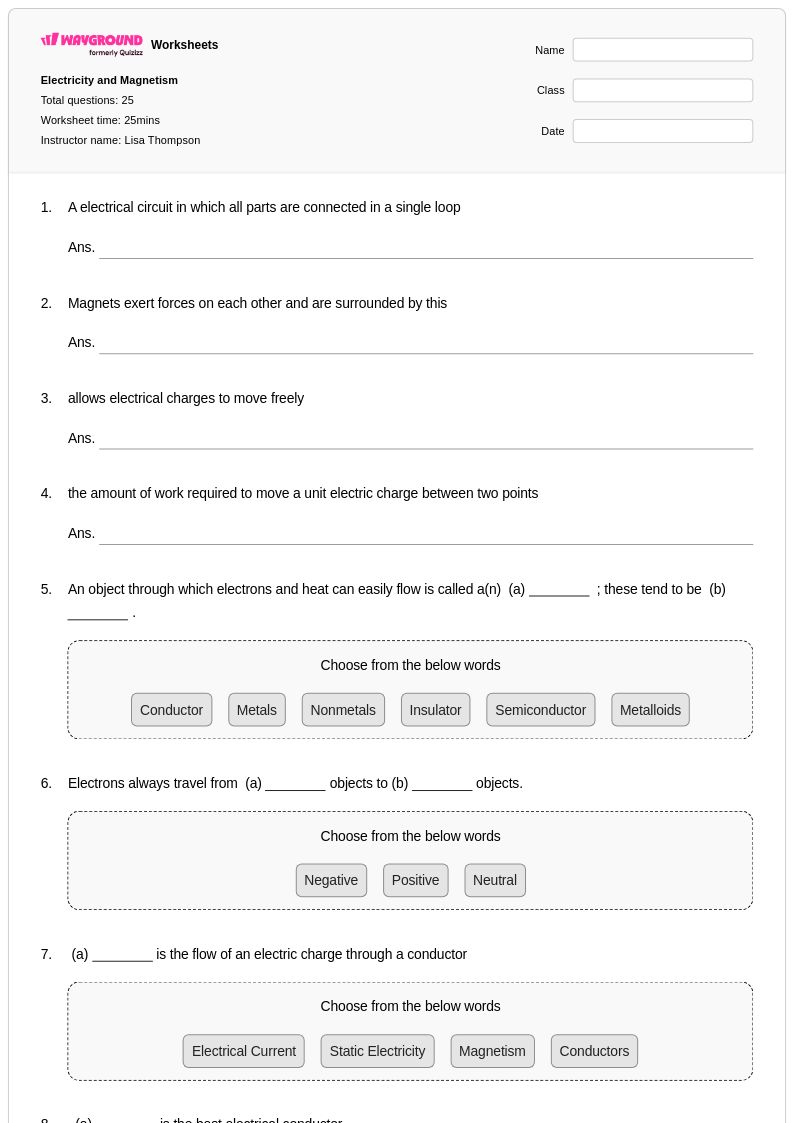
Electric power and DC circuits worksheets for Class 12 students available through Wayground (formerly Quizizz) provide comprehensive practice with advanced electrical concepts that form the foundation of modern electronics and power systems. These carefully designed resources help students master critical skills including calculating electrical power using P=IV, P=I²R, and P=V²/R formulas, analyzing series and parallel circuit configurations, applying Kirchhoff's voltage and current laws, and determining efficiency in DC power systems. Students work through practice problems involving real-world applications such as household electrical systems, automotive circuits, and electronic device power consumption, while building proficiency in circuit analysis techniques essential for advanced physics study. Each worksheet includes detailed answer keys and step-by-step solutions, with materials available as free printables and downloadable PDF formats to support flexible learning environments.
Wayground (formerly Quizizz) empowers educators with millions of teacher-created resources specifically focused on electric power and DC circuits, featuring robust search and filtering capabilities that allow instructors to locate materials aligned with specific learning standards and curriculum requirements. The platform's differentiation tools enable teachers to customize worksheets based on individual student needs, offering multiple difficulty levels and problem types to support both remediation for struggling learners and enrichment opportunities for advanced students. Available in both printable and digital formats including PDF downloads, these resources facilitate seamless lesson planning whether for in-person instruction, remote learning, or hybrid educational models. Teachers can efficiently implement targeted skill practice sessions, create comprehensive review materials for assessments, and develop scaffolded learning experiences that build student confidence with complex electrical concepts through systematic problem-solving practice.
FAQs
How do I teach electric power and DC circuits to high school physics students?
Start by grounding students in Ohm's Law before introducing power formulas, since understanding the relationship between voltage, current, and resistance is prerequisite knowledge for calculating power. Use simple series circuits first so students can trace current flow and identify voltage drops at each resistor, then gradually introduce parallel arrangements. Connecting calculations to real-world devices — like lightbulbs and phone chargers — helps students see why power consumption matters and sustains engagement throughout the unit.
What practice problems are most effective for teaching DC circuit analysis?
The most effective practice problems require students to apply multiple formulas in sequence — for example, using Ohm's Law to find current, then substituting into P=IV to calculate power consumption. Problems involving series-parallel hybrid circuits push students to analyze each branch independently before combining results. Scaffolded problem sets that begin with single-resistor circuits and progress toward multi-loop configurations build the quantitative reasoning skills needed for full circuit analysis.
What mistakes do students commonly make when calculating electric power and analyzing DC circuits?
One of the most frequent errors is misidentifying whether resistors are in series or parallel, which cascades into incorrect current and voltage values throughout the entire calculation. Students also commonly confuse which power formula to apply, using P=IV when only resistance and voltage are given rather than switching to P=V²/R. Another persistent misconception is assuming current is consumed by resistors rather than understanding that current remains constant in a series circuit while voltage drops are distributed across components.
How can I differentiate electric power and DC circuits instruction for students with different skill levels?
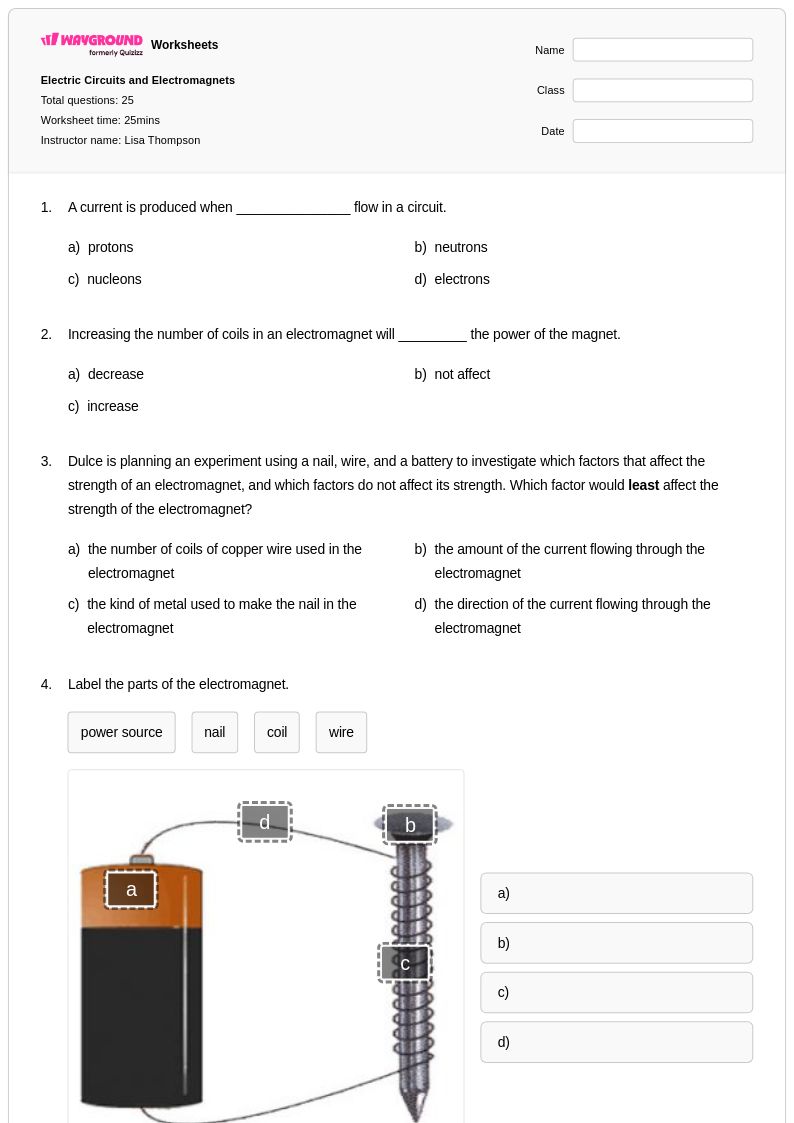
For students who struggle with multi-step problems, reduce cognitive load by breaking circuit analysis into discrete steps — find total resistance first, then current, then individual voltage drops — rather than presenting open-ended problems. Advanced learners benefit from problems involving non-ideal components or multiple voltage sources that require Kirchhoff's Laws. On Wayground, teachers can assign accommodations such as reduced answer choices, read-aloud support, or extended time to individual students without disrupting the experience for the rest of the class, making differentiation practical at scale.
How do I use Wayground's electric power and DC circuits worksheets in my classroom?
Wayground's electric power and DC circuits worksheets are available as printable PDFs for traditional classroom use and in digital formats for technology-integrated environments, including the option to host them as a quiz directly on Wayground. Teachers can use these resources for initial concept introduction, targeted remediation, or ongoing practice throughout an electricity and magnetism unit. Each worksheet includes a complete answer key, so grading and feedback can be turned around quickly without additional prep time.
How do I help students understand the difference between series and parallel circuits?
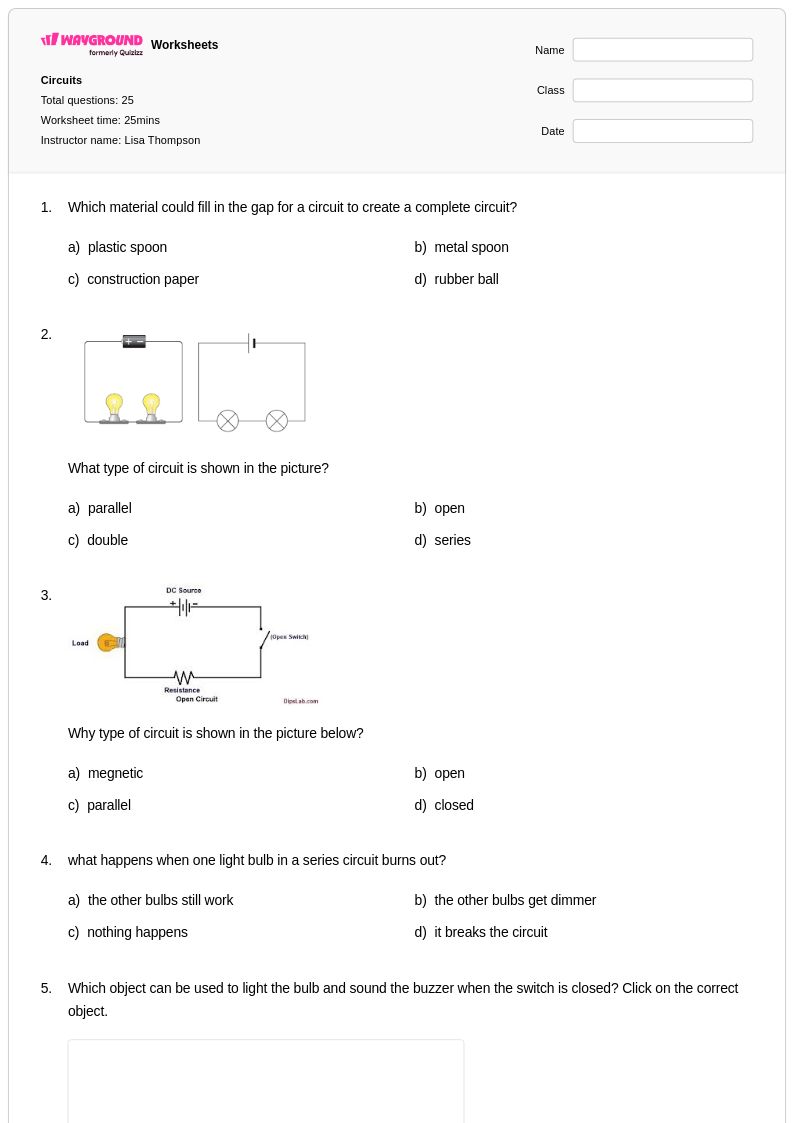
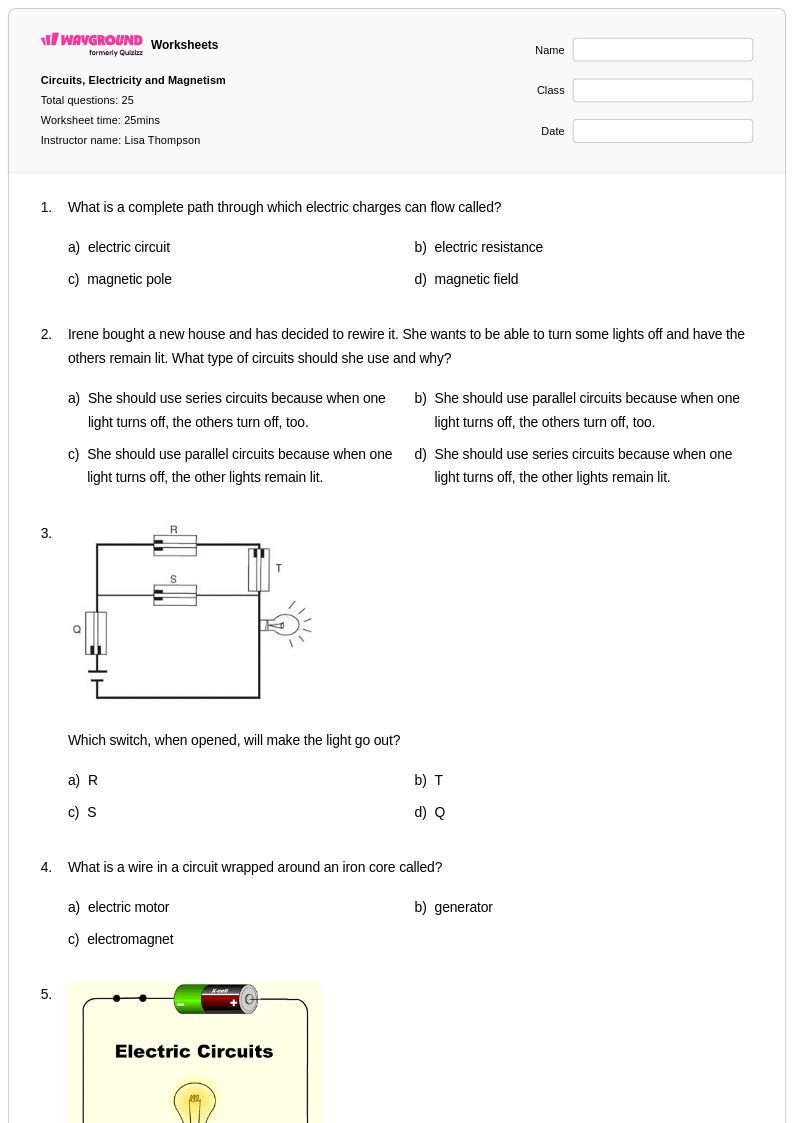
The clearest approach is a direct side-by-side comparison: in a series circuit, current is the same at every point but voltage is divided among resistors, while in a parallel circuit, voltage is the same across each branch but current is divided. Having students physically trace current paths on a diagram before writing any equations significantly reduces formula-misapplication errors. Follow-up problems that ask students to predict what happens when one resistor is removed — circuit goes dark in series, other branches stay on in parallel — reinforce the conceptual distinction alongside the math.