Free Printable Earth Science Worksheets for Class 9
Explore Class 9 Earth Science worksheets and printables from Wayground that help students master fundamental concepts through engaging practice problems, free PDF resources, and comprehensive answer keys.
Explore printable Earth Science worksheets for Class 9
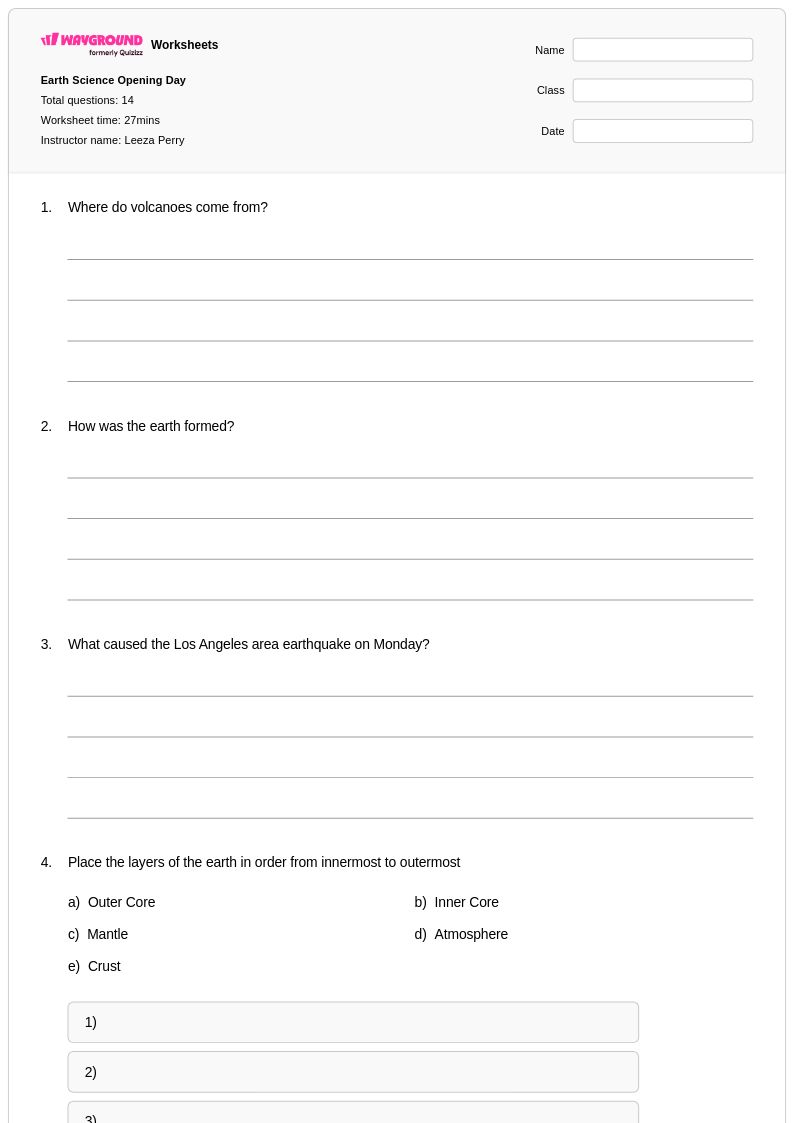
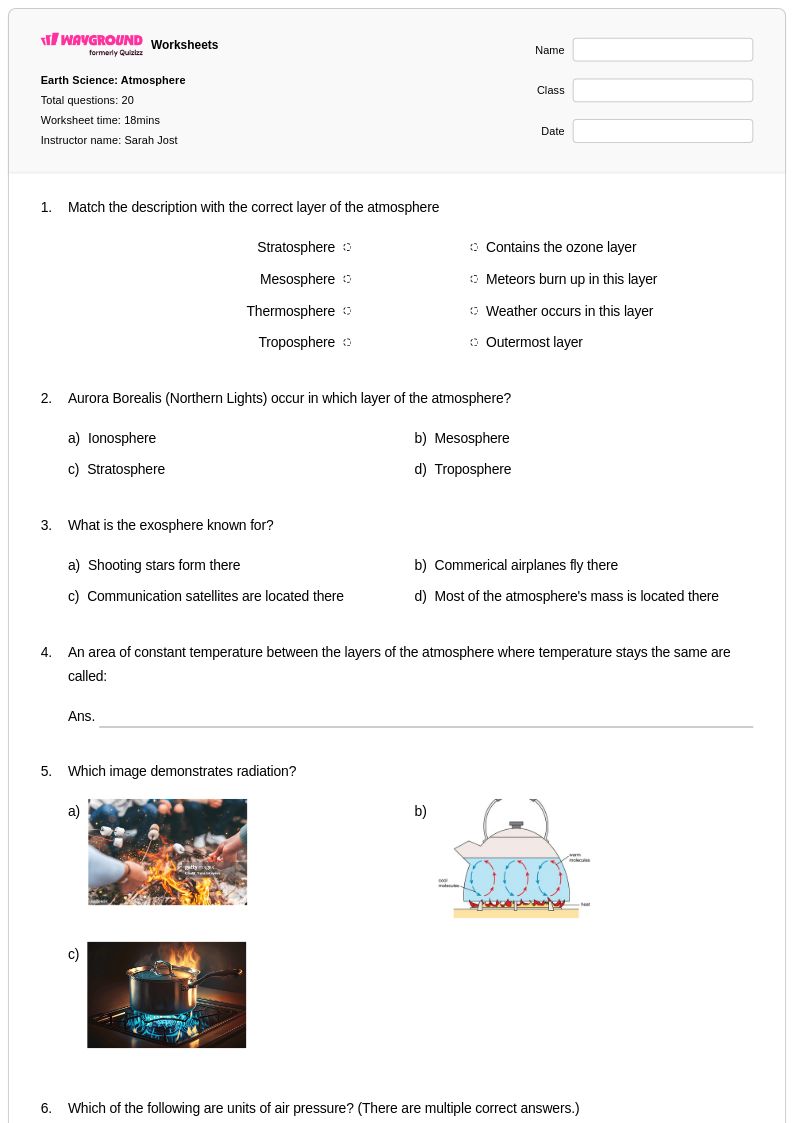
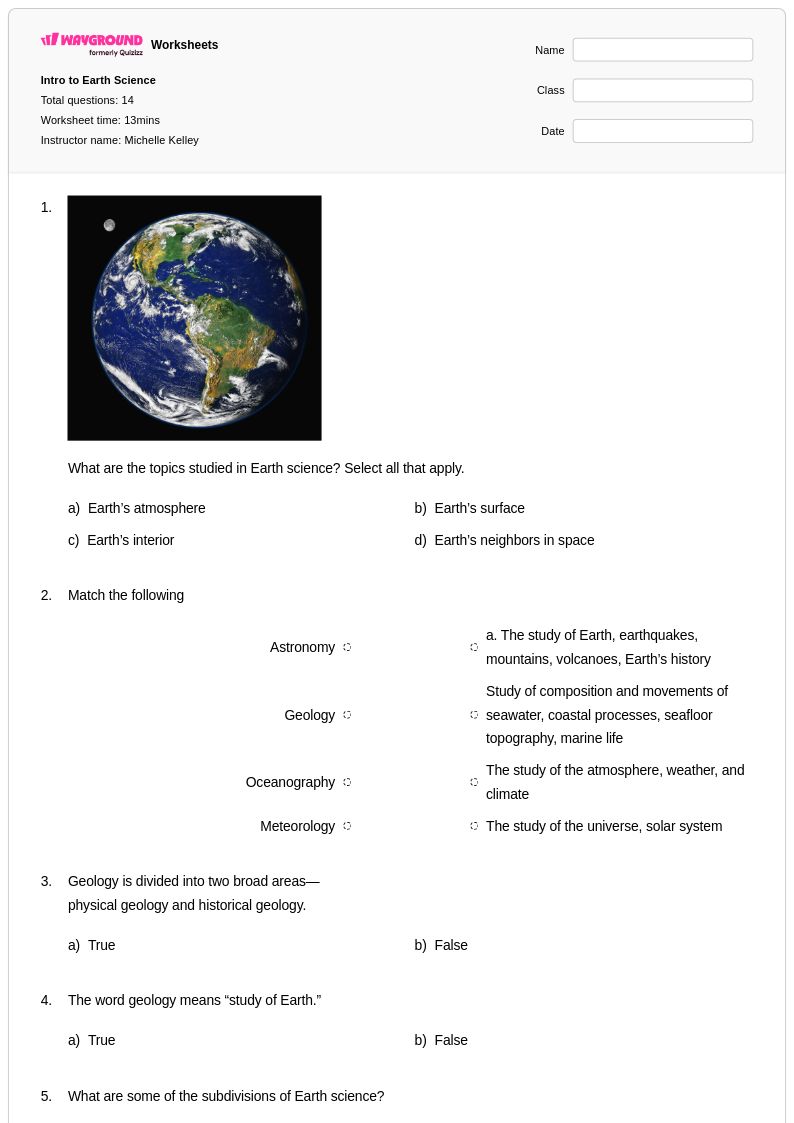
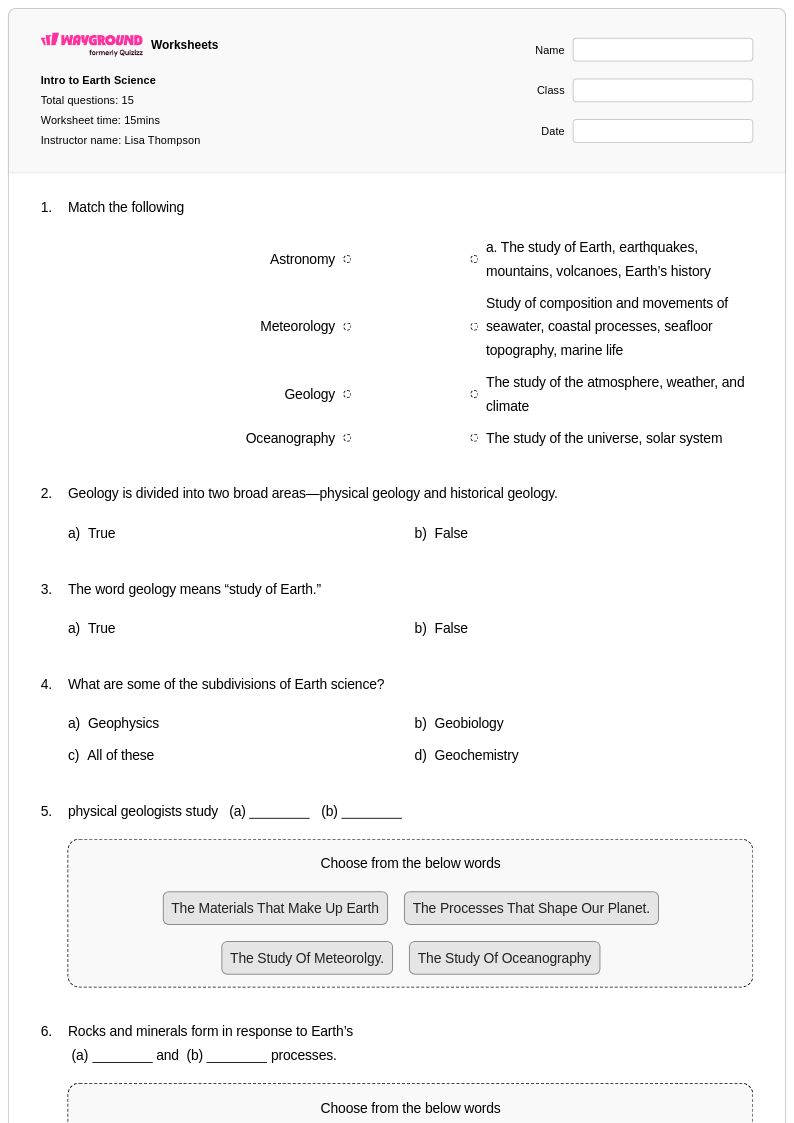
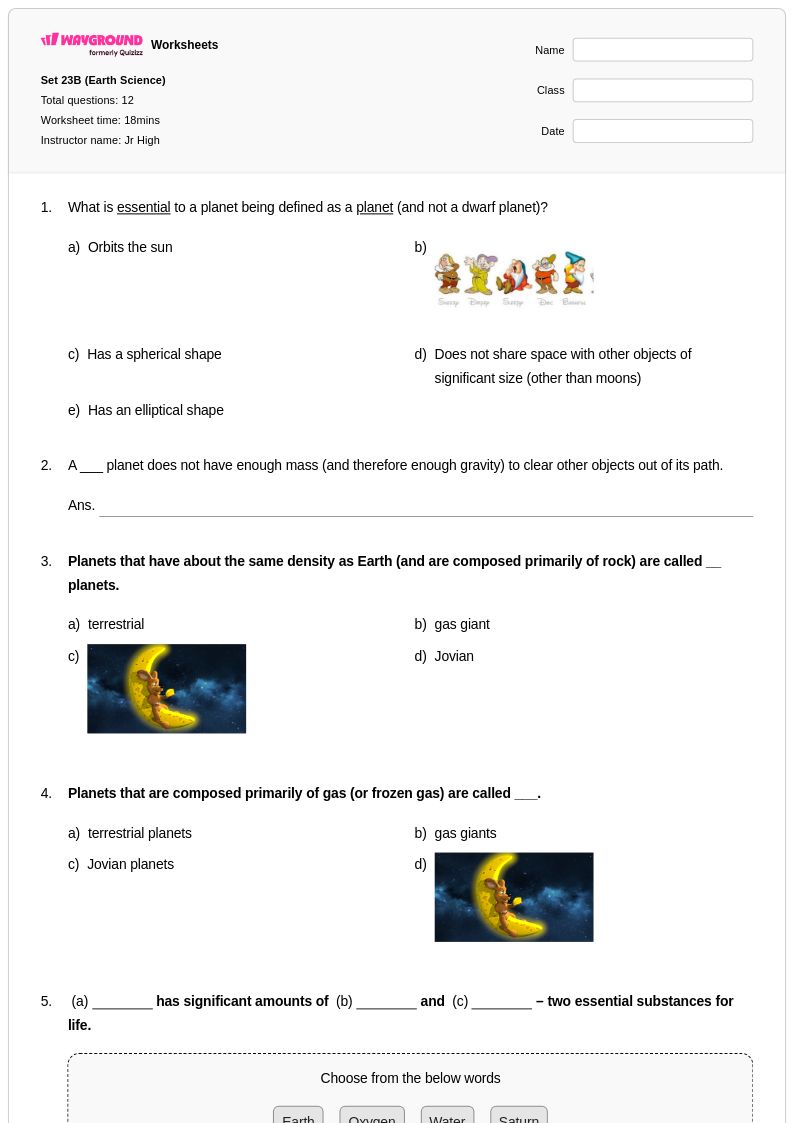
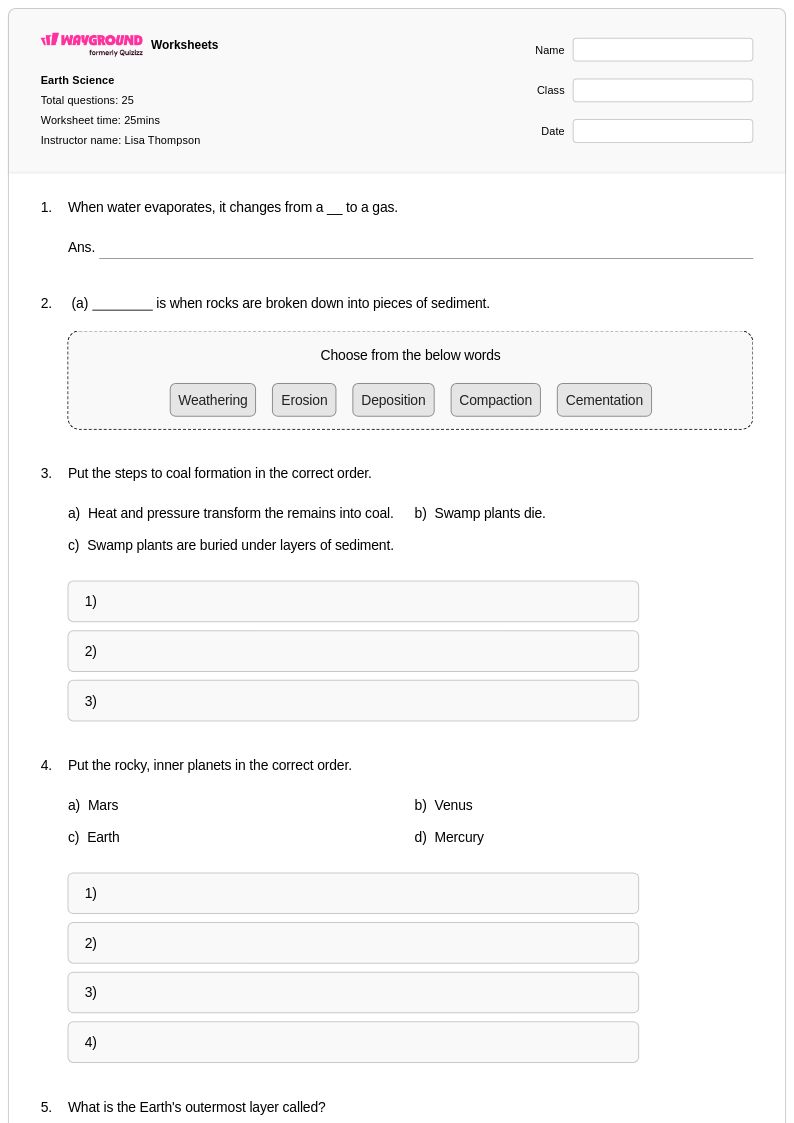
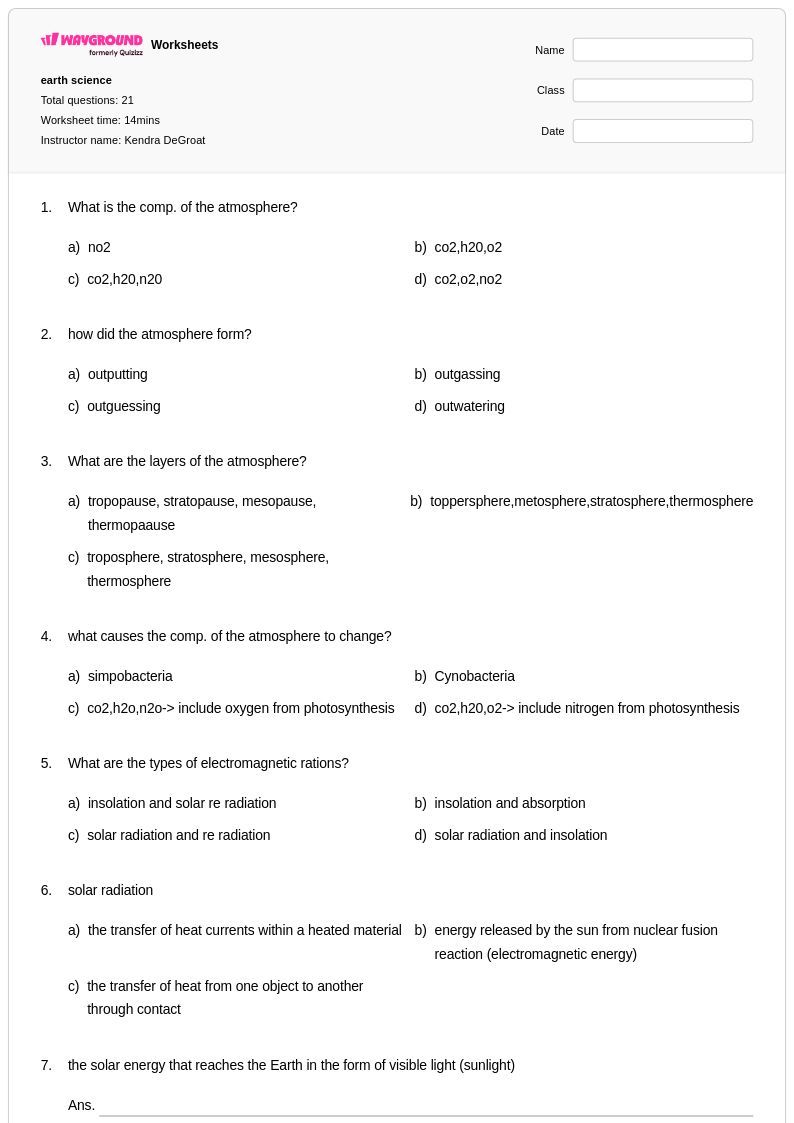
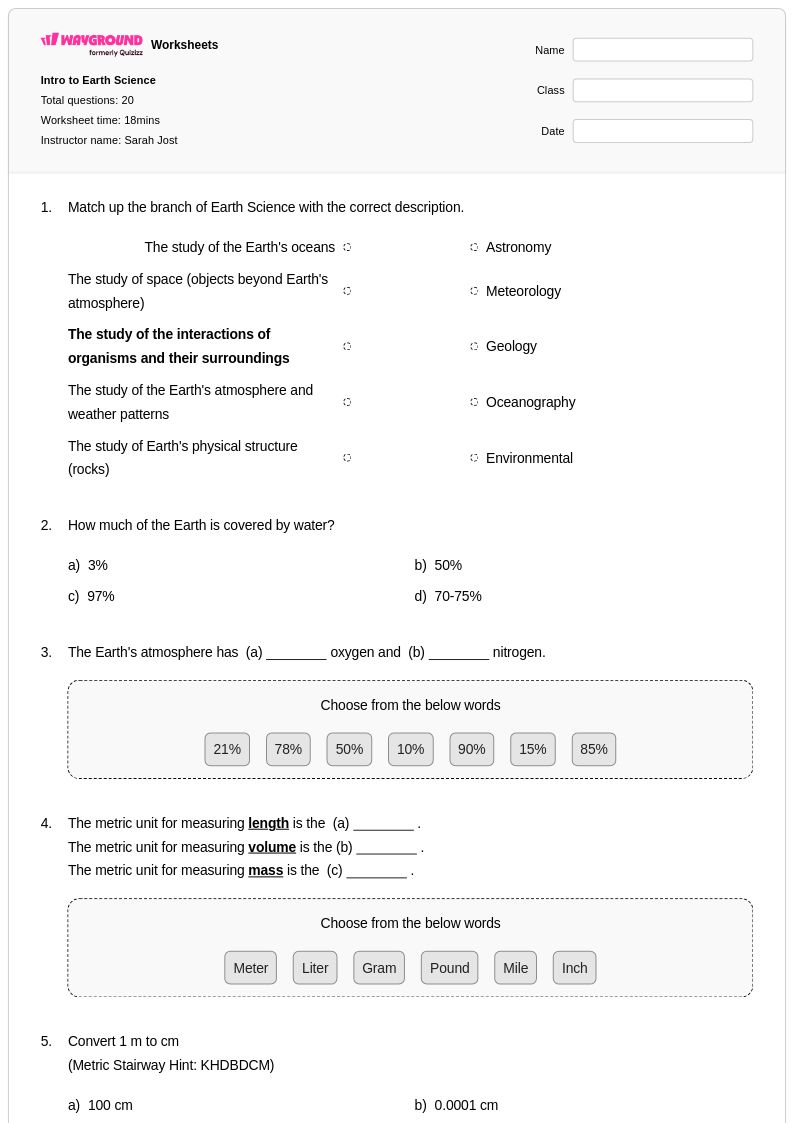
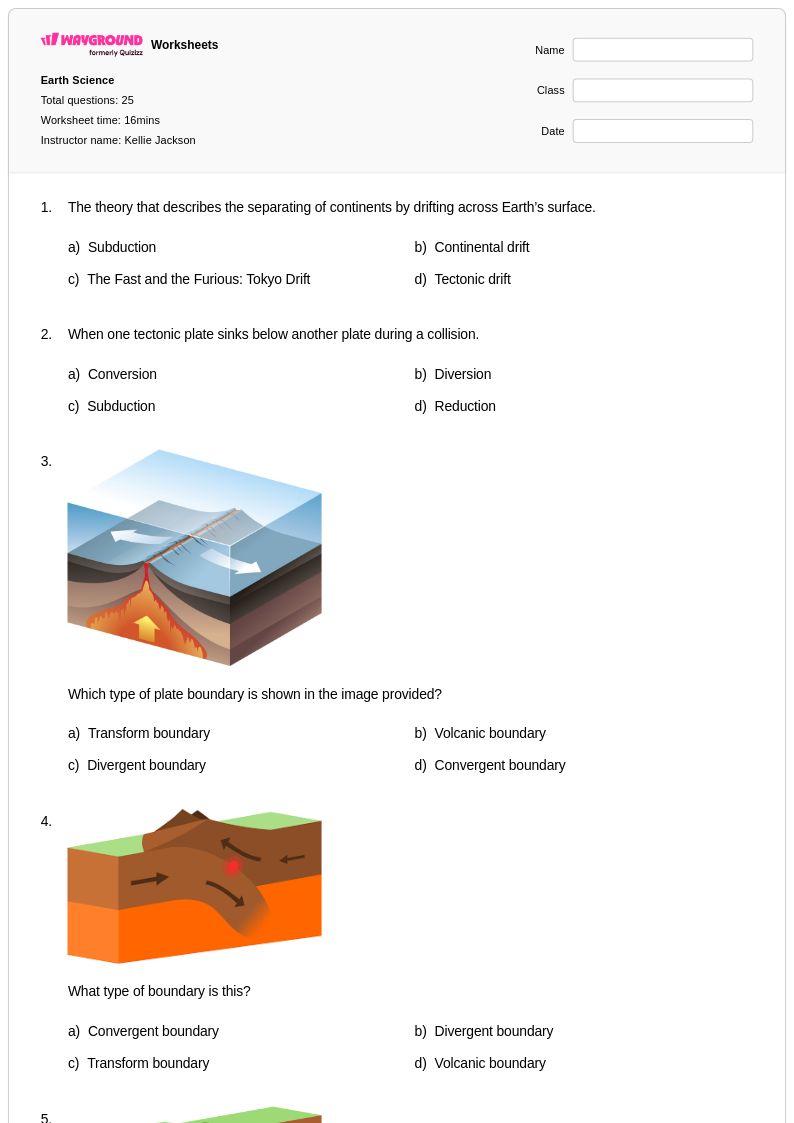
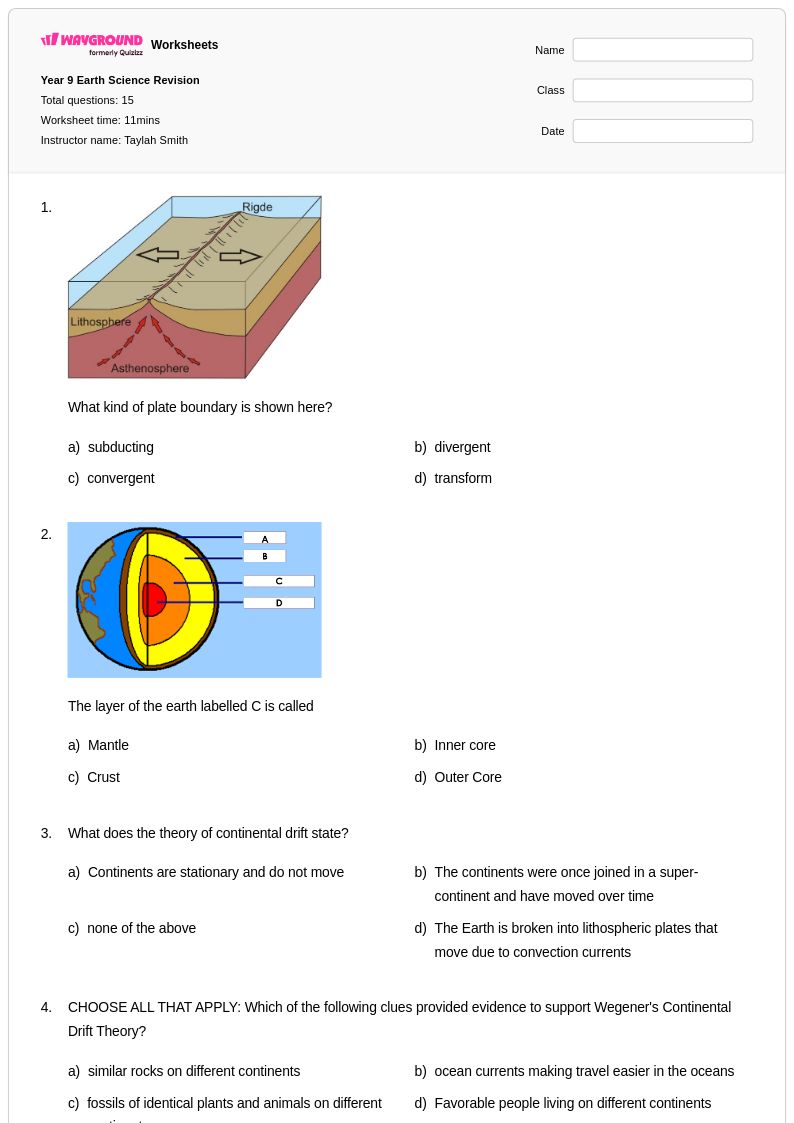
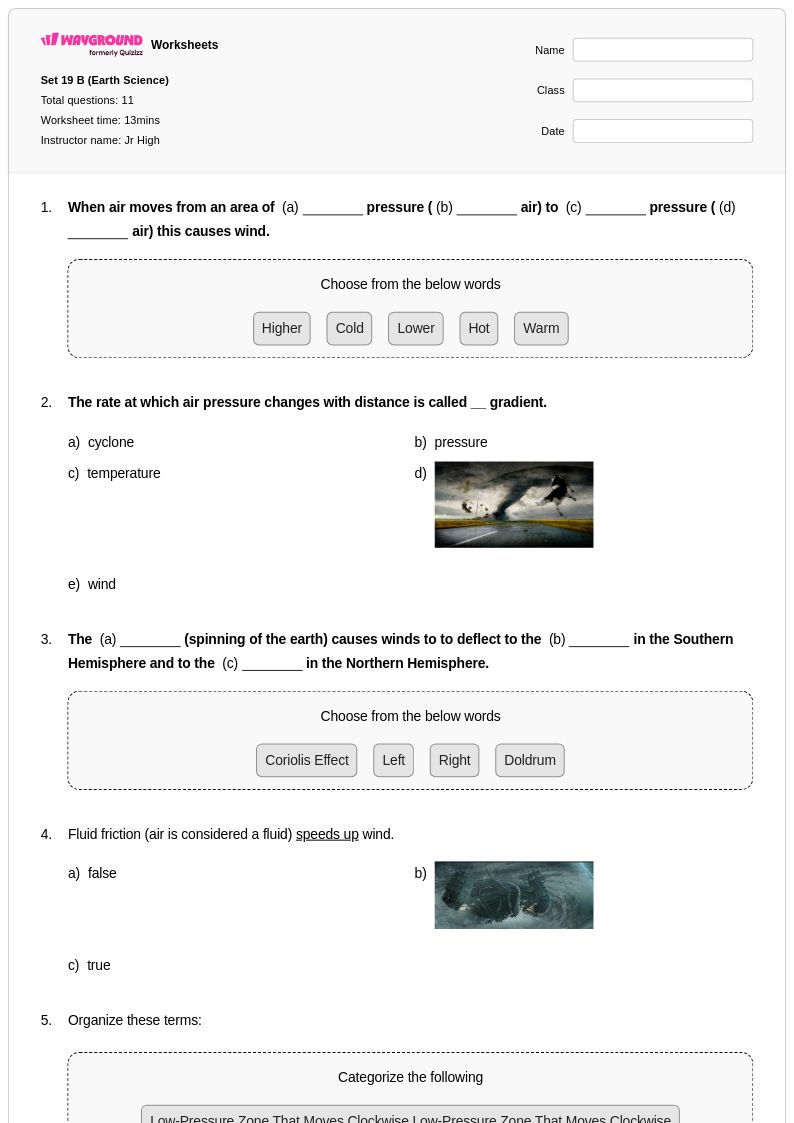
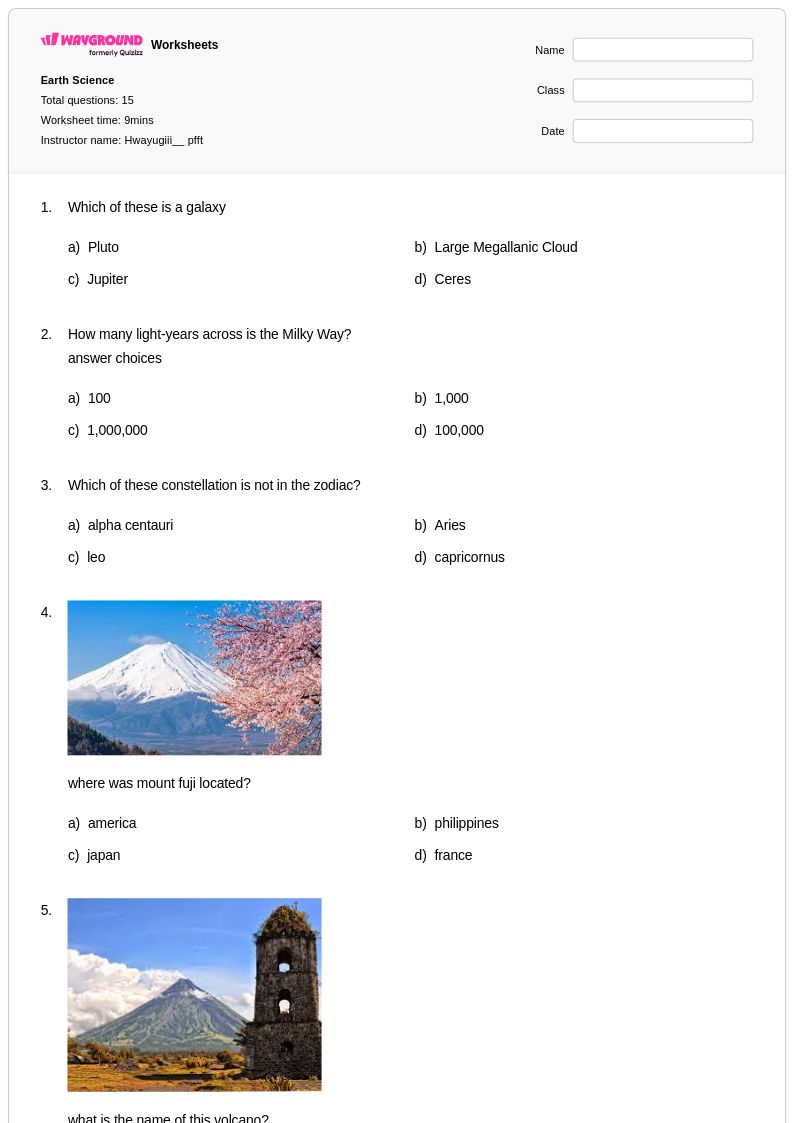
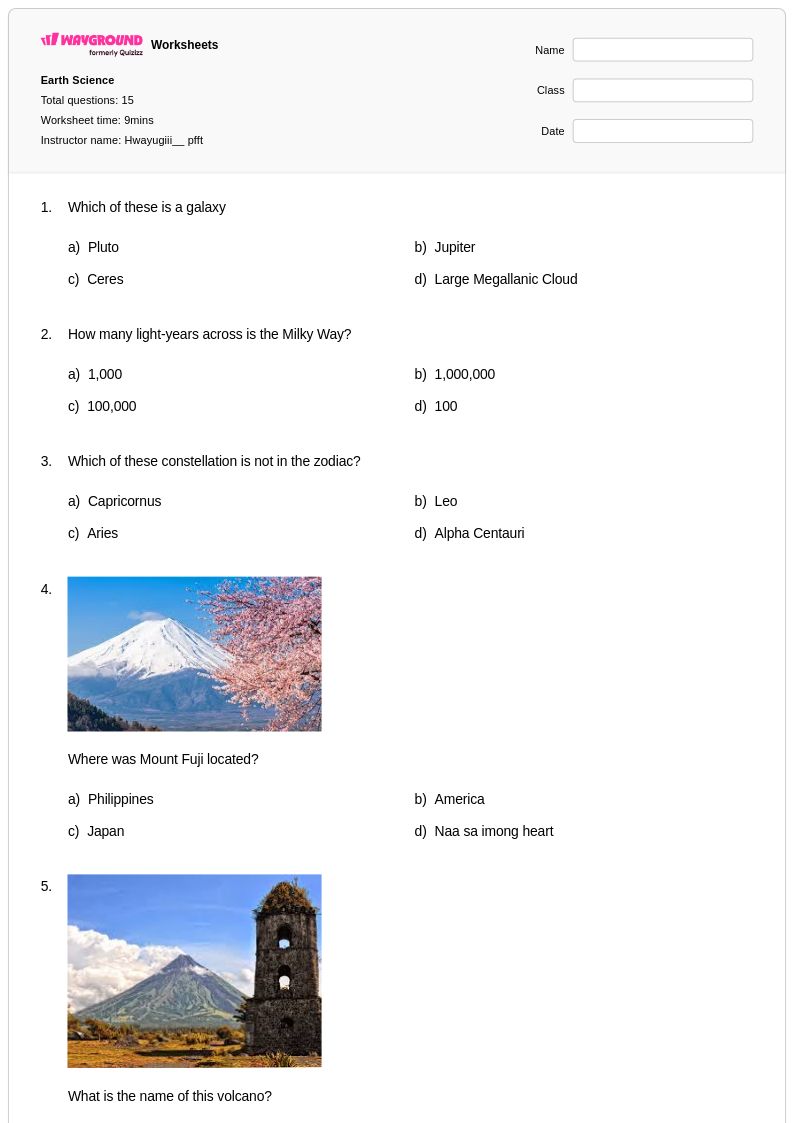
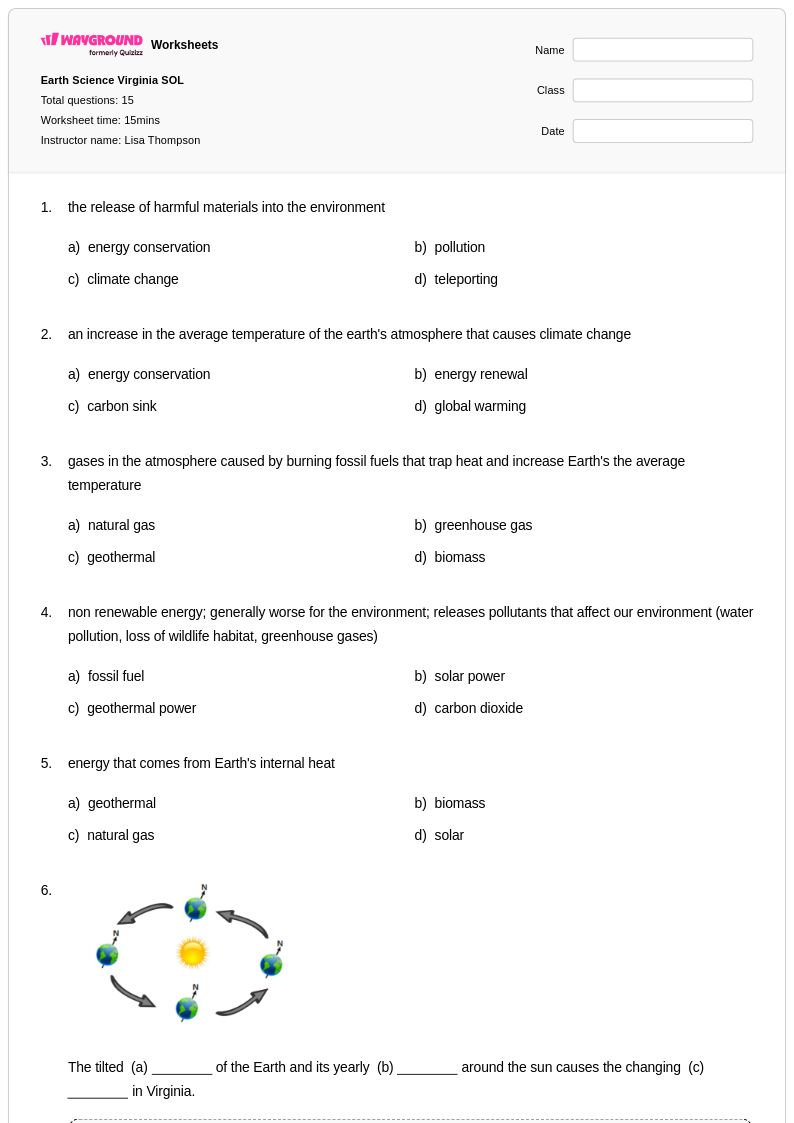
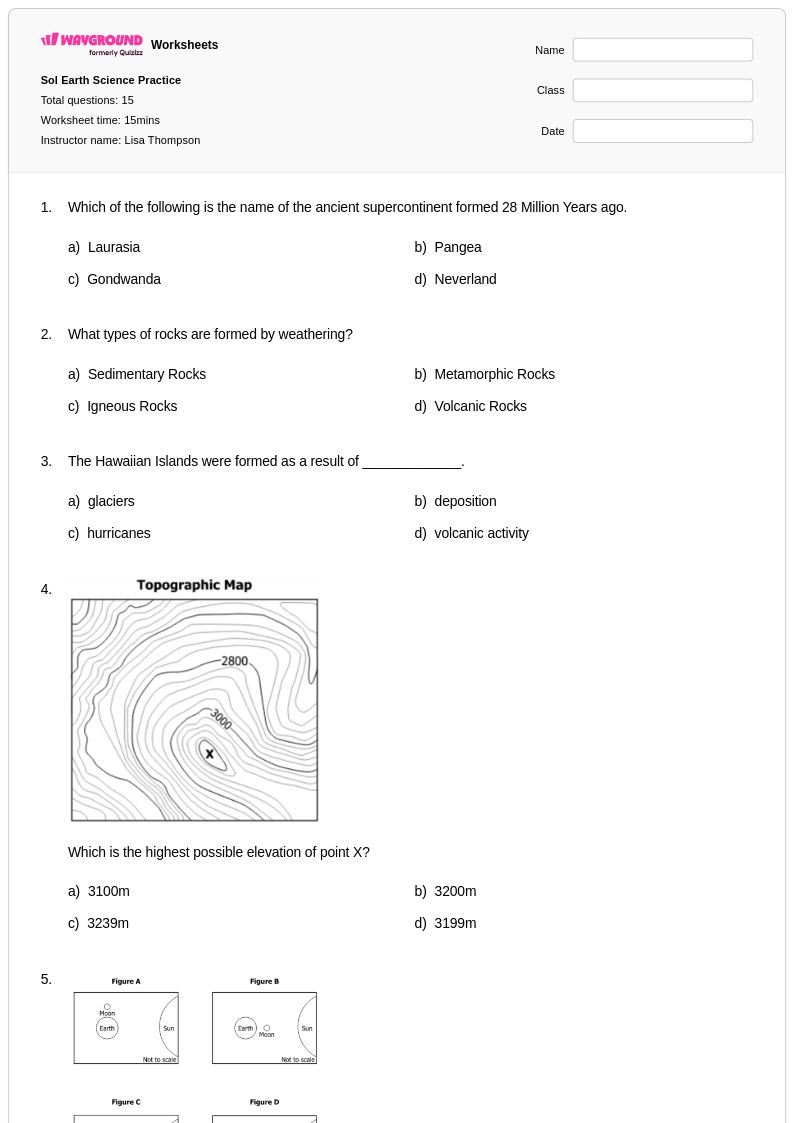
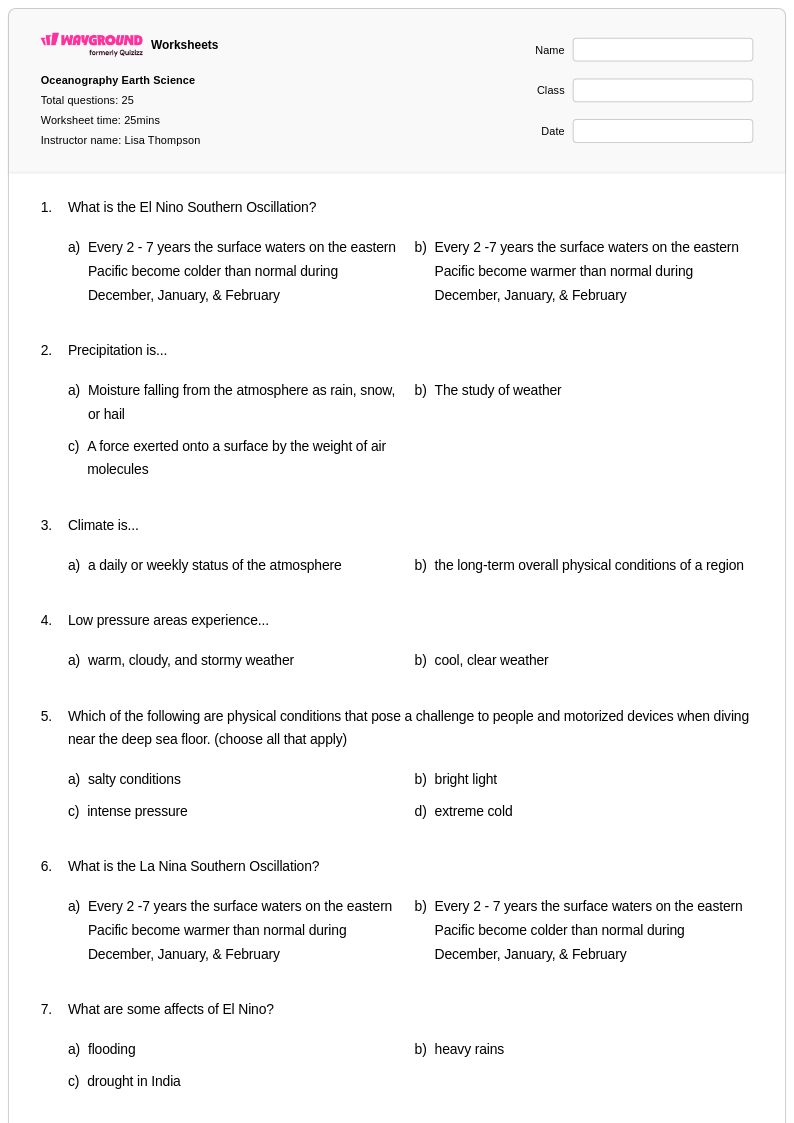
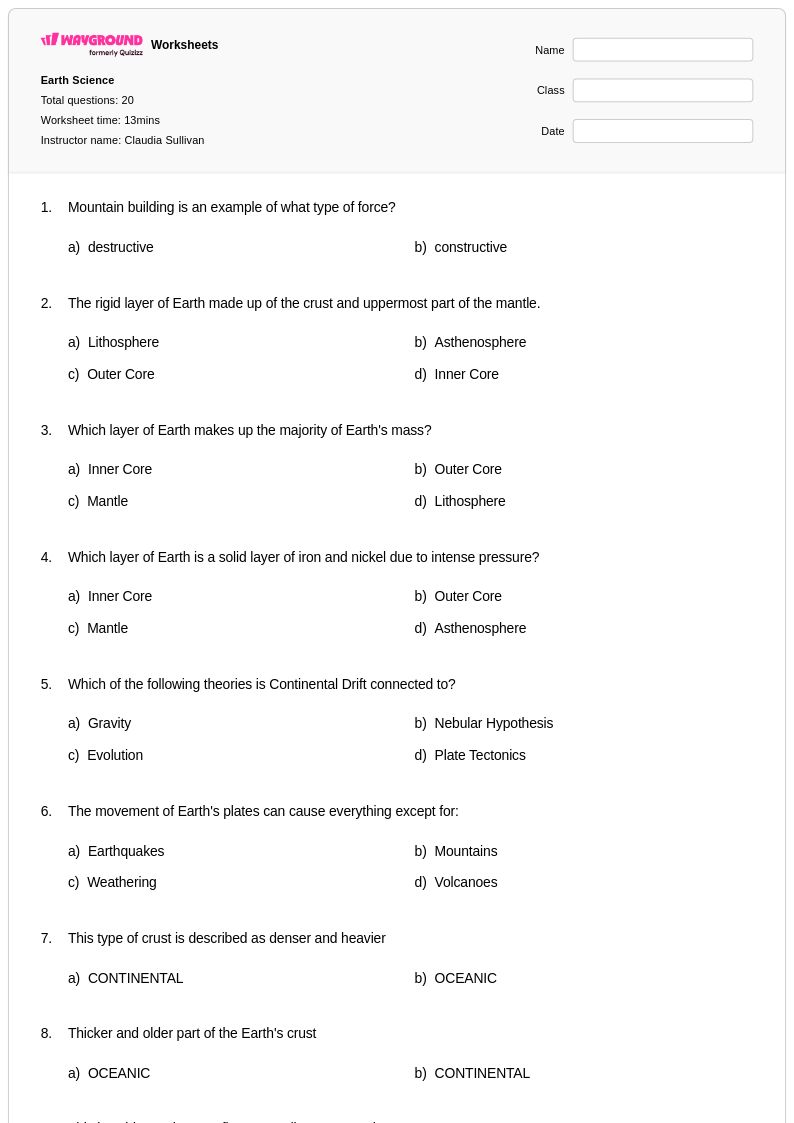
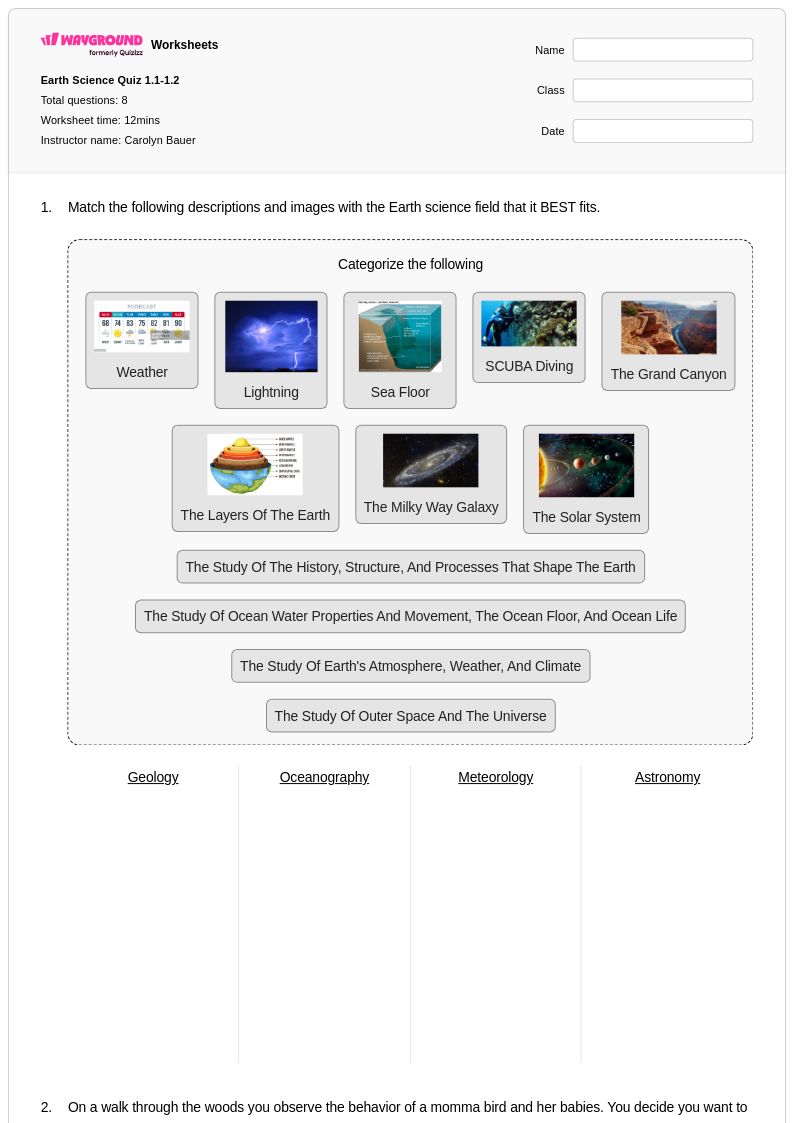
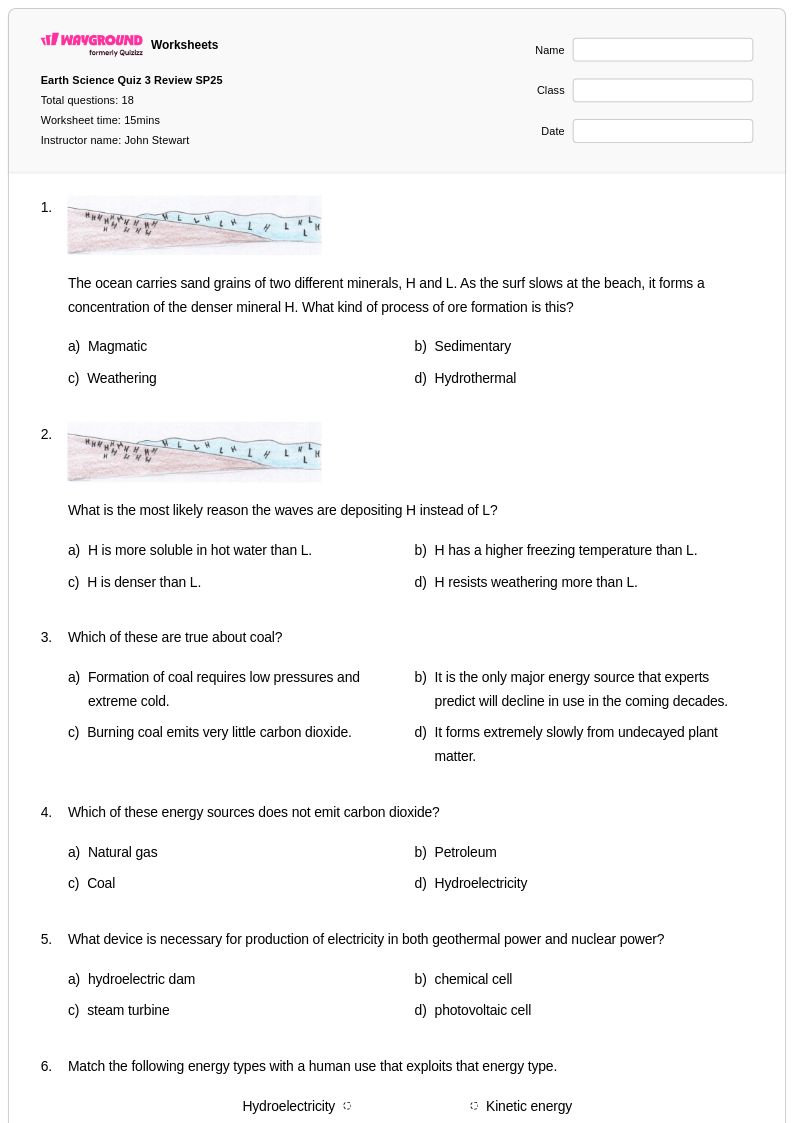
Earth Science worksheets for Class 9 students available through Wayground (formerly Quizizz) provide comprehensive coverage of fundamental concepts including plate tectonics, rock cycles, weathering and erosion, mineral identification, and geological time scales. These expertly crafted resources strengthen critical thinking skills as students analyze geological processes, interpret rock formations, and understand the dynamic systems that shape our planet's surface and interior. The collection includes diverse practice problems that challenge students to apply scientific reasoning to real-world geological phenomena, with each worksheet featuring detailed answer keys that support both independent study and classroom instruction. Teachers can access these materials as free printables in convenient pdf format, making it easy to distribute targeted practice exercises that reinforce essential Earth Science concepts and prepare students for advanced coursework.
Wayground (formerly Quizizz) empowers educators with millions of teacher-created Earth Science resources that can be easily searched and filtered by specific geological topics, difficulty levels, and educational standards alignment. The platform's differentiation tools allow teachers to customize worksheets to meet diverse learning needs, whether providing remediation support for struggling students or enrichment activities for advanced learners. These flexible resources are available in both printable and digital formats, including downloadable pdf versions, enabling seamless integration into any classroom environment or remote learning situation. Teachers can efficiently plan comprehensive Earth Science units by accessing this vast collection of practice materials, using the robust filtering system to identify worksheets that target specific skills like mineral classification, fossil interpretation, or understanding seismic activity patterns.
FAQs
How do I teach earth science to elementary and middle school students?
Anchor earth science instruction in local, observable phenomena before expanding to global systems -- start with rocks and soil students can hold, weather they can observe, and landforms they can see before introducing plate tectonics, ocean currents, and atmospheric circulation. Use worksheets that pair hands-on activities with diagram interpretation, such as labeling the rock cycle after examining rock samples or tracing the water cycle after a condensation demonstration. This concrete-to-abstract progression builds the spatial and systems thinking that earth science requires across all its subdisciplines.
What exercises help students practice earth science concepts across topics?
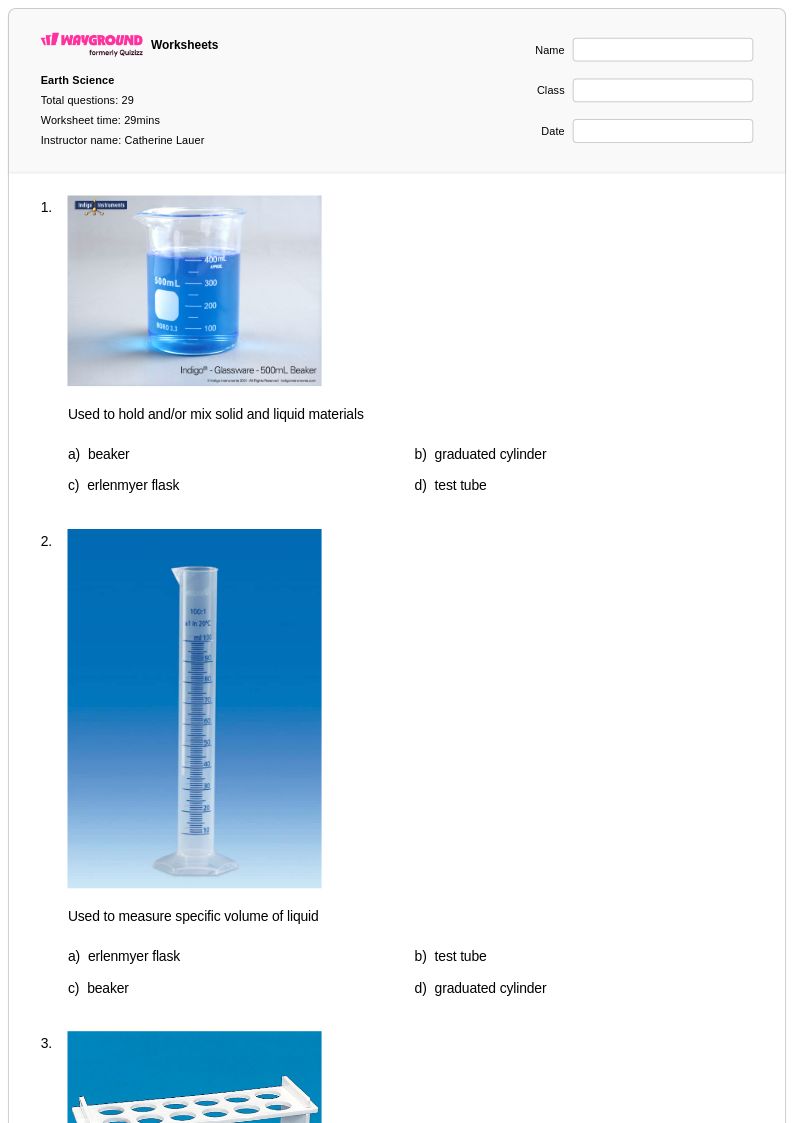
Diagram-labeling worksheets for the rock cycle, water cycle, and Earth's interior layers build foundational vocabulary and structural understanding. Graph analysis exercises where students interpret real seismic data, temperature records, or precipitation charts develop the quantitative reasoning skills central to earth science. Lab practical worksheets that guide students through mineral identification, fossil classification, or soil composition testing connect classroom content to hands-on scientific investigation and reinforce observation-based learning.
What common mistakes do students make in earth science?
Students frequently confuse weathering and erosion, describing them as a single process rather than recognizing that weathering breaks down rock in place while erosion transports the material. In plate tectonics, students commonly believe earthquakes only occur at fault lines they can see on a map, not understanding that tectonic plate boundaries extend deep underground. Students also tend to think the rock cycle follows a single fixed sequence rather than understanding that any rock type can transform into any other type depending on the geological conditions it encounters.
How do I assess student understanding across earth science subdisciplines?
Use worksheets that require students to connect processes across subdisciplines -- for example, explaining how plate tectonics drives both volcanic activity and mountain formation, or how the water cycle links weather patterns to erosion and soil formation. Questions that present real-world data such as seismograph readings, stratigraphic columns, or climate graphs and ask students to draw conclusions test applied reasoning rather than memorization. Including problems where students must identify which earth science process explains a given landscape feature assesses their ability to reason from evidence.
How do I use earth science worksheets alongside lab activities?
These worksheets are available as printable PDFs for traditional classroom use and in digital formats for technology-integrated learning environments. Use diagram-labeling and vocabulary worksheets as pre-lab preparation so students enter the lab familiar with terminology and processes they will observe. Assign graph analysis and data interpretation worksheets as post-lab follow-ups where students apply what they observed during rock identification, soil testing, or weather data collection to analytical problems that extend beyond the lab activity itself.
How do I differentiate earth science instruction for different grade levels?
For grades K-3, focus on worksheets with sorting and matching activities -- classifying rocks by observable properties, identifying weather types from pictures, and labeling basic landforms. Grades 4-6 benefit from worksheets that introduce process cycles such as the rock cycle and water cycle, basic plate tectonics vocabulary, and simple data tables comparing soil or mineral properties. For grades 7-12, assign worksheets requiring interpretation of seismic data, analysis of stratigraphic columns for relative dating, evaluation of climate data trends, and multi-step problems connecting geological processes to surface features.
What topics are covered in earth science worksheets?
Earth science worksheets cover the full breadth of the discipline across four major branches. Geology topics include the rock cycle, mineral identification, plate tectonics, earthquakes, volcanoes, weathering, and erosion. Meteorology topics cover atmospheric layers, weather fronts, climate patterns, and severe weather events. Hydrology topics address the water cycle, groundwater, ocean currents, and watershed systems. Additional topics include soil composition, fossil dating and paleontology, oceanography, and the relationship between Earth's internal processes and surface features.