
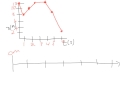
Understanding Position-Time Graphs and Motion Maps

Interactive Video
•
Physics
•
9th - 10th Grade
•
Hard

Evelyn Hayes
FREE Resource
10 questions
Show all answers
1.
MULTIPLE CHOICE QUESTION
30 sec • 1 pt
What is the primary focus of the video tutorial?
Exploring advanced physics concepts
Understanding the relationship between position-time graphs and motion maps
Learning about different types of graphs
Studying the history of motion maps
2.
MULTIPLE CHOICE QUESTION
30 sec • 1 pt
In the motion map example, what is the initial position of the object?
2 meters
3 meters
1 meter
0 meters
3.
MULTIPLE CHOICE QUESTION
30 sec • 1 pt
How is a stop in motion represented on a position-time graph?
A flat line
A downward slope
A steep slope
An upward slope
4.
MULTIPLE CHOICE QUESTION
30 sec • 1 pt
What does a steeper slope on a position-time graph indicate?
Slower velocity
Faster velocity
Constant velocity
No movement
5.
MULTIPLE CHOICE QUESTION
30 sec • 1 pt
When converting a position-time graph to a motion map, what does a change in direction require?
A pause in motion
A jump in the motion map
A steep slope
A continuous line
6.
MULTIPLE CHOICE QUESTION
30 sec • 1 pt
How is a direction change without stopping shown on a motion map?
By adding a dot
By jumping underneath
By drawing a continuous line
By removing a dot
7.
MULTIPLE CHOICE QUESTION
30 sec • 1 pt
What does two dots underneath each other on a motion map indicate?
A change in direction
A stop in motion
A decrease in speed
An increase in speed
Access all questions and much more by creating a free account
Create resources
Host any resource
Get auto-graded reports

Continue with Google

Continue with Email

Continue with Classlink

Continue with Clever
or continue with

Microsoft
%20(1).png)
Apple

Others
Already have an account?


