
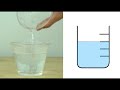
Understanding Dissolving and Particles

Interactive Video
•
Science
•
3rd - 4th Grade
•
Practice Problem
•
Hard

Jennifer Brown
FREE Resource
10 questions
Show all answers
1.
MULTIPLE CHOICE QUESTION
30 sec • 1 pt
What is the first step in the experiment shown in the video?
Stirring sugar in a cup
Filling a cup with warm water
Adding sugar to cold water
Tasting the water
2.
MULTIPLE CHOICE QUESTION
30 sec • 1 pt
Why does the water taste sweet after adding sugar?
Because sugar particles are visible
Because sugar remains undissolved
Because sugar dissolves in water
Because sugar evaporates
3.
MULTIPLE CHOICE QUESTION
30 sec • 1 pt
What are particles?
Objects that are larger than grains of sand
Objects that can only be seen under a microscope
Tiny objects too small to see
Large objects visible to the eye
4.
MULTIPLE CHOICE QUESTION
30 sec • 1 pt
What is the smallest piece of sand according to the video?
A molecule of sand
A particle of sand
A grain of sand
A drop of sand
5.
MULTIPLE CHOICE QUESTION
30 sec • 1 pt
How does understanding particles help explain dissolving?
It explains that sugar particles are larger than water particles
It suggests that sugar particles float on water
It shows that sugar and water are made of different substances
It helps visualize sugar particles filling spaces between water particles
6.
MULTIPLE CHOICE QUESTION
30 sec • 1 pt
What happens to sugar when it is added to water?
It breaks into individual particles
It floats on the surface
It sinks to the bottom
It evaporates
7.
MULTIPLE CHOICE QUESTION
30 sec • 1 pt
Why can't you see sugar after it dissolves in water?
Because it evaporates
Because it turns into water
Because particles are too small to see
Because it changes color
Access all questions and much more by creating a free account
Create resources
Host any resource
Get auto-graded reports

Continue with Google

Continue with Email

Continue with Classlink

Continue with Clever
or continue with

Microsoft
%20(1).png)
Apple

Others
Already have an account?


