
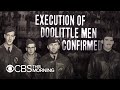
Doolittle Raid: Impact and Legacy

Interactive Video
•
History, Social Studies, English
•
9th - 12th Grade
•
Practice Problem
•
Hard

Patricia Brown
FREE Resource
Read more
10 questions
Show all answers
1.
MULTIPLE CHOICE QUESTION
30 sec • 1 pt
What was the significance of the Doolittle Raid in World War II?
It was the first American victory in Europe.
It marked the first successful airstrike on Japan by the U.S.
It led to the immediate end of World War II.
It was a failed mission with no impact.
2.
MULTIPLE CHOICE QUESTION
30 sec • 1 pt
What was a major challenge faced during the execution of the Doolittle Raid?
Inability to reach Japan due to fuel constraints
Lack of trained pilots
Poor weather conditions
Mechanical failures in all aircraft
3.
MULTIPLE CHOICE QUESTION
30 sec • 1 pt
How did the Doolittle Raid affect Japan's military strategy?
It encouraged Japan to attack more aggressively.
It forced Japan to adopt a defensive strategy.
It led Japan to seek peace negotiations immediately.
It had no impact on Japan's strategy.
4.
MULTIPLE CHOICE QUESTION
30 sec • 1 pt
What happened to some of the Doolittle Raiders after the mission?
They were all safely returned to the U.S.
They were captured and treated harshly by the Japanese.
They were immediately executed by the Japanese.
They were lost at sea and never found.
5.
MULTIPLE CHOICE QUESTION
30 sec • 1 pt
What was a key outcome of the trials of Japanese soldiers after the Doolittle Raid?
They were all acquitted of war crimes.
They were given fair trials, setting a precedent for future tribunals.
They were executed without trial.
They were pardoned by the U.S. government.
6.
MULTIPLE CHOICE QUESTION
30 sec • 1 pt
Which trials were influenced by the precedent set in the trials of Japanese soldiers after the Doolittle Raid?
The Salem Witch Trials
The Tokyo and Nuremberg War Crimes Tribunals
The Geneva Conventions
The Watergate Hearings
7.
MULTIPLE CHOICE QUESTION
30 sec • 1 pt
What was the role of Colonel Edmund Bodeen in the trials following the Doolittle Raid?
He was the lead defense lawyer for the accused Japanese soldiers.
He was not involved in the trials.
He was a witness in the trials.
He was a prosecutor in the trials.
Access all questions and much more by creating a free account
Create resources
Host any resource
Get auto-graded reports

Continue with Google

Continue with Email

Continue with Classlink

Continue with Clever
or continue with

Microsoft
%20(1).png)
Apple

Others
Already have an account?


