
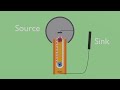
Van de Graaff Generator Concepts

Interactive Video
•
Physics, Science, Chemistry
•
9th - 10th Grade
•
Practice Problem
•
Medium

Patricia Brown
Used 5+ times
FREE Resource
Read more
10 questions
Show all answers
1.
MULTIPLE CHOICE QUESTION
30 sec • 1 pt
Who developed the Van de Graaff generator and in which year?
Robert Van de Graaff in 1929
Albert Einstein in 1925
Thomas Edison in 1920
Nikola Tesla in 1930
2.
MULTIPLE CHOICE QUESTION
30 sec • 1 pt
What is the primary principle behind both the Van de Graaff generator and the balloon trick?
Photoelectric Effect
Electromagnetic Induction
Thermoelectric Effect
Triboelectric Effect
3.
MULTIPLE CHOICE QUESTION
30 sec • 1 pt
In the triboelectric series, which material is likely to lose electrons when rubbed against a rubber balloon?
Human Hair
Glass
Copper
Wood
4.
MULTIPLE CHOICE QUESTION
30 sec • 1 pt
What is the main function of the rubber belt in the Van de Graaff generator?
To conduct electricity
To transfer electrons
To generate heat
To provide mechanical support
5.
MULTIPLE CHOICE QUESTION
30 sec • 1 pt
What happens to the roller made of Teflon in the Van de Graaff generator?
It loses electrons to the belt
It remains neutral
It gains a negative charge
It gains a positive charge
6.
MULTIPLE CHOICE QUESTION
30 sec • 1 pt
How does the Van de Graaff generator create a large potential difference?
By compressing air molecules
By heating the air
By transporting electrons from a source to a sink
By using magnetic fields
7.
MULTIPLE CHOICE QUESTION
30 sec • 1 pt
What role do the metal brushes play in the Van de Graaff generator?
They provide structural support
They conduct electricity
They ionize air molecules
They generate heat
Access all questions and much more by creating a free account
Create resources
Host any resource
Get auto-graded reports

Continue with Google

Continue with Email

Continue with Classlink

Continue with Clever
or continue with

Microsoft
%20(1).png)
Apple

Others
Already have an account?


