
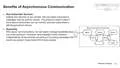
Design Microservices Architecture with Patterns and Principles - Benefits of Asynchronous Communication

Interactive Video
•
Information Technology (IT), Architecture
•
University
•
Practice Problem
•
Hard

Wayground Content
FREE Resource
Read more
5 questions
Show all answers
1.
MULTIPLE CHOICE QUESTION
30 sec • 1 pt
What is a key advantage of adding new subscriber services in asynchronous communication?
It needs a custom solution for each subscriber.
It requires changes to the producer service.
It is complex and time-consuming.
It can be done without affecting the producer.
2.
MULTIPLE CHOICE QUESTION
30 sec • 1 pt
How does asynchronous communication improve scalability?
By requiring all services to scale together.
By allowing independent scaling of services.
By limiting the number of subscribers.
By reducing the need for message brokers.
3.
MULTIPLE CHOICE QUESTION
30 sec • 1 pt
What role does Kubernetes play in managing microservices?
It offers an autoscaler based on CPU and RAM usage.
It replaces the need for message brokers.
It provides a manual scaling solution.
It limits the number of microservices.
4.
MULTIPLE CHOICE QUESTION
30 sec • 1 pt
What is the benefit of using KEDA in a microservice architecture?
It reduces the number of messages in Kafka.
It eliminates the need for Kubernetes.
It autoscale services based on message broker logs.
It simplifies the manual scaling process.
5.
MULTIPLE CHOICE QUESTION
30 sec • 1 pt
How do retry mechanisms benefit message delivery in asynchronous communication?
They automatically retry sending messages after failures.
They require custom solutions for each error.
They only work with synchronous communication.
They prevent any message from being sent.
Access all questions and much more by creating a free account
Create resources
Host any resource
Get auto-graded reports

Continue with Google

Continue with Email

Continue with Classlink

Continue with Clever
or continue with

Microsoft
%20(1).png)
Apple

Others
Already have an account?


