
The New Oldest Animal Fossils?

Interactive Video
•
Science, Geography, Biology, History
•
11th Grade - University
•
Practice Problem
•
Hard

Wayground Content
FREE Resource
Read more
7 questions
Show all answers
1.
MULTIPLE CHOICE QUESTION
30 sec • 1 pt
What is the significance of the sponge fossils found in northwestern Canada?
They are the oldest known animal fossils.
They are the most colorful fossils.
They are the largest fossils ever discovered.
They are the first fossils found in Canada.
2.
MULTIPLE CHOICE QUESTION
30 sec • 1 pt
How did early sponges possibly survive in low-oxygen environments?
By relying on oxygen from cyanobacteria.
By living in coral reefs.
By migrating to oxygen-rich areas.
By consuming other animals.
3.
MULTIPLE CHOICE QUESTION
30 sec • 1 pt
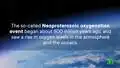
What is the Neoproterozoic oxygenation event?
A decline in cyanobacteria populations.
A time when sponges first appeared.
A rise in oxygen levels in the atmosphere and oceans.
A period of decreased oxygen levels.
4.
MULTIPLE CHOICE QUESTION
30 sec • 1 pt
What role does the hippocampus play in visual memory?
It has no role in visual memory.
It helps in recognizing single visual inputs.
It is involved in remembering sequences of images.
It stores all types of visual memories.
5.
MULTIPLE CHOICE QUESTION
30 sec • 1 pt
What was the outcome for mice with damaged hippocampuses in the visual memory study?
They had no change in memory abilities.
They could remember sequences of images.
They could not remember sequences of images.
They showed improved memory for single images.
6.
MULTIPLE CHOICE QUESTION
30 sec • 1 pt
What is one potential implication of understanding the hippocampus's role in memory?
It could lead to new treatments for Alzheimer's.
It could help in developing new visual technologies.
It could improve memory in all animals.
It could eliminate the need for memory research.
7.
MULTIPLE CHOICE QUESTION
30 sec • 1 pt
What is a limitation of the visual memory research discussed?
It was conducted on humans.
It only focused on single-image memory.
It did not involve the hippocampus.
It was conducted on mice.
Access all questions and much more by creating a free account
Create resources
Host any resource
Get auto-graded reports

Continue with Google

Continue with Email

Continue with Classlink

Continue with Clever
or continue with

Microsoft
%20(1).png)
Apple

Others
Already have an account?
Similar Resources on Wayground

6 questions
Weather Around Us: Summing Up
Interactive video
•
10th - 12th Grade
3 questions
The Impact of Tides: Understanding the Rise and Fall of Ocean Levels
Interactive video
•
KG - University
2 questions
TED-Ed: Just how small is an atom? - Jonathan Bergmann
Interactive video
•
KG - University
6 questions
Objectos en movimiento: cambios en movimiento
Interactive video
•
10th - 12th Grade
6 questions
Plants in Our Lives: Seed-producing Plants
Interactive video
•
10th - 12th Grade
6 questions
El sol y las estrellas: recapitulando
Interactive video
•
10th - 12th Grade
Popular Resources on Wayground
8 questions
Spartan Way - Classroom Responsible

Quiz
•
9th - 12th Grade
15 questions
Fractions on a Number Line
Quiz
•
3rd Grade
14 questions
Boundaries & Healthy Relationships

Lesson
•
6th - 8th Grade
20 questions
Equivalent Fractions
Quiz
•
3rd Grade
3 questions
Integrity and Your Health
Lesson
•
6th - 8th Grade
25 questions
Multiplication Facts
Quiz
•
5th Grade
9 questions
FOREST Perception
Lesson
•
KG
20 questions
Main Idea and Details
Quiz
•
5th Grade
Discover more resources for Science
15 questions
Chemical Reactions (Types of Chemical Reactions)
Interactive video
•
11th Grade
10 questions
Symbiotic Relationships
Lesson
•
9th - 12th Grade
17 questions
Sex-Linked, Co and Incomplete Dominance
Quiz
•
9th - 12th Grade
5 questions
Greenhouse Effect and Climate Change
Interactive video
•
11th - 12th Grade
9 questions
The Mole Concept
Lesson
•
9th - 12th Grade
10 questions
ACT Science #1
Quiz
•
11th Grade
20 questions
Speed, Velocity, and Acceleration Quiz
Quiz
•
9th - 12th Grade
11 questions
Photosynthesis and ATP
Lesson
•
9th - 12th Grade