Honors Life Science SSA Review
Presentation
•
Science
•
8th Grade
•
Easy
+29
Standards-aligned
Scott Lords
Used 1+ times
FREE Resource
20 Slides • 127 Questions
1
Honors Life Science Review
2
SC.6.L.14.1: Students will identify and/or describe patterns in the hierarchical organization of organisms, from atoms to molecules, to cells, to tissues, to organs, to organ systems, to organisms
Level of Organization
3
Reorder
Reorder the following from simplest to most complex.
Organelle
Cell
Tissue
Organ
Organ System
4
Multiple Choice
Any living thing made up of one or more cells....
organ
cell
organ system
organism
tissue
5
Multiple Choice
What is the smallest unit of life?
atom
organ
tissue
cell
6
Multiple Choice
Which of the following is the correct order of organization in living things from most basic (simple) to most complex?
organism, molecule cell, atom, tissue, organ, organ system
atom, molecule, organ system, organ, tissue, cell, organism
atom,molecule,cell, tissue, organ, organ system, organism
atom, cell, organ, tissue, molecule organism, organ system
7
Multiple Choice
2 or more different kinds of tissues that work together
Cell
Organ
Tissue
Organ system
Organism
8
Multiple Choice
The smallest unit of a living thing
Cell
Tissue
organ
Organ system
Organism
9
Multiple Choice
2 or more organs that work together.
cell
tissue
organ
organ system
organism
10
SC.6.L.14.2: Students will identify, describe, and explain the components of cell theory.
The Cell Theory
11
Multiple Choice
12
Multiple Choice
13
Multiple Choice
What is the basic structural and functional unit of all living things?
atom
cell
bacteria
animalcules
14
Multiple Choice
Which statement was NOT included in cell theory?
All living things are composed of cells.
Living cells come only from other living cells.
Each cell contains a cell membrane, cytoplasm, nucleus, mitochondria, and endoplasmic reticulum.
Cells are the smallest structure of living things that can perform the functions necessary for life.
15
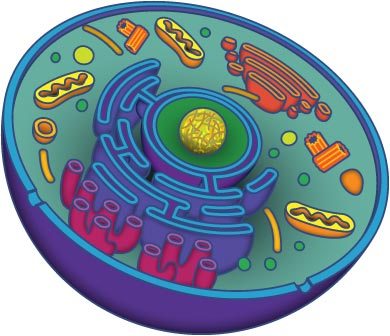
SC.6.L.14.4: Students will compare and/or contrast the structure and function of major organelles of plant and animal cells.
Plant vs Animal Cells
16
Multiple Choice
What does a plant cell have that an animal cell doesn't have?
Cell Membrane and Cell Wall
Cell Wall and Mitochondria
Cell Wall and Ribosomes
Cell Wall and Chloroplast
17
Multiple Choice
Rigid, protective and supportive outer layer of plant cells
cell membrane
nuclear membrane
cell wall
cristae
18
Multiple Choice
control, read, and direct the cell using DNA instructions
nucleus
mitochondria
endoplasmic reticulum
ribosome
19
Multiple Choice
An organelle that captures energy from the sunlight and uses it to produce food/ sugars in plant cells is ______________.
Chromatin
Chloroplast
Mitochondria
Ribosome
20
Multiple Choice
Storage of food, water, wastes, and enzymes. (Mostly water)
Vacuole
Mitochondria
Cell Membrane
Cytoplasm
21
Multiple Choice
22
Multiple Choice
The chloroplast in plant cells are responsible for ______________.
Cell respiration
Metabolism
Photosynthesis
Carbon synthesis
23
Multiple Choice
24
Multiple Choice
25
Multiple Choice
Student 1: Cell 1 is a plant cell because it has a cell wall
Student 2: Cell 2 is an animal cell because it has a nucleus
Student 3: Cell 1 is a plant cell because it has chloroplasts
Student 4: Cell 2 is an animal cell because it has a cell membrane
Who is correct?
26
Multiple Choice
What is the difference between mitochondria and chloroplast?
Chloroplasts produces energy from food/ sugars and Mitochondria capture energy from sunlight, and use it to produce food/ sugars.
They both have the same function (they produce energy), but one is found in animal cells and one is found in plant cells.
Mitochondria produces energy from food/ sugars and chloroplasts capture energy from sunlight, and use it to produce food/ sugars.
27
SC.6.L.14.5: Students will identify and/or describe the general functions of the major systems of the human body. Students will identify and/or describe how the major systems of the human body interact to maintain homeostasis.
Homeostasis and the Human Body
28
SC.6.L.14.5: Students will identify and/or describe the general functions of the major systems of the human body. Students will identify and/or describe how the major systems of the human body interact to maintain homeostasis.
Homeostasis and the Human Body
29
Match
Match the organ system with its function
Nervous System
Circulatory System
Muscular System
Excretory System
Controls the body
Transports oxygen and nutrients through the body
Helps move the body
Removes waste
Controls the body
Transports oxygen and nutrients through the body
Helps move the body
Removes waste
30
Multiple Choice
Which system interacts with the circulatory system in order to pump blood?
Digestive system
Respiratory System
Muscular System
Skeletal System
31
Multiple Choice
What system works with the circulatory system to control the heart beat?
Digestive system
Respiratory system
Skeletal system
Nervous system
32
Multiple Choice
What system works with the respiratory system to control your breathing?
Circulatory system
Digestive system
Nervous system
Skeletal system
33
Multiple Choice
What system interacts with the respiratory system to control the diaphragm, which helps you breathe?
Muscular system
Skeletal system
Digestive system
Circulatory system
34
Multiple Choice
What system works with the skeletal system to allow movement?
Digestive system
Circulatory system
Muscular system
Respiratory system
35
Multiple Choice
Which system interacts with the digestive system to trigger your stomach growling?
Circulatory system
Respiratory system
Muscular system
Nervous system
36
Match
Match the organ system with its function(s).
Skeletal System
Respiratory System
Digestive System
Provides support, protects organs, helps the body move
Takes in oxygen and removes carbon dioxide
Breaks down food, absorbs nutrients, and removes waste
Provides support, protects organs, helps the body move
Takes in oxygen and removes carbon dioxide
Breaks down food, absorbs nutrients, and removes waste
37
SC.6.L.14.6: Students will identify, compare, and/or contrast the types of infectious agents that affect the human body
Infectious Agents
38
SC.6.L.15.1: Students will analyze and/or describe how and why organisms are classified.
How are living things classified?
39
40
Multiple Choice
What is the correct order of classification?family
kingdom, domain, phylum, class, order, family, genus, species
domain, kingdom, phylum, class, order, family, genus, species
domain, phylum, class, order, kingdom, family, genus, species
species, genus, family, phylum, order, class, domain, kingdom
41
Multiple Choice
What two levels make up a scientific name?
genus and order
genus and species
domain and kingdom
family and genus
42
Multiple Choice
The _________ levels that 2 organisms share, the more similar they are to each other.
fewer
more
43
Multiple Choice
The 3 domains are Eukarya, Archaea, and
Fungi
Plantae
Animalia
Bacteria
44
Multiple Choice
Scientists place organisms into domains and kingdoms based on cell type, number of cells, and
if they are able to grow.
if they drink water.
if they have the ability to make food.
if they are able to move.
45
Multiple Choice
Biologist group living things based on ____.
Habitat
Size
Colors
Shared Characteristics
46
Multiple Choice
47
Categorize
Unicellular
Prokaryote
DNA
Harsh Environments
Eukaryote
Nucleus
Multicellular
Peptidoglycan
What characteristics describe the Eukarya Domain?
48
Categorize
Unicellular
Prokaryote
DNA
Harsh Environments
Eukaryote
Nucleus
Multicellular
Peptidoglycan
What characteristics describe the Archaea Domain?
49
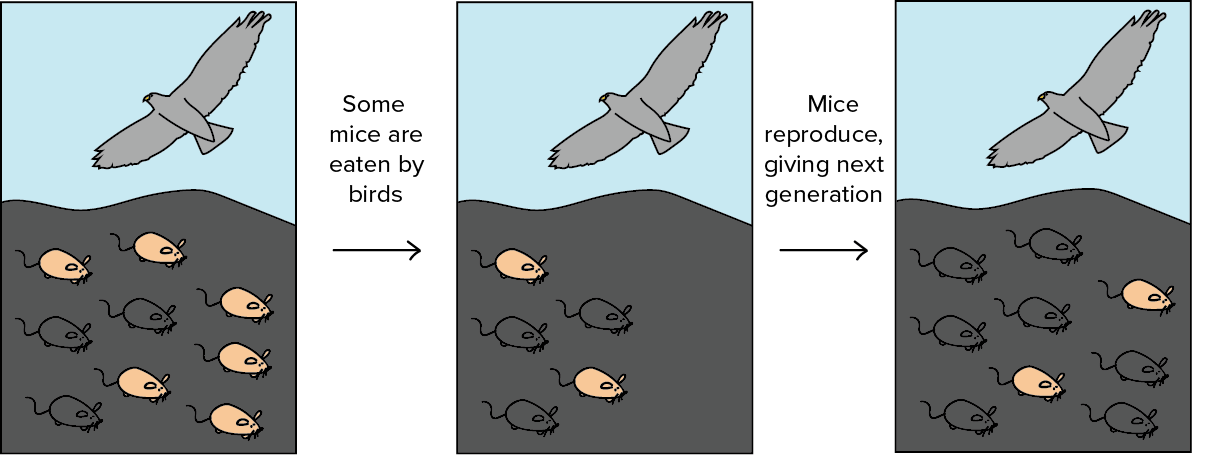
SC.7.L.15.2: Students will identify and explain ways in which genetic variation and environmental factors contribute to evolution by natural selection and diversity of organisms.
Evolution through Natural Selection
50
SC.7.L.15.2: Students will identify and explain ways in which genetic variation and environmental factors contribute to evolution by natural selection and diversity of organisms.
Evolution through Natural Selection
51
Categorize
Unicellular
Prokaryote
DNA
Harsh Environments
Eukaryote
Nucleus
Multicellular
Peptidoglycan
What characteristics describe the Bacteria Domain?
52
Multiple Choice
Vocab check:
The theory that organisms have slowly changed over time...
fossil record
relative dating
evolution
adaptation
53
Multiple Choice
Structures that have the same function but evolved independently are called
homologous
analogous
vestigial
embryological
54
Multiple Choice
Shows how different groups of organisms have changed over time.
fossil record
homologous structures
embryology
55
Multiple Choice
A species could go extinct if:
food becomes more plentiful.
members of the species have adaptations to enhance survival.
the environment changes drastically and no one can adapt.
there is less competition for resources.
56
Multiple Choice
57
Multiple Choice
58
Multiple Choice
59
Multiple Choice
60
Multiple Choice
61
Multiple Choice
Why are advantageous traits more likely to be passed onto offspring?
Because they are more likely to survive and reproduce.
Because they come from dominant alleles.
Because they come from recessive alleles.
Because the organism knew it needed that trait, survives, and passes it on.
62
Multiple Choice
63
Multiple Choice
64
Multiple Choice
Where do adaptations come from?
The individual organism decides to adapt
Mutations that give an organism an advantage in its environment
Genetic recombination during meiosis
Both mutations and genetic recombination are sources of adaptation
65
Multiple Choice
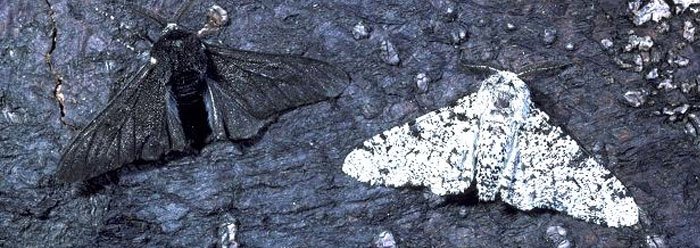
The trees these moths used to live on were white, but have been covered in soot from coal factories. Which moth will be more successful in this environment?
Dark moth
Light moth
Both will be equally successful
Neither will be successful
66
Multiple Choice
Predict which moth would increase in population over time.
light colored
dark colored
67
SC.7.L.16.1: Students will describe and explain that every organism requires a set of instructions that specifies its traits. Students will identify and explain that hereditary information (DNA) contains genes located in the chromosomes of each cell and that heredity is the passage of these instructions from one generation to another.
Heredity/Genetics
68
SC.7.L.16.2: Students will use Punnett squares and pedigrees to determine genotypic and phenotypic probabilities..
Heredity/Genetics
69
Multiple Choice
70
Multiple Choice
71
Multiple Choice
72
Multiple Choice
73
Multiple Choice
having two of the same genes for the trait (sometimes called purebred)
homozygous
hetrozygous
protein
chromosome
74
Multiple Choice
having two different genes for a trait (sometimes called hybrid)
protein
homozygous
heterozygous
genotype
75
Multiple Choice
76
Multiple Choice
77
Multiple Choice
78
Multiple Choice
79
Multiple Choice
A __________ carries information that determines one of your traits.
chromosome
gene
trait
Punnett square
80
Multiple Choice
a tool used to predict the results from crossing 2 sets of allelles
microscope
Punnett square
Jawsome trapezoid
81
SC.7.L.16.2: Students will use Punnett squares and pedigrees to determine genotypic and phenotypic probabilities..
Heredity/Genetics
82
Multiple Choice
In the punnett square below, what belongs in the missing square
83
Multiple Choice
In the punnett square, what is the probability for white fur?
84
Multiple Choice
85
Multiple Choice
86
Multiple Choice
87
Multiple Choice
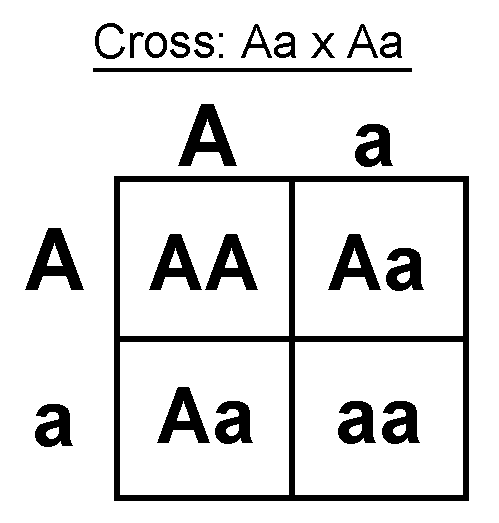
88
Fill in the Blank
What is the missing allele for this parent?
89
Fill in the Blank
What are the alleles for this parent?
90
SC.7.L.16.2: Students will use Punnett squares and pedigrees to determine genotypic and phenotypic probabilities..
Heredity/Genetics
91
Multiple Choice
What do the circles represent?
Male
Female
92
Multiple Choice
What do the squares represent?
Male
Female
93
Multiple Choice
Examine the parents in generation I. How many children do they have?
3
5
6
7
94
Multiple Choice
The shaded shapes represent individuals with attached earlobes (ee). What is the genotype of the generation I parents?
ee
Ee
EE
It is not possible to determine
95
Multiple Choice
Examine the parents in generation I. What is the genotype of their boys?
EE or Ee
EE or ee
Ee or ee
ee
96
SC.7.L.17.1: Students will describe and explain the roles of and relationships among producers, consumers, and decomposers in the process of energy transfer in a food web.
Energy in the Ecosystem
97
Multiple Choice
98
Multiple Choice
99
Multiple Choice
100
Multiple Choice
Make their own food for energy
producers
herbivores
omnivores
carnivores
101
Multiple Choice
Get their energy from consuming plants and other organisms (primary or secondary consumers)
producers
herbivores
omnivores
carnivores
102
Multiple Choice
Get their energy from consuming other organisms (secondary or tertiary consumers)
producers
herbivores
omnivores
carnivores
103
Multiple Choice
What is the frog considered in this food web?
producer
primary consumer
secondary consumer
tertiary consumer
104
Multiple Choice
A food pyramid represent the relative amount of energy in trophic levels. Which of the following correctly shows a food pyramid?
A
B
C
D
105
Multiple Choice
The owl receives energy from which organisms?
grasshopper and mouse
rabbit and butterfly
mouse and rabbit
butterfly and frog
106
Multiple Choice
What is a producer?
Organism that makes its own energy
Organism that breaks down dead organisms
Organism that eats other organisms for food & energy
107
Multiple Choice
108
Multiple Choice
What is a carnivore?
An organism that only eats plants for energy
An organism that eats animals for energy
An organism that eats both plants and animals for energy.
109
Multiple Choice
What is an herbivore?
An organism that only eats plants for energy
An organism that eats animals for energy
An organism that eats both plants and animals for energy.
110
Multiple Choice
What is a consumer?
Organism that makes its own energy
Organism that breaks down dead organisms
Organism that eats other organisms for food & energy
111
Multiple Choice
Several owls live in a forest. The owls prey on mice. Hawks also prey on mice. Which might happen if several hawks move to the forest where the owls live?
The number of owls will increase, and the number of hawks will decrease.
The number of owls and hawks will increase.
The number of mice will increase, and the number of owls will decrease.
The number of owls and mice will decrease.
112
Multiple Choice
Most of the energy in the trophic level below is NOT available to the organisms that eat them. Therefore, the ecosystem can only support the number of organisms that can have enough to eat.
Why can the ecosystem only support small numbers of consumers compared to a large number of producers?
There is not enough energy available to support more consumers
There is too much energy available to the consumers
There is not enough food available for decomposers
There is not enough sunlight available to support more consumers
113
SC.7.L.17.2 : Students will compare and contrast relationships between organisms, such as mutualism, predation, parasitism, competition, and commensalism.
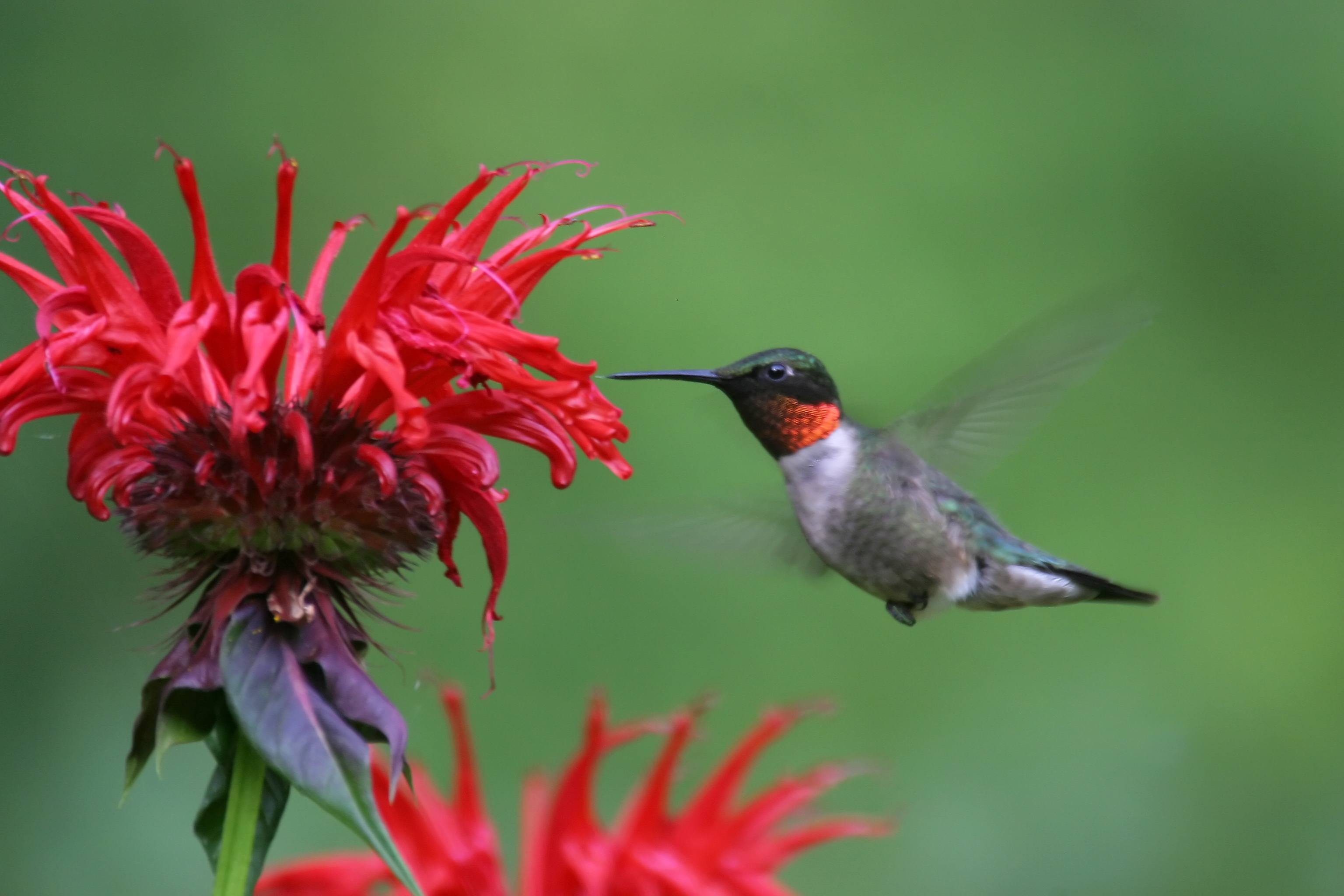
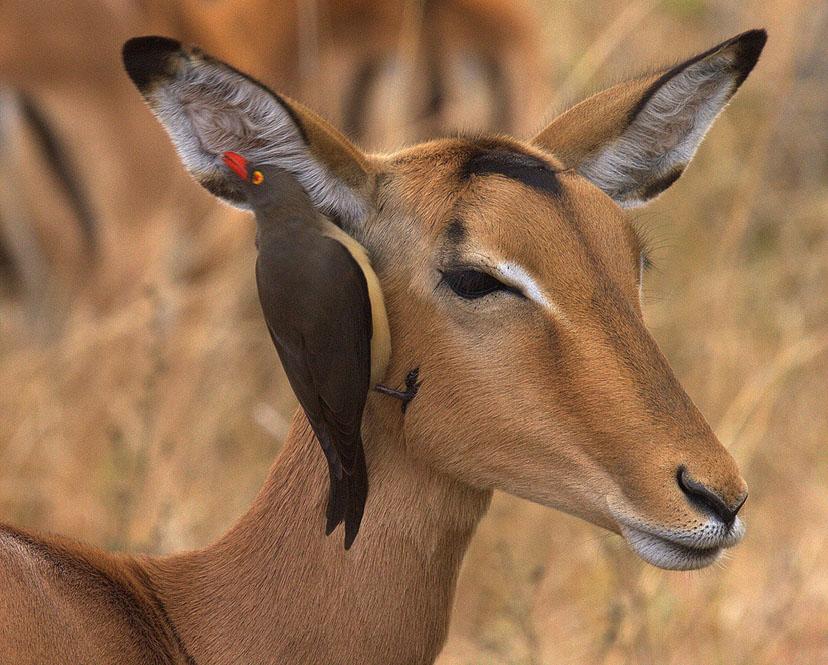
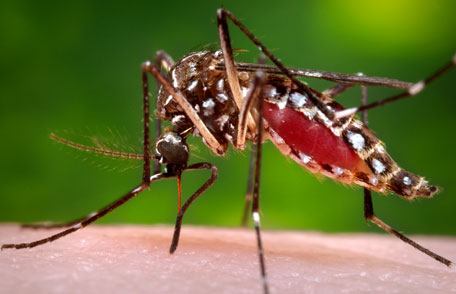
Symbiotic Relationships
114
Multiple Choice
115
Multiple Choice
116
Multiple Choice
117
Multiple Choice
118
Multiple Choice
119
Multiple Choice
120
Multiple Choice
Aphids are tiny insects that live on and eat the leaves of plants, removing vital nutrients from the plants.
Predation
Parasitism
Commensalism
Mutualism
121
Multiple Choice
122
Multiple Choice
123
SC.7.L.17.3: Students will identify and describe various limiting factors in an ecosystem and their impact on native populations
Limiting Factors
124
Multiple Choice
What is NOT an example of limiting factors?
Predation
Food Source
Space
Migration
125
Multiple Choice
Carrying capacity is...
The maximum number of individuals that can fit into an area
Ability of an area to accommodate a growing population
The greatest # of individuals an area can support over time.
The maximum number of species that can co-exist in an area
126
Multiple Choice
If a population of gazelle decrease, the population of cheetahs will...
Decrease
Increase
Stay the same
Cheetahs don't eat gazelle
127
Multiple Choice
Which of the following statements is true?
A decrease in food availability lowers carrying capacity.
An increase in water will decrease the carrying capacity.
A fishes population cannot exceed the carrying capacity.
A population stays level once at carrying capacity.
128
Multiple Choice
If humans destroys all of the Sea Turtles nesting sites, what is going to happen to the Sea Turtles?
Increase
Decrease
Stay the same
Sea Turtles don't need to nest
129
Multiple Choice
What would happen to the bird population if mouse population increased?
Increase
Decrease
Stay the same
What is a mouse?
130
Multiple Choice
What would happen to all organisms on the food web if a disease killed off most of the grass?
Increase
Decrease
Stay the same
What is a disease?
131
SC.8.L.18.4: Students will explain that living systems obey the Law of Conservation of Mass and the Law of Conservation of Energy.
Law of Conservation of Mass
132
SC.8.L.18.4: Students will explain that living systems obey the Law of Conservation of Mass and the Law of Conservation of Energy.
Law of Conservation of Energy
133
Multiple Choice
Is this statement True or False ?
The law of conservation of energy states that energy can neither be created nor destroyed - only converted from one form of energy to another.
True
False
134
Multiple Choice
The Law of Conservation of Mass states Matter is NEITHER created nor destroyed.
True
False
135
Multiple Choice
136
Multiple Choice
137
Multiple Choice
138
Multiple Choice
139
Multiple Choice
140
Multiple Choice
141
Multiple Choice
142
Multiple Choice
143
Multiple Choice
144
Multiple Choice
145
Multiple Choice
146
Multiple Choice
147
Multiple Choice
Honors Life Science Review
Show answer
Auto Play
Slide 1 / 147
SLIDE

Similar Resources on Wayground
133 questions
Marine Science Ch 5
Lesson
•
9th Grade
147 questions
Honors Life Science SSA Review
Lesson
•
8th Grade
142 questions
U3 Catch up plan
Lesson
•
8th Grade
147 questions
2021 Grade 8 SSA Review
Lesson
•
6th - 8th Grade
140 questions
connection
Lesson
•
KG
140 questions
8.11.4-Galaxies & the Universe
Lesson
•
8th Grade
139 questions
Unit 2 Study Guide
Lesson
•
KG
147 questions
Periodic Table Lesson
Lesson
•
8th Grade
Popular Resources on Wayground
15 questions
Fractions on a Number Line
Quiz
•
3rd Grade
14 questions
Boundaries & Healthy Relationships
Lesson
•
6th - 8th Grade
13 questions
SMS Cafeteria Expectations Quiz
Quiz
•
6th - 8th Grade
20 questions
Equivalent Fractions
Quiz
•
3rd Grade
25 questions
Multiplication Facts
Quiz
•
5th Grade
12 questions
SMS Restroom Expectations Quiz
Quiz
•
6th - 8th Grade
20 questions
Main Idea and Details
Quiz
•
5th Grade
10 questions
Pi Day Trivia!
Quiz
•
6th - 9th Grade
Discover more resources for Science
20 questions
Cell Organelles and Functions
Quiz
•
6th - 8th Grade
10 questions
Exploring the Layers of the Earth
Interactive video
•
6th - 10th Grade
21 questions
Waves and Wave Properties
Quiz
•
6th - 8th Grade
20 questions
Newton's Laws of Motion
Quiz
•
8th Grade
20 questions
Heredity Punnett square review
Quiz
•
8th Grade
13 questions
Plate Tectonics and Earth's Structure
Lesson
•
6th - 8th Grade
16 questions
Pedigree
Quiz
•
8th Grade
10 questions
Exploring Heat Transfer: Conduction, Convection, and Radiation
Interactive video
•
6th - 8th Grade