

Unit 2 Lesson 2: Relative Dating

Presentation
•
Science
•
6th Grade
•
Medium
+6
Standards-aligned

Jesse Jayne
Used 34+ times
FREE Resource
13 Slides • 22 Questions
1

2
Open Ended
3
Open Ended
4
Open Ended
5
Open Ended
6
Multiple Choice
7
Multiple Choice
8

9

10
Multiple Choice
11
Multiple Choice

Using Absolute and Relative Age
This tiny speck is a crystal that was found in a sandstone rock in Australia. It's about 4.2 billion years old. The person holding it is Simon Wilde, who discovered it in 1984. Is this an example of Relative Age or Absolute Age
12
Multiple Choice
13
Multiple Choice
14
15
Multiple Choice
16

17
Multiple Choice

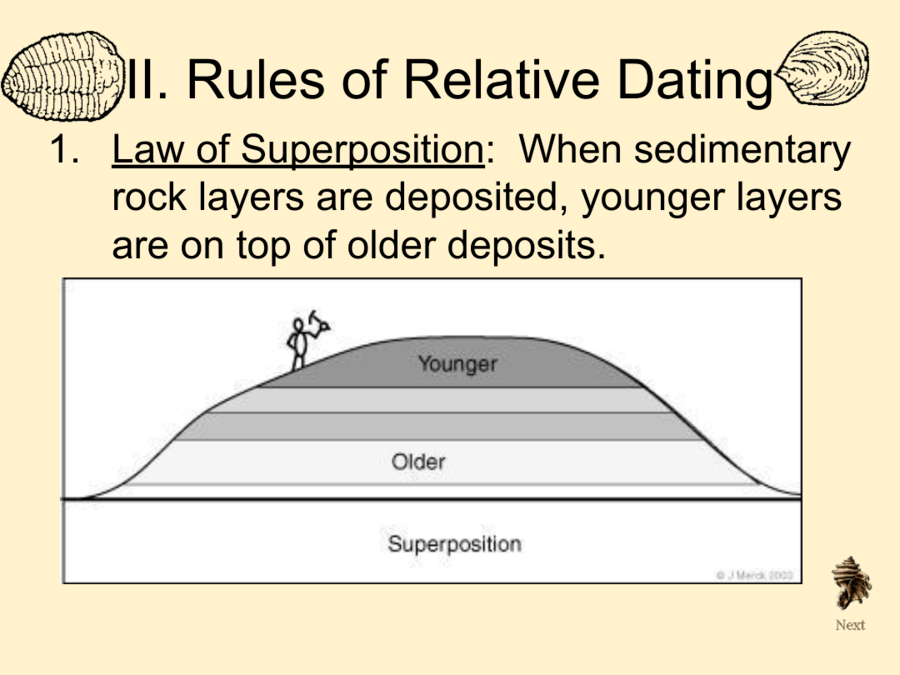
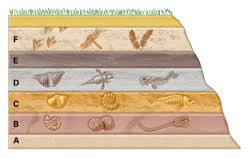
Which layer is the oldest?
18

19
Multiple Choice
20

21
Multiple Choice

Using the information from the previous slides. Which Rock layer is the oldest?
22
Multiple Choice

Using the information from the prevous slides. Which rock layer is the youngest?
23
Multiple Choice

24
Multiple Choice

Which of the following is true?
25
Multiple Choice

Which of the following is true?
26

27

28
Multiple Select
29

30

31

32
Multiple Choice
33
Multiple Choice

34
Multiple Choice

The fossil record shows that horseshoe crabs have existed with very little change for about 1 billion years. Would horseshoe crabs be useful as an index fossil?
35

Show answer
Auto Play
Slide 1 / 35
SLIDE
Similar Resources on Wayground

27 questions
Exploring Variation in Spider Silk
Lesson
•
6th Grade
30 questions
Clouds Lesson
Lesson
•
6th Grade
28 questions
Describing Earth's Atmosphere
Lesson
•
6th Grade
33 questions
RFMS Science: 5 Levels of Environmental Organization Lesson 22
Lesson
•
6th Grade
30 questions
Earth's Atmosphere
Lesson
•
6th Grade
28 questions
Minerals
Lesson
•
6th Grade
27 questions
Body Systems
Lesson
•
6th Grade
27 questions
Minerals
Lesson
•
6th Grade
Popular Resources on Wayground
8 questions
Spartan Way - Classroom Responsible

Quiz
•
9th - 12th Grade
15 questions
Fractions on a Number Line
Quiz
•
3rd Grade
14 questions
Boundaries & Healthy Relationships
Lesson
•
6th - 8th Grade
20 questions
Equivalent Fractions
Quiz
•
3rd Grade
3 questions
Integrity and Your Health
Lesson
•
6th - 8th Grade
25 questions
Multiplication Facts
Quiz
•
5th Grade
9 questions
FOREST Perception
Lesson
•
KG
20 questions
Main Idea and Details
Quiz
•
5th Grade
Discover more resources for Science
20 questions
Rocks and The Rock Cycle
Quiz
•
6th Grade
20 questions
Waves and Wave Properties
Quiz
•
6th - 8th Grade
10 questions
Exploring the Rock Cycle: Types and Formation

Interactive video
•
6th - 8th Grade
15 questions
Punnett Squares
Quiz
•
6th Grade
20 questions
Phases of the Moon
Quiz
•
6th Grade
9 questions
Seasons and Earth's Tilt
Lesson
•
6th - 8th Grade
10 questions
Exploring the Evolution of the Peppered Moth
Interactive video
•
6th - 10th Grade
26 questions
Amplify Chemical Reactions
Quiz
•
6th - 8th Grade