IB Psychology Quantitative Research
Presentation
•
Social Studies
•
11th - 12th Grade
•
Easy
Tanya HS]
Used 9+ times
FREE Resource
19 Slides • 42 Questions
1
IB Psychology
Quantitative Research Methods
2
Multiple Choice
__________ refers to the one study that can be applied to people, places or situations beyond the context of the original study.
credibility
generalizability
triangulation
sampling
3
Multiple Choice
4
Multiple Choice
the extent to which from the study are trustworthy or believable.
credibility
generalizability
triangulation
sampling
5
Multiple Choice
6
Multiple Choice
This is where the researcher reflects on how his or her own biases or personal experiences may have influenced their findings. This is important because it will help to reduce researcher bias. The second type is called "epistemological." This is when the researcher reflects on how they carried out the study and whether their choice of research method or procedure could have influenced the findings. This is important in order to establish the credibility of the findings.
researcher triangulation
reflexivity
methodology triangulation
data triangulation
7
Multiple Choice
_____________ ____________ are variables that can potentially distort the relationship between the IV and the DV.
Target population
Confounding variables
Matching variables
Target variables
8
Multiple Choice
9
Multiple Choice
In_____________ _______________you recruit participants that are more easily available.
Self-selected sampling
Opportunity sampling
Random sampling
Stratified sampling
10
Multiple Choice
_____________ refers to the extent to which findings can be generalized from the experiment to other settings or situations.
Internal validity
Ecological validity
Population validity
11
Multiple Choice
12
Multiple Choice
13
Multiple Choice
14
Multiple Choice
15
Multiple Choice
What is...an unstructured interview?
An interview conducted on a small group at the same time.
An interview method that involves asking questions in a way so the participant has to construct a narrative-type response.
An interview that covers a general topic but there is even more freedom to ask a range of questions.
An interview that has no structure.
16
Multiple Choice
17
Multiple Choice
A ___________ is the group of individuals taking part in the research study.
Population
Sample
Variable
Control
18
Multiple Choice
When the beliefs, opinions or views of the researcher influence the research process, this is called...
Confirmation bias
Researcher bias
Reflexivity
Hindsight bias
19
Multiple Choice
How can you "operationalize" verbal aggression?
Yelling at someone
Kicking someone
The number of insulting comments per hour.
Giving someone the silent treatment.
20
Multiple Choice
Gathering a sample of participants by asking people who have the desirable characteristics
Snowball sampling
Opportunity Sampling
Purposive sampling
Seedling sampling
21
Multiple Choice
22
Multiple Choice
____________refers to the extent to which the !findings can move from one context to another. This is a similar concept to generalizability as the “context” may refer to a setting or participants outside the original study.
credibility
generalizability
triangulation
transferability
23
A key characteristic of an experiment is the use of controls. The idea of "control" is that when the researcher manipulates the independent variable, all other possible variables stay the same. In other words, the procedure must be exactly the same in both groups; the only difference should be the manipulation of the independent variable.
24
For example, if we are testing the role of noise in one's ability to recall a list of words, one group would read the list while listening to music. Another group would read the list in silence. Otherwise, there should be no other difference between the groups. Some examples of controls for this study would include:
The list of words would be the same - the same words, the same font, the same size font, the same order of the words.
The conditions of the room should be the same.
If one room has a lot of posters on the wall with information, while the other room has bare walls, this could theoretically influence the results.
The temperature of the rooms should be the same.
The time of day when the test is taken should be the same.
25
Both the independent and dependent variables must be operationalized. In other words, they need to be written in such a way that it is clear what is being measured. In the example used above, noise is the independent variable.
This could be operationalized as dissonant rock music played at a volume of 100 decibels. An operationalized dependent variable could be the number of words remembered from a list of 30 words.
Now we know exactly what the IV is and what you are going to measure in order to support your research question. Simply stating that your dependent variable is "the results of the study" is not enough as it does not say anything about what is actually being measured.
26
Another characteristic of experiments is that they are highly standardized. This means that they have procedures that are written in enough detail that they can be easily replicated by another researcher. Like ACT tests.
27
A true experiment randomly allocates participants to conditions. With random allocation, participants have the same chance of being assigned to the experimental or the control condition. This lessens the potential for characteristics of the individuals influencing the results.
28
29
Open Ended
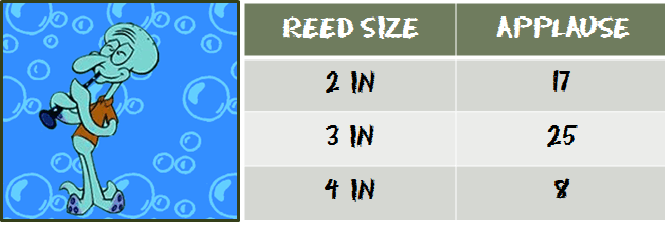
Was this experiment - gold or rubbish? Explain your answer (use some of the vocabulary you learned in the past couple of units)
30
31
Open Ended
How is this study experiment different from the cute aggression study?
32
Lab experiment: an experiment done under highly controlled conditions.
Field experiment: an experiment done in a natural setting. There is less control over variables.
33
Open Ended
How are field experiments different than natural observations?
34
A true experiment: An IV is manipulated and a DV measured under controlled conditions. Participants are randomly allocated to conditions.
A natural experiment: An experiment that is the result of a "naturally occurring event."
35
A quasi experiment: Like the "experiment" by Derren Brown - no IV is manipulated and participants are not randomly allocated to conditions. Instead, it is their traits that set them apart - a fish seller, a hot dog vendor and a jeweler.
This occurs when the researcher does not have control of assigning participants into experimental groups because of the research question. In this type of research, the population of interest is identified, and a sample of that population randomly gathered. The difference begins at this step. Some attribute of the groups sets them apart.
Color blindness would be an example. If the research question is to test differences on a driving task between color blind participants and participants without colorblindness, the attribute of being colorblind cannot be randomly assigned. One group has color blind participants, the other does not. This initial group difference produces a quasi-experiment, even when all other rigors of the scientific method being followed.
36
A natural experiment: An experiment that is the result of a "naturally occurring event." Natural experiments examine a natural situation that occurs in the real world. They are often used when it is not possible to change an independent variable (IV) intentionally for ethical or practical reasons.
In a natural experiment, researchers take advantage of events that occur or have already occurred naturally. Therefore, the researchers cannot change or control the IV of the natural experiment. The IV varies naturally even without intervention in the experiment, e.g., by a natural disaster.
37
Internal validity refers to the degree of confidence that the causal relationship being tested is trustworthy and not influenced by other factors or variables. The ability of the research design to adequately test the hypothesis.Ask yourself if the study design provides strong evidence that the variables are associated with one another. DID MANIPULATION OF THE IV CAUSE CHANGES IN THE DV?
External validity refers to the extent to which results from a study can be applied (generalized) to other situations, groups or events.
38
Natural experiments are often used when it is not possible to alter an IV for ethical or practical reasons intentionally.
The advantages of natural experiments are that they provide opportunities for research that researchers cannot do for ethical or practical reasons. They also have high ecological validity.
The disadvantages of natural experiments are infrequent opportunities for researchers, pre-existing sample bias, and ethical issues, such as conducting a study after traumatic events that may be harmful to participants.
A quasi-experiment is an experiment that examines pre-existing differences between people, so the IV already exists.
The advantages are that quasi-experiments are conducted in the laboratory in a well-controlled environment, which implies good internal validity and reliability. Also, quasi-experiments allow comparisons between people based on their pre-existing differences, so they have higher external validity.
The disadvantage is that there is a bias in the sample in natural quasi-experiments, and researchers can only draw causal conclusions tentatively.
39
Multiple Choice
What are observations made using our five senses called?
Qualitative data
Quantitative data
40
Multiple Select
A Quasi Experiment has a... (tick all that apply)
Artifical Independent Variable
Naturally Occuring Independent Variable
Control of the Independent Variable
Dependent Variable
41
Multiple Select
Which two types of experiments are conducted in a natural setting (eg. a mall, BTS station, school, cinema)?
Laboratory experiment
Field experiment
Natural experiment
42
Multiple Choice
The chimp identified 12 pictures correctly.
Qualitative
Quantitative
43
Multiple Choice
What is a unique weakness of opportunity sampling?
Results may not generalise as participants have been recruited from the same place
Participants may not give their consent to take part
Only participatns that are confident will take part
It is a time consuming sampling method
44
Multiple Choice
The flower is 8 cm tall.
Qualitative data
Quantitative data
45
The experimental method is based on hypothesis testing. Inferential testing asks the researcher to choose between a null and an alternative (research) hypothesis. You are actually calculating the probability of the result occurring if the null hypothesis is true. The first step is to state the null hypothesis. The null hypothesis assumes that there will be no significant difference for a given population under two different conditions. For example: H0: Individuals show no significant difference in the mean number of words that students recall from a list of 40 unrelated words when in a quiet room than when listening to music. The IV and the DV are clearly stated. The IV is whether the individual is in a quiet room or listening to music. The DV is recalling words from a list of 40 unrelated words.
First, notice that the variables are operationalized - that is, they are very clearly defined for us so we know exactly what is being manipulated and what is being measured. Also notice that the null hypothesis states that there will be no significant difference. This is important because we are not saying that the mean recall must be exactly the same in order to retain the null hypothesis - it is only important that there not be a "significant difference" - that is, a large enough difference to say that the results were not due to chance.
46
The alternative hypothesis is your guess about what will happen. For the above experiment, the researcher hypothesis could be:
H1: Participants will memorize more words from a list of 40 unrelated words when they are in a quiet room than when listening to the radio.
Notice that there is a clear guess as to the outcome of the experiment.
47
What if we find that they remember fewer words? If that is true, then the alternative hypothesis is not supported, but neither is the null hypothesis is also not supported because there is a difference in the number of words memorized. If the null is rejected by there is no correct alternative hypothesis, the experiment is technically invalid.
48
The way to solve this is to state a two-tailed hypothesis instead of a one-tailed hypothesis. A two-tailed hypothesis does not state the direction:
H1: There will be a difference in the number of words that participants will memorize from a list of 40 unrelated words when they are in a quiet room than when listening to the radio.
The two-tailed test gets you away from the trap of getting results that do not accept your alternative hypothesis but clearly are significant. It is not acceptable practice to change your hypothesis after you get your results to match your findings. A two-tailed hypothesis is usually done in psychology to investigate a question. A one-tailed is often used to test the reliability of a study's findings.
49
Time to apply what you just learned!
50
Multiple Choice
The ethical guideline for research in which participants must agree to be a part of the study is known as
Informed consent
Confidentiality
Free from harm
Debriefing
51
Multiple Choice
Choose the type of experiment that has the highest reliability.
Laboratory experiment
Field experiment
Natural experiment
52
Multiple Choice
Feelings, attitudes, opinions and thoughts of human being
QUALITATIVE RESEARCH
QUANTITATIVE RESEARCH
53
Multiple Choice
The names of the participants in a research experiment must be kept secret is an ethical guideline known as
Debriefing
Free from harm
Informed Consent
Confidentiality
54
Multiple Choice
A carefully worded statement of the exact procedures used in a research experiment is known as
replication
operational definition
hypothesis
standardization
55
Multiple Choice
The level of difficulty of psychology is significantly different to the level of difficulty of biology. This is an example of a....
2 Tailed Hypothesis
1 Tailed Hypothesis
Null Hypothesis
56
Multiple Choice
What was the dependent variable?
57
Multiple Choice
Which type of experiment is most likely to have proper informed consent and be more ethical?
Laboratory experiment
Field experiment
Natural experiment
58
Multiple Choice
Choose the type of experiment that has the highest ecological validity.
Laboratory experiment
Field experiment
Natural experiment
59
Multiple Choice
The researchers got two students to be confederates (actors) and act out a fight in the middle of the school canteen. They quietly watched form a corner to see count how many people went to help.
Laboratory experiment
Field experiment
Natural experiment
60
Multiple Choice
Which type of experiment lacks ecological validity?
field
lab
quasi
61
Multiple Choice
IB Psychology
Quantitative Research Methods
Show answer
Auto Play
Slide 1 / 61
SLIDE
Similar Resources on Wayground

56 questions
Copy of G2_K9_L11_22-23
Lesson
•
KG
56 questions
8.6 Trig Review
Lesson
•
11th Grade
59 questions
African American
Lesson
•
KG - 12th Grade
56 questions
Final 4
Lesson
•
11th Grade
53 questions
Cardiovascular System: Heart Anatomy
Lesson
•
11th Grade - University
58 questions
Web technologies
Lesson
•
11th - 12th Grade
59 questions
DC Government
Lesson
•
12th Grade
56 questions
Environmental Science Final Exam Review (Fall 2020)
Lesson
•
10th - 12th Grade
Popular Resources on Wayground
8 questions
Spartan Way - Classroom Responsible
Quiz
•
9th - 12th Grade
15 questions
Fractions on a Number Line
Quiz
•
3rd Grade
14 questions
Boundaries & Healthy Relationships
Lesson
•
6th - 8th Grade
20 questions
Equivalent Fractions
Quiz
•
3rd Grade
3 questions
Integrity and Your Health
Lesson
•
6th - 8th Grade
25 questions
Multiplication Facts
Quiz
•
5th Grade
9 questions
FOREST Perception
Lesson
•
KG
20 questions
Main Idea and Details
Quiz
•
5th Grade
Discover more resources for Social Studies
38 questions
Unit 6 Key Terms
Quiz
•
11th Grade - University
8 questions
1990's Review
Quiz
•
11th Grade
10 questions
Boss Battle- Quizziz
Quiz
•
12th Grade
55 questions
Unit 12: World War I
Quiz
•
8th - 12th Grade
22 questions
25-26 Standard 3
Quiz
•
11th Grade
35 questions
Early Cold War Review
Quiz
•
9th - 12th Grade
20 questions
Legislative Branch review - Congress
Quiz
•
12th Grade
18 questions
USHC 6 1920s to Mass Advertising
Quiz
•
9th - 12th Grade