Search Header Logo
Module 3 Revision Quiz Part 2

Module 3 Revision Quiz Part 2

Assessment

Presentation

•

Biology

•

11th Grade

•

Medium

Created by

Jeremy Soumpholphakdy

Used 1+ times

FREE Resource

33 Slides • 28 Questions

1

Module 3 Revision Quiz Part 2

Theory of Evolution by Natural Selection and Evidence for Evolution
Slide image

2

Open Ended

What is evolution?

3

Evolution

  • Evolution is the change in the genetic composition of populations over time.

4

Multiple Select

Evolution can be observed by changes in

1

phenotypes in a population

2

genotypes in populations

3

allele frequencies

4

genetic frequencies

5

Biodiversity and speciation

  • Biodiversity increases as genetic changes result in new genetic variation and the divergence of population and species

6

Open Ended

What were TWO key observations that formed the basis of Darwin's theory of evolution

7

Natural selection

  • The theory of evolution by natural selection proposed that species were not created in their present forms but had evolved from ancestral species.

8

Natural Selection Pt. 2

  • 1. Members of a population often vary in their inherited traits

  • 2. All species produce more offspring than their environmental can support, and most of these offspring fail to survive and reproduce

9

Two more inferences


  • Based on these two key observations, Darwin drew two inferences

10

Inference 1.

Individuals with favourable traits are more likely to survive and reproduce

11

Inference 2.

  • This unequal ability of individuals to survive and reproduce leads to the accumulation of favourable traits in a population over generations

12

Fitness

  • Fitness refers to an organism's suitability to its environment.

13


14

Multiple Choice

Question image

Evolution occurring quickly due to catastrophic events

1

Homeostasis

2

Gradualism

3

Statsis

4

Punctuated Equilibrim

15

Multiple Choice

What type of evolution where there is a sudden, rapid change then no change for a long time?

1

Co-Evolution

2

Punctuated Equilibrium

3

Divergent Evolution

4

Convergent Evolution

16

Darwin's OG Theory

Our notion of evolution, and indeed Darwin’s idea, was of slow gradual change.

This occurs if there is little to no change in the environment. 

17

Punctuated equilibrium

Most examples of evolution occur in (relative) short bursts of change, followed by longer periods of stability.

This is punctuated equilibrium

18

Multiple Choice

Humming birds and some moths have evolved beaks/tongues directly suited to the flowers from which they feed. This is an example of:

1

Coevolution

2

Parallel evolution

3

Convergent evolution

4

Divergent Evolution

19

Multiple Choice

Question image
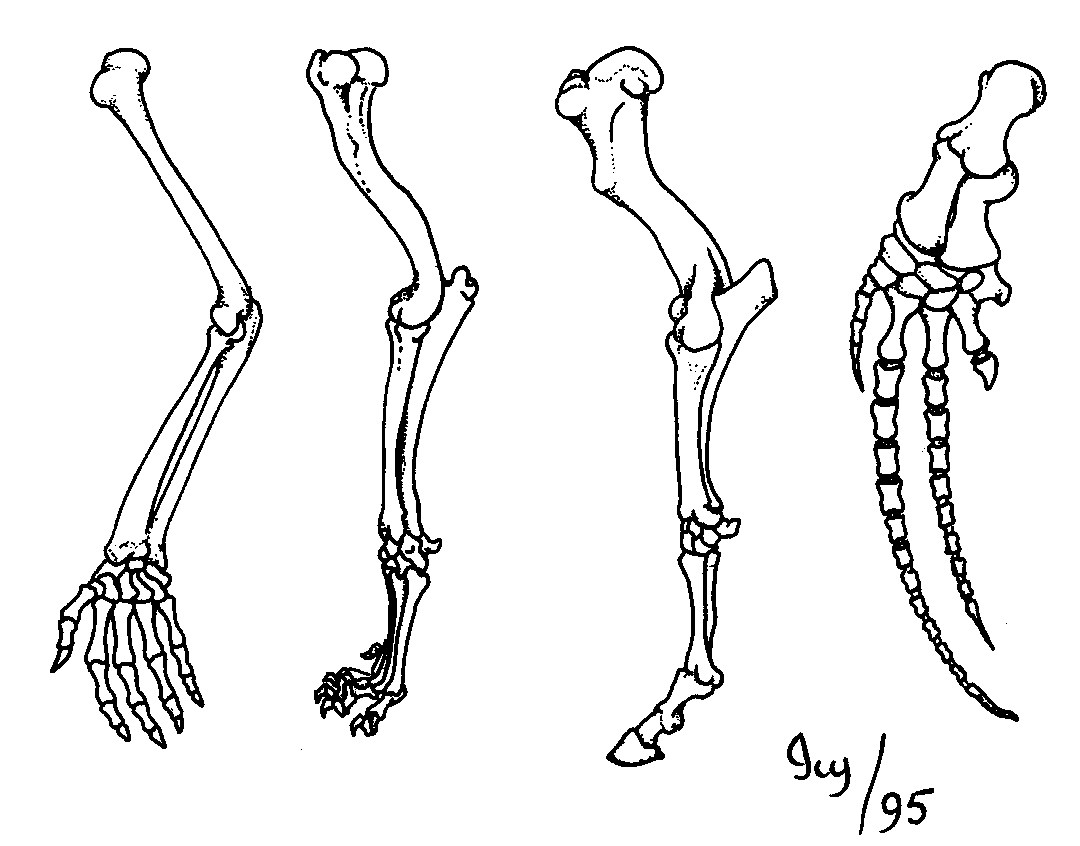
Structures with the same parts have different functions; suggests that organisms share a common ancestry
1
vestigial structures
2
homologous structures
3
adaptive radiation
4
fossil

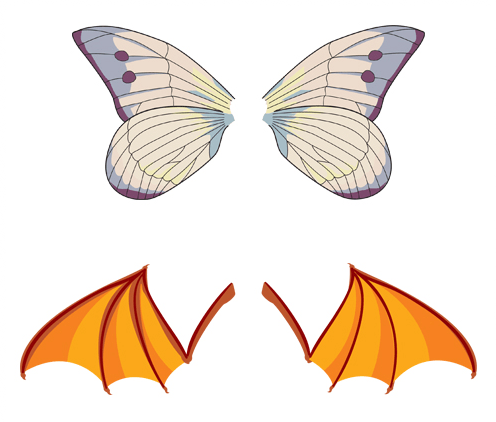
20

Multiple Choice

Question image
How would you describe this evolution?
1
Homologous structure
2
Analogous structure
3
Structural adaption
4
Functional adaption

21

Multiple Choice

Question image

The three species pictured do not share a common ancestor, yet have evolved to have a similar anatomy and life style. This is an example of ?

1

Homologous Structures

2

Divergent Evolution

3

Vestigial Organs

4

Convergent Evolution

22

Key definitions

  • Coevolution occurs when a change in one species directly effects another. 

  • Parallel evolution occurs is the evolution of similar features in related species that have experienced similar environments and selection pressures.

  • Convergent evolution is the evolution through natural selection of similar features in unrelated groups of organism.

23

Slide image

24

Multiple Choice

Question image

1

The image shows convergent evolution.

2

The image shows divergent evolution.

3

The image shows adaptive radiation.

4

The image shows homologous structures.

25

Multiple Choice

Which type of evolution shows a common ancestor?  
1
convergent
2
divergent
3
adaptive radiation 
4
both divergent and adaptive radiation 

26

Multiple Choice

Question image

By what mechanism did the anoles on Puerto Rico diverge to occupy species specific niches?

1

Adaptive Radiation

2

Artificial Selection

3

Stabilizing Natural Selection

4

Coevolution

27

Multiple Choice

Question image

The three species pictured share a common ancestor and have adapted so that each lives in a different environment. This is an example of

1

Law of Superposition

2

Evolutionary Arms Race

3

Divergent Evolution

4

Convergent Evolution

28

Divergent evolution

Separated populations typically diverge and gradually evolve into different species.


This is called divergent evolution.

29

Factors and effects

  • Divergent evolution can be a result of genetic drift (random changes in allele frequencies)

  • After enough difference has accumulated, the populations lose the ability to interbreed. Thus, one parent species can give rise to many new species; this is known as speciation

30

Multiple Choice

All of the alleles of all of the genes within a population

1

Allele Frequency

2

Gene Pool

3

Genetic Drift

4

Genetic Equilibrium

31

Multiple Choice

One variation/version of a gene

1

Allele

2

Analogous

3

Homologous

4

Mutation

32

Multiple Choice

Formation of a new species

1

Genetic Drift

2

Speciation

3

Migration

4

Genetic Equilibrium

33

Multiple Choice

Formation of a new species

1

Genetic Drift

2

Speciation

3

Migration

4

Genetic Equilibrium

34

Key definitions

  • A species is a group of individuals that can produce viable, fertile offspring through interbreeding.

  • The gene pool is all the possible varieties of a gene within a group of interbreeding individual organisms. 

35

Open Ended

Provide some examples of prezygotic isolating mechanisms.

36

Prezygotic isolating mechanisms

  • These are anything that prevents individuals of different species from interbreeding

37

Geographical (spatial) isolation

Populations may be separated by physcial and geographical barriers, such as oceans, deserts, mountain ranges and glaciers.

38

Ecological isolation

Populations occupy different ecological niches within the same ecoystem

39

Ecological isolation

Mt Abrupt stringybark and brown stringbark both occupy the Grampians in Mt Victoria, however, Mt Abrupts live on upper slopes on rocky sites and browns occur on lower slopes on deeper soils

Slide image

40

Temporal isolation

The breeding cycles or active times of populations do not overlap.


For example, a nocturnal animal is unlikely to breed with a diurnal one.

41

Behavioural isolation

This occurs when behaviours such as mating calls and courtship rituals are different.


42

Structural/morhpological isolation

The reproductive organs of different species are physically incompatible and individuals are unable to reproduce.

43

Slide image


44

Gamete mortality

This occurs after mating has taken place. Egg and sperm fail to fuse in fertilization and a zygote does not form.

45

Multiple Choice

Question image

A population of fruit bats is active at night. Part of the population is most active from 8pm to midnight, and the rest of the bats eat from 1am to 5am. Eventually, the bats don't interact with each other at all. What type of isolation is this?

1

Behavioral isolation

2

Temporal isolation

3

Geographic isolation

46


47

Multiple Choice

Question image

What type of isolation has occurred in the image?

1

Geographic isolation

2

Temporal isolation

3

Behavioral isolation

48

Multiple Choice

Question image

What type of isolation has occurred in the image?

1

Geographic isolation

2

Temporal isolation

3

Behavioral isolation

49

Multiple Choice

What evidence does speciation provide for the theory of evolution by natural selection?
1
Speciation can show us that new species don't choose to adapt, but have changed due to diverging from an original species due to reproductive barriers.
2
Speciation can show us that new biological species can come from divergence (separating) due to reproductive barriers.
3
Speciation can show us that environmental changes & genetic variation play a role in the process of a new species diverging from an original species due to reproductive barriers. 
4
All of the above fit!

50

Multiple Choice

The term for the formation of new and distinct species over the course of evolution is...

1

speciation

2

biological species concept

3

reproductive barrier

4

natural selection

51

Multiple Choice

The flowers of pink tulips open in the morning, while the flowers of lavender tulips open in the early afternoon. The bees that pollinate these tulips cannot carry pollen back & forth between the two types of tulips because of their flowers being closed at different times of day. What type of reproductive barrier is this?

1

behavioral isolation

2

hybrid sterility

3

temporal isolation

4

mechanical isolation

52

Multiple Choice

Some female peacocks prefer males with large, colorful tales while other female peacocks prefer males with no tail at all. Females are beginning to only mate with the type of males with the tail they prefer. What type of reproductive barrier is this?
1
behavioral isolation
2
hybrid sterility 
3
temporal isolation
4
mechanical isolation 

53

Multiple Choice

A flash flood carried a raft of Amazon ants away from their original population. There is enough distance between the two groups, that they will never meet in nature again. What type of reproductive barrier is this?

1

behavioral isolation

2

temporal isolation

3

gametic isolation

4

geographic isolation

54

Post zygotic isolating mechanisms

Anything that prevents the production of viable offspring after fertilisation

55

Hybrid inviability

The hybrid zygote does not survive

56

Reduced hybrid viability

The hybrid zygote develops but does not develop fully into a new individual

57

Hybrid sterility

The hybrid organism develops but is incapable of reproducing

58

Hybrid breakdown

The hybrid cannot reliably produce viable offspring.

59


60

Open Ended

Why is genetic isolation an important step in speciation?

61

Open Ended

Why is genetic isolation an important step in speciation?

Module 3 Revision Quiz Part 2

Theory of Evolution by Natural Selection and Evidence for Evolution

Slide image

Show answer

Auto Play

Slide 1 / 61

SLIDE