Life Science Review Part 2
Presentation
•
Science
•
6th - 9th Grade
•
Medium
+17
Standards-aligned
Katherine Heter
Used 17+ times
FREE Resource
25 Slides • 31 Questions
1
Life Science Review Part 2
2
3
4
5
6
7
8
9
Multiple Choice
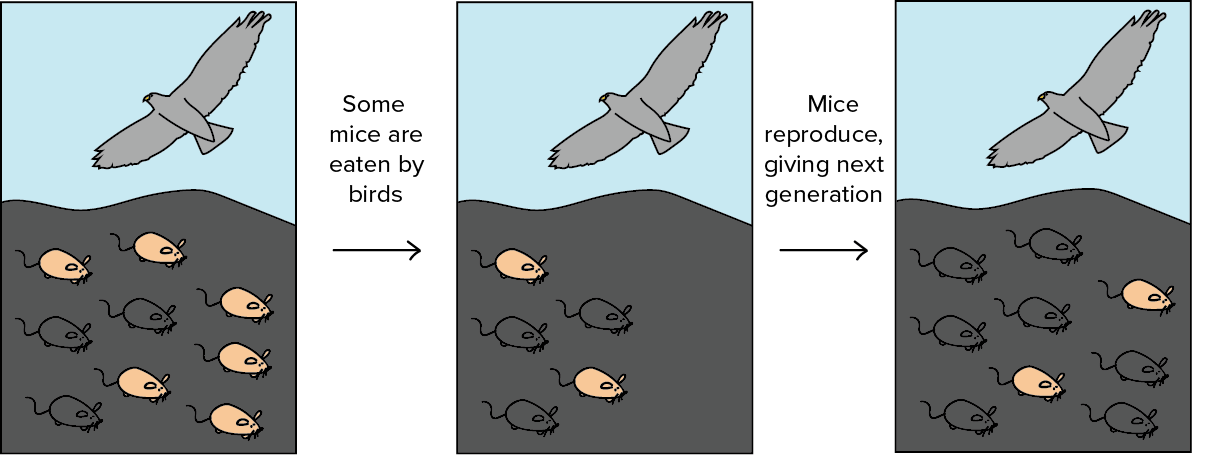
Most tortoises have large domed-shaped shells rather than flat shells. Which of the following best explains why?
Tortoises are amphibians, and domed shells are better for swimming
There is little genetic variation in tortoises
Having a flat shell is the result of injury
Domed shells offer an advantage for survival
10
Multiple Choice
Scientists believe that the modern horse developed from a short, horse-like mammal about the size of a dog. Over millions of years, the horse increased in size and developed much longer legs. Horses with longer legs had a better chance of surviving than the shorter-legged members of the herd. How did longer legs help horses survive?
They allowed the horses to reach nuts in trees
They allowed the horses to outrun predators
They allowed the horses to carry more body weight
They allowed the horses to capture prey
11
Multiple Choice
12
Multiple Choice
13
Multiple Choice
Based on the fossil layers shown, what can you infer about the past environment at this location?
The environment at this location has never changed
The organisms at this environment became simpler over time
The environment began as a dry land environment, then evolved into an ocean or water environment.
The environment began as an ocean or water environment, then evolved into a dry land environment.
14
Multiple Choice
15
Multiple Choice
16
Multiple Choice
17
18
19
20
21
22
23
Multiple Choice
If all of the offspring of an organism have the exact same genetic material, which is identical to the parent organism what type of reproduction is most likely?
reproduction with spores
reproduction with gametes
sexual reproduction
asexual reproduction
24
Multiple Choice
What is the correct genotype for individual I-2?
25
Multiple Choice
26
Multiple Choice
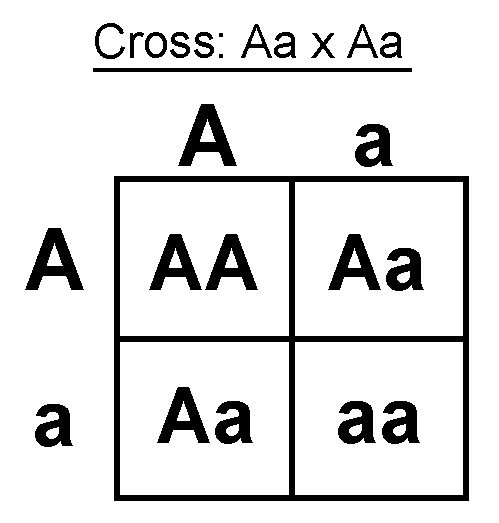
What are the phenotype percentages of the offspring?
(A-Brown fur color; a-white fur color)
50 % Brown fur and 50% White fur
25 % Brown fur and 75% White fur
75 % Brown fur and 25% White fur
0% Brown fur and 100% White fur
27
Multiple Choice
B = brown eyes
b = blue eyes
One brother has genotype BB and the other brother has genotype Bb.
Which statement is true about these two brothers?
They have same phenotype and genotype
They have different phenotypes and genotypes
They have same phenotype, but different genotypes
They have different phenotypes, but the same genotype
28
Multiple Choice
In this cell division, one diploid cell divides and makes four haploid sex cells. What do you call this special kind of cell division?
mitosis
meiosis
fertilization
pollination
29
Multiple Choice
What do you call the type of reproduction in which the genetic materials from two different cells combine, producing an offspring?
pollination
sexual reproduction
fertilization
asexual reproduction
30
Multiple Choice
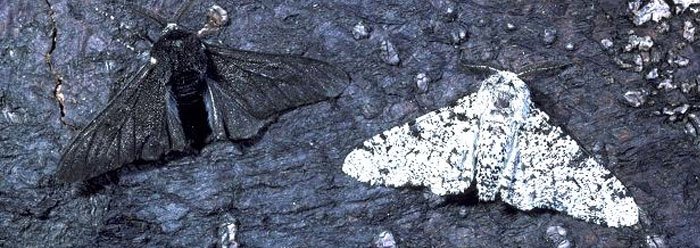
The Bengal tiger is a species with fur that is usually orange with dark stripes. Sometimes orange Bengal tiger parents produce an offspring known as a white tiger, which has white fur. The trait for white fur is most likely caused by
parasites in the female parent
mutation in the embryo
recessive alleles in both parents
unusual conditions in the environment
31
32
33
34
35
36
37
38
Multiple Choice
Food webs show feeding relationships among different types of organisms. those organisms each have a specific niche. Which of the following best describes the function of decomposers in food webs?
to recycle nutrients into soil
to convert solar energy into food
to provide food for secondary consumers
to compete with secondary consumers for oxygen
39
Multiple Choice
A food web is represented by the diagram below. Which population in this food web would most likely be negatively affected by an increase in the mouse population?
snake
wolf
rabbit
hawk
40
Multiple Choice
Which of these is the producer in this food web?
Phytoplankton
Crabs
Clams
Copepods
41
Multiple Choice
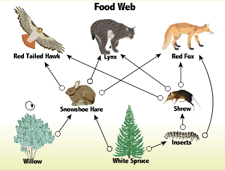
What may happen if the snowshoe hare was removed from the food web pictured?
The insects in the habitat would increase because there are less snowshoes hares to eat them.
The Lynx, Fox, and Hawk populations would decrease.
The willow tree population would decrease because they are now more insects to eat them.
Foxes would increase because they are now eating the willow trees.
42
Multiple Choice
43
Multiple Choice
Bass tapeworms attach to the gills and intestines of bass fish. These worms survive by taking nutrients from the bass. What type of relationship does this represent?
predation
parasitism
mutualism
commensalism
44
Multiple Choice
A population of deer existed for centuries in a hilly region of England. The landowners decided to introduce sheep into the same area. Deer and sheep eat the same kind of plants. After the sheep were introduced, the deer population began to decline. How could the decline in the deer population be explained?
sheep compete with the deer
the sheep were smaller than the deer
the food web became too complex
sheep are at a higher trophic level than deer
45
Multiple Choice
Mangrove tree roots serve as a place for freshwater oysters to attach when the tide is high, as shown in the picture below. The oysters are protected from predators when attached to the roots underwater. The oysters do not harm the trees nor do they provide any benefit to the trees. Which of the following relationships is most similar to the relationship between the mangrove trees and the oysters?
African ants living in acacia trees feed on leaf-eating insects found on the tree
Spider crabs are camouflaged by the green-brown algae growing on their shells
A whale is unaffected by the attached remora fish feeding on the whale’s leftover food
Bees fly from one flowering plant to another gathering nectar and pollinating the flowers
46
Multiple Choice
If a disease destroying barley plants in a field swept through an ecosystem, what would happen to the barley eating bird population in the the field ?
The bird population would stay the same
The bird population would infinitely increase
The bird population would decrease
47
48
49
50
51
Multiple Choice
The average person eats tons of food during their life, yet an adult only weighs, at most, a few hundred pounds. Which answer best explains what happens to all of that food?
Some is used to build body structures, and some disappears while being transported
Some is used for growth, some may be stored, and some is excreted as waste
Some is used for energy for the body, some may be stored, and some disappears
Some evaporates during the digestion process, and some gets used by the body
52
Multiple Choice
One of your cells has taken in a sugar molecule from a cookie you ate at lunch. The sugar molecule contains atoms of carbon. Which best explains what will happen to the carbon after your body processes it?
It is recycled by the body to create CO₂ which will be stored for later use
It is destroyed as the body breaks it down to use for energy
It is returned to the environment through CO₂ or the decay of organic matter
It is transformed into sugars which will be broken down and used for energy by the body
53
Multiple Choice
If a plant had a mutation that kept it from making enough chlorophyll, how would it look different from other plants of its own kind?
It would have fewer leaves and a broader stem than the others
It would be smaller and not as green than the others
It would be larger and greener than the others
It would have more flowers and more leaves than the others
54
Multiple Choice
Fossil fuels such as natural gas and petroleum contain carbon. How did the carbon get into the fossil fuels?
It migrated into them from the rocks in which the fossil fuels are found
It seeped out of coal buried near the fossil fuel deposits underground
It was in the air that was trapped underground when the fossil fuels formed
It was once part of the organisms from which the fossil fuels formed
55
Multiple Choice
Plants produce and release oxygen gas during the process of photosynthesis. Why do they do this?
Oxygen is a waste product of photosynthesis and is easily released as a gas
Humans need oxygen, so plants produce it to make sure we have enough of it
The escaping oxygen gas helps the plant gather the sunlight needed for photosynthesis
When the oxygen gas is released, it turns into carbon dioxide gas that the plant needs
56
Multiple Choice
Which of the following processes would be most likely to release carbon dioxide into the environment?
building a wooden house
growing trees in the yard
burning wood in a campfire
chipping up wood for mulch
Life Science Review Part 2

Show answer
Auto Play
Slide 1 / 56
SLIDE

Similar Resources on Wayground
50 questions
Subject and Verb Agreement
Lesson
•
7th - 10th Grade
53 questions
SSA - EARTH REVIEW (6-8th)
Lesson
•
6th - 8th Grade
52 questions
Atoms, Molecules, Compounds, Elements
Lesson
•
6th - 8th Grade
52 questions
Space Exploration
Lesson
•
6th - 8th Grade
53 questions
Separating Mixtures
Lesson
•
7th - 9th Grade
47 questions
Invertebrates
Lesson
•
6th - 8th Grade
53 questions
Untitled Lesson
Lesson
•
KG
50 questions
Earth Convection Currents
Lesson
•
6th - 8th Grade
Popular Resources on Wayground
15 questions
Fractions on a Number Line
Quiz
•
3rd Grade
14 questions
Boundaries & Healthy Relationships
Lesson
•
6th - 8th Grade
13 questions
SMS Cafeteria Expectations Quiz
Quiz
•
6th - 8th Grade
20 questions
Equivalent Fractions
Quiz
•
3rd Grade
25 questions
Multiplication Facts
Quiz
•
5th Grade
12 questions
SMS Restroom Expectations Quiz
Quiz
•
6th - 8th Grade
20 questions
Main Idea and Details
Quiz
•
5th Grade
10 questions
Pi Day Trivia!
Quiz
•
6th - 9th Grade
Discover more resources for Science
20 questions
Rocks and The Rock Cycle
Quiz
•
6th Grade
20 questions
Cell Organelles and Functions
Quiz
•
6th - 8th Grade
10 questions
Exploring the Layers of the Earth
Interactive video
•
6th - 10th Grade
21 questions
Waves and Wave Properties
Quiz
•
6th - 8th Grade
20 questions
Newton's Laws of Motion
Quiz
•
8th Grade
16 questions
Photosynthesis and Cellular Respiration Review
Quiz
•
7th Grade
20 questions
Heredity Punnett square review
Quiz
•
8th Grade
15 questions
Punnett Squares
Quiz
•
6th Grade