

Endothermic vs exothermic

Presentation
•
Chemistry
•
10th - 11th Grade
•
Practice Problem
•
Easy
Standards-aligned

Kristen Vanderveen
Used 33+ times
FREE Resource
10 Slides • 9 Questions
1

2
Multiple Choice
3
Multiple Choice
4

5

6
Multiple Choice
7

8

9

10

11
12
Multiple Choice
13

14
Multiple Choice
15
Multiple Choice
16
Multiple Choice
17
Multiple Choice
18
19
Multiple Choice

Is the following process exothermic or endothermic?
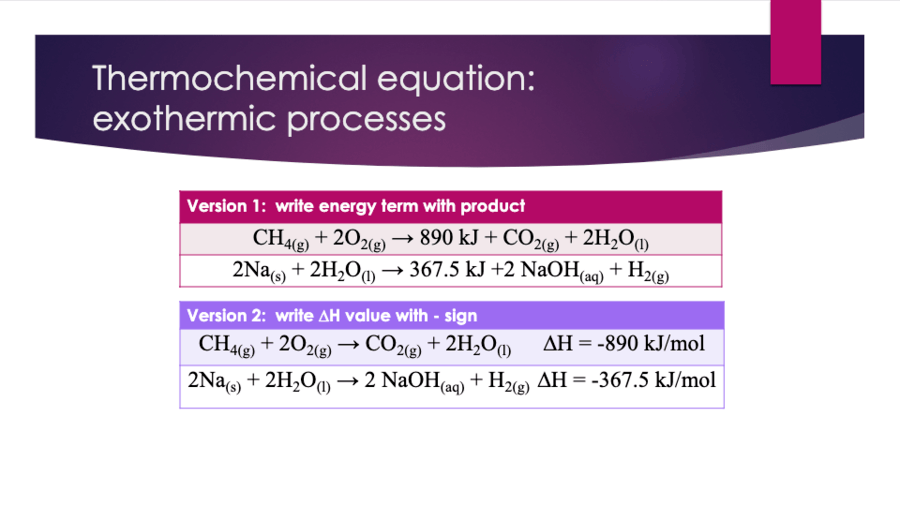
2 Al + 3CuCl2 ⟶ 2AlCl3 + 3 Cu + heat
Show answer
Auto Play
Slide 1 / 19
SLIDE
Similar Resources on Wayground

12 questions
Molar Conversions
Lesson
•
9th - 12th Grade
14 questions
Camel Racing
Lesson
•
10th - 11th Grade
11 questions
Ch. 12.3 - Limiting Reagent and Percent Yield
Lesson
•
9th - 11th Grade
16 questions
Molarity
Lesson
•
10th - 11th Grade
16 questions
stoichiometry
Lesson
•
10th Grade
11 questions
Significant Figures
Lesson
•
10th - 12th Grade
17 questions
Unit 3 Lesson 2: Specific Heat
Lesson
•
10th - 12th Grade
16 questions
Intro to Nuclear Chemistry
Lesson
•
9th - 12th Grade
Popular Resources on Wayground
15 questions
Fractions on a Number Line

Quiz
•
3rd Grade
10 questions
Probability Practice
Quiz
•
4th Grade
15 questions
Probability on Number LIne
Quiz
•
4th Grade
20 questions
Equivalent Fractions
Quiz
•
3rd Grade
25 questions
Multiplication Facts
Quiz
•
5th Grade
22 questions
fractions
Quiz
•
3rd Grade
6 questions
Appropriate Chromebook Usage
Lesson
•
7th Grade
10 questions
Greek Bases tele and phon
Quiz
•
6th - 8th Grade
Discover more resources for Chemistry
20 questions
Predicting Products
Quiz
•
9th - 12th Grade
10 questions
Exploring Types of Chemical Reactions

Interactive video
•
6th - 10th Grade
19 questions
Stoichiometry, % yield, Limiting Reactants
Quiz
•
10th Grade
20 questions
Types of Chemical Reactions
Quiz
•
9th - 12th Grade
10 questions
Exploring Ionic and Covalent Bonding Concepts
Interactive video
•
6th - 10th Grade
7 questions
GCSE Chemistry - Balancing Chemical Equations #4
Interactive video
•
9th - 10th Grade
12 questions
Percent Yield
Quiz
•
10th Grade
10 questions
Identifying types of reactions
Quiz
•
9th - 12th Grade