
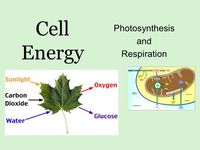
AP Biology Cellular Respiration

Flashcard
•
Biology
•
11th Grade - University
•
Practice Problem
•
Hard

Wayground Content
FREE Resource
Student preview

15 questions
Show all answers
1.
FLASHCARD QUESTION
Front
What is cellular respiration?
Back
Cellular respiration is the process by which cells convert glucose and oxygen into energy (ATP), carbon dioxide, and water.
2.
FLASHCARD QUESTION
Front
What are the main stages of cellular respiration?
Back
The main stages of cellular respiration are Glycolysis, the Citric Acid Cycle (Krebs Cycle), and Oxidative Phosphorylation.
3.
FLASHCARD QUESTION
Front
What is the role of glycolysis in cellular respiration?
Back
Glycolysis breaks down glucose into pyruvate, producing a small amount of ATP and NADH in the process.
4.
FLASHCARD QUESTION
Front
What is the Citric Acid Cycle (Krebs Cycle)?
Back
The Citric Acid Cycle is a series of chemical reactions used by all aerobic organisms to generate energy through the oxidation of acetyl-CoA.
5.
FLASHCARD QUESTION
Front
What is oxidative phosphorylation?
Back
Oxidative phosphorylation is the final stage of cellular respiration where ATP is produced using energy from electrons transferred through the electron transport chain.
6.
FLASHCARD QUESTION
Front
What are electron carriers in cellular respiration?
Back
Electron carriers, such as NADH and FADH2, transport electrons and hydrogen atoms to the electron transport chain.
7.
FLASHCARD QUESTION
Front
What is the significance of the electron transport chain?
Back
The electron transport chain is crucial for creating a proton gradient that drives ATP synthesis through chemiosmosis.
Access all questions and much more by creating a free account
Create resources
Host any resource
Get auto-graded reports

Continue with Google

Continue with Email

Continue with Classlink

Continue with Clever
or continue with

Microsoft
%20(1).png)
Apple

Others
Already have an account?



