Free Printable Vowel Digraphs Worksheets for Class 5
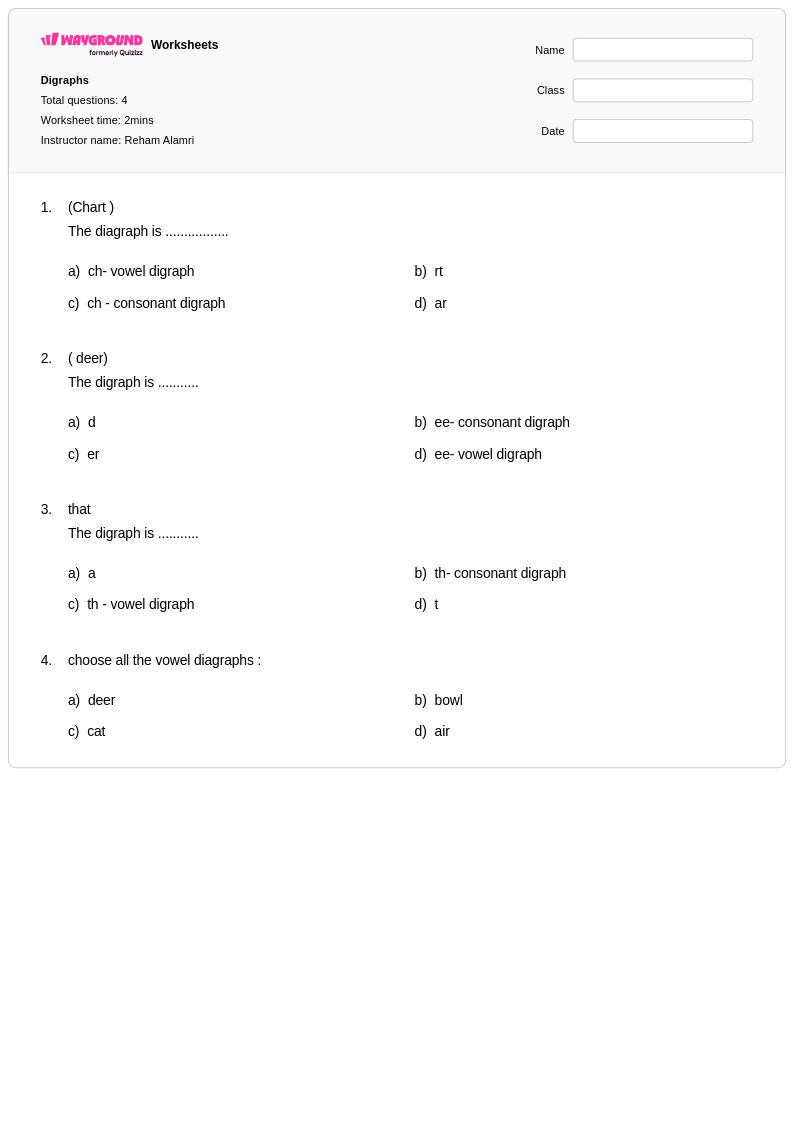
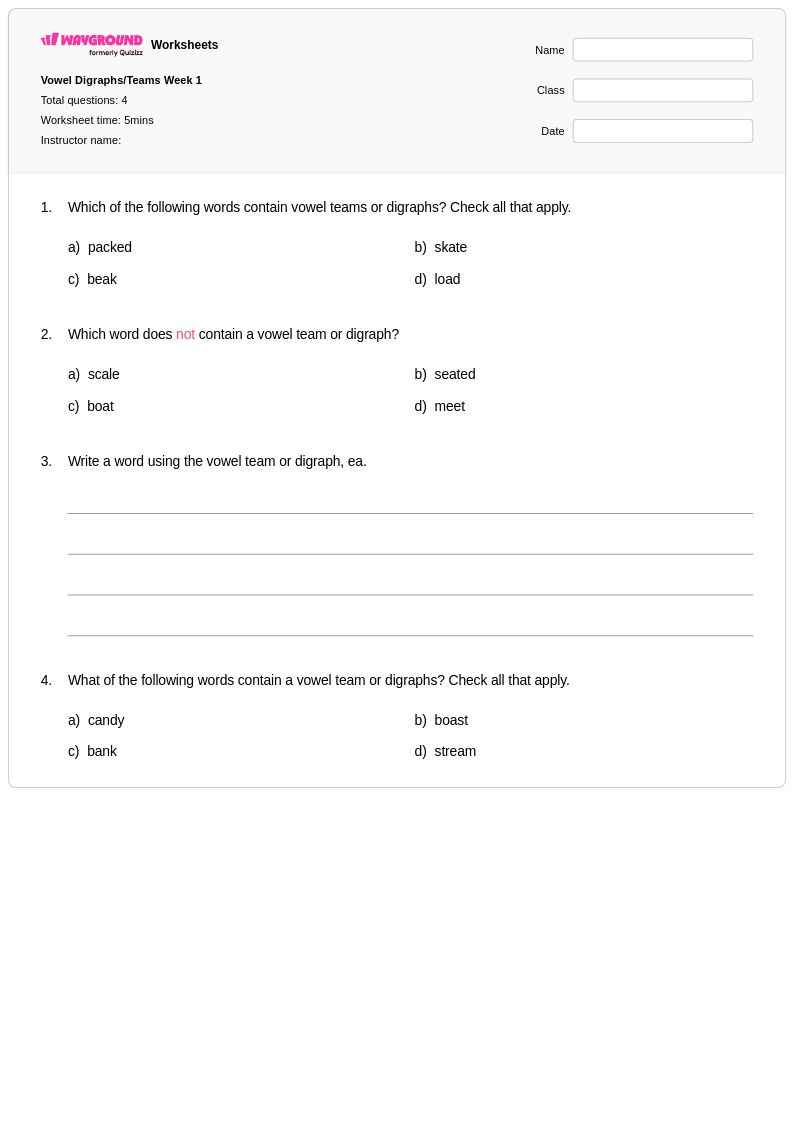
Enhance Class 5 students' reading skills with our free vowel digraphs worksheets and printables, featuring comprehensive practice problems and answer keys to master these essential phonetic combinations.
Explore printable Vowel Digraphs worksheets for Class 5
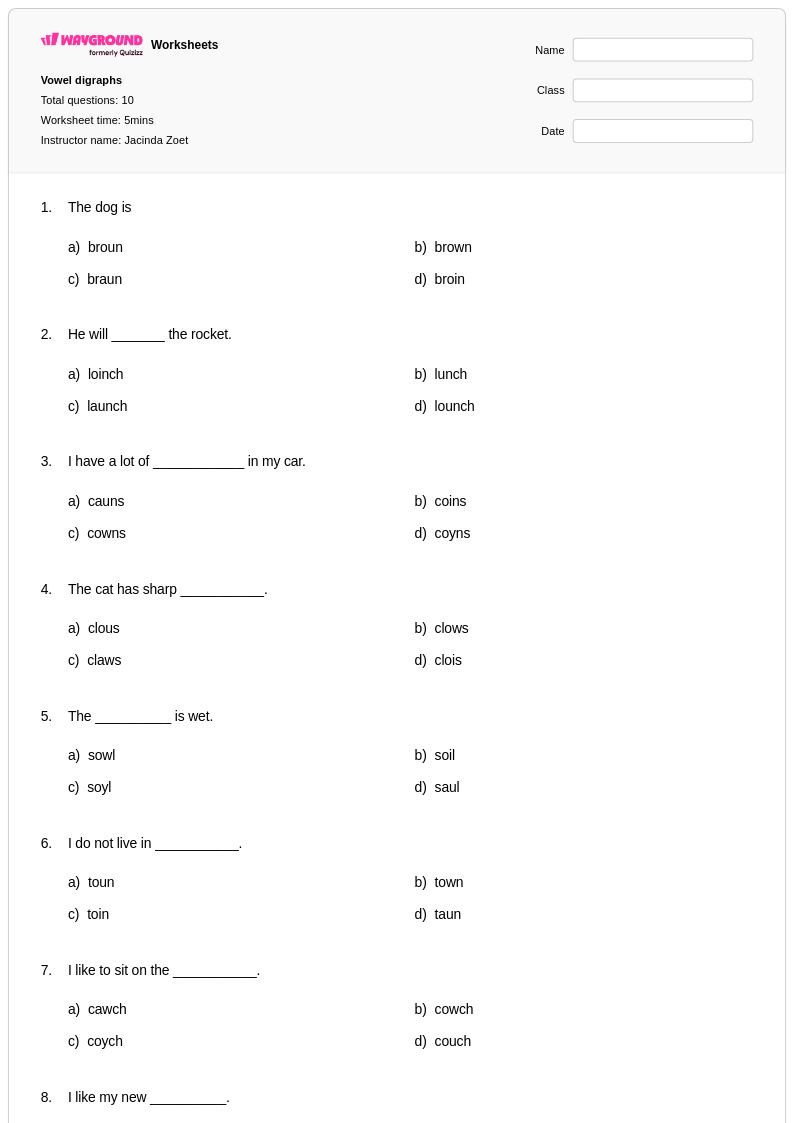
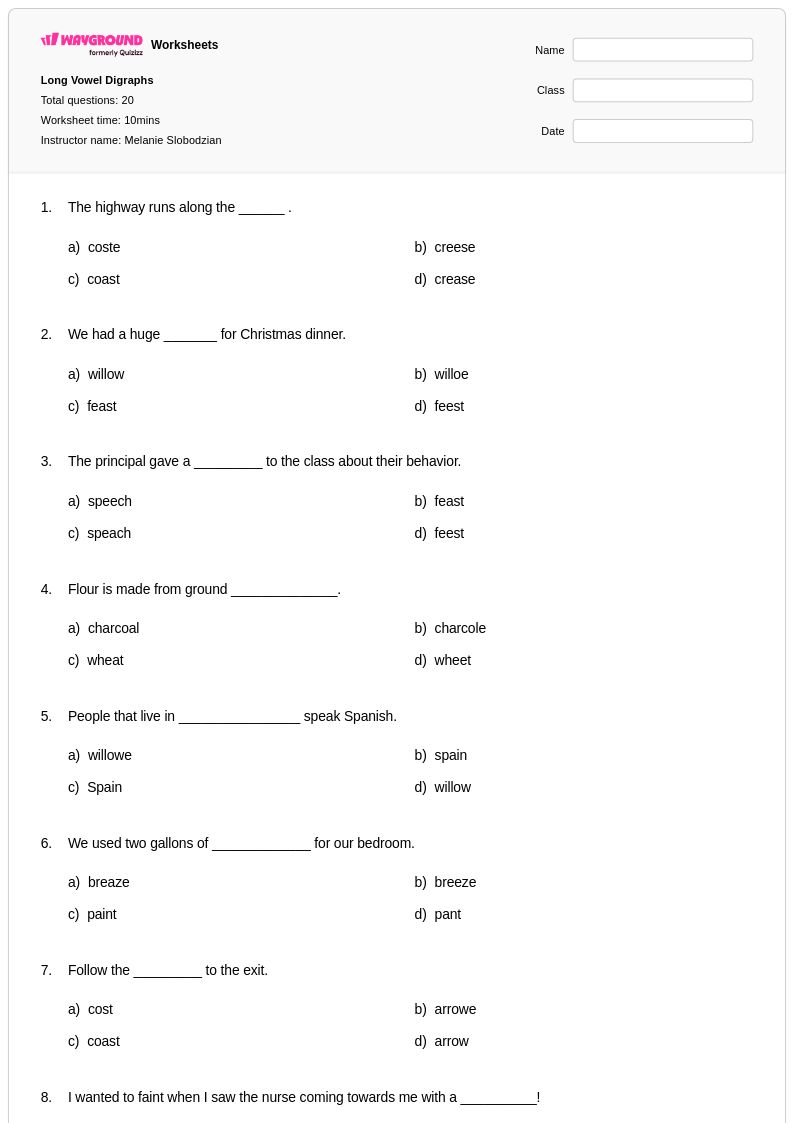
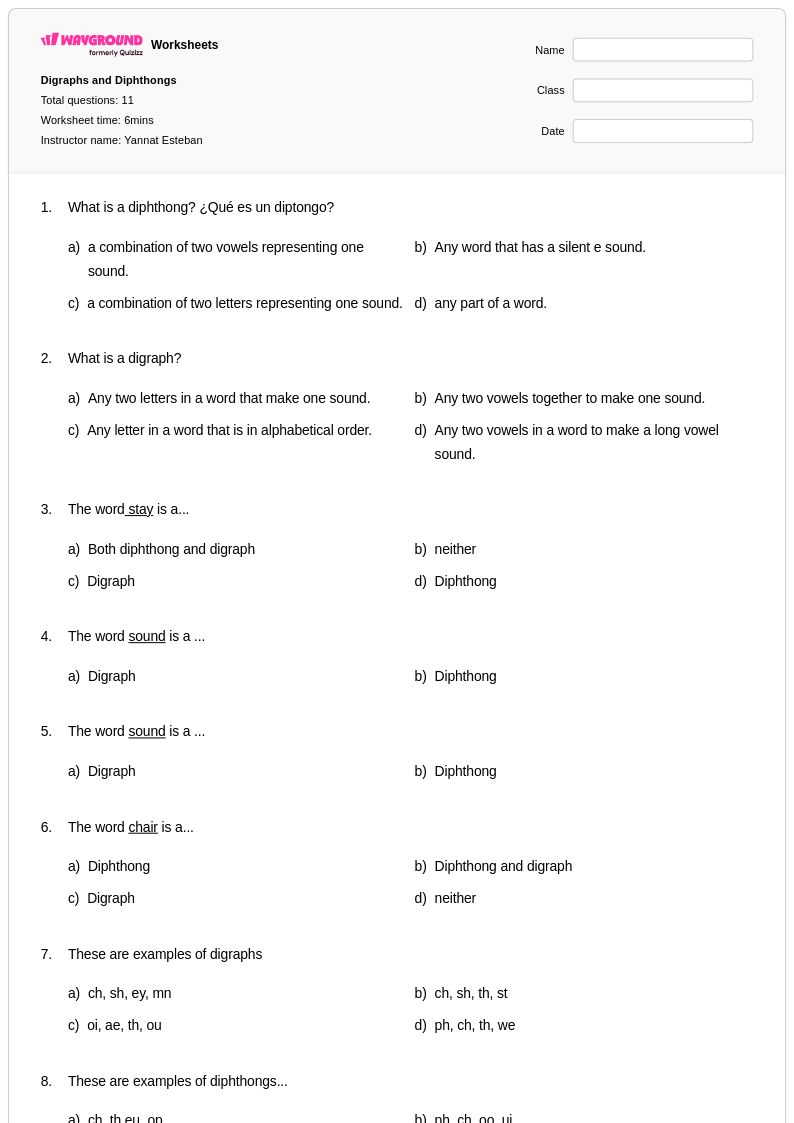
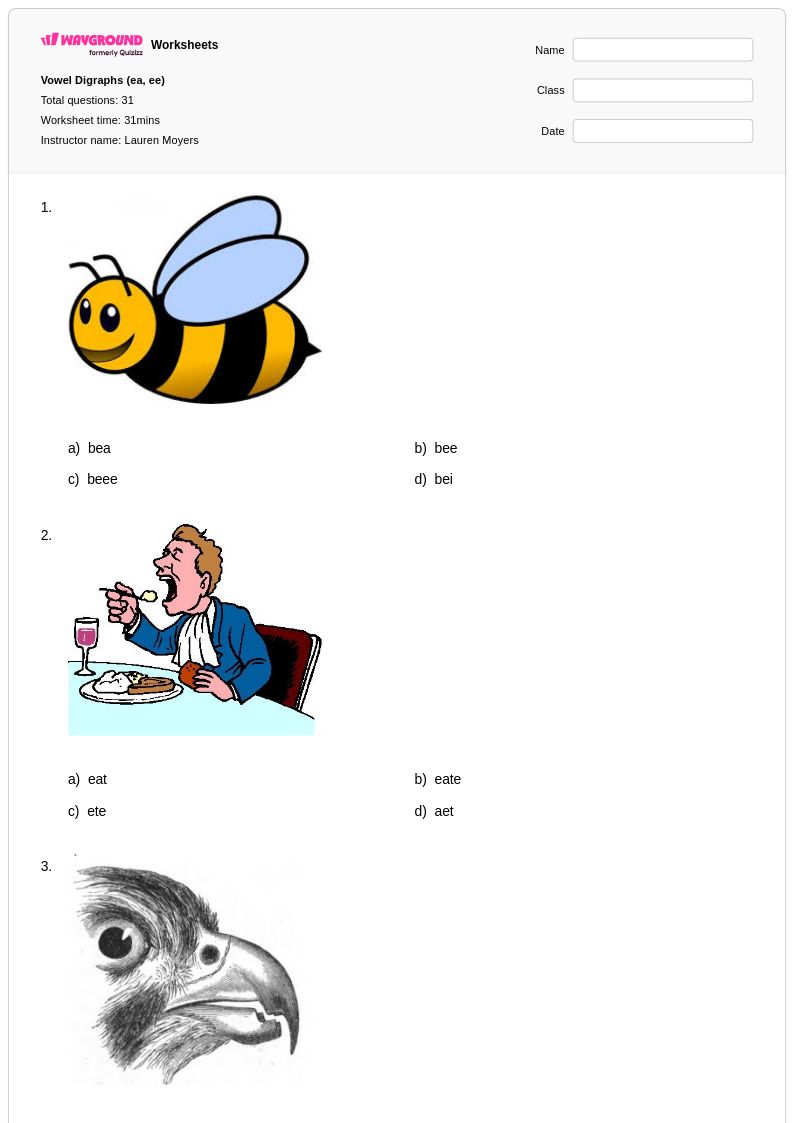
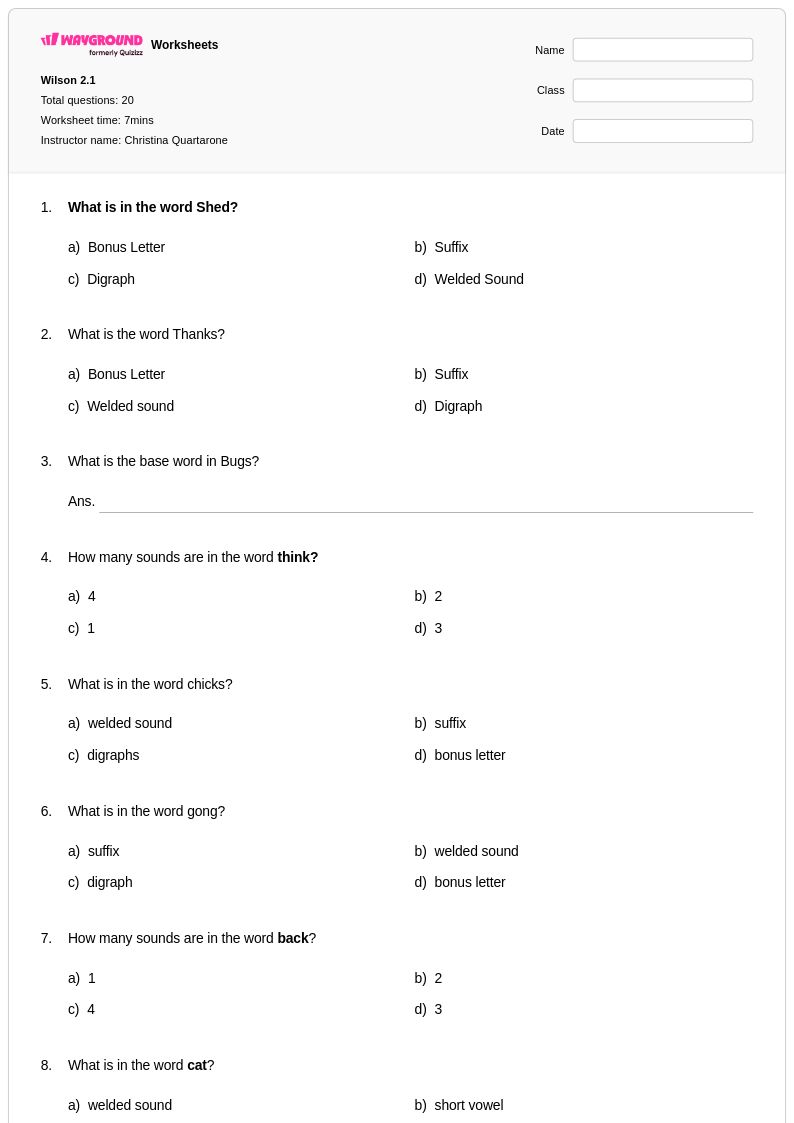
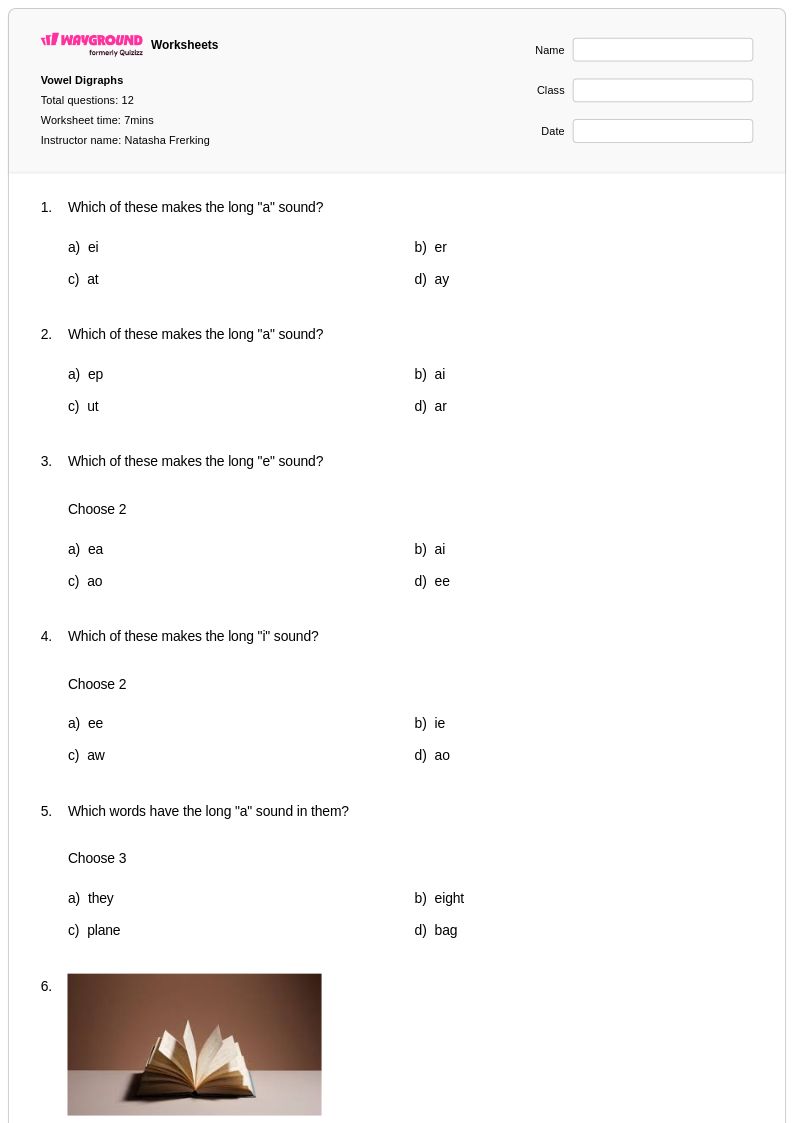
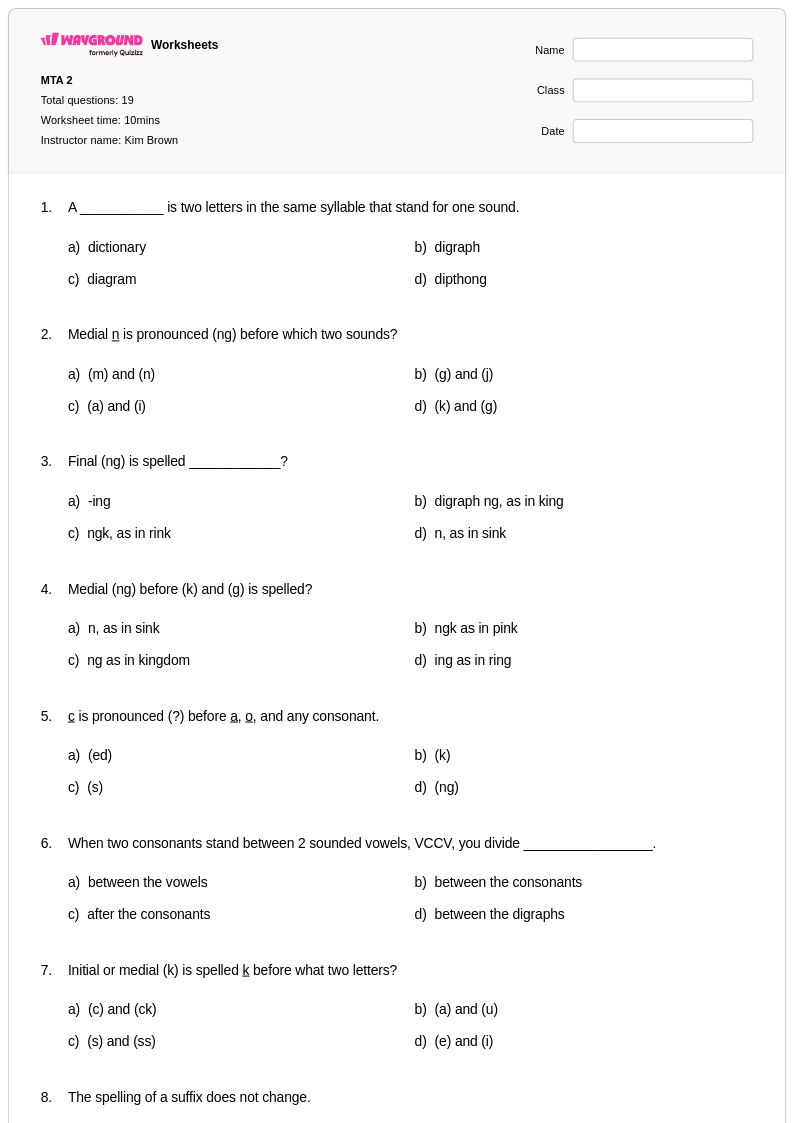
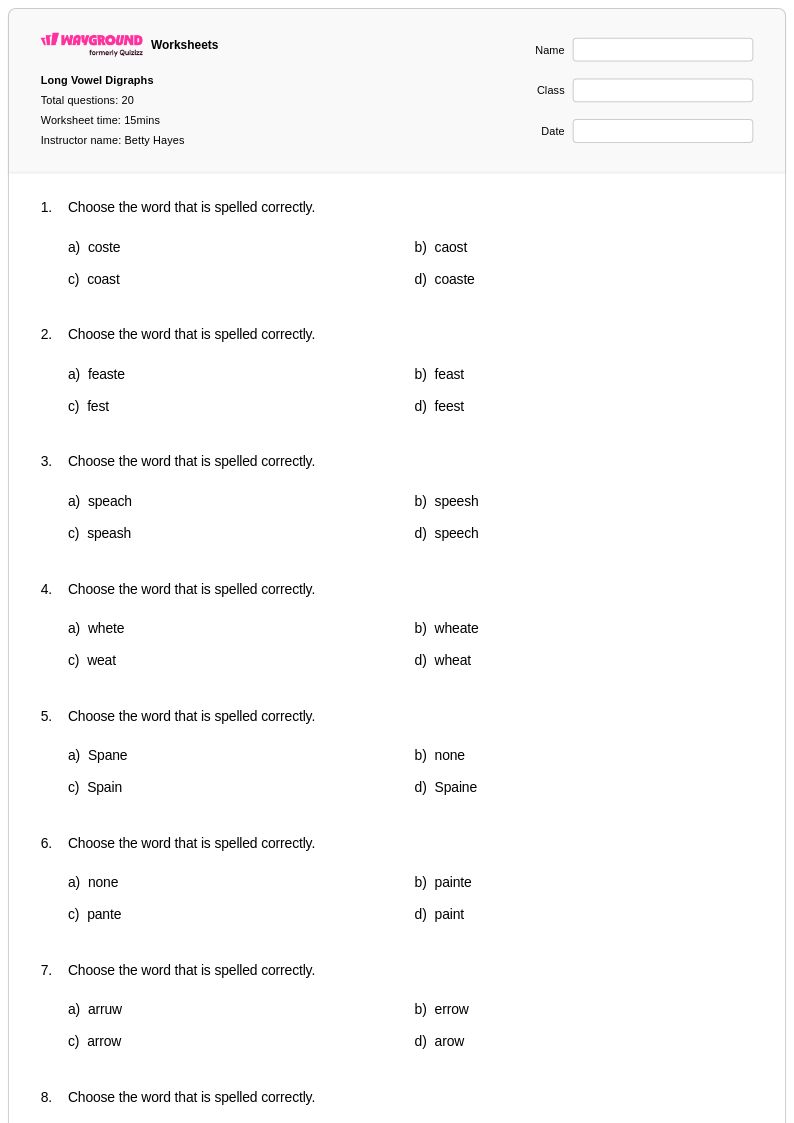
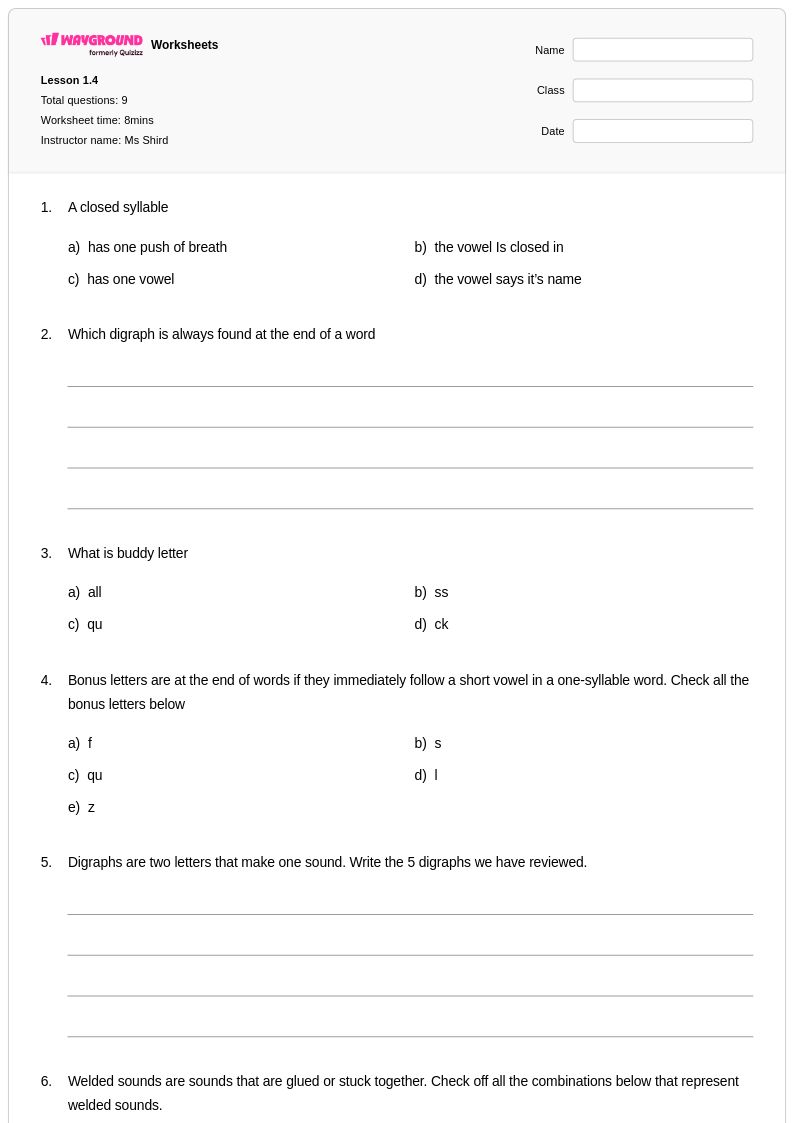
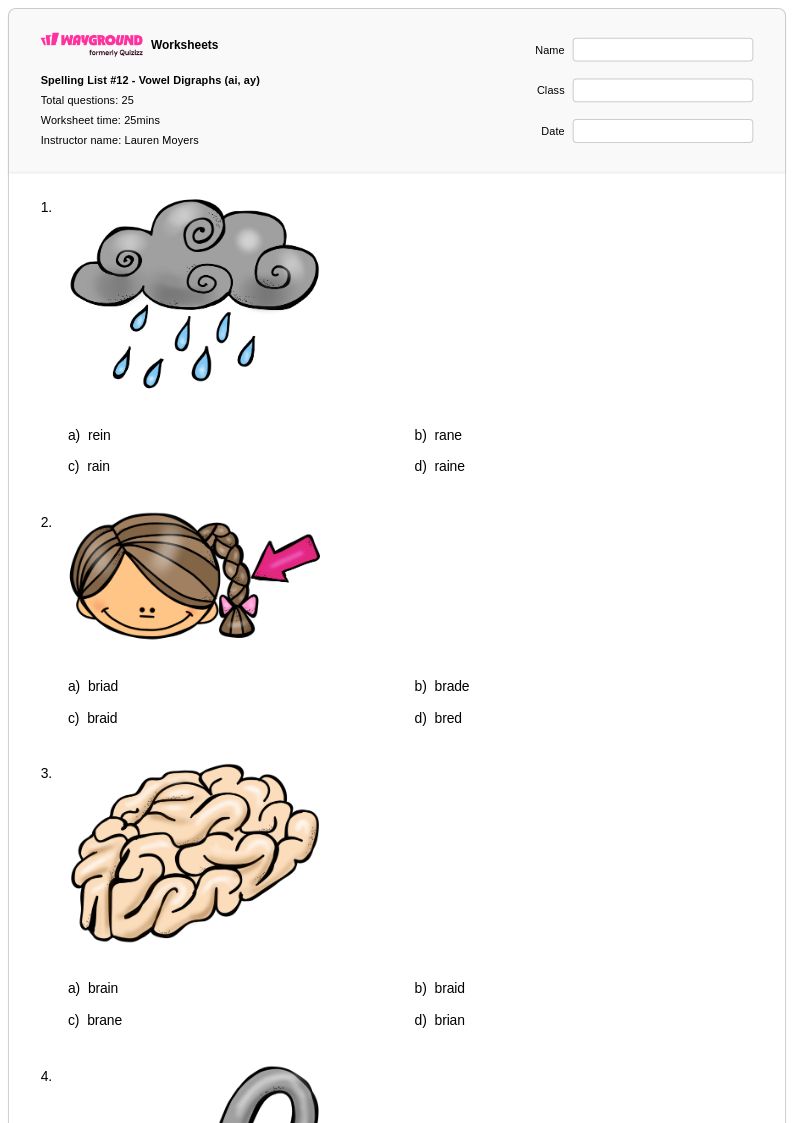
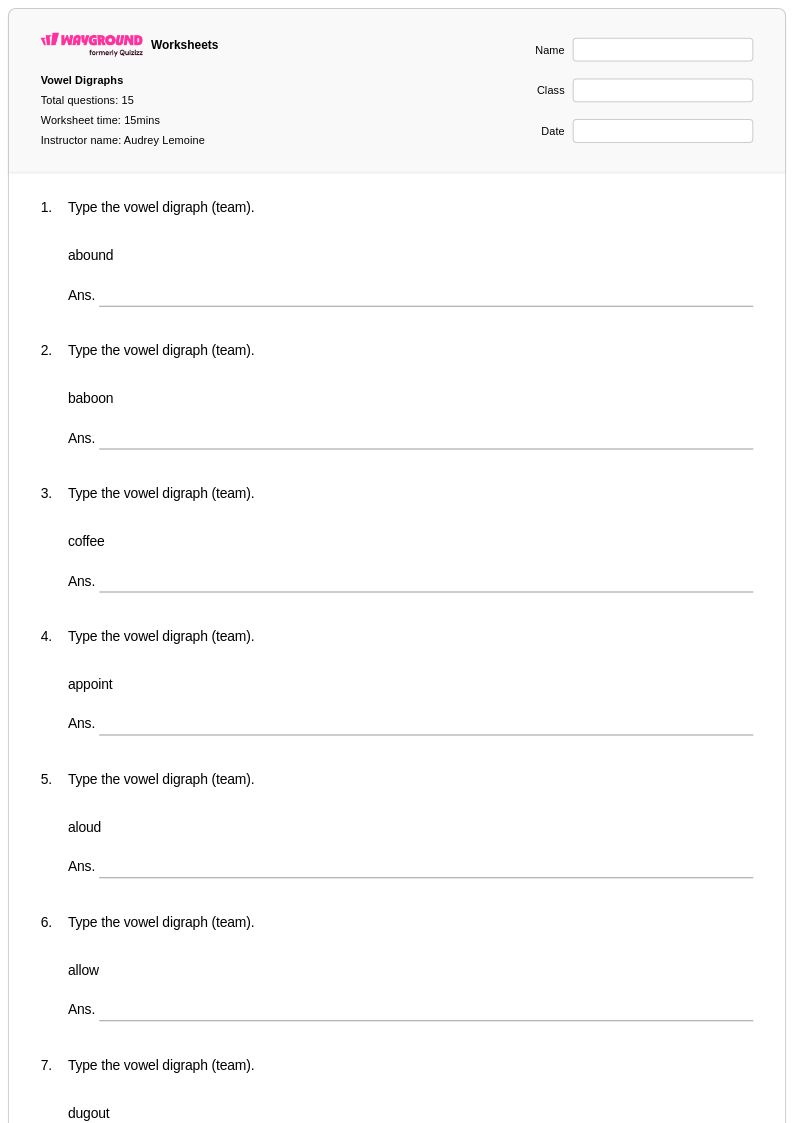
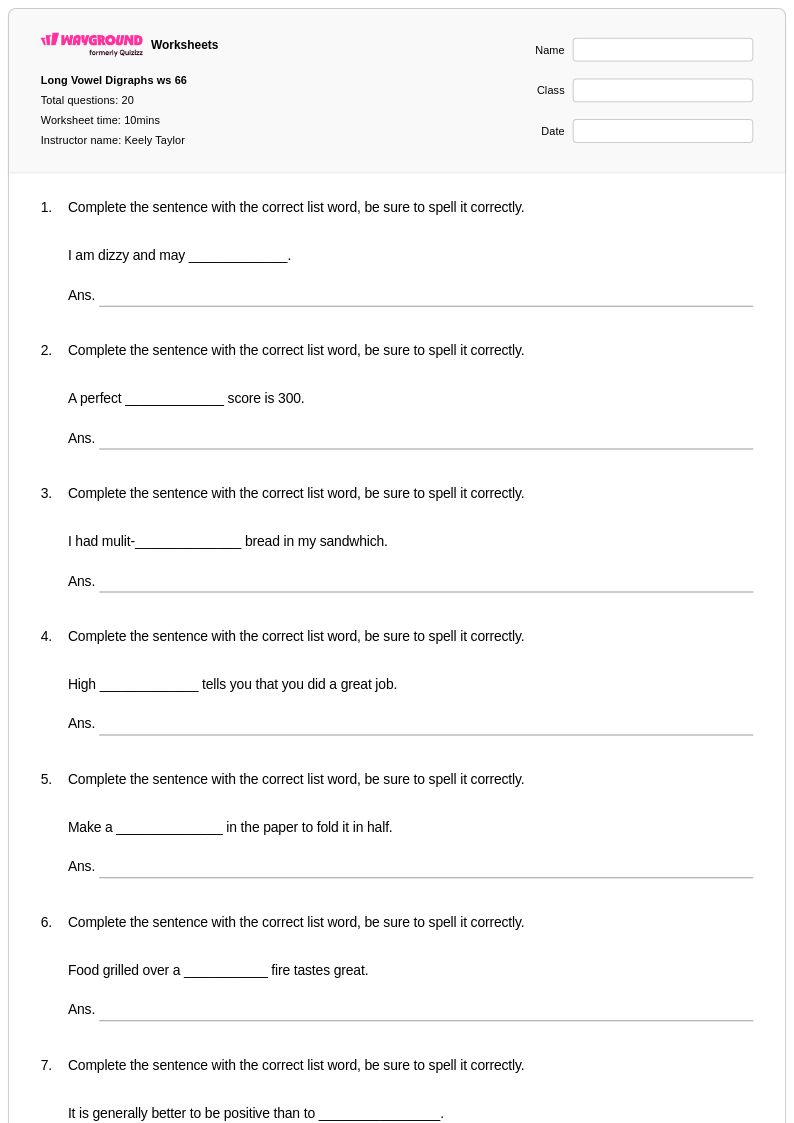
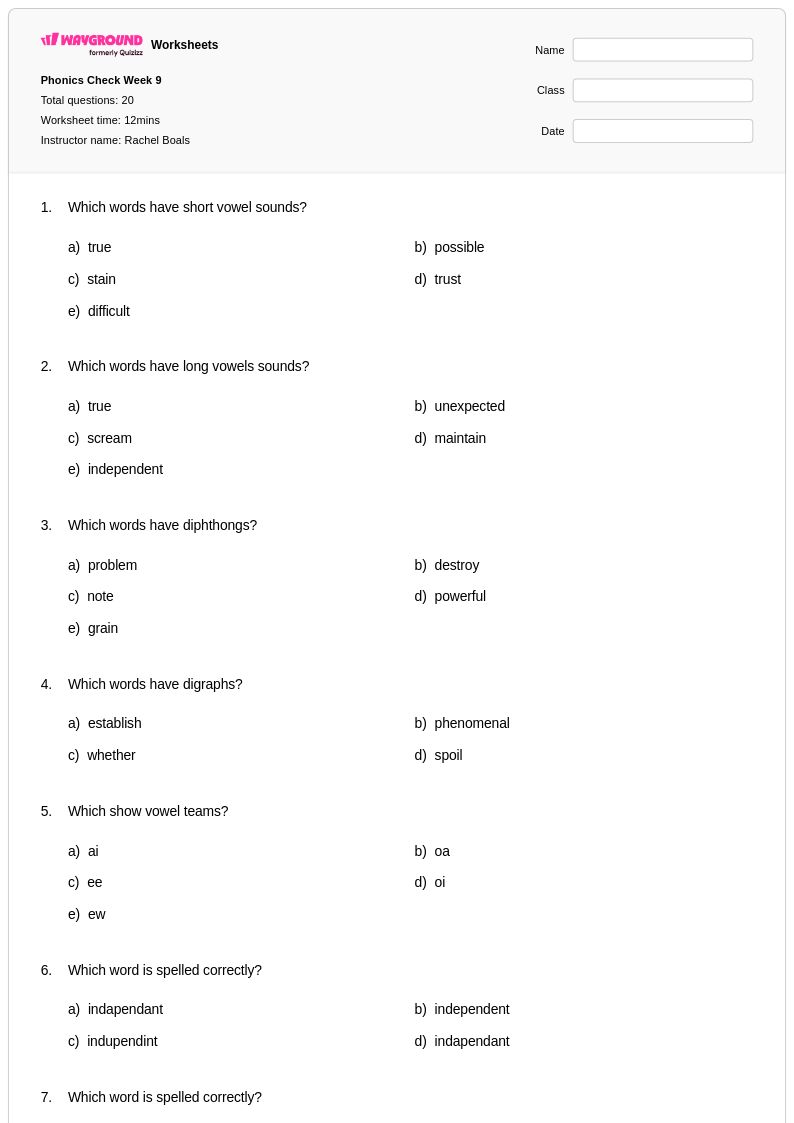
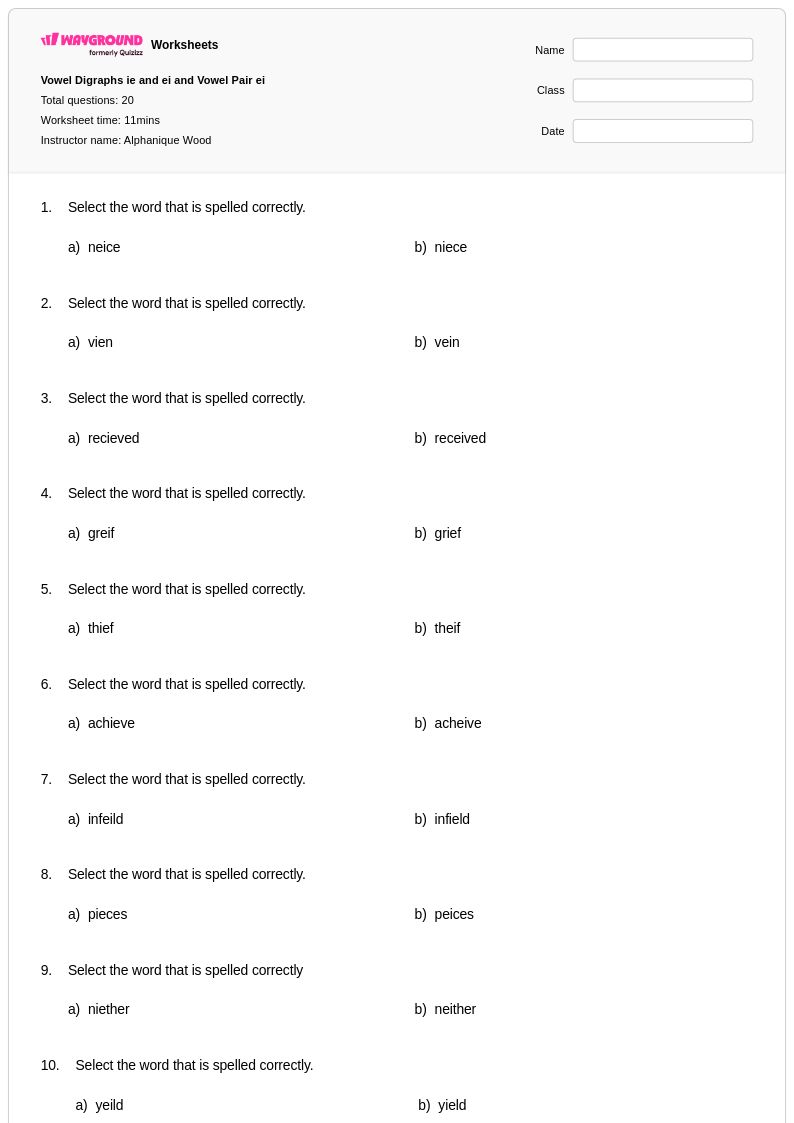
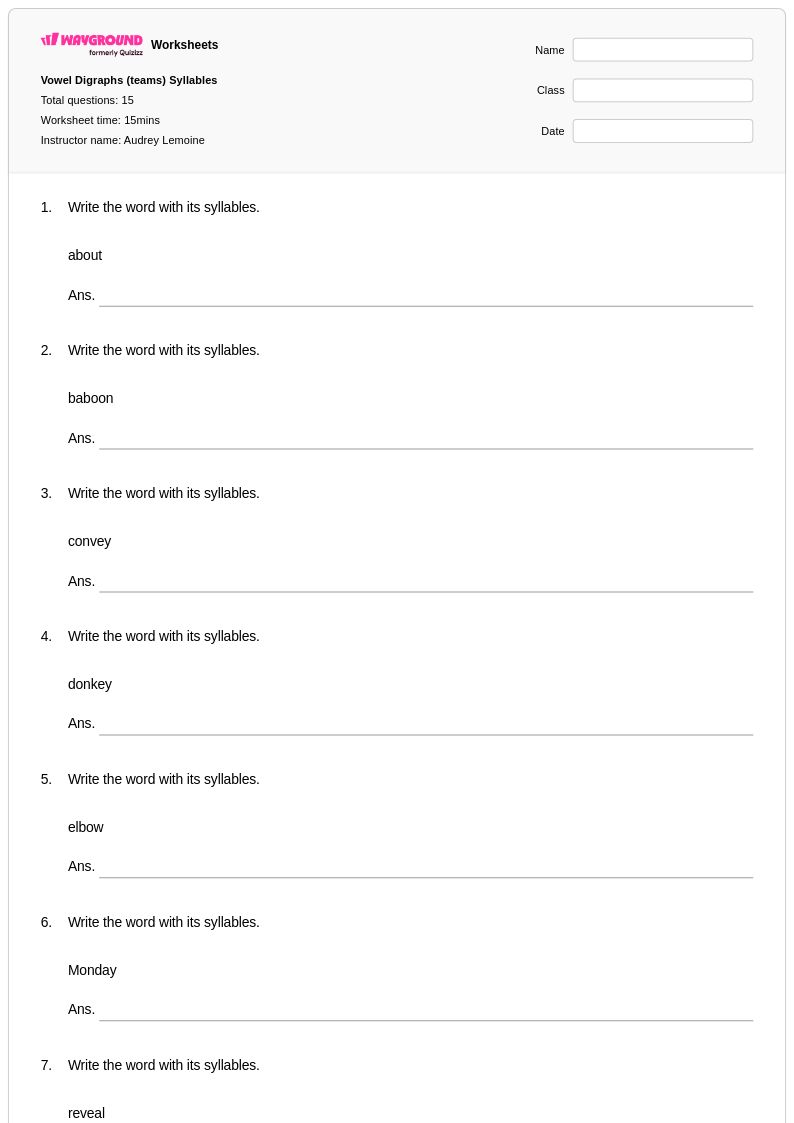
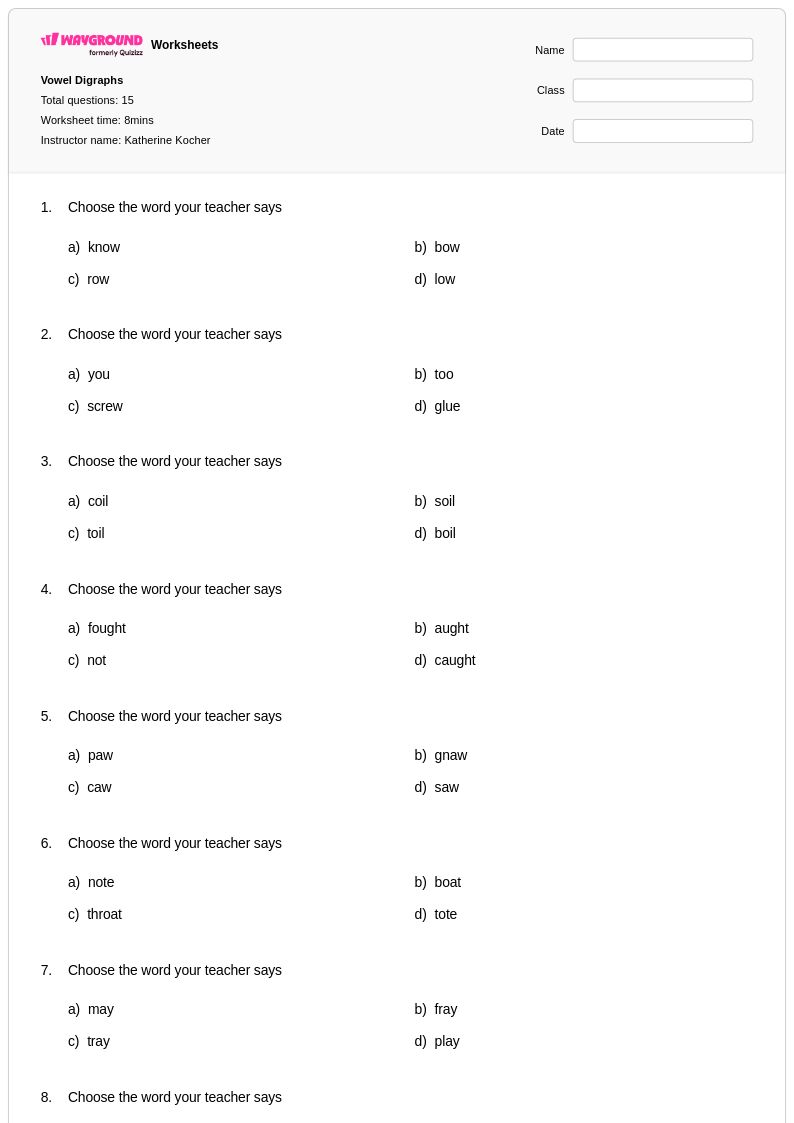
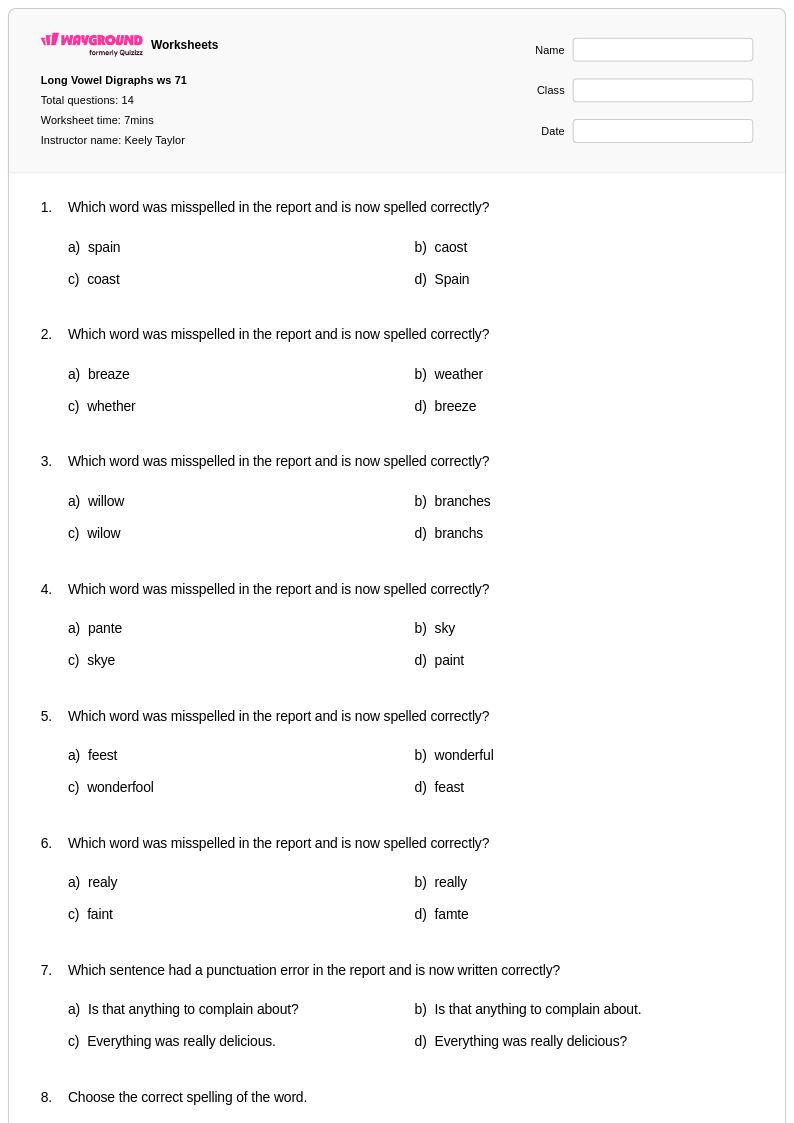
Vowel digraphs represent a fundamental component of Class 5 English literacy instruction, where students must master the recognition and pronunciation of two-vowel combinations that create single sounds. Wayground's comprehensive collection of vowel digraph worksheets provides targeted practice with common patterns such as ai, ea, oa, ie, and ou, helping fifth-grade students develop fluency in reading and spelling words containing these complex phonetic structures. These carefully designed printables strengthen students' phonemic awareness and decoding abilities through systematic practice problems that progress from simple identification exercises to more advanced application in context. Each worksheet includes a detailed answer key, making it easy for educators to assess student progress and identify areas requiring additional reinforcement, while the free pdf format ensures accessibility for both classroom instruction and independent study.
Wayground's extensive platform, formerly known as Quizizz, empowers teachers with millions of educator-created vowel digraph resources that can be seamlessly integrated into differentiated instruction plans. The platform's robust search and filtering capabilities allow instructors to quickly locate materials aligned with specific learning standards and customize content to match individual student needs and reading levels. Teachers can access these versatile worksheets in both printable and digital formats, providing flexibility for various learning environments while supporting comprehensive lesson planning that addresses remediation for struggling readers and enrichment opportunities for advanced learners. The platform's differentiation tools enable educators to modify existing materials or create new variations, ensuring that vowel digraph skill practice remains engaging and appropriately challenging for every student in the Class 5 classroom.
FAQs
How do I teach vowel digraphs to early readers?
Start by introducing one digraph at a time, using word sorting and picture-word matching activities to help students connect the letter combination to its sound. Once students can identify the digraph in isolation, move to word-level practice where they decode and read words containing that pattern in context. Systematic, cumulative instruction works best — revisit previously taught digraphs regularly to build retention before adding new ones.
What vowel digraphs should students learn first?
Most phonics sequences introduce high-frequency digraphs first, typically 'ai,' 'ea,' 'oo,' and 'ou,' because they appear in a large number of common words students encounter in early reading. Teaching digraphs by frequency of use helps students gain decoding leverage quickly. After these core patterns are secure, instruction can expand to less common combinations like 'ie' and variant vowel digraphs.
What exercises help students practice vowel digraphs?
Effective practice exercises include word sorting by digraph pattern, fill-in-the-blank sentence completion, word-to-picture matching, and reading passages that isolate target digraph words. Progressing from identification tasks to word analysis and application in connected text ensures students can both recognize and use digraph patterns independently. Worksheets that move through this progression within a single activity are especially useful for structured phonics practice.
What mistakes do students commonly make when learning vowel digraphs?
A common error is applying single-vowel short or long sound rules to digraphs, such as pronouncing 'ea' in 'bread' as a long e rather than a short e. Students also frequently confuse digraphs with vowel teams that follow the 'when two vowels go walking' rule, which does not apply consistently to all digraphs. Explicit instruction on which digraphs have variant sounds, paired with targeted practice, helps students develop accurate decoding strategies.
How do I differentiate vowel digraph instruction for struggling readers?
For struggling readers, reduce the number of digraph patterns introduced at once and use scaffolded practice that begins with picture cues before moving to text-only tasks. On Wayground, teachers can enable accommodations such as Read Aloud so students hear the digraph words spoken aloud, and Reduced Answer Choices to lower cognitive load on identification tasks. Extended time settings can also be applied to individual students without affecting the rest of the class, allowing differentiated pacing within a single session.
How do I use Wayground's vowel digraph worksheets in my classroom?
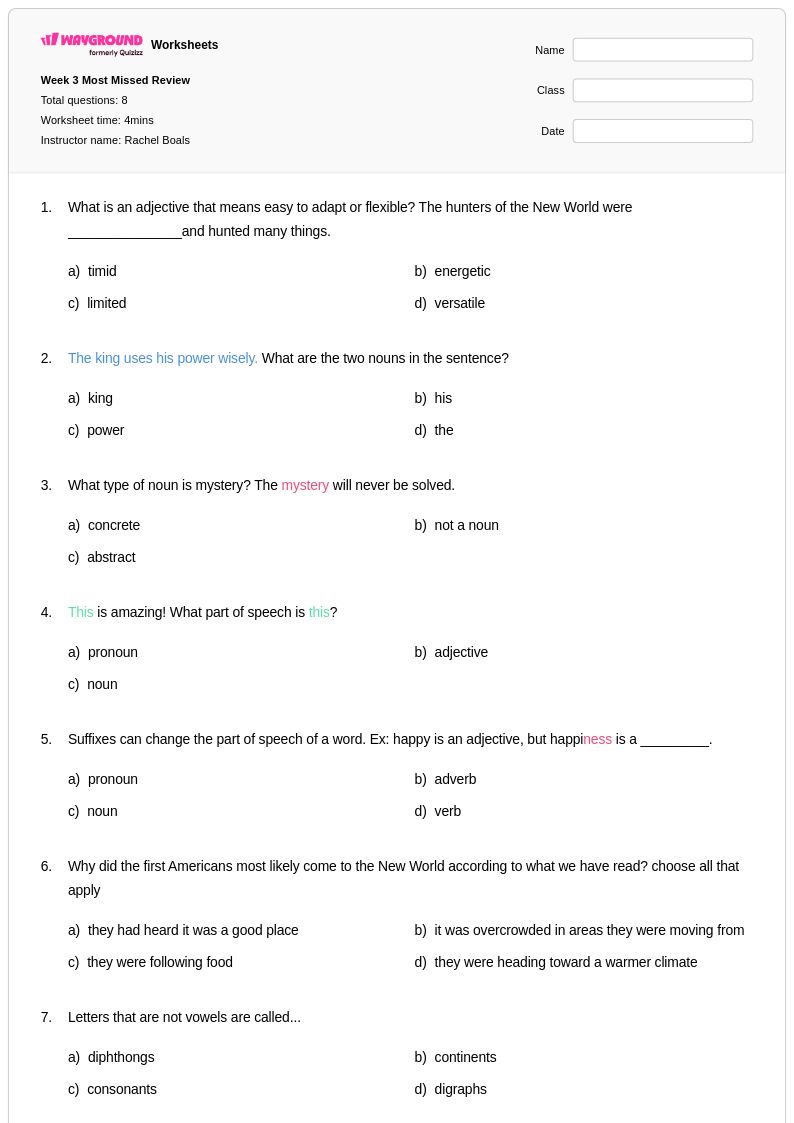
Wayground's vowel digraph worksheets are available as free printable PDFs for traditional classroom use and in digital formats for technology-integrated environments, including the option to host them as an interactive quiz on Wayground. Teachers can print and distribute worksheets for independent practice, small group work, or homework, or assign the digital version for immediate auto-scored feedback. Each worksheet includes a complete answer key, making it straightforward to use for both formative assessment and skill reinforcement.