Master Class 5 syllables with Wayground's comprehensive collection of free phonics worksheets, featuring engaging practice problems, printable PDFs, and detailed answer keys to strengthen syllable recognition and division skills.
Explore printable Syllables worksheets for Class 5
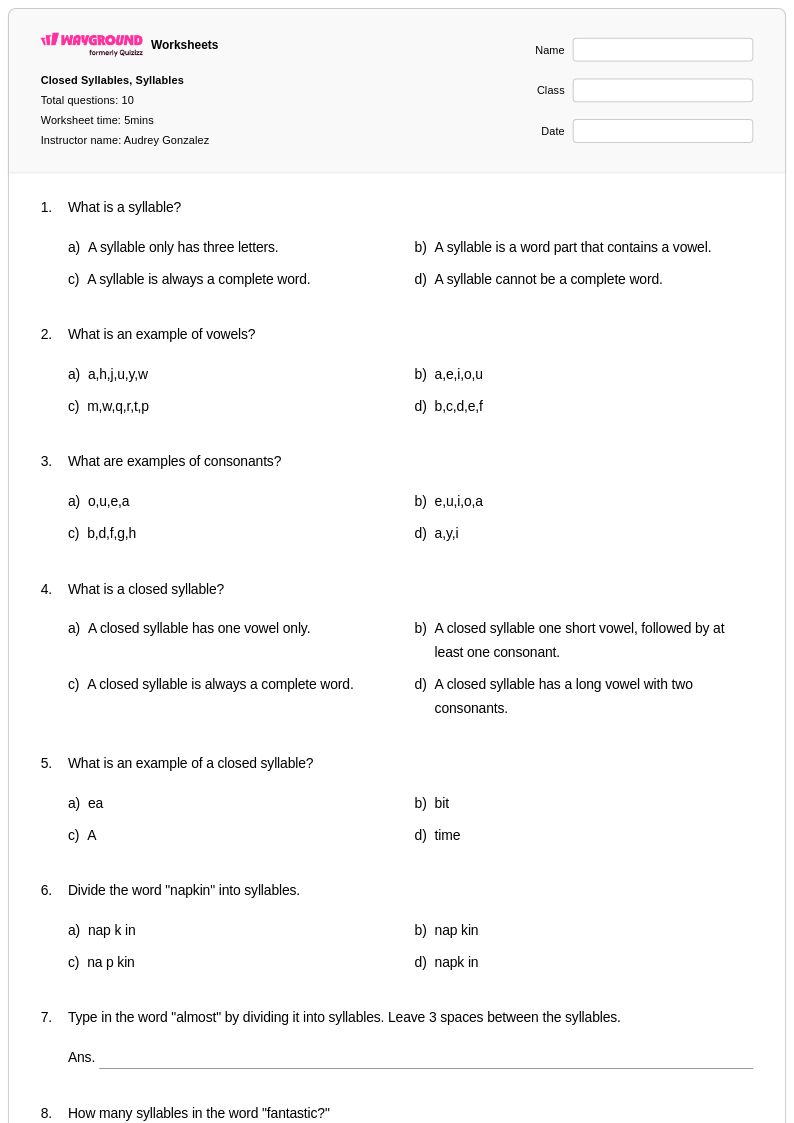
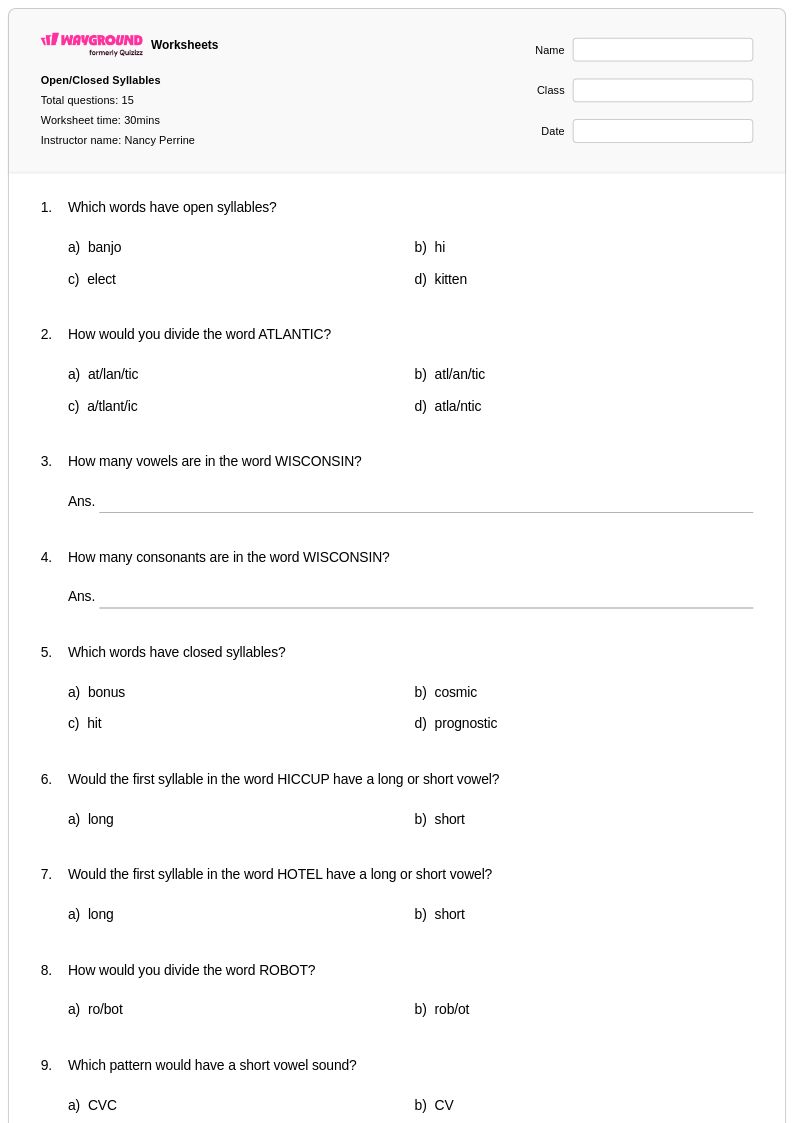
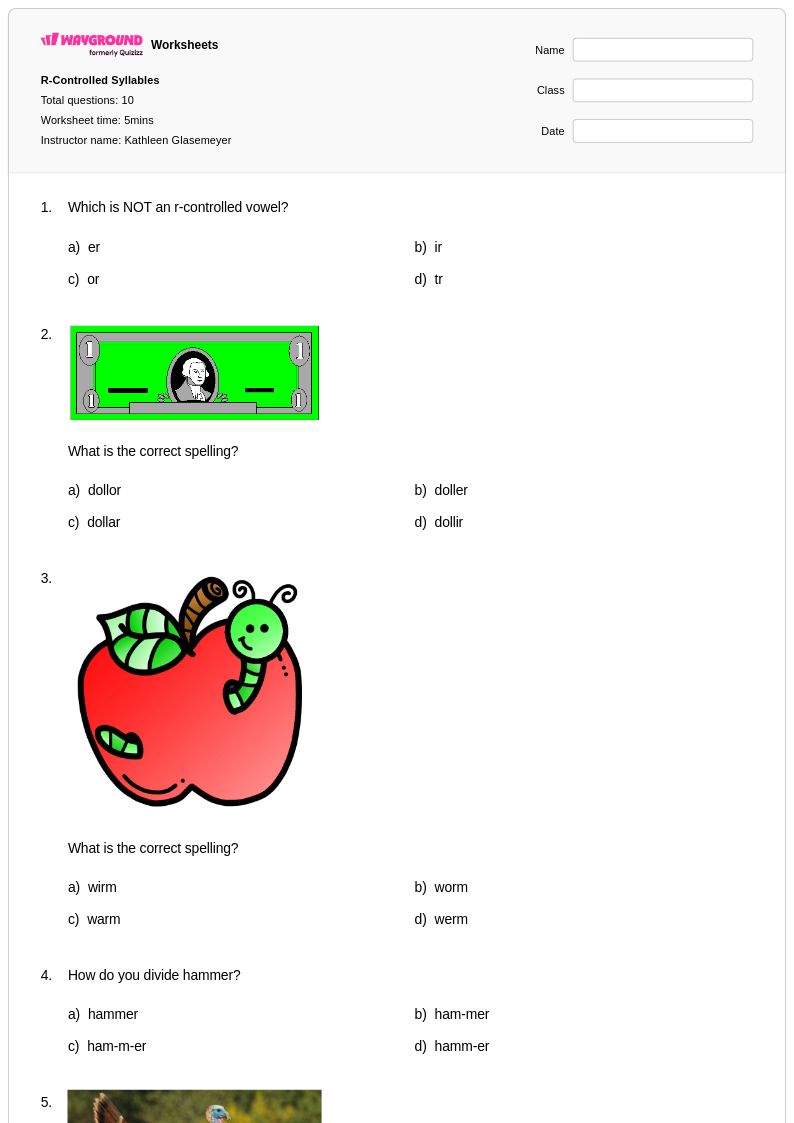
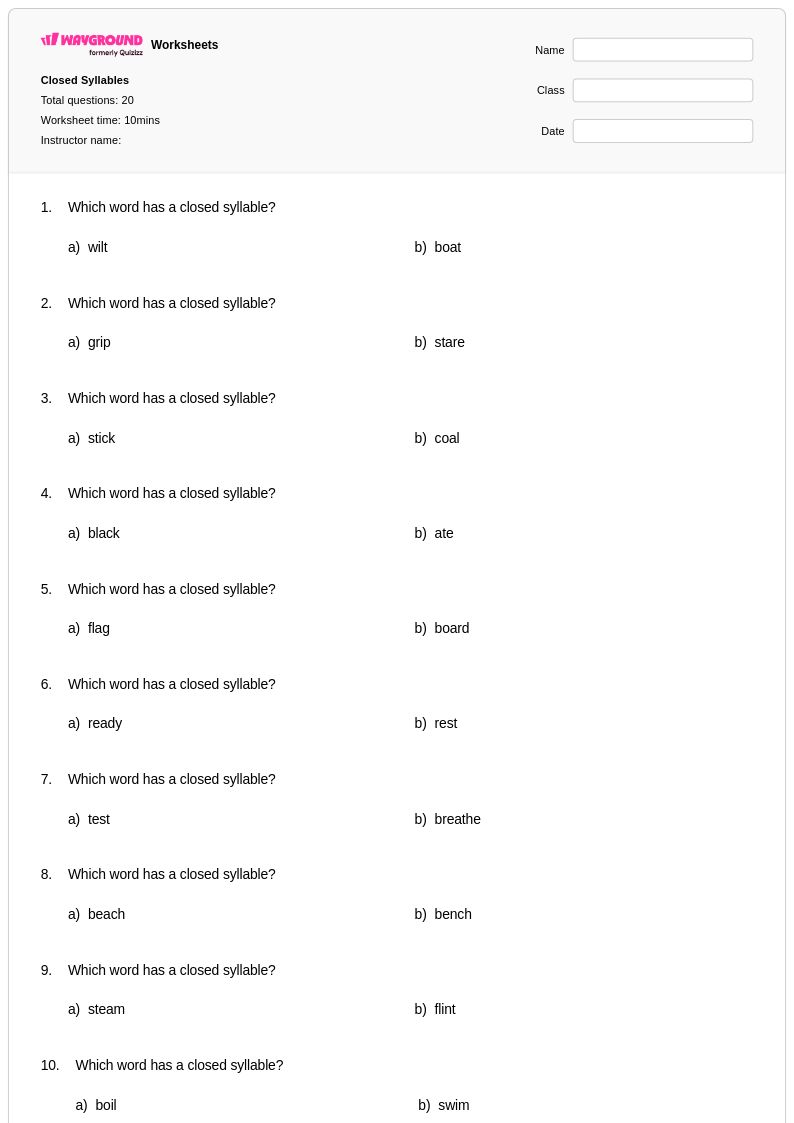
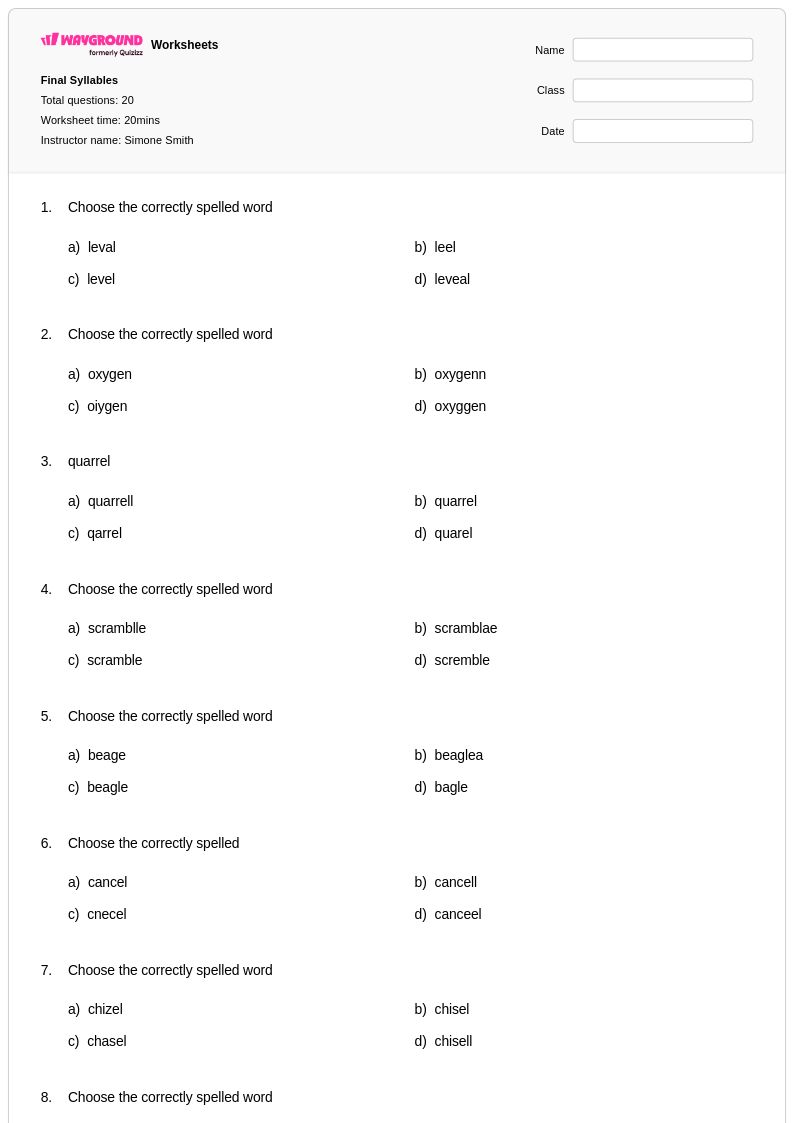
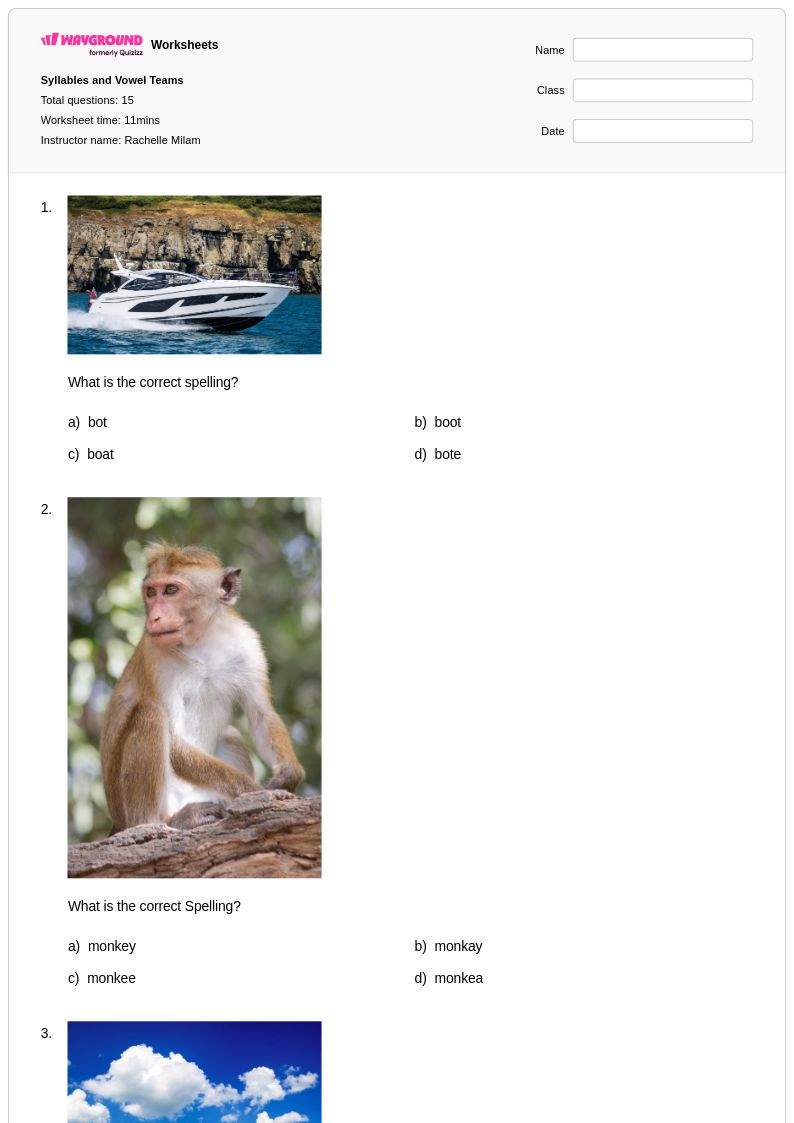
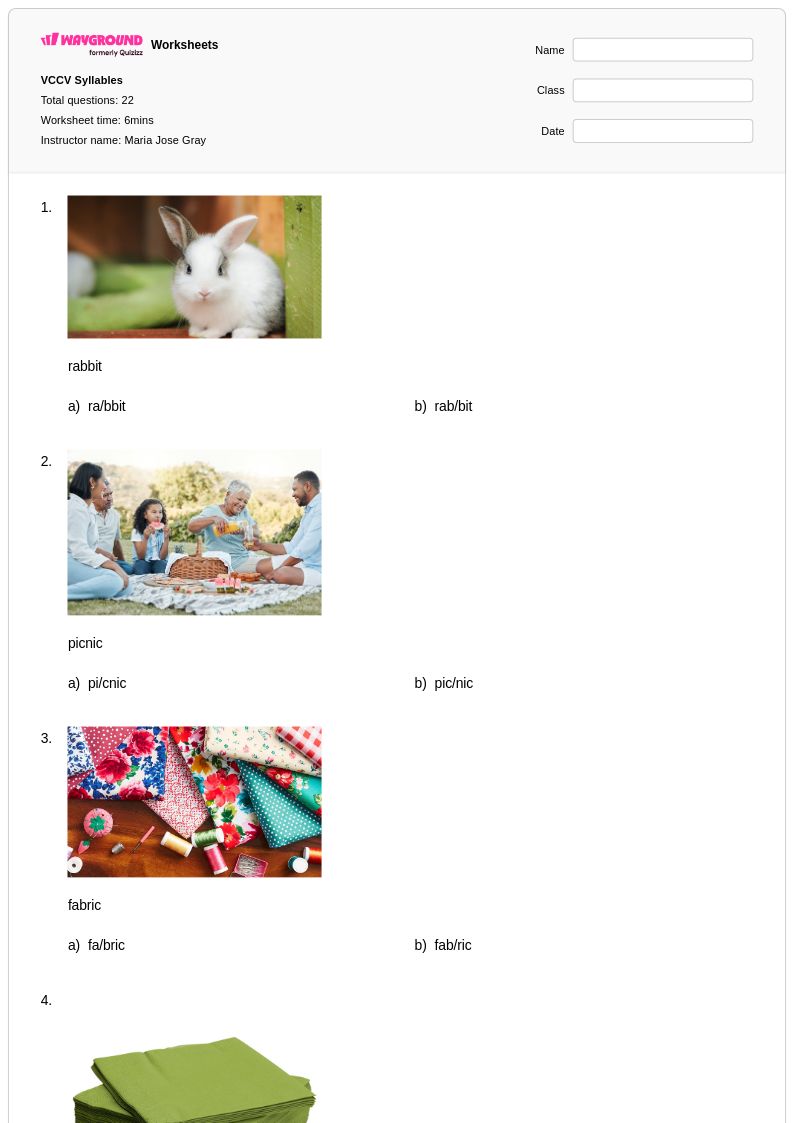
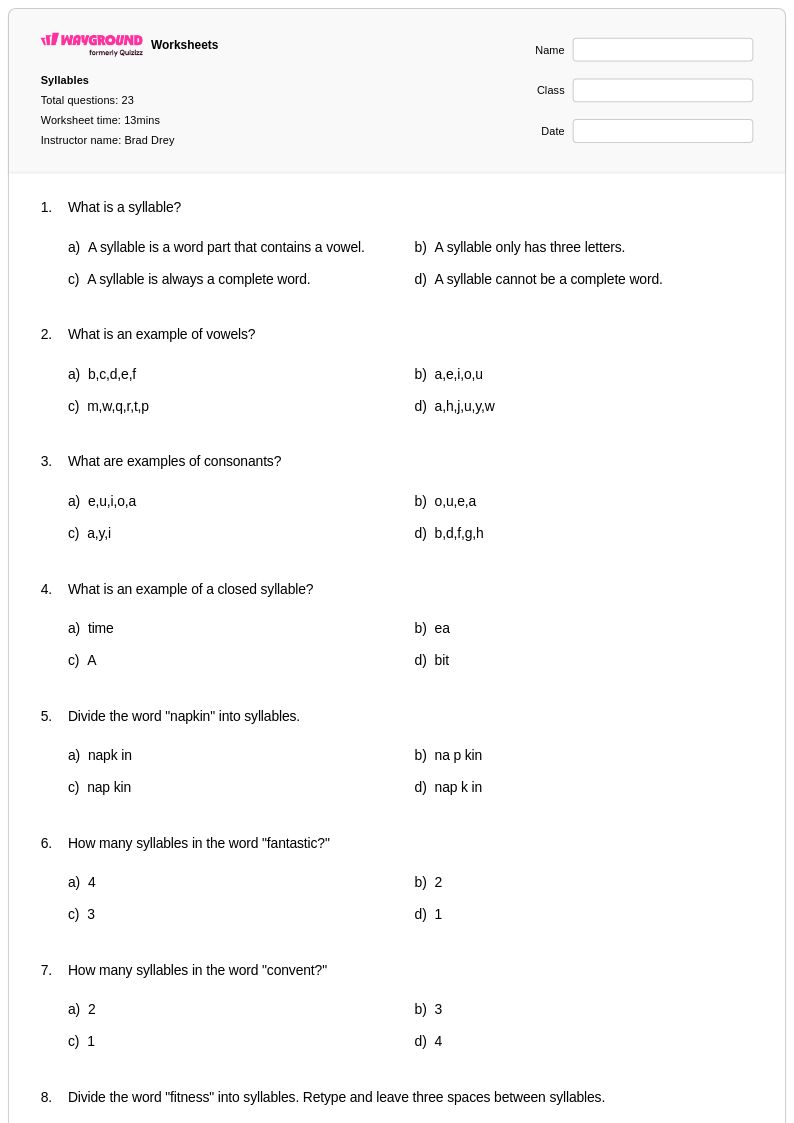
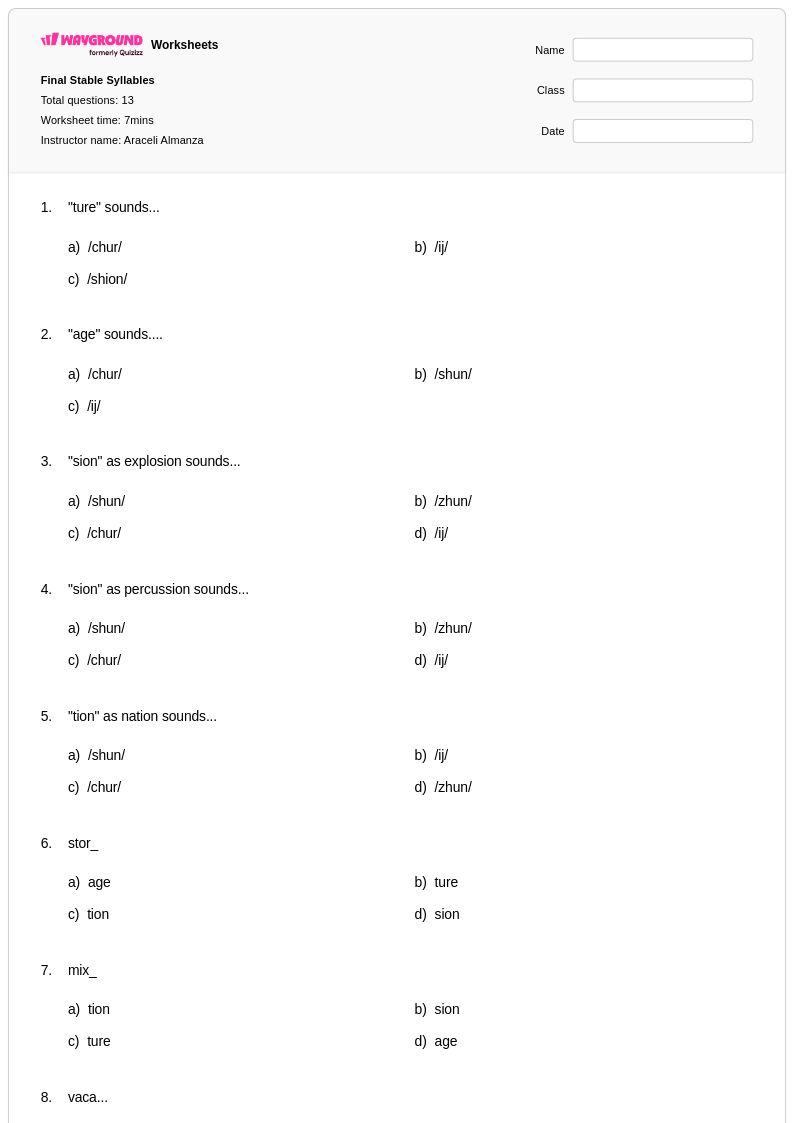
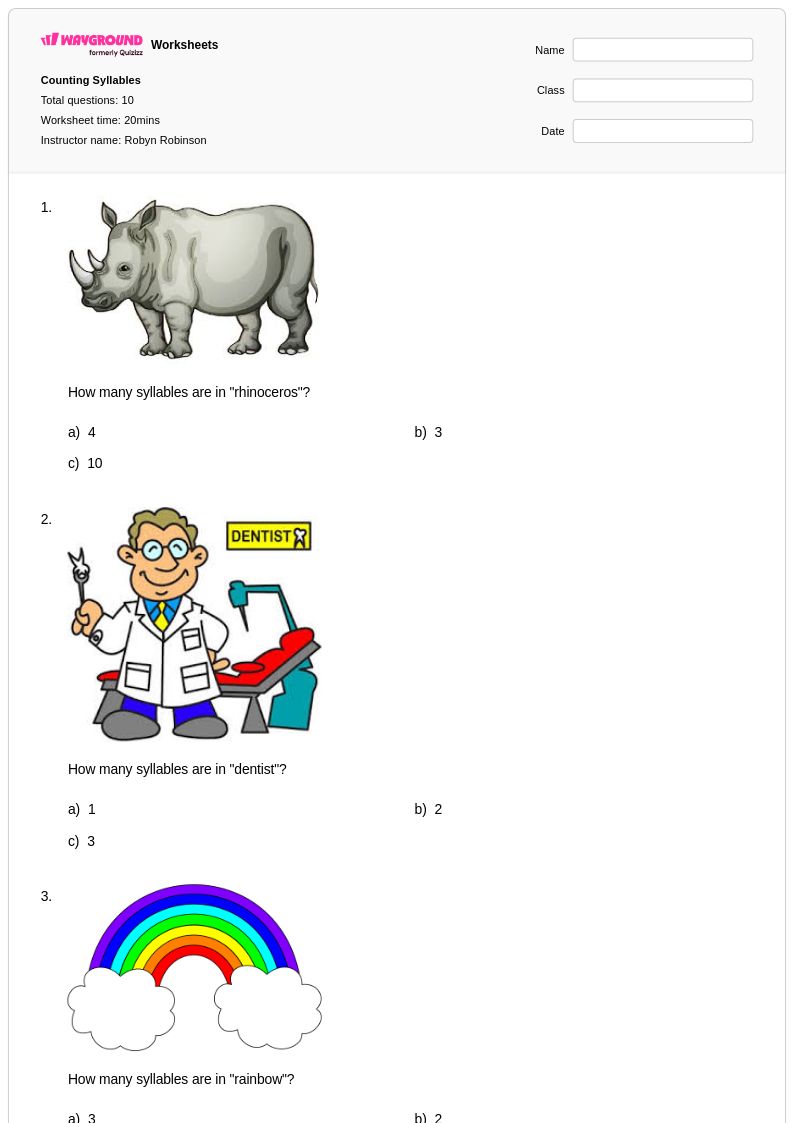
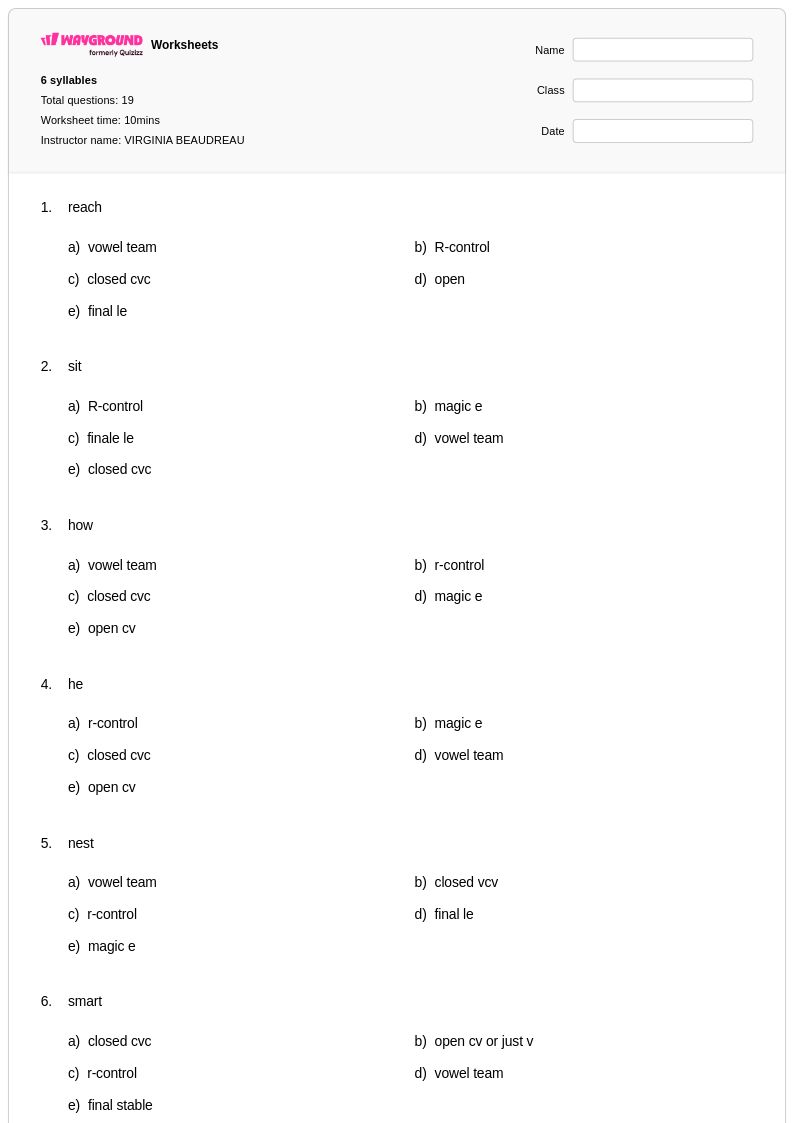
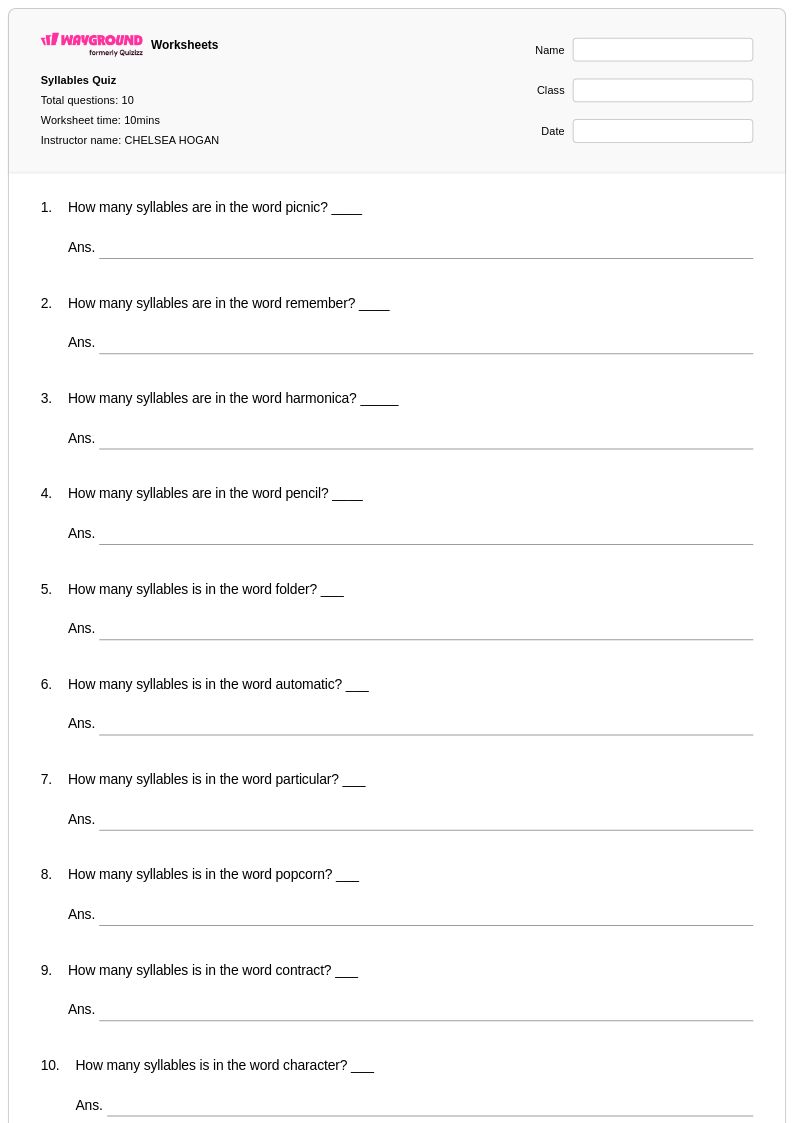
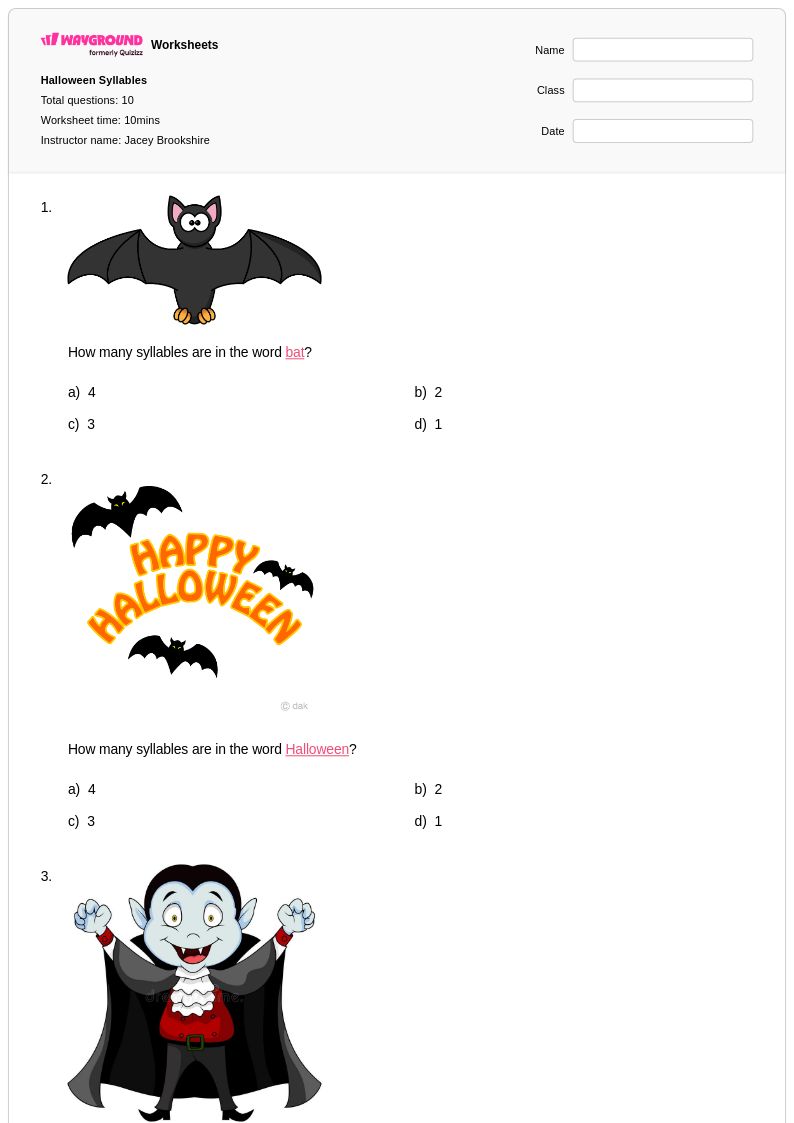
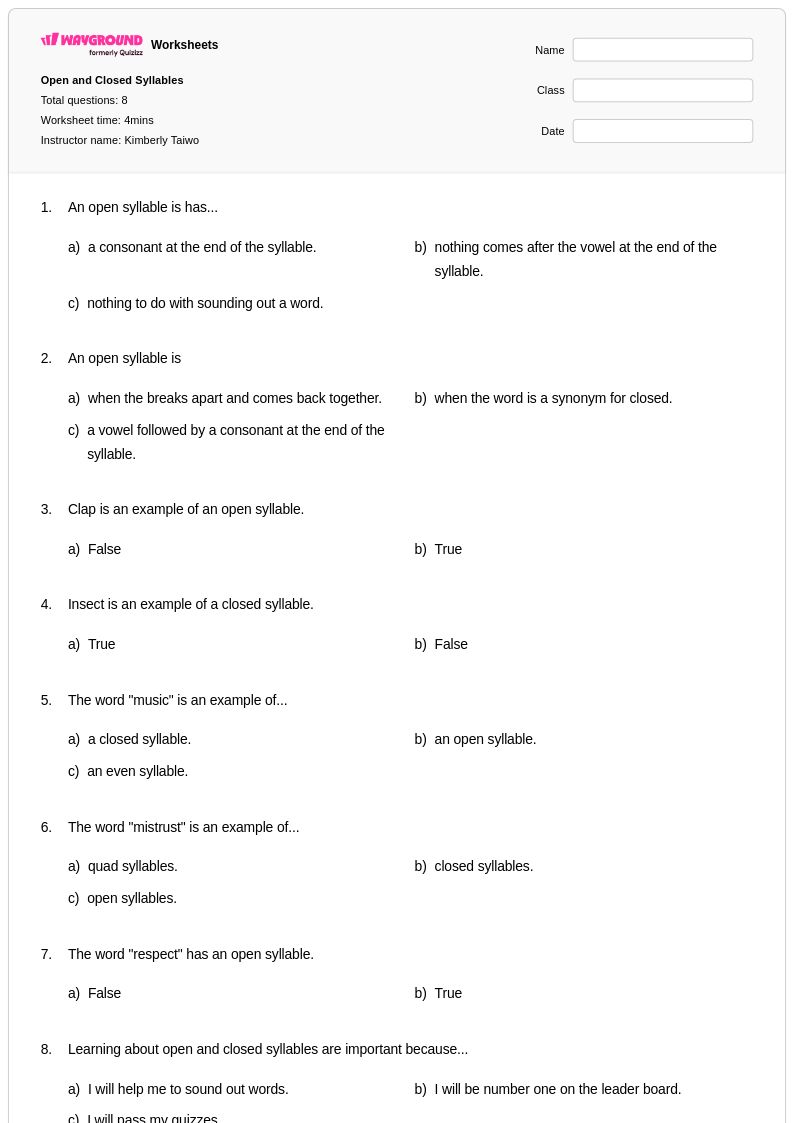
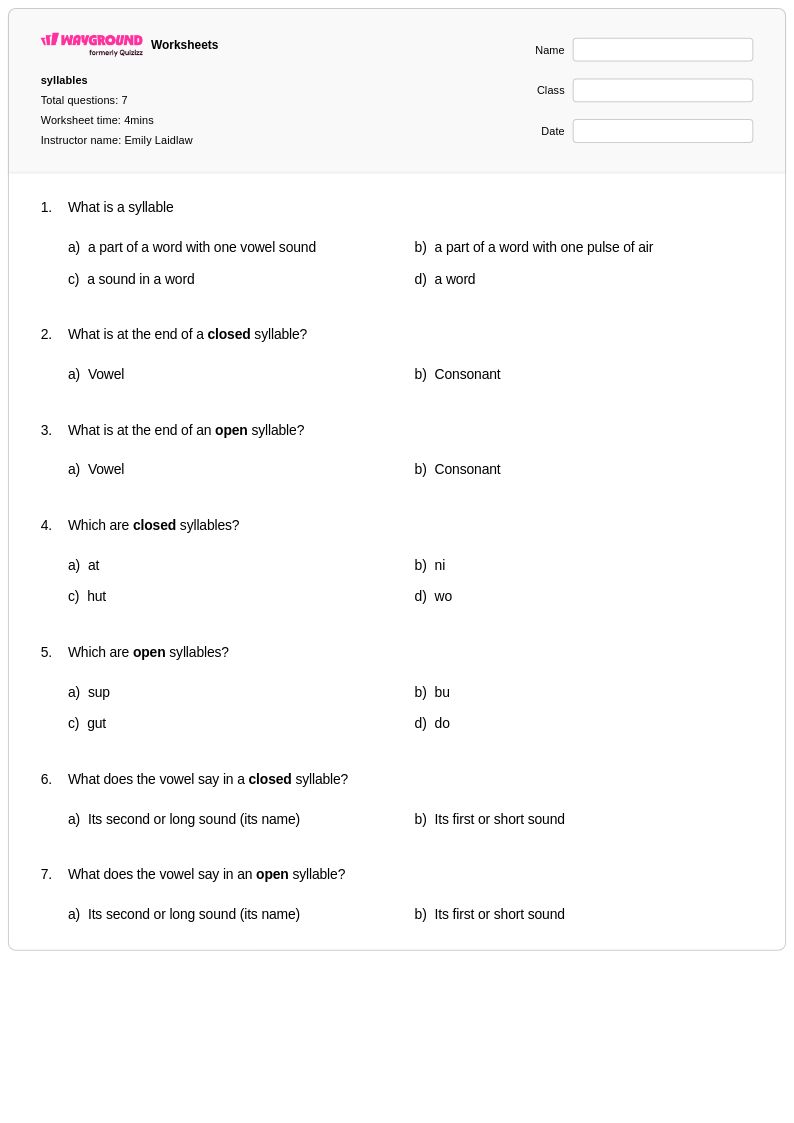
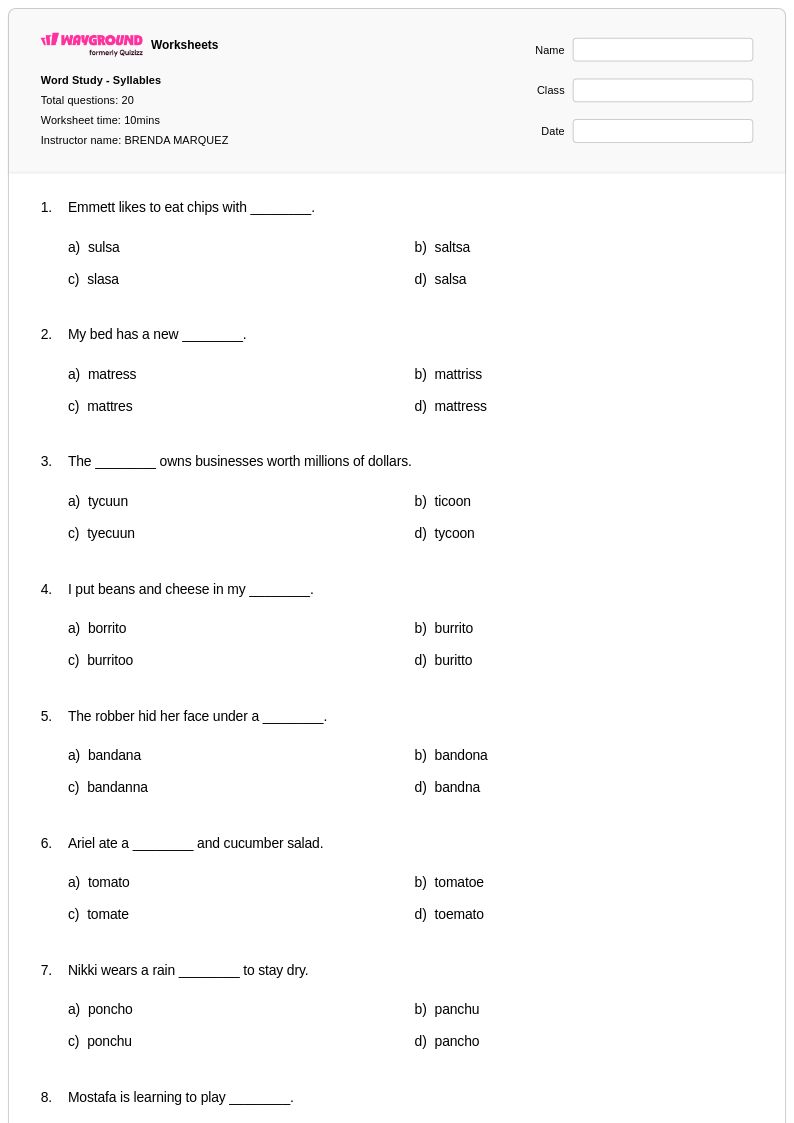
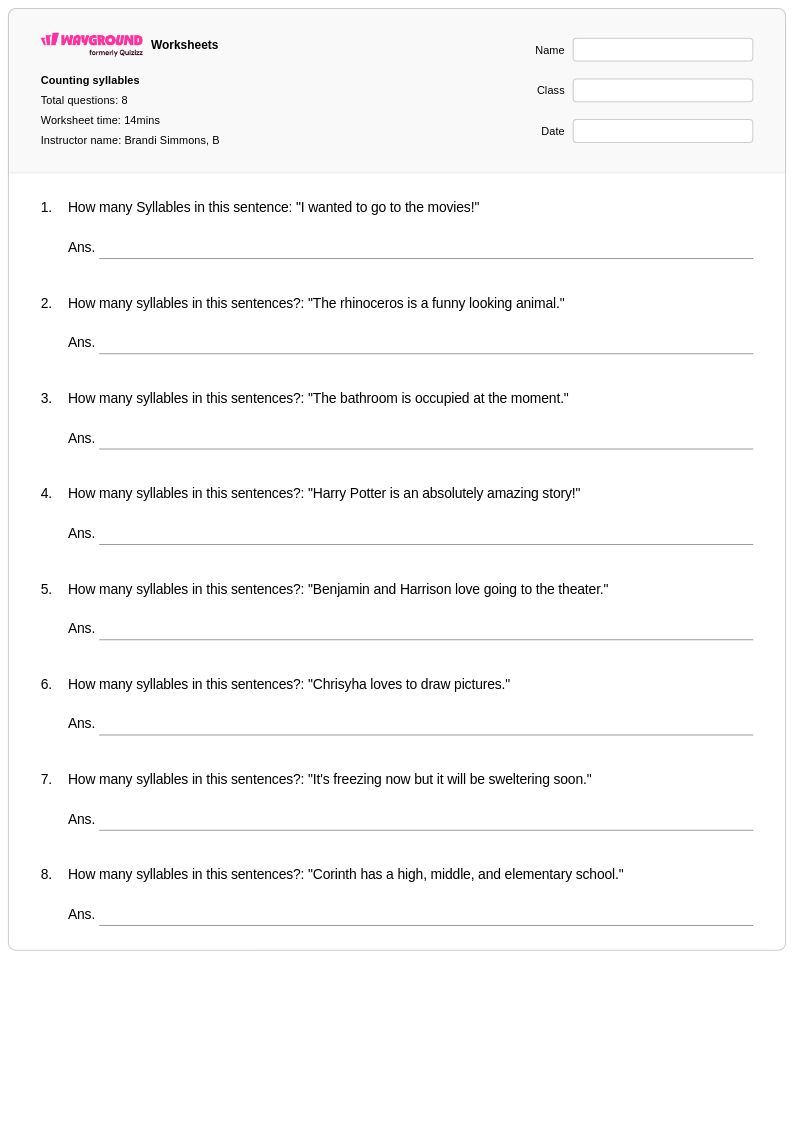
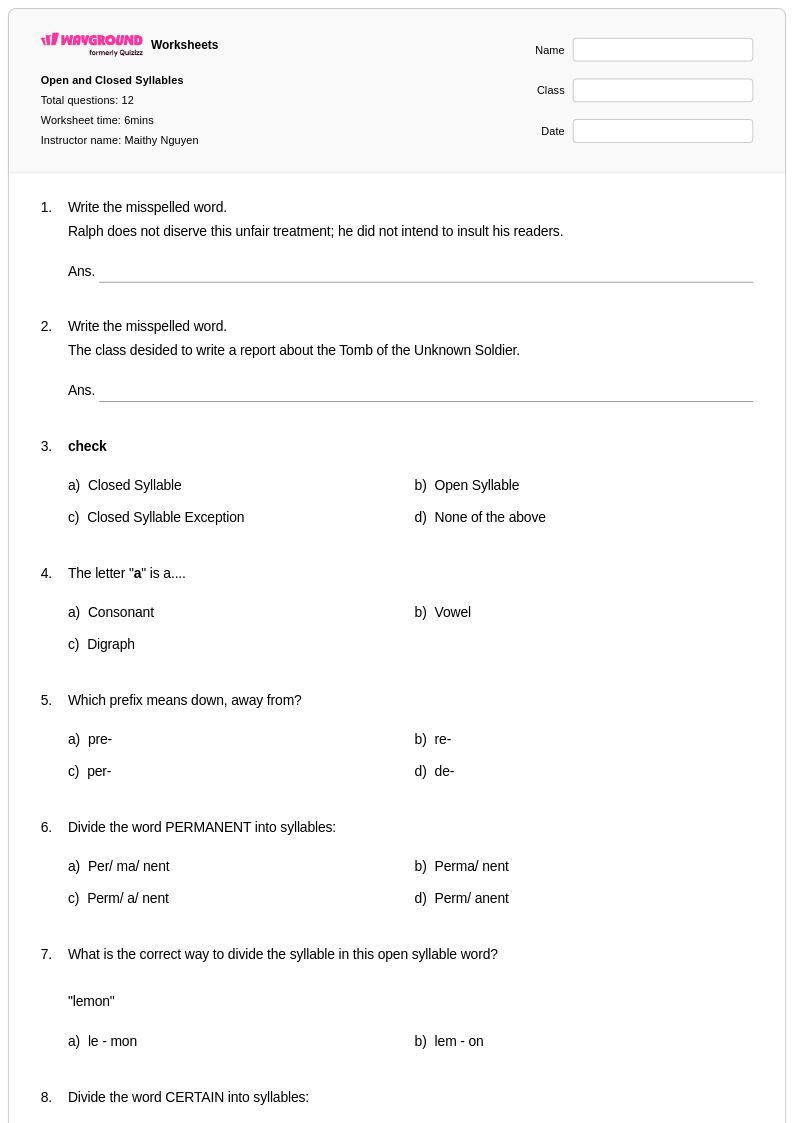
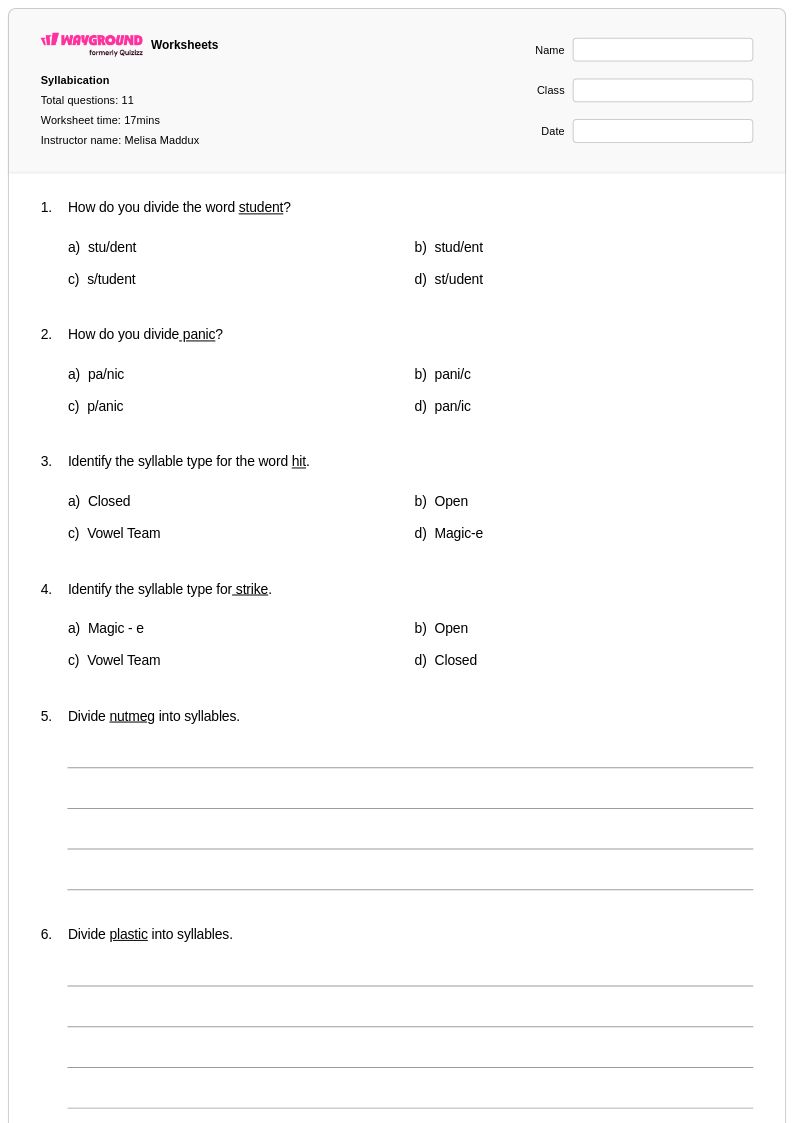
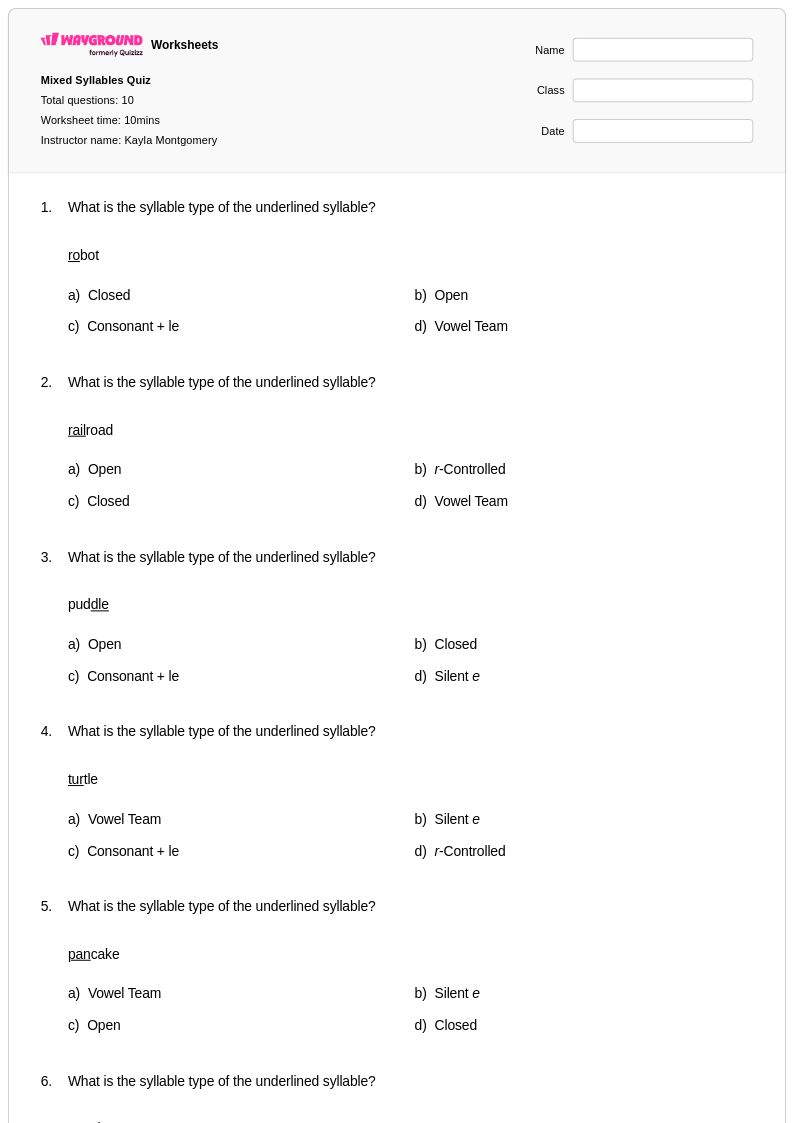
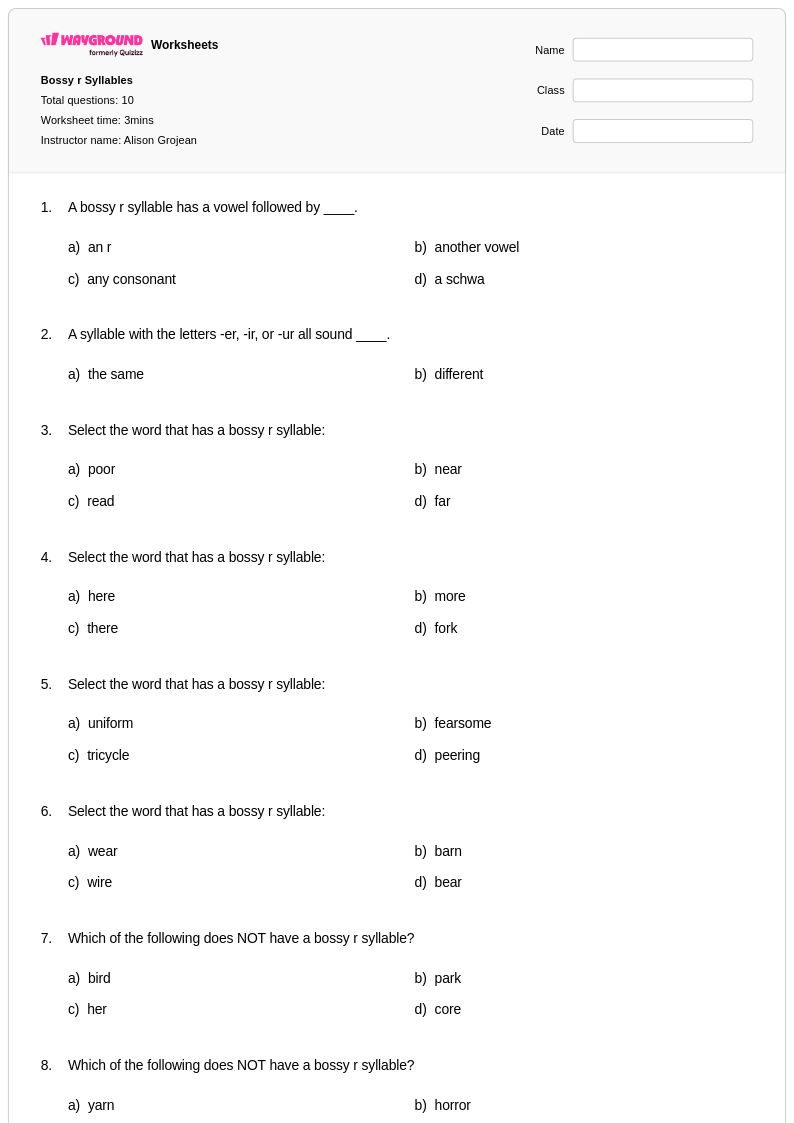
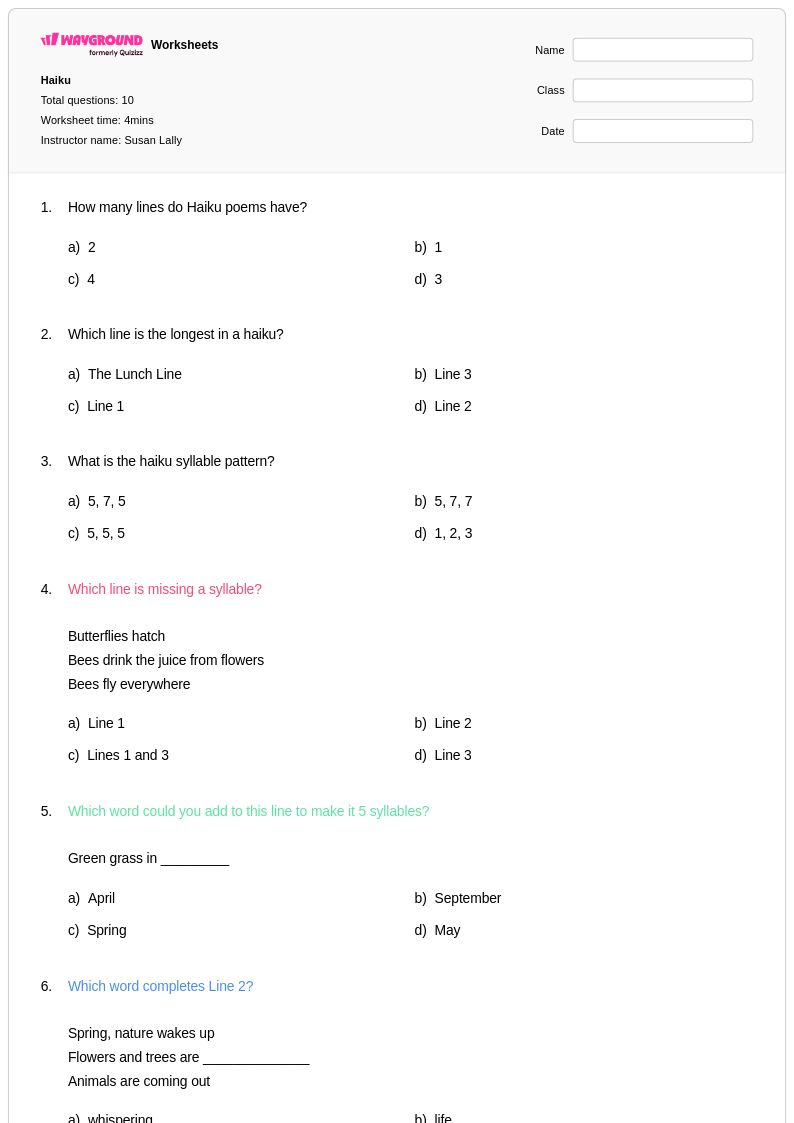
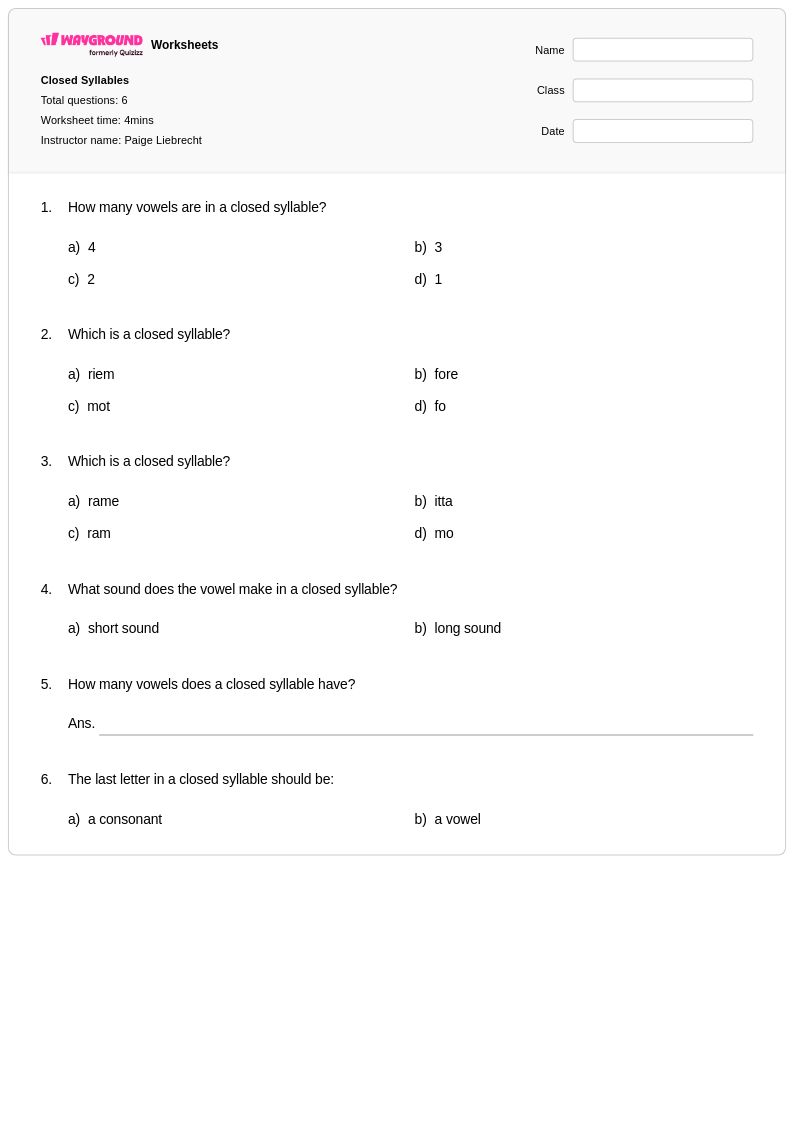
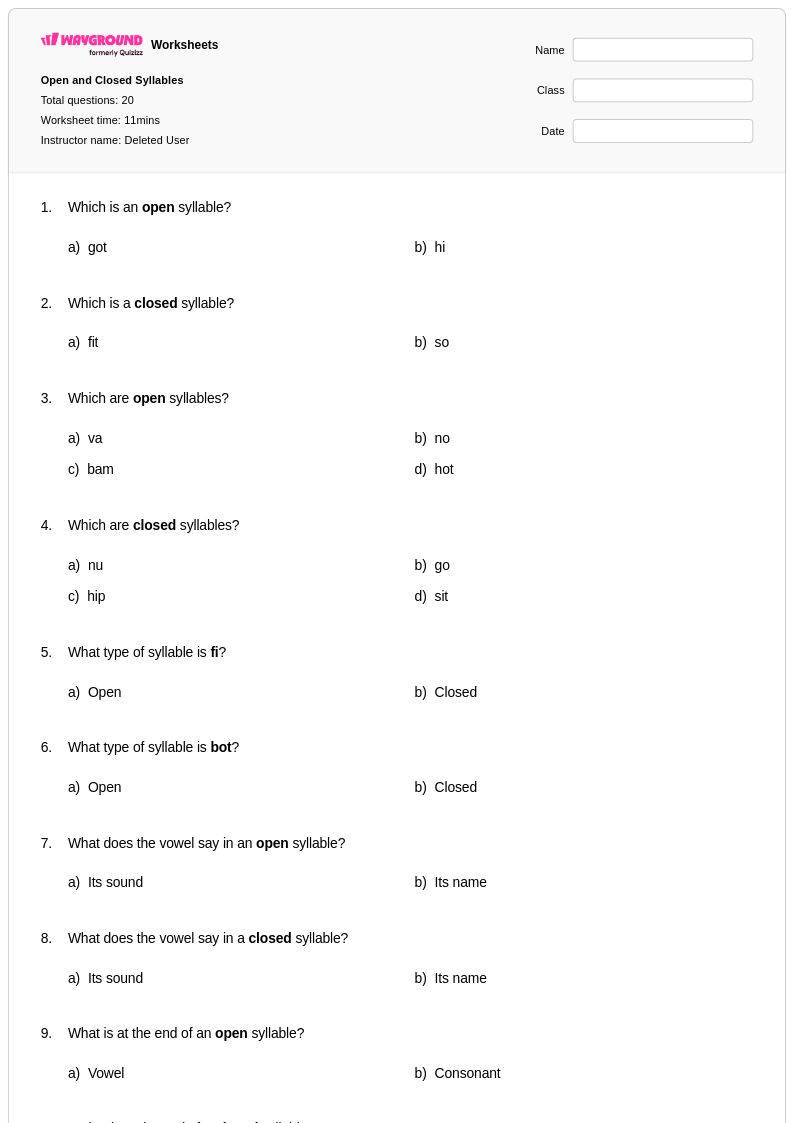
Class 5 syllables worksheets available through Wayground (formerly Quizizz) provide comprehensive practice for students developing advanced phonemic awareness and word structure skills. These educational resources focus on multisyllabic word patterns, syllable division rules, and stress patterns that fifth graders encounter in increasingly complex academic vocabulary. Students work through practice problems that reinforce concepts like identifying open and closed syllables, recognizing syllable boundaries in compound words, and applying division patterns such as VCCV and VCV. Each worksheet collection includes detailed answer keys and is available as free printables in convenient PDF format, making it simple for educators to distribute materials for independent practice, homework assignments, or targeted intervention sessions.
Wayground's extensive platform supports teachers with millions of teacher-created syllables resources specifically designed for Class 5 phonics instruction. The robust search and filtering system allows educators to locate worksheets aligned with specific curriculum standards and differentiate instruction based on individual student needs. Teachers can customize existing materials or create new variations to address diverse learning styles, whether students require additional scaffolding for basic syllable recognition or enrichment activities involving complex multisyllabic academic terms. The platform's flexible format options include both printable PDFs for traditional classroom use and digital versions for technology-integrated learning environments, streamlining lesson planning while providing comprehensive tools for skill remediation and ongoing phonics development throughout the academic year.
FAQs
How do I teach syllables to early readers?
Start by helping students hear syllables through clapping, tapping, or chin-drop techniques, where each jaw drop on a vowel sound marks one syllable. From there, introduce syllable types systematically — closed syllables first, then open, vowel-consonant-e, and so on — so students build a transferable framework for decoding unfamiliar words. Connecting syllable work to real reading practice, rather than drills alone, accelerates fluency gains.
What exercises help students practice blending and segmenting syllables?
Effective practice includes blending spoken syllable parts into whole words (e.g., 'bas-ket' → 'basket'), sorting picture cards by syllable count, and marking syllable breaks in written words using dots or slash marks. Worksheets that target multisyllabic words are especially useful because they push students beyond single-syllable decoding and into the chunking strategies needed for grade-level reading. Repeated exposure to different syllable patterns — closed, open, vowel teams — solidifies both recognition and recall.
What mistakes do students commonly make when counting or dividing syllables?
The most frequent error is miscounting syllables in words with vowel digraphs or silent vowels — students often count letters instead of sounds, treating 'ea' in 'bread' as two syllables rather than one. Another common mistake is failing to recognize that every syllable must contain exactly one vowel sound, which leads to incorrect splits in words like 'athlete' or 'rhythm.' Students also struggle with consonant cluster division rules, often splitting blends that should stay together in the same syllable.
How can I differentiate syllable instruction for struggling readers and advanced learners?
For struggling readers, focus on single-syllable closed words first and use Wayground's Read Aloud feature to support students who need audio assistance while working through syllable identification tasks. Reduced answer choices can also lower cognitive load for students who are easily overwhelmed by multisyllabic word options. Advanced learners benefit from challenging multisyllabic word exercises and open-ended tasks that ask them to generate words within specific syllable structures, pushing beyond pattern recognition toward application.
How do I use Wayground's syllables worksheets in my classroom?
Wayground's syllables worksheets are available as printable PDFs for traditional classroom use and in digital formats for technology-integrated or blended learning environments. Teachers can also host worksheets directly as a quiz on Wayground, making it easy to assign practice, track student responses, and review results in one place. The included answer keys make self-checking and teacher-grading efficient, whether students are working independently, in small groups, or as part of whole-class phonics instruction.
At what grade level should syllable instruction begin, and how long should it continue?
Syllable instruction typically begins in kindergarten with awareness-level tasks like clapping and counting syllables in spoken words, then deepens in first and second grade as students learn to apply syllable division rules to decode written words. Explicit syllable type instruction — covering closed, open, vowel-consonant-e, vowel team, r-controlled, and consonant-le patterns — is most critical in grades 1 through 3. However, multisyllabic word work remains essential through upper elementary grades as students encounter increasingly complex vocabulary in content-area reading.