Free Printable Long I/short I Worksheets for Class 2
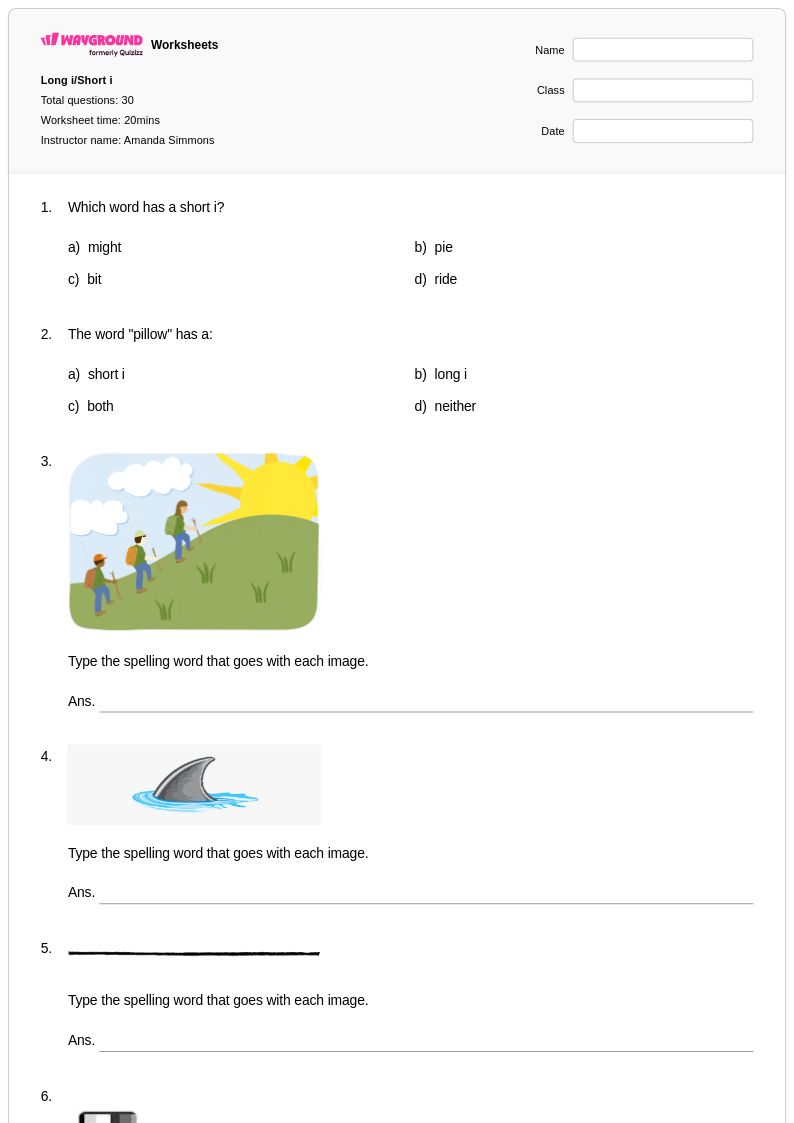
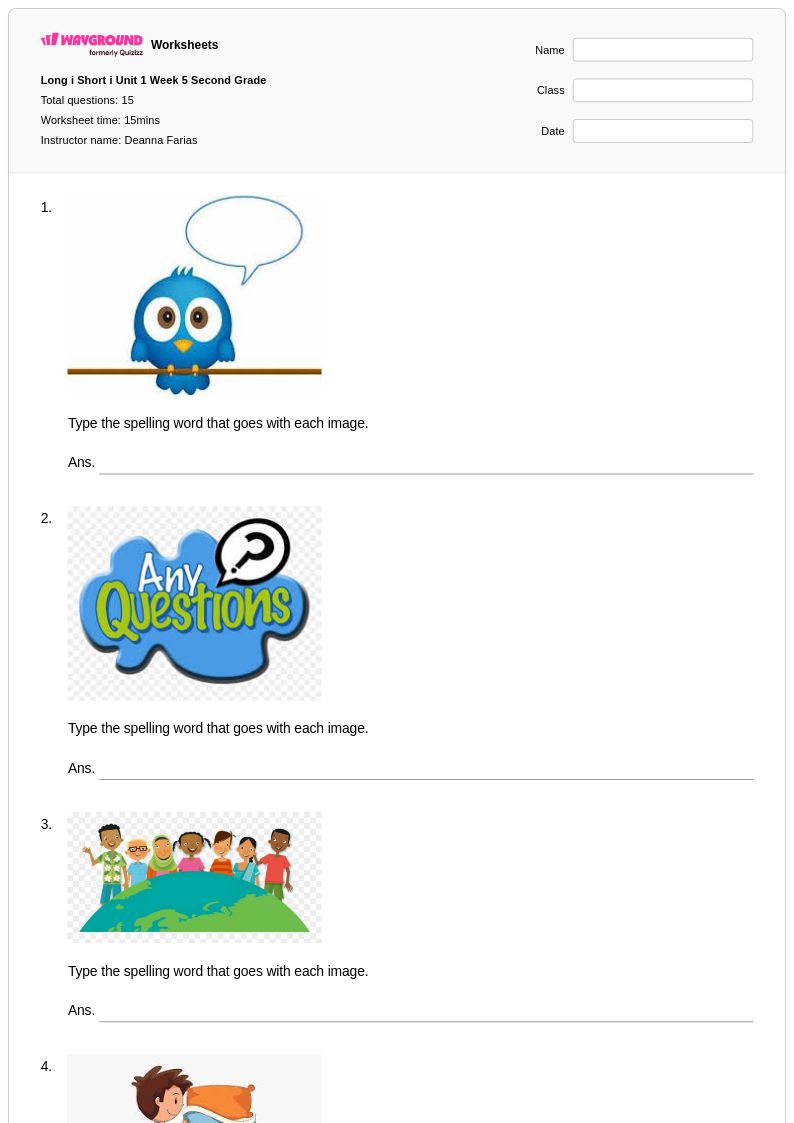
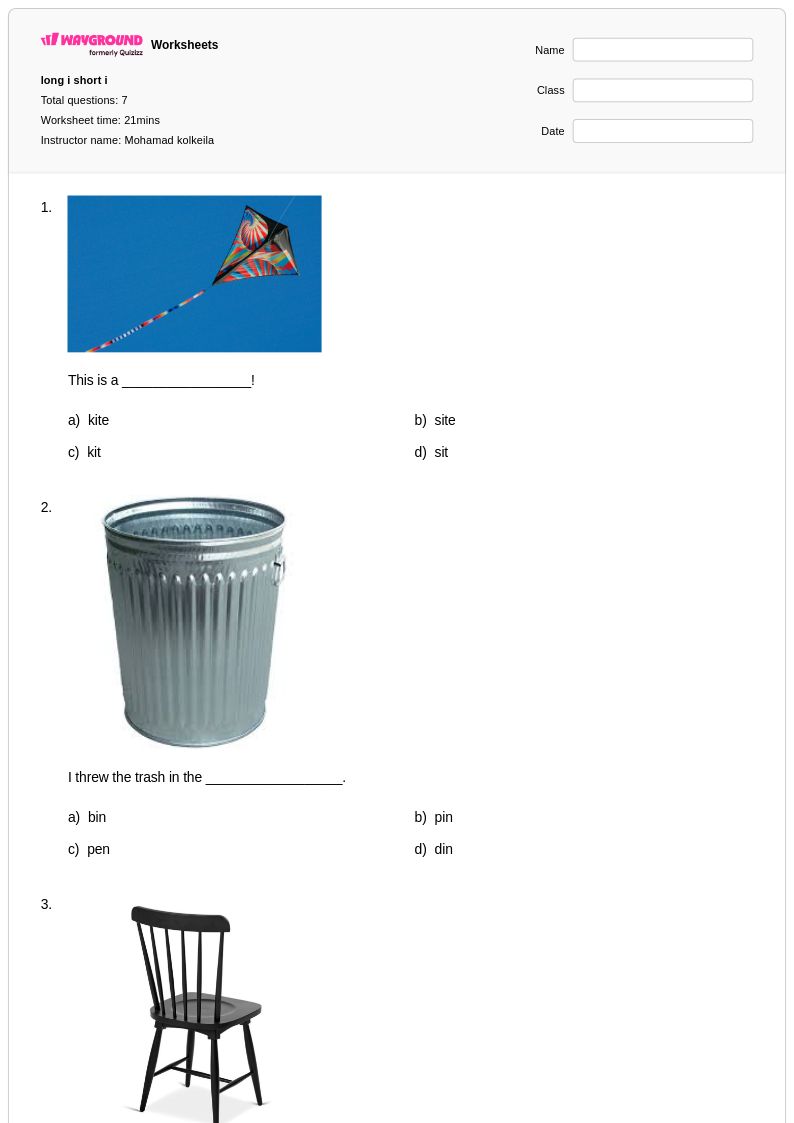
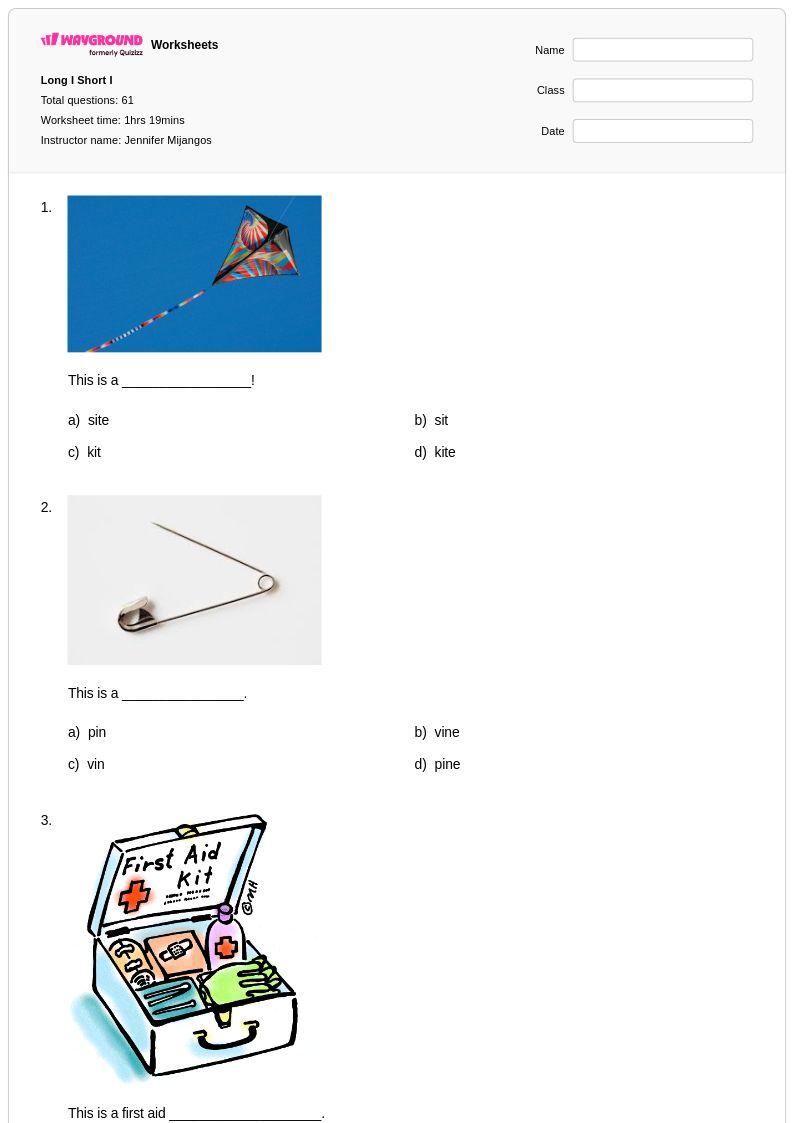
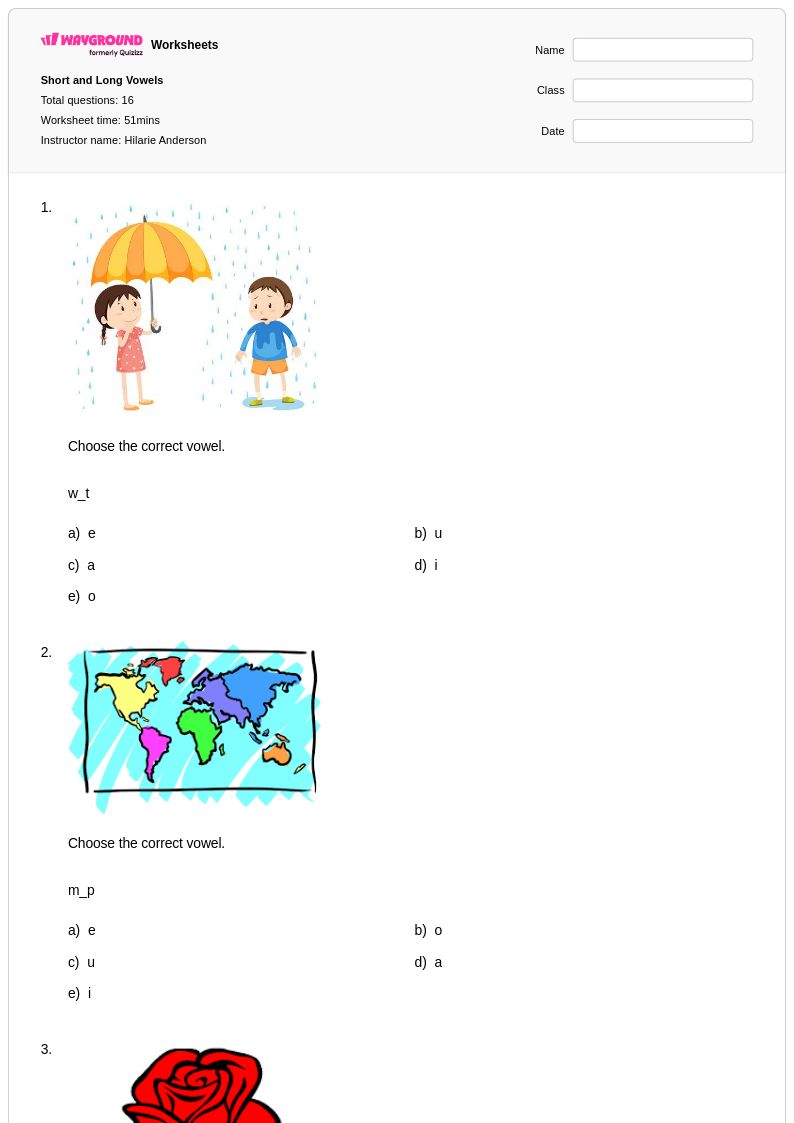
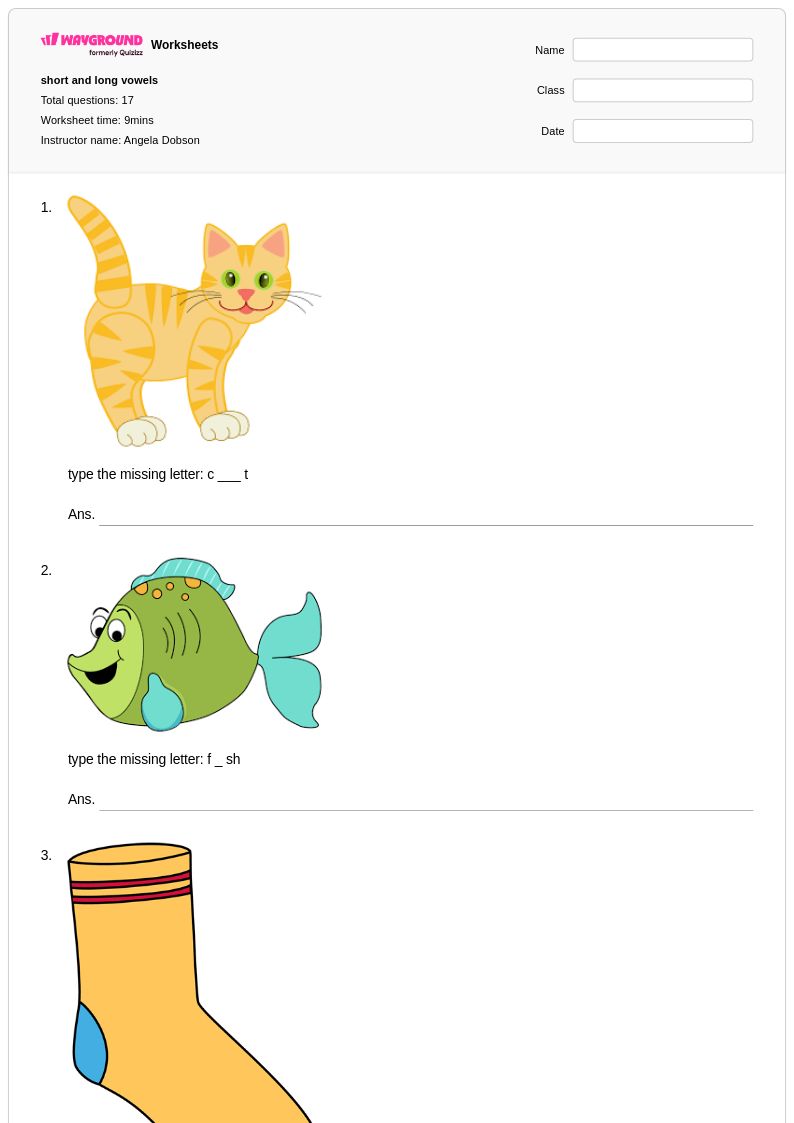
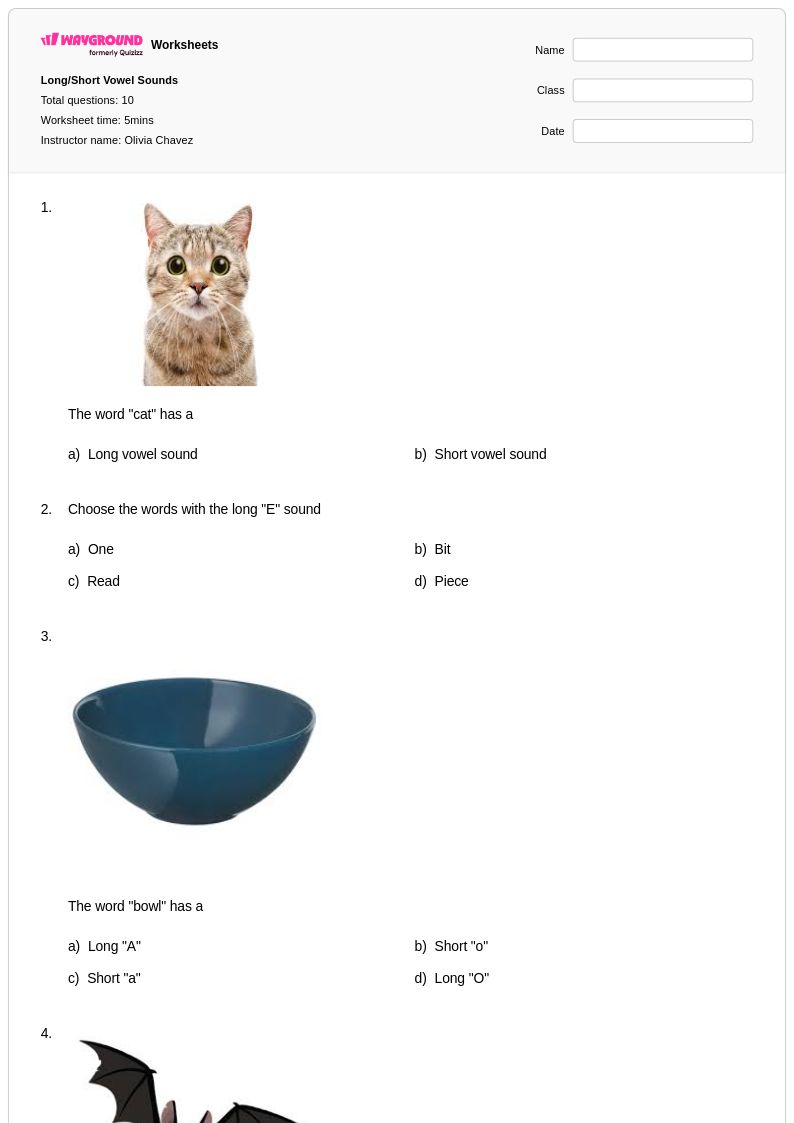
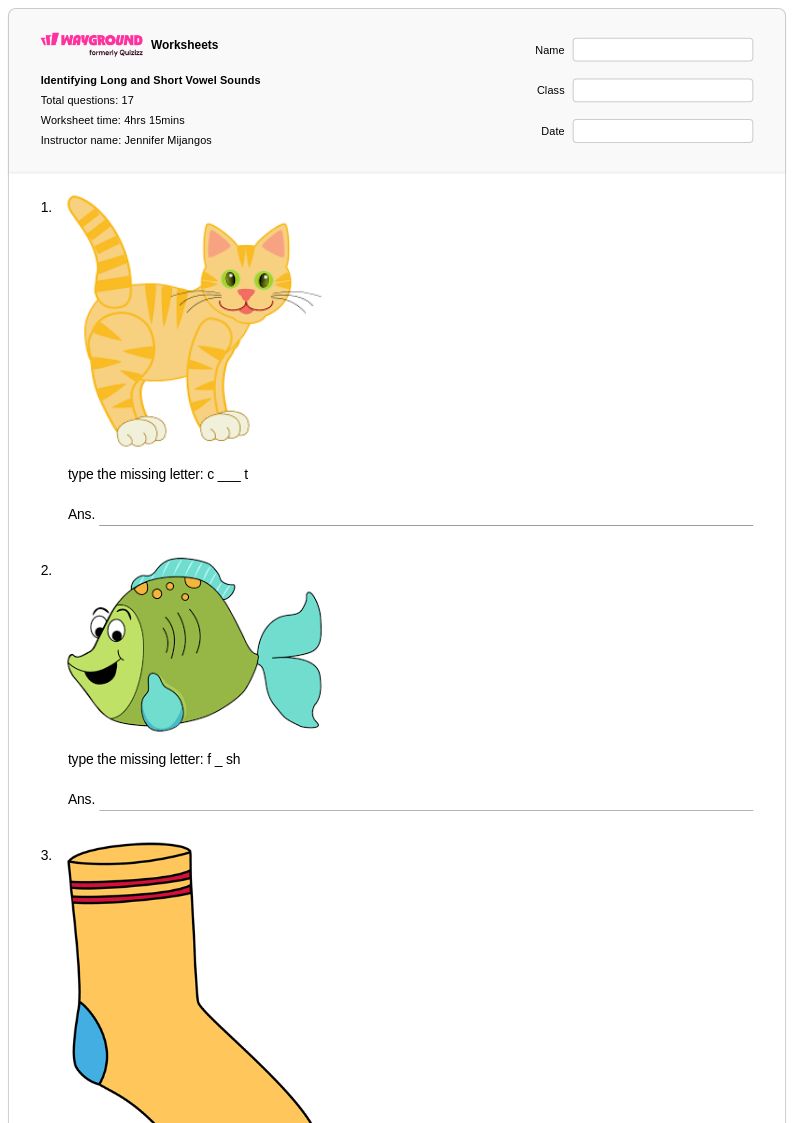
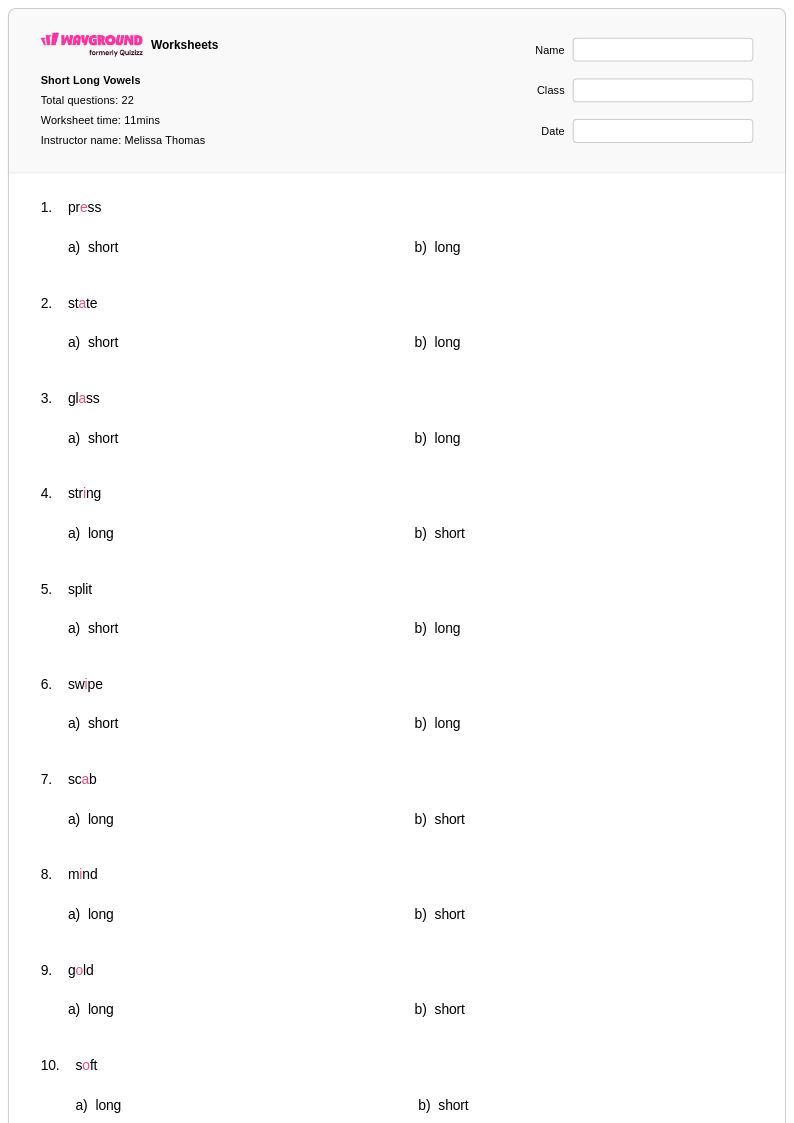
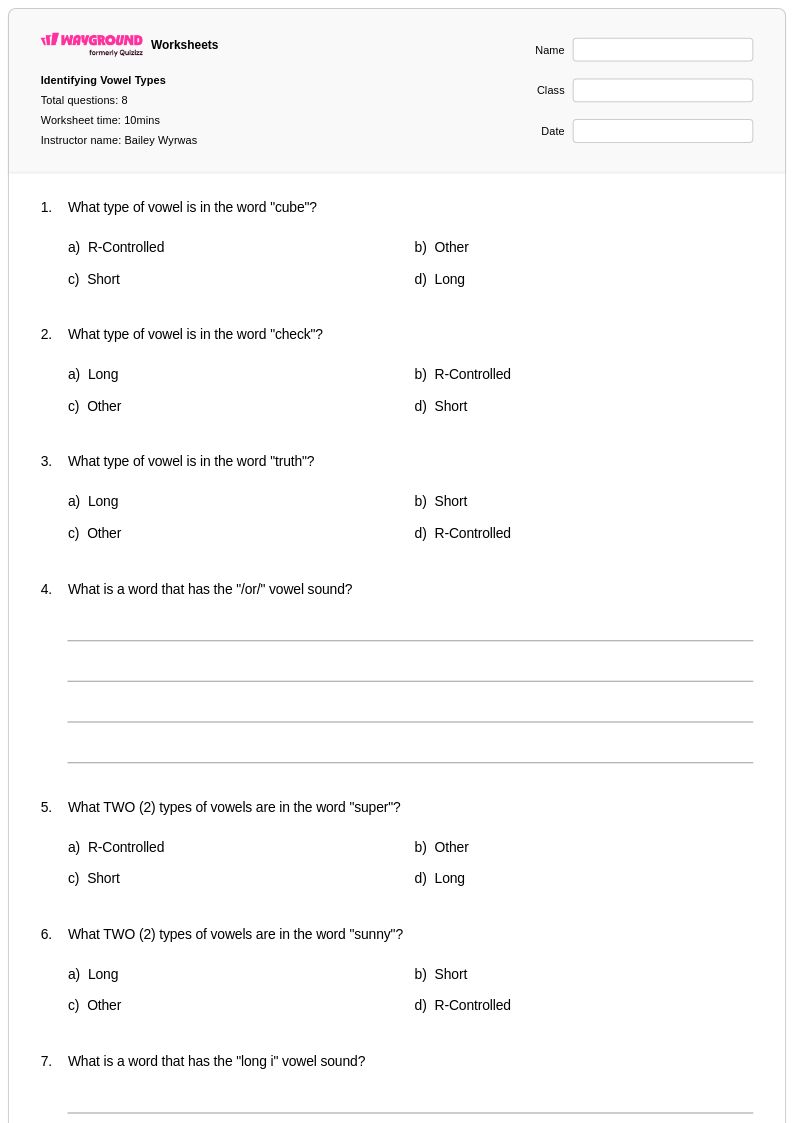
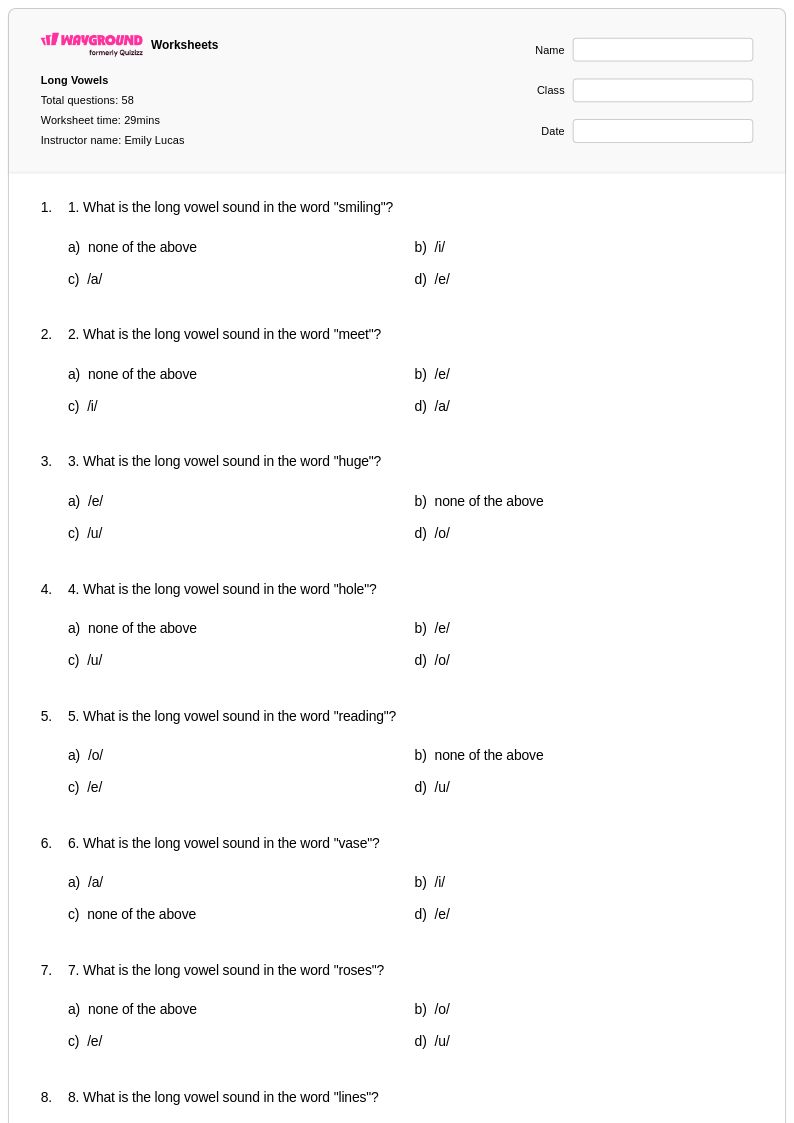
Wayground's free Class 2 long I and short I vowel worksheets provide printable PDF practice problems with answer keys to help students master distinguishing between these essential phonetic sounds.
Explore printable Long I/short I worksheets for Class 2
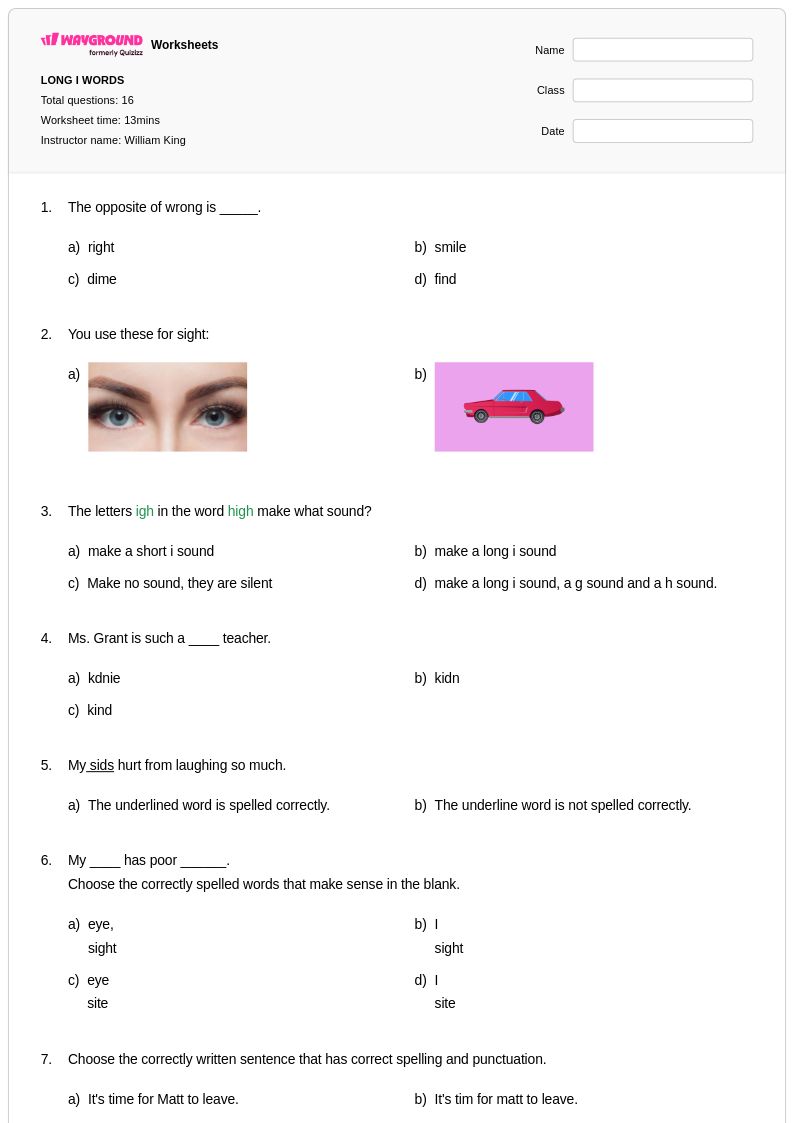
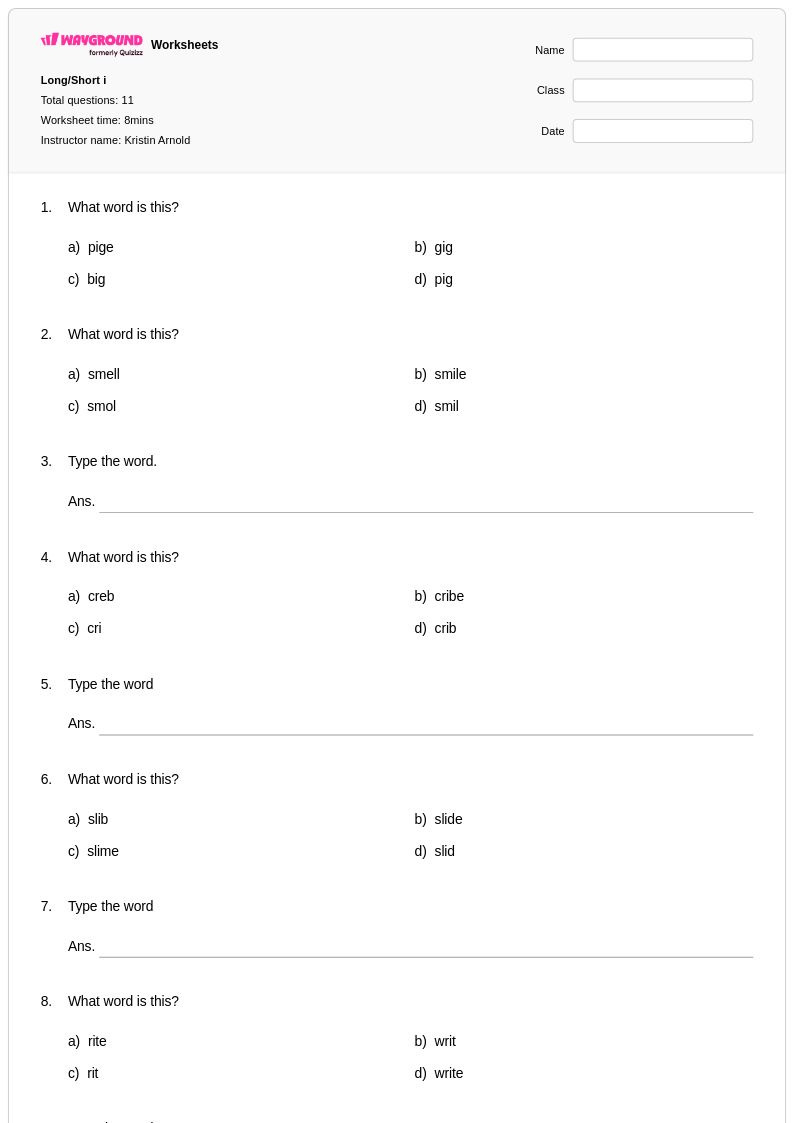
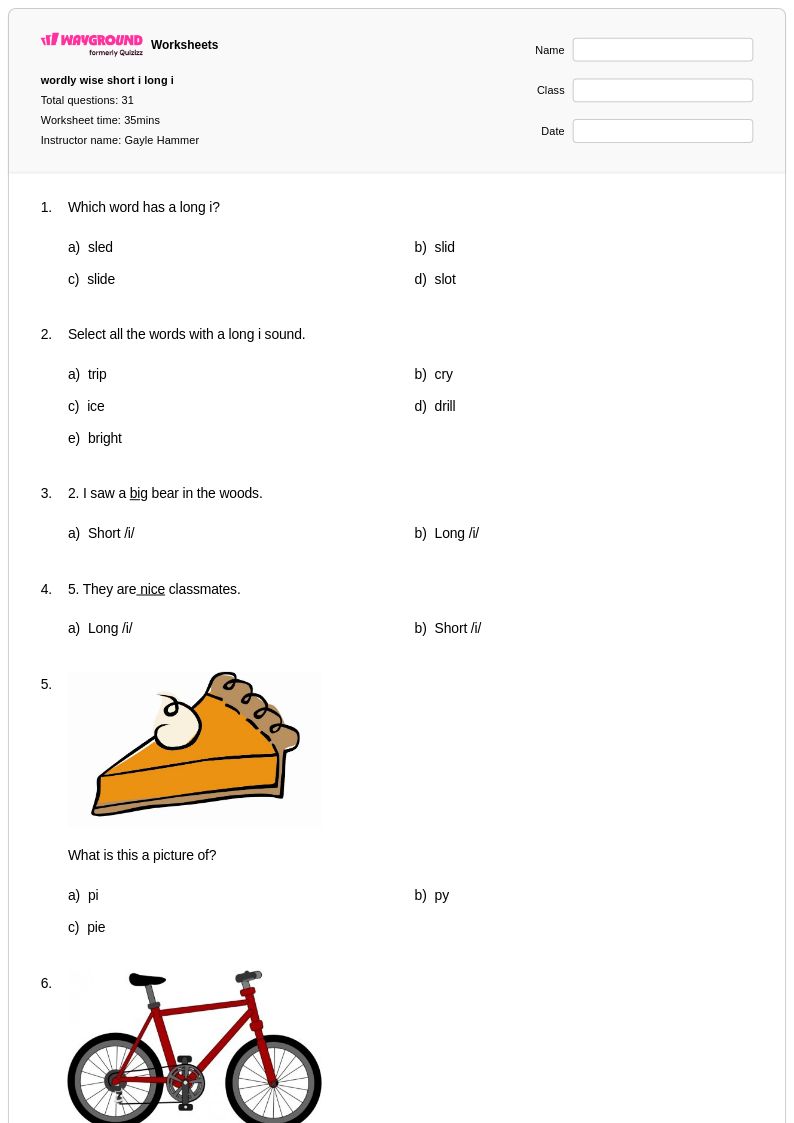
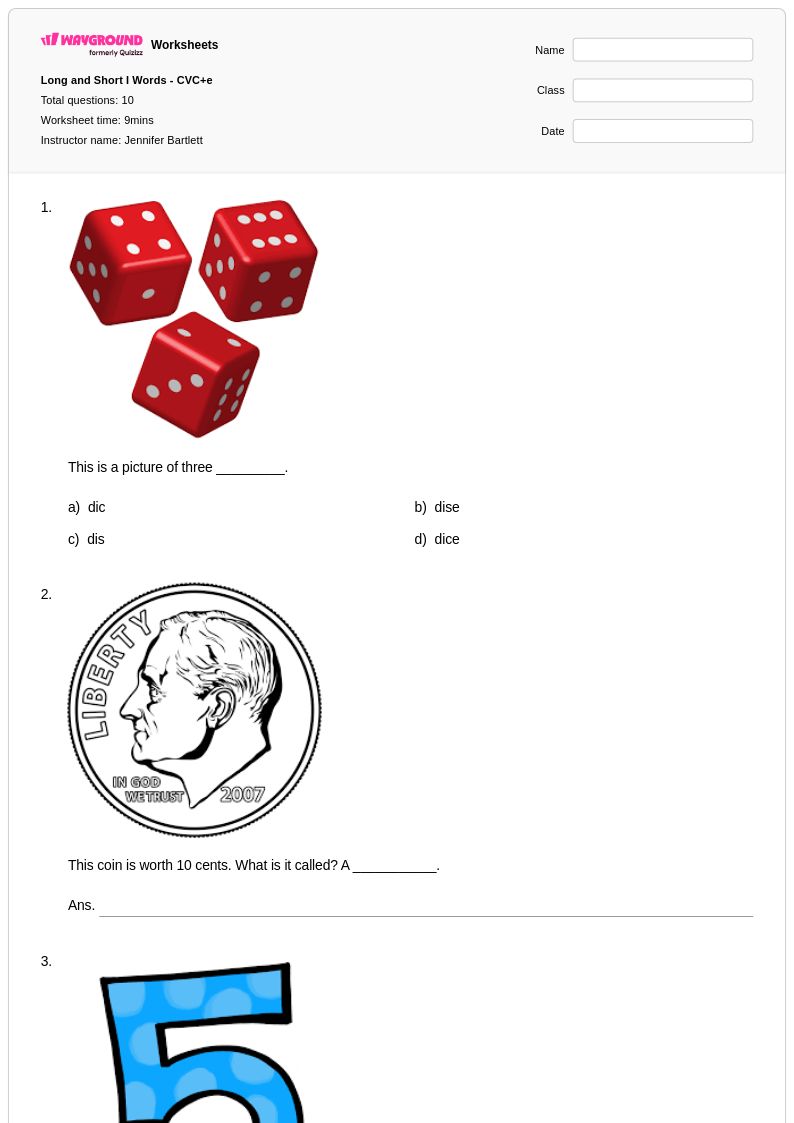
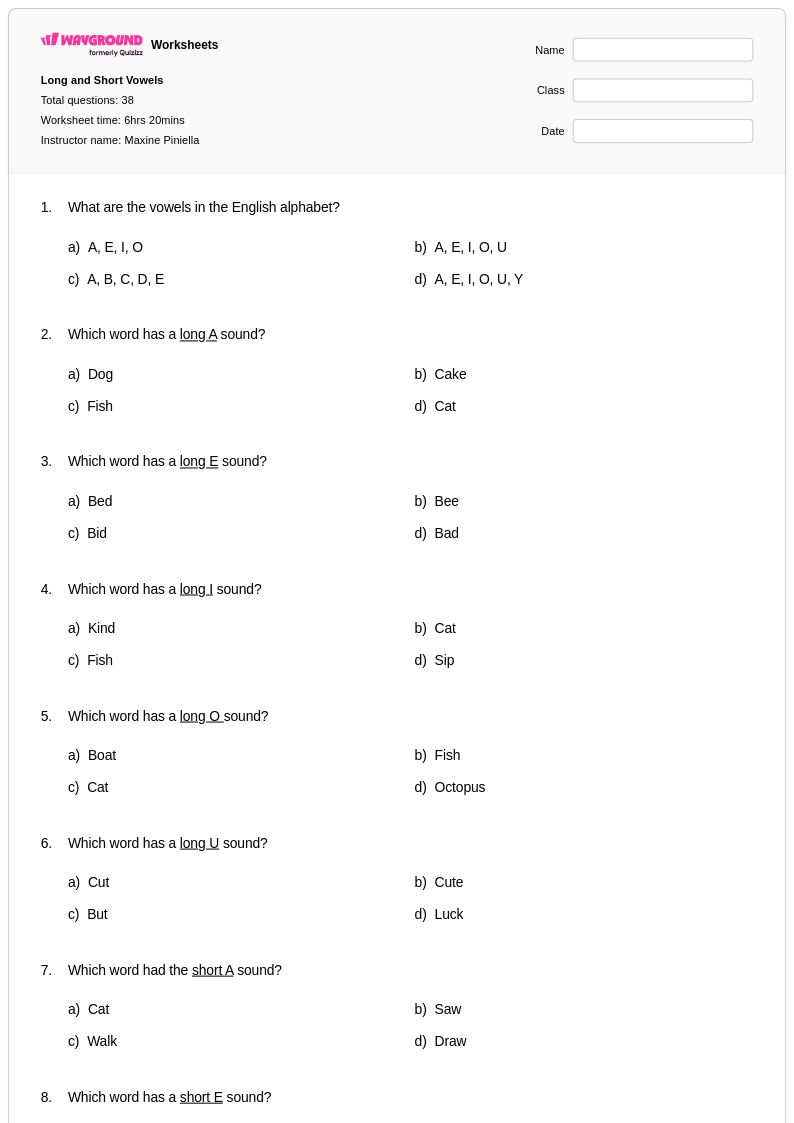
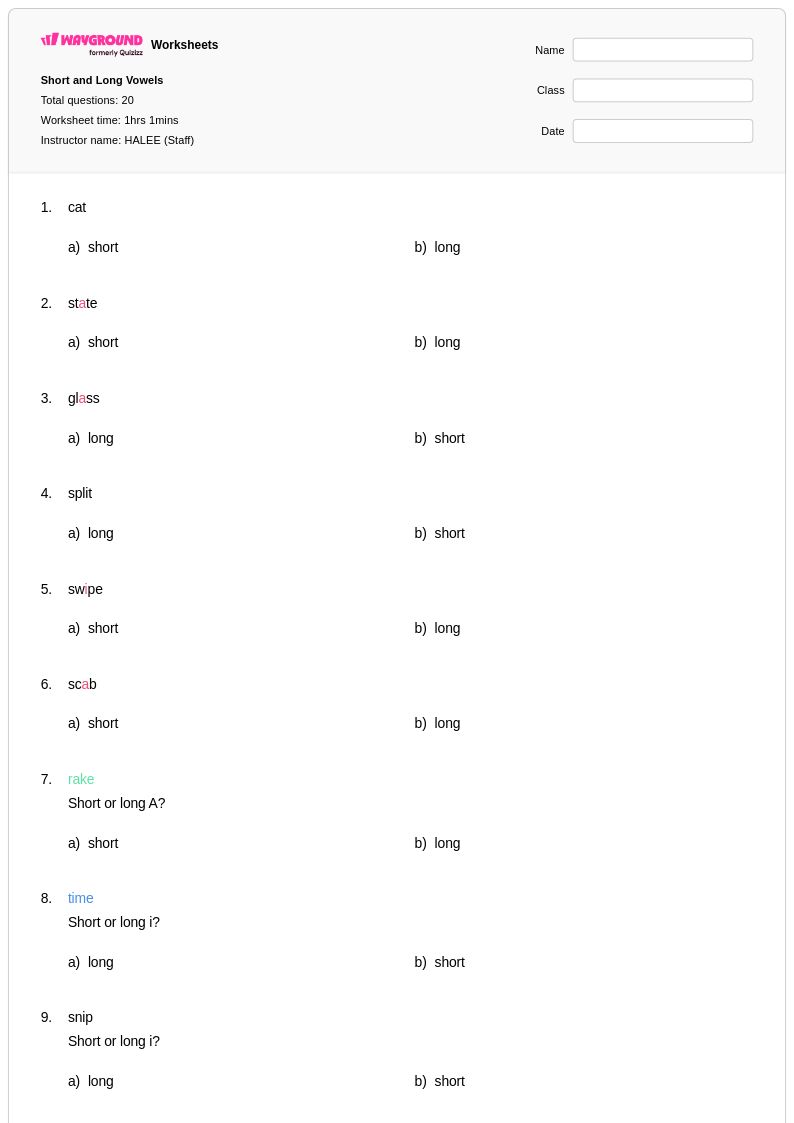
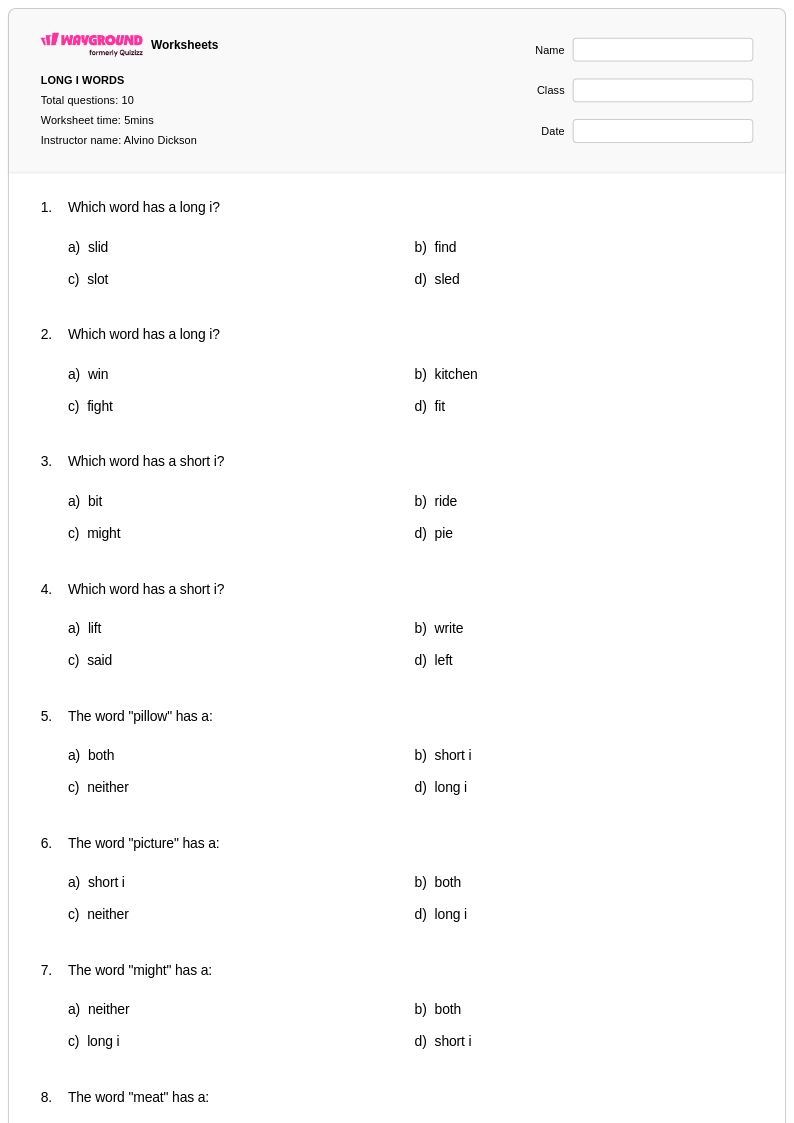
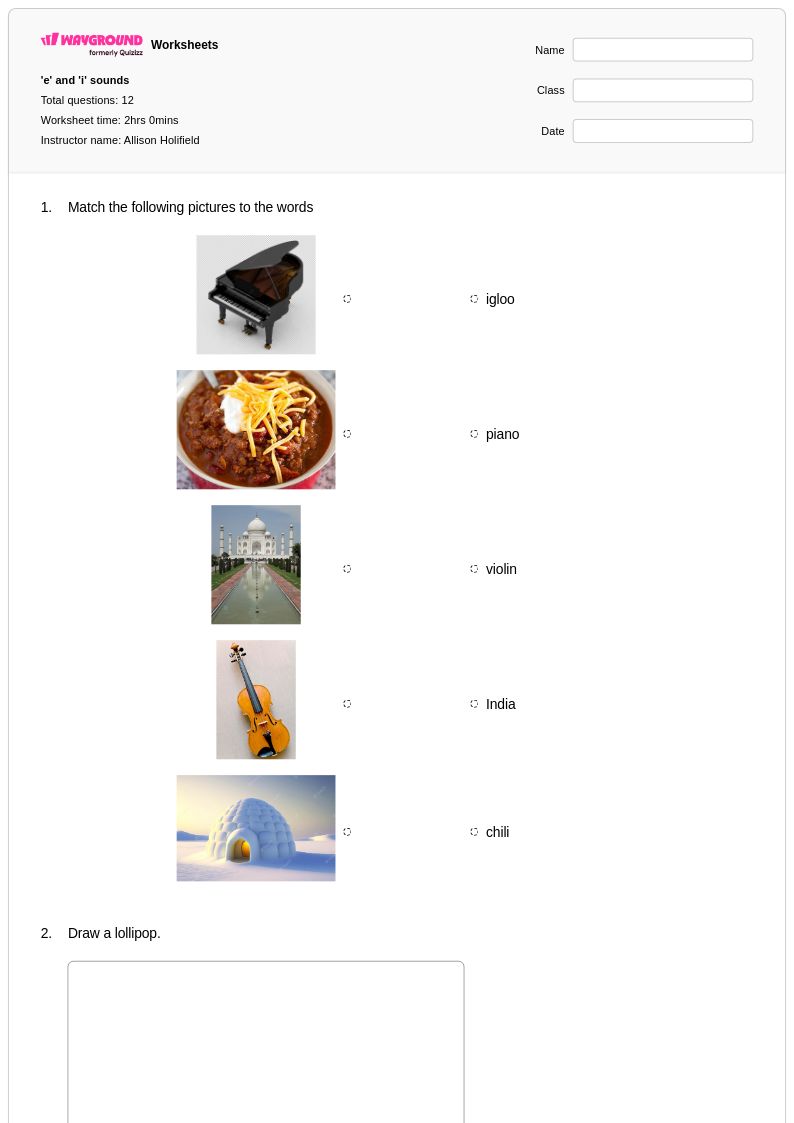
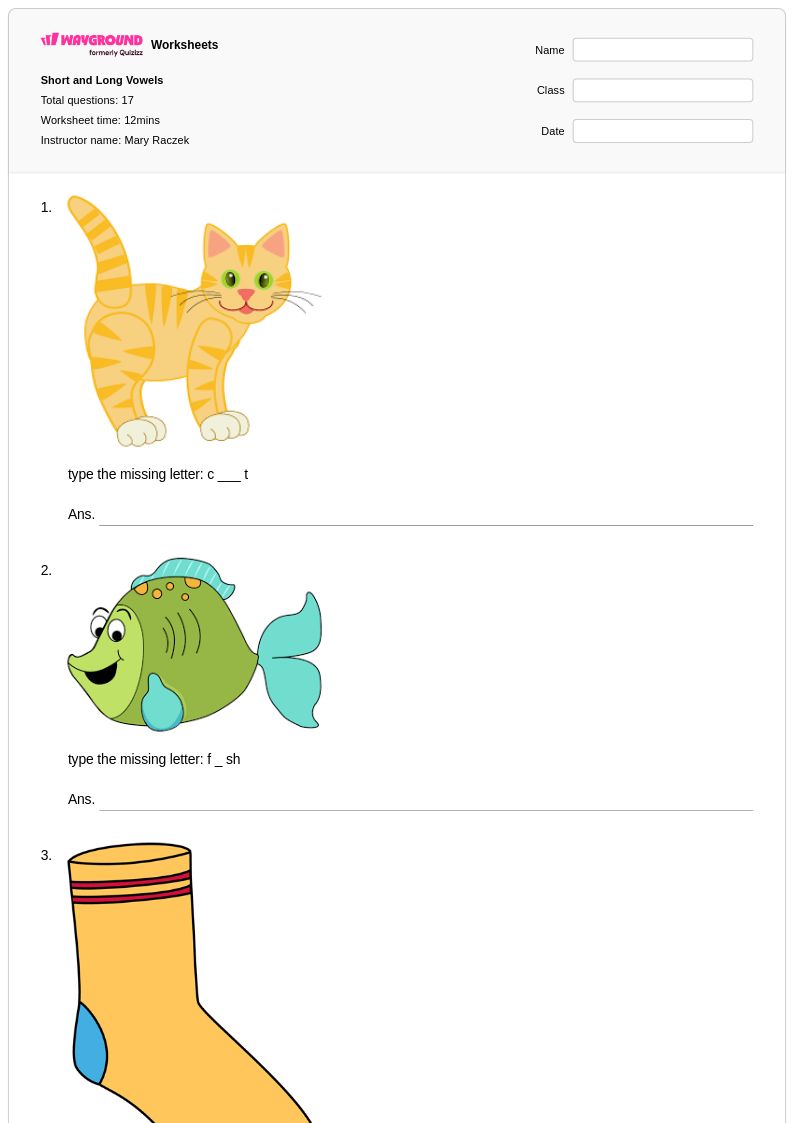
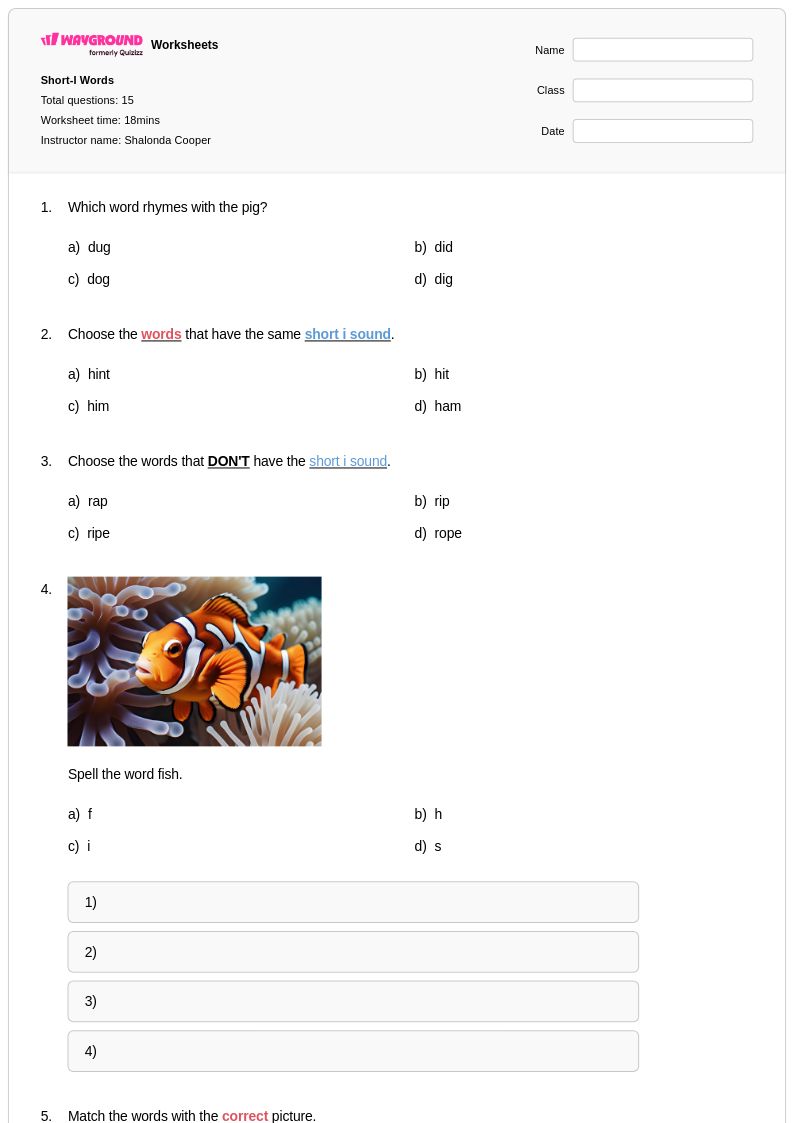
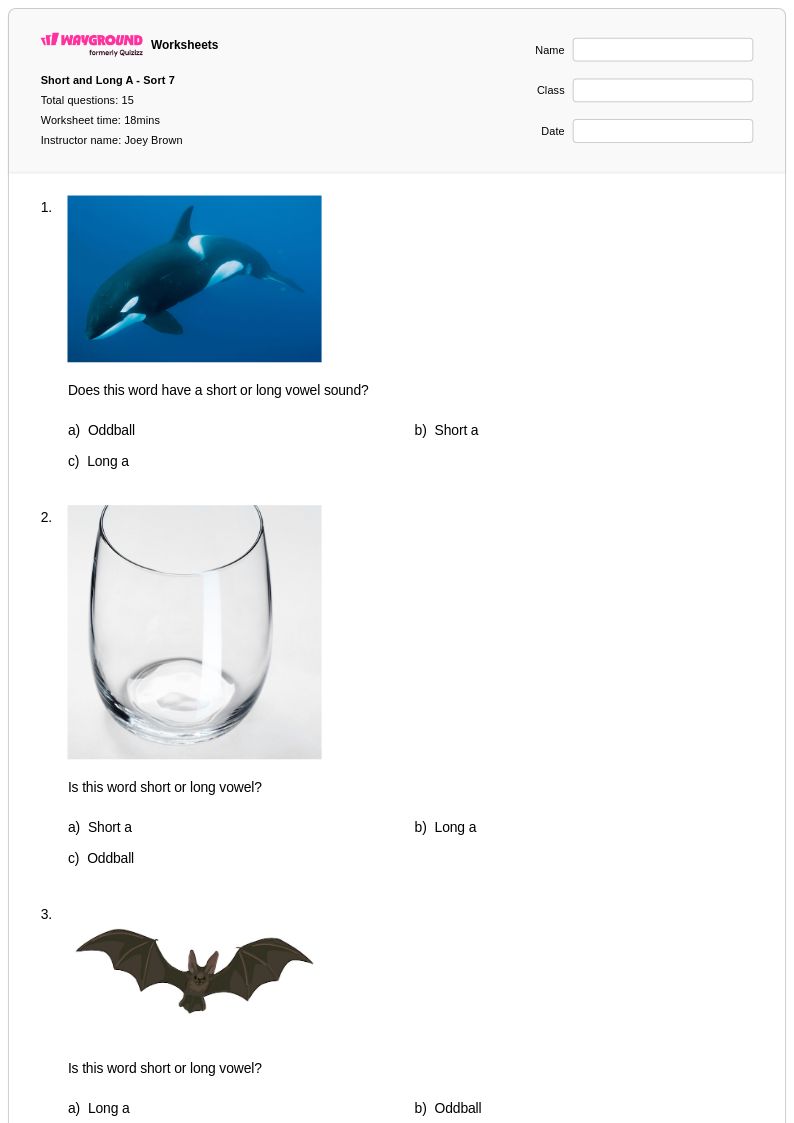
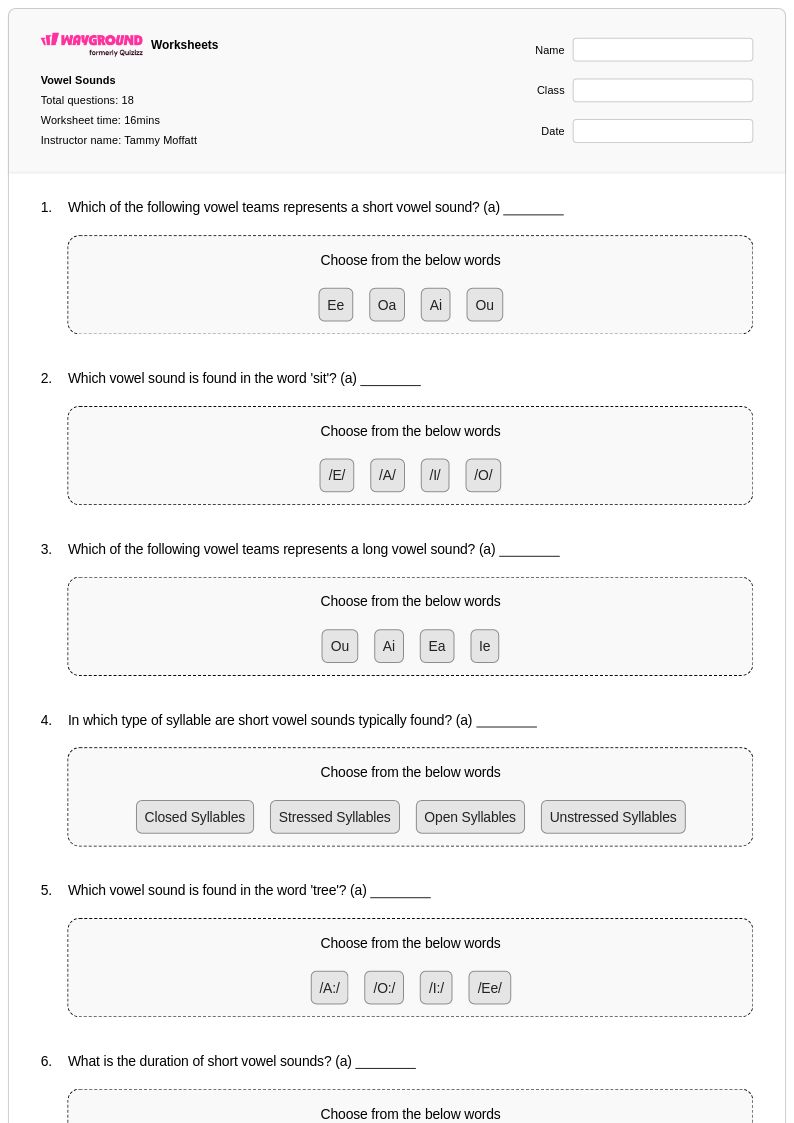
Long I and short I vowel worksheets for Class 2 students through Wayground (formerly Quizizz) provide essential phonics instruction that builds foundational reading and spelling skills. These comprehensive practice materials help young learners distinguish between the two distinct sounds of the letter I, strengthening their ability to decode unfamiliar words and improve reading fluency. The worksheets feature engaging activities that reinforce vowel sound recognition through word sorting exercises, picture identification tasks, and spelling practice problems that target specific phonetic patterns. Teachers can access complete answer keys and download materials as free printables in convenient pdf format, making it simple to implement structured vowel instruction that meets diverse classroom needs.
Wayground (formerly Quizizz) empowers educators with millions of teacher-created resources specifically designed for Class 2 long I and short I vowel instruction, featuring robust search and filtering capabilities that align with phonics standards and curriculum requirements. The platform's differentiation tools allow teachers to customize worksheet difficulty levels and select from various activity types, ensuring appropriate challenge levels for students at different reading stages. These versatile materials are available in both printable and digital formats, including downloadable pdfs, giving teachers flexibility to support remediation efforts for struggling readers, provide enrichment opportunities for advanced students, and deliver consistent skill practice across whole-group and small-group instruction settings.
FAQs
How do I teach students the difference between long I and short I sounds?
Start by anchoring each sound to a high-frequency example word — 'kite' for long I and 'sit' for short I — so students have a reliable reference point before encountering new vocabulary. Explicit instruction works best when teachers model listening for the vowel sound first, then move to reading and spelling. Word sorts, where students physically categorize picture or word cards by vowel sound, are especially effective for building auditory discrimination before transitioning to written practice.
What exercises help students practice long I and short I vowel sounds?
Effective practice activities include word sorting tasks, fill-in-the-blank exercises, phonetic identification drills, and reading passages with embedded target words. Mixing auditory, visual, and written formats is important because students may recognize a sound when they hear it but still struggle to apply that knowledge while reading independently. Repeated, varied exposure across multiple activity types builds the automaticity students need for fluent decoding.
What mistakes do students commonly make when distinguishing long I from short I?
A common error is overgeneralizing the silent-e rule — students may mark any word with a final 'e' as long I without recognizing exceptions or alternate spelling patterns like 'igh' or 'y.' Students also frequently mispronounce short I as a schwa or confuse it with short E in words like 'bit' versus 'bet.' Targeted practice with minimal pairs and spelling pattern sorting helps surface these specific confusions so they can be corrected directly.
How do I use long I and short I worksheets effectively in my classroom?
These worksheets are available as printable PDFs for traditional classroom use and in digital formats for technology-integrated environments, including the option to host them as a quiz on Wayground, which accommodates a range of teaching setups and student preferences. For whole-class instruction, printable versions work well as guided practice or warm-up activities, while digital formats suit independent work or remote learning. Using the included answer keys allows for quick formative assessment, helping you identify which students need additional support before moving to more complex phonics patterns.
How can I support struggling readers who can't distinguish long I from short I?
For students who are still developing phonemic awareness, reduce the cognitive load by starting with picture-based sorting tasks before introducing written words. On Wayground, you can apply accommodations such as Read Aloud so the platform reads questions aloud for students who benefit from auditory support, or Reduced Answer Choices to minimize the number of options a student must evaluate at once. These settings can be assigned to individual students without affecting the rest of the class, making differentiated support practical during whole-class digital sessions.
What spelling patterns should I cover when teaching long I and short I?
Long I appears in several reliable spelling patterns, including silent-e words (kite, time), vowel teams like 'igh' (bright, night) and 'ie' (pie, tie), and open syllables ending in I (hi, I). Short I is most commonly found in closed syllables where a consonant follows the vowel (sit, big, fish). Teaching students to recognize these patterns as predictable spelling conventions, rather than memorizing words individually, builds transferable decoding skills.