Free Printable Identifying Problems and Solutions in Nonfiction Worksheets for Class 3
Class 3 students can master identifying problems and solutions in nonfiction texts with Wayground's comprehensive collection of free worksheets, printables, and practice problems complete with answer keys.
Explore printable Identifying Problems and Solutions in Nonfiction worksheets for Class 3
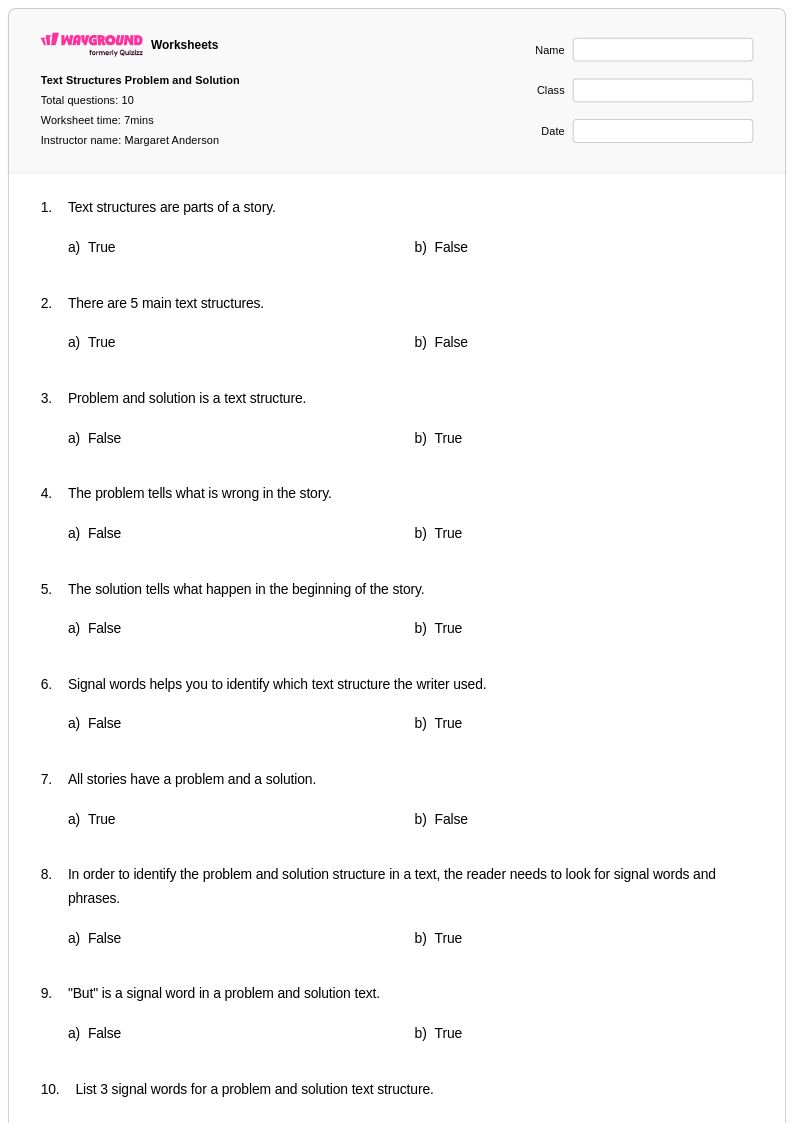
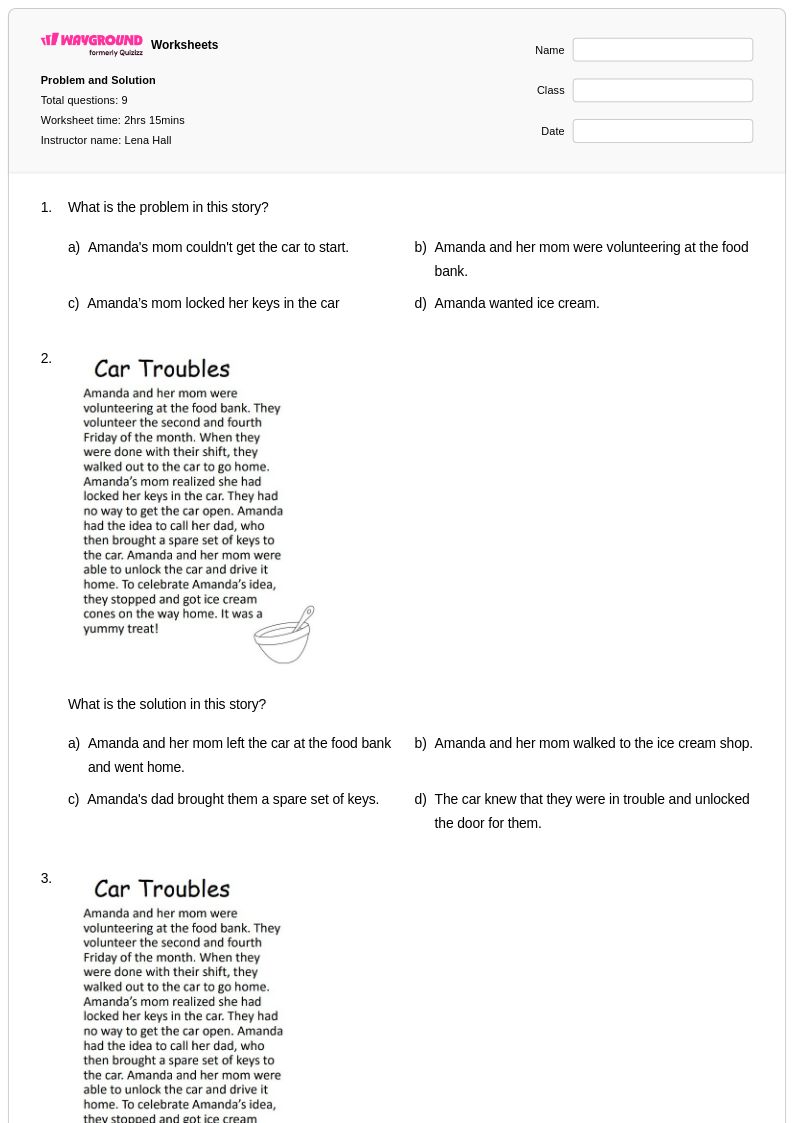
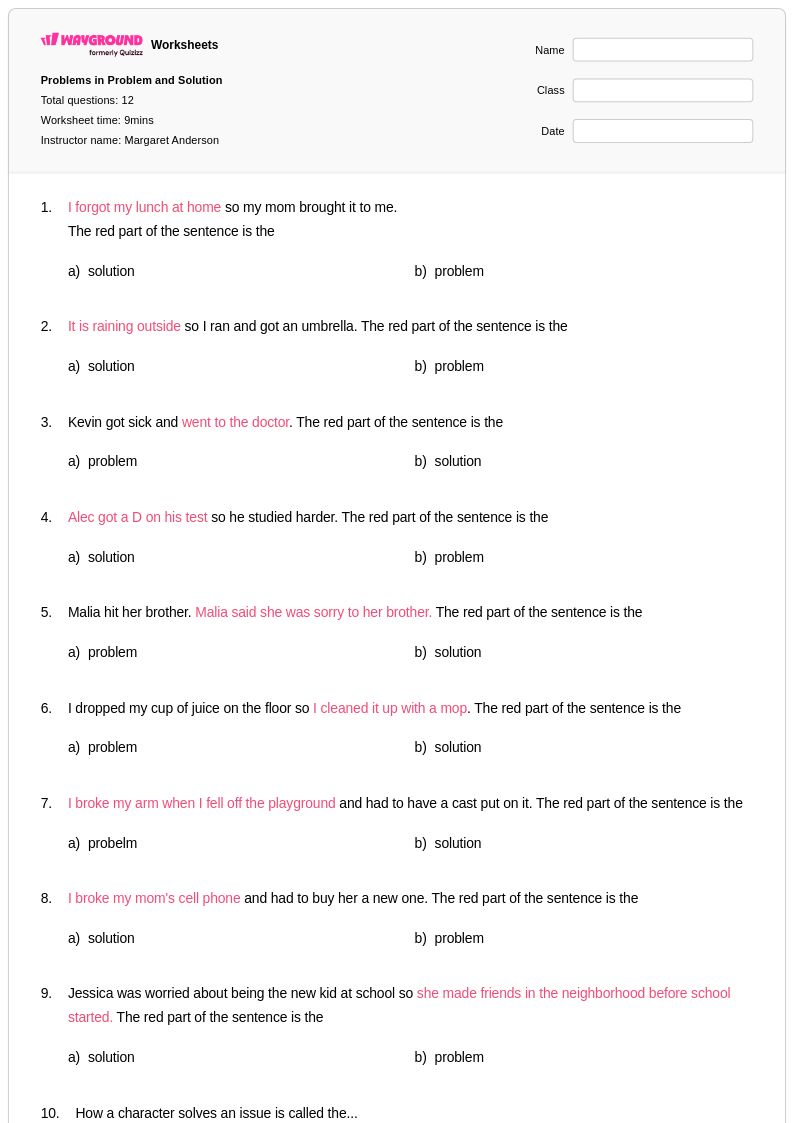
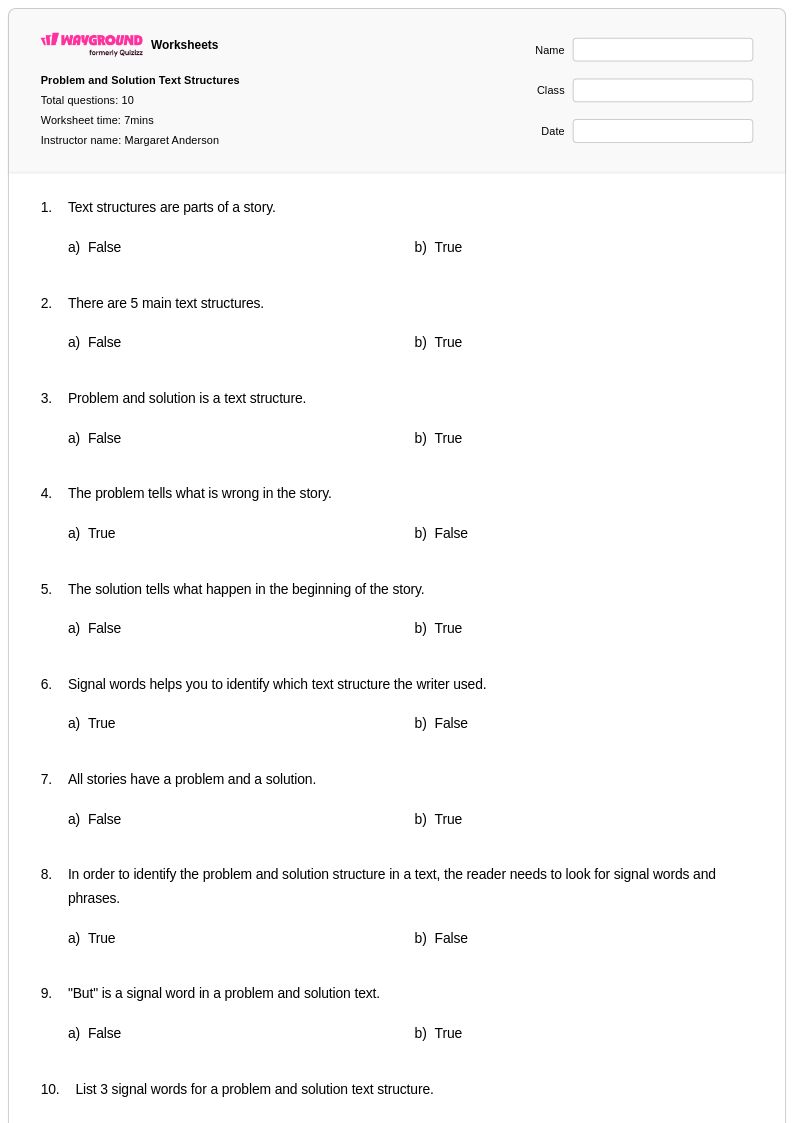
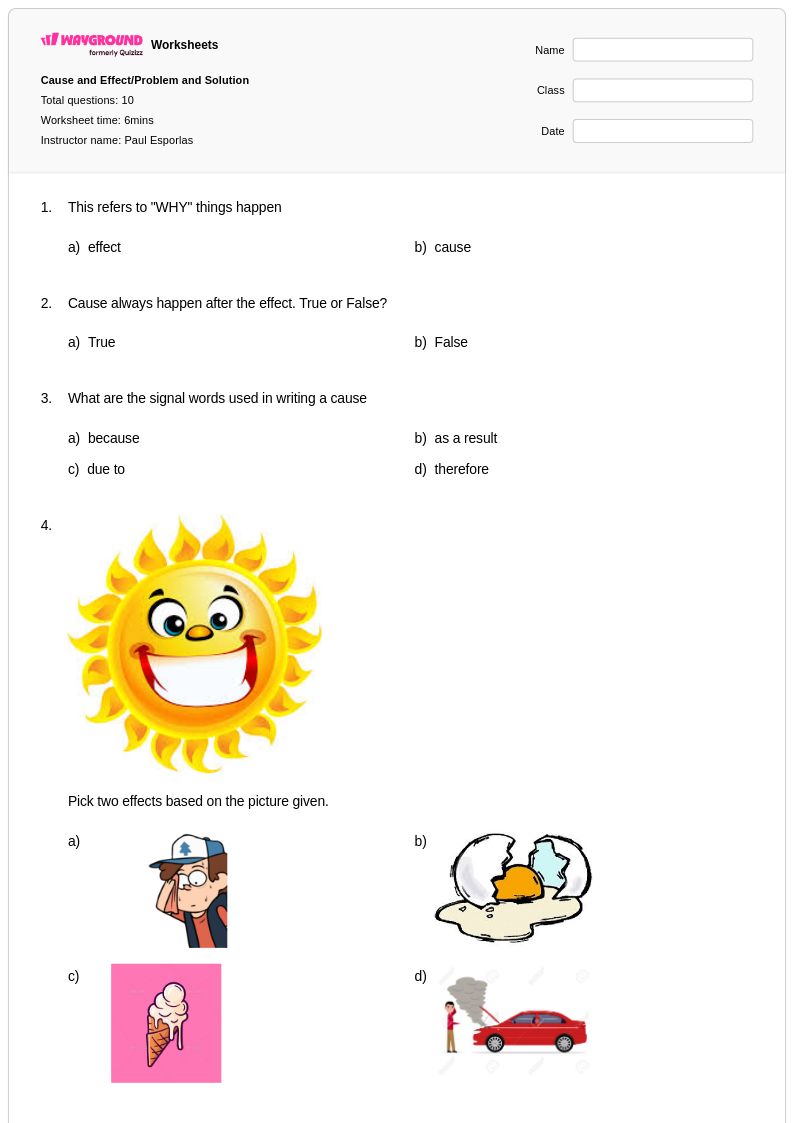
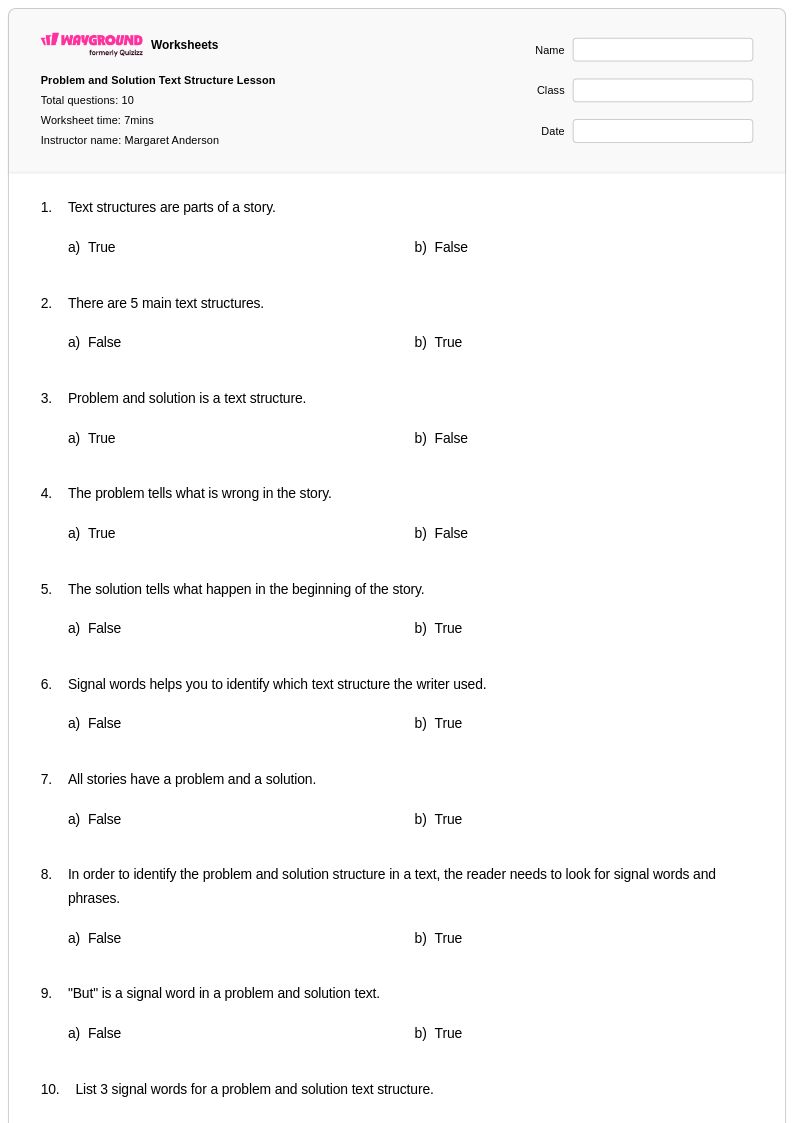
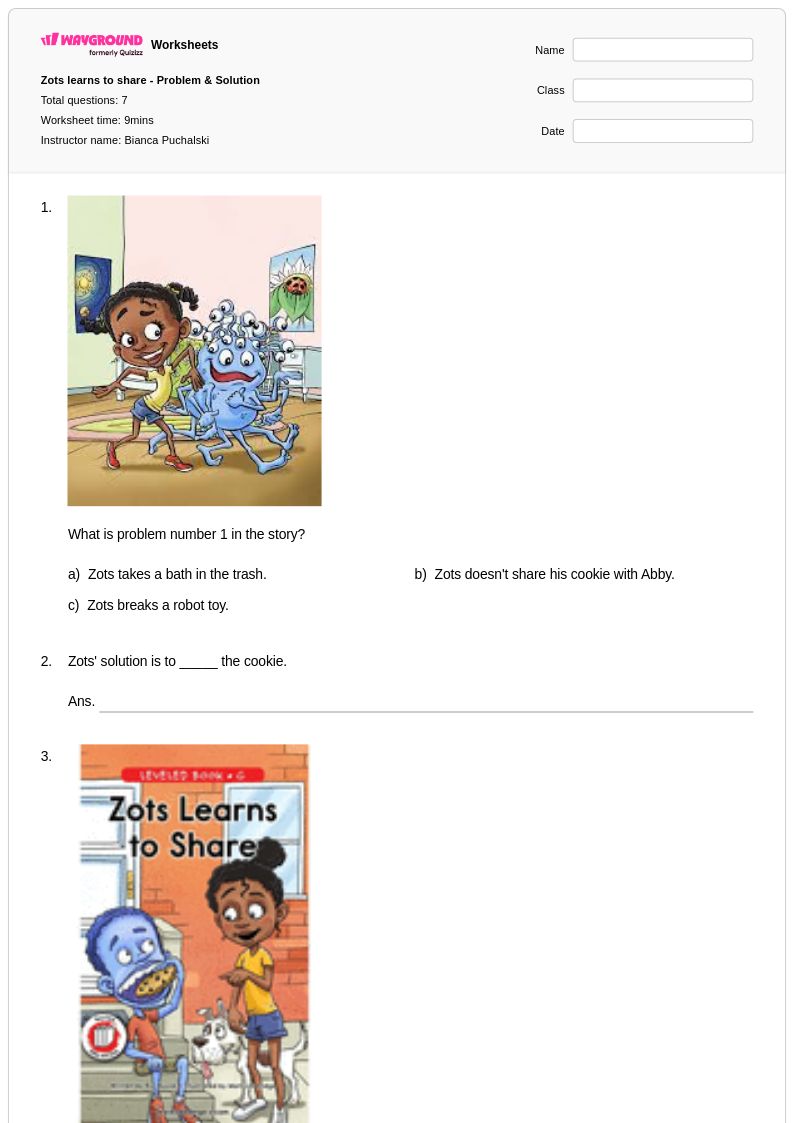
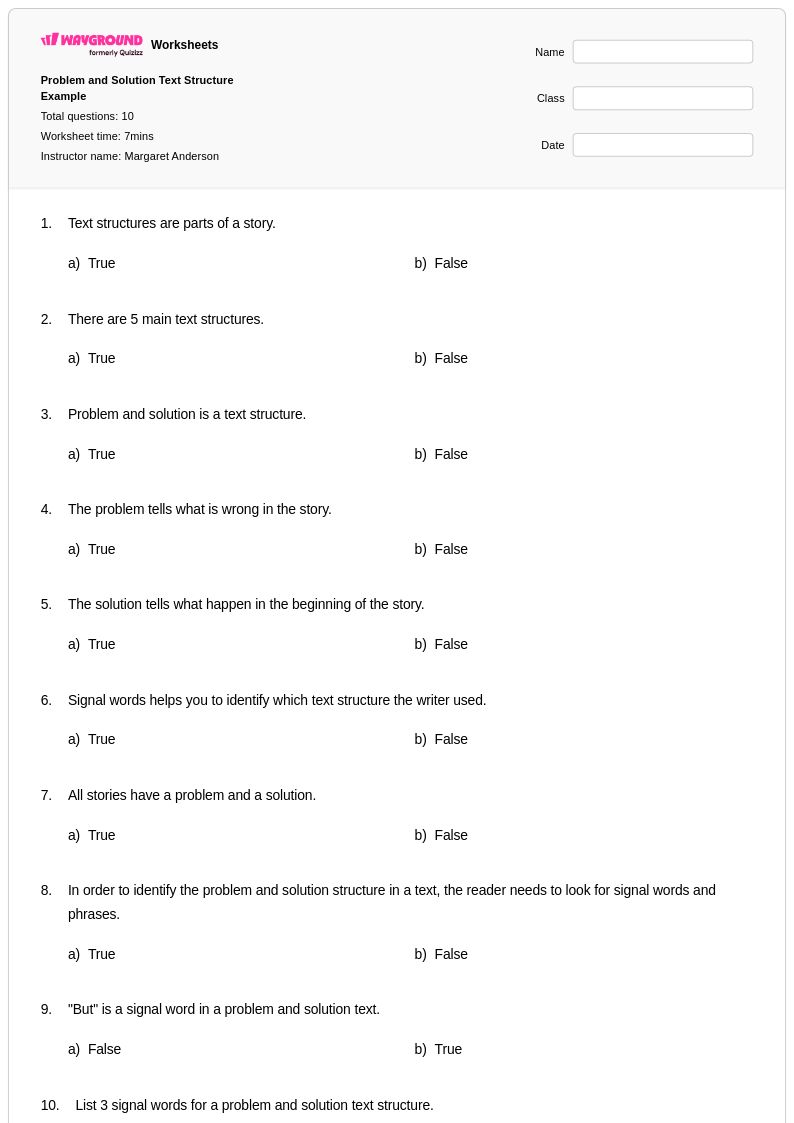
Class 3 students develop critical reading comprehension skills through specialized worksheets focused on identifying problems and solutions in nonfiction texts. These educational resources from Wayground (formerly Quizizz) guide young learners to recognize how authors present real-world challenges and their corresponding resolutions across various informational formats, including science articles, historical accounts, and biographical texts. Each worksheet strengthens analytical thinking by teaching students to locate explicit problem-solution relationships, understand cause-and-effect patterns, and connect textual evidence to logical conclusions. The practice problems progress systematically from simple, clearly stated scenarios to more complex situations where problems and solutions may be implied or distributed throughout multiple paragraphs. Teachers can access comprehensive answer keys and printable pdf versions that support both independent student work and guided instruction, making these free resources invaluable for developing essential nonfiction reading strategies.
Wayground (formerly Quizizz) empowers educators with millions of teacher-created worksheet collections specifically designed for identifying problems and solutions in nonfiction reading instruction. The platform's advanced search and filtering capabilities allow teachers to locate materials perfectly aligned with curriculum standards and student reading levels, while differentiation tools enable customization for diverse learning needs within the same Class 3 classroom. These versatile resources are available in both printable and digital formats, including downloadable pdf files that facilitate seamless integration into lesson plans, homework assignments, and assessment activities. Teachers utilize these comprehensive collections for targeted skill practice, remediation support for struggling readers, and enrichment opportunities for advanced students, ensuring that every learner develops the analytical skills necessary to navigate complex informational texts and understand how authors structure problem-solution relationships in real-world contexts.
FAQs
How do I teach students to identify problems and solutions in nonfiction texts?
Start by introducing signal words and phrases that authors use to flag problem-solution structures, such as 'the challenge is,' 'one solution is,' 'as a result,' and 'to address this.' Model the skill explicitly using a short informational passage, thinking aloud as you identify the central problem and trace each proposed solution. Gradually release responsibility by having students annotate passages independently, circling the problem and underlining each solution before discussing their reasoning with a partner.
What exercises help students practice identifying problems and solutions in nonfiction?
Structured worksheet practice is highly effective for building this skill because it gives students repeated exposure to varied nonfiction formats, including science articles, social studies passages, and current events texts. Exercises that ask students to complete graphic organizers mapping the problem and one or more solutions reinforce the logical structure of informational writing. Practice problems that include both explicit and implicit problem-solution relationships help students develop the analytical flexibility needed for standardized reading assessments.
What mistakes do students commonly make when identifying problems and solutions in nonfiction?
A frequent error is confusing cause-and-effect relationships with problem-solution structures, since both involve two connected events. Students also tend to identify only the first solution mentioned in a passage and miss additional or competing solutions the author presents. Another common misconception is treating every negative situation described in a text as the central problem, rather than distinguishing the author's primary challenge from supporting details.
How do I use Wayground's identifying problems and solutions worksheets in my classroom?
Wayground's worksheets are available as free printable PDFs for traditional classroom use and in digital formats for technology-integrated environments, including the option to host them as a quiz directly on Wayground. Each worksheet includes a complete answer key, so teachers can use them for guided practice, independent work, or quick formative checks without additional prep. For students who need support, Wayground's accommodation tools allow teachers to enable read-aloud, extended time, or reduced answer choices on an individual basis without disrupting the rest of the class.
How can I differentiate problem-and-solution practice for struggling readers?
For struggling readers, begin with shorter passages that contain a single, clearly stated problem and one explicit solution before moving to texts with multiple or implied solutions. Providing a graphic organizer with labeled boxes for 'Problem' and 'Solution' reduces cognitive load and helps students focus on the structural relationship rather than decoding alone. On Wayground, teachers can enable the Read Aloud accommodation for individual students so the passage is read to them, allowing comprehension work to remain accessible regardless of decoding level.
How does identifying problems and solutions in nonfiction support reading comprehension across subject areas?
Problem-solution is one of the most common organizational structures in informational writing, appearing in science texts explaining environmental challenges, social studies passages addressing historical conflicts, and health articles discussing public policy issues. When students can reliably recognize this structure, they read more strategically, anticipating what information the author will present and how the text is organized. This skill directly supports academic reading in every content area, not just English Language Arts.