
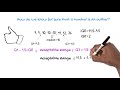
Identifying Outliers and Quartiles

Interactive Video
•
Mathematics
•
9th - 10th Grade
•
Practice Problem
•
Hard

Thomas White
FREE Resource
Read more
15 questions
Show all answers
1.
MULTIPLE CHOICE QUESTION
30 sec • 1 pt
What is the main focus of the video?
Calculating averages
Identifying outliers in data sets
Understanding mean and median
Learning about standard deviation
2.
MULTIPLE CHOICE QUESTION
30 sec • 1 pt
In the classroom example, why is the teacher's age considered an outlier?
It is significantly different from the students' ages
It is the median age
It is the same as the students' ages
It is the average age
3.
MULTIPLE CHOICE QUESTION
30 sec • 1 pt
According to the rule of thumb, when is a value not considered an outlier?
When it is greater than the upper quartile
When it is within the range defined by 1.5 times the interquartile range
When it is equal to the median
When it is less than the lower quartile
4.
MULTIPLE CHOICE QUESTION
30 sec • 1 pt
What is the first step in finding quartiles?
Finding the mode
Calculating the mean
Calculating the standard deviation
Arranging the data in order
5.
MULTIPLE CHOICE QUESTION
30 sec • 1 pt
How is the lower quartile (Q1) determined?
By finding the maximum value
By calculating the median of the lower half of the data
By calculating the mean of the data
By finding the average of the entire data set
6.
MULTIPLE CHOICE QUESTION
30 sec • 1 pt
What is the value of the upper quartile (Q3) in the example?
11.5
10.5
9.5
12.5
7.
MULTIPLE CHOICE QUESTION
30 sec • 1 pt
How is the interquartile range (IQR) calculated?
By subtracting the lower quartile from the upper quartile
By adding the lower and upper quartiles
By dividing the sum of quartiles by two
By multiplying the quartiles
Access all questions and much more by creating a free account
Create resources
Host any resource
Get auto-graded reports

Continue with Google

Continue with Email

Continue with Classlink

Continue with Clever
or continue with

Microsoft
%20(1).png)
Apple

Others
Already have an account?


