
- Resource Library
- Math
- Probability And Statistics
- Relative Frequency
- Understanding Relative Frequency Concepts
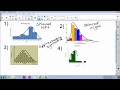
Understanding Relative Frequency Concepts

Interactive Video
•
Mathematics
•
6th - 7th Grade
•
Practice Problem
•
Hard

Thomas White
FREE Resource
Read more
10 questions
Show all answers
1.
MULTIPLE CHOICE QUESTION
30 sec • 1 pt
What does it mean when data is described as 'skewed right'?
Most data is on the right side
Most data is on the left side
Data is evenly distributed
Data is in a bell shape
2.
MULTIPLE CHOICE QUESTION
30 sec • 1 pt
In a histogram, what does the y-axis typically represent?
Intervals
Cumulative frequency
Frequency of data
Data values
3.
MULTIPLE CHOICE QUESTION
30 sec • 1 pt
What is the purpose of using intervals in a frequency table?
To group data into ranges
To find the median
To calculate mean
To list all data points
4.
MULTIPLE CHOICE QUESTION
30 sec • 1 pt
How is relative frequency calculated?
By dividing the frequency by the total number of data points
By adding all frequencies together
By multiplying the frequency by 100
By subtracting the smallest frequency from the largest
5.
MULTIPLE CHOICE QUESTION
30 sec • 1 pt
What is the benefit of converting relative frequency to a percentage?
It makes data easier to compare
It reduces calculation errors
It increases the data size
It changes the data shape
6.
MULTIPLE CHOICE QUESTION
30 sec • 1 pt
What should the sum of all relative frequencies equal?
1
0
10
100
7.
MULTIPLE CHOICE QUESTION
30 sec • 1 pt
How does the shape of a relative frequency histogram compare to a frequency histogram?
They are always different
They are usually the same
Frequency histogram is always symmetric
Relative frequency is always skewed
Access all questions and much more by creating a free account
Create resources
Host any resource
Get auto-graded reports

Continue with Google

Continue with Email

Continue with Classlink

Continue with Clever
or continue with

Microsoft
%20(1).png)
Apple

Others
Already have an account?


