
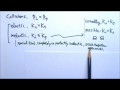
Collision Types and Energy Conservation

Interactive Video
•
Physics, Science, Mathematics
•
9th - 10th Grade
•
Practice Problem
•
Hard

Patricia Brown
FREE Resource
Read more
10 questions
Show all answers
1.
MULTIPLE CHOICE QUESTION
30 sec • 1 pt
What principle is primarily used to solve collision problems?
Conservation of force
Conservation of mass
Conservation of energy
Conservation of momentum
2.
MULTIPLE CHOICE QUESTION
30 sec • 1 pt
In an elastic collision, what is conserved in addition to momentum?
Kinetic energy
Potential energy
Thermal energy
Gravitational energy
3.
MULTIPLE CHOICE QUESTION
30 sec • 1 pt
What happens to kinetic energy in an inelastic collision?
It is not conserved
It is converted to potential energy
It is always increased
It is always conserved
4.
MULTIPLE CHOICE QUESTION
30 sec • 1 pt
Which type of collision involves objects sticking together after impact?
Completely inelastic collision
Elastic collision
Partially elastic collision
Superelastic collision
5.
MULTIPLE CHOICE QUESTION
30 sec • 1 pt
In a completely inelastic collision, what happens to the kinetic energy?
It is converted to sound energy
It is completely lost
It is partially lost
It is completely conserved
6.
MULTIPLE CHOICE QUESTION
30 sec • 1 pt
What is a common example of a completely inelastic collision?
A pendulum swinging
Two billiard balls colliding
A car crash where cars stick together
A rubber ball bouncing off a wall
7.
MULTIPLE CHOICE QUESTION
30 sec • 1 pt
What is the main characteristic of a completely inelastic collision?
Objects bounce off each other
Objects stick together
Objects explode apart
Objects remain stationary
Access all questions and much more by creating a free account
Create resources
Host any resource
Get auto-graded reports

Continue with Google

Continue with Email

Continue with Classlink

Continue with Clever
or continue with

Microsoft
%20(1).png)
Apple

Others
Already have an account?

