
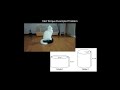
Understanding Torque and Rotational Motion

Interactive Video
•
Physics, Science, Mathematics
•
9th - 12th Grade
•
Practice Problem
•
Hard

Patricia Brown
FREE Resource
Read more
10 questions
Show all answers
1.
MULTIPLE CHOICE QUESTION
30 sec • 1 pt
What is the primary focus of the initial example problem discussed in the video?
Calculating the speed of a rotating object
Understanding net torque with a cylinder
Determining the temperature of a cylinder
Measuring the mass of a cylinder
2.
MULTIPLE CHOICE QUESTION
30 sec • 1 pt
How is a torque measured in the counterclockwise direction considered?
As a negative torque
As a positive torque
As an undefined torque
As a neutral torque
3.
MULTIPLE CHOICE QUESTION
30 sec • 1 pt
What mathematical operation is used to solve net torque problems in the video?
Division
Cross product
Addition
Subtraction
4.
MULTIPLE CHOICE QUESTION
30 sec • 1 pt
Why does a smaller force applied at a greater distance create more torque?
Because torque is independent of distance
Because torque is directly proportional to distance
Because torque decreases with distance
Because torque is inversely proportional to distance
5.
MULTIPLE CHOICE QUESTION
30 sec • 1 pt
What units are used to measure torque?
Kilograms
Newton meters
Watts
Joules
6.
MULTIPLE CHOICE QUESTION
30 sec • 1 pt
What is the rotational equivalent of mass in Newton's second law?
Angular velocity
Moment of inertia
Linear momentum
Kinetic energy
7.
MULTIPLE CHOICE QUESTION
30 sec • 1 pt
What does angular acceleration represent in rotational motion?
The rate of change of force
The rate of change of mass
The rate of change of angular velocity
The rate of change of linear velocity
Access all questions and much more by creating a free account
Create resources
Host any resource
Get auto-graded reports

Continue with Google

Continue with Email

Continue with Classlink

Continue with Clever
or continue with

Microsoft
%20(1).png)
Apple

Others
Already have an account?

