
Gas Properties and Kinetic Theory

Interactive Video
•
Physics, Chemistry, Science
•
9th - 10th Grade
•
Practice Problem
•
Hard

Patricia Brown
FREE Resource
Read more
10 questions
Show all answers
1.
MULTIPLE CHOICE QUESTION
30 sec • 1 pt
Why is it important to study gases and pressure in relation to weather?
Because pressure has no effect on weather.
Because gases are easier to study than solids.
Because pressure changes can predict weather events.
Because gases are the most abundant state of matter.
2.
MULTIPLE CHOICE QUESTION
30 sec • 1 pt
According to kinetic theory, what is the nature of gas particles?
They are stationary and do not move.
They are small and have insignificant volume.
They are large and move slowly.
They are large and have significant volume.
3.
MULTIPLE CHOICE QUESTION
30 sec • 1 pt
What happens to gas particles when they are in a container?
They escape the container immediately.
They fill the container completely.
They form a solid at the bottom.
They stay in one corner of the container.
4.
MULTIPLE CHOICE QUESTION
30 sec • 1 pt
What is the result of gas particles colliding with the walls of their container?
The container shrinks.
The gas particles stop moving.
Gas pressure is created.
The gas turns into a liquid.
5.
MULTIPLE CHOICE QUESTION
30 sec • 1 pt
What is a vacuum in terms of gas pressure?
A space with solid particles only.
A space with only liquid particles.
A space with no particles and no pressure.
A space with high gas pressure.
6.
MULTIPLE CHOICE QUESTION
30 sec • 1 pt
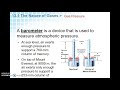
How is atmospheric pressure measured?
Using a thermometer.
Using a hygrometer.
Using a seismometer.
Using a barometer.
7.
MULTIPLE CHOICE QUESTION
30 sec • 1 pt
What happens to atmospheric pressure as altitude increases?
It remains constant.
It decreases.
It increases.
It fluctuates randomly.
Access all questions and much more by creating a free account
Create resources
Host any resource
Get auto-graded reports

Continue with Google

Continue with Email

Continue with Classlink

Continue with Clever
or continue with

Microsoft
%20(1).png)
Apple

Others
Already have an account?

