
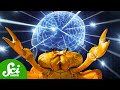
Understanding Neuroscience and the Work of Eve Marder

Interactive Video
•
Biology, Science
•
9th - 12th Grade
•
Practice Problem
•
Hard

Jackson Turner
FREE Resource
Read more
10 questions
Show all answers
1.
MULTIPLE CHOICE QUESTION
30 sec • 1 pt
What does the Kavli Prize recognize in the field of neuroscience?
Advancements in genetic engineering
Innovations in computer technology
Outstanding achievements in understanding the nervous system
Breakthroughs in artificial intelligence
2.
MULTIPLE CHOICE QUESTION
30 sec • 1 pt
What was the initial comparison made between computers and the human nervous system?
Both have a similar input-output process
Both are powered by solar energy
Both can self-repair damaged parts
Both are controlled by a central processor
3.
MULTIPLE CHOICE QUESTION
30 sec • 1 pt
Why did the circuit-board model of the nervous system begin to fall apart?
It required too many neurons
It was too simple to explain complex behaviors
It was based on outdated technology
It ignored the role of neurotransmitters
4.
MULTIPLE CHOICE QUESTION
30 sec • 1 pt
What unique feature did Eve Marder study in crustaceans?
Their stomatogastric ganglion
Their complex mating rituals
Their color-changing abilities
Their ability to regenerate limbs
5.
MULTIPLE CHOICE QUESTION
30 sec • 1 pt
How do neuromodulators affect the STG neurons according to Marder's research?
They have no effect on neuron activity
They only activate one neuron at a time
They influence the entire group of neurons
They deactivate all neurons simultaneously
6.
MULTIPLE CHOICE QUESTION
30 sec • 1 pt
What did Marder's findings suggest about neural circuits in humans?
They are identical in every individual
They can adapt and create multiple pathways
They are fixed and unchangeable
They deteriorate quickly over time
7.
MULTIPLE CHOICE QUESTION
30 sec • 1 pt
What was a key finding about the variability in crustacean nervous systems?
All crustaceans have identical neural circuits
Variability is only present in lab-bred crustaceans
Variability does not affect the outcome of behaviors
Variability leads to different behaviors
Access all questions and much more by creating a free account
Create resources
Host any resource
Get auto-graded reports

Continue with Google

Continue with Email

Continue with Microsoft
or continue with

%20(1).png)
Apple

Others
Already have an account?

