
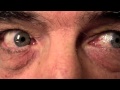
Understanding Vestibular Disorders

Interactive Video
•
Biology, Science
•
10th - 12th Grade
•
Practice Problem
•
Hard

Aiden Montgomery
FREE Resource
Read more
10 questions
Show all answers
1.
MULTIPLE CHOICE QUESTION
30 sec • 1 pt
What is the term used to describe the delay before symptoms appear in the Dix-Hallpike maneuver?
Interval
Pause
Latency
Duration
2.
MULTIPLE CHOICE QUESTION
30 sec • 1 pt
In the Dix-Hallpike maneuver, what happens to the nystagmus and vertigo after about 15 seconds?
They intensify
They remain constant
They improve
They worsen
3.
MULTIPLE CHOICE QUESTION
30 sec • 1 pt
What is the primary focus of the first section of the video?
Alexander's law
Dix-Hallpike maneuver
Central cause nystagmus
Suppression of nystagmus
4.
MULTIPLE CHOICE QUESTION
30 sec • 1 pt
What is challenging to observe in the second example of the Dix-Hallpike maneuver?
Vertical nystagmus
Torsional component
Latency period
Vertigo
5.
MULTIPLE CHOICE QUESTION
30 sec • 1 pt
According to Alexander's law, how does nystagmus change with eye movement in vestibular neuritis?
It increases in size
It decreases in size
It remains constant
It disappears completely
6.
MULTIPLE CHOICE QUESTION
30 sec • 1 pt
Which condition is associated with Alexander's law?
Dix-Hallpike maneuver
Torsional nystagmus
Vestibular neuritis
Central cause nystagmus
7.
MULTIPLE CHOICE QUESTION
30 sec • 1 pt
What can suppress nystagmus in a patient with vestibular neuritis?
Loud noise
Closing eyes
Fixation on a point
Rapid movement
Access all questions and much more by creating a free account
Create resources
Host any resource
Get auto-graded reports

Continue with Google

Continue with Email

Continue with Classlink

Continue with Clever
or continue with

Microsoft
%20(1).png)
Apple

Others
Already have an account?

