
Compound Events
7th Grade
•15 Qs

Similar activities
Order of Operation <KRUANN:D>
7th Grade
•10 Qs
Algebraic Expressions - Wording
7th - 9th Grade
•11 Qs
untitled
7th Grade - University
•19 Qs
Unit 1 Review
6th - 7th Grade
•12 Qs
Proportions and Ratios
7th Grade
•12 Qs
Scale Factor 2
7th Grade
•10 Qs
16 - Additional Unit 8 Vocabulary
7th Grade
•20 Qs
Mathcounts practice
6th - 8th Grade
•10 Qs
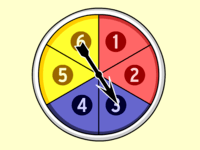
Compound Events

Quiz
•
Mathematics
•
7th Grade
•
Practice Problem
•
Medium

Wayground Content
Used 19+ times
FREE Resource

Enhance your content in a minute
15 questions
Show all answers
1.
MULTIPLE CHOICE QUESTION
3 mins • 1 pt
What is the difference between independent and dependent events?
Independent events are always more likely to occur than dependent events.
Independent events do not affect each other's outcomes, while dependent events do.
Dependent events are always mutually exclusive.
Independent events can only occur in a sequence.
2.
MULTIPLE CHOICE QUESTION
3 mins • 1 pt
What is the difference between theoretical and experimental probability?
Theoretical probability is based on expected outcomes, while experimental probability is based on actual trials.
Theoretical probability is based on actual trials, while experimental probability is based on expected outcomes.
Theoretical probability is always higher than experimental probability.
Theoretical probability is calculated using a formula, while experimental probability is calculated using intuition.
3.
MULTIPLE CHOICE QUESTION
3 mins • 1 pt
What are the possible results of an experiment called?
Results
Outcomes
Findings
Conclusions
4.
MULTIPLE CHOICE QUESTION
3 mins • 1 pt
What is the definition of a compound event?
An event that combines two or more simple events.
An event that occurs only once.
An event that has no possible outcomes.
An event that is impossible to happen.
5.
MULTIPLE CHOICE QUESTION
3 mins • 1 pt
What is a simple event?
An event that consists of a single outcome.
An event that can have multiple outcomes.
An event that is impossible to occur.
An event that occurs frequently.
6.
MULTIPLE CHOICE QUESTION
3 mins • 1 pt
What is experimental probability?
The probability based on the results of a series of trials.
The theoretical probability calculated using a formula.
The probability that is always equal to 1.
The probability determined by personal judgment.
7.
MULTIPLE CHOICE QUESTION
3 mins • 1 pt
How do you calculate the probability of a compound event?
Use the formula: P(A and B) = P(A) * P(B) for independent events.
Add the probabilities of the individual events together.
Multiply the probabilities of the individual events and then add them.
Use the formula: P(A or B) = P(A) + P(B) - P(A and B).
Access all questions and much more by creating a free account
Create resources
Host any resource
Get auto-graded reports

Continue with Google

Continue with Email

Continue with Classlink

Continue with Clever
or continue with

Microsoft
%20(1).png)
Apple

Others
Already have an account?
Similar Resources on Wayground
14 questions
Area & Perimeter of Rectangles
Quiz
•
6th - 8th Grade
15 questions
Algebra Formulas
Quiz
•
7th - 8th Grade
10 questions
Homework 8 T2 WE 16 MARCH 2023
Quiz
•
7th Grade
12 questions
Formules met haakjes, kwadraten en wortels 2kgt2
Quiz
•
1st - 10th Grade
20 questions
Using Negative numbers
Quiz
•
6th - 7th Grade
20 questions
Year 9 - Expressions and Formulae Review
Quiz
•
7th - 9th Grade
15 questions
MATH 7 UNIT III PRE-UNIT ASSESSMENT
Quiz
•
7th Grade
15 questions
properties of integers-assessment
Quiz
•
7th Grade
Popular Resources on Wayground
15 questions
Fractions on a Number Line
Quiz
•
3rd Grade
20 questions
Equivalent Fractions
Quiz
•
3rd Grade
25 questions
Multiplication Facts
Quiz
•
5th Grade
54 questions
Analyzing Line Graphs & Tables
Quiz
•
4th Grade
22 questions
fractions
Quiz
•
3rd Grade
20 questions
Main Idea and Details
Quiz
•
5th Grade
20 questions
Context Clues
Quiz
•
6th Grade
15 questions
Equivalent Fractions
Quiz
•
4th Grade
Discover more resources for Mathematics
22 questions
distributive property
Quiz
•
7th Grade
18 questions
Angle Relationships
Quiz
•
7th Grade
20 questions
How Some Friendships Last — and Others Don’t Video Questions
Quiz
•
7th Grade
18 questions
Handbook Refresher Quiz
Quiz
•
7th Grade
20 questions
Graphing Inequalities on a Number Line
Quiz
•
6th - 9th Grade
20 questions
graphing inequalities
Quiz
•
6th - 7th Grade
16 questions
Adding and Subtracting Integers
Quiz
•
7th Grade
20 questions
Angles: Complementary/Supplementary/ Vertical/ Adjacent
Quiz
•
7th Grade