
Benchmark 24/25 Review
Authored by Michelle Rodriguez
Chemistry
8th Grade
NGSS covered
Used 1+ times


AI Actions
Add similar questions
Adjust reading levels
Convert to real-world scenario
Translate activity
More...
Content View
Student View
78 questions
Show all answers
1.
MATCH QUESTION
2 mins • 6 pts
answer the 4 questions down below
boundaries where tectonic plates slide past each other horizontally
oceanic plates
tectonic plates that make up the continents
transform boundaries
tectonic plates that make up the ocean floor
the process of one tectonic plate sliding beneath another
convergent boundaries
boundaries where tectonic plates collide or come together
Tags
NGSS.MS-ESS2-3
NGSS.MS-ESS2-2
2.
MATCH QUESTION
2 mins • 1 pt
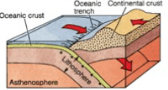
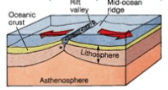
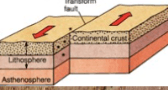
Match the following images with vocabulary.
Transform Boundary

Continental Drift

Convergent Boundary

Divergent Boundary

3.
MULTIPLE SELECT QUESTION
2 mins • 1 pt
Select all that are TRUE about Continental Drift.
Supercontinent was known as Continental Ridge
Supercontinent was known as Pangaea
Pangaea was the area between continents
Continental Ridge was the area between continents
4.
MULTIPLE SELECT QUESTION
2 mins • 1 pt
Select all that are TRUE about Tectonic Plates.
Creates Divided Boundary
Creates Divergent Boundary
Creates Convergent Boundary
Creates Concave Boundary
Tags
NGSS.MS-ESS2-3
NGSS.MS-ESS2-2
5.
MULTIPLE SELECT QUESTION
2 mins • 1 pt
Select all that are TRUE about Divergent Boundary.
Forms Pacific Ring of Fire
Plates will move toward each other
Plates will move away from each other
Forms Mid-Atlantic Ridge
Tags
NGSS.MS-ESS2-3
NGSS.MS-ESS2-2
6.
DRAG AND DROP QUESTION
1 min • 3 pts
(a) was proposed by (b) and suggested that the (c) are in constant motion.
Continental drift
Alfred Wegener
continents
Harry Hess
Seafloor Spreading
oceans
Answer explanation
The theory of Continental drift, proposed by Alfred Wegener, suggests that the continents are in constant motion.
Tags
NGSS.MS-ESS2-3
7.
DRAG AND DROP QUESTION
1 min • 3 pts
(a) was proposed by (b) and suggested that the (c) are in constant motion.
Continental drift
Alfred Wegener
continents
Harry Hess
Seafloor Spreading
oceans
Answer explanation
The theory of Continental drift, proposed by Alfred Wegener, suggests that the continents are in constant motion.
Tags
NGSS.MS-ESS2-3

Access all questions and much more by creating a free account
Create resources
Host any resource
Get auto-graded reports

Continue with Google

Continue with Email

Continue with Classlink

Continue with Clever
or continue with

Microsoft
%20(1).png)
Apple

Others
Already have an account?
Similar Resources on Wayground

78 questions
TN +2 Chemistry volume 1 TM 1-4

Quiz
•
12th Grade
73 questions
Celloedd 1.1
Quiz
•
10th - 11th Grade
75 questions
MCQ-Organic-I
Quiz
•
University
75 questions
Physical Science Final Exam
Quiz
•
9th Grade
80 questions
Periodic Table Review
Quiz
•
KG - University
75 questions
cons chem
Quiz
•
9th Grade
80 questions
Equilibrium
Quiz
•
11th - 12th Grade
80 questions
Chemistry Spring Semester Exam 23-24
Quiz
•
11th Grade
Popular Resources on Wayground
15 questions
Fractions on a Number Line
Quiz
•
3rd Grade
20 questions
Equivalent Fractions
Quiz
•
3rd Grade
25 questions
Multiplication Facts
Quiz
•
5th Grade
29 questions
Alg. 1 Section 5.1 Coordinate Plane
Quiz
•
9th Grade
22 questions
fractions
Quiz
•
3rd Grade
11 questions
FOREST Effective communication

Lesson
•
KG
20 questions
Main Idea and Details
Quiz
•
5th Grade
20 questions
Context Clues
Quiz
•
6th Grade
Discover more resources for Chemistry
10 questions
Exploring Types of Chemical Reactions

Interactive video
•
6th - 10th Grade
40 questions
Unit 3 (Part 1) Chemical Equations & Reactions Review Game
Quiz
•
8th - 12th Grade
10 questions
Identifying Types of Chemical Reactions
Interactive video
•
6th - 10th Grade
20 questions
Counting Atoms
Quiz
•
8th Grade
10 questions
Exploring Acids, Bases, and the pH Scale
Interactive video
•
6th - 10th Grade
20 questions
Periodic Table Basics
Quiz
•
8th Grade
15 questions
Elements, Compounds, and Mixtures Review
Quiz
•
8th Grade
20 questions
Counting Atoms Practice
Quiz
•
8th Grade