
Ionic Bonding
Authored by Lisa Thompson
Science
10th Grade
NGSS covered


AI Actions
Add similar questions
Adjust reading levels
Convert to real-world scenario
Translate activity
More...
Content View
Student View
15 questions
Show all answers
1.
MULTIPLE SELECT QUESTION
1 min • 12 pts
Which of the following is true for ionic bonding & ionic compounds? (3 correct statements)
They must be made of ions with like charges.
The negative ion must be written first.
Compounds must have an overall charge of zero.
They are made of metals and nonmetals.
The positive ion must be written first.
2.
MULTIPLE SELECT QUESTION
1 min • 12 pts
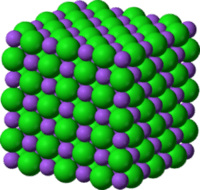
Which properties are all characteristics of ionic compounds?
solids with high melting and boiling points
soft solids which are highly malleable
when solid, the ions are held in place so the compounds cannot conduct electricity
conduct electricity when dissolved or molten
Tags
NGSS.HS-PS1-3
NGSS.HS-PS2-5
3.
MULTIPLE CHOICE QUESTION
1 min • 12 pts

Why do ionic compounds NOT conduct electricity when they are in their solid state?
Their ions are free to move.
Their ions are held in fixed positions.
Their electrons are free to move
Their electrons are held in a fixed state
4.
MULTIPLE CHOICE QUESTION
1 min • 12 pts
Ionic compounds conduct electricity when dissolved in water. Which statement below best explains the property?
Ions are free to move.
Electrons are free to move.
Bonds are strong.
There are weak intermolecular forces of attraction.
5.
MULTIPLE CHOICE QUESTION
1 min • 12 pts

Why do ionic compounds have high melting and boiling points?
Their ions are free to move.
Their ions are held in fixed positions.
They have many strong bonds which require a large amount of heat energy to overcome these strong bonds.
They have weak bonds which require a little amount of heat energy to overcome these weak bonds.
6.
MULTIPLE SELECT QUESTION
1 min • 12 pts
Which three of the following are features of ionic compounds? (click 3 boxes)
They have bonds between metals and non-metals.
They have bonds between two non-metals.
They form simple molecular structures.
They form giant ionic lattices.
They involve the transfer of electrons.
Tags
NGSS.HS-PS1-3
7.
MULTIPLE SELECT QUESTION
1 min • 12 pts
Be and F can combine to form BeF2, an ionic compound. Select ALL the true statements.
Each Be atom loses two electrons from the outer shell.
Each F atom gains two electrons from Be.
The force holding the ionic compound together is electrostatic attraction.
Each F ion has a charge of -1
Tags
NGSS.HS-PS1-1
NGSS.HS-PS1-2


Access all questions and much more by creating a free account
Create resources
Host any resource
Get auto-graded reports

Continue with Google

Continue with Email

Continue with Classlink

Continue with Clever
or continue with

Microsoft
%20(1).png)
Apple

Others
Already have an account?
Similar Resources on Wayground

15 questions
Quiz on Stars and Astronomy

Quiz
•
8th Grade - University
12 questions
Forces Vocab Review
Quiz
•
9th - 12th Grade
10 questions
Black Inventors
Quiz
•
3rd Grade - University
17 questions
(2.4) Isotopes and Its Uses
Quiz
•
10th Grade
16 questions
Astronomy Unit 3: The Solar System Practice
Quiz
•
10th - 12th Grade
20 questions
Astronomy 1
Quiz
•
9th - 12th Grade
12 questions
Energy & Power Form 3
Quiz
•
10th Grade
17 questions
Stars and Stellar Evolution Review
Quiz
•
9th Grade - University
Popular Resources on Wayground
7 questions
History of Valentine's Day

Interactive video
•
4th Grade
15 questions
Fractions on a Number Line
Quiz
•
3rd Grade
20 questions
Equivalent Fractions
Quiz
•
3rd Grade
25 questions
Multiplication Facts
Quiz
•
5th Grade
22 questions
fractions
Quiz
•
3rd Grade
15 questions
Valentine's Day Trivia
Quiz
•
3rd Grade
20 questions
Main Idea and Details
Quiz
•
5th Grade
20 questions
Context Clues
Quiz
•
6th Grade
Discover more resources for Science
10 questions
Exploring Weathering, Erosion, and Deposition Processes
Interactive video
•
6th - 10th Grade
10 questions
Exploring Mendelian Genetics and Punnett Squares
Interactive video
•
6th - 10th Grade
10 questions
Exploring Light and Waves Concepts
Interactive video
•
6th - 10th Grade
35 questions
DNA Structure and Replication
Quiz
•
10th Grade
10 questions
Distinguishing Natural Hazards from Disasters
Interactive video
•
6th - 10th Grade
89 questions
Unit 1 (Ch 2 & 3) Test Review - Water/Ocean Currents
Quiz
•
9th - 12th Grade
48 questions
Review for Homeostasis & Interacting Systems Test
Quiz
•
9th - 12th Grade
10 questions
Exploring Protein Synthesis: Transcription and Translation
Interactive video
•
10th Grade