
Organic Chemistry Basics
Authored by Lisa Thompson
Science
12th Grade
NGSS covered


AI Actions
Add similar questions
Adjust reading levels
Convert to real-world scenario
Translate activity
More...
Content View
Student View
15 questions
Show all answers
1.
MULTIPLE CHOICE QUESTION
1 min • 1 pt
What happens to the boiling point and flammability of hydrocarbons as the length of the molecules increases?
Longer hydrocarbons have lower boiling points and are less flammable
Longer hydrocarbons have higher boiling points and are more flammable
Longer hydrocarbons have lower boiling points and are more flammable
Longer hydrocarbons have higher boiling points and are less flammable
2.
MULTIPLE CHOICE QUESTION
1 min • 1 pt
What does this make them useful for?
Lubricants
Fuels
Plastics
Feedstock
Tags
NGSS.MS-ETS1-1
NGSS.MS-PS1-3
3.
MULTIPLE CHOICE QUESTION
1 min • 1 pt
How many carbon atoms and hydrogen atoms are there in propane?
2 carbon atoms, 6 hydrogen atoms
4 carbon atoms, 8 hydrogen atoms
3 carbon atoms, 8 hydrogen atoms
3 carbon atoms, 6 hydrogen atoms
Tags
NGSS.MS-PS1-1
4.
MULTIPLE CHOICE QUESTION
1 min • 1 pt
Which substances can be produced from crude oil?
Metal alloys and glass
Glass and concrete
Limestone and steel
Kerosene and polymers
5.
MULTIPLE CHOICE QUESTION
1 min • 1 pt
What happens to carbon and hydrogen during combustion reactions?
They are reduced
They are oxidised
They are cracked
They are distilled
Tags
NGSS.MS-PS1-5
6.
MULTIPLE CHOICE QUESTION
1 min • 1 pt
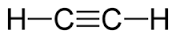
Classify the compound based on the functional group present.
alkane
alkene
alkyne
7.
MULTIPLE CHOICE QUESTION
1 min • 1 pt

Classify the compound based on the functional group present.
alkane
alkene
alkyne
aromatic


Access all questions and much more by creating a free account
Create resources
Host any resource
Get auto-graded reports

Continue with Google

Continue with Email

Continue with Classlink

Continue with Clever
or continue with

Microsoft
%20(1).png)
Apple

Others
Already have an account?


