
IMF
Authored by Lisa Thompson
Science
10th Grade
NGSS covered


AI Actions
Add similar questions
Adjust reading levels
Convert to real-world scenario
Translate activity
More...
Content View
Student View
15 questions
Show all answers
1.
MULTIPLE CHOICE QUESTION
1 min • 1 pt
True or false: All molecules have London Dispersion forces between them. The strength of London dispersion force decreases as the weight of that molecule increase (molecular weight)
True
False
Tralse
2.
MULTIPLE CHOICE QUESTION
1 min • 1 pt
Which of the following statements correctly explains why hydrogen bonding is such a strong intermolecular force?
There is an attraction between a small, weakly electronegative hydrogen atom and a large, strongly electronegative atom of fluorine, nitrogen, or oxygen
There is an attraction between a small, highly electronegative hydrogen atom and a large, highly electronegative fluorine atom
There is an attraction between the hydrogen and oxygen atoms, only
There is an attraction between the hydrogen and nitrogen atoms, only
3.
MULTIPLE CHOICE QUESTION
1 min • 1 pt

Intermolecular forces for: NH3
London dispersion Forces
Dipole dipole
Hydrogen bonding
4.
MULTIPLE CHOICE QUESTION
1 min • 1 pt

Intermolecular forces for: CO2
London dispersion Forces
Dipole dipole
Hydrogen bonding
Tags
NGSS.HS-PS1-3
NGSS.HS-PS1-5
5.
MULTIPLE CHOICE QUESTION
1 min • 1 pt
Which molecule: Br2, HCl, H2S, or NH3, will most likely have London dispersion forces as the MOST important IMF considered when determining melting/boiling points?
Br2, it only has dispersion forces when interacting
HCl, it can participate in dipole-dipole interactions and also dispersion forces
H2S, it can participate in dipole-dipole interactions and also dispersion forces
NH3, it can participate in hydrogen bonding and also dispersion forces
6.
MULTIPLE CHOICE QUESTION
1 min • 1 pt
Which substance has the weakest intermolecular forces?
Substance A, boiling point of 75 °C
Substance B, boiling point of 105 °C
Substance C, boiling point of 25 °C
Substance d, boiling point of 45 °C
Tags
NGSS.HS-PS1-3
7.
MULTIPLE CHOICE QUESTION
1 min • 1 pt
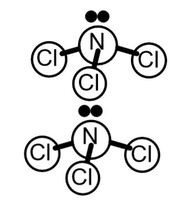
Which type of IMF is responsible for the attraction pictured above?
Dipole-Dipole Interaction
Ion-Dipole Interaction
Hydrogen Bonds
Covalent Bond
Ionic Bond
Access all questions and much more by creating a free account
Create resources
Host any resource
Get auto-graded reports

Continue with Google

Continue with Email

Continue with Classlink

Continue with Clever
or continue with

Microsoft
%20(1).png)
Apple

Others
Already have an account?
Similar Resources on Wayground

20 questions
Energy Sources

Quiz
•
7th - 10th Grade
15 questions
Acid, Bases and Salt
Quiz
•
10th - 12th Grade
16 questions
Chapter 3: Biochemistry
Quiz
•
8th - 10th Grade
10 questions
Electric Fields (Now!)
Quiz
•
11th - 12th Grade
10 questions
DNA, Genes and Chromosomes
Quiz
•
9th - 10th Grade
20 questions
The Big Bang Quiz #1
Quiz
•
9th - 12th Grade
17 questions
Big Bang Theory
Quiz
•
10th - 12th Grade
16 questions
OLDReview - Human Population Growth
Quiz
•
9th - 12th Grade
Popular Resources on Wayground
15 questions
Fractions on a Number Line
Quiz
•
3rd Grade
20 questions
Equivalent Fractions
Quiz
•
3rd Grade
25 questions
Multiplication Facts
Quiz
•
5th Grade
54 questions
Analyzing Line Graphs & Tables
Quiz
•
4th Grade
22 questions
fractions
Quiz
•
3rd Grade
20 questions
Main Idea and Details
Quiz
•
5th Grade
20 questions
Context Clues
Quiz
•
6th Grade
15 questions
Equivalent Fractions
Quiz
•
4th Grade
Discover more resources for Science
10 questions
Exploring the Layers of the Earth

Interactive video
•
6th - 10th Grade
10 questions
Exploring Weathering, Erosion, and Deposition Processes
Interactive video
•
6th - 10th Grade
13 questions
Part 3 Review Protein Synthesis and Mutations
Quiz
•
10th Grade
22 questions
Earth's Spheres and Interactions Quiz Reveiw
Quiz
•
8th - 10th Grade
35 questions
DNA Structure and Replication
Quiz
•
10th Grade
20 questions
Phylogenetic Trees and Cladograms
Quiz
•
10th Grade
89 questions
Unit 1 (Ch 2 & 3) Test Review - Water/Ocean Currents
Quiz
•
9th - 12th Grade
10 questions
Natural Resources

Lesson
•
9th - 12th Grade