
Waves on a String
11th Grade
•12 Qs

Similar activities
P6. Waves
8th - 12th Grade
•16 Qs
Temperature & Solids Liquids and Gasses
11th - 12th Grade
•15 Qs
INDUKSI ELEKTROMAGNETIK
10th - 12th Grade
•10 Qs
VEHICLES
KG - University
•7 Qs
DIODE - HALF WAVE AND FULL WAVE RECTIFICATION
11th - 12th Grade
•12 Qs
Magnetism
10th - 12th Grade
•15 Qs
Series Circuit
8th - 12th Grade
•15 Qs
Short Quiz (Rotation of Rigid Body)
8th - 12th Grade
•10 Qs
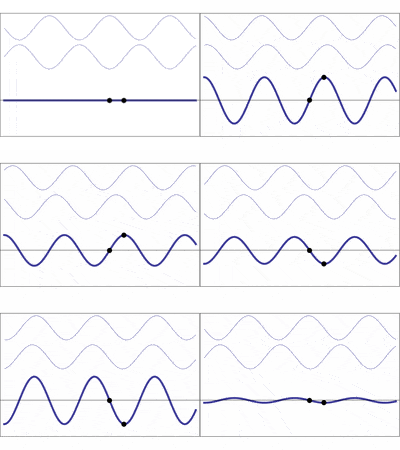
Waves on a String

Quiz
•
Physics
•
11th Grade
•
Practice Problem
•
Hard
Standards-aligned

Charles Martinez
FREE Resource

Enhance your content in a minute
12 questions
Show all answers
1.
MULTIPLE CHOICE QUESTION
1 min • 1 pt
A standing wave is formed on a string of length l. Which of the following statements is/are true?
∎ Progressive waves are travelling along the string in both directions.
∎ The standing wave is an example of superposition.
∎ The wavelength of the standing wave is l.
Tags
NGSS.HS-PS4-1
2.
MULTIPLE CHOICE QUESTION
1 min • 1 pt
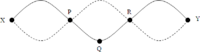
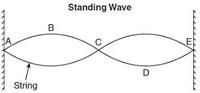
The diagram shows the standing wave pattern of a vibrating string which is fixed at ends X and Y.
Which one of these statements is true?
Tags
NGSS.HS-PS4-1
3.
MULTIPLE CHOICE QUESTION
1 min • 1 pt
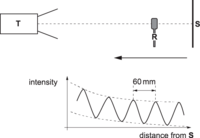
A receiver R is moved from S (a reflector) towards T (a transmitter). The intensity changes as in the diagram. Which of the following statements is correct?
Tags
NGSS.HS-PS4-1
NGSS.HS-PS4-3
4.
MULTIPLE CHOICE QUESTION
30 sec • 1 pt
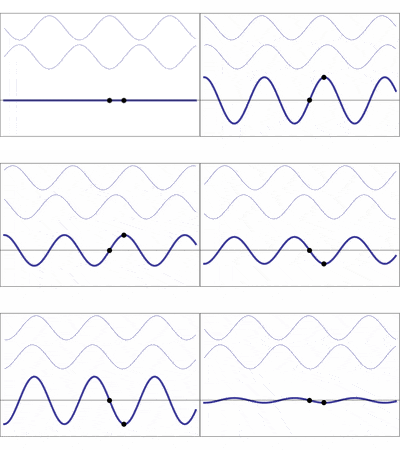
The moving black dot is called:
Tags
NGSS.HS-PS4-1
5.
MULTIPLE CHOICE QUESTION
30 sec • 1 pt
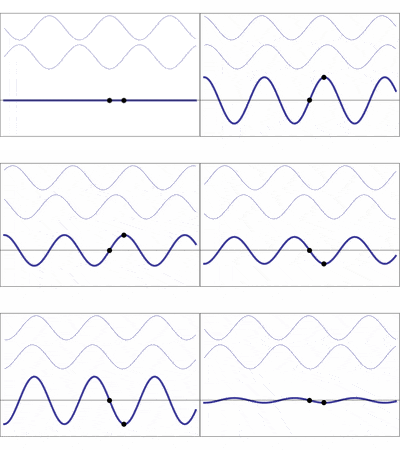
The stationary dot is called:
6.
MULTIPLE CHOICE QUESTION
45 sec • 1 pt
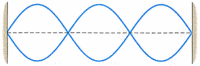
Which harmonic is shown?
Tags
NGSS.HS-PS4-1
7.
MULTIPLE CHOICE QUESTION
1 min • 1 pt
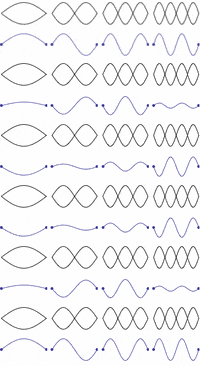
A standing wave:
Tags
NGSS.HS-PS4-1
NGSS.HS-PS4-5

Access all questions and much more by creating a free account
Create resources
Host any resource
Get auto-graded reports

Continue with Google

Continue with Email

Continue with Classlink

Continue with Clever
or continue with

Microsoft
%20(1).png)
Apple

Others
Already have an account?
Similar Resources on Wayground
12 questions
AP Physics 1: Intro to Torque
Quiz
•
10th - 12th Grade
12 questions
Electric charge
Quiz
•
11th - 12th Grade
16 questions
Speed Quiz
Quiz
•
KG - University
16 questions
AERODYNAMICS
Quiz
•
10th - 12th Grade
10 questions
Emerging technologies
Quiz
•
6th Grade - University
12 questions
Work - Concepts and Problems
Quiz
•
9th - 12th Grade
17 questions
Forces Review
Quiz
•
10th - 12th Grade
12 questions
SI units
Quiz
•
10th - 12th Grade
Popular Resources on Wayground
15 questions
Fractions on a Number Line
Quiz
•
3rd Grade
20 questions
Equivalent Fractions
Quiz
•
3rd Grade
25 questions
Multiplication Facts
Quiz
•
5th Grade
22 questions
fractions
Quiz
•
3rd Grade
20 questions
Main Idea and Details
Quiz
•
5th Grade
20 questions
Context Clues
Quiz
•
6th Grade
15 questions
Equivalent Fractions
Quiz
•
4th Grade
20 questions
Figurative Language Review
Quiz
•
6th Grade
Discover more resources for Physics
18 questions
Universal Law of Gravitation

Lesson
•
11th Grade
20 questions
Potential and Kinetic Energy
Quiz
•
9th - 12th Grade
34 questions
Energy Review
Quiz
•
9th - 12th Grade
14 questions
Bill Nye Waves

Interactive video
•
9th - 12th Grade
24 questions
Reflection, Refraction & Diffraction
Quiz
•
6th - 12th Grade