
The Particle Theory of Matter
7th Grade
•12 Qs

Similar activities
London
7th Grade
•14 Qs
Rhetorical Fallacies
6th - 8th Grade
•7 Qs
Internal and external conflicts
7th Grade
•10 Qs
Personal Attributes/ Employability Skills
3rd - 11th Grade
•8 Qs
Our Future
KG - 12th Grade
•10 Qs
Read the "My Study Habit" to answer the following 10 questions!
7th Grade
•10 Qs
Literary Devices
7th - 12th Grade
•15 Qs
English: Basics: Grammar: QZ: 010
6th - 10th Grade
•16 Qs
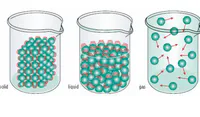
The Particle Theory of Matter

Quiz
•
English
•
7th Grade
•
Practice Problem
•
Easy

Danielle Pedler
Used 47+ times
FREE Resource

Enhance your content in a minute
12 questions
Show all answers
1.
DRAG AND DROP QUESTION
1 min • 2 pts

The particle theory of matter is a simple way of describing (a) and its (b)
2.
MULTIPLE CHOICE QUESTION
30 sec • 1 pt
Matter is made up of what sized particles?
Small
Tiny
Large
Medium
3.
MULTIPLE CHOICE QUESTION
30 sec • 1 pt
All particles are still and do not move.
False
True
4.
REORDER QUESTION
1 min • 1 pt
Reorder the following according to how fast the particles move from slowest to fastest
Gas
Liquid
Solid
5.
MULTIPLE CHOICE QUESTION
30 sec • 1 pt
All particles of one size are ...
different
similar
identical
the same size
6.
DRAG AND DROP QUESTION
1 min • 4 pts
Temperature affects the (a) at which the particles (b) . Warmer temperatures make the particles move (c) while particles move slower when the temperature is (d) .
7.
MULTIPLE CHOICE QUESTION
30 sec • 1 pt
Particles are attracted to one another. This means that they
move around one another
stay close together
stay far apatrt
move together and apart constantly
Access all questions and much more by creating a free account
Create resources
Host any resource
Get auto-graded reports

Continue with Google

Continue with Email

Continue with Classlink

Continue with Clever
or continue with

Microsoft
%20(1).png)
Apple

Others
Already have an account?
Similar Resources on Wayground
15 questions
Verb Get
Quiz
•
7th Grade
12 questions
Past Simple - Irregular verbs
Quiz
•
7th - 9th Grade
10 questions
Comperative and Superlative Adjectives
Quiz
•
7th Grade
10 questions
quintifiers
Quiz
•
3rd - 8th Grade
15 questions
Sentence Structures -Complex Sentences by Dr. Perez
Quiz
•
7th Grade
10 questions
Present Continuous Tense
Quiz
•
7th Grade
10 questions
Global English 8. Unit 3.5
Quiz
•
7th Grade
10 questions
Here We Go Unit 8-1
Quiz
•
7th Grade
Popular Resources on Wayground
15 questions
Fractions on a Number Line
Quiz
•
3rd Grade
20 questions
Equivalent Fractions
Quiz
•
3rd Grade
25 questions
Multiplication Facts
Quiz
•
5th Grade
54 questions
Analyzing Line Graphs & Tables
Quiz
•
4th Grade
22 questions
fractions
Quiz
•
3rd Grade
20 questions
Main Idea and Details
Quiz
•
5th Grade
20 questions
Context Clues
Quiz
•
6th Grade
15 questions
Equivalent Fractions
Quiz
•
4th Grade
Discover more resources for English
15 questions
Making Inferences
Quiz
•
7th - 12th Grade
20 questions
Main Idea and Supporting Details
Quiz
•
7th Grade
15 questions
Main Idea and Supporting Details.
Quiz
•
4th - 11th Grade
24 questions
7th grade STAAR Reading Review
Quiz
•
7th Grade
12 questions
Final Figurative Language Review

Lesson
•
6th - 8th Grade
5 questions
Text Structures
Lesson
•
6th - 8th Grade
10 questions
Author's Purpose
Quiz
•
7th Grade
25 questions
Making Inferences
Quiz
•
6th - 8th Grade