
B.11B Ecological Succession 🏖️
Authored by PAULINA MARTINEZ
Biology
9th - 12th Grade
NGSS covered
Used 1+ times


AI Actions
Add similar questions
Adjust reading levels
Convert to real-world scenario
Translate activity
More...
Content View
Student View
10 questions
Show all answers
1.
MULTIPLE CHOICE QUESTION
2 mins • 1 pt
___ are the first organisms to colonize an area and begin the process of ecological succession.
foundational organisms
introductory organisms
primary organisms
pioneer species
Tags
NGSS.MS-LS2-4
2.
MULTIPLE CHOICE QUESTION
3 mins • 1 pt
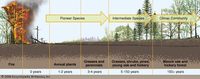
The picture shows what type of succession?
primary
secondary
tertiary
pond succession
Tags
NGSS.MS-LS2-3
3.
MULTIPLE CHOICE QUESTION
3 mins • 1 pt
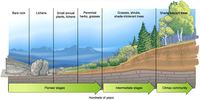
The picture shows what type of succession?
primary
secondary
tertiary
quaternary
4.
MULTIPLE CHOICE QUESTION
30 sec • 1 pt

Between 2005 and 2016 Kenai Fjords in Alaska experienced an increase in exposed rock due to melting ice. The rock formations are known as "nunataks" which are the tips of mountains that were left uncovered by glaciers in the last ice age. Nunataks are shown in the image.
Which time line describes how plant diversity on the nunataks will change over time?


Tags
NGSS.MS-LS2-3
NGSS.MS-LS2-4
NGSS.MS-LS2-1
NGSS.MS-LS1-5
5.
MULTIPLE CHOICE QUESTION
30 sec • 1 pt

The table shows the predominant plant types on a piece of land in the years following a disturbance.
Based on the data in the table, which disturbance most likely led to this progression?
A glacier retreat
A volcanic island formed
A plowed field was abandoned
A new sand dune was formed
Tags
NGSS.MS-LS2-4
NGSS.MS-LS2-1
NGSS.MS-LS2-2
6.
MULTIPLE CHOICE QUESTION
30 sec • 1 pt
After a wheat field is cleared, wild grasses and weeds begin growing.
This process is considered--
Primary succession because pioneer species appear
Primary succession because there are no large trees
Secondary succession because soil is already present
Secondary succession because the field contains inorganic matter
7.
MULTIPLE CHOICE QUESTION
30 sec • 1 pt
Sand dunes along the coast are formed of bare sand. Eventually, grasses take root on the dunes. Over time, larger plants such as shrubs and trees are able to grow at the edge of the sand dune ecosystem.
This gradual change in plant communities of a sand dune ecosystem can result in --
reduced symbiotic relationships between producers and bacteria
reduced energy absorption by consumers
greater erosion rates
greater species diversity
Tags
NGSS.MS-LS2-3
NGSS.MS-LS2-4
NGSS.MS-LS2-1


Access all questions and much more by creating a free account
Create resources
Host any resource
Get auto-graded reports

Continue with Google

Continue with Email

Continue with Classlink

Continue with Clever
or continue with

Microsoft
%20(1).png)
Apple

Others
Already have an account?

