
Sound Review
Authored by Adriana Pineda
Science
5th Grade
NGSS covered
Used 50+ times


AI Actions
Add similar questions
Adjust reading levels
Convert to real-world scenario
Translate activity
More...
Content View
Student View
11 questions
Show all answers
1.
MULTIPLE CHOICE QUESTION
2 mins • 1 pt
Sound is a form of what kind of energy?
Radiant
Thermal
Mechanical
Nuclear
Tags
NGSS.MS-PS4-2
NGSS.MS-PS4-1
2.
MULTIPLE CHOICE QUESTION
2 mins • 1 pt

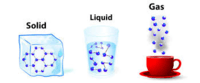
The little dots on the model represent what?
Sound Particles
Air Particles
Sound waves
Air
Tags
NGSS.MS-PS4-1
3.
MULTIPLE CHOICE QUESTION
2 mins • 1 pt
Which material will sound travel through the best?
Water
Air
Steel
Cloth
Tags
NGSS.MS-PS4-2
4.
MULTIPLE CHOICE QUESTION
2 mins • 1 pt
Sound waves travel best through
Gases
Solids
Vacuums
Liquids
Tags
NGSS.MS-PS4-2
5.
MULTIPLE CHOICE QUESTION
2 mins • 1 pt

According to the table, sound travels fastest through matter that-
can evaporate easily.
Has no definite shape
Has particles close together
Has particles that move quickly.
Tags
NGSS.MS-PS4-2
NGSS.MS-PS4-1
6.
MULTIPLE CHOICE QUESTION
2 mins • 1 pt
Ms. Pineda asks her students, why can't we hear in space. Which explanation best explains on why we cannot hear in space.
Todd says " We cannot hear in space because space is so deep and wide, that we just cannot hear it".
Jeff says "We cannot hear in space because the frequency is so high only animals can hear"
Bridgette says "We cannot hear in space because the sound waves have no air particles to transfer their energy to".
Chrissy says: " we cannot hear in space because the sounds are too soft. If we made a really loud sound, we could hear it in space"
7.
MULTIPLE CHOICE QUESTION
2 mins • 1 pt
Sound travels faster in solids than gasses and liquids. Which explanation best explains why?
In solids, the particles are spread out, so sound waves can travel much faster.
In solids, the particles are closer together, so sound waves can vibrate on more particles faster.
In solids, the particles are spread out and moving fast so sound waves can vibrate faster.
In solids, the particles are not dense. They are thinner so sound waves are able to move through faster.
Tags
NGSS.MS-PS4-2

Access all questions and much more by creating a free account
Create resources
Host any resource
Get auto-graded reports

Continue with Google

Continue with Email

Continue with Classlink

Continue with Clever
or continue with

Microsoft
%20(1).png)
Apple

Others
Already have an account?


